
Pool Enclosure Ideas: Designs, Costs and Equipment Enclosures
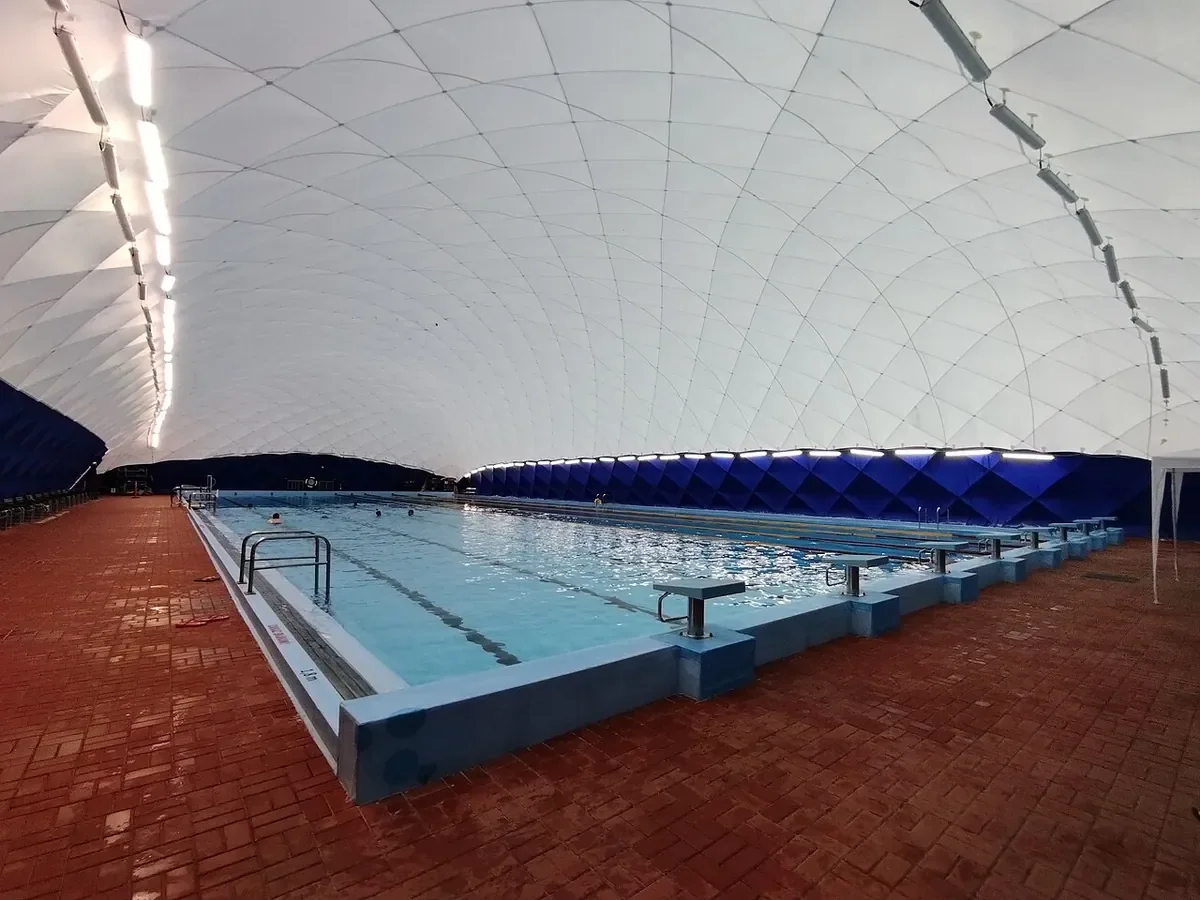
Photo: Jan Beránek, Wikimedia Commons, CC BY-SA 3.0
Quick Answer
The most common pool enclosure ideas are screen enclosures (lanais, about $15,000 to $40,000), low telescopic enclosures that slide open on tracks ($15,000 to $45,000), retractable glass or polycarbonate enclosures ($40,000 to $120,000), seasonal air domes ($10,000 to $40,000), pergolas with retractable roofs ($10,000 to $40,000) and full pool houses or sunrooms ($60,000 and up). For hiding the pump, filter and heater, the best pool equipment enclosure ideas are slatted wood screens, louvered aluminum panels, lattice, hedges, low block walls and prefab resin boxes, typically $150 to $8,000. Whatever you choose, keep airflow, 3 feet of service space, heater clearances and a lockable gate.
A pool enclosure can do many jobs at once. It keeps leaves, bugs and pollen out of the water, holds heat so the swimming season lasts longer, cuts evaporation and chemical use, adds privacy and, with the right design, works as a safety barrier for children. On the other side of the yard, a smaller enclosure around the pump, filter and heater hides the least attractive part of any pool, softens the noise and protects the equipment from sun and weather. This guide covers both. It starts with full pool enclosure ideas for the water itself, then moves on to pool equipment enclosure ideas and pool pump enclosure ideas that look good without causing overheating or repair headaches.
For detailed prices on full structures, see our pool enclosure cost guide. For fences and privacy screens that do not cover the pool, see swimming pool fence ideas.
Pool Enclosure Ideas by Type and Cost
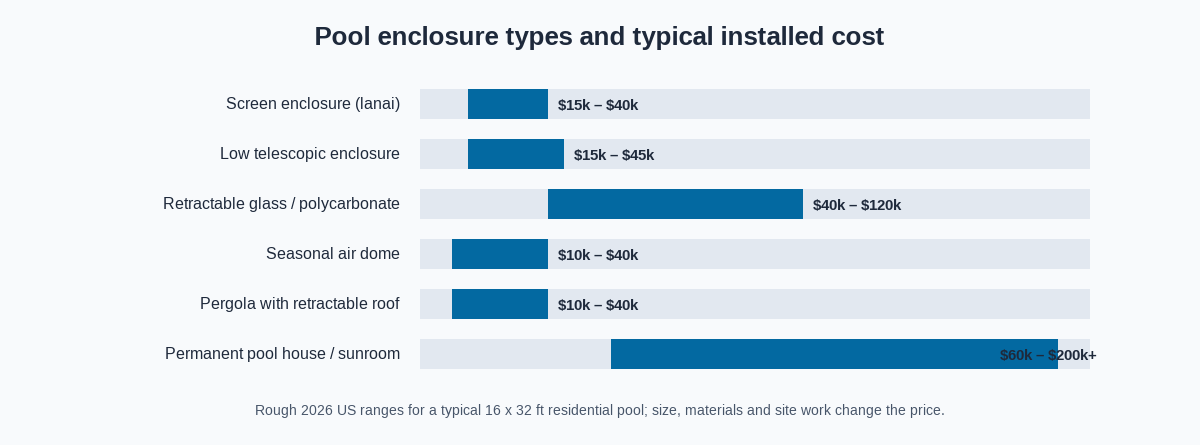
Chart: Asphapro.com
The chart above compares the main pool enclosure ideas on price. These are rough 2026 ranges for a typical 16 by 32 foot inground pool with a modest deck around it. A bigger deck area, a taller roof, a hurricane rating, custom glass or difficult site work can push any of these well above the top of the range. Cheaper options exist too, such as a simple shade sail or a pop-up screen room over a small above ground pool. Below, each of the pool enclosure ideas is explained in turn: what it is, how it works, what it costs and who it suits.
Pool Enclosure Ideas #1: Screen Enclosure (Lanai)
The screen enclosure is the classic choice in Florida, Arizona, Texas and other warm states. A frame of aluminum beams and posts holds panels of fiberglass or polyester screen over the pool and deck. The result is an outdoor room that keeps out bugs, leaves, pine needles and most debris while letting air and light through. Typical shapes are the mansard (flat top with sloped sides), the gable (a peaked roof like a house), the hip roof and the dome. Many attach to the back of the house so you can step from the living room straight onto the pool deck without letting mosquitoes in.
Screen enclosures typically cost $15,000 to $40,000 for an average pool and deck, or roughly $6 to $15 per square foot of covered area. Rescreening every 10 to 15 years costs a few thousand dollars, and the aluminum frame can last 25 to 40 years. In hurricane regions, frames must meet local wind codes, which adds cost. Among all pool enclosure ideas, this one has the best mix of price, comfort and low maintenance in warm, buggy climates. It does not hold much heat, though, so it will not add many weeks to the season in a cold area.
Screen options matter. Standard 18 by 14 mesh blocks most insects; 20 by 20 "no-see-um" mesh blocks tiny biting midges but cuts airflow slightly. Privacy screen panels on the lower walls block the view from neighbors, and heavy-duty "pet screen" on the bottom few feet resists claws. Solar screens cut glare and heat. Mixing these on one enclosure is common.
Pool Enclosure Ideas #2: Low Telescopic Enclosure
Popular in Europe and growing in the US, a low telescopic enclosure is a series of curved aluminum frames glazed with clear polycarbonate. The sections nest inside each other on rails along the pool sides. Closed, they form a low tunnel, often 2 to 4 feet high, that sits just over the water. Open, they slide together at one end of the pool. A low enclosure works like a very strong, rigid pool cover. It keeps out debris, warms the water through the greenhouse effect and, when locked, keeps children and pets out of the pool.
Low telescopic enclosures cost about $15,000 to $45,000 depending on pool size and section count. You cannot swim with them closed, so they are best for owners who want a longer season and less cleaning more than an indoor-style swimming space. Taller "mid-height" versions, 5 to 7 feet high, let you walk along the pool and swim under cover, at a higher price. Among pool enclosure ideas for cooler climates, telescopic enclosures give strong heat gain for the money.
Pool Enclosure Ideas #3: Retractable Glass or Polycarbonate
The premium end of the pool enclosure ideas list is a full-height retractable enclosure, essentially a sunroom with a roof that opens. Panels of tempered glass or multiwall polycarbonate run on motorized or manual tracks. On a cold day, the enclosure is closed and the pool feels indoors. On a warm day, roof and wall sections slide back and the pool is outdoors again. These systems can make an outdoor pool usable all year in many climates.
Expect $40,000 to $120,000 or more installed, with glass costing more than polycarbonate. A full enclosure needs a proper foundation or footing along the pool deck, may need a building permit and engineering, and changes how you manage humidity. With the roof closed in winter, warm pool water evaporates into the air and condenses on cold glass, so these spaces often need ventilation or a dehumidifier. Ask the installer how they handle condensation before you buy. Of all pool enclosure ideas, this one gives the most usable time in the pool.
Pool Enclosure Ideas #4: Seasonal Air Dome
An air dome, like the one in the photo at the top of this page, is a large fabric bubble held up by gentle air pressure from a blower. Public and school pools have used them for decades to keep outdoor pools open through winter, and residential versions now exist. The fabric is anchored around the pool deck, the blower runs constantly and an airlock door lets swimmers enter without collapsing the dome. Domes hold heat well and are much cheaper than a permanent building of the same size.
A residential air dome costs roughly $10,000 to $40,000, plus the ongoing cost of running the blower and heating the space. Domes are put up in fall and taken down in spring, which is work, and they need storage space for the rolled fabric. They also look exactly like what they are, which some owners and neighborhoods do not love. Among pool enclosure ideas for winter swimming on a budget, though, a dome is hard to beat. Check local rules before you install one, since some areas treat domes as temporary structures that need permits.
Pool Enclosure Ideas #5: Pergola With a Retractable Roof
A pergola does not enclose the pool fully, but a pergola over part of the deck or pool with a motorized louvered roof or a retractable fabric canopy gives shade, rain protection and a strong design feature. It can be paired with roll-down screens on the sides for bug protection and privacy, which brings it close to a full enclosure. Aluminum louvered pergolas cost about $10,000 to $40,000 for a large size; wood pergolas with fabric shades cost less. See our pool pergola ideas for layouts and materials.
Pergolas are one of the more flexible pool enclosure ideas because you can start with the frame and add roof panels, screens, lighting and heaters over time. They are best for shade and style, not for keeping the pool clean or warm.
Pool Enclosure Ideas #6: Pool House or Sunroom
A fully enclosed pool house turns the pool into an indoor pool. It needs a true building: foundation, walls, roof, insulation, HVAC and a dehumidification system sized for the pool. Costs start around $60,000 for a modest structure and can easily pass $200,000. Indoor pools are wonderful to use but expensive to run, and humidity control is critical; too little dehumidification leads to mold, rot and corrosion. Among pool enclosure ideas, this is the biggest project and the one that most needs an architect and a mechanical engineer.
More Pool Enclosure Ideas on a Smaller Budget
Not everyone needs or wants a permanent structure. These lower-cost pool enclosure ideas fit smaller budgets, rental homes and above ground pools:
7. Shade sails. Triangular or square fabric sails stretched between posts or the house give shade over part of the pool for a few hundred to a few thousand dollars. They do not stop bugs or debris but make the deck far more comfortable on hot days.
8. Pop-up or kit screen rooms. Freestanding screen houses and kits can cover a small above ground pool or a hot tub for $500 to $5,000. They are not as strong as a custom lanai, so take them down before storms.
9. Above ground pool domes. Clear vinyl or polycarbonate domes made for round above ground pools trap heat and keep out leaves for a few hundred to a few thousand dollars. They are a low-cost way to extend the season.
10. Roll-down screens on a covered patio. If your pool sits next to a covered patio or porch, motorized or manual roll-down screens can enclose that space and part of the deck for $2,000 to $10,000.
11. Hybrid fence and canopy. A privacy fence around the pool paired with shade sails or a pergola gives privacy, shade and a safety barrier without a full roof. See our guide to pool fence cost for fence prices.
12. Safety or solar covers. Strictly speaking a cover is not an enclosure, but for many owners an automatic pool cover or a mesh safety cover gives most of the cleaning, heat and safety benefits of a low enclosure at a lower price.
How to Choose Between Pool Enclosure Ideas
Start with what problem you want to solve. If bugs and leaves are the main issue and you live somewhere warm, a screen enclosure is usually the answer. If you want to swim in spring and fall in a cooler climate, a telescopic or retractable enclosure holds heat better. If you want to swim all winter, a dome or a full retractable or permanent enclosure is needed. If shade is the goal, a pergola or sails will do. If safety is the main goal, compare an enclosure to a code-compliant fence and a safety cover, which may cost less.
Then look at the site. Measure the pool and deck, check where the house wall is, note trees, slopes and any utility lines overhead, and look up setback rules, height limits and HOA rules. Some neighborhoods do not allow tall structures or certain colors. Most permanent pool enclosure ideas need a permit, and in coastal areas wind ratings are strict. Finally, set a budget that includes maintenance: rescreening, panel cleaning, track and motor service, blower electricity or dehumidifier running costs.
Pool Enclosure Ideas: Materials Compared
Aluminum frames are the standard for screen and telescopic enclosures because they are light, strong and do not rust. Powder-coated finishes in white, bronze or black last for decades. Steel is used in large commercial structures but needs good coatings near chlorinated air. Wood is beautiful for pergolas and pool houses but needs sealing and will not last as long near pool water without care.
For the covering, fiberglass screen is the cheapest and most common; polyester screen is stronger. Polycarbonate panels are light, impact-resistant and insulate well, especially multiwall versions, but can yellow or scratch over many years. Glass is clear, scratch-resistant and long-lasting but heavy and costly. PVC-coated fabric is used for domes and some canopies. When comparing pool enclosure ideas, ask about each material's warranty against yellowing, fading and corrosion.
Benefits and Downsides of Pool Enclosure Ideas
The benefits of most pool enclosure ideas are similar: less cleaning, lower chemical use, less evaporation and heat loss, a longer season, fewer bugs and more privacy and safety. A good enclosure can cut debris in the pool to almost nothing and reduce water and heating costs. Screen enclosures also protect furniture from bird droppings and leaves.
The downsides are cost, permits, maintenance and appearance. Screens tear and need replacement, panels need washing, tracks need cleaning and motors wear. A large structure can block views and sunlight; it can also make the yard look boxed in if poorly designed. In snowy climates, roofs must handle snow loads, and screen enclosures are often removed or left to sag. Weigh these against the benefits before choosing among pool enclosure ideas.
Pool Equipment Enclosure Ideas
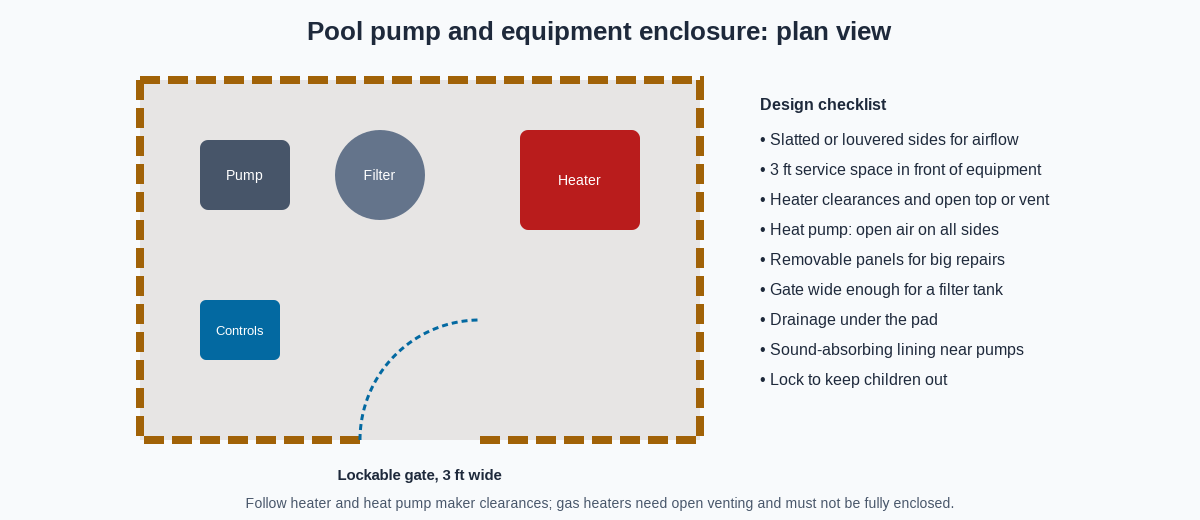
Diagram: Asphapro.com
The second half of the pool enclosure topic is the equipment pad: the concrete slab where the pump, filter, heater, chlorinator, valves and control panel sit. Equipment is noisy, not pretty and often placed right where everyone sees it. Good pool equipment enclosure ideas hide it, reduce noise, protect it from sun and weather and keep children away from moving parts and chemicals, while still letting the equipment breathe and the technician work.
The diagram above shows a well-planned layout. Three sides of the pad are screened with slatted panels, the fourth side has a wide gate, and there is clear space in front of each piece of equipment. The heater has room above and around it for venting. The controls sit where they can be reached without moving anything. That layout is the base for almost all pool equipment enclosure ideas, whatever material you pick.
Pool equipment enclosure ideas: rules before style
Before comparing pool equipment enclosure ideas by look and price, check them against five basic rules. Pool pump enclosure ideas that break these rules cause overheating, failed inspections and costly service calls.
Airflow. All good pool pump enclosure ideas start with air. Pump motors are cooled by air. A motor in a tight, closed box runs hot, which shortens its life. Heat pumps pull large volumes of air through their coils and need open space on all sides, often 2 feet or more, plus clear space above for the fan discharge, usually 5 feet or more. Gas heaters need clearances to combustible materials and an open top or a code-compliant vent; they must not be boxed in. Always read the clearance table in each manual.
Service access. The best pool equipment enclosure ideas leave about 3 feet of clear working space in front of equipment, and make sure the gate or a removable panel is wide enough to carry out a filter tank or heater. A technician who has to unscrew a fence to change a pump will charge more.
Electrical. The equipment pad has a disconnect switch and often a subpanel. Electrical codes require clear working space in front of panels, usually about 3 feet deep and 30 inches wide. Do not build a cabinet that blocks it.
Drainage. Filters drain when cleaned, valves drip and rain must run off. Do not trap water around the pad; leave gaps under panels and slope the ground away.
Safety. Chemicals stored near equipment must be kept dry, separate and locked. A lockable gate keeps children away from pumps and electrical gear.
Pool Pump Enclosure Ideas Compared
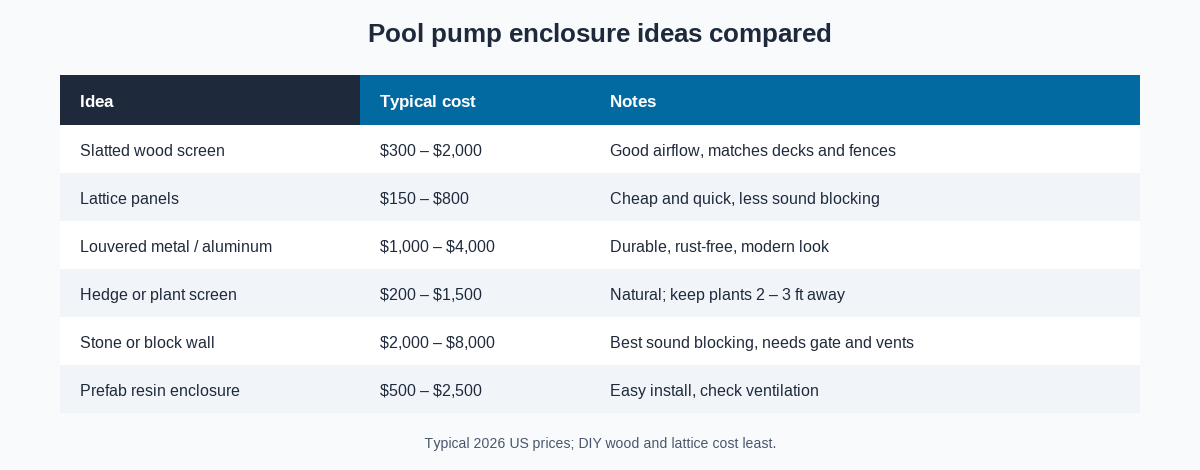
Chart: Asphapro.com
The chart compares the most common pool pump enclosure ideas and pool equipment enclosure ideas. Here is more detail on each one, from the cheapest pool enclosure ideas for equipment to the most permanent.
Slatted wood screen. Horizontal cedar or pressure-treated slats with gaps of half an inch to an inch hide the equipment, let air through and match many decks and fences. A DIY version costs a few hundred dollars in lumber; a built-in version with a gate runs up to about $2,000. Stain or seal the wood every few years. Among pool pump enclosure ideas, this is the most popular because it is cheap, attractive and easy to change.
Lattice panels. Among pool pump enclosure ideas, vinyl or wood lattice is the cheapest screen and goes up in an afternoon. It hides less and does almost nothing for noise, but it is a quick fix for a rental or a new pool on a tight budget.
Louvered aluminum or composite panels. One of the most durable pool equipment enclosure ideas: angled louvers block the view from outside while letting air flow freely. They last a long time, do not rot and look clean and modern. Expect $1,000 to $4,000 for a typical pad.
Hedges and plants. A row of shrubs or ornamental grasses can hide equipment naturally. Keep plants 2 to 3 feet from the equipment so leaves do not get pulled into heat pump coils or block motor vents, and choose plants that do not drop much litter. Avoid thorny plants near the service path. Plants are one of the softest pool equipment enclosure ideas and pair well with a small gate.
Stone or block wall. Of all pool pump enclosure ideas, a low masonry wall, sometimes capped and finished to match the house, gives the most noise reduction and a permanent look. Leave the top open and include vents or open sections for airflow. Walls cost $2,000 to $8,000 or more and need a footing.
Prefab resin or plastic enclosures. The easiest pool pump enclosure ideas are ready-made boxes and screens for pool pumps come in several sizes. They are easy to install and good for above ground pool pumps. Many full boxes are too tight for modern variable speed pumps, so measure clearances and check that the design has vents.
Pool Pump Enclosure Ideas for Noise
Pumps are often the loudest thing in the backyard. The biggest noise fix is not an enclosure at all but a variable speed pump run at low speed most of the day, which can be far quieter than an old single-speed motor. After that, good pool pump enclosure ideas for noise include solid walls on the side facing the house or neighbors, mass-loaded vinyl or outdoor acoustic panels on the inside of slatted screens, a rubber pad under the pump, and checking for loose pipes or worn bearings that rattle. Leave the side facing open yard or the top open for air; a fully sealed box traps heat and can void the motor warranty.
Pool Equipment Enclosure Ideas: Roofs and Covers
A small roof over the pump and filter keeps sun and rain off controls and extends the life of plastic parts. A simple shed roof on posts, a pergola-style top or a small awning all work. Keep the roof high enough for the pump to vent, and never place a roof over a gas heater vent or a heat pump fan discharge. Some owners use a low, hinged lid over just the pump; make sure it has louvers or a gap for air. For the slab itself, see our concrete pads guide if you need to pour or enlarge one.
Pool Pump Enclosure Ideas for Above Ground Pools
Above ground pool pumps and filters usually sit on a small pad or paver base next to the pool wall. Simple pool pump enclosure ideas for these setups include a small cedar box with a removable lid and slatted sides, a three-sided screen made from leftover deck boards, or a decorative planter-style surround. If the pool has a deck, the pump can sometimes sit in a vented cubby under the deck steps. Keep hoses and the timer reachable, leave space for winterizing and make sure the box does not trap rain water around the motor.
DIY Pool Equipment Enclosure Ideas: Step by Step
Many pool equipment enclosure ideas are easy weekend projects. Here is a typical slatted screen build for a pad about 6 by 10 feet:
1. Measure and plan. Measure the pad, the height of the tallest equipment and every required clearance. Mark where the gate will go, ideally facing the path the technician uses.
2. Set posts. Use 4 by 4 posts set in concrete or on post anchors bolted to the pad edge, placed at least 3 feet from the front of the equipment. Check for buried pipes and wires before digging.
3. Add rails and slats. Attach top and bottom rails, then screw horizontal slats with a half-inch gap. Keep the bottom slat a few inches off the ground for drainage and airflow.
4. Build the gate. Make it at least 3 feet wide, use strong hinges and add a latch that can take a padlock.
5. Finish. Seal or stain the wood. Check the screen does not touch the equipment or block vents, and that you can still read the gauges and reach the valves.
The same steps work for most wooden pool equipment enclosure ideas, including louvered and lattice versions. Lumber and hardware for this build typically cost $300 to $900. Hiring a carpenter adds labor, usually bringing the total to $1,000 to $2,500.
Pool Enclosure Ideas and Building Codes
Most permanent pool enclosure ideas need a permit. Screen enclosures and glass structures are treated as buildings or accessory structures and must meet wind, snow and foundation requirements. Many codes also have rules about pool barriers: if a screen enclosure is the pool's barrier, its doors must be self-closing and self-latching, like a pool fence gate. The International Swimming Pool and Spa Code sets common barrier rules, but local versions vary. Equipment enclosures are usually simpler, but walls over a certain height and anything near electrical gear may need approval. Check with your local building department before you build.
Pool Enclosure Ideas: Worked Examples
Florida family, 15 by 30 foot pool. Bugs, leaves and afternoon rain are the problems. A mansard screen enclosure attached to the house with no-see-um mesh and privacy panels on the lower 3 feet costs about $25,000. The pool needs far less skimming, and the family uses the deck in the evenings without mosquitoes.
Ohio couple, 16 by 32 foot pool. They want to open in April and close in October instead of June to September. A low telescopic polycarbonate enclosure at about $30,000 traps heat and doubles as a safety cover. Combined with a heat pump, they gain roughly two months of swimming each year.
Colorado household, year-round swimming. A seasonal air dome for about $25,000 lets them swim through winter. They budget for higher heating bills and the work of setting up and taking down the dome each year.
Equipment pad facing the patio. A homeowner hides a pump, cartridge filter and heat pump with louvered aluminum panels on three sides and an open-top design, leaving 2 feet around the heat pump and 3 feet of service space in front. Cost: about $2,500. These pool equipment enclosure ideas improve the view without touching the equipment's performance.
Pool Enclosure Ideas: Lighting and Finishing Touches
Inside a screen or glass enclosure, add LED lights on the frame, ceiling fans under a solid roof section, outdoor curtains, potted plants and comfortable furniture. String lights and pool lighting turn the space into an evening room. Around equipment enclosures, a small path light near the gate makes nighttime checks safe, and planting around the outside softens the screen. These details make pool enclosure ideas feel finished instead of purely practical.
Maintaining Your Pool Enclosure Ideas Over Time
Wash screen and frame once or twice a year with a garden hose and mild soap. Repair small screen tears early with patch kits before they grow. Check fasteners, gutters and door closers. On glass and polycarbonate enclosures, clean panels with products approved by the maker, since harsh chemicals can cloud polycarbonate. Clean tracks and lubricate rollers on retractable systems. For domes, inspect seams, the blower and the door each season. For equipment enclosures, keep leaves out, check that vents stay clear and refinish wood regularly.
Pool Enclosure Ideas and Pool Chemistry
Covering the pool changes the chemistry a little. Under a screen enclosure, sunlight is reduced, so chlorine lasts longer and you may need less stabilizer. Under a closed glass or polycarbonate roof, chlorine can last much longer still, and owners sometimes overdose because they keep the outdoor routine. Test more often in the first weeks and adjust. Fewer leaves and less dust mean less phosphate and fewer algae problems. In fully closed spaces, chlorine smell and humidity can build up, so ventilate.
Pool Enclosure Ideas: Key Points
- Screen enclosures ($15k to $40k) are best for bugs and debris in warm climates.
- Telescopic and retractable enclosures hold heat and extend the season.
- Air domes are the budget path to winter swimming.
- Pergolas and sails give shade; covers give many benefits for less.
- Pool equipment enclosure ideas must keep airflow, clearances and access.
- Most permanent pool enclosure ideas need a permit.
Frequently Asked Questions
What are the cheapest pool enclosure ideas?
Shade sails, pop-up screen rooms and above ground pool domes cost the least, from a few hundred to a few thousand dollars. A permanent screen enclosure is the cheapest full structure.
Do pool enclosures add value to a home?
In warm, buggy areas a screen enclosure is often expected and can help resale. Elsewhere the value depends on buyers; a well-built enclosure that extends the season appeals to many pool buyers.
Can you enclose a pool pump completely?
No. Pumps need air to cool the motor, and heaters and heat pumps need open clearances. Use slatted, louvered or open-top designs and follow the manuals.
How far should pool pump enclosure ideas sit from the equipment?
Leave about 3 feet of service space in front, and follow heater and heat pump clearances, often 2 feet or more on the sides and 5 feet above a heat pump fan.
Do I need a permit for a pool enclosure?
Usually yes for screen, glass and permanent enclosures. Small equipment screens often do not, but check local rules.
Will a pool enclosure keep the water warmer?
Solid glass, polycarbonate and domes hold heat well. Screen enclosures help a little by blocking wind but do not trap much heat.
Sources
- ICC: International Swimming Pool and Spa Code
- CPSC: Pool and spa safety
- US Department of Energy: Swimming pool covers
- HomeGuide: Pool enclosure cost