
How to Keep Ducks Out of Pool Water: Humane Methods That Work
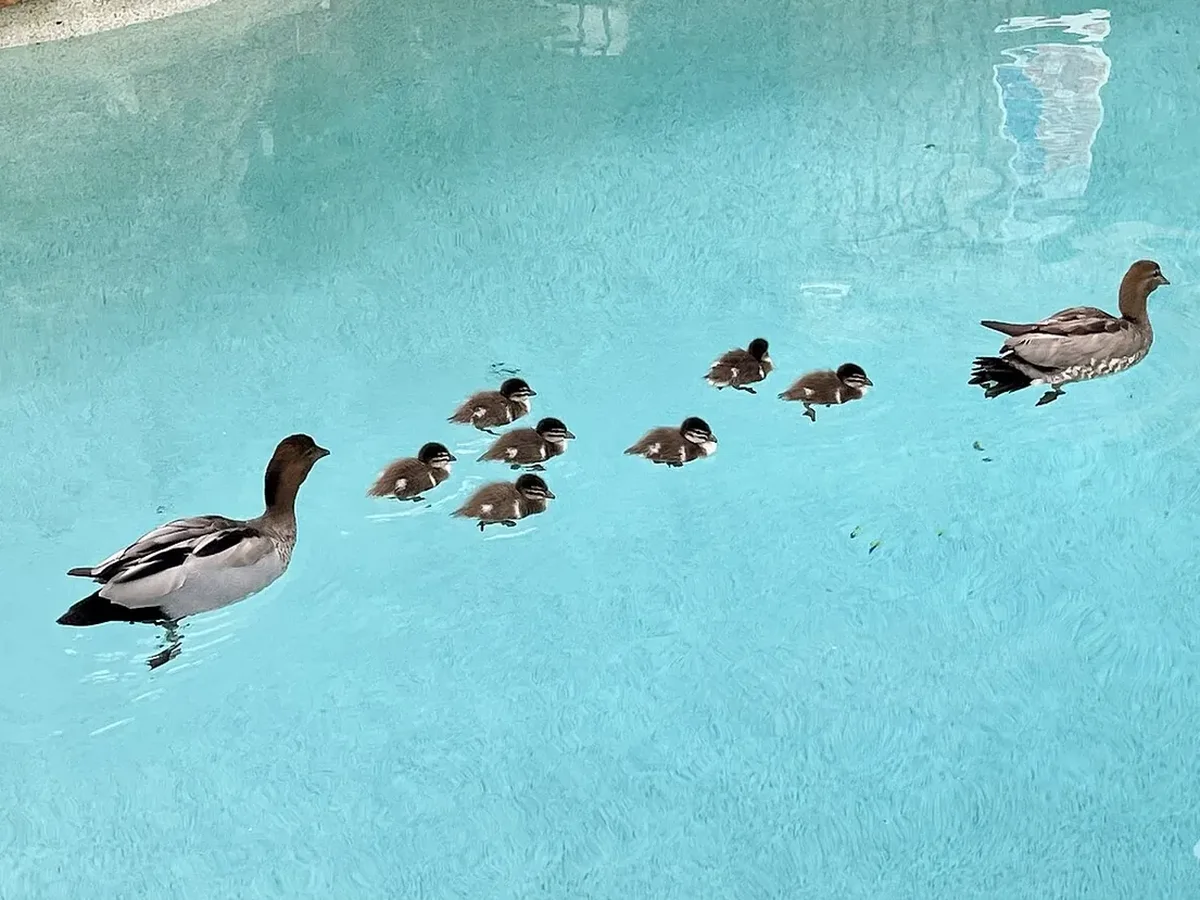
Photo: Kgbo, Wikimedia Commons, CC BY-SA 4.0
Quick Answer
To keep ducks out of your pool, make it less inviting and harder to land in. The most reliable step is a pool cover whenever the pool is not in use. Add a motion-activated sprinkler aimed across the water, keep water moving with a robotic cleaner or floating skimmer, and use predator decoys such as floating alligators or owls, moving them every day or two. Remove food sources like bird feeders and spilled seed, and start early in spring before ducks nest. Never harm ducks or move nests with eggs; wild ducks are protected in the US and many other countries.
Ducks love swimming pools. Clear water, open space and few predators make a pool look like a safe pond, especially in spring when pairs are looking for places to rest and nest. A single pair might seem charming, but ducks leave droppings, feathers and bacteria in the water and on the deck, use up chlorine, clog skimmers and can return every day. Once a duck family moves in, the problem grows quickly.
This guide explains how to keep ducks out of pool water using humane methods, what to do when there are ducks in my pool right now, how to deal with nests and ducklings, how to clean up afterward and what the law says. For general pool care, see how much chlorine to add to pool water.
Why Do Ducks Like Swimming Pools?
Ducks look for open water where they can rest, preen and feel safe from predators. A pool offers clean water, a clear view all around, and often a quiet yard with lawn and shrubs nearby for nesting. Mallards and other ducks also return to places where they have found food or safety before. Spring is the peak time for ducks in pool problems, as pairs scout for nesting sites near water, and hens later lead their ducklings to the nearest water source after hatching. Pools near ponds, lakes, golf courses or rivers see more ducks. Yards with bird feeders, spilled seed or people who feed ducks nearby attract them too, since ducks remember where they found food and return to it day after day.
Why Ducks in Pool Water Are a Problem
One duck can produce a lot of droppings each day, and duck droppings can carry bacteria and parasites, such as E. coli, Salmonella, Cryptosporidium and Giardia, which can make swimmers sick. Droppings also add nitrogen and phosphates that use up chlorine and feed algae. Feathers and debris clog skimmer and pump baskets. Ducks can scratch vinyl liners with their claws, and their droppings can stain light-colored plaster and coping if left in place. Ducklings that hatch nearby may jump into the pool and be unable to get out, since pool walls are too steep for them; without help, they can become exhausted and drown, or be harmed by chlorinated water over long periods.
How to Keep Ducks Out of Your Pool: 12 Humane Methods
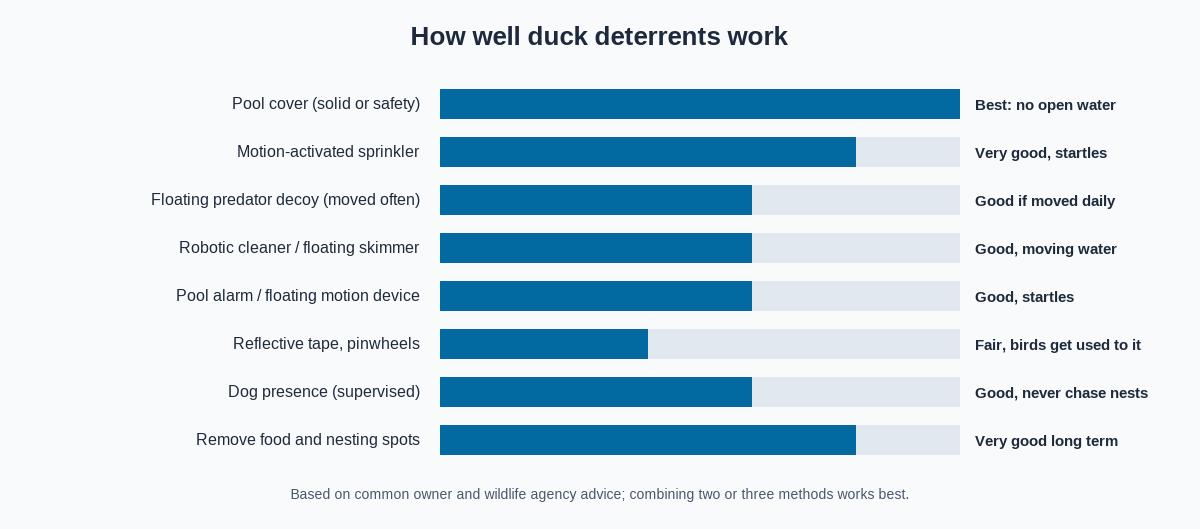
Chart: Asphapro.com
1. Cover the pool. A solid, mesh safety or automatic cover is the most effective way to keep ducks away from pool water, since there is nowhere to land. Even a solar cover helps, though some ducks will walk on it. Cover the pool overnight and when you are away. See pool cover cost.
2. Use a motion-activated sprinkler. A sprinkler with a motion sensor sprays water when a duck lands or walks near the pool. It startles them without harm and works day and night. Aim it across the water and the edge where ducks land.
3. Keep water moving. Ducks prefer still water. A robotic or automatic pool cleaner, a fountain, a waterfall or a floating skimmer that moves around makes the surface less inviting.
4. Use predator decoys. Floating alligator heads, swan or heron decoys, and owl or hawk decoys on the deck can scare ducks. Move them every day or two, since ducks quickly learn that a still decoy is harmless.
5. Float a pool alarm or motion device. Floating pool alarms or motion-activated floating toys move or sound when something enters the water, startling ducks.
6. Add reflective tape or pinwheels. Shiny, moving objects around the pool can make ducks uneasy, though they work best when combined with other methods.
7. Remove food sources. Take down bird feeders near the pool, clean up spilled seed, and never feed ducks. Food keeps them coming back.
8. Remove nesting spots. Before nesting season, trim low, dense shrubs near the pool and clear tall grass where hens might nest. Do this before any nest has eggs.
9. Haze them early and often. As soon as ducks land, calmly walk toward them, clap or use a garden hose spray from a distance to encourage them to leave. Do this every time in early spring so they decide your pool is not a safe spot. Do not chase them repeatedly once a hen is nesting nearby.
10. Let a dog patrol (supervised). A dog that walks around the yard regularly can discourage ducks, but never let a dog chase, catch or harm ducks or ducklings, and keep it away from nests.
11. Use a pool net or barrier. Bird netting or a perimeter fence of netting a few feet high around the water keeps ducks from walking in, though it is less practical during swim season.
12. Change the pool's look. Some owners float a few large pool toys or an inflatable when the pool is not in use, which breaks up the open water ducks prefer.
Ducks in My Pool Right Now: How to Get Rid of Ducks in Your Swimming Pool Safely
If you find ducks in my pool this morning, stay calm and give them a way out. Walk slowly toward them so they fly or walk away. If they will not leave, gently spray water near them, not at them, from a hose. If there are ducklings, do not chase them around the pool; they cannot fly. Instead, set up a ramp or float a board at the edge so they can climb out, and give the mother space. Once they are gone, start using deterrents right away so they do not return.
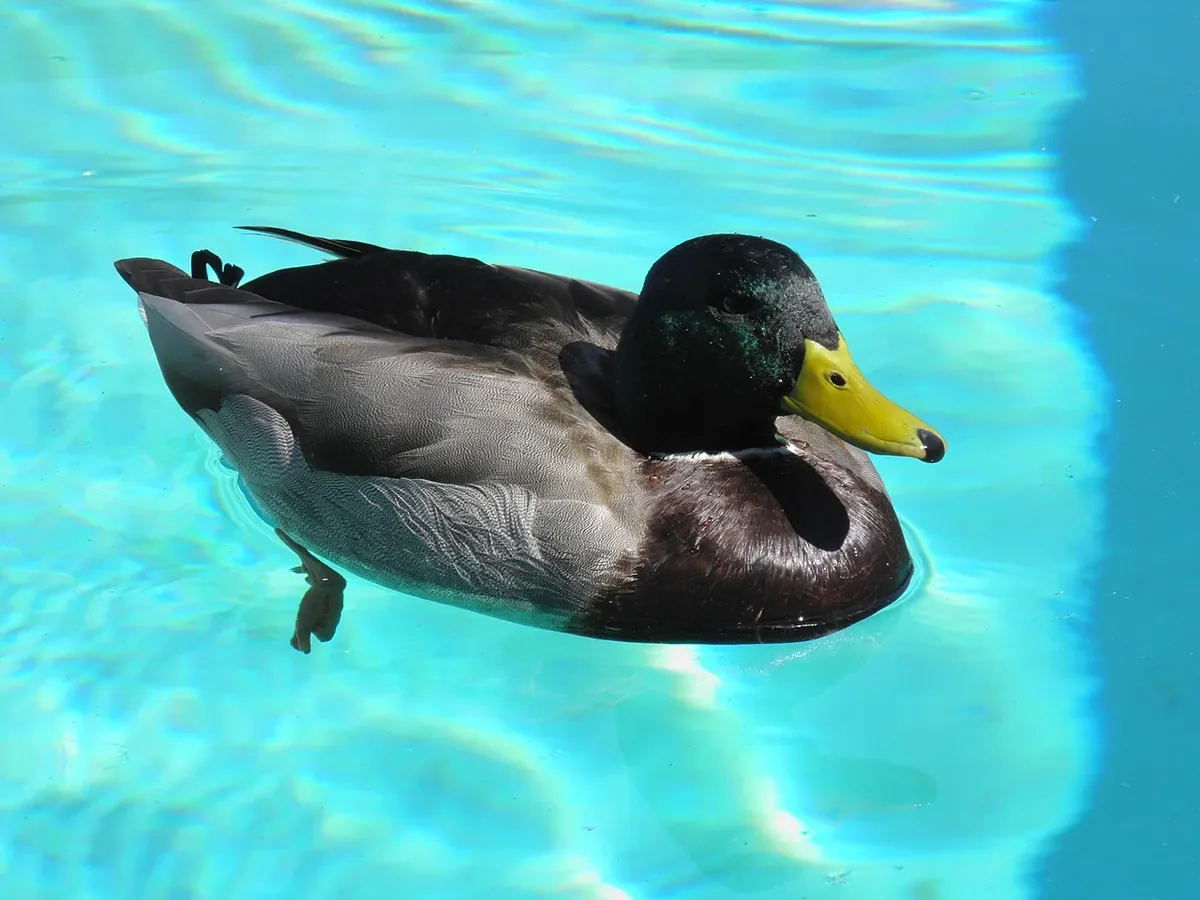
Photo: Michael W. Kolton, Wikimedia Commons, CC BY-SA 3.0
Ducks Nesting Near Your Pool
If a hen has built a nest with eggs near your pool, do not move or destroy it. In the US, most wild ducks, including mallards, are protected by the Migratory Bird Treaty Act, which makes it illegal to harm them or destroy active nests without a permit. Mallard eggs hatch about 26 to 30 days after incubation starts, and the hen leads the ducklings to water within a day of hatching. If the nest is near your pool, cover the pool when the hatch is near, give the family space, and call your state wildlife agency or a local wildlife rehabilitator for advice on guiding the family to a nearby pond.
How to Clean Up After You Get Rid of Ducks in Pool Water
After ducks have been in the pool, clean it before anyone swims. Skim out feathers and droppings, empty the skimmer and pump baskets, and brush the walls and steps. Test free chlorine and pH, then shock the pool, raising free chlorine to the shock level for your stabilizer and holding it until the water is clear and combined chlorine is low. Run the pump for at least 24 hours and clean or backwash the filter. Clean the deck with a hose and a deck cleaner. Because duck droppings can carry Cryptosporidium, which is very resistant to chlorine, consider keeping swimmers out for a day or more after heavy contamination. See when to shock a pool.
How to Get Rid of Ducks in Your Pool Legally
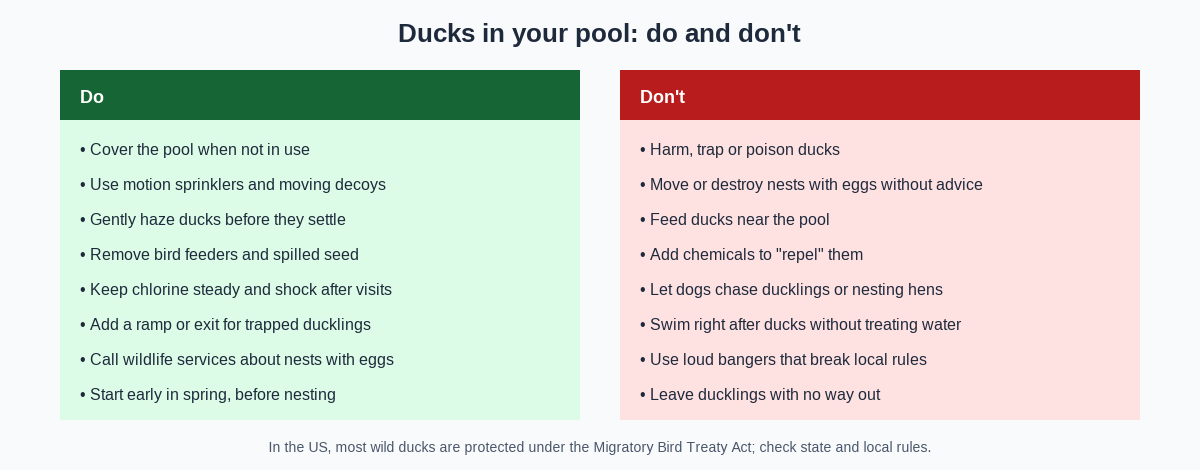
Diagram: Asphapro.com
When people search for how to get rid of ducks in your pool, they often want a quick fix. The law limits what you can do. In the US, mallards, wood ducks and most other wild ducks are covered by the Migratory Bird Treaty Act, enforced by the US Fish and Wildlife Service, and by state wildlife laws. You may scare ducks away with humane methods such as covers, sprinklers, decoys and gentle hazing. You may not shoot, trap, poison or injure them, and you may not destroy or move a nest with eggs without a permit. Muscovy ducks, a domesticated species that has gone feral in some states, are treated differently, and some states allow their removal under specific rules. If you are unsure, call your state wildlife agency or a licensed wildlife control operator. Following these rules is the safe, legal way to get rid of ducks in pool areas.
How to Keep Ducks Out of Your Swimming Pool in Spring
Spring is when you need to work hardest to keep ducks out of your swimming pool. Pairs arrive in early spring looking for a place to rest and nest, and once a hen chooses a nest site near your pool, the problem lasts for weeks. Start your deterrents before the season begins: put the cover on as soon as you are not swimming, set up a motion sprinkler, and move decoys every day or two. Haze ducks the moment they land, every time, so they learn your pool is not a safe stop. Check shrubs and flower beds near the pool for signs of nesting, such as a shallow bowl of grass and down feathers, and gently discourage ducks from spending time there before eggs are laid. A few weeks of steady effort in early spring usually saves a whole season of trouble.
How to Keep Ducks Out of My Pool When I Am Away
Many owners ask how to keep ducks out of my pool while they are at work or on vacation. A cover is the best answer, since it works without anyone at home. If you cannot cover the pool, combine automatic deterrents: a motion-activated sprinkler, a robotic cleaner on a schedule, and a floating motion device. Ask a neighbor to check the pool and move decoys every few days. Keep the pool chemistry steady with a floater, feeder or salt system so that if ducks do visit, the water is still sanitized. When you return, skim, test and shock if you see signs of duck visits.
How to Keep Ducks Out of Swimming Pool Areas Near Ponds
Homes near ponds, lakes, rivers and golf courses see the most ducks, because the birds move back and forth between natural water and pools. If you live near water, it is harder to keep ducks out of swimming pool areas completely, but you can make your pool the least attractive option. Use a cover whenever possible, keep the yard free of food, and consider a low fence or hedge between the pool and the pond side of the yard so ducks cannot walk straight in. Talk to neighbors; if several homes use deterrents, ducks are more likely to stay on the pond, where they belong.
Duck Pool Ideas: A Safe Pool for Ducks You Keep
Not every duck pool question is about keeping wild ducks away. Many people keep pet or backyard ducks and want a safe pool for ducks to swim, bathe and stay healthy. Ducks need water deep enough to dip their heads and clean their eyes and nostrils, and ideally deep enough to swim. A good duck pool can be a plastic kiddie pool, a stock tank, a cement mixing tub or a small pond with a liner. Shallow sides or a ramp let ducks get in and out easily, and ducklings need very shallow water and close supervision, since they can tire and drown.
A swimming pool for ducks gets dirty fast, so plan for easy cleaning. Many owners place the duck swimming pool on gravel or pavers near a drain, so they can dump and refill it every day or two and use the dirty water on garden beds. Larger duck ponds can use a simple pump and filter or a planted filter zone. Never use chlorinated pool water or pool chemicals in a duck pool; ducks drink the water they swim in. Keep pet ducks out of your family swimming pool for the same health reasons that apply to wild ducks. A dedicated pool for ducks keeps them happy and keeps your swimming pool clean.
Pool Duck Toys vs Real Ducks
Searches for a "pool duck" sometimes mean a giant inflatable duck float or a rubber duck for kids. These toys are harmless and fun, and some owners even report that large floating toys left in the pool make real ducks less likely to land, since they break up the open water. They are not a reliable deterrent on their own, but floating a big pool duck toy along with other methods may help a little. Just take inflatables out when you put the cover on, so they do not damage it.
How to Keep Ducks Out of Your Pool: Mistakes to Avoid
The biggest mistake when trying to keep ducks out of your pool is waiting until a duck family has settled in, by which time deterrents work far less well. Another is using decoys that never move, which ducks ignore within days. Some owners feed ducks once "just to be kind," which brings them back every day. Others use loud fireworks or bangers that break local noise or fireworks rules and upset neighbors. Using pool chemicals on the deck to repel ducks is ineffective and can harm birds and pets. And chasing ducklings around the pool stresses and exhausts them; give them a way out instead. Patient, steady use of humane methods works best, and it keeps you on the right side of wildlife laws and your neighbors.
Health Risks of Duck Droppings in Pools
Duck droppings can carry germs that cause stomach illness in swimmers, especially children who swallow water. Cryptosporidium is a particular concern because it can survive for days even in properly chlorinated water. Salmonella, E. coli and Giardia are other risks. If ducks have left visible droppings in the pool, follow the CDC's guidance for fecal incidents: keep swimmers out, remove the droppings, raise chlorine, and filter before reopening. For formed droppings, a shorter closure is often enough; for loose or diarrheal droppings, much higher chlorine and a longer closure are recommended. Clean the deck too, since children and pets can track droppings back into the water. Wash your hands after handling skimmer baskets or nets used to remove droppings.
Which Ducks Visit Pools?
In North America, the most common pool visitor is the mallard. Males have a green head and yellow bill; females are mottled brown. Mallards adapt well to suburbs and nest in gardens, flower beds and under shrubs. Wood ducks, which nest in tree holes or nest boxes, sometimes visit pools near wooded streams. Muscovy ducks, large ducks with red facial skin, are common around pools in Florida and Texas. In Australia, Pacific black ducks and Australian wood ducks often visit backyard pools. Geese, especially Canada geese, cause similar problems and respond to many of the same deterrents, though they are larger and bolder. Knowing which birds you have helps you choose the right approach and understand the rules that apply.
Cost of Duck Deterrents
Most methods to keep ducks out of pool water are inexpensive. A motion-activated sprinkler costs $40 to $120. Floating predator decoys cost $15 to $60. Reflective tape and pinwheels cost under $20. A floating pool alarm costs $50 to $200. A robotic pool cleaner costs $400 to $1,500 but also saves cleaning time. A solar cover costs $50 to $300 for most pools, a mesh safety cover $1,000 to $3,000 installed, and an automatic cover $8,000 to $20,000. Bird netting costs $30 to $150. Compared with the cost of shocking, extra filtering and cleaning after repeated duck visits, a few simple deterrents usually pay for themselves in a single season.
Worked Examples
Example 1: early spring visitors. A homeowner notices a pair of mallards landing in the pool each morning in March. They put the solar cover on every evening, set up a motion sprinkler aimed across the shallow end, and float an alligator decoy that they move to a new spot each day. After a week, the ducks stop coming. Total cost: about $110.
Example 2: ducklings in the pool. A family finds a hen and eight ducklings in the pool in May. They place a board ramp at the shallow end, keep the dog inside and give the ducks space. Within an hour, the hen leads the ducklings out and toward a nearby creek. The family then shocks the pool, cleans the filter and covers the pool for a week while the family settles elsewhere.
Example 3: repeated visits near a pond. A home backing onto a golf course pond has ducks most days. The owner installs a mesh safety cover used whenever the pool is closed, adds a robotic cleaner that runs mid-morning, and plants a low hedge on the pond side of the yard. Visits drop from daily to occasional.
A Season Plan to Keep Ducks Away From Pool Water
Late winter: trim shrubs near the pool, remove feeders, and make sure the cover fits well. Early spring: set up motion sprinklers and decoys before the first ducks arrive, and haze any ducks that land. Nesting season: keep up deterrents, check for nests, and call wildlife experts if you find eggs. Summer: keep water moving and covered when not in use; shock after any visits. Fall: keep the pool covered after closing so migrating ducks do not stop on open water. Following a simple plan each year is the most reliable way to keep ducks away from pool water for good.
Combining Methods for Lasting Results
If you are wondering how to get rid of ducks in pool water for good, the answer is to combine methods rather than rely on one. Ducks are smart and quickly learn which threats are real. A decoy alone may work for a few days, and a sprinkler alone may work until ducks find the spot it does not reach. A cover, a motion sprinkler and a moving decoy together, along with regular hazing and no food in the yard, give ducks several reasons to choose somewhere else. Change the setup from time to time: move the sprinkler, swap decoy types, and vary when the robotic cleaner runs.
Be patient. Ducks that have used your pool before may keep testing it for a while. Each time they land and are gently moved on, they become less likely to return. Most owners find that two or three weeks of steady effort is enough to break the habit. After that, a cover and one or two automatic deterrents are often all you need to keep the pool duck-free for the rest of the season.
How to Keep Ducks Away From Pool Areas: Key Points
- Cover the pool when not in use; it is the most effective deterrent.
- Add motion sprinklers, moving water and decoys you move often.
- Remove food and nesting spots, and start early in spring.
- Never harm ducks or move nests with eggs; shock and clean after visits.
Frequently Asked Questions
What scares ducks away from a pool?
Motion sprinklers, moving water, predator decoys that are moved often, and regular gentle hazing. A cover works best of all, since it removes the open water ducks are looking for.
Is chlorine bad for ducks?
Short visits are unlikely to harm adult ducks, but ducklings can be harmed by long exposure and may be unable to get out of a pool with steep walls. Always give them a ramp or exit.
Will a fake alligator keep ducks out of my pool?
It can help for a while, especially if you move it often, but ducks get used to still decoys within days. Pair it with a motion sprinkler or cover for better results.
Is it illegal to get rid of ducks?
Harming them or destroying active nests is illegal in the US without a permit. Humane hazing, covers and scare devices are allowed, and they are the right way to get rid of ducks in pool areas.
How do I keep ducks out of my pool in winter?
Keep the pool covered with a tight winter cover, and pump standing water off the cover so it does not become a small pond that attracts birds.
Can I swim after ducks were in my pool?
Shock, filter and clean first, then wait until chlorine is back in range. After heavy contamination, follow CDC fecal incident guidance and keep swimmers out longer.
Sources
- US Fish and Wildlife Service: Migratory Bird Treaty Act
- CDC: Healthy swimming
- USDA APHIS: Wildlife damage management
- Cornell Lab of Ornithology: Mallard life history