
Concrete Slab Leak Repair: Signs, Detection, Repair Options and Cost
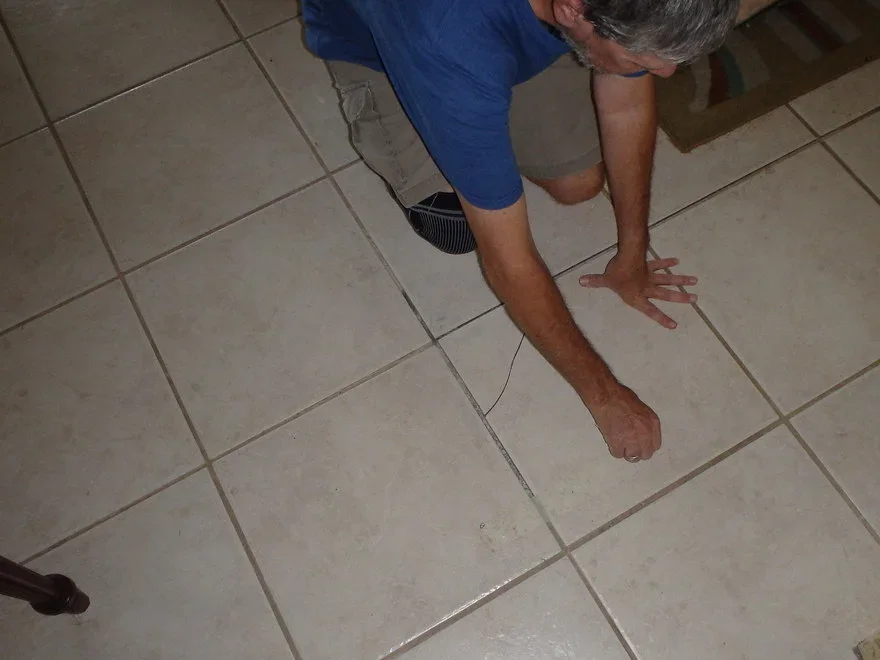
Photo: osseous, Flickr, CC BY 2.0 (cropped)
Quick Answer
A slab leak is a leak in a water or drain pipe running in or under a concrete slab foundation. Common signs are a sudden jump in the water bill, the meter moving with everything off, warm spots on the floor, the sound of running water and damp or lifting flooring. Concrete slab leak repair starts with professional leak detection, about $150 to $500, followed by one of three fixes: direct spot repair through the slab, about $1,500 to $4,000; rerouting the line through walls or the attic, about $1,500 to $5,000; or epoxy pipe lining, about $2,000 to $7,000. Homes with repeated slab leaks often need a whole-house repipe, about $4,000 to $15,000. Fix slab leaks quickly: water under a slab can damage flooring, grow mold and wash out or swell the soil supporting the foundation.
Millions of homes in the South and West sit on concrete slab foundations with water lines buried in the gravel under the slab or cast into the concrete itself. When one of those pipes leaks, the water has nowhere obvious to go, and a slab leak can run for weeks before anyone notices. By then the water bill may have doubled, flooring may be ruined, and in clay soils the foundation itself can start to move. The photo above shows the first, simplest check many homeowners make: feeling a hard floor for warm or damp spots.
This guide explains what causes slab leaks, how to recognize and confirm them, how professionals find them, the main concrete slab leak repair methods, how the slab is patched afterward, insurance, costs and how to prevent slab leaks.
What Is a Slab Leak?
In a slab-on-grade house, water supply lines, both hot and cold, and drain lines are installed in the ground before the concrete slab is poured. Supply lines are often copper in older homes and PEX in newer ones, laid in the gravel under the slab or run through sleeves. Drain lines are usually cast iron in older homes and PVC or ABS plastic in newer ones. A slab leak is any leak in these buried lines. Supply line leaks are under constant pressure and can release hundreds of gallons a day. Drain line leaks only leak when water drains, but they can saturate soil over time and are harder to notice.
What Causes Slab Leaks?
Corrosion. Copper pipes can corrode from the inside because of water chemistry, or from the outside where they touch soil, concrete or other metals. Pinhole leaks are common in older copper lines.
Abrasion. Pipes vibrate and expand and contract with hot water. Where a pipe rubs against concrete, gravel or rebar, it slowly wears through.
Poor installation. Kinked, dented or poorly joined pipe, missing sleeves where pipes pass through concrete, or fittings buried under the slab create weak spots.
Soil movement. Expansive clay soils, settlement and earthquakes can shift the slab and stress the pipes, especially drain lines with long runs.
High water pressure. Pressure above about 80 psi strains pipes and fittings; most homes should run at about 40 to 60 psi.
Age. Cast iron drains and older copper lines reach the end of their service life after several decades.
Signs of a Slab Leak
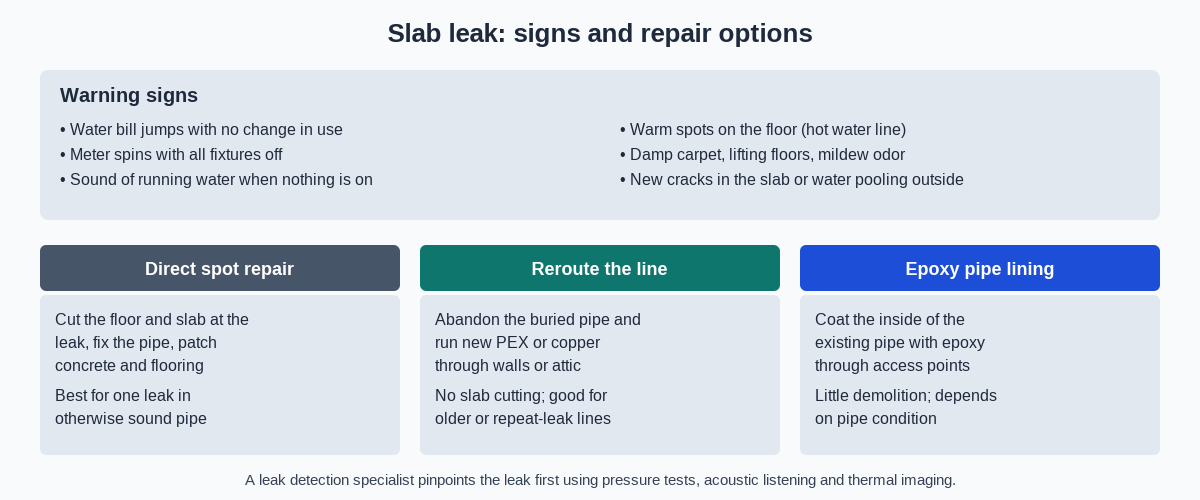
As the diagram shows, the warning signs are often indirect:
A higher water bill without any change in household use.
The water meter moving when every faucet, fixture and appliance is off.
The sound of running water when nothing is running, often heard best at night.
Warm spots on the floor, especially on tile or bare concrete, from a leaking hot water line.
Damp carpet, swelling wood floors or loosening tile, and musty or mildew odors.
A water heater that runs constantly or never seems to catch up, even with normal household use.
Low water pressure at fixtures, especially when several taps run at once or the change came on suddenly.
New cracks in the slab, walls or flooring, or water pooling outside along the foundation.
The Water Meter Test
Before calling a plumber, you can confirm a hidden leak with a simple test. Turn off every faucet, fixture, appliance, irrigation system and ice maker. Find the water meter, usually in a box near the street, and look at the leak indicator, a small triangle or dial that spins with even a tiny flow, or record the reading. Wait 30 minutes to two hours without using any water, then check again. If the meter moved, water is leaking somewhere. To narrow it down, close the main shutoff valve at the house; if the meter still moves, the leak is in the service line between the meter and the house, not under the slab. If it stops, the leak is inside, which could be a toilet, faucet or a slab leak. Check toilets with food coloring in the tank first, since they are the most common hidden leak.
Professional Slab Leak Detection
Finding exactly where a slab leak is matters, because concrete slab leak repair costs depend on not cutting more concrete than necessary. Leak detection specialists and many plumbers use:
Pressure testing. Isolating hot and cold lines and pressurizing them to see which one loses pressure.
Acoustic listening. Sensitive ground microphones pick up the hiss of water escaping under pressure through the concrete.
Thermal imaging. Infrared cameras show warm areas from hot water leaks under flooring.
Line tracing. Electronic locators follow the pipe route under the slab.
Camera inspection. For drain line slab leaks, a camera on a cable shows cracks, offsets and root intrusion, and a hydrostatic test checks whether drains hold water.
Leak detection typically costs $150 to $500 and can often pinpoint a leak within a foot or two.
Concrete Slab Leak Repair Methods
Direct spot repair. The plumber cuts or jackhammers a small opening, often about 2 by 2 feet, through the flooring and concrete above the leak, digs down to the pipe, repairs the damaged section and pressure tests it. The hole is then backfilled and the concrete patched. This is often the fastest and cheapest option for a single leak in otherwise sound pipe, but it can damage flooring, and if the pipe is old, more leaks may follow.
Rerouting. Instead of digging into the slab, the plumber abandons the leaking buried line and runs a new line, usually PEX, through walls, ceilings or the attic. This avoids concrete demolition and is often the best choice when pipes are old or have leaked before. The trade-off is opening drywall in a few places and, for hot water, a longer run.
Epoxy pipe lining. The pipe is drained, dried and cleaned, then coated inside with epoxy that seals pinholes and creates a new inner surface. It requires little demolition but depends on the condition of the existing pipe and is not suitable for every situation.
Whole-house repipe. When copper lines have multiple slab leaks, replacing all supply lines, usually overhead with PEX, often makes more sense than repairing leak after leak.
Drain line repairs. Broken cast iron or PVC drains under the slab are repaired by cutting the slab, by tunneling under it from outside, or by trenchless pipe lining from cleanouts.
What to Do When You Suspect a Slab Leak
1. Confirm a leak. Do the water meter test described above and check toilets, faucets, irrigation and the water heater relief valve first.
2. Limit the water. If the meter is spinning fast, or water is visible on the floor, shut off the main valve and open a faucet to relieve pressure. If only the hot side is leaking, closing the cold supply valve on top of the water heater can stop the hot water slab leak while keeping cold water available.
3. Protect belongings. Move furniture and rugs off wet areas and run fans and a dehumidifier.
4. Call a leak detection specialist or plumber. Ask whether they can both locate and repair the slab leak, and whether they will provide a written report for insurance.
5. Call your insurer. Report the leak promptly and ask what the policy covers before major work begins.
6. Document everything. Take photos of damage, the water meter, bills and the repair work as it happens.
Hot Water vs. Cold Water Slab Leaks
Hot water slab leaks are more common than cold ones, because hot water lines expand and contract with every use, rubbing against concrete and gravel, and because hot water speeds some forms of corrosion. They are also easier to notice: warm spots on the floor, a water heater that runs constantly and higher energy bills along with water bills. Cold water slab leaks give fewer clues and often show up only as a high water bill or damp flooring. Detection specialists usually test hot and cold lines separately, and the result affects the repair plan; a hot line in poor condition is often rerouted, while a single cold line leak may be repaired in place.
Drain Line Slab Leaks
Sewer and drain lines under a slab leak differently from pressurized supply lines. A cracked cast iron drain, a broken PVC joint or a separated fitting only leaks when water flows through it, so the water bill does not change, but the leak can saturate soil under the slab over months or years. Signs include slow drains, sewer odors, recurring backups, damp spots near bathrooms and kitchens, and settling or cracking floors. A camera inspection shows the problem, and a hydrostatic test, plugging the drain system and filling it with water, confirms whether it leaks. Concrete slab leak repair for drains may involve cutting the slab, tunneling under the foundation from outside, or trenchless lining, in which a resin-soaked liner is inserted and cured inside the old pipe to form a new pipe within it.
PEX vs. Copper When Rerouting
Most reroutes and repipes today use PEX, a flexible plastic tubing that can be snaked through walls and attics with few joints, resists corrosion and is less expensive to install than copper. Copper is still used, valued for its long track record and resistance to heat and UV, but it costs more and needs more fittings. In hot attics, PEX lines should be insulated and kept away from direct sunlight and heat sources, and both materials should be insulated in cold climates to prevent freezing. Your plumber can explain which material suits your house and local code.
Mold and Water Damage After a Slab Leak
Water from a slab leak soaks into carpet padding, wood flooring, drywall and the bottom of wall framing. Mold can begin growing within 24 to 48 hours in damp materials. After the leak is fixed, dry the area thoroughly with fans and dehumidifiers; professional water restoration companies use moisture meters to confirm that floors and walls are dry before rebuilding. Wet carpet padding usually has to be replaced, and swollen wood flooring and baseboards often do too. Do not cover damp concrete with new flooring; trapped moisture causes mold, adhesive failure and odors. See mold on concrete.
How Long Slab Leak Repair Takes
Leak detection usually takes one to three hours. A direct spot repair often takes a day for the plumbing work, plus several days for the concrete patch to cure before flooring is replaced. Rerouting a single line typically takes one to two days, plus drywall patching and painting. A whole-house repipe often takes two to five days. Flooring replacement and drying can add days or weeks, so the total disruption from a slab leak is often longer than the plumbing repair itself.
Slab Leaks When Buying or Selling a Home
Slab leak history is worth asking about when buying a slab-on-grade house, especially one with original copper plumbing several decades old. Ask the sellers about past leaks and repairs, look for patched areas in tile or concrete, and check whether lines were rerouted overhead. A home inspector can check water pressure and look for signs of leaks; a plumber can do a pressure test of the supply lines and a camera inspection of the drains for a few hundred dollars, which is money well spent in areas where slab leaks are common. Sellers who have completed concrete slab leak repair should keep invoices and warranties to show buyers that the problem was handled properly.
Questions to Ask Before Concrete Slab Leak Repair
Before approving any work, ask the plumber a few direct questions. Is the leak on the hot or cold side, or in a drain? How precisely has it been located, and how large will the opening in the floor be? What is the condition of the rest of the pipe, and how likely are more slab leaks in the next few years? What would it cost to reroute the line instead, and how long would each option take? Who handles the concrete patch, flooring and drywall, and are those costs in the estimate? What warranty covers the pipe repair and the patch? Clear answers make it easier to compare quotes and to choose the concrete slab leak repair that costs least over the life of the house, not just this week.
Choosing a Slab Leak Repair Company
Look for a licensed plumber or leak detection company with specific slab leak experience. Ask how they locate leaks, whether they recommend spot repair, rerouting or lining and why, and whether the estimate includes concrete patching, flooring and drywall repair. Ask about warranties on both the repair and the patch. For homes with repeated slab leaks, get at least one quote for rerouting or repiping as well as spot repair, so you can compare the long-term cost. Be cautious of companies that push a whole-house repipe for a single leak in otherwise sound, newer pipe without explaining why.
How the Concrete Is Patched After Slab Leak Repair
When concrete slab leak repair requires opening the slab, the patch matters for the floor's long-term performance. A good patch includes:
Proper backfill. The excavation under the slab is backfilled with clean sand or gravel compacted in layers, not loose soil that will settle.
Vapor barrier. A piece of polyethylene vapor barrier is placed and lapped onto the surrounding barrier where possible, to keep ground moisture from coming up through the patch.
Doweling. Short pieces of rebar drilled and epoxied into the edges of the existing slab tie the patch to the surrounding concrete so it does not sink or rock.
Concrete. The opening is filled with concrete or a repair mix, consolidated, leveled flush with the surrounding slab and cured before new flooring goes down.
Flooring. Tile, wood or carpet is replaced last. Matching old tile is often the hardest part, so homeowners sometimes keep spare tiles for this reason. See concrete patching compound and concrete slab thickness.
Slab Leaks and Foundation Damage
A slab leak is a plumbing problem first, but it can become a foundation problem. Water escaping under a slab can wash away supporting soil, creating voids and settlement, or, in expansive clay soils, make the soil swell and lift parts of the slab. Either way, cracks, uneven floors and sticking doors can follow. If a slab leak has been running a long time, or if you see new cracks and uneven floors, have the foundation evaluated after the plumbing is repaired. Void filling, slab lifting or other foundation repairs may be needed. See concrete foundation and concrete leveling cost.
Does Insurance Cover Slab Leak Repair?
Homeowners insurance treatment of slab leaks varies by policy. Many standard policies cover the cost of accessing the leak, tearing out and replacing the slab and flooring, and the resulting water damage from a sudden and accidental leak, but do not pay to repair the pipe itself, which is considered maintenance. Some policies have specific slab leak endorsements or limits. Damage from a long-running leak that should have been noticed, and foundation settlement, are often excluded. Document everything with photos and invoices, call your insurer early, and get the leak detection report in writing.
Concrete Slab Leak Repair Cost
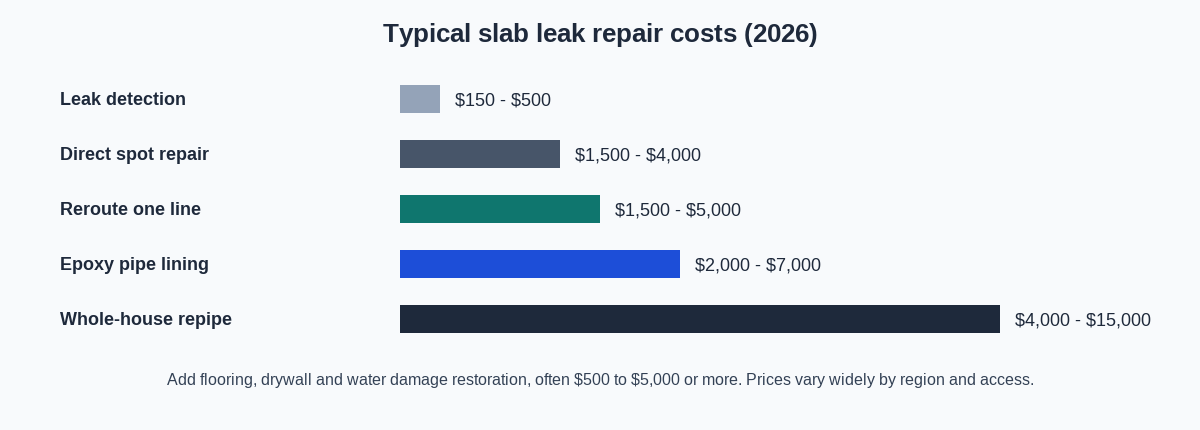
The chart above summarizes typical costs. The final price of concrete slab leak repair depends on how many leaks there are, how deep and accessible the pipe is, flooring type and local labor rates. Flooring and drywall repairs and water damage restoration often add $500 to $5,000 or more, especially with tile or hardwood floors. See concrete repair cost.
Slab Leaks in Different Climates and Soils
Slab leaks are most common in regions where slab-on-grade homes dominate: Texas, Florida, Arizona, Nevada, California and much of the Southeast. Local conditions shape the risk. In areas with expansive clay soils, such as parts of Texas and Oklahoma, seasonal swelling and shrinking move slabs and stress pipes, so a slab leak can also be both a cause and a result of foundation movement. In coastal and humid regions, aggressive groundwater and soils can corrode copper from the outside. In desert regions, very hard water can scale pipes, while some water treatment changes have been linked to pinhole leaks in copper. Local plumbers usually know which neighborhoods and building eras have the most slab leaks, which is useful information when deciding between spot repair and rerouting.
Can You Repair a Slab Leak Yourself?
Homeowners can confirm a leak with the meter test, shut off water, and handle drying and flooring work, but concrete slab leak repair itself is usually a job for professionals. Locating the leak precisely needs specialized equipment, cutting through a slab requires heavy tools and care to avoid post-tension cables and other lines, and repairs to supply and drain lines usually require a licensed plumber and sometimes a permit. Post-tensioned slabs, common in parts of the South and West, contain steel cables under very high tension; cutting one can be dangerous and expensive, so always confirm whether a slab is post-tensioned before any cutting. See post-tensioned concrete slab.
After the Repair: Checking Your Work
After any concrete slab leak repair, repeat the water meter test with everything off to confirm that the leak has stopped, and compare the next few water bills with past months. Watch the repaired area for new cracks, settling or moisture coming through the patch, and keep an eye on other parts of the house for signs of additional leaks, since homes with one slab leak in aging pipe often develop another. Keep all invoices, test results and warranty documents together for insurance, future repairs and resale.
Preventing Slab Leaks
Control water pressure. Install or adjust a pressure-reducing valve to keep household pressure around 40 to 60 psi.
Manage water chemistry. Very hard or acidic water can corrode copper. A water test and, if needed, treatment can slow pipe corrosion.
Watch the bill and meter. Check the meter periodically with everything off; a small leak caught early is far cheaper to fix.
Install leak detection. Smart water monitors and automatic shutoff valves can detect continuous flow and close the main valve, alerting you to a possible slab leak on your phone long before the water bill arrives.
Plan for repiping. In homes with aging copper under the slab and a history of leaks, proactive repiping overhead can prevent future concrete slab leak repair and floor damage.
Frequently Asked Questions
How do I know if I have a slab leak?
Watch for a higher water bill, a moving meter with all water off, warm or damp floor spots and the sound of running water. A leak detection specialist can confirm it.
How much does concrete slab leak repair cost?
Typically $1,500 to $4,000 for a direct spot repair or $1,500 to $5,000 to reroute a line, plus detection and flooring repairs.
Is a slab leak an emergency?
A large supply line leak is urgent because it wastes water and can damage flooring and the foundation quickly. Shut off the main valve if water is visible.
Is it better to reroute or repair a slab leak?
Spot repair suits a single leak in sound pipe; rerouting is often better for older pipes or repeat leaks.
How long does concrete slab leak repair take?
Detection takes a few hours, a spot repair or reroute usually one to two days, and flooring replacement and drying can add days or weeks.
Will homeowners insurance pay for a slab leak?
Many policies pay for accessing the leak and resulting water damage from a sudden leak, but not for the pipe repair itself. Check your policy.
Can a slab leak damage the foundation?
Yes. Escaping water can wash out or swell the soil under the slab, causing settlement or heaving.
Sources
- US EPA WaterSense: finding and fixing household leaks
- International Plumbing Code and International Residential Code: piping under slabs
- Copper Development Association: copper tube installation and corrosion
- Insurance Information Institute: water damage and homeowners coverage
Related Guides
- Concrete cutter — cut-off saws, Stihl models, concrete chainsaws, depths and rental
- Hydraulic concrete — hydraulic cement for leaks and concrete for dams, canals and tanks