
Concrete Block Wall Cost in 2026: Price per Square Foot for Walls, Fences and Retaining Walls
Quick Answer
The typical concrete block wall cost in 2026 is about $15 to $30 per square foot of wall face installed, according to HomeGuide, including the footing, reinforcement and rebar. Of that, materials are about $5 to $13 and labor about $10 to $17 per square foot. Block retaining walls cost more, about $20 to $35 per square foot (HomeAdvisor puts split-face retaining walls at $23 to $40). A 40 foot long, 4 foot high garden wall (160 square feet) typically runs about $2,400 to $4,800. Stucco, paint, stone veneer and extra core fill add more.
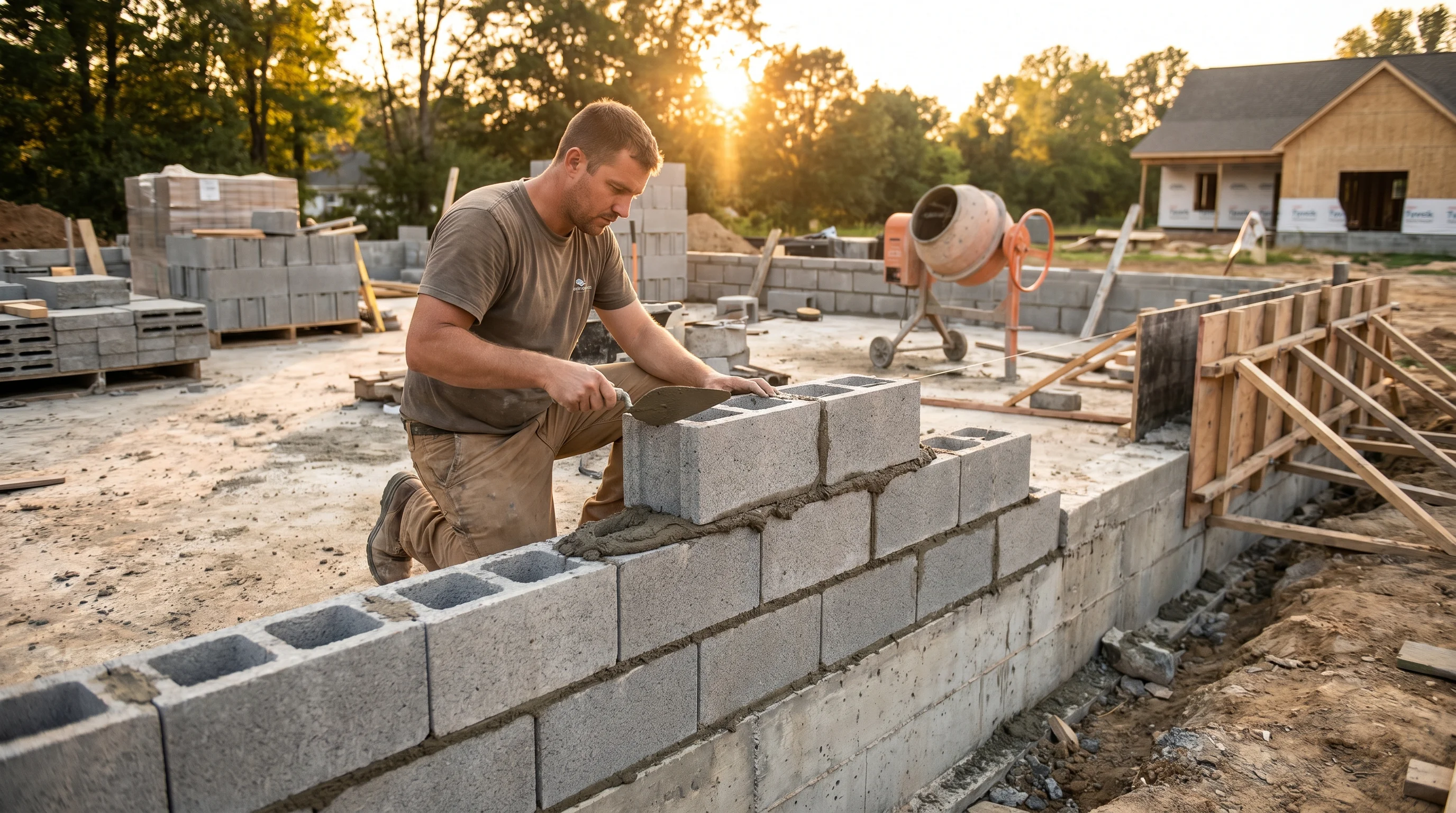
Concrete block walls, also called CMU (concrete masonry unit) or cinder block walls, are a durable, fire-resistant and relatively affordable way to build garden walls, privacy fences, retaining walls, garage and shop walls, and foundations. They are made of hollow concrete blocks laid in mortar, often reinforced with steel bars and grout in some of the cores, on top of a concrete footing.
This guide breaks down concrete block wall cost per square foot, explains what is included, compares freestanding walls, fences and retaining walls, covers footings, reinforcement and finishes, and shows how to estimate blocks and budget a project. Price ranges come from HomeGuide and HomeAdvisor, listed in the sources.
Concrete Block Wall Cost at a Glance
| Item | Typical cost per sq ft of wall face | Source |
|---|---|---|
| Block wall, installed | $15 – $30 | HomeGuide |
| Materials only | $5 – $13 | HomeGuide |
| Labor only | $10 – $17 | HomeGuide |
| Block fence | $15 – $30 | HomeGuide |
| Block retaining wall | $20 – $35 | HomeGuide |
| Split-face block retaining wall | $23 – $40 | HomeAdvisor |
Concrete Block Wall Cost by Size
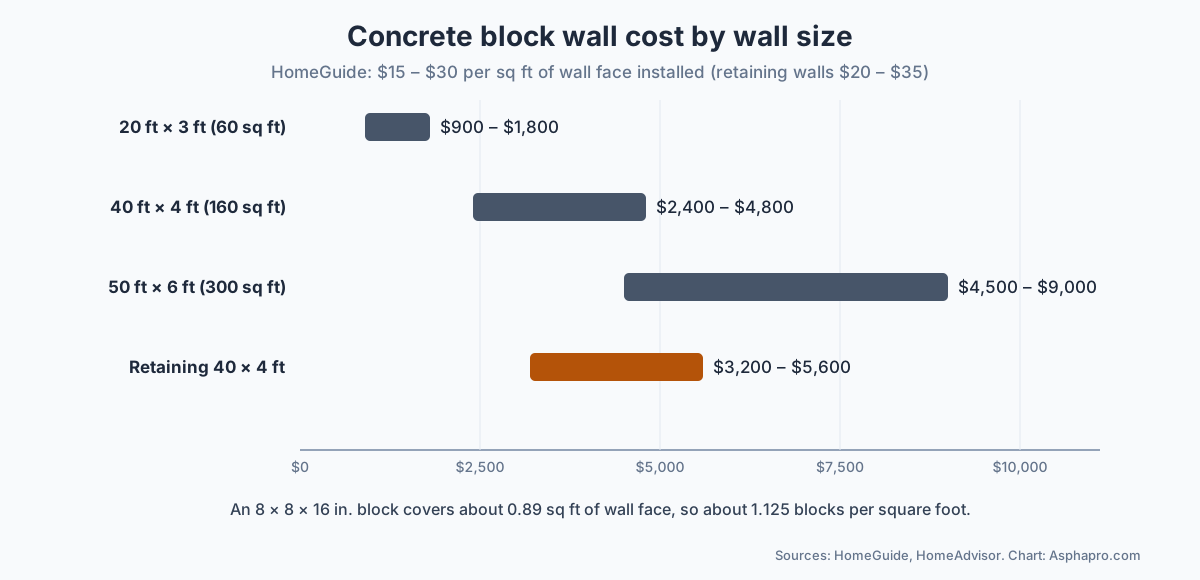
Block walls are priced by the square foot of wall face: length × height. Here are typical totals at $15 to $30 per square foot:
| Wall | Wall face (sq ft) | Blocks needed (about 1.125 per sq ft) | Installed cost |
|---|---|---|---|
| Planter wall, 20 × 2 ft | 40 | about 45 | $600 – $1,200 |
| Garden wall, 20 × 3 ft | 60 | about 68 | $900 – $1,800 |
| Garden wall, 40 × 4 ft | 160 | about 180 | $2,400 – $4,800 |
| Privacy fence, 50 × 6 ft | 300 | about 338 | $4,500 – $9,000 |
| Privacy fence, 100 × 6 ft | 600 | about 675 | $9,000 – $18,000 |
| Garage wall, 24 × 8 ft (one side) | 192 | about 216 | $2,880 – $5,760 |
Short walls often have minimum charges because the footing, mobilization and setup cost about the same for a small wall as for a larger one.
What Is Included in a Concrete Block Wall Price
Concrete block wall installation cost usually covers the footing, block, mortar, rebar and grout in the cores, and labor. Stucco, paint, caps and drainage are often priced separately.
- Footing: a continuous concrete footing, typically about twice as wide as the block, below the frost line. See concrete footing cost.
- Blocks: standard 8 × 8 × 16 inch (nominal) gray blocks, or decorative split-face, ribbed or colored units.
- Mortar: to lay each course.
- Reinforcement: vertical rebar in grouted cores at set spacing and horizontal joint reinforcement or bond beams.
- Grout: fills the cores that hold rebar; fully grouted walls cost more.
- Cap: solid cap blocks or a poured concrete cap on top.
- Drainage for retaining walls: gravel backfill and drain pipe.
- Finish: bare block, paint, stucco or veneer.
Block Fence Cost
HomeGuide puts block fences at about $15 to $30 per square foot. Block fences are common in hot, dry regions and in areas where privacy and noise reduction matter. They need a solid footing, regular pilasters or reinforced cores to resist wind, and a cap. A 6 foot high block fence along a 100 foot property line has about 600 square feet of wall face, so roughly $9,000 to $18,000. Many cities limit fence height and require permits, especially for walls over a certain height or near sidewalks.
Block Retaining Wall Cost
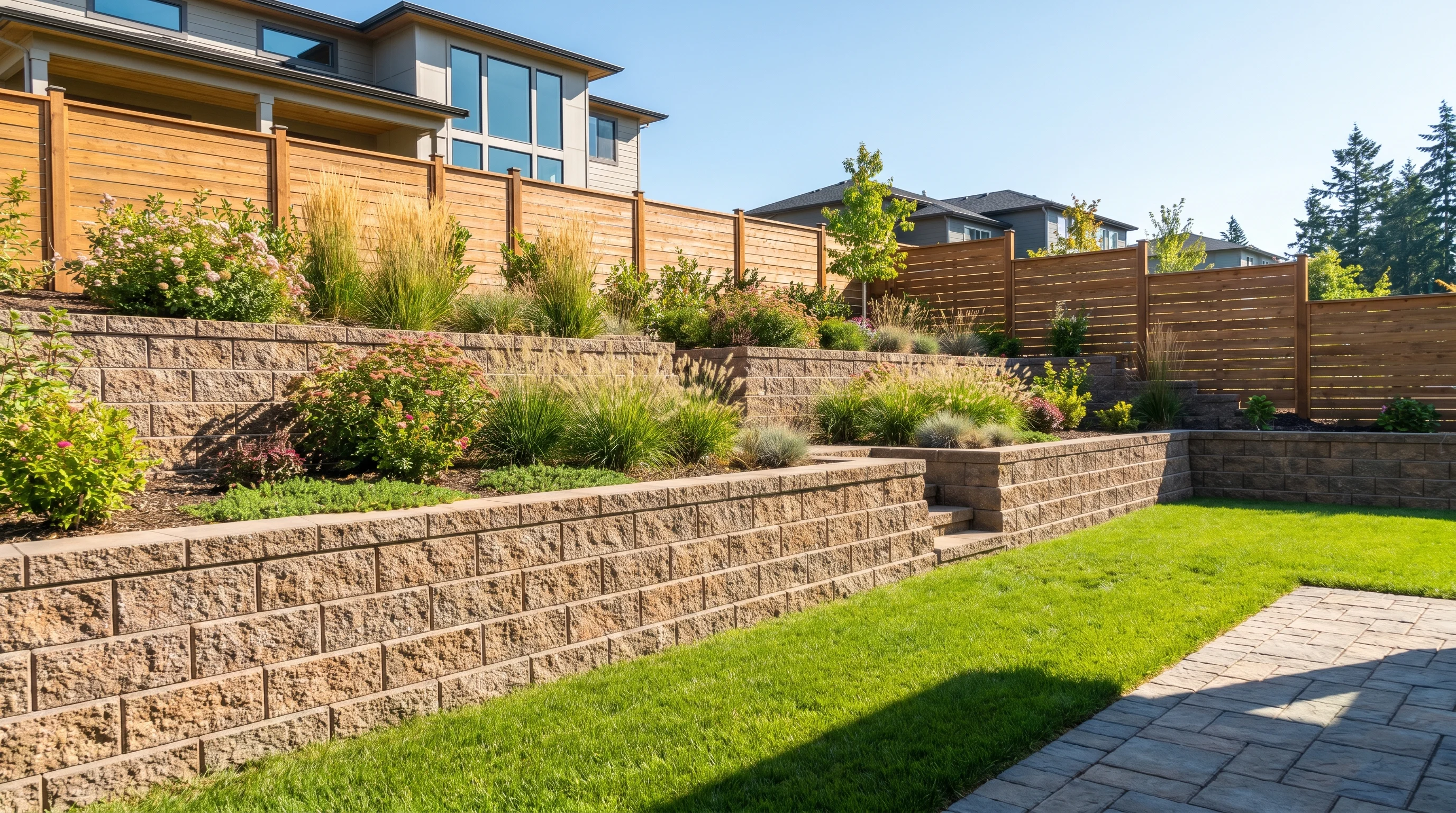
Retaining walls hold back soil, so they carry far more pressure than a garden wall. HomeGuide notes block retaining walls cost up to about 20 percent more, about $20 to $35 per square foot, and HomeAdvisor puts split-face block retaining walls at about $23 to $40. The extra cost comes from:
- Wider, heavier footings.
- More rebar and fully grouted cores.
- Gravel backfill and drainage pipe behind the wall.
- Excavation and soil hauling.
- Engineering for taller walls; many areas require an engineer above about 3 to 4 feet.
Materials vs Labor
HomeGuide breaks concrete block wall cost into about $5 to $13 per square foot for materials and $10 to $17 per square foot for labor, so labor is often more than half the price. Laying block is skilled work: every course must be level, plumb and properly bonded, and reinforcement and grout must be placed correctly. That is why DIY can save a lot on small garden walls, while structural and retaining walls are usually left to masons.
Concrete Block Wall Cost per Square Foot Explained
The $15 to $30 range in concrete block wall cost reflects how much more than blocks goes into a wall. At the low end are simple garden walls of standard gray block, a modest footing, minimal reinforcement and no finish, on easy ground. At the high end are tall fences and structural walls with deeper footings, vertical rebar and grout in many cores, bond beams, pilasters, decorative split-face block, stucco or paint, and difficult access. Retaining walls add drainage, gravel backfill and often engineering, pushing the block wall cost to about $20 to $40 per square foot. When comparing quotes, ask each mason to list footing size, block type, rebar spacing, which cores are grouted, the cap, drainage and the finish.
Concrete Block Wall Cost by Region
Masonry labor is the largest share of the price, so concrete block wall cost follows local wages and the number of masons in the area. Block construction is very common in hot, dry regions, where many contractors build block fences and competition can keep prices reasonable. In regions where block walls are less common, fewer masons may be available and prices can be higher. Deep frost lines in northern areas raise footing costs, and seismic zones require more steel and grout.
How Many Blocks Do You Need?
A standard 8 × 8 × 16 inch block (nominal, including the mortar joint) covers about 0.89 square feet of wall face, so you need about 1.125 blocks per square foot. Multiply length × height in feet, then multiply by 1.125, and add about 5 percent for cuts and breakage.
Blocks = wall length (ft) × wall height (ft) × 1.125 × 1.05
Example: a 40 × 4 foot wall is 160 square feet; 160 × 1.125 = 180 blocks, plus 5 percent, about 189 blocks. Cap blocks are counted separately, by length. See how much a concrete block weighs for hauling.
Finishes and Their Cost
- Bare block: the cheapest; fine for utility walls.
- Paint: roughly a few dollars per square foot; use masonry paint or elastomeric coating.
- Stucco: a cement plaster finish common on block fences and houses.
- Split-face or decorative block: textured block faces cost more per block but need no extra finish.
- Stone or brick veneer: the most expensive; adds weight and needs a ledge or ties.
How a Concrete Block Wall Is Built
- Plan and permit: check height limits, setbacks and whether the wall needs engineering, especially for retaining walls.
- Dig and pour the footing: a trench below the frost line, rebar, and a concrete footing with vertical dowels where cores will be reinforced.
- Lay the first course: the mason spreads mortar on the footing, sets corner blocks, strings a line, and lays the first row perfectly level. Every course above depends on it.
- Build up the corners: corners are built a few courses high and checked for level and plumb, then the wall between is filled in using a string line.
- Add reinforcement: horizontal joint reinforcement goes in mortar joints at set intervals, and bond beam blocks with horizontal rebar are used at the top or at intervals.
- Grout the cores: cores with vertical rebar are filled with grout in lifts, tying the wall to the footing.
- Cap the wall: solid cap blocks or a poured cap shed water and finish the top.
- Finish: joints are tooled, and the wall is painted, stuccoed or left bare.
A crew of two or three masons can lay a few hundred blocks a day on a straight, simple wall, which is why wall length and complexity drive the labor share of concrete block wall cost.
Types of Concrete Blocks
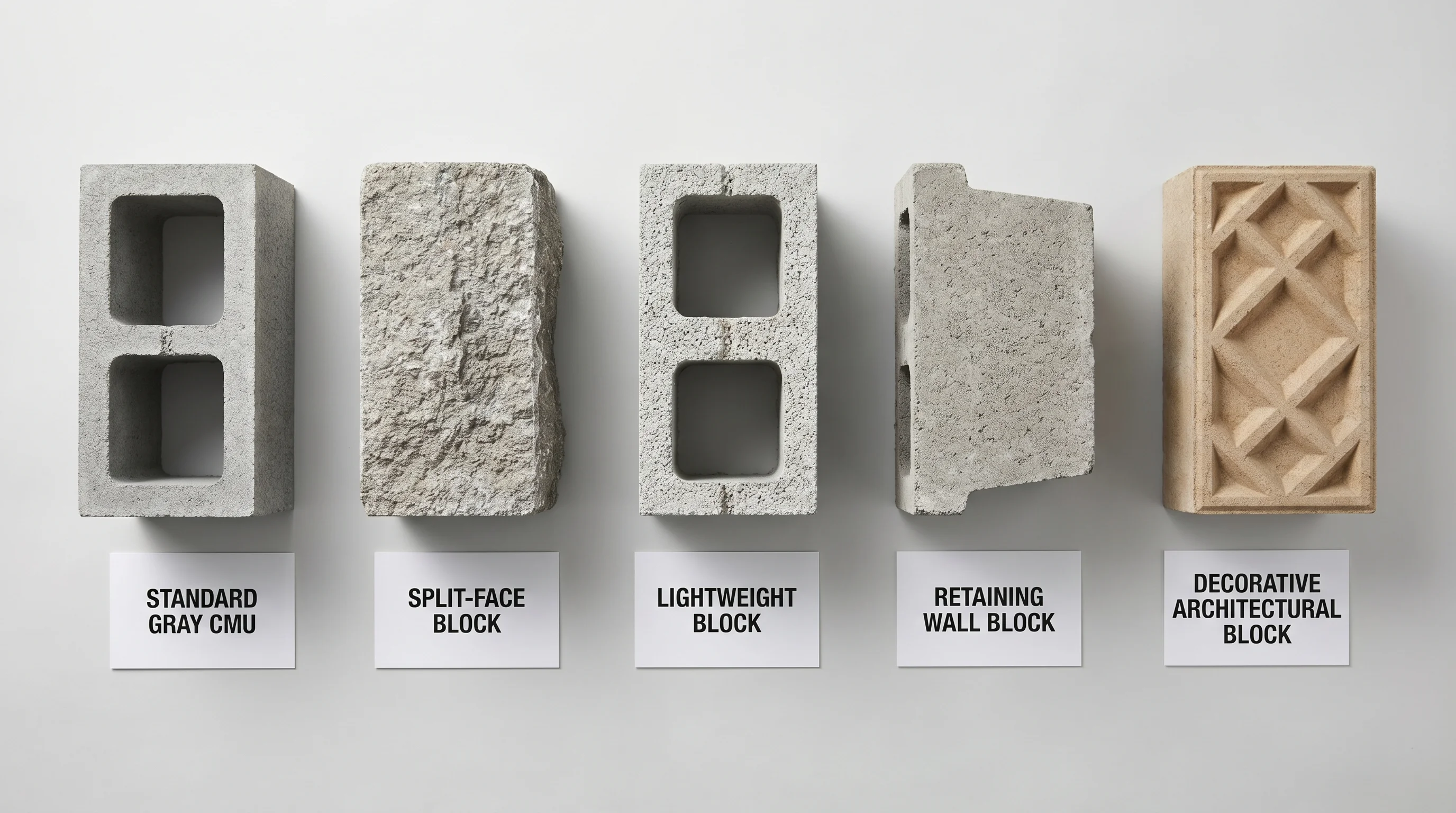
- Standard stretcher block: the common gray 8 × 8 × 16 inch hollow block.
- Corner and end blocks: with finished ends for corners and openings.
- Bond beam blocks: with a channel for horizontal rebar and grout.
- Lightweight blocks: made with lighter aggregate; easier to lift.
- Split-face and ribbed blocks: decorative textured faces; cost more per block.
- Cap blocks: solid tops for the wall.
- Pilaster blocks: for thicker columns that stiffen long fences.
- Segmental retaining wall blocks: dry-stacked interlocking units for landscape walls; a different system from mortared CMU.
For more on block types, see cinder block vs concrete block.
Reinforcement and Grout
Unreinforced block walls are weak against sideways forces such as wind, soil pressure and earthquakes. Most code-compliant block walls have vertical rebar in some cores, often at spacing set by the plans or local code, with those cores filled with grout. Horizontal reinforcement in joints and bond beams ties the wall together lengthwise. Retaining walls and seismic areas usually require more steel and sometimes fully grouted walls. Grouting more cores adds materials and labor, which is one reason retaining walls cost more than garden walls. Cores are not usually filled with regular concrete mix; masonry grout is designed to flow into the narrow cells.
Block Wall vs Other Wall Options
| Wall type | Pros | Cons |
|---|---|---|
| Concrete block wall | Durable, fire-resistant, no large forms, flexible layout | Plain look unless finished; labor-heavy |
| Poured concrete wall | Strong, fast on long runs, monolithic | Needs forms and a pump or truck access |
| Brick wall | Classic look | Usually more labor and cost |
| Segmental retaining blocks | Dry-stacked, DIY-friendly for low walls | Height limits without geogrid and engineering |
| Wood or vinyl fence | Cheaper upfront | Shorter life, less privacy and sound blocking |
Permits and Height Limits
Many towns allow low garden walls without a permit but require permits for fences above a certain height, walls near property lines or sidewalks, and retaining walls above a certain height, often around 3 to 4 feet. Taller retaining walls frequently need engineered designs. HOAs may also limit materials and colors. Check before you buy blocks; changing a wall after it is built is expensive.
Building a Low Garden Wall Yourself
A low, freestanding garden or planter wall, two or three courses high, is a good DIY masonry project. Pour a small footing, lay the first course in mortar using a string line and level, stagger joints in a running bond, and finish with cap blocks. Mix mortar in small batches, keep joints consistent, and check level and plumb every few blocks. DIY saves the labor share, which HomeGuide puts at about $10 to $17 per square foot. Retaining walls, tall fences and walls supporting structures should be built by professionals.
Drainage for Block Retaining Walls
Water pressure behind a retaining wall is one of the main reasons walls lean and crack. A proper block retaining wall has free-draining gravel directly behind the wall, a perforated drain pipe at the base that carries water away, weep holes in some designs, and filter fabric to keep soil out of the gravel. Skipping drainage can turn a sound wall into a failing one within a few years, and repairs cost far more than doing it right.
Block Foundation and Garage Walls
Concrete block is widely used for basement and crawl-space foundation walls, garage walls and shop buildings. Foundation walls must resist soil pressure and water, so they need proper footings, reinforcement as required by code or plans, waterproofing or damp-proofing on the outside, and drainage at the footing. Garage and shop walls carry roof loads and often need bond beams at the top, anchor bolts for the roof structure, and openings with lintels over doors and windows. These structural walls cost more per square foot than garden walls and must be inspected. See concrete footing cost for the footings that support them.
Hidden Costs in a Block Wall Quote
- Removing an old wall or fence before building.
- Excavation on slopes and stepped footings.
- Engineering and permits for retaining walls and tall fences.
- Gates and openings with steel lintels or posts.
- Extra grout and rebar required by code.
- Finishes such as stucco, paint or veneer.
- Utility conflicts along property lines.
Concrete Block Wall vs Segmental Retaining Blocks
For landscape retaining walls, many homeowners compare a mortared concrete block wall with a segmental retaining wall made of dry-stacked interlocking blocks. Segmental walls do not use mortar or grout; each block locks into the one below with a lip or pins, and the wall leans slightly back into the slope. They are easier for DIY on low walls, flexible enough to tolerate small movement, and come in many decorative faces. Taller segmental walls need layers of geogrid reinforcement extending into the soil behind the wall, and usually engineering. Mortared block walls with rebar and grout can be built more vertically and take up less space, and they can be finished with stucco or veneer, but they need a solid concrete footing and skilled masons. For a short garden retaining wall, segmental blocks are often cheaper; for a tall wall near a property line or structure, an engineered block retaining wall may be the better solution.
Painting and Sealing Block Walls
Concrete block is porous, so paint needs a masonry primer or block filler first to fill pores and give an even finish. Elastomeric coatings are popular because they stretch over hairline cracks and resist water. A clear water-repellent sealer can protect bare split-face or decorative block without changing its look much. Painting adds a few dollars per square foot when done by a painter, plus periodic repainting. Stucco gives a smooth, house-like finish and is common on block fences in warm climates.
Ways to Save on Concrete Block Wall Cost
- Keep walls straight: curves, corners and steps add cutting and labor.
- Use standard block and add color with paint or stucco later if needed.
- Stay under engineering heights for retaining walls by terracing into two shorter walls where practical.
- Do the demolition and site cleanup yourself if the mason agrees.
- Build in cooler months when masons may have more availability.
- Get several quotes with the same footing, reinforcement and finish.
Block Wall Safety and Common Failures
Block walls fail in a few predictable ways. Freestanding walls without enough footing or reinforcement can lean or topple in strong wind, especially tall fences. Retaining walls without drainage bow outward as water pressure builds. Walls on shallow footings in cold climates crack in a stair-step pattern as frost lifts them. Uncapped walls let water into the cores, which freezes and cracks blocks. Most of these problems come from skipping parts of the system to save money. If an existing block wall leans, bulges or has wide stair-step cracks, have it inspected; replacing a failing wall is safer than waiting for it to fall.
Timeline for a Block Wall Project
For a typical garden wall or fence, expect a day or two for layout, excavation and the footing, a short cure before laying block, then a few days of block laying depending on length and height, plus a day for grouting and capping. Stucco or paint follows after the mortar and grout have cured. Retaining walls take longer because of excavation, drainage and backfill. Permits and inspections can add time before and during the work.
Weather and Block Laying
Mortar and grout cure best in mild weather. In hot, dry, windy conditions, masons dampen blocks and protect fresh work from drying too fast; in cold weather, they use heated materials, blankets and enclosures, or wait. Mortar must not freeze before it gains strength. Rain can wash mortar out of fresh joints, so walls under construction are covered at night. Weather delays can stretch the schedule but protect the quality of the wall.
Hiring a Mason
Look for a licensed masonry contractor with experience in the type of wall you need: garden walls, block fences, retaining walls or structural walls. Ask for photos and addresses of past work, and check how walls built several years ago look today. Get written quotes that list footing size, block type, reinforcement, grout, cap, drainage, finish and cleanup, and ask who handles permits and inspections.
Questions to ask
- How deep and wide will the footing be?
- How far apart will vertical rebar be, and which cores will be grouted?
- What drainage will you install behind a retaining wall?
- Is engineering required, and who provides it?
- What finish is included, and what does it cost to add stucco or paint?
Maintenance and Lifespan
A well-built block wall can last for decades. Keep water from pooling at the base, repoint cracked mortar joints, reseal or repaint as needed, and watch retaining walls for leaning or new cracks. Efflorescence, a white powder on the surface, comes from moisture moving through the block and can be brushed or cleaned off once the moisture source is reduced.
Three Concrete Block Wall Cost Examples
Planter wall
A 30 foot, 2 foot high planter wall (60 square feet) with cap blocks, built by a mason at about $20 per square foot: about $1,200.
Privacy block fence
A 6 foot high, 80 foot long block fence (480 square feet) with stucco finish and pilasters at about $25 per square foot: about $12,000.
Backyard retaining wall
A 4 foot high, 40 foot long retaining wall (160 square feet) with drainage and fully grouted cores at about $30 per square foot: about $4,800.
Frequently Asked Questions
How much does a concrete block wall cost?
About $15 to $30 per square foot of wall face installed, according to HomeGuide, including footing and reinforcement.
How much does a block retaining wall cost?
About $20 to $35 per square foot according to HomeGuide, and $23 to $40 for split-face block according to HomeAdvisor.
How many blocks are in a square foot of wall?
About 1.125 standard 8 × 8 × 16 inch blocks per square foot of wall face.
Is a block wall cheaper than a poured concrete wall?
It depends on size and region. Block walls avoid large forms and are often cheaper for small walls; poured walls can be faster and cheaper for long foundation walls.
Do block walls need a footing?
Yes. Block walls need a continuous concrete footing below the frost line, sized for the wall and soil.
How much does a 6 foot block fence cost?
At $15 to $30 per square foot, a 6 foot high block fence costs about $90 to $180 per linear foot, so about $9,000 to $18,000 for 100 feet.
How long does a concrete block wall last?
Many decades, often longer than the house itself, when built on a proper footing with reinforcement, drainage and a good cap, and maintained with occasional repointing.
Does a block wall need rebar?
Most structural block walls, fences and retaining walls do. Low garden walls may need little or none. Follow local code and plans.
What is the cinder block wall cost compared with a poured wall?
For small walls and fences, a block wall is often cheaper because it needs no large forms. For long foundation walls, poured concrete can be competitive or cheaper. Compare local quotes for both.
Is a block wall good for noise?
Yes. Solid, grouted concrete block walls and block fences block much more sound than wood or vinyl fences, which is one reason they are popular along busy roads and between close neighbors in dense neighborhoods.
What is included in the concrete block wall cost from HomeGuide?
HomeGuide's $15 to $30 per square foot range includes the foundation, reinforcement and rebar. Finishes such as stucco or paint are usually extra and priced separately by most masons.
How many blocks for a 4 foot wall?
About 4.5 standard blocks per linear foot of wall (4 feet × 1.125), so about 180 blocks for a 40 foot long, 4 foot high wall, plus about 5 percent extra.
How much does stucco add to a block wall?
Stucco adds labor and materials on top of the wall price. Ask for it as a separate line item so you can compare quotes.
Can I build a block wall myself?
Low garden walls are a realistic DIY project. Tall fences, retaining walls and structural walls are best left to masons and may need permits and engineering.
Sources
- HomeGuide, "How much does a cinder block wall cost?" homeguide.com
- HomeAdvisor, "How much do cinder block walls cost?" homeadvisor.com
- HomeAdvisor, "How much do split-face CMU blocks cost?" homeadvisor.com
- Standard masonry estimating for 8 × 8 × 16 in. CMU (blocks per square foot).
- Image credits: images and chart by Asphapro.com.
Prices checked November 2026. They are national ranges; local prices can be higher or lower.
Related Guides
- Insulated concrete forms cost — ICF wall prices
- Can mold grow on concrete? — what kills it and drying a cellar
- How to get concrete splash off bricks — fresh splatter, lumps and haze
- Types of concrete anchors — plugs, screws, wedge and epoxy
- Mortar vs concrete — differences and which to use
- Can concrete burn? — fire resistance and heat damage
- Can rats chew through concrete? — rodent entry points and termites