
Inground Hot Tub Cost: What You Will Pay for a Built-In Spa
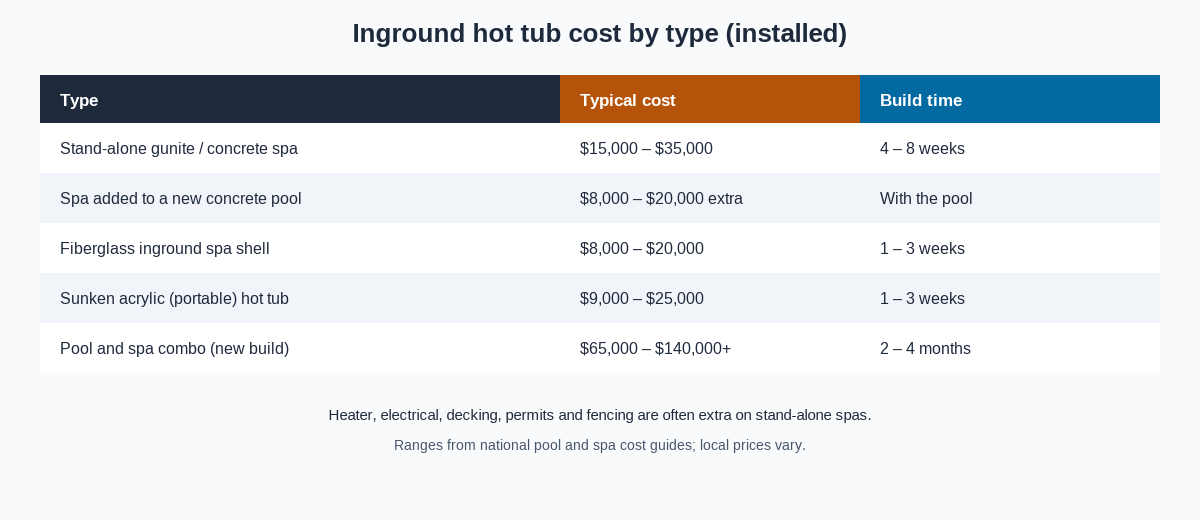
Chart: Asphapro.com
Quick Answer
The typical inground hot tub cost is about $15,000 to $35,000 for a stand-alone gunite or concrete spa, and about $8,000 to $20,000 extra when the spa is built at the same time as a new concrete pool. A fiberglass inground spa costs about $8,000 to $20,000 installed, and sinking a portable acrylic hot tub into the ground or a deck costs about $9,000 to $25,000 including the tub. The inground pool hot tub combo cost for a new build usually runs $65,000 to $140,000 or more. Heating an inground spa costs about $20 to $250 a month, depending on how often it is kept hot.
An inground hot tub, also called an inground spa or built-in spa, sits flush with or slightly above the deck, giving a clean, custom look that a portable tub cannot match. It can be a stand-alone feature in the yard, a raised spa spilling into a pool, or a sunken tub set into a deck or patio. Because it is built on site and tied into permanent plumbing and electrical, the cost of inground hot tub projects is higher than buying a portable tub, but so is the design freedom.
This guide breaks down in ground hot tub cost by type, explains what drives the price, and compares the running costs with a portable tub. For portable tubs, see our guide to hot tub cost, and for deck ideas, our hot tub deck ideas.
In Ground Hot Tub Cost by Type
Stand-alone gunite or concrete spa. A custom spa built from steel and sprayed concrete, finished with plaster, pebble or tile, typically 7 to 9 feet across with built-in seats and jets. It can be any shape and is very durable. The in ground hot tub cost for this type is usually $15,000 to $35,000, more for large spas, all-tile interiors or water features.
Spa added to a new concrete pool. When the spa is built with the pool, it shares excavation, equipment pad, plumbing runs, heater and crews, which lowers the added cost to about $8,000 to $20,000. Many combos use a raised spa that spills water into the pool, creating a waterfall effect.
Fiberglass inground spa. A factory-made fiberglass shell set in the ground, with a smooth gel coat finish and molded seats. Installation is quick and the surface is easy to clean. Costs typically run $8,000 to $20,000 including the shell, plumbing and basic equipment.
Sunken portable hot tub. Some owners set a standard acrylic hot tub into the ground or a raised deck for a built-in look. You pay for the tub ($5,000 to $15,000), plus excavation, a drained gravel base or concrete vault, access for service panels and decking. The total cost is usually $9,000 to $25,000. Service access is critical, since portable tubs have equipment inside the cabinet.
Vinyl spa. Rare as a stand-alone feature, vinyl spas are sometimes built with vinyl pools at a lower cost, but liners in hot water wear faster.
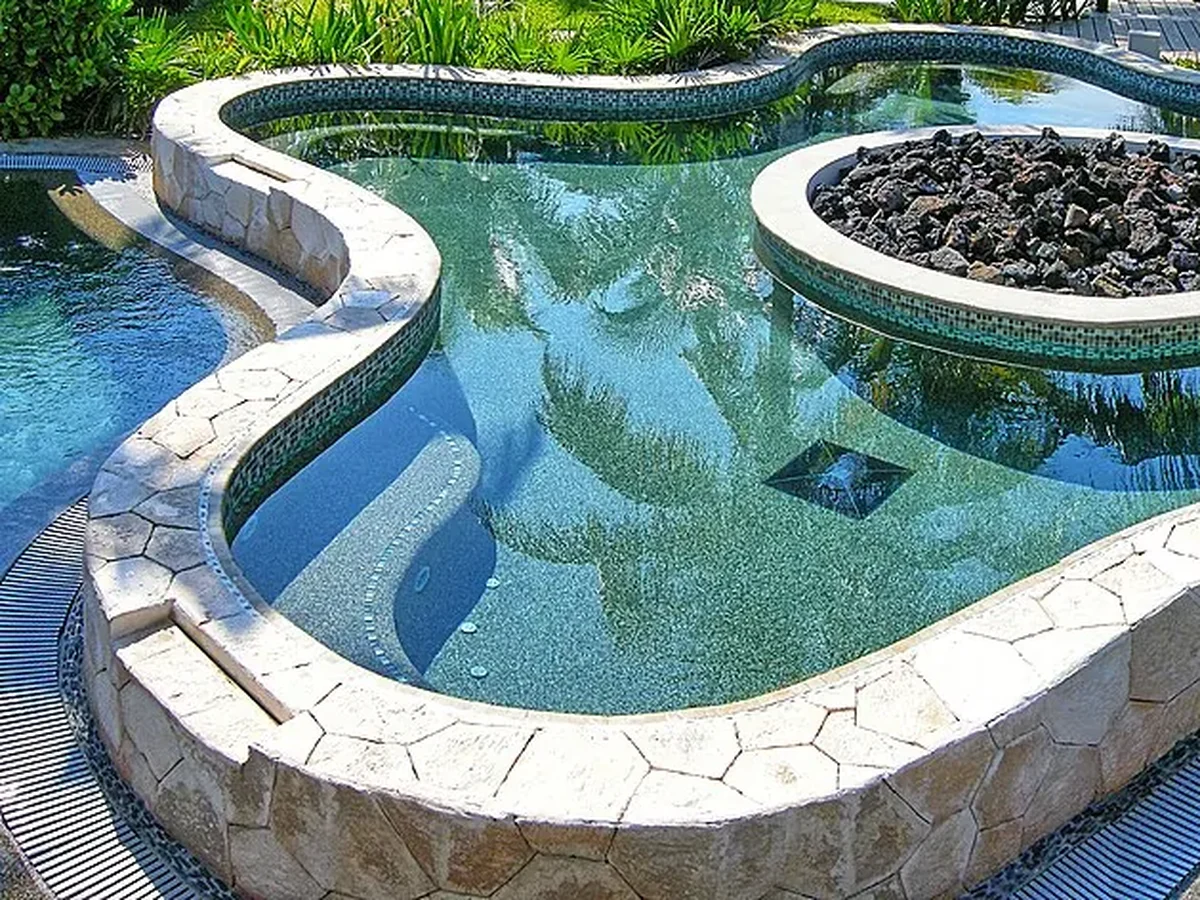
Photo: Kirt Edblom, Wikimedia Commons, CC BY-SA 2.0
Cost of Inground Hot Tub: Line-by-Line Breakdown
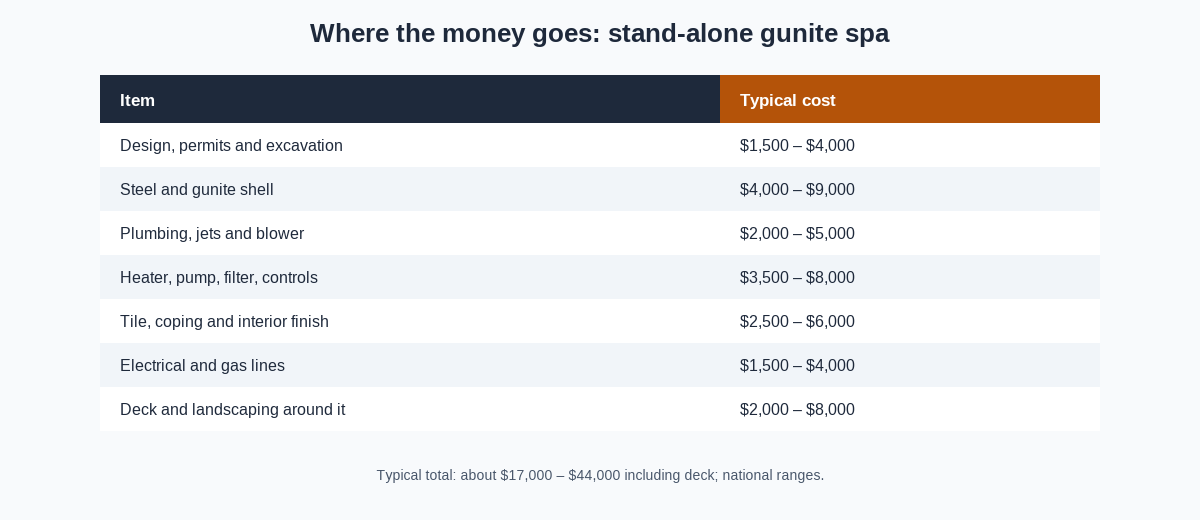
Chart: Asphapro.com
For a stand-alone gunite spa about 8 by 8 feet, design, permits and excavation cost about $1,500 to $4,000. The steel and gunite shell costs about $4,000 to $9,000. Plumbing, jets and an air blower add $2,000 to $5,000. The heater, pump, filter and controls cost $3,500 to $8,000. Tile, coping and the interior finish add $2,500 to $6,000. Electrical and gas lines cost $1,500 to $4,000, more if the run from the house is long. Decking and landscaping around the spa add $2,000 to $8,000. All together, the cost of inground hot tub projects like this often lands around $17,000 to $44,000 including the deck.
Inground Pool Hot Tub Combo Cost
The inground pool hot tub combo cost depends mostly on the pool. A concrete pool with a built-in spa typically costs $65,000 to $140,000 or more, depending on size, finishes, decking and features. A fiberglass pool with a matching fiberglass spa often runs $60,000 to $110,000. Building the spa at the same time as the pool is the most cost-effective approach, since the spa shares excavation, steel, gunite, plumbing trenches, the equipment pad and the heater. Adding a spa to an existing pool later usually costs more, often $15,000 to $35,000, because the crew must cut into the deck, tie into existing plumbing and match finishes.
Common combo designs include a raised spa that spills into the pool, a spa set at one end of the pool sharing a wall, and a spa beside a tanning ledge. Because the spa and pool usually share equipment, valves switch the water between spa mode and pool mode, and the heater warms the smaller spa volume quickly.
What Drives Inground Hot Tub Cost
Size and seating. Spas range from compact two-person designs to large 10-person spas. Each extra seat adds shell, plumbing and jets, raising the inground hot tub cost.
Shape and height. Round and square spas are simplest. Freeform shapes, raised walls with spillways, and spas set above the deck with stone veneer add steel, masonry and labor.
Jets and features. More jets need more plumbing and sometimes a second pump. An air blower, lighting, a fire bowl or a waterfall each adds cost.
Finishes. Plaster is the lowest-cost interior. Quartz and pebble finishes cost more but last longer. Full tile, especially glass mosaic, is the most expensive but very durable and striking.
Heating. A gas heater heats a spa fast, from cold to 102°F in under an hour for small spas, but costs more to run. Heat pumps are cheaper to run in mild weather but heat slowly. Many owners use gas for quick spa heating and a heat pump for the pool.
Site and utilities. Long gas and electrical runs, tight access, rock and poor soil increase costs. A spa near the house and existing utilities costs less to connect.
Location. Labor and material prices vary by region, and some areas require more engineering or inspections.
Inground Hot Tub Cost to Run Each Month
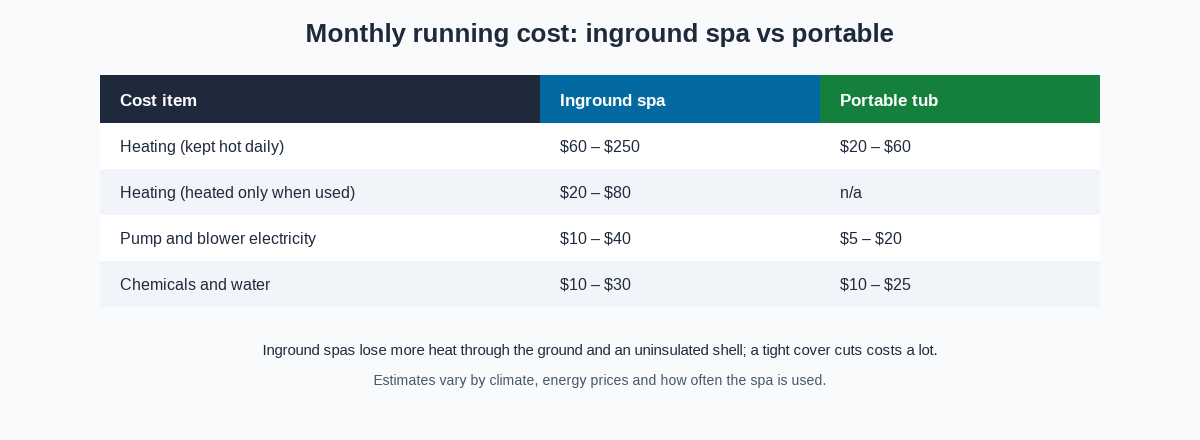
Chart: Asphapro.com
Beyond the build price, plan for monthly running costs. Inground spas lose heat through the ground and an uninsulated shell, so keeping one hot all the time can cost $60 to $250 a month in heating, much more than a well-insulated portable tub at $20 to $60. Many inground spa owners instead heat the spa only when they plan to use it, which costs about $20 to $80 a month for a few uses a week. A tight, insulated spa cover cuts heat loss sharply. Pump and blower electricity adds $10 to $40 a month, and chemicals and water another $10 to $30. When the spa shares equipment with a pool, its running costs are often folded into the pool budget.
Inground Hot Tub Cost vs a Portable Tub
Portable hot tubs cost less up front, often $5,000 to $15,000 delivered and connected, install in a day or two, and are cheaper to heat thanks to thick foam insulation. They can be moved or sold. Inground spas cost more, take weeks to build and cost more to heat, but they last longer as structures, can be any shape or size, blend into the landscape, and pair with a pool. For many owners the choice is about style and permanence: a built-in spa becomes part of the home, while a portable tub is more like an appliance.
Permits, Safety and Inground Hot Tub Cost
Inground spas need building permits in almost all areas, along with electrical permits for the bonding, lighting and equipment, and gas permits for heaters. Most codes require a barrier around spas just as for pools, though a lockable safety cover may meet the rule for spas in some areas. Drain covers must meet anti-entrapment standards, and many codes require a dual drain or safety vacuum release system. Water temperature controls should keep the spa at or below 104°F. Budget for permit fees and inspections in the inground hot tub cost.
How Long an Inground Hot Tub Takes to Build
A stand-alone gunite spa usually takes four to eight weeks from excavation to filling, since the shell must cure and each stage needs inspection. Spas built with a new pool follow the pool's timeline, often two to four months. Fiberglass spas and sunken portable tubs can be finished in one to three weeks once permits are approved, plus time for decking.
Ways to Save on In Ground Hot Tub Cost
The best way to save is to build the spa at the same time as a pool, which can cut the in ground hot tub cost by half compared with a stand-alone spa. Keep the shape simple and the size modest, with seats for the number of people who will really use it. Choose a quartz or plaster finish with tile only at the waterline. Place the spa close to the house and utilities. Consider a fiberglass spa shell, which is faster and cheaper to install than custom gunite. If you mainly want hydrotherapy and do not need a built-in look, a quality portable tub set into a deck may give most of the benefits for less.
Upkeep and the Long-Term Cost of Inground Hot Tub Ownership
Spa water is hot and used by several people in a small volume, so it needs close attention. Test sanitizer and pH several times a week, keep free chlorine about 3 to 5 ppm or use bromine, and shock after heavy use. Drain and refill a stand-alone spa every three to four months to reset dissolved solids, unless it shares water with a pool. Keep the cover on when not in use, clean filters regularly, and check jets and lights each season. Plaster spas may need resurfacing every 10 to 15 years; tile and pebble last longer.
Inground Hot Tub Cost Examples
Example 1: stand-alone gunite spa. A homeowner builds an 8 x 8 foot gunite spa near the back patio with six seats, 12 jets, a gas heater, LED lighting, pebble finish and tile at the waterline. The spa shell, plumbing and equipment cost $24,000, the gas and electrical runs $3,000, and a small paver deck $4,000. The total inground hot tub cost is about $31,000.
Example 2: spa with a new pool. A family adds a raised spa to a new 16 x 32 foot concrete pool. The pool alone is quoted at $70,000; the spa adds $15,000, since it shares the equipment pad, heater and excavation. The inground pool hot tub combo cost, including a travertine deck and fence, comes to about $105,000.
Example 3: fiberglass spa. An owner installs a 7-foot fiberglass spa shell beside an existing patio. The shell and installation cost $9,500, equipment $5,000, electrical $2,000, and pavers around it $2,500. The total is about $19,000.
Example 4: sunken portable tub. A buyer purchases a $9,000 acrylic hot tub and sets it into a new composite deck with a removable panel for service access. The deck section and footings cost $6,000 and the electrical $1,500, for a total of about $16,500.
Adding a Spa to an Existing Pool
Adding a spa to a pool that is already built is possible but costs more than building both together. The crew must cut the deck, dig beside the pool, build the spa shell, run new plumbing back to the equipment pad, often add a heater and valves, and repair the deck and coping around the new spa. Matching the existing finish and tile can be difficult. Expect the cost of inground hot tub additions to existing pools to run about $15,000 to $35,000. In some cases, a sunken portable tub or a fiberglass spa next to the pool is a more affordable way to get a similar experience.
Features That Add to Inground Hot Tub Cost
Popular upgrades include a spillover edge into the pool ($1,500 to $5,000), extra jet seats and a second pump ($1,500 to $4,000), an air blower ($500 to $1,500), color LED lighting ($800 to $2,500), automation with phone control ($1,500 to $4,000), a fire feature beside the spa ($2,000 to $8,000), stone veneer on raised walls ($2,000 to $6,000), and an automatic or hard spa cover ($500 to $3,000). Each can be worthwhile on its own, but adding several can raise the inground hot tub cost by $10,000 or more.
Questions to Ask Spa Builders
When getting quotes, ask each builder what the price includes: shell, plumbing, jets, blower, heater, pump, filter, controls, interior finish, tile, coping, electrical, gas, permits and decking. Ask how many seats and jets are included, what heater size they recommend and how long it takes to heat, and whether the spa will be insulated or covered. For combos, ask how the spa and pool share equipment and whether the spa can be heated without heating the pool. Ask about warranties on the shell, finish and equipment, and to see spas they built several years ago. Clear answers make it much easier to compare in ground hot tub cost quotes on equal terms.
Financing an Inground Spa
Many owners finance an inground spa as part of a pool project or on its own. Options include pool loans, home equity loans and lines of credit, and builder financing. A $30,000 spa financed at 9% over 10 years costs about $380 a month. For financing options and a payment calculator, see our guide on how to finance a pool.
Where to Place an Inground Spa
Placement affects both enjoyment and inground hot tub cost. A spa close to the back door gets used more, especially in cold weather, and costs less to connect to gas and power. A spa next to the pool lets people move between hot and cool water and can share equipment. Privacy matters: screen the spa from neighbors with plantings, walls or a pergola. Think about views from the spa, wind direction, and where steam and splash will go. Leave room around the spa for a step, a towel hook and a safe walkway, and plan where the cover will go when the spa is open.
Interior Finish Options and Their Cost
The interior finish changes both the look and the long-term cost of inground hot tub ownership. White or colored plaster is the lowest-cost option but may need resurfacing in 10 to 15 years, sooner in hot spa water. Quartz finishes add color and durability for a moderate extra cost. Pebble finishes are tougher still and can last 15 to 25 years, with a textured surface that some love and others find rough. Full tile is the most durable and luxurious, often lasting decades, but costs the most up front. Many owners choose pebble for the spa and plaster for the pool to balance cost and durability.
Energy-Saving Tips for Inground Spas
Because inground spas lose more heat than portable tubs, energy savings matter. Use a thick, well-fitted insulated cover every time the spa is not in use. Heat the spa only when you plan to use it, rather than keeping it hot all week. Consider a heat pump for steady heating in mild climates and a gas heater for quick boosts. Insulate exposed plumbing and keep the spa sheltered from wind. Use a variable-speed pump at low speed for filtration. In combos, isolate the spa so you are not heating the whole pool when you only want the spa. These steps can cut monthly running costs by half or more.
Does an Inground Spa Add Home Value?
A well-built inground spa can add appeal, especially as part of a pool and spa combo in warm markets where buyers expect outdoor living features. A stand-alone spa may add less value than its cost, much like pools, and some buyers see it as extra upkeep. A portable tub usually adds no value since it can be removed. As with any major backyard feature, build an inground spa mainly for your own enjoyment. See our guide on how much value does a pool add to a home.
Common Mistakes That Raise Inground Hot Tub Cost
Several mistakes push the cost of inground hot tub projects up. Building the spa after the pool instead of with it can double the added cost. Choosing an undersized heater means long waits and high bills. Skipping a good cover wastes energy every day. Placing the spa far from the house and utilities adds long trenches. Overloading the design with features you rarely use adds thousands. Leaving no service access for a sunken portable tub leads to costly repairs later. Planning carefully with your builder, before any digging starts, avoids most of these problems and keeps the budget on track.
Inground Hot Tub Cost by Region
Where you live changes the inground hot tub cost. In warm markets with many pool builders, such as Florida, Texas, Arizona and California, competition can keep spa prices moderate, though labor costs in coastal California are high. In the Northeast and Midwest, short building seasons and freeze-protection needs can push prices up, and spas must be built to handle winter. Rural areas may have fewer builders and higher travel charges. Getting three local quotes is the best way to see the real in ground hot tub cost in your area.
Planning Your Inground Spa Budget
To plan a realistic budget, start with the base spa quote, then add the heater, electrical and gas runs, decking, a barrier or cover, permits and a contingency of 10% to 15% for surprises such as rock or long utility runs. Add a yearly running budget for heating, power and chemicals, and set aside money for future finish and equipment replacements. Comparing this full picture with the cost of a quality portable tub helps you decide whether an inground spa is the right fit for your home, your budget and how often you expect to use it through the year.
Who Builds Inground Spas
Most inground spas are built by pool contractors, since the work uses the same excavation, steel, gunite, plumbing and finishing trades as a pool. Some landscape and hardscape firms build spas as part of larger outdoor living projects, working with pool subcontractors. For fiberglass spas, look for dealers who install the brand they sell. For sunken portable tubs, a hot tub dealer and a deck builder often work together. Whoever you hire, check licensing, insurance, reviews and past spa work before you sign a contract.
Inground Hot Tub Cost: Key Points
- Stand-alone gunite spas cost about $15,000 to $35,000.
- A spa built with a new pool adds about $8,000 to $20,000.
- Fiberglass spas cost $8,000 to $20,000; sunken portable tubs $9,000 to $25,000.
- Inground spas cost more to heat than insulated portable tubs.
Frequently Asked Questions
Is an inground hot tub worth it?
For owners who want a permanent, custom look or a pool and spa combo, often yes. Portable tubs cost less to buy and run, so compare the full inground hot tub cost, including heating, before deciding.
How long does an inground spa last?
The shell can last decades. Finishes need renewal every 10 to 15 years, and equipment every 8 to 15 years, depending on water chemistry and how often the spa is used.
What is the cheapest way to get an inground hot tub?
A fiberglass spa shell or a portable tub sunk into a deck usually costs the least, about $9,000 to $20,000. Building the spa together with a new pool is the cheapest way to get a custom gunite spa.
How much does it cost to heat an inground spa?
About $20 to $80 a month if heated only when used, and $60 to $250 a month if kept hot all the time, depending on climate and energy prices. A good cover is the single biggest saver.
Does the inground pool hot tub combo cost include a heater?
Often, since a spa needs a heater to be useful, but always confirm. Some quotes list the heater as an option, which can add $2,500 to $6,000 to the total.
Sources
- HomeGuide: Inground hot tub cost
- US Department of Energy: Heating your swimming pool
- CPSC: Pool and spa safety
- ICC: International Swimming Pool and Spa Code