
How Much Value Does a Pool Add to a Home?
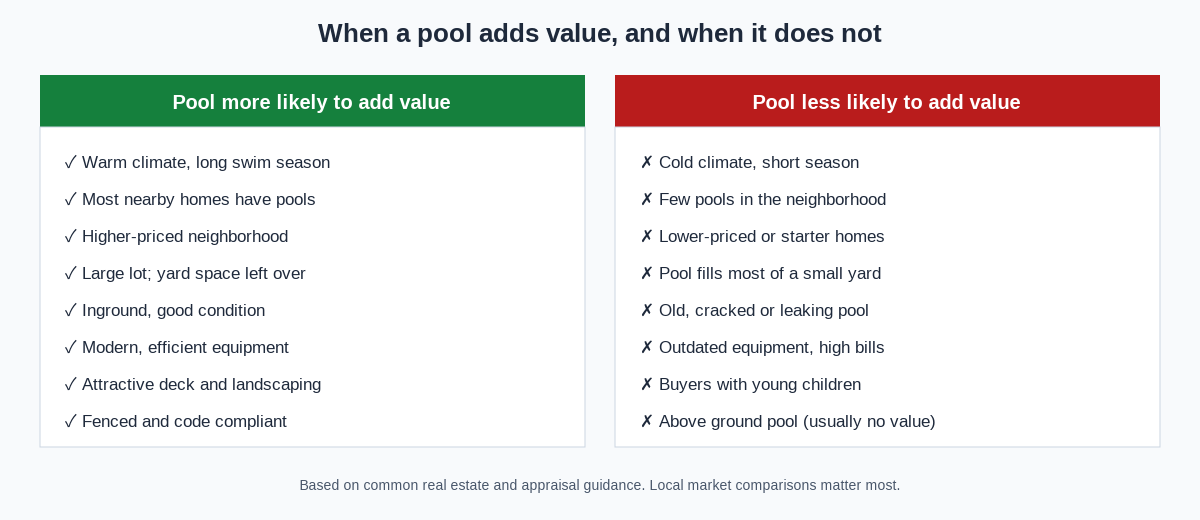
Chart: Asphapro.com
Quick Answer
How much value does a pool add to a home? In warm climates and higher-priced neighborhoods where many homes have pools, an inground pool in good condition often adds roughly 5% to 8% to a home's value. In cold climates, modest neighborhoods or small yards, a pool may add little or nothing, and some buyers see it as a cost or a safety risk. A pool almost never recovers its full cost: a $60,000 pool might add $20,000 to $50,000 in a strong market. Above ground pools usually add no value. Build a pool for the enjoyment, and treat any resale value as a bonus.
Adding a pool is one of the biggest backyard projects a homeowner can take on, so it is natural to ask whether it pays off when you sell. The honest answer is that it depends heavily on where you live, what your home is worth, what nearby homes have, and how well the pool is kept. A pool can make a home sell faster and for more money in some markets, and make it harder to sell in others.
This guide looks at how much value does a pool add to a home, why the numbers vary so much, how appraisers and buyers see pools, and how to decide whether a pool makes sense for you. For project costs, see our guides to small inground pool cost and how to finance a pool.
Does a Pool Add Value to Your Home?
Does a pool add value to your home? Often yes, but usually less than it costs. Real estate agents and appraisers commonly quote ranges of about 5% to 8% for an inground pool in favorable markets, meaning warm areas with long swim seasons, where pools are common and buyers expect them. In those places, a home without a pool can be harder to sell than one with a pool.
In other markets, the picture is very different. In the northern United States and Canada, where pools are used only a few months a year, many buyers see a pool as extra upkeep and cost. In neighborhoods where few homes have pools, a pool may not raise the price at all. Families with young children may worry about safety. And a pool that takes up most of a small yard can turn buyers away who want grass for play or a garden.
How Much Does a Pool Add to Home Value in Dollars?
Using the 5% to 8% range, a pool might add about $20,000 to $32,000 to a $400,000 home, $30,000 to $48,000 to a $600,000 home, and $45,000 to $72,000 to a $900,000 home, in a strong warm-weather market. These figures are rough. Appraisers base value on comparable sales: how much more homes with pools actually sold for than similar homes without pools nearby. If local data shows little difference, the pool adds little value, no matter what it cost to build.
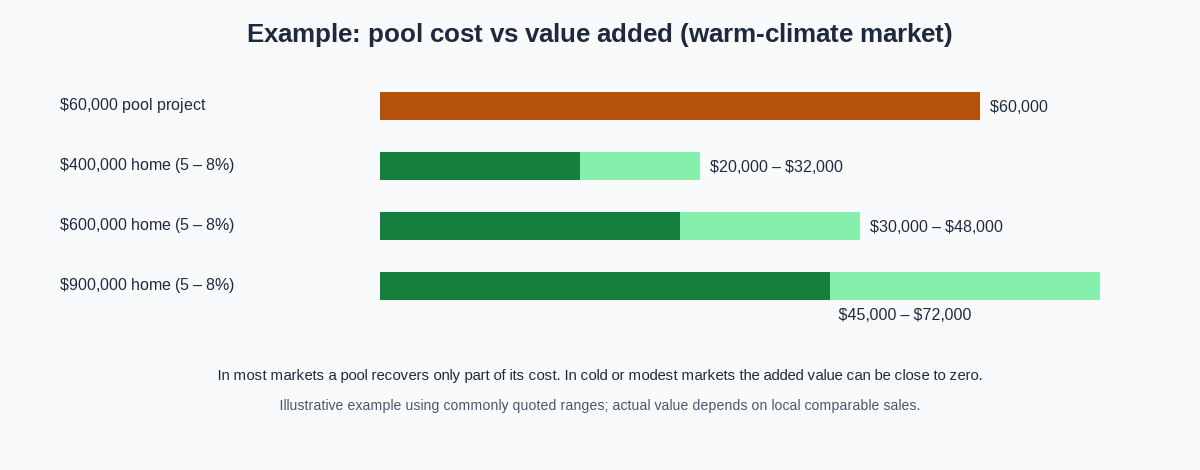
Chart: Asphapro.com
Why a Pool Rarely Recovers Its Full Cost
A new inground pool with decking, fencing and landscaping often costs $50,000 to $100,000 or more. Even in strong markets, the value added is usually lower than that. There are several reasons. Buyers discount pools for ongoing costs such as chemicals, electricity, repairs and insurance, which often total $1,200 to $4,500 a year. Pools age: a 15-year-old pool may need a new liner, resurfacing or equipment soon, and buyers factor that in. Taste varies, so a custom design you love may not appeal to every buyer. And many buyers who do not want a pool will not pay extra for one.
Does a Swimming Pool Increase Home Value in Every Market?
Does a swimming pool increase home value everywhere? No. The biggest factor is climate. In Florida, Arizona, Texas, Southern California, Nevada and similar areas, pools are used most of the year and buyers often expect one in mid- and upper-priced homes. There, a home with swimming pool features can sell faster and for more than a similar home without one. In the Midwest, Northeast and Pacific Northwest, the swim season may be only three months, and many buyers see more upkeep than benefit.
The second factor is the neighborhood. If most homes nearby have pools, a home without one may look less complete to buyers, so adding a pool brings it in line with the area. If few homes nearby have pools, a pool may make a house stand out to some buyers but will not raise the price much, because appraisers have few comparable sales to support a higher value. The third factor is price range: pools add more value to higher-priced homes, where buyers have bigger budgets and expect more features.
Will a Pool Increase Home Value if the Yard Is Small?
Will a pool increase home value on a small lot? Often not as much. Many buyers want some lawn for children and pets, a garden, or space for entertaining. A pool that fills most of a small yard can turn those buyers away. A smaller pool, a plunge pool or a spa may be a better choice for small lots, leaving room for other uses. See our guide on swimming pool ideas for small backyard spaces for layouts that keep the yard usable.
How Appraisers Value a Home With Swimming Pool
Appraisers estimate value mostly by comparing your home with similar homes that sold recently nearby, then adjusting for differences such as size, condition, bedrooms and features like pools. For a home with swimming pool features, the appraiser looks for sales of similar homes with and without pools and uses the price difference to set a pool adjustment. In markets where pools are common, that adjustment can be significant. Where they are rare, the adjustment may be small, even if the pool was expensive.
Appraisers also consider the pool's condition, age, type and equipment. A well-kept inground pool with modern equipment adds more than an old pool with cracked plaster and failing equipment. An appraiser may note safety items such as fencing, and lenders may require repairs on a pool that is unsafe or not working.
Photo: PJMarriott, Wikimedia Commons, CC BY 3.0
Does Adding a Swimming Pool Add Value to Your Home Faster Sale?
Does adding a swimming pool add value to your home by helping it sell faster? In warm markets, often yes. Listings with pools tend to draw more interest in summer, and buyers who want a pool may focus on homes that already have one, since building a pool takes time and money. In cold markets or in winter, a pool may not speed a sale, and a covered pool in January may be hard to show at its best. Good photos of the pool in summer, records of maintenance and recent upgrades can help buyers see its value.
What Makes a Pool Add More Value
Several things help a pool add more value. Condition comes first: clean water, smooth surfaces, working equipment and no leaks. A recently resurfaced pool, a new liner or new equipment reassures buyers. Energy-efficient features such as a variable-speed pump, a heat pump or solar heating and an automatic cover lower ownership costs. Good design matters too: a pool that suits the home's style, with attractive decking, landscaping and lighting, looks like part of the home rather than an add-on. Safety features such as a code-compliant fence and a safety cover appeal to families. Finally, keep records of service, repairs and equipment warranties to share with buyers.
Does a Pool Increase Home Value if It Needs Repairs?
A pool in poor condition can actually lower what buyers will pay, because they will subtract the cost of repairs, and often more for the hassle. Cracked plaster, a torn liner, leaks, an old pump or a broken heater all become negotiation points. Some buyers will ask for the pool to be repaired before closing or for a price reduction. If you plan to sell, fix obvious problems first, clean the pool, and have the equipment serviced. See our guides on pool resurfacing cost and pool liner replacement cost for common pre-sale repairs.
The Ongoing Cost of Owning a Pool
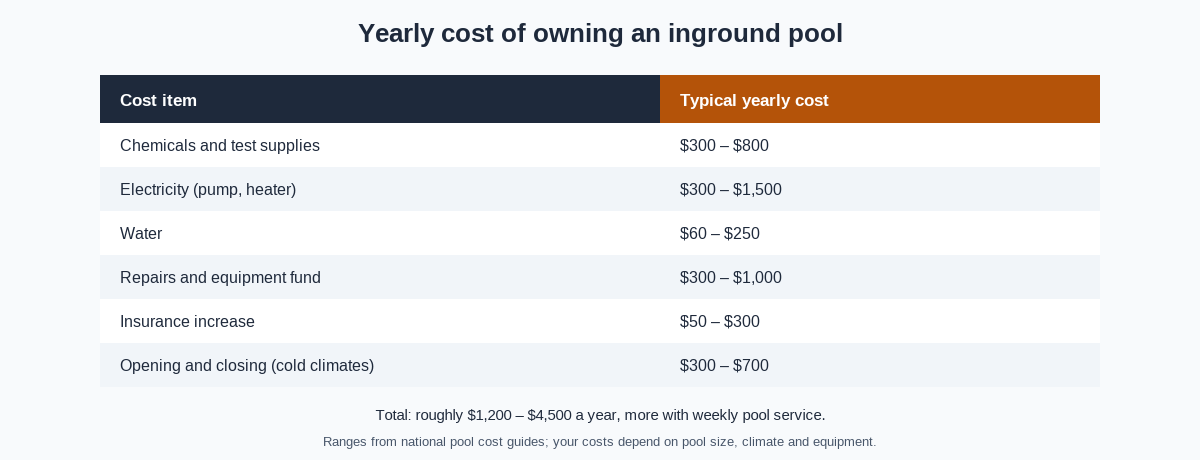
Chart: Asphapro.com
When thinking about value, include the cost of owning the pool. Chemicals, electricity, water, repairs, insurance and opening and closing often add up to $1,200 to $4,500 a year, more with a weekly pool service or a heated pool. Over ten years, that can be $12,000 to $45,000. These costs do not come back at sale, but they buy years of family enjoyment. Buyers think about these costs too, which is one reason pools rarely add as much value as they cost. For a full breakdown, see our guide to the cost to maintain a pool.
Insurance and Liability
Pools raise liability risk, and insurers know it. Adding a pool usually raises homeowners insurance premiums a little, and many insurers recommend or require a fence and a self-closing gate. Some advise higher liability limits or an umbrella policy. Diving boards and slides can raise premiums further or be excluded. Buyers may factor insurance into their decision, and some lenders and insurers may require safety features before closing. See our guide on pool fence cost.
Does an Above Ground Pool Add Value to a Home?
Above ground pools usually add no value and are often treated as personal property, like furniture, rather than part of the home. Some buyers see them as a hassle and may ask the seller to remove them. If you sell with an above ground pool, keep it clean and in good repair, or be ready to take it down. A semi-inground pool with a permanent deck may add some value in markets where pools are popular, but far less than an inground pool.
Does the Type of Pool Matter for Value?
Inground pools add the most value. Among inground pools, buyers tend to see concrete and fiberglass pools as durable and premium, while vinyl pools are seen as more affordable but needing new liners every several years. A vinyl pool with a recent liner can still add strong value. Saltwater systems, heaters, automatic covers and automation are attractive extras, especially if they are new. Unusual or very custom designs, such as a pool with a cave, grotto or very deep diving end, may appeal to fewer buyers. Simple, well-built pools with good decking tend to add the most broadly. For type comparisons, see our guide to fiberglass vs vinyl pool options.
Property Taxes and Pools
Because a pool can raise your home's assessed value, it may also raise your property taxes. In many areas, building a pool triggers a reassessment through the permit process. The increase depends on local tax rates and how the assessor values pools. Over many years, this can add up, so ask your local assessor's office how pools are valued before you build. This is one more ongoing cost to weigh against any resale value.
Worked Examples by Market
Phoenix-area home, $550,000. Most nearby homes in this price range have pools. A buyer expects one, and homes without pools sit on the market longer. A well-kept pool here might add about 6% to 8%, or $33,000 to $44,000, and help the home sell faster.
Chicago-area home, $450,000. Few nearby homes have pools, and the season is short. A pool may add little, perhaps a few thousand dollars, and some buyers may see it as a drawback. The owner should build it only if the family will enjoy it.
Florida starter home, $300,000. Pools are common in the area, but buyers at this price may focus on cost and upkeep. A simple, well-kept pool may add a modest amount, while an old pool needing resurfacing may add nothing until it is repaired.
Selling a Home With a Pool
If you are selling a home with a pool, make it an asset. Before listing, clean the pool and deck, balance the water and run the equipment so it sounds quiet and smooth. Fix leaks, cracked tiles and loose coping. Service the pump, filter and heater, and keep receipts. Take listing photos in warm months with the water sparkling, and include evening shots with pool lights on. Gather records: build date, resurfacing or liner dates, equipment ages and warranties. Point out energy-saving features such as variable-speed pumps. Consider a pre-listing pool inspection so you can fix problems before a buyer's inspector finds them.
Buying a Home With a Pool
Buyers should look at a pool as both a feature and a cost. Hire a pool inspector, separate from the general home inspector, to check the shell, finish, plumbing, equipment, electrical bonding and safety features. Ask the seller for records and the age of the finish or liner. Budget for upcoming work: a liner in 3 years, a new pump in 2 years, or resurfacing soon. Check whether the fence and gates meet local code. Factor in ongoing costs, insurance and property taxes. A pool in great shape can be a real bonus; one that needs major work should be reflected in the price.
When a Pool Can Lower Home Value
A pool can reduce home value or make a home harder to sell when it is in poor condition, takes up most of a small yard, is in a market where buyers do not want pools, or lacks required safety barriers. In these cases, some owners decide to remove the pool. Pool removal costs often run $5,000 to $30,000 depending on the method, and full removal with engineered fill is usually best for resale. See our guide to the cost of removing a pool.
Alternatives That Add Enjoyment for Less
If resale value is a big concern, smaller water features may give you much of the enjoyment for less money and risk. A hot tub or spa costs far less, uses little space and is used year-round in many climates. A plunge pool fits small yards and costs less to run. A swim spa combines exercise and relaxation in a compact unit. These options may add less value than a full inground pool in warm markets, but they also cost less and appeal to more buyers in cold or small-lot markets. See our guides to plunge pool cost and hot tub cost.
Should You Add a Pool for Resale Value?
Most real estate professionals advise against adding a pool only to raise resale value, because the cost is usually higher than the value added. The better question is whether you and your family will use and enjoy the pool for years. If you will, a pool can be one of the most rewarding home projects, giving exercise, fun and a place to gather. If you plan to sell within a few years, the numbers rarely work out, unless you live in a market where pools are expected and your home is at a price point where buyers want one.
What Buyers Think About Pools
Buyer attitudes toward pools vary widely. Some buyers search only for homes with pools and are willing to pay more for one, especially families with older children, people who love to entertain and retirees in warm regions. Others actively avoid pools: parents of toddlers who worry about safety, people who do not want the upkeep, and buyers who prefer lawn or garden space. In many markets, the pool narrows the pool of buyers even as it raises what some will pay. That trade-off is why agents often describe pools as a feature that adds appeal to the right buyer rather than a guaranteed boost in value.
Talking to a local real estate agent before you build can help. Ask how homes with pools in your neighborhood have sold compared with similar homes without them, how long they stayed on the market, and what buyers said about the pools. That local insight is more useful than any national average, because value is set by what buyers in your own area actually pay.
Making a New Pool a Smart Investment
If you decide to build, a few choices help protect value. Keep the design simple and suited to the house. Leave enough yard for other uses. Choose durable materials and efficient equipment. Install a code-compliant fence and consider an automatic or safety cover. Use a reputable builder and keep permits, plans and warranties on file. Maintain the pool well every year. These steps will not guarantee a high return, but they make the pool an asset to the home rather than a burden for the next owner.
Pros and Cons of a Pool for Home Value
The pros are clear in the right market: more appeal to buyers who want a pool, potentially faster sales in warm areas, and a higher price for upscale homes where pools are expected. The cons are just as real: high build costs that rarely come back in full, ongoing costs for upkeep and insurance, a smaller group of interested buyers in some areas, higher property taxes, and the risk of an aging pool becoming a negotiation point. Weighing these against how much your household will really use the pool, year after year, is the key to a good decision.
How Much Does a Pool Add to Home Value Over Time?
How much does a pool add to home value as it ages? Usually less each year unless it is renewed. A brand-new pool in a strong market adds the most, because buyers see years of trouble-free use ahead. As the finish wears, equipment ages and styles change, the value added slowly falls. Major updates, such as resurfacing, new tile, a new liner, new equipment or a fresh deck, can bring it back up. Planning these updates on a regular schedule, and keeping clear records of the work, helps the pool keep adding value for as long as you own the home. Asking how much value does a pool add to a home is really asking how well it has been kept, as much as where it is.
How Much Value Does a Pool Add to a Home: Key Points
- In warm, upscale markets, often about 5% to 8% of home value.
- In cold or modest markets, little or no added value.
- Pools rarely recover their full cost at sale.
- Condition, design and local comparable sales matter most.
Frequently Asked Questions
Does an above ground pool add value?
Usually not. Appraisers treat most above ground pools as personal property, and buyers may ask for them to be removed before closing. A semi-inground pool with a permanent deck may add a little in pool-friendly markets.
Can a pool lower home value?
It can in some markets, especially if the pool is old, in poor condition or takes up most of a small yard. Buyers may subtract repair costs or the cost of removal from their offer.
How much value does a pool add to a house in a warm state?
Often about 5% to 8% for a well-kept inground pool in a mid- to upper-priced home, based on local comparable sales. Homes in neighborhoods where most houses have pools see the strongest effect.
Does a swimming pool add value to a home in a cold climate?
Usually much less. With a short swim season, many buyers see a pool as upkeep, so the added value may be small or none. A heated pool with an automatic cover may appeal more.
Does pool increase value of home if it is heated?
A heater, especially an efficient heat pump, can add appeal by lengthening the season, but it does not usually add much on its own. Buyers value low running costs more than extra features.
Does a pool add value to a home with young families nearby?
It can, if the pool is fenced and safe. Some families love pools; others avoid them for safety reasons, so a good fence and a safety cover help widen the appeal.
Does pool add value to home appraisals?
Appraisers adjust value based on local sales of similar homes with and without pools. Where pools are common, the adjustment is larger; where they are rare, it may be small even for an expensive pool.
Does swimming pool add value to home insurance costs?
It usually raises premiums slightly and may require a fence, a self-closing gate or higher liability limits. Diving boards and slides can raise premiums further, so ask your insurer before adding them.
Sources
- HouseLogic (National Association of Realtors): Home value guides
- National Association of Realtors: Research and statistics
- Appraisal Institute
- CPSC: Pool and spa safety