
How Long Does It Take to Build a Pool? A Week-by-Week Timeline
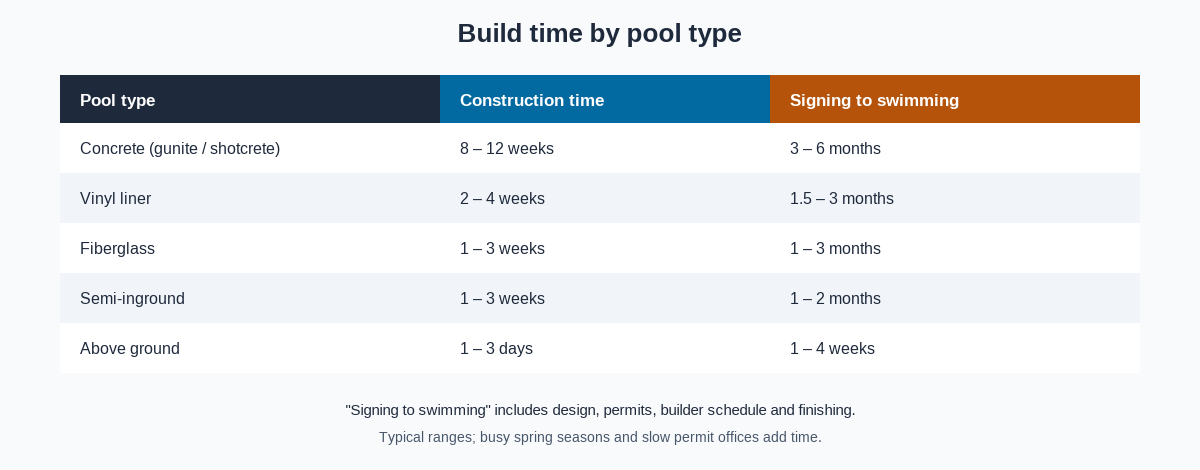
Chart: Asphapro.com
Quick Answer
How long does it take to build a pool? Actual construction usually takes 8 to 12 weeks for a concrete (gunite) pool, 2 to 4 weeks for a vinyl liner pool, and 1 to 3 weeks for a fiberglass pool. An above ground pool can be set up in 1 to 3 days. Before construction starts, design, contracts and permits often add 2 to 8 weeks, and builders may have a waiting list in spring. From signing to swimming, plan on roughly 3 to 6 months for concrete, 1.5 to 3 months for vinyl and 1 to 3 months for fiberglass. Weather, rock, groundwater, inspections and change orders are the most common causes of delay.
Most people planning a pool want it ready for the next swim season, so timing matters almost as much as cost. The answer to how long does it take to build a pool depends on the type of pool, your town's permit process, your builder's schedule, the weather, and what is under the ground in your yard.
This guide breaks down the full timeline, from the first design meeting to the first swim, for each type of pool, and explains what slows projects down and how to keep yours on track. For cost planning, see our guides to small inground pool cost and vinyl inground pool cost.
How Long Does It Take to Build a Pool Before Construction Starts?
The time before digging often surprises people. First comes design and quotes: meeting builders, choosing a pool type, size, shape and features, and comparing bids. This can take one to four weeks, or longer if you shop around carefully. Next is the contract and deposit, then the builder's site survey and engineered plans, which can take one to three weeks.
Permits are the biggest variable. Some towns approve pool permits in a few days; busy cities or areas with strict zoning, HOA reviews or drainage reviews can take four to eight weeks or more. If your lot needs a variance for setbacks or a survey of easements, add more time. Many builders submit permits as soon as the contract is signed.
Finally, there is the builder's schedule. In spring, good builders are often booked weeks or months ahead. Signing in fall or winter can mean a shorter wait and a pool ready for early summer.
How Long Does It Take to Build a Concrete Pool?
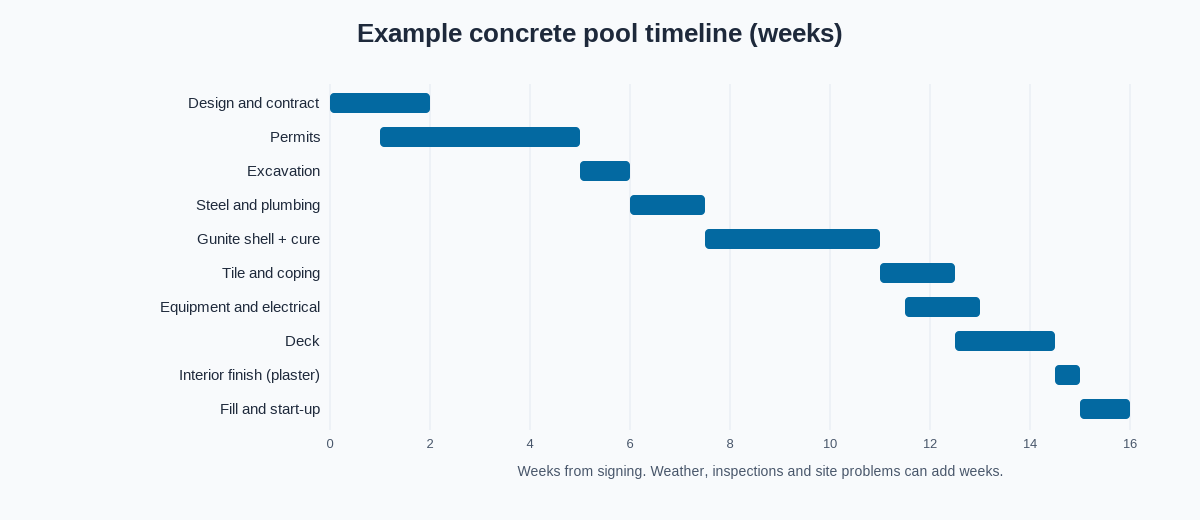
Chart: Asphapro.com
Concrete pools, built with gunite or shotcrete, take the longest because they are built in place in stages, with curing time and inspections between them. A typical concrete pool timeline looks like this:
Layout and excavation, 1 to 3 days. The crew marks the pool shape and digs the hole. Rock or groundwater can add days or weeks.
Steel and plumbing, 1 to 2 weeks. Rebar is tied in a grid that forms the shell's skeleton, and plumbing lines for the drains, skimmers and returns are run. An inspection is usually required before the shell is sprayed.
Gunite or shotcrete shell, 1 to 2 days, then curing. Concrete is sprayed onto the steel and shaped. The shell then cures, usually for at least 7 to 28 days, and is watered regularly during the first week.
Tile and coping, 1 to 2 weeks. Waterline tile and coping stones are set on the bond beam.
Equipment, electrical and gas, 1 to 2 weeks. The pump, filter, heater and controls are installed on the equipment pad, and the electrician completes bonding and wiring. Electrical inspections follow.
Deck, 1 to 3 weeks. The deck is formed and poured or laid. Pavers and stone take longer than poured concrete.
Interior finish, 1 to 2 days. Plaster, quartz or pebble finish is applied, usually near the end so the deck work does not damage it.
Fill and start-up, 1 to 2 weeks. The pool is filled right away after plastering, then the water is balanced and brushed daily during the plaster start-up period.
In total, a concrete pool usually takes 8 to 12 weeks of construction, and up to 16 weeks or more with complex features, slow inspections or bad weather. See our guide to the concrete pool for more on this type.
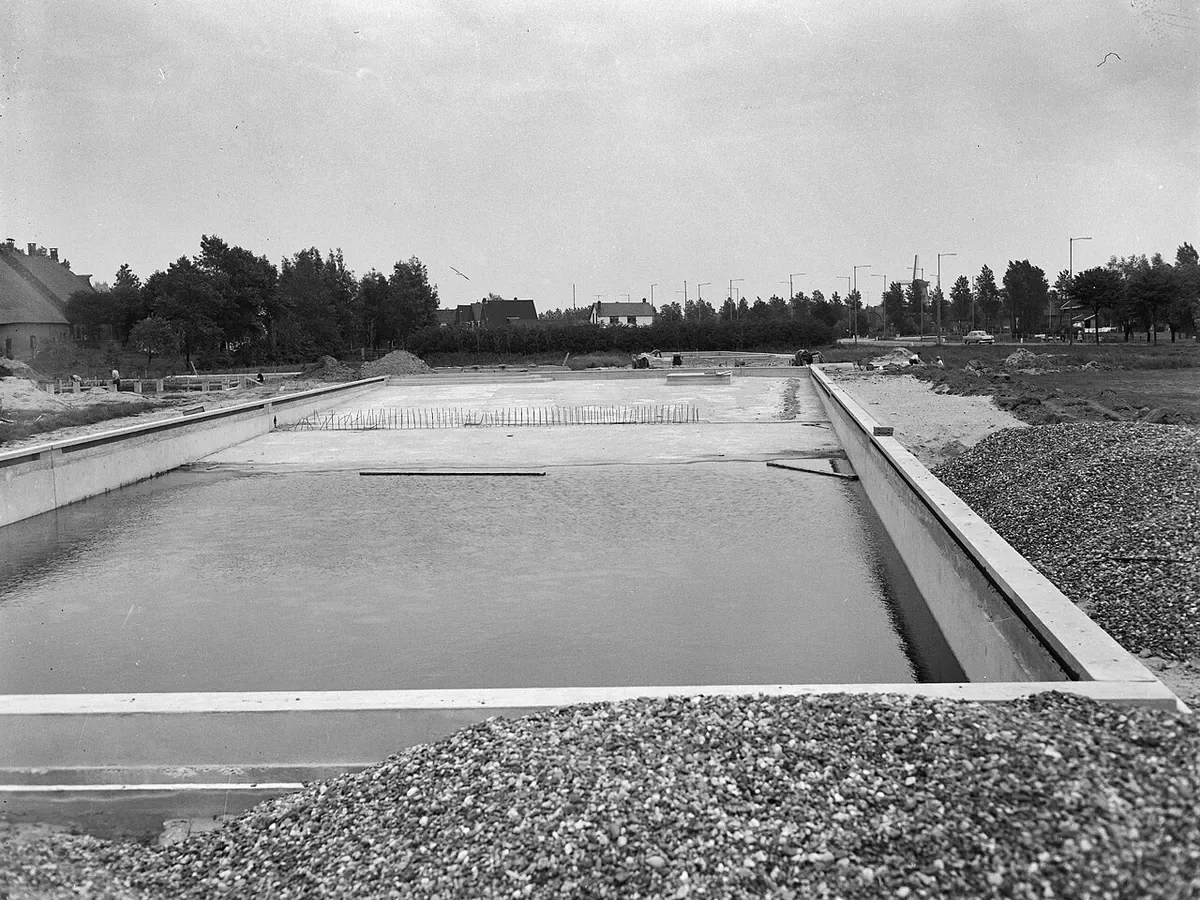
Photo: Henk Lindeboom / Anefo, Wikimedia Commons, CC0
How Long Does It Take to Build a Vinyl Pool?
Vinyl liner pools are built faster because the walls are prefabricated panels. Excavation takes one or two days. Setting and bracing the walls, installing the plumbing and pouring the concrete collar around the base takes three to seven days. The floor is shaped, then the custom liner, measured on site, is ordered, which can take one to two weeks to arrive. The liner is installed and the pool is filled in one to two days. Coping, deck and equipment follow. Total construction time is usually 2 to 4 weeks, often longer if you wait for a custom liner or a large deck.
How Long Does It Take to Build a Fiberglass Pool?
Fiberglass pools are the fastest inground option because the shell arrives finished from the factory. After excavation and a level gravel base, a crane sets the shell in place, the plumbing is connected, and the pool is backfilled as it fills with water so pressure stays balanced. This can take as little as one to three days. Equipment, electrical, coping and deck work add one to two weeks. Total construction is often 1 to 3 weeks, though shell delivery dates can add waiting time in busy seasons.
Above Ground and Semi-Inground Pools
Above ground pools are quickest: once the ground is leveled and a base of sand or pad is laid, the walls, liner and equipment can be set up in one to three days. A deck around it adds a week or two. Semi-inground pools need partial excavation and stronger wall systems, taking about one to three weeks including a deck.
What Slows Down a Pool Build
Weather. Rain stops excavation, softens the hole and delays concrete, deck and plaster work. Extreme heat and freezing temperatures also limit when concrete can be poured or plaster applied. In rainy seasons, a two-month project can stretch to three or four.
Rock and groundwater. Hitting rock means slower digging with hydraulic hammers. Groundwater requires pumping before work can continue. Either can add days to weeks. See our guide to pool excavation cost.
Inspections. Most towns inspect the steel, plumbing pressure test, electrical bonding, barrier and final pool. Each inspection must be scheduled, and a busy office can add a week between stages.
Change orders. Changing the design after work starts, such as adding a spa, moving steps or upgrading the deck, often means new drawings, new permits or new materials, which delays the job.
Materials and equipment. Custom liners, special tile, stone coping, fiberglass shells and some equipment can have long lead times, especially in spring.
Access and utilities. Tight access may require smaller machines, which work slower. Relocating utilities or adding electrical service can also add time.
Crew scheduling. Builders use several subcontractors, such as excavators, steel crews, gunite crews, tile setters, electricians and plasterers. If one trade is behind, the next waits.
How Long Does It Take to Build a Swimming Pool by Season?
How long does it take to build a swimming pool in spring compared with fall? The construction time is similar, but the wait before construction is very different. In spring, demand peaks and many builders are booked for months; permit offices are busy too. Signing in late summer or fall often means shorter waits and sometimes better prices. In mild climates, building through winter is common and the pool can be ready for spring. In cold climates, digging and concrete may pause in deep winter, but signing contracts and getting permits approved over winter puts you at the front of the line when the ground thaws.
Adding Decks, Fences and Landscaping
A pool is not finished until it is safe and usable. A code-compliant fence must usually be in place before the final inspection and before swimming. Fences take one to five days to install, but custom fences or materials can take weeks to order; see our guide to pool fence cost. Large decks, pergolas, outdoor kitchens and landscaping can each add one to four weeks, and are often done by separate contractors after the pool. Many owners swim first and finish the landscaping later in the season.
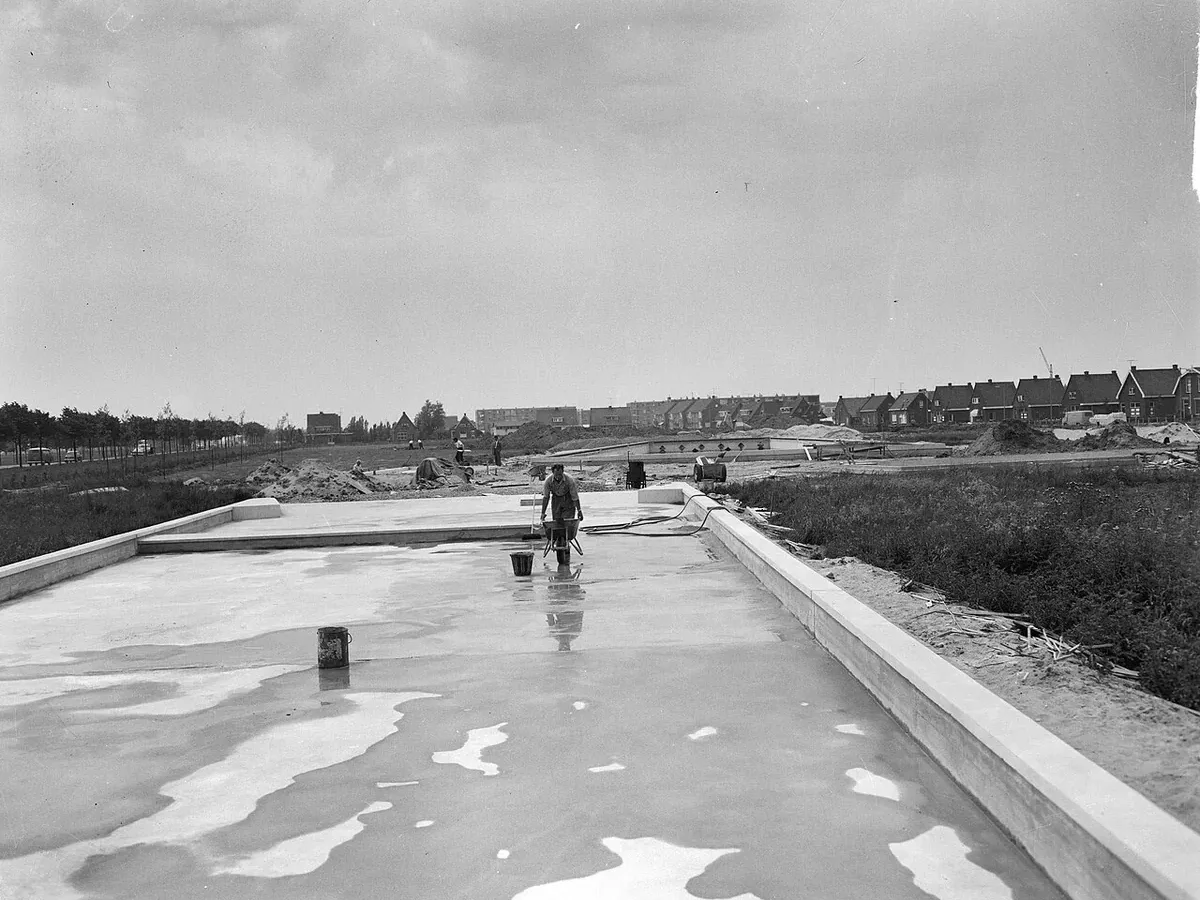
Photo: Henk Lindeboom / Anefo, Wikimedia Commons, CC0
The First Weeks After Filling
Even after the pool is full, there is a start-up period. New plaster, quartz and pebble finishes release lime and calcium into the water in the first weeks, so the water must be balanced carefully and brushed once or twice a day to prevent scale and staining. Most builders recommend waiting a few days to a week before swimming, until chemistry is stable, and avoiding heaters, salt and automatic cleaners for the first few weeks. Fiberglass and vinyl pools can usually be used within a day or two once chemistry is balanced. Count this start-up time when planning your first pool party.
How to Keep a Pool Build on Schedule
Make all design decisions before signing, so changes do not interrupt construction. Choose tile, coping, finish and equipment early, and ask whether any items have long lead times. Sign in the off season if you can. Ask the builder for a written schedule with milestones, and check in each week. Keep access clear, protect the site from runoff, and be ready to approve inspections and payments promptly. Plan the fence and other required items so they are done in time for the final inspection.
Timelines for Pool Renovations
Renovations are faster than new builds. Replastering or resurfacing a concrete pool usually takes one to two weeks, including draining, surface prep, application and refilling. Replacing waterline tile adds a few days. A vinyl liner replacement often takes one to three days once the liner arrives. Replacing a deck takes one to three weeks. Adding a spa to an existing pool takes four to eight weeks. See our guides to pool resurfacing cost and pool liner replacement cost.
What Homeowners Do During the Build
Homeowners have a role too. Before work starts, clear the work area, mark sprinklers and private lines, and arrange access for trucks. During construction, expect noise, dust and heavy equipment, and keep children and pets away from the site. Water the gunite shell if your builder asks. Approve selections and change orders quickly. After filling, follow the builder's start-up instructions closely. Good communication saves days or weeks.
How Long Does It Take to Build a Pool Yourself?
DIY pool builders, usually installing above ground pools, semi-inground kits or vinyl kits, should expect more time than a professional crew. A DIY above ground pool may take a weekend or two, including leveling. A DIY vinyl kit can take several weekends to a couple of months, depending on help, weather and how much work is hired out, such as excavation and electrical. Concrete pools are rarely built by homeowners. Ask local inspectors early so required inspections do not hold up your project.
How Long Does It Take to Build a Pool With Features?
Features add time as well as cost. A built-in spa usually adds one to two weeks to a concrete pool. Rock waterfalls, grottos and stone veneer walls can add two to four weeks of masonry. A tanning ledge or beach entry adds a few days of shaping and finishing. Automatic cover tracks must be built into the shell and deck, adding a week or more, and the cover itself may take weeks to arrive. Infinity edges need precise construction and testing, often adding two to four weeks. If you want to know how long does it take to build a pool with your exact wish list, ask the builder to add time for each feature to the schedule.
Example Timelines
Fiberglass pool signed in February. Permits are approved in three weeks. The shell is delivered in early April, set in two days, and the deck and fence finished by the end of April. The family swims in early May, about 10 weeks after signing.
Vinyl pool signed in April. The builder's first opening is in late May. Permits come through in two weeks. Construction takes three weeks, including a two-week wait for the custom liner. The pool is ready in late June, about 11 weeks after signing.
Concrete pool signed in January. Design takes three weeks and permits five. Excavation starts in mid-March, the shell is shot in early April and cures through April. Tile, coping, equipment and deck follow in May, and plaster goes in at the end of May. The pool is swimmable in early June, about 20 weeks after signing.
These examples show that the answer to how long does it take to build a pool from your first call to your first swim is often two to five months, even when construction itself is shorter.
How Long Does It Take to Build a Swimming Pool in Hot or Cold Climates?
Climate shapes the calendar. In hot regions such as the Southwest and Florida, builders work year-round, but summer heat can limit concrete and plaster work to cooler hours, and monsoon or hurricane seasons bring rain delays. In cold regions, the building season runs roughly from spring thaw to late fall, and frozen ground stops digging and concrete in winter. Builders in cold areas pack their schedules tightly into warm months, so signing early matters most there. Answering how long does it take to build a swimming pool in your area starts with asking local builders about their seasons.
Pool Removal and Rebuild Timelines
Replacing an old pool with a new one adds demolition time. Breaking out and hauling away an old concrete pool typically takes one to two weeks, plus time for backfill and compaction if the new pool goes elsewhere. If the new pool goes in the same spot, the crew may remove the old shell and dig the new hole in one sequence. Old vinyl pools can be taken apart faster. See our guide to the cost of removing a pool.
Questions to Ask About the Schedule
Before signing, ask each builder when they can start, how long construction usually takes for your type of pool, and what could delay it. Ask how they schedule subcontractors, who handles permits and inspections, and how they communicate progress. Ask whether the contract has a target completion date and what happens if the job runs late. Clear answers help you choose a builder who can deliver on time and keep you informed along the way.
Pool Permits: What Takes So Long
Permit reviews check many things: setbacks from property lines, septic systems and easements; the pool barrier; electrical bonding and wiring; drainage and erosion control; and sometimes engineering for retaining walls or sloped sites. In some areas, a homeowners association must approve the design before the town will issue a permit. Each review step can take days or weeks, and any missing information sends plans back for changes. A builder who knows your local office and submits complete plans can save weeks. When people ask how long does it take to build a pool and are surprised by the answer, permits are usually the reason.
Speed vs Cost Trade-Offs
Faster is not always cheaper, and cheaper is not always slower. Fiberglass pools install fastest but cost more up front than vinyl. Vinyl pools are quick and affordable but wait on custom liners. Concrete pools take longest but give full design freedom. Rushing a concrete pool by shortening curing times or plastering in poor weather can cause cracks and finish problems that cost far more later. Paying for overtime or express shipping can save a week or two but adds cost. For most owners, the best approach is to plan early, so the build can follow a normal schedule and still finish in time for summer.
Week-by-Week Checklist for Owners
During planning, finalize the design, choose finishes and equipment, sign the contract and help gather permit documents such as surveys and HOA approvals. Before digging, mark private utilities, clear the site, and plan where trucks and dirt will go. During excavation and steel, check that the layout matches your expectations, since this is the easiest time to catch problems. During the shell and curing stage, water the shell if asked and confirm tile and coping selections. During decking and equipment, confirm fence plans and final electrical. Before plaster, make sure the deck is finished and the site is clean. After filling, follow start-up instructions and schedule the final inspection. Keeping this checklist handy answers much of how long does it take to build a pool for your own project, since you can see each stage coming.
Planning Backward From Your Swim Date
The easiest way to plan is to work backward from the day you want to swim. For a concrete pool ready by Memorial Day, aim to sign a contract by January, so design and permits can finish in February and digging can start in March. For a vinyl pool, signing by March usually works. For a fiberglass pool, signing by April is often enough, as long as the shell is available. Add a few weeks of buffer for weather and inspections. If you are reading this in late spring, it may be more realistic to aim for a midsummer finish, or to plan now for next year and take advantage of off-season scheduling.
Builders also appreciate early decisions. When the design, finishes and equipment are chosen before the contract is signed, the builder can order materials early and book subcontractors with confidence, which keeps every stage moving. That planning is the single best way to shorten how long does it take to build a pool in practice, because it removes the waiting between steps that so often stretches a schedule.
Communicating With Your Builder
Ask for a single point of contact and a weekly update, even if it is just a short text or email. Keep a shared written list of selections and decisions. Take photos at each stage of the work, especially of plumbing and steel before they are covered. Raise any concerns quickly, while changes are still easy and cheap to make on site. Builders who communicate well tend to finish on time because problems are caught early, before they turn into costly delays.
When Is the Pool Really Finished?
A pool is truly finished when the final inspection is passed, the barrier and gates are in place, the equipment is running correctly, the water is balanced, and the builder has walked you through how everything works. Ask for a final walk-through, written instructions for the pump, filter, heater and controls, warranty documents and the start-up schedule, and keep them together in one folder for future reference. Small items such as touch-up work, landscaping and furniture can follow later, but the pool should not be used until it is safe, fenced, inspected and approved.
How Long Does It Take to Build a Pool: Key Points
- Concrete: 8 to 12 weeks of construction, 3 to 6 months from signing.
- Vinyl: 2 to 4 weeks of construction; fiberglass: 1 to 3 weeks.
- Permits and design can add 2 to 8 weeks before digging.
- Sign in fall or winter to swim by early summer.
Frequently Asked Questions
What is the fastest pool to build?
Above ground pools, then fiberglass. A fiberglass pool can be in the ground and filled within a few days once work starts, with the deck and fence finished a week or two later.
Can a pool be built in the winter?
In mild climates, yes. In freezing climates, digging and concrete work are harder, but planning and permits can happen in winter, so the crew is ready to dig as soon as the ground thaws in spring.
How long does it take to build a swimming pool with a spa?
Adding a spa to a new concrete pool usually adds one to two weeks to construction, since the spa is built alongside the pool and shares the same crews and inspections.
How long does it take to build a pool after the permit?
Usually 8 to 12 weeks for concrete, 2 to 4 weeks for vinyl, and 1 to 3 weeks for fiberglass, depending on weather, inspections, materials and how busy the builder's crews are.
How long after plastering can you swim?
Often within a few days, once the water is balanced, but follow your builder's start-up instructions and keep brushing daily for the first weeks.
Sources
- HomeGuide: Inground pool cost and timeline
- ICC: International Swimming Pool and Spa Code
- Call 811: Know what's below
- Pool and Hot Tub Alliance