
Hot Tub Deck Ideas: Decks, Patios and Gazebos That Work
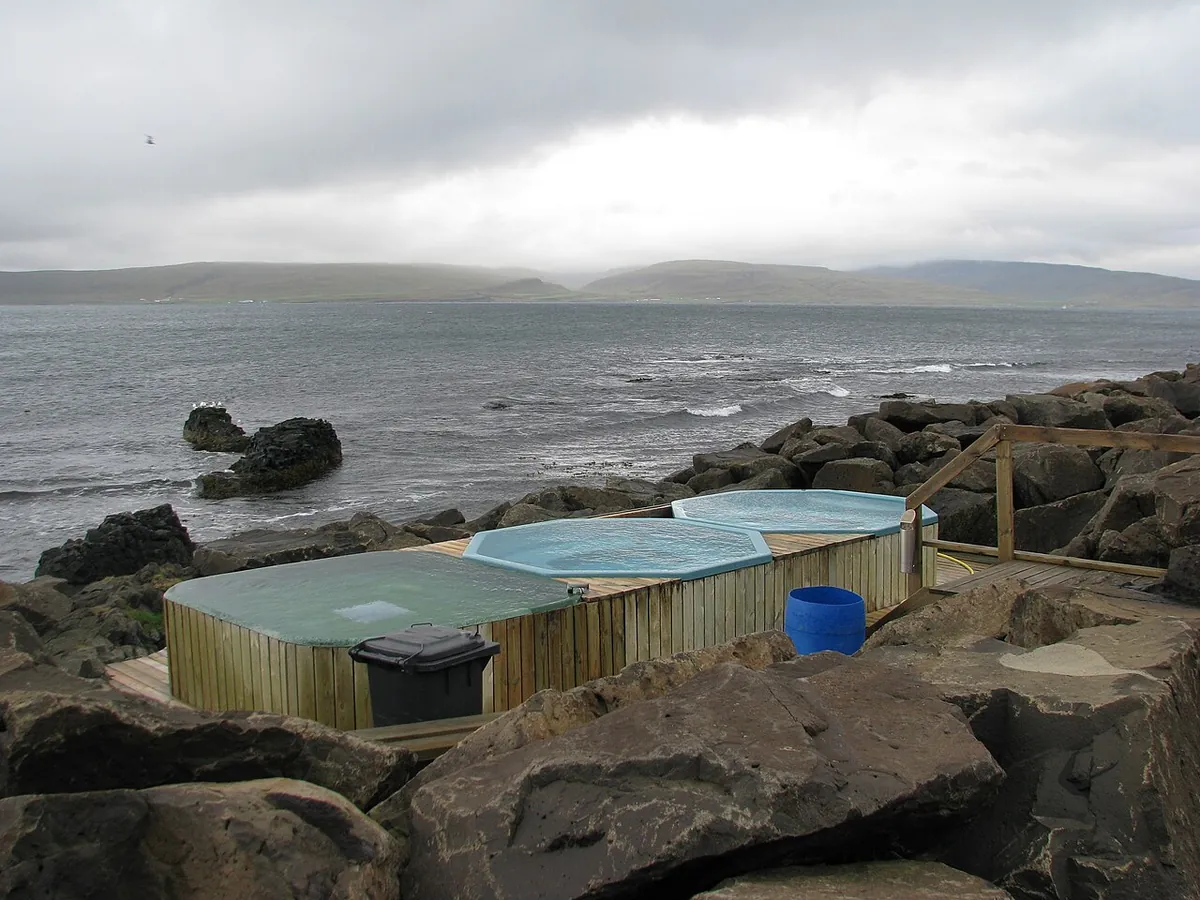
Photo: Bromr, Wikimedia Commons, CC BY-SA 3.0
Quick Answer
Popular hot tub deck ideas include a recessed tub set into a deck so the rim sits at deck height, a raised platform with steps and built-in benches, a wraparound deck with storage for the cover, a ground-level hot tub patio of pavers or concrete, and a hot tub gazebo or pergola for shade and privacy. Before you plan, remember that a filled hot tub with people weighs 3,000 to 6,000+ pounds (about 100 to 150 lb per sq ft), more than most decks are built for, so a hot tub on a deck needs extra framing or its own concrete pad. A new hot tub deck typically costs $5,000 to $20,000; a patio pad $1,000 to $5,000; a gazebo $2,000 to $15,000.
A hot tub can be the best-used part of a backyard: warm water on cold evenings, a place to relax after work, somewhere to sit with friends. Where and how you set it makes a big difference. A tub dropped on bare ground looks unfinished and is awkward to get into. A tub on a well-designed deck or patio, with steps, seating, a cover lifter, privacy and good lighting, feels like an outdoor room.
This guide collects practical hot tub deck ideas and patio ideas, explains whether you can put a hot tub on a deck and how to support it, covers hot tub gazebo and pergola ideas, privacy and landscaping, materials, and costs. For the price of the tub itself, see hot tub cost.
Can You Put a Hot Tub on a Deck?
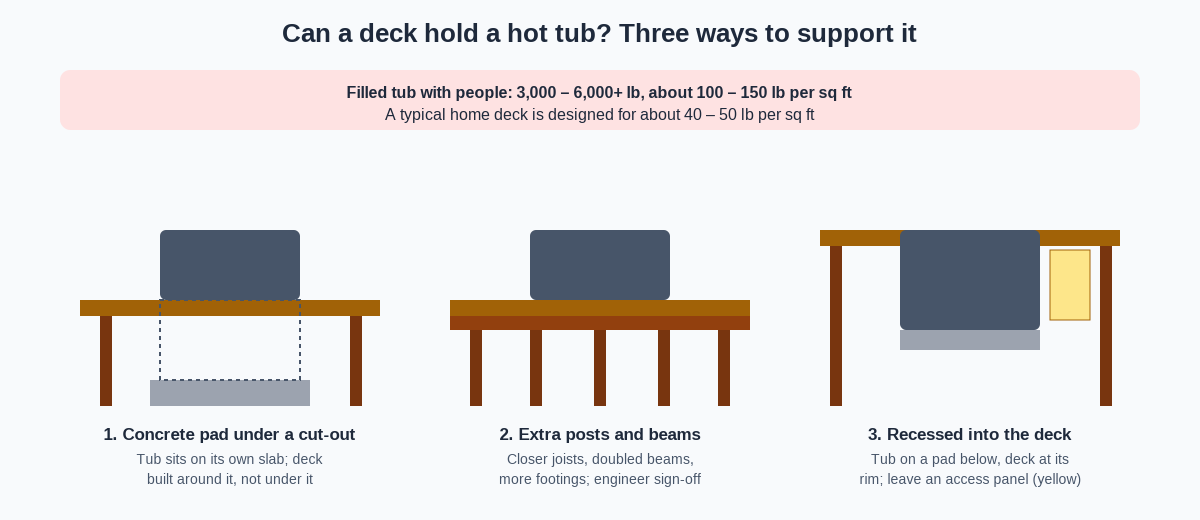
Diagram: Asphapro.com
Yes, but only if the deck is built to carry it. A typical 6-person hot tub weighs about 800 to 1,000 lb empty, holds 400 to 500 gallons of water (at 8.34 lb per gallon, about 3,300 to 4,200 lb), plus 1,000 lb or more of people. Spread over a 7 x 7 ft footprint, that is roughly 100 to 150 pounds per square foot. Most home decks are designed for about 40 lb per sq ft of live load plus 10 of dead load. Placing a hot tub on a standard deck can overload joists, beams and footings and lead to sagging or collapse.
There are three safe ways to have a hot tub on deck:
- Concrete pad under a deck cut-out: pour a 4 to 6 inch reinforced concrete pad on the ground, set the tub on it, and build the deck around the tub without touching it. This is the most common method for ground-level decks.
- Reinforced framing: add more footings, posts and beams and closer joist spacing under the tub area, designed by an engineer or a contractor following the tub maker's load. Required for raised decks.
- Recessed tub: set the tub on a pad below deck level and build the deck at the tub's rim height, leaving an access panel to reach the equipment.
Check local codes; many towns require a permit and engineering for a deck with a hot tub. For pad sizes, see concrete pads.
Hot Tub Deck Ideas
These deck ideas for hot tub owners range from simple to elaborate. Each one shows a different way to combine a deck and hot tub. Pick the deck with hot tub layout that fits your yard and budget.
1. Recessed (sunken) hot tub deck
A recessed tub sits with its rim at or slightly above deck height, so you step down into it like an inground spa. It looks built-in, makes entry easy and lets you sit on the deck with your feet in the water. Plan a removable access panel or hatch for the tub's equipment side.
2. Partially recessed deck
Setting the tub 12 to 24 inches into the deck gives an easier step in and a lower profile while keeping some of the tub's sides exposed for service. It is a good compromise between looks and access.
3. Raised platform with steps
A hot tub with deck steps on all sides is one of the most popular backyard hot tub deck ideas.
On a flat yard, a low platform deck around the tub with two or three wide steps makes a defined hot tub area. Steps can double as seats and hide storage.
4. Wraparound deck with benches
Build benches into the deck along one or two sides of the tub. Benches give guests a place to sit and hold towels and drinks, and can hide chemical storage under hinged lids.
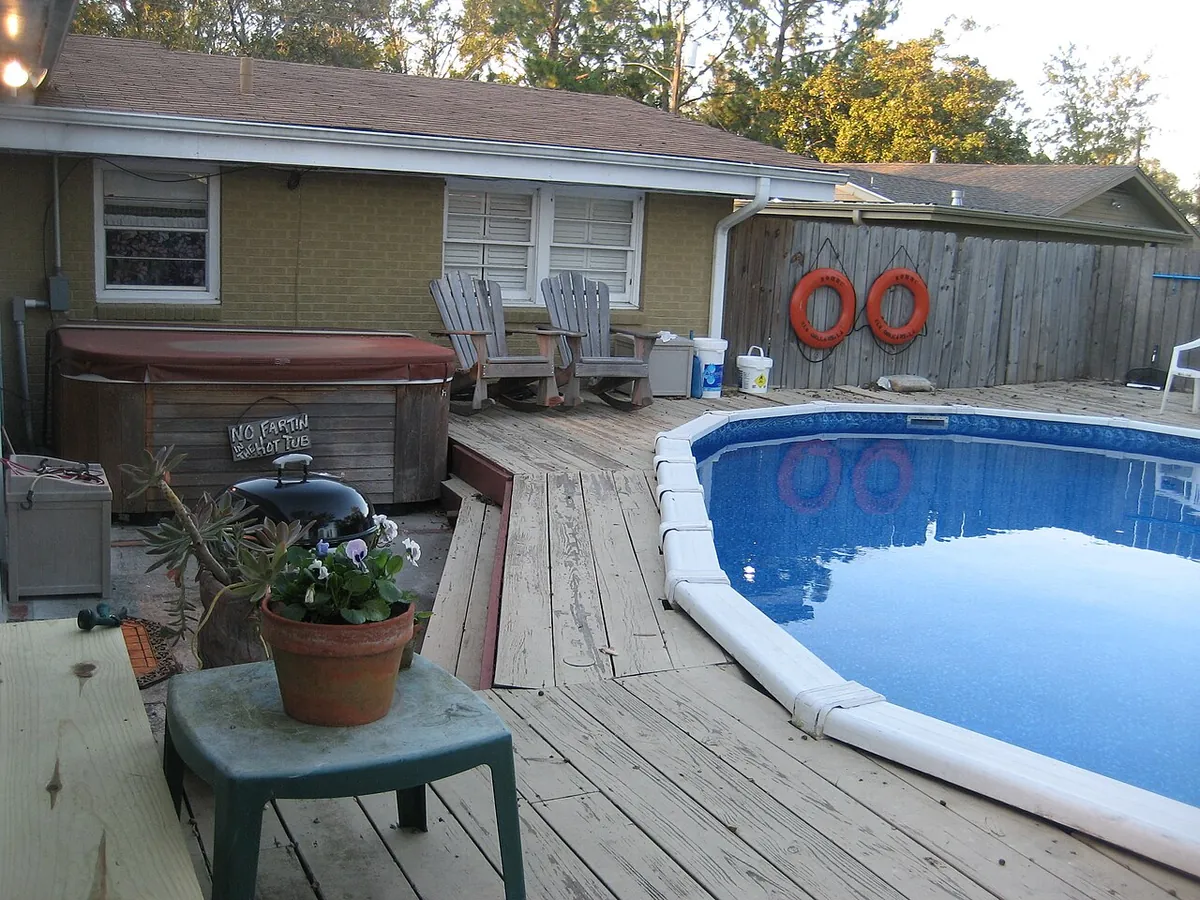
Photo: Infrogmation of New Orleans, Wikimedia Commons, CC BY-SA 3.0
5. Deck shared with a pool
If you have an above ground pool, a deck that connects the pool and hot tub makes one outdoor living area. Keep the hot tub on its own pad or reinforced section, separate from the pool deck framing.
6. Multi-level deck
On a sloped yard or off a raised back door, a two-level deck puts the hot tub on the lower level near the ground (easier to support) and dining or lounging on the upper level.
7. Corner hot tub deck
Tucking the tub into a corner of the deck against the house or a privacy wall saves space and blocks wind.
8. Hot tub deck with a privacy wall
A slatted wood or composite screen on one or two sides blocks neighbors' views and wind, and can hold hooks for towels and robes.
Hot Tub Patio Ideas
Hot tub ideas for patio spaces are often the easiest to build. A hot tub on patio pavers or concrete is stable and low cost. A ground-level patio is often the simplest and lowest-cost home for a hot tub. Popular hot tub patio ideas:
- Concrete pad with pavers around it: a solid slab under the tub, with pavers or stone around for looks.
- Stamped or colored concrete that matches the main patio.
- Gravel base with a paver border: low cost and drains well; the gravel must be compacted and level.
- Stone surround: build a low stone or block wall around the tub for a built-in look.
- Prefab spa pad: interlocking plastic pads for a quick, level base.
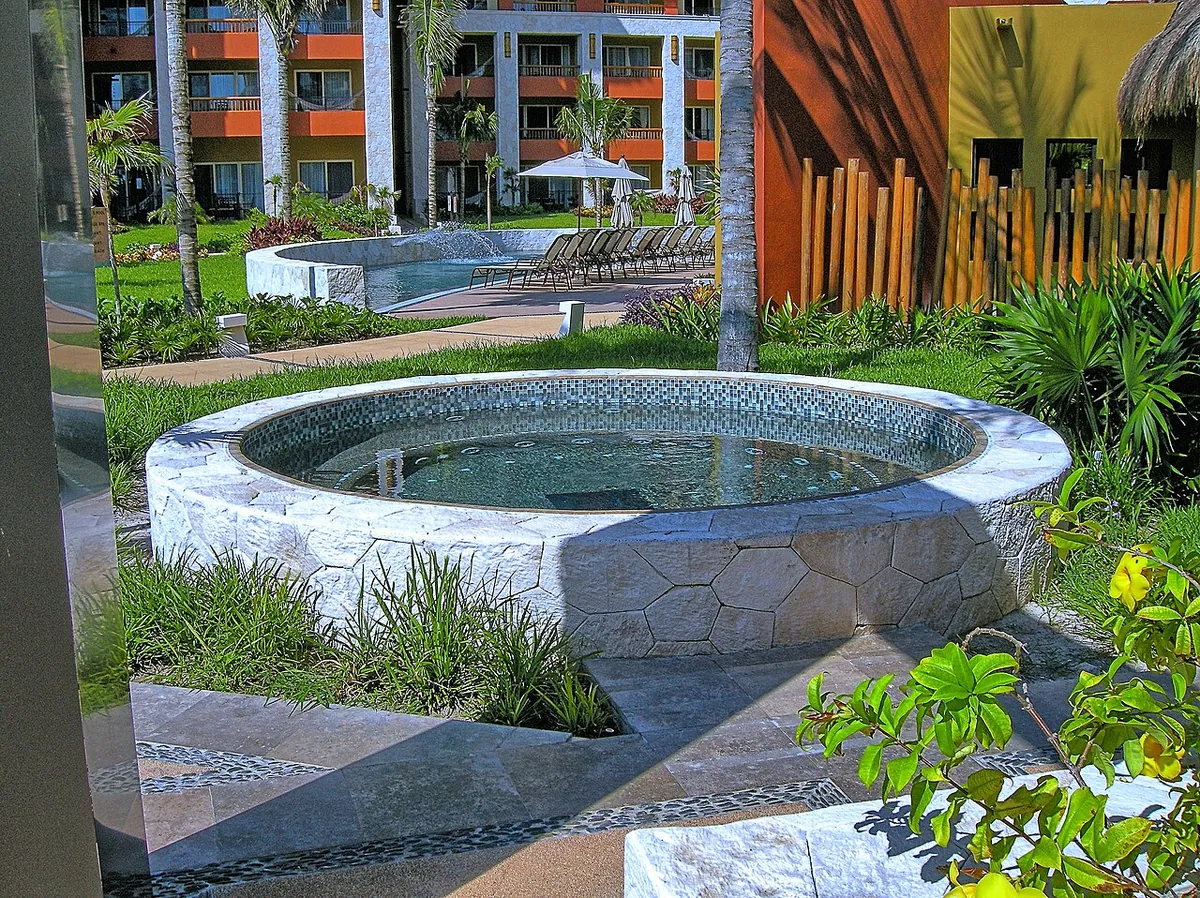
Photo: Kirt Edblom, Wikimedia Commons, CC BY-SA 2.0
Hot Tub Gazebo Ideas
Gazebo with hot tub ideas are among the most searched backyard projects, and hot tubs with gazebo roofs get far more use in rain, snow and strong sun.
A hot tub gazebo puts a roof over the tub, which adds shade, keeps rain and snow off, extends the season and gives privacy from upstairs windows. Popular gazebo for hot tub options:
- Hardtop gazebo kits: metal or polycarbonate roofs on aluminum or steel posts, 10 x 10 to 12 x 14 ft. About $2,000 to $6,000. Choose one rated for local snow and wind loads.
- Wood gazebos: cedar or pressure-treated pine, built from a kit or custom. About $4,000 to $15,000. Look for vented roofs to let steam out.
- Gazebo with privacy panels: louvered or lattice panels on one to three sides, or roll-down shades and curtains.
- Enclosed gazebo or spa house: walls and windows for year-round use in cold climates. Needs good ventilation to prevent moisture damage.
For a hot tub with gazebo, measure the tub plus at least 2 to 3 feet on each side for steps, a cover lifter and walking room. Most 7 x 7 ft tubs fit well under a 10 x 12 or 12 x 12 gazebo. Make sure the gazebo is anchored to footings or the pad, and that the roof is at least 7 feet above the deck. Electrical work inside a gazebo still needs GFCI protection and must meet clearance rules.
Hot tub gazebo vs pergola
| Feature | Gazebo | Pergola |
|---|---|---|
| Roof | Solid roof | Open slats or louvers, or a shade cloth |
| Rain and snow protection | Good | Little, unless louvered |
| Privacy from above | Full | Partial |
| Steam ventilation | Needs vents | Open |
| Typical cost | $2,000 – $15,000 | $1,500 – $10,000 |
Hot Tub Landscaping Ideas
Backyard hot tub landscaping ideas soften the edges of the deck or patio. A patio with hot tub ideas works best with planting around it.
- Evergreen screening: arborvitae, boxwood, holly or clumping bamboo for year-round privacy.
- Ornamental grasses: soft movement, little leaf drop, and easy care.
- Raised beds or planters around the deck edge.
- Stepping stones from the back door to the tub to keep feet clean.
- Gravel border around the pad to keep mud and grass out of the water.
- Avoid messy trees that drop leaves, seeds or sap into the tub.
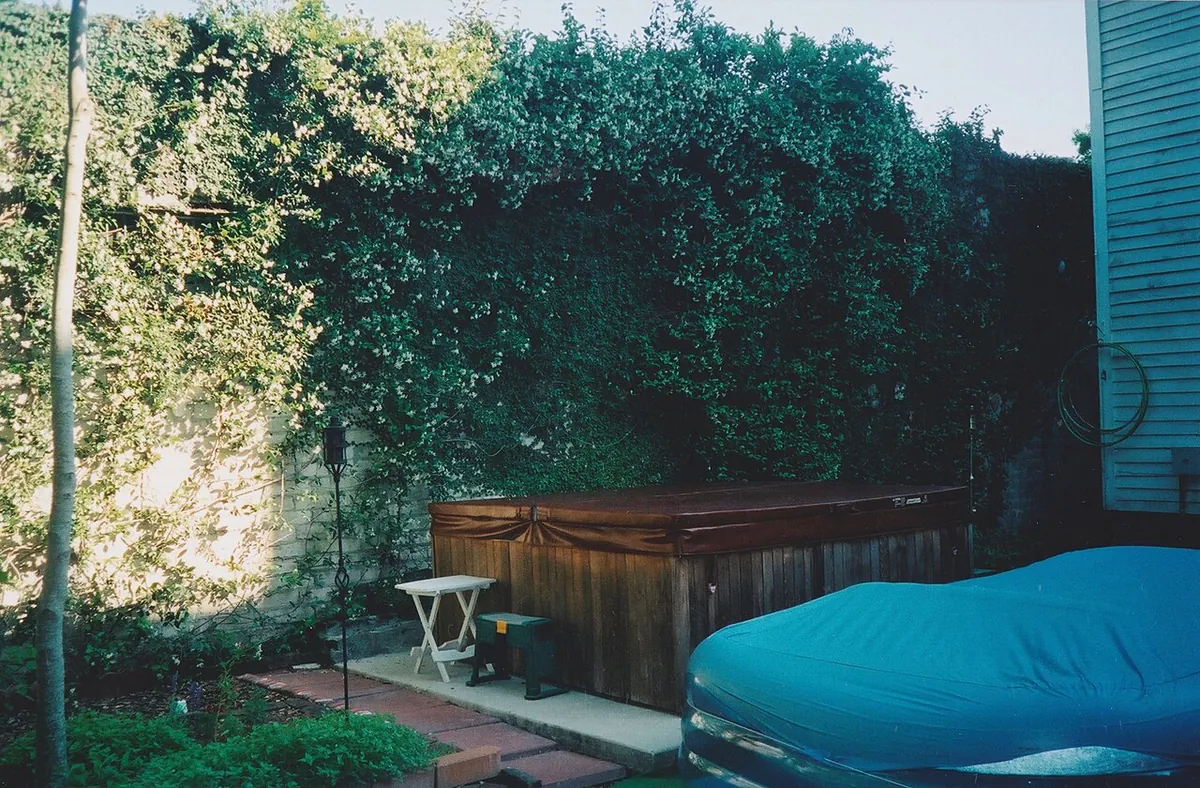
Photo: Infrogmation of New Orleans, Wikimedia Commons, CC BY-SA 4.0
Privacy Ideas for a Hot Tub Deck
- Slatted privacy screens on one or two sides.
- Outdoor curtains on a pergola or gazebo.
- Lattice panels with climbing vines such as jasmine or clematis.
- Tall planters with grasses or bamboo.
- Placing the tub in a corner against the house or a garage wall.
Lighting and Comfort Ideas
- Low-voltage step lights and post-cap lights for safe night entry.
- String lights on a pergola or gazebo.
- A cover lifter mounted on the deck to make opening the tub easy.
- Hooks or a towel bar within reach.
- A small side table or a wide ledge for drinks.
- An outdoor heater or fire pit nearby for cold nights (kept at a safe distance).
- Non-slip decking or mats around the tub, since wet surfaces get slippery.
Best Decking Materials Around a Hot Tub
Hot tub decking takes more water and chemicals than an ordinary deck. These hot tub decking ideas compare the main materials.
| Material | Cost per sq ft installed | Pros | Cons |
|---|---|---|---|
| Pressure-treated pine | $15 – $30 | Lowest cost, strong | Splinters, needs sealing, can warp when wet |
| Cedar or redwood | $25 – $45 | Natural rot resistance, looks great | Needs regular sealing |
| Composite | $30 – $60 | Low maintenance, no splinters | Can get hot in sun, higher cost |
| PVC decking | $35 – $65 | Waterproof, slip-resistant options | Highest cost of synthetics |
| Concrete or pavers | $8 – $30 | Strong, durable, easy to clean | Ground level only |
Around hot tubs, splashing water and chemicals are constant. Composite and PVC decking resist moisture best; wood decks need sealing every one to two years. Use stainless steel or coated fasteners, which resist corrosion from chlorine and bromine. For a concrete patio around the tub, see concrete pool deck.
Hot Tub Deck Cost
| Project | Typical cost |
|---|---|
| Concrete pad only (8 x 8 ft) | $500 – $1,500 |
| Paver patio around tub (150 – 250 sq ft) | $2,000 – $6,000 |
| Ground-level deck with cut-out (200 sq ft) | $5,000 – $12,000 |
| Raised deck with reinforced framing | $10,000 – $25,000+ |
| Hardtop gazebo | $2,000 – $6,000 |
| Custom wood gazebo or pergola | $4,000 – $15,000 |
| Privacy screens (per 8 ft section) | $300 – $1,200 |
Simple Hot Tub Deck Ideas on a Budget
You do not need a big deck to make a hot tub look good. Simple hot tub deck ideas that cost little:
- Gravel pad with a timber border: compacted gravel inside a frame of landscape timbers, with a few stepping stones to the door. Often under $800.
- Prefab spa pad plus pavers: a plastic spa base under the tub and a ring of pavers around it.
- Small step deck: a 4 x 8 ft deck on one side of the tub at rim height, with steps. The tub sits on its own pad; the deck is just for entry.
- Wood surround kit: panels that wrap the tub's cabinet to give a built-in look without a full deck.
- Reuse an existing patio if the slab is at least 4 inches thick, level and not cracked.
How to Build a Deck for a Hot Tub
Building a deck for a hot tub follows normal deck building, with extra attention to the tub area. A general outline:
- Get the tub specs first: dimensions, filled weight, electrical needs, and where the equipment access panel is.
- Plan the layout: decide whether the tub sits on the deck, in a cut-out on its own pad, or recessed. Mark the access side so it stays reachable.
- Pull permits for the deck and electrical work.
- Pour the tub pad (for cut-out or recessed designs): 4 to 6 inches of reinforced concrete on compacted gravel, level and slightly larger than the tub.
- Set footings and posts for the deck. For a tub on the deck, add footings and posts under the tub area as designed by an engineer.
- Frame the deck: beams, joists and blocking. Under a tub, joists are often 12 inches on center or closer, with doubled beams.
- Frame the cut-out around the tub with a small gap so the deck does not touch the tub.
- Lay the decking and build steps, benches and railings.
- Run electrical (a licensed electrician): a dedicated GFCI-protected circuit with a disconnect at least 5 feet from the water, within sight of the tub.
- Set the tub and finish trim, lighting and privacy screens.
The American Wood Council's deck guide (DCA 6) covers standard deck framing, but hot tub loads are outside its scope, so a design professional should size the framing for a hot tub on a deck.
Planning the Hot Tub Area
- Distance from the house: close enough for a short walk in winter, ideally 10 to 25 feet from a door.
- Electrical run: a shorter run from the panel lowers wiring cost.
- Drainage: plan where water goes when you drain the tub every 3 to 4 months.
- Delivery path: the tub arrives on its side and needs a clear path about 4 feet wide, or a crane.
- Service access: leave room to open the equipment panel; a technician needs about 2 to 3 feet.
- Views: face the tub toward the garden or sky, and away from neighbors' windows.
- Sun and shade: afternoon shade helps in summer; winter sun helps in cold climates.
- Safety: a locking cover is required in many areas; some also require a fence.
Buying Tips for Hot Tub Gazebos
Hot tub gazebos come in many styles. When shopping for a gazebo hot tub setup:
- Check snow load and wind ratings for your area.
- Choose rust-proof aluminum or treated wood; plain steel rusts in steamy conditions.
- Look for a vented or double roof to let steam escape.
- Make sure the height clears the open cover and a cover lifter.
- Plan where lights and outlets go, keeping them at safe distances from water.
- Anchor the gazebo to the pad or footings; lightweight kits can blow over.
A hot tub in a gazebo can be used in rain and snow, and a gazebo with curtains or panels gives a private, room-like feel.
Backyard Hot Tub Landscaping Ideas Through the Seasons
Good hot tub landscape ideas look good all year. Evergreens provide winter structure and privacy; ornamental grasses add movement in summer and fall; spring bulbs in planters bring early color; and a few pots near the steps can be swapped each season. Use path lighting so planting stays visible at night, when most people use the tub. Keep plants that attract bees, such as lavender, a few feet away from the water.
Hot Tub Deck Ideas for Cold Climates
- Short path from the door: a covered walkway or a tub near the back door makes winter use far more likely.
- Wind block: a solid screen or the house wall on the windward side keeps the water and you warmer.
- Heated changing spot: a mudroom or covered porch near the tub for robes and towels.
- Snow-rated roof: a gazebo or pergola with a solid or louvered roof built for snow load.
- Non-slip, quick-draining surface: composite with a textured finish or pavers that shed water.
- Good insulation and a thick cover on the tub itself, since heat loss is the main running cost in winter.
Hot Tub Deck Ideas for Hot Climates
- Shade: a pergola, shade sail or gazebo keeps the tub cover and deck from overheating.
- Light-colored decking: dark composite can get too hot to walk on barefoot.
- Cool-down space: an outdoor shower or a small pool next to the tub.
- Evening lighting: most use happens after sunset, so plan lights and seating for night.
Safety Around a Hot Tub Deck
Wet decks are slippery, so choose textured decking, add handrails on steps and keep the area lit. Use a locking, rated cover whenever the tub is not in use, especially with children nearby. Keep electrical outlets and lights at the distances required by code, and never run extension cords to a hot tub. Keep glass away from the tub area; use plastic cups and plates instead.
Maintaining a Hot Tub Deck
A deck around a hot tub gets wet several times a week, so a little regular care goes a long way:
- Sweep leaves and dirt off the deck so they do not get tracked into the water.
- Wash the deck every spring and fall with a deck cleaner made for your material.
- Reseal wood decks every one to two years, and check for soft or rotting boards near the tub.
- Look under the deck once a year for sagging joists, loose hangers and wet footings, especially under a tub on deck framing.
- Keep the gap between the deck and the tub clear so water can drain and the tub can be serviced.
- Store chemicals in a dry, ventilated box, never directly on wood decking.
With good support, sensible materials and a little care, any of these hot tub deck ideas can give you a comfortable spot to soak for 15 to 20 years.
Hot Tub Deck Ideas: Key Points
- A filled hot tub needs 100 to 150 lb per sq ft of support, more than most decks.
- Use a concrete pad under a deck cut-out, reinforced framing, or a recessed design.
- Patios are the simplest, lowest-cost base.
- Gazebos and pergolas add shade and privacy.
Frequently Asked Questions
Are hot tubs on deck framing safe?
Yes, when the deck is designed for the load. Hot tub decks built without extra support can sag or fail over time.
Can you put a hot tub on a deck?
Yes, if the deck is designed for 100 to 150 lb per sq ft under the tub, or the tub sits on its own pad through a deck cut-out.
How much does a hot tub deck cost?
About $5,000 to $20,000 for a new deck built for a hot tub, depending on size, height and materials.
Can I move my hot tub onto a new deck later?
Yes, if the new deck or pad is designed for it. Drain the tub, have an electrician disconnect it, and hire a hot tub moving crew. Plan the deck around the exact tub size so you do not need to cut the decking later.
What goes under a hot tub on a deck?
Either reinforced framing with extra joists and posts, or a concrete pad on the ground through a cut-out. Never set a tub on decking boards alone without checking the framing below.
How big should a deck for a hot tub be?
Plan the tub size plus at least 3 feet on the entry side and 2 feet on the others. For a 7 x 7 ft tub, a deck area of about 12 x 12 ft or larger works well.
Should a hot tub be recessed into a deck?
Recessing looks great and makes entry easier, but service access is harder. Leave a removable panel on the equipment side.
How far should a hot tub be from the house?
Close enough for a short walk, often 10 to 25 feet, while meeting electrical clearances and leaving room around the tub.
Do I need a permit for a hot tub deck?
Usually for a new deck, a raised deck or one carrying a hot tub, and almost always for the electrical work.
Can a hot tub go under a gazebo?
Yes. Choose a gazebo with good ventilation, at least 7 feet of headroom and a roof rated for your snow and wind loads.
What is the best surface for a hot tub patio?
A 4 to 6 inch concrete pad is the most stable. Pavers on a compacted base and prefab pads also work for smaller tubs.
How do I protect a wood deck from hot tub water?
Seal it every one to two years, wipe up chemical spills, use mats at the entry and keep water balanced to reduce splashing of harsh chemicals.
Is a hot tub on a second-story deck safe?
Only if an engineer designs the framing, posts and footings for the full weight. Many owners choose a ground-level location instead.
Sources
- American Wood Council: Prescriptive residential deck construction guide (DCA 6)
- HomeGuide: Hot tub cost
- Angi: Deck building cost
- CPSC: Pool and spa safety