
How Long Does Concrete Take to Cure? When to Walk, Drive and Put Weight on It
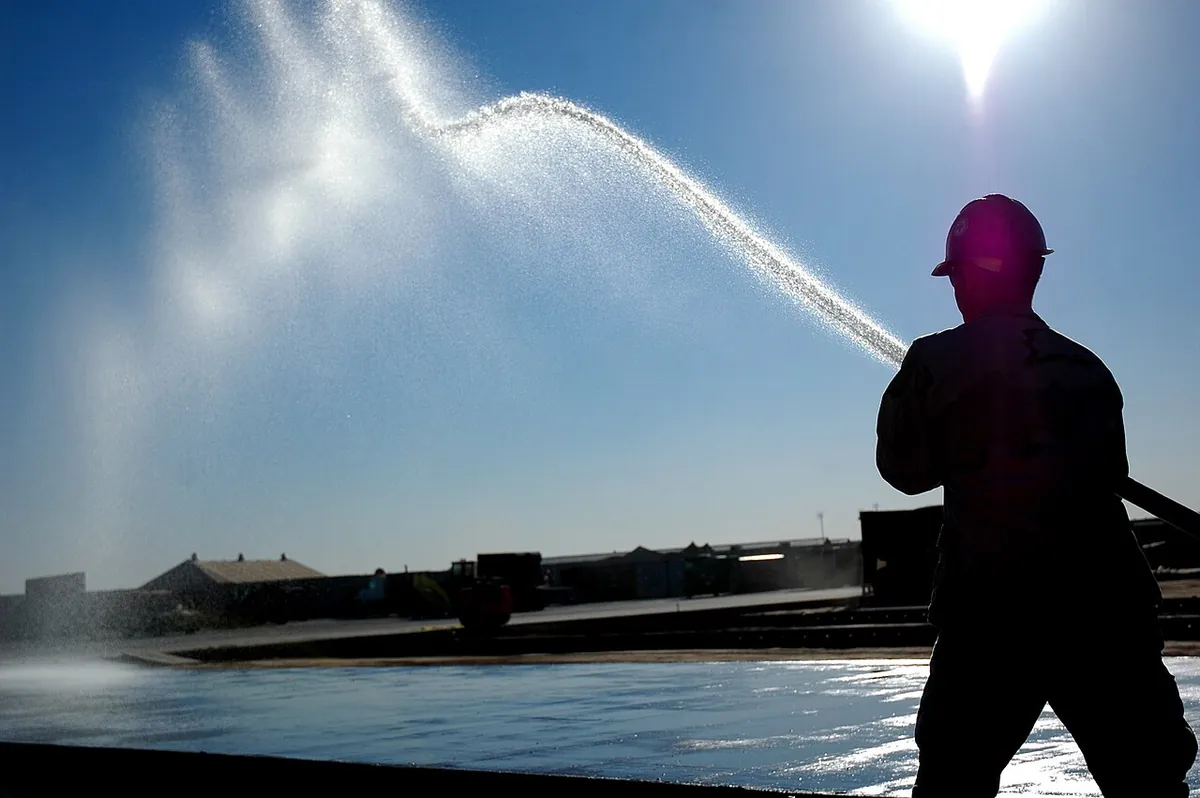
Photo: U.S. Navy / Demetrius Kennon, Wikimedia Commons, public domain
Quick Answer
Concrete sets in a few hours, but it takes much longer to cure. In mild weather (around 70°F), you can usually walk on new concrete after 24 to 48 hours, drive a car on it after about 7 days, when it has reached roughly 70 percent of its strength, and treat it as fully cured for design purposes at about 28 days. The American Concrete Institute recommends keeping concrete moist or covered for at least the first 7 days. Cold weather slows curing a lot; hot, dry and windy weather can make the surface dry out too fast.
"How long does concrete take to cure?" is really several questions. When can you take the forms off? When can you walk on it? When can you park a car or set a hot tub on it? When can you seal it or put down flooring? Each one has a different answer, because concrete gains strength gradually over weeks, not all at once.
This guide explains the difference between setting, drying and curing, gives a clear timeline for a typical slab, covers how temperature and the mix change the schedule, shows how to cure concrete properly, and answers common questions such as whether you can drive on new concrete after 3 days.
Concrete Cure Time at a Glance
| Milestone | Typical time at about 70°F | What it means |
|---|---|---|
| Initial set | a few hours | Concrete stiffens; finishing must be done before and around this point |
| Remove slab forms | about 1 – 2 days | Edges can stand on their own; careful not to chip them |
| Light foot traffic | about 24 – 48 hours | Walk carefully; no dragging or heavy loads |
| Furniture, light equipment | about 3 – 7 days | Avoid point loads and dragging |
| Passenger cars | about 7 days | About 70 percent of design strength reached |
| Heavy trucks, RVs, equipment | about 28 days | Design strength reached |
| Most sealers and coatings | often after about 28 days | Check the product label |
| Moisture-sensitive flooring | weeks to months | Test slab moisture first |
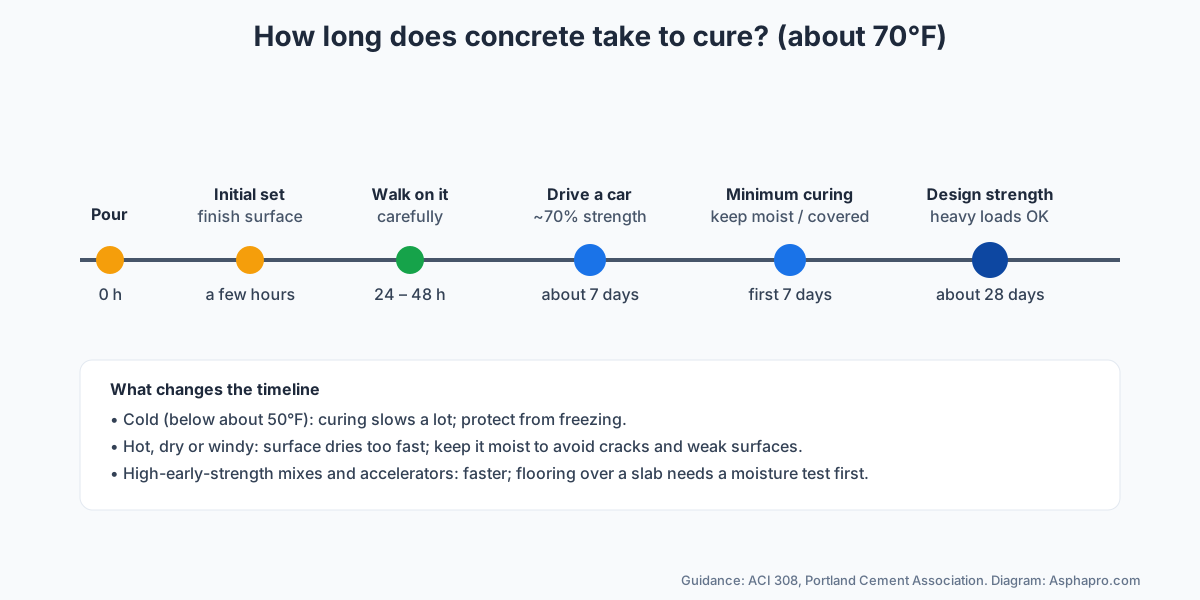
Set, Dry and Cure: What Is the Difference?
People use these words as if they mean the same thing, but they describe different stages:
- Setting is when fresh concrete stops being workable and starts to harden. It happens within hours. Once concrete has set, it holds its shape, but it is still weak.
- Curing is the chemical reaction between cement and water, called hydration, that makes concrete hard and strong. It needs moisture and moderate temperatures, and it continues for weeks and, more slowly, for months.
- Drying is the loss of extra water from the concrete into the air. Concrete can look dry on the surface within a day, but a slab can hold moisture deep inside for weeks or months.
The key point is that concrete does not get strong by drying. It gets strong by curing, and curing needs water. If concrete dries out too fast in the first days, the reaction slows and the surface ends up weaker, dusty and more likely to crack. That is why good contractors keep new concrete moist instead of letting it dry quickly.
How Long for Concrete to Set?
How long does it take for concrete to set? Usually 1 to 2 hours for initial set and 4 to 8 hours for final set at about 70°F. How long does concrete take to set on a cool day is a different story: at 50°F, the same mix can take twice as long, which pushes finishing late into the day.
Normal concrete reaches its initial set within a few hours of mixing, depending on the temperature and the mix. In hot weather it can set much faster; in cold weather, much slower. Finishers watch the concrete rather than the clock: they float the surface after placing, wait for the bleed water on the surface to disappear, then edge, joint and trowel or broom it as it stiffens. Fast-setting bagged mixes can set in well under an hour, according to their labels, which is why they are popular for fence posts. Retarders are sometimes added to slow setting on hot days or long pours.
How Long Before You Can Walk on Concrete?
For most slabs in mild weather, you can walk on new concrete after about 24 to 48 hours. Walk gently, wear clean, soft-soled shoes, and avoid twisting, dragging tools or letting pets run across it. In cool weather, wait longer; the surface may still be soft enough to mark. If you can press a fingernail into the surface or leave a print, it is too early.
So how long until you can walk on concrete safely without any risk? Most people are fine after two days. Keep heavier foot traffic, such as moving furniture or wheelbarrows, off the slab for several days.
How Long Should Concrete Cure Before Putting Weight on It?
The answer depends on how heavy the load is:
- Patio furniture and grills: about 3 to 7 days. Lift items into place instead of dragging them.
- A shed: many builders set a light shed after about a week; heavy sheds with equipment are better after longer curing.
- Cars: about 7 days, when concrete typically reaches around 70 percent of its design strength.
- Hot tubs: a filled hot tub is very heavy, so many installers wait until the slab approaches full strength at about 28 days.
- Heavy trucks, RVs, dumpsters and equipment: about 28 days or longer for thick slabs.
Edges and corners are the weakest parts of a new slab. Keep tires and heavy loads away from the edges for longer than the middle.
Can You Drive on New Concrete After 3 Days?
It is not recommended for most driveways. At 3 days, concrete has usually gained some strength but not enough for regular car traffic, especially near the edges and joints. A car tire puts a concentrated load on a small area, and the slab can crack. The common rule is to wait about 7 days before driving a passenger car on a new driveway, and longer in cool weather. Heavy vehicles such as moving trucks, delivery trucks and RVs should wait about 28 days. If you must use the driveway sooner, ask your contractor about high-early-strength concrete when planning the pour.
How Long Does Concrete Take to Fully Cure?
How long does it take for concrete to cure enough for normal use? About 7 days for cars and 28 days for heavy loads. How long does it take for concrete to fully cure in the chemical sense is a different answer: cement keeps reacting slowly for months and even years as long as there is moisture inside, so strength keeps creeping up after day 28.
For engineering purposes, concrete is considered to reach its design strength at 28 days. That is when test cylinders are usually broken to check the strength listed on the order, such as 3,000 or 4,000 psi. In practice, concrete keeps getting a little stronger for months and even years if moisture is present, but the rate slows sharply after the first few weeks. A common rule of thumb is that concrete reaches about 70 percent of its design strength in about 7 days and close to 100 percent at about 28 days under good curing conditions.
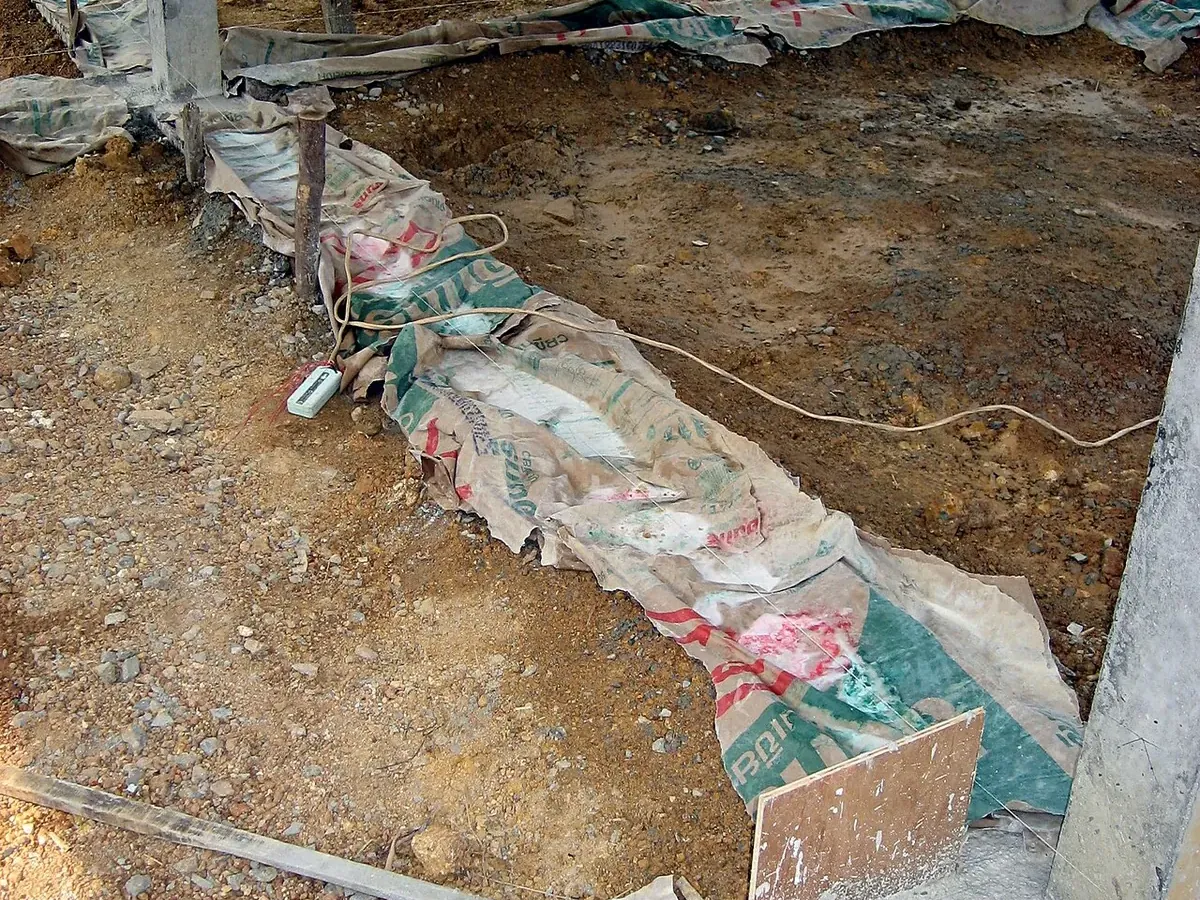
Photo: Khaosaming, Wikimedia Commons, CC BY-SA 3.0
Concrete Strength Gain Day by Day
Strength builds fastest in the first week and then slows. The exact curve depends on the cement, the mix and the temperature, but under good moist curing at about 70°F, a typical pattern looks like this:
| Age | Approximate share of 28-day strength | What you can usually do |
|---|---|---|
| 1 day | roughly 15 – 20% | Light foot traffic late in the day or the next day |
| 3 days | roughly 40% | Normal walking, light furniture lifted into place |
| 7 days | roughly 65 – 70% | Passenger cars on driveways |
| 14 days | roughly 90% | Most normal residential use |
| 28 days | about 100% (design strength) | Heavy trucks, RVs, equipment |
These are general figures, not guarantees. Cold weather, poor curing or a wet mix can slow strength gain a lot, while high-early-strength mixes gain strength faster. When the concrete has to carry a structural load, engineers use test cylinders rather than a calendar.
Cure Time by Concrete Mix
Regular ready-mix
Standard 3,000 to 4,000 psi mixes follow the familiar 7-day and 28-day pattern. Most driveways, patios and slabs use this type.
High-early-strength concrete
Mixes made with high-early cement (often called Type III) or extra cement and accelerators reach usable strength faster. ACI guidance cited by the FHWA allows a shorter minimum curing period, about 3 days, for high-early-strength concrete. These mixes cost more per yard but are useful when a driveway or street must reopen quickly.
Mixes with fly ash or slag
Many plants replace part of the cement with fly ash or slag. These mixes often gain strength more slowly in the first days, especially in cool weather, but can end up as strong or stronger in the long run. They benefit from longer curing.
Bagged concrete mixes
Standard bagged concrete behaves like regular concrete. Fast-setting mixes for posts set in well under an hour, and high-strength bagged mixes are made to reach higher psi. Always follow the times printed on the bag, since products vary. See how much a bag of concrete costs for the main types.
Does Slab Thickness Change Cure Time?
Thickness has two opposite effects. Thicker concrete holds the heat produced by curing, which helps strength develop in cool weather. But thicker slabs also take much longer to dry out, so moisture-sensitive flooring over a 6 inch slab must wait longer than over a 4 inch slab. For walking and driving, the usual 2-day and 7-day guidelines apply to typical residential thicknesses; for flooring and coatings, rely on moisture tests.
What If It Rains After You Pour?
Light rain after the concrete has been finished and has begun to set usually does little harm and can even help curing. Heavy rain on fresh concrete before it sets can wash cement paste off the surface, leave pits, and weaken the top layer. Keep plastic sheeting on hand to cover the slab if rain arrives in the first few hours, and do not work rainwater into the surface while finishing. See can you pour concrete in the rain.
Curing Concrete in Cold Weather
Cold weather is the biggest reason concrete takes longer to cure. Below about 50°F, the reaction slows; near freezing, it nearly stops. If water in fresh concrete freezes, it expands and can damage the concrete permanently. Contractors pouring in cold weather:
- Never pour on frozen ground or snow.
- Use heated water and accelerating admixtures from the ready-mix plant.
- Cover the slab with insulated curing blankets right after finishing.
- Keep forms on longer, since they help hold heat.
- Wait longer before walking, driving or loading the slab.
In cold weather, add several days to every milestone, and longer if nights are freezing. See pouring concrete in cold weather.
Curing Concrete in Hot Weather
Heat speeds up setting, which shortens the time crews have to finish. Sun and wind also pull water from the surface. The result can be plastic shrinkage cracks, a weak surface and lower long-term strength. To cure well in hot weather, pour early in the morning, dampen the base and forms before the pour (without leaving puddles), use an evaporation reducer during finishing, and start wet curing or apply curing compound as soon as possible. Shade and windbreaks help on very hot, windy days.
Indoor Slabs: Garages and Basements
Slabs poured inside a building are protected from sun, wind and rain, so they often cure more evenly. But they also dry more slowly, especially basements with little airflow. Garage floors can usually take cars after about a week, like driveways. Before applying epoxy or installing flooring in a basement, test the slab's moisture; many coating and flooring failures come from applying them too early. See concrete coating cost.
How Long Does Concrete Take to Dry?
How long does it take for concrete to dry depends on what you mean by dry. The surface looks dry and turns lighter in color within a day or two. How long does it take concrete to dry inside, so that flooring, paint or sealer will stick? Much longer. A common rule of thumb is about 30 days per inch of thickness in good conditions, so how long for concrete to dry under a floor covering can be 3 to 4 months for a 4 inch slab, and longer in a cool, damp basement. Flooring makers ask for a moisture test rather than a calendar date, and that is how long does concrete need to dry: until it passes the test.
The surface can look dry within hours to a day, but drying the whole slab takes far longer. Thick slabs, basements, slabs poured under a roof and slabs in humid climates hold moisture the longest. This matters most if you plan to put wood, vinyl, laminate, carpet, tile with certain adhesives, or epoxy over the concrete. Flooring and coating manufacturers usually require a moisture test, such as a relative humidity probe or calcium chloride test, before installation. Plan on weeks to months, and test rather than guess.
How Temperature Changes Concrete Cure Time
| Conditions | Effect on curing | What to do |
|---|---|---|
| Above about 90°F, sunny or windy | Sets fast; surface can dry and crack | Pour early, use evaporation reducer, keep moist |
| About 50 – 85°F | Normal curing | Keep moist or covered for about 7 days |
| About 40 – 50°F | Curing slows noticeably | Use blankets, consider accelerators, wait longer for loads |
| Below about 40°F | Curing very slow; freezing risk | Protect from freezing; heated enclosures or blankets |
The ACI curing guidance summarized by the Federal Highway Administration calls for curing for 7 days, or until concrete reaches 70 percent of its specified strength, when temperatures are above about 40°F. In colder weather, curing takes longer, and concrete must not freeze before it reaches a minimum strength. See pouring concrete in cold weather for details.
How to Cure Concrete Properly
How long does concrete need to cure with water or a cover on it? ACI recommends keeping it moist for at least the first 7 days. That is the part you control. How long for concrete to cure after that is mostly up to the weather.
Curing means keeping the right moisture and temperature in the concrete during its first days. Common methods:
- Water curing. Keep the surface wet with a sprinkler, soaker hose or by misting several times a day. Do not let it dry between wettings.
- Wet coverings. Cover with wet burlap or curing blankets and keep them damp.
- Plastic sheeting. Lay plastic over the slab to trap moisture. Weigh down the edges. It can leave light discoloration on colored concrete.
- Curing compound. Spray a liquid membrane on the surface after finishing to slow evaporation. Some compounds must be removed before sealing or coating; check the label.
- Insulated blankets. In cold weather, blankets hold in the heat that curing concrete produces.
Start curing as soon as the surface can be covered without marking it, and keep it up for at least 7 days. High-early-strength concrete may need less time, while some cement types need longer. See cold-weather pouring and pouring in the rain for weather-specific steps.
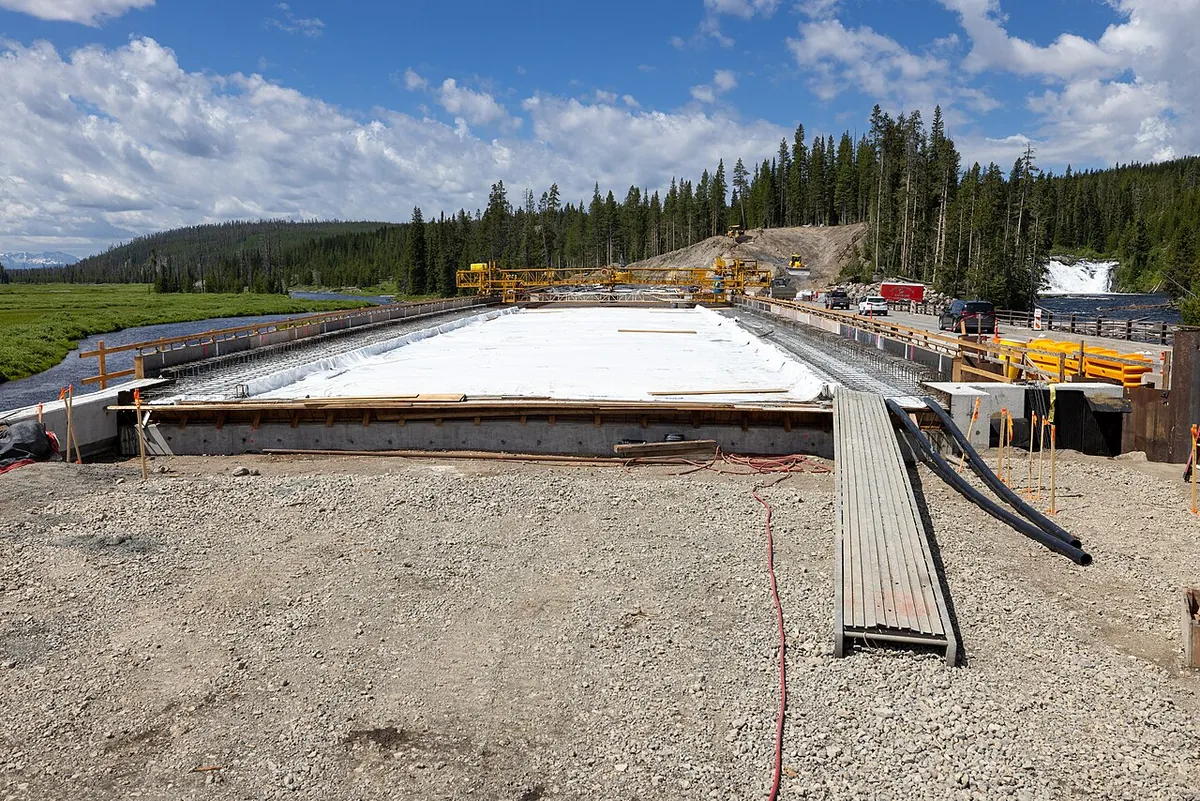
Photo: NPS / Jacob W. Frank, Wikimedia Commons, public domain
When Can You Remove Concrete Forms?
For slabs, sidewalks and driveways, side forms can usually be removed after about 1 to 2 days in mild weather. Be careful not to chip the edges. Forms for walls, columns and steps take longer, and forms that support weight, such as for elevated slabs or beams, must stay until the concrete is strong enough, as set by the engineer. In cold weather, leave forms on longer; they also help hold in heat.
When Can You Seal New Concrete?
Many sealers are meant to go on after the concrete has cured for about 28 days, so the surface can release extra moisture first. Some cure-and-seal products are made to go on right after finishing. Follow the label for the product you choose. See how to seal concrete for product types and steps.
Cure Times for Common Projects
| Project | Typical wait before use (mild weather) |
|---|---|
| Fence post footings (fast-setting mix) | a few hours before attaching rails, per bag label |
| Fence post footings (regular mix) | about 1 – 2 days before heavy loads |
| Sidewalk or walkway | walk after 24 – 48 hours |
| Patio | light use after a few days, furniture after about a week |
| Driveway | cars after about 7 days, heavy trucks after about 28 days |
| Garage floor | cars after about 7 days, coatings after the slab has cured and passed moisture tests |
| Footings and foundations | building may start once the engineer or inspector allows |
For driveway-specific guidance, see concrete driveway cost and how thick a concrete driveway should be.
Quick Rules: How Long Does Concrete Take to Cure for Each Job?
If you only remember a few numbers, make them these. For a typical slab in mild weather, the concrete curing time breaks down like this: about 2 days before walking, about 7 days before driving a car, and about 28 days before heavy loads, sealing with most products or putting a hot tub on it. In cold weather, stretch each number. In hot weather, the numbers stay similar, but the first days of curing concrete matter even more, because the surface can dry out before it gains strength.
When someone asks how long does concrete take to cure before a party, a move or a delivery, the honest answer is to plan around the 7-day mark for cars and the 28-day mark for anything heavy. If a moving truck or a dumpster is scheduled, keep it on the street or on plywood over an older driveway, not on new concrete. If you are planning a project with a deadline, tell your contractor up front; a high-early mix or a different pour date may solve the problem.
Keep in mind that the concrete cure time is not the same as the time it takes to look finished. New concrete often looks hard and dry by the next morning, but it is still weak inside, and its edges are fragile. Treat the slab gently for the first week, keep it moist, and you will get a stronger, longer-lasting surface.
Mistakes That Ruin Curing
- Letting it dry out fast. A hot, windy day can dry the surface within hours, leaving a weak, dusty layer.
- Adding water at the truck. Extra water makes concrete weaker and more likely to crack and curl.
- Driving on it too soon. Early loads crack slabs, especially at edges.
- Letting it freeze. Concrete that freezes in the first days can lose much of its strength and scale badly.
- Salt in the first winter. De-icing salt on young concrete causes scaling; see does salt damage concrete.
- Sealing too early with a product that is meant for cured concrete.
Protecting New Concrete During the First Week
The first week decides much of how strong and durable new concrete will be. Put up tape or barriers so kids, pets and delivery drivers stay off it. Keep sprinklers and downspouts from washing over the surface in the first hours, but keep the slab moist with gentle watering or coverings once it has set. Do not let vehicles cross the edges, even briefly, and do not stack heavy materials on it. If a freeze is forecast, cover the slab with insulated blankets before sunset. These steps cost almost nothing and prevent most early cracks, scaling and weak surfaces. If something does mark the surface in the first hours, tell your contractor right away; small marks can often be fixed while the concrete is still green and soft enough to work.
How to Tell if Concrete Is Cured Enough
You cannot see curing directly, but these signs help: the surface is hard and does not scratch with a fingernail or key, it has an even light-gray color with no dark damp patches, and the slab has had the recommended days at reasonable temperatures. For structural work, engineers rely on test cylinders broken at set ages, often 7 and 28 days. For flooring, rely on moisture tests, not appearance.
Frequently Asked Questions
How long does concrete take to cure?
About 7 days to reach roughly 70 percent of its strength and about 28 days to reach its design strength in mild weather. It keeps curing slowly after that.
How long before you can walk on concrete?
Usually 24 to 48 hours in mild weather. Walk gently, and wait longer in cool weather.
Can you drive on new concrete after 3 days?
It is not recommended. Wait about 7 days for passenger cars and about 28 days for heavy vehicles.
How long does concrete take to dry?
The surface can look dry within a day, but a slab may hold moisture inside for weeks or months. Test moisture before installing flooring.
How long for concrete to set?
A few hours for normal concrete in mild weather. Fast-setting bagged mixes can set in under an hour, according to their labels.
How long does concrete take to fully cure?
About 28 days to reach its design strength in mild weather. It continues to gain a little strength for months if moisture is present.
How long should concrete cure before putting weight on it?
About 3 to 7 days for furniture and light loads, about 7 days for cars, and about 28 days for heavy trucks, RVs and hot tubs.
How long before you can put a hot tub on new concrete?
Many installers wait until the slab approaches its design strength at about 28 days, because a filled hot tub with people in it weighs several thousand pounds.
Does concrete cure faster in hot weather?
It sets faster, but the surface can dry out before it cures properly. Keep hot-weather concrete moist so it cures fully.
How long should you keep new concrete wet?
At least the first 7 days for typical concrete, by water curing, wet coverings, plastic sheeting or a curing compound.
How long does it take concrete to cure in cold weather?
Much longer. Below about 50°F, strength gain slows a lot, and below 40°F it nearly stops. Concrete kept cold can take two or three times as long to reach the same strength, so contractors use blankets, heated enclosures and accelerators.
Sources
- Federal Highway Administration, summary of ACI 308 curing practice. fhwa.dot.gov
- American Concrete Institute, ACI 308R-16 "Guide to External Curing of Concrete" (preview). concrete.org
- NRMCA, "Concrete in Practice: Curing In-Place Concrete." nrmca.org
- Portland Cement Association, "Design and Control of Concrete Mixtures" (curing period guidance).
- Image credits: watering photo by the U.S. Navy and bridge photo by NPS / Jacob W. Frank (public domain); footing photo by Khaosaming (CC BY-SA 3.0), via Wikimedia Commons. Timeline by Asphapro.com.
Times are typical for normal concrete in mild weather. Follow your contractor's and product instructions. Checked November 2026.
Related Guides
- What is concrete made of? — cement, water, sand, gravel and air
- Can you pour concrete in the rain? — risks and how to protect a pour
- Can you pour concrete in the winter? — cold weather rules and protection
- Does salt damage concrete? — deicers, scaling and protection