
Can You Pour Concrete in the Winter? Cold Weather Concreting Explained
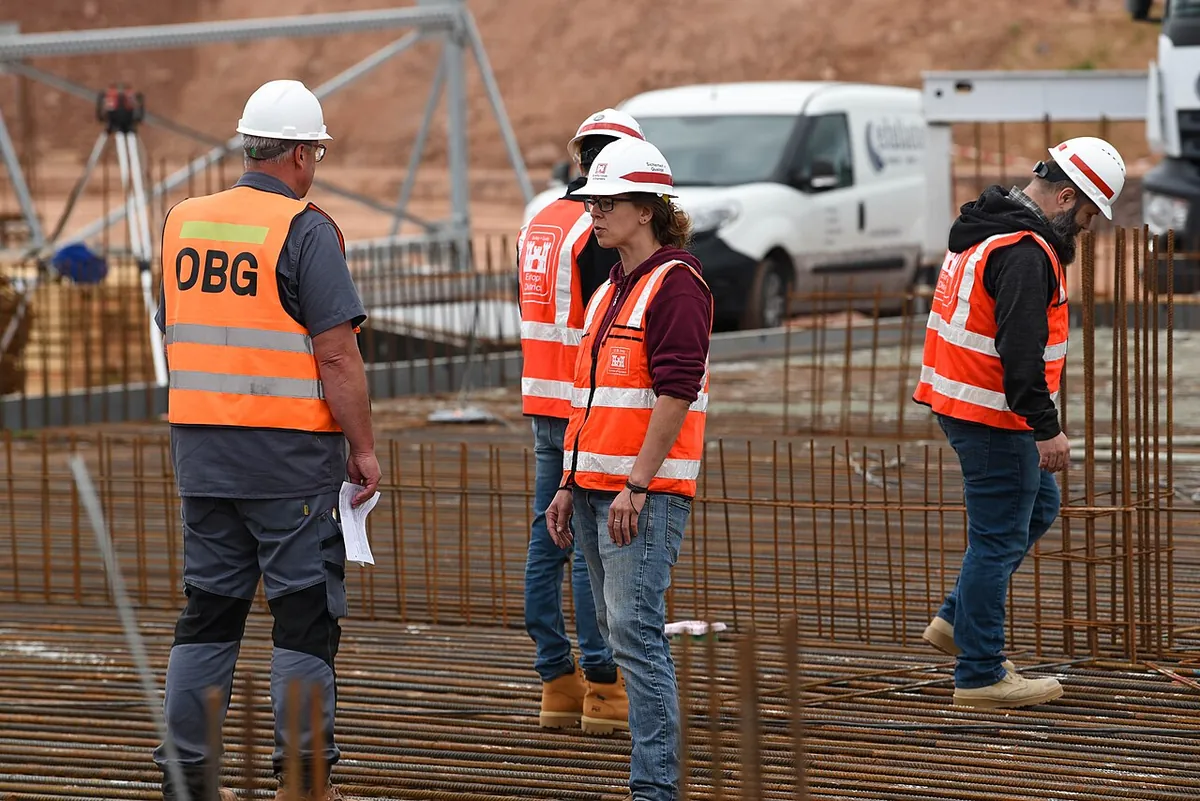
Photo: U.S. Air Force, Airman Sydney Franklin, Wikimedia Commons, public domain.
Quick Answer
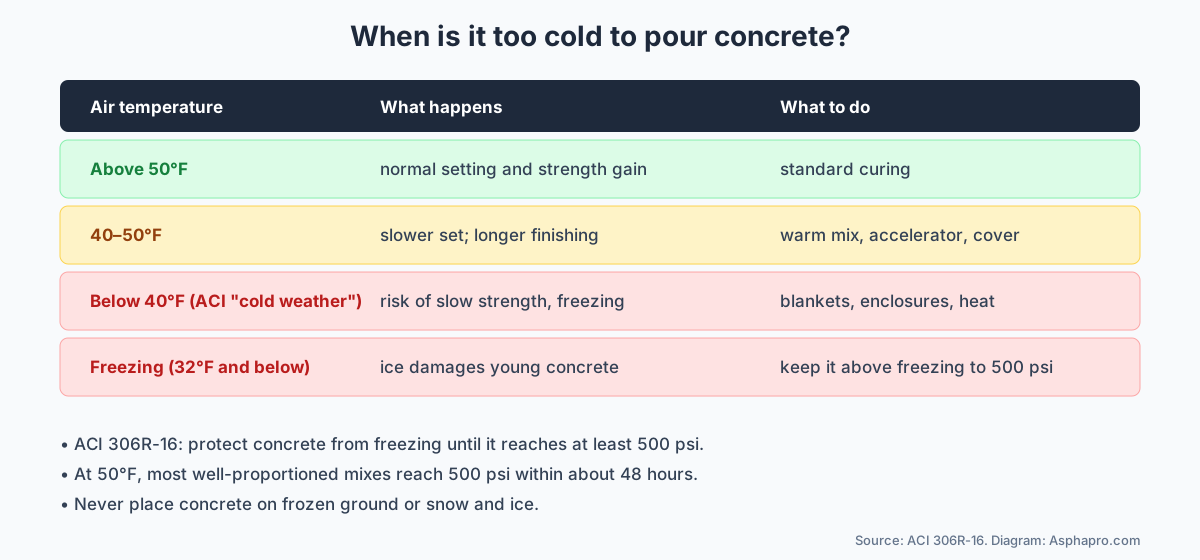
Yes, you can pour concrete in the winter, but it needs planning and protection. The American Concrete Institute considers it cold weather when the air temperature has fallen to, or is expected to fall below, 40°F (4°C) during the protection period (ACI 306R-16). The key rule is to keep the concrete from freezing until it reaches at least 500 psi; at 50°F, most well-proportioned mixes get there within about 48 hours. To do that, never pour on frozen ground, order a heated mix with an accelerator, cover the slab with insulated blankets, and use enclosures and vented heaters when it gets colder. When is it too cold to pour concrete? Without protection, any time temperatures will drop below about 40°F in the days after the pour. With proper protection, contractors pour through much colder conditions.
Construction does not stop for winter. Foundations, footings, garage slabs and repairs are poured in cold weather every year. But concrete behaves very differently when it is cold. It sets slowly, gains strength slowly, and if the water inside freezes before the concrete is strong enough, it can be permanently damaged.
This guide explains whether you can pour concrete in the winter, when it is too cold to pour concrete, what happens to cold concrete, how professionals protect it, what homeowners can do for small projects, and how to spot freeze damage.
What Cold Does to Concrete
Concrete hardens through hydration, a chemical reaction between cement and water. Like most chemical reactions, it slows down as the temperature drops. Cold has three main effects:
- Slower setting: concrete stays soft longer, which delays finishing and leaves the surface exposed to weather for more hours.
- Slower strength gain: the slab takes longer to reach the strength needed to walk on, drive on, or remove forms.
- Freezing risk: fresh concrete contains a lot of water. If that water freezes before the concrete has gained enough strength, ice crystals expand and disrupt the cement paste, leading to permanent loss of strength and durability, and often a scaling, crumbling surface.
Once concrete has reached about 500 psi, ACI explains, its degree of saturation has dropped enough that a single freezing cycle will not damage it. That is why the 500 psi rule is the core of cold weather concreting. It does not mean the concrete is fully strong; it just means one freeze will not ruin it. It still needs protection and curing to reach full strength. See how long concrete takes to cure.
When Is It Too Cold to Pour Concrete?
There is no single cutoff temperature that applies to every job. It depends on how warm the concrete is when placed, how thick the section is, the mix, and what protection is used. But these guidelines help:
- Above 50°F: normal conditions. Concrete sets and gains strength at a typical pace.
- 40 to 50°F: slower. Expect longer finishing times. Use a heated mix and covers, especially overnight.
- Below 40°F: ACI's definition of cold weather. Plan protection: blankets, accelerators, possibly enclosures and heat.
- Below freezing: concrete must be kept above freezing until it reaches at least 500 psi. Without heat and insulation, do not pour.
Watch the forecast for the days after the pour, not just the pour day. A mild afternoon followed by a 20°F night is a common trap. The protection period, not the moment of placing, is what matters.
How Temperature Changes Setting and Strength Times
Temperature has a big effect on how fast concrete sets and gains strength. A common rule of thumb in the industry is that every drop of about 20°F roughly doubles setting time. A slab that reaches initial set in a few hours on a 70°F day can take much longer at 50°F, and at temperatures near 40°F the slab may still be soft late in the day. Strength gain follows the same pattern: concrete that would reach a given strength in three days at 70°F may need a week or more in the cold.
This is why ACI's guidance focuses on the protection period rather than the pour moment, and why it notes that at 50°F most well-proportioned mixtures reach 500 psi within about 48 hours. At lower temperatures, that period stretches out, which means longer protection. Insulated blankets help because the slab produces heat as it hydrates; trapping that heat can keep the concrete much warmer than the air around it.
Antifreeze Admixtures: What They Do and Do Not Do
Some products are marketed as concrete "antifreeze." In practice, most are accelerators that help concrete gain strength faster so it reaches a safe strength before freezing. Special cold weather admixture systems can lower the freezing point of the mix water and allow strength gain at lower temperatures, and ACI 306R discusses them. But they do not replace good practice. They do not make it acceptable to pour on frozen ground, skip blankets in deep cold, or ignore curing. And chloride-based products can corrode rebar. Always use admixtures supplied and dosed by the ready-mix producer, not additives poured into the truck on site.
Fall Pours: The Hidden Risk
Many homeowners schedule driveways and patios in fall when contractors have openings. Fall pours can be excellent, but a slab poured in late fall goes into its first winter young and wet. It has less time to dry and gain strength before freeze-thaw cycles and deicing salts arrive. To reduce risk, use air-entrained concrete, cure properly, keep salt off the slab the first winter, and consider applying a penetrating sealer once the concrete has cured and dried enough, following the sealer label. See how to seal concrete.
Never Pour on Frozen Ground
Concrete should never be placed on frozen soil, snow or ice. Frozen ground chills the bottom of the slab, slowing hydration and risking freezing from below. Worse, when the ground thaws, it settles unevenly, leaving the slab unsupported and cracking. Before a winter pour:
- Remove snow and ice from forms, rebar and the base.
- Thaw frozen ground with insulated blankets, ground heaters or hydronic heating systems, which pump heated fluid through tubing laid on the ground.
- Check that the base is thawed through, not just on top.
- Keep the thawed ground covered until the pour so it does not refreeze.
How Professionals Pour Concrete in Winter
Can concrete be poured in the winter? Yes. Contractors pour all winter in cold states, but they plan for it with heated materials, accelerators, insulated blankets and sometimes heated enclosures.
1. Adjust the mix
- Heated concrete: ready-mix plants heat the water and sometimes the aggregates so concrete leaves the plant warm.
- Accelerating admixtures: speed up setting and early strength. For reinforced concrete, non-chloride accelerators are used, because ACI notes that early strength from calcium chloride is not worth it if reinforcement later corrodes and the concrete cracks.
- Type III or high-early-strength cement: gains strength faster.
- Lower water content: less water to freeze and faster strength gain.
- Air entrainment: for exterior concrete that will face freeze-thaw cycles in service.
- Cold weather admixture systems: special admixtures designed to let concrete gain strength at lower temperatures.
2. Prepare the site
- Thaw the ground and remove snow and ice.
- Warm forms and rebar if they are very cold.
- Have blankets, plastic and heaters on site before the truck arrives.
3. Protect after placing
- Insulated curing blankets: hold in the heat from hydration. Often enough for slabs and footings in moderately cold weather.
- Plastic under blankets: keeps moisture in for curing.
- Enclosures: tarps or temporary structures around the work, heated when needed.
- Heaters: indirect-fired or vented heaters are preferred. ACI notes that carbon monoxide in the exhaust of fossil-fuel heaters can cause dusting of concrete surfaces less than 24 hours old, so exhaust should be vented outside the enclosure.
- Temperature monitoring: thermometers or embedded sensors track concrete temperature; maturity methods estimate strength.
4. Remove protection gradually
When protection comes off, the concrete surface should cool gradually. A sudden drop from a warm enclosure to frigid air can cause thermal cracking. Contractors lower temperatures slowly or remove blankets on milder days.
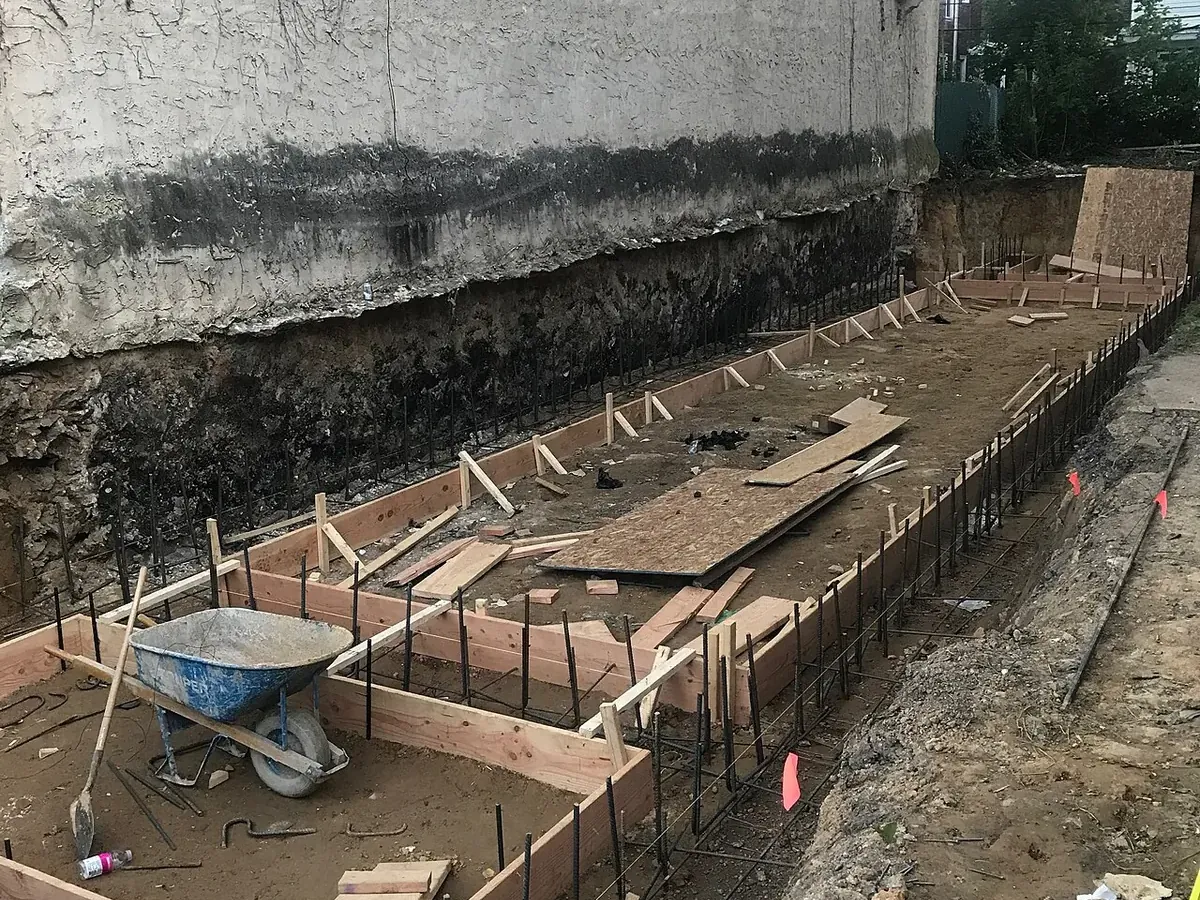
Photo: Beams&Lintels, Wikimedia Commons, CC BY-SA 4.0
Small Winter Projects for Homeowners
Homeowners often wonder whether they can pour concrete in the winter for small jobs like fence posts, a shed pad, steps or a footing for a deck. The answer is often yes, if you follow a few simple steps.
Fence and deck posts
Posts use small amounts of concrete deep in the ground, where soil below the frost layer is warmer than the air. Dig through any frozen crust, make sure the bottom of the hole is not frozen, use a fast-setting mix mixed with warm (not hot) water, and cover the top of each hole with insulation or a blanket for the first couple of days if nights are below freezing. Fast-setting mixes generate heat quickly and set before the cold can do much harm.
Small slabs and pads
A shed pad or landing is more exposed. Pick a stretch of days with mild afternoons and nights near or above freezing. Thaw and cover the ground beforehand. Order a heated, accelerated ready-mix if possible, or use warm water in bagged concrete. After finishing, cover with plastic and then with insulated blankets, straw bales or rigid foam boards, and keep them on for several days. Check the slab temperature with an infrared thermometer under the blanket.
Footings
Footings sit in the ground and are easier to protect, but the trench must be free of frost and snow. Cover the trench overnight before the pour, and cover the fresh concrete with blankets and backfill or insulation afterward if nights are cold. Footings must sit on unfrozen, undisturbed soil below the local frost depth. See concrete footing cost.
When to wait for spring
If you cannot thaw the ground, do not have blankets, and the forecast shows hard freezes every night, wait. Decorative work like stamped and stained concrete is especially hard to do well in the cold and is usually scheduled for warmer months.
Finishing Concrete in Cold Weather
Cold concrete stays plastic much longer, so finishing can stretch late into the day. Bleed water rises slowly and lingers on the surface. Finishers must wait for it to disappear rather than troweling it in, because working water into the surface makes it weak and prone to scaling. Some crews use accelerators specifically to shorten this wait. Never sprinkle dry cement to soak up bleed water. Plan for longer days and portable lights, and avoid starting large pours late in the afternoon in winter. See types of concrete finishes.
Curing in Cold Weather
Curing is about keeping concrete moist and at a reasonable temperature long enough to gain strength. In winter, moisture is less of a problem than heat. Concrete under blankets generates its own heat from hydration, which helps. But as soon as protection comes off, strength gain slows dramatically in cold air. The FHWA's summary of ACI 308 curing guidance calls for curing for 7 days or until about 70% of the specified strength, at temperatures above about 40°F. In cold weather, that often means keeping blankets on longer than the minimum and checking strength or temperature before loading the slab.
Do not let concrete dry out under heaters either. Heated enclosures can be dry; keep the surface covered with plastic or moist curing to stop it drying too fast. Rapid drying in a heated space can cause plastic shrinkage cracks and a weak surface.
How to Tell if Concrete Froze
- Surface scaling or flaking in the first months, especially after the first thaws.
- A crumbly, powdery surface that scratches easily with a key.
- Ice crystal patterns visible on the surface right after a freeze, sometimes like frost feathers.
- Low strength on test cylinders or a rebound hammer.
- Hollow sound when tapped, from a weak surface layer.
If concrete froze very early, the damaged layer may be limited to the top, and grinding and resurfacing can restore it. If it froze through, the concrete may need to be removed and replaced. For structural work, a contractor or engineer can test the strength with cores. See concrete repair cost.
Deicing Salts and New Concrete
Even if a slab is poured and protected well in fall or winter, it is most vulnerable to deicing salt in its first winter, when it has not had time to dry and gain full strength. Avoid salt on new concrete for the first year; use sand or kitty litter for traction. When you do use deicers later, avoid harsh ones like ammonium nitrate and ammonium sulfate. See does salt damage concrete.
Cost of Pouring Concrete in Winter
Winter concrete usually costs more because of heated mixes, accelerators, blankets, heaters, enclosures, fuel and slower work. Ready-mix suppliers often add a winter heating charge per cubic yard. Contractors may charge more for winter labor or schedule only essential pours. For many homeowners, if the job can wait, spring or fall pours give better results at lower cost. If the job cannot wait, such as a foundation for a home under construction, winter protection is a normal and reliable part of the work. See concrete price per yard.
Common Mistakes in Cold Weather
- Pouring on frozen or snow-covered ground, which later thaws and settles under the slab.
- Focusing on the pour-day temperature and ignoring the next few nights.
- Adding extra water to make cold, stiff concrete easier to place.
- Using calcium chloride accelerators in reinforced concrete.
- Running unvented heaters in an enclosure, causing surface dusting.
- Removing blankets too soon or all at once.
- Letting heated concrete dry out under heaters without plastic or moist curing to hold in water.
- Using deicing salt on new concrete in its first winter.
A Worked Example: Garage Slab in Late Fall
Say a builder must pour a 24 by 24 foot garage slab in late November. Forecast: highs in the low 40s, lows in the mid 20s for the next week.
- Two days before, the crew covers the compacted gravel base with insulated blankets to keep frost out.
- The morning of the pour, blankets come off; the base is thawed and free of ice.
- The ready-mix supplier sends a heated 4,000 psi mix with a non-chloride accelerator and air entrainment.
- The crew places, screeds and bull floats, then waits longer than usual for bleed water to disappear before finishing.
- After finishing, they apply curing compound, lay plastic, then two layers of insulated blankets, weighted at the edges.
- The garage walls are not yet up, so they also tarp the area to block wind.
- A thermometer under the blankets shows the concrete staying above 50°F for the first three days as hydration heat builds up.
- After about a week, they remove the blankets on a mild afternoon and keep traffic light for another week.
Planning Checklist for Concrete in Winter
If you are asking "can you pour concrete in the winter" for your own project, work through this checklist before booking the truck:
- Forecast: check lows for at least 3 to 7 days after the pour, not just the pour day.
- Ground: is it frozen? If so, plan to thaw it with blankets or heaters before the pour.
- Mix: ask the supplier for heated cold weather concrete with a non-chloride accelerator and the right air content.
- Protection: enough insulated blankets to cover the slab with overlap, plus plastic sheeting.
- Heat: for very cold weather, vented heaters and an enclosure.
- Timing: start early in the day so finishing ends before dark and the coldest hours.
- Monitoring: a thermometer to check concrete temperature under the blankets.
- Crew: enough people to cover the slab quickly after finishing.
- Deicers: plan to keep salt off the new concrete for its first winter.
Can You Lay Concrete in the Winter Without Heaters?
Often, yes. For many slabs and footings in moderately cold weather, with lows in the 20s and highs near 40°F, insulated blankets alone can keep the concrete warm enough, because hydration releases heat. Thicker sections hold heat better than thin ones. A 4-inch slab loses heat faster than a 12-inch footing, so thin slabs need more insulation. The key is to cover the concrete right after finishing and keep the blankets on for several days. In colder weather, with highs below freezing, wind or very thin sections, enclosures and heaters become necessary. So can you lay concrete in the winter without heaters? In mild cold, with good blankets, usually yes; in deep cold, no.
When Is It Too Cold to Pour Concrete for a DIYer?
Professionals with heated mixes, enclosures and monitoring equipment can pour concrete in the winter almost anywhere. A homeowner with bagged concrete and a few tarps has fewer tools. For DIY work, a practical guide to when it is too cold to pour concrete is this: if nights will drop well below freezing in the three days after the pour and you do not have insulated blankets and a way to thaw the ground, wait. If nights stay near or above freezing, the ground is thawed, you use warm mixing water and you can cover the work, small pours are usually fine. When in doubt, wait for a milder week; spring always comes.
Cold Weather Concrete vs Hot Weather Concrete
Both extremes need special care, but for opposite reasons. In cold weather concrete sets too slowly and risks freezing; the goal is to keep it warm and protected. In hot weather, concrete sets too quickly, loses water fast and risks plastic shrinkage cracks; the goal is to keep it cool and moist. Many of the same tools apply in reverse: retarders instead of accelerators, chilled water instead of heated water, sunshades and wind breaks instead of blankets. For rain, see can you pour concrete in the rain.
Questions to Ask a Contractor About a Winter Pour
- How will you protect concrete in the winter on this job: blankets, enclosure, heat?
- Will the mix be heated, and which accelerator will you use? Is it non-chloride?
- How will you thaw the ground, and how will you check it?
- How long will protection stay on, and how will you monitor concrete temperature?
- Are winter heating charges included in the quote?
- Will you warranty the surface against scaling if poured in cold weather?
A good contractor will have clear answers. If someone plans to pour concrete in the winter with no protection plan, look elsewhere.
To sum up: can you pour concrete in the winter? Yes, and contractors do it every year. The rules are simple even if the work is not. Never pour on frozen ground, use a warm, accelerated mix, keep the concrete from freezing until it reaches at least 500 psi, vent any heaters, remove protection gradually, and keep salt off the new surface for its first season. Follow those steps and winter concrete can last just as long as concrete poured in summer.
Frequently Asked Questions
Can you pour concrete in the winter?
Yes, with protection: no frozen ground, a heated and accelerated mix, insulated blankets, and heat or enclosures in colder weather.
When is it too cold to pour concrete?
Without protection, when temperatures are expected below about 40°F during the days after the pour. With protection, much colder conditions are workable.
Can you lay concrete in the winter?
Yes. The same rules apply: keep it from freezing until it reaches at least 500 psi and cure it properly.
What happens if concrete freezes?
If it freezes before reaching about 500 psi, ice can damage the paste, reducing strength and durability and causing surface scaling.
How long does concrete need to be protected from freezing?
Until it reaches at least 500 psi, often within about 48 hours at 50°F, longer when colder; then continued protection helps it gain strength.
Can I use salt on new concrete in winter?
Avoid deicing salts on concrete in its first winter. Use sand for traction instead.
Can you pour concrete at 30 degrees?
Only with protection: thawed ground, heated and accelerated mix, insulated blankets, and often enclosures and heat, keeping it above freezing until at least 500 psi.
Do concrete blankets really work?
Yes. They trap the heat that hydration produces and are often enough for slabs and footings in moderate cold.
Is it better to pour concrete in fall or spring?
Both are usually good. Fall pours need time to cure before freezing nights and deicing salt; spring pours avoid that risk.
Can I pour concrete on frozen ground if I add antifreeze?
No. Never pour on frozen ground. Antifreeze admixtures do not fix a frozen base that will settle when it thaws.
Sources
- American Concrete Institute, ACI 306R-16 Guide to Cold Weather Concreting (cold weather definition, 500 psi protection, heater exhaust). concrete.org
- Federal Highway Administration, summary of ACI 308 curing guidance. fhwa.dot.gov
- Image credits: inspection photo U.S. Air Force (public domain); slab forms photo by Beams&Lintels (CC BY-SA 4.0), both Wikimedia Commons; chart by Asphapro.com.
Checked November 2026.
Related Guides
- Can you pour concrete in the rain? — risks and how to protect a pour