
Concrete Disposal and Concrete Dumpster Rental: Options, Rules and Costs
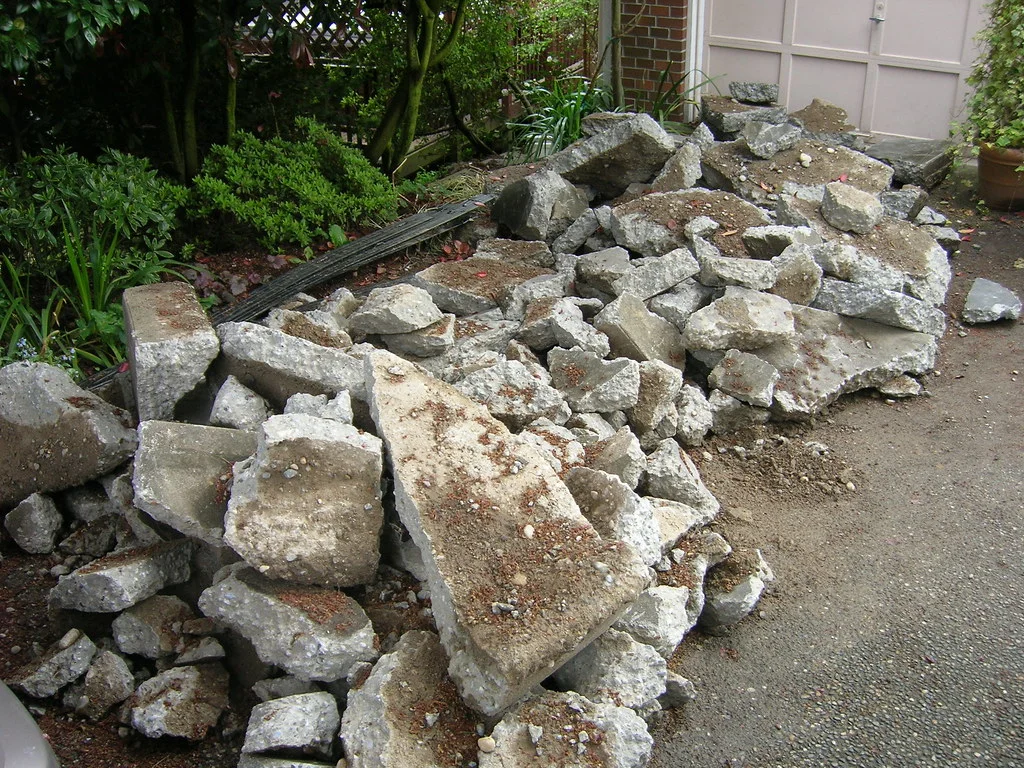
Photo: brewbooks, Flickr, CC BY-SA 2.0
Quick Answer
Concrete disposal is usually cheapest at a concrete recycling yard, which charges about $0 to $30 per ton for clean broken concrete, compared with roughly $40 to $100 per ton at a landfill. For a patio, driveway or slab, a concrete dumpster rental is the easiest option: most haulers require a 10 yard heavy-debris dumpster for concrete, filled only to a marked line, with a weight limit of about 10 tons, and charge around $300 to $700 for clean concrete. Concrete is heavy: a 4 inch slab weighs about 50 pounds per square foot, so 100 square feet is roughly 2.5 tons. Leftover wet concrete and washout water must never go into drains or soil; let it harden in a lined washout area and dispose of it as solid concrete.
Breaking out an old patio, sidewalk, driveway or garage floor is only half the job. The other half is getting rid of the pieces, and that can surprise people, because concrete is extremely heavy, most curbside trash services will not take it, and regular dumpsters are not allowed to be filled with it. The pile of broken patio slabs in the photo above, from a small backyard project, could easily weigh a ton or more. Fortunately, concrete disposal has a big advantage over most debris: clean concrete is valuable as a recycled material, so many yards accept it cheaply or for free.
This guide covers every concrete disposal option, from concrete dumpster rental to recycling yards, landfills, haulers and reuse, how much each costs, how to estimate weight, and how to handle wet concrete and washout. For the cost of breaking out the concrete in the first place, see concrete removal cost.
How Much Does Broken Concrete Weigh?
Weight drives almost every concrete disposal decision, from which dumpster you can rent to how many trips your truck can make. Normal concrete weighs about 145 to 150 pounds per cubic foot, or roughly 4,000 pounds (2 tons) per cubic yard. That gives easy rules of thumb for slabs:
4 inch slab: about 50 pounds per square foot. A 10 x 10 foot patio weighs about 5,000 pounds, or 2.5 tons.
5 inch slab: about 62 pounds per square foot.
6 inch slab or driveway: about 75 pounds per square foot. A 12 x 40 foot driveway at 6 inches is about 18 tons.
Sidewalk: a 4 foot wide, 4 inch thick walk weighs about 200 pounds per running foot.
For concrete disposal planning, remember that once broken, concrete pieces leave gaps between them, so a pile takes up roughly 1.3 to 1.5 times the volume of the original slab. That is why a broken patio looks like so much more than the flat slab it came from. For more on weights, see how much does a yard of concrete weigh.
Concrete Dumpster Rental
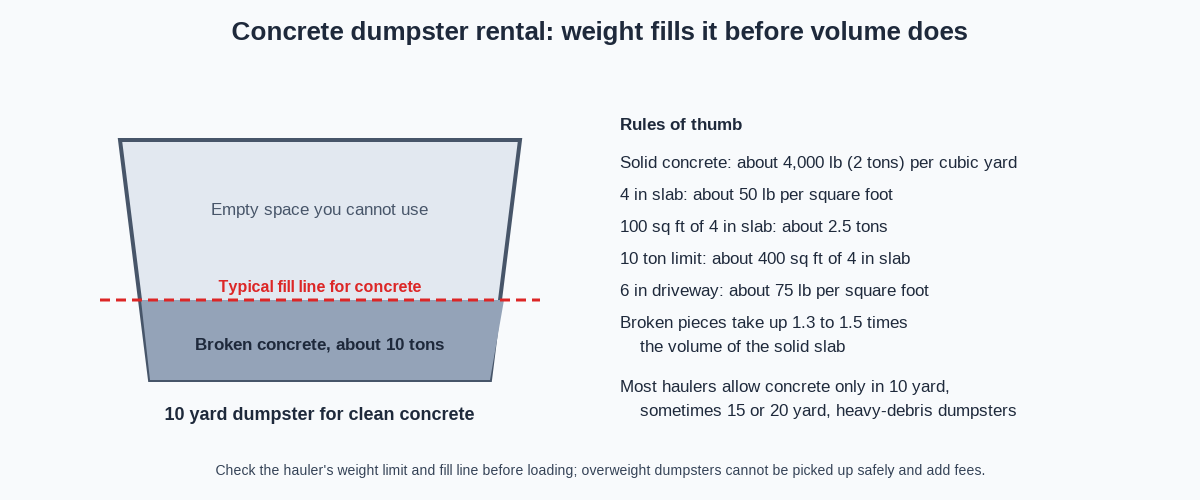
A concrete dumpster rental is the most convenient way to handle concrete disposal for a homeowner or small contractor. The hauler drops a roll-off container in the driveway, you load the broken concrete, and the hauler takes it to a recycling yard. Because concrete is so dense, these rentals work differently from regular dumpsters, as the diagram above shows.
Size. For a concrete dumpster rental, most haulers only allow concrete in small dumpsters, usually 10 yards and sometimes 15 or 20 yards with a fill line. A 10 yard dumpster is about 12 to 14 feet long, 7 to 8 feet wide and 3 to 4 feet tall. Larger dumpsters filled with concrete would exceed the weight their trucks can legally and safely lift.
Weight limit. A typical concrete dumpster rental has a limit of about 10 tons, sometimes more for a heavy-debris container. At 50 pounds per square foot, that is about 400 square feet of 4 inch slab.
Fill line. Many haulers mark a fill line partway up the container, or tell you to fill it only halfway or two-thirds, so a concrete dumpster never goes over the weight limit. Do not load a concrete dumpster above it.
Clean loads only. Concrete dumpster rental prices usually assume clean concrete, which can go straight to a recycler. Some concrete dumpster rental companies accept brick, block, asphalt, stone and dirt in the same clean-load dumpster, but mixing in wood, trash, plastic or drywall turns it into a mixed load at a higher landfill rate, often with a contamination fee.
Rebar and wire mesh. Most recyclers accept concrete with rebar or mesh, since their crushers separate the steel with magnets, but some charge more or ask that long pieces of steel be cut flush. Ask before loading.
Price. A concrete dumpster rental for clean concrete usually costs about $300 to $700 for a 10 yard container, including delivery, pickup, disposal and a rental period of about 7 to 10 days. Prices are often flat-rate for clean concrete because the hauler pays little at the recycler. Mixed heavy debris can cost $400 to $900 plus overweight fees of about $50 to $100 per ton above the limit.
Placement. A loaded concrete dumpster weighs 10 tons or more, enough to crack an old or thin driveway. Ask the hauler to set it on boards, and place it where the truck can reach without driving over septic tanks, lawns or soft ground. If it must go on the street, many cities require a right-of-way permit.
Concrete Recycling Centers
Concrete recycling centers, also called crushing yards or aggregate recyclers, crush old concrete into recycled concrete aggregate, which is sold as road base, driveway gravel and fill. The U.S. Environmental Protection Agency estimates that concrete makes up about two-thirds of all construction and demolition debris in the United States, around 400 million tons a year, and most of it is recycled rather than landfilled. For you, that means concrete disposal at a recycler is usually far cheaper than any other option.
Typical fees. For concrete disposal, clean concrete without rebar is often accepted for free or about $5 to $30 per ton, or a flat fee of about $10 to $50 per pickup load. Concrete with rebar may cost a little more. Very large pieces, over about 2 to 3 feet across, may cost extra or be refused, so break slabs to a manageable size.
What they want. Clean concrete, brick, block and sometimes asphalt and stone, with no dirt clumps, wood, trash, plastic, metal objects or hazardous materials. Some yards accept asphalt in a separate pile; see asphalt recycling near me.
How to find one. Search for concrete recycling, crushed concrete or recycled aggregate suppliers, and call ahead about hours, prices and size limits. Many sell the crushed product too; see crushed concrete.
Landfill and Transfer Station Disposal
Landfills and municipal transfer stations will accept concrete disposal loads in most areas, but usually at regular construction and demolition rates, often $40 to $100 per ton, with minimum charges for small loads. Some landfills accept clean concrete at a reduced inert-material rate, because it is used as cover or road material inside the landfill. Many municipal transfer stations accept small amounts of concrete from residents, such as a few buckets or bags from a small project, sometimes for a small per-item fee. Rules vary widely, so check with your city or county public works department before loading the truck.
Junk Removal and Demolition Haul-Off
Junk removal companies will handle concrete disposal for you, loading and hauling broken concrete, typically charging by the truckload with a heavy-material surcharge. Expect roughly $300 to $800 for a load of concrete, depending on location and how far they must carry it. This is a good option when you have a moderate pile and do not want to load a dumpster yourself.
Concrete removal contractors usually include haul-off and disposal in their price, which commonly runs about $2 to $6 per square foot for a typical 4 inch patio or driveway. If you are hiring someone to break out the concrete anyway, letting them handle concrete disposal is usually the simplest and cheapest route, since they have the trucks and recycler accounts. See how to remove concrete for the DIY approach.
Doing Your Own Concrete Disposal by Truck or Trailer
Hauling concrete yourself for concrete disposal saves money but demands care with weight. A half-ton pickup is usually rated for about 1,500 to 2,000 pounds of payload, which is only 30 to 40 square feet of 4 inch slab. A three-quarter-ton or one-ton truck can carry more, and a dump trailer rated for 7,000 to 14,000 pounds gross can carry a few tons per trip and unload easily. Overloading a vehicle damages tires, brakes and suspension and is dangerous on the road.
Tips for DIY concrete disposal: break pieces to a size two people can lift, about 40 to 60 pounds each; load the heaviest pieces over or just ahead of the axle; tie down the load; and bring gloves and a hand truck. Rent a dump trailer if you have more than a few loads.
Reusing Broken Concrete Instead of Disposal
The cheapest concrete disposal is often no disposal at all. Broken concrete, sometimes called urbanite, has many uses:
Garden walls and raised beds. Stacked pieces of slab make dry-laid retaining walls, planters and edging.
Paths and stepping stones. Broken slabs laid flat with gaps for gravel or plants make a rustic path or patio.
Fill and base. Clean broken concrete can fill low areas or hollows, though large pieces leave voids; for base under new concrete or pavers, it should be crushed and compacted.
Erosion control. Pieces can protect slopes and ditches, but placing material in streams, wetlands or shorelines usually requires permits.
Give it away. Post a free clean fill or free broken concrete listing online. Landscapers, farmers and homeowners with low spots sometimes pick it up for free.
Before burying concrete on your property, check local rules; some areas limit buried debris, and buried pieces can make future digging, planting and building difficult.
Disposal of Wet Concrete and Washout
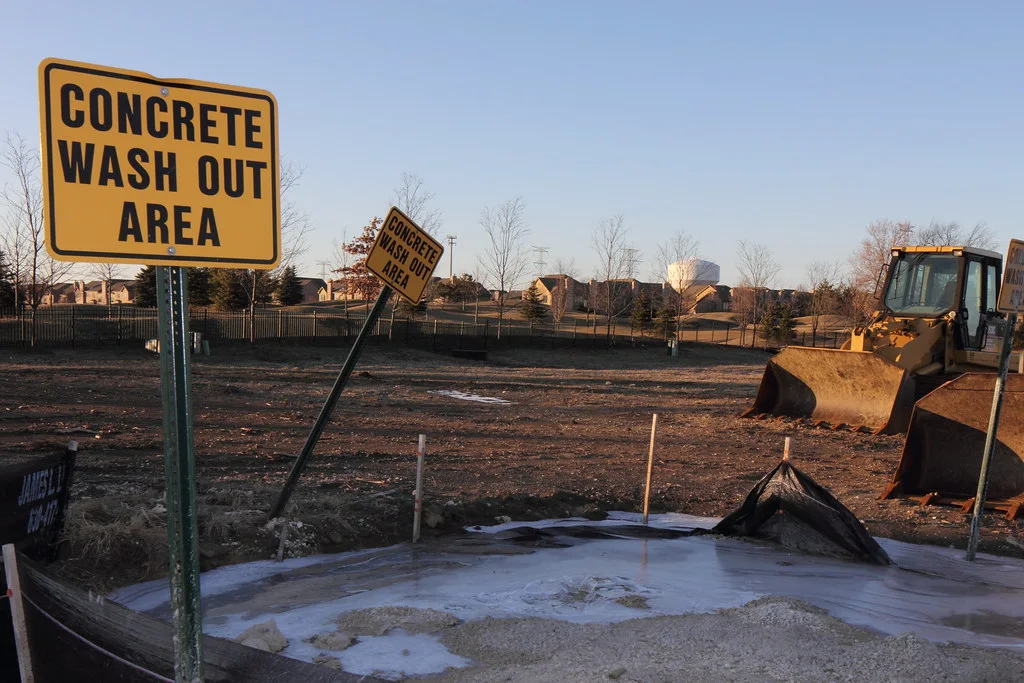
Photo: danxoneil, Flickr, CC BY 2.0
Fresh concrete and the water used to wash mixers, chutes, wheelbarrows and tools need special handling. Washout water is highly alkaline, with a pH of about 12, similar to ammonia or lye, and contains cement fines and metals that harm fish and plants. Under the U.S. Clean Water Act, construction sites covered by stormwater permits must contain concrete washout so none reaches storm drains, ditches, streams or soil. The photo above shows a site washout area: a shallow lined pit, marked with signs, where truck chutes and tools are rinsed. The water evaporates or is pumped off, and the hardened solids are broken up and recycled like any other concrete.
For DIY projects:
Leftover wet concrete. Pour it into a simple form to make stepping stones, splash blocks or a small pad, or onto a sheet of plastic in a low pile. Once hardened, break it up for normal concrete disposal. Never pour it into a drain, a lawn or a ditch.
Washing tools and mixers. Rinse into a wheelbarrow, a tub or a plastic-lined pit dug in the yard, not the street or a storm drain. Let the solids settle and harden, scoop them into the trash or recycling, and let the water evaporate.
Returning ready-mix. If a ready-mix truck has concrete left over, the supplier normally takes it back and may charge a return fee. Order carefully to avoid paying for both waste and return. See concrete slurry for handling cutting slurry, which follows similar rules.
Bagged mix. Unopened bags can be stored dry for later projects or given away. Bags that have hardened from moisture are solid waste and can usually go in household trash in small amounts or with your concrete disposal load.
Contaminated Concrete and Special Cases
Most old concrete is inert, but a few situations need extra care:
Attached flooring and mastic. Old vinyl tile, sheet flooring and black mastic on slabs can contain asbestos. Test before breaking or grinding such floors, and follow local asbestos rules.
Oil-soaked concrete. Concrete from garages, shops or fuel areas with heavy oil or chemical contamination may be refused by recyclers and require landfill disposal or testing.
Painted or sealed concrete. Usually accepted by recyclers, though old lead-based paint on concrete may need testing in some areas.
Concrete with heavy steel. Pieces with large embedded beams, pipes or post-tension tendons may need cutting before a recycler will take them. A concrete cutter with a diamond blade cuts both concrete and rebar.
How to Prepare Concrete for Disposal
A little preparation makes concrete disposal faster and cheaper, whatever option you choose.
Break it to size. Recyclers, haulers and concrete dumpster rental companies all prefer pieces small enough to handle, usually under about 2 feet across. Score large slabs into a grid with a saw first, then break along the cuts with a sledgehammer or rented electric breaker. Smaller pieces also pack more tightly in a concrete dumpster, so you use the weight allowance instead of wasting space.
Keep it clean. Shake off dirt, pull out wood forms and expansion joint strips, and keep trash out of the pile. Clean loads get the lowest concrete disposal rates everywhere.
Separate materials. Keep concrete, asphalt, brick and dirt in separate piles if your recycler prices them differently. Ask your concrete dumpster rental company which materials can share the container.
Deal with steel. Cut long rebar or mesh ends flush with bolt cutters or a grinder if the recycler asks for it.
Estimate the weight. Use the square footage and thickness to estimate tons before you book anything. That number decides how many concrete dumpster rentals or truck trips you need.
Tips for Loading a Concrete Dumpster Rental
Loading a concrete dumpster rental correctly avoids overweight fees and damage.
Spread the load. Distribute broken concrete evenly across the floor of the concrete dumpster rather than piling it at one end, so the truck can lift it level and safely.
Lay big pieces flat. Place large slabs flat on the bottom and fill gaps with smaller pieces.
Respect the fill line. Stop at the marked line or the height the concrete dumpster rental company gave you, even if the container looks half empty.
Use the door. Most roll-off dumpsters have a swinging rear door. Open it and wheel heavy pieces in with a wheelbarrow on a sturdy plank rather than lifting them over the side.
Protect the driveway. Put plywood or boards under the container's rails before delivery.
Do not hide trash. Haulers check clean loads at the recycler. A few bags of trash in a concrete dumpster can turn a clean concrete disposal price into a mixed-debris bill with extra fees.
Plan the schedule. Book the concrete dumpster rental to arrive the day you start breaking, and ask for pickup as soon as it is full if you need a second container.
Questions to Ask a Concrete Dumpster Rental Company
Concrete dumpster rental terms vary a lot between haulers. Before booking, ask:
1. What sizes do you allow for concrete, and where is the fill line?
2. What is the weight limit, and what is the overweight charge per ton?
3. Is the price flat for clean concrete, or charged by weight?
4. Can I mix in brick, block, asphalt, stone or dirt?
5. Is concrete with rebar or wire mesh accepted?
6. How many days are included, and what is the daily rate after that?
7. Are delivery, pickup, fuel and concrete disposal fees included in the quote?
8. Do I need a permit to place the dumpster on the street?
Getting these answers in writing prevents most surprise charges on a concrete dumpster rental.
Concrete Disposal for Contractors
Contractors who break out concrete regularly handle concrete disposal differently from homeowners. Many own dump trucks or dump trailers and haul directly to a recycler, where they may have an account with volume pricing or even receive credit toward recycled base they buy back. On larger demolition jobs, mobile crushers are sometimes brought to the site so old concrete is crushed and reused as base for the new pavement or building, eliminating most hauling and concrete disposal costs. Contractors bidding removal work should include concrete disposal as a separate line: tons multiplied by the recycler rate, plus truck time per trip. Some public projects and green building programs, such as LEED, give credit for recycling construction waste, so tracking concrete disposal tickets from the recycler can matter for the owner.
Why Recycling Is the Best Concrete Disposal Option
Recycling is usually both the cheapest and the most sustainable form of concrete disposal. Landfilling concrete uses landfill space for an inert material that could replace newly quarried stone. Recycled concrete aggregate is used as road base, driveway base, pipe bedding, fill and, in some specifications, as part of the aggregate in new concrete. Crushing and reusing concrete near where it was removed also reduces truck traffic and fuel compared with hauling virgin gravel from a distant quarry. When you choose a recycler or a concrete dumpster rental company that takes clean loads to a recycler, your concrete disposal helps keep a valuable material in use.
Concrete Disposal Mistakes to Avoid
Renting the wrong dumpster. Ordering a 30 yard dumpster and filling it with concrete leads to refused pickup or huge overweight fees. Always book a dedicated concrete dumpster rental.
Underestimating weight. Measure the slab and do the math before choosing your concrete disposal method.
Mixing debris. Keep trash and wood out of clean concrete loads.
Dumping illegally. Illegal dumping of concrete brings fines in most places, and washout into drains violates stormwater rules.
Overloading a truck. Respect your vehicle's payload rating, and split heavy concrete disposal loads into several shorter, safer trips.
Concrete Disposal Cost Comparison
Here is how the main concrete disposal options, including concrete dumpster rental, compare for a typical 300 square foot, 4 inch patio, which produces about 7.5 tons of broken concrete:
Self-haul to recycler: about $0 to $225 in fees, plus truck or trailer rental and your time over several trips.
Concrete dumpster rental: about $300 to $700 for one 10 yard clean-load container.
Self-haul to landfill: about $300 to $750 in tipping fees, plus trips.
Junk removal: about $600 to $1,500 for two or more loads.
Removal contractor: about $600 to $1,800 total for breaking, loading and concrete disposal.
For most homeowners breaking out concrete themselves, a concrete dumpster rental offers the best balance of price and effort, while self-hauling to a recycler is cheapest for small jobs if you have a suitable truck.
Frequently Asked Questions
How much does a concrete dumpster rental cost?
A 10 yard concrete dumpster rental for clean concrete usually costs about $300 to $700, including delivery, pickup and concrete disposal at a recycler. Mixed debris and overweight loads cost more.
How long can I keep a concrete dumpster?
Most concrete dumpster rental quotes include about 7 to 10 days, with a daily fee after that. Because a concrete dumpster fills by weight quickly, many jobs finish in a day or two.
What is the cheapest way to handle concrete disposal?
Self-hauling clean concrete to a recycling yard, or giving it away as free fill, is usually the cheapest concrete disposal. For larger jobs, a concrete dumpster rental is often cheaper than paying for many truck trips.
Can a concrete dumpster hold dirt too?
Some haulers allow clean dirt in a concrete dumpster as part of a heavy-debris load, often with the same weight limit. Ask before mixing.
Can I put concrete in my regular trash?
Usually not, except very small amounts. Most curbside services refuse concrete because of its weight. Use a recycler, transfer station or concrete dumpster rental.
What size dumpster do I need for concrete?
Usually a 10 yard dumpster, filled to the hauler's fill line, which holds roughly 400 square feet of 4 inch slab.
Is concrete disposal free?
Sometimes. Many recycling yards take clean concrete free or for a small fee, and people looking for fill may pick it up.
Can I bury broken concrete in my yard?
In many places small amounts of clean concrete can be used as fill on your own property, but check local rules, and avoid areas where you may dig or build later.
Where do I dump concrete washout?
Into a lined washout pit or container where solids harden and water evaporates. Never into storm drains, sewers, streams or soil.
Sources
- U.S. EPA: construction and demolition debris material-specific data
- U.S. EPA: Construction General Permit, concrete washout requirements
- Construction & Demolition Recycling Association
- U.S. EPA: asbestos in buildings and flooring
Related Guides
- Wet concrete — how liquid concrete works, workability, setting times and safety