
Concrete Removal Cost in 2026: Price per Square Foot, by Project and How to Dispose of Concrete
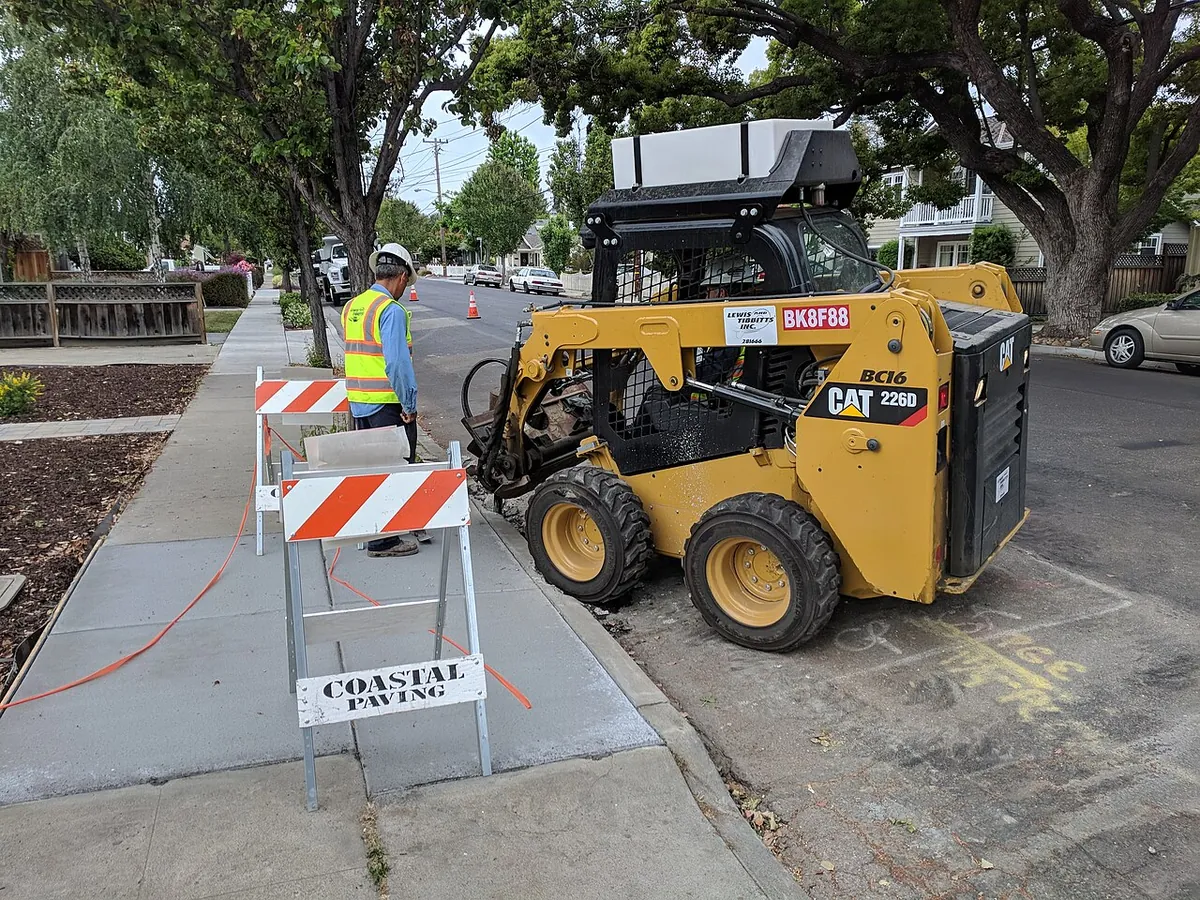
Photo: Grendelkhan, Wikimedia Commons, CC BY-SA 4.0
Quick Answer
The typical concrete removal cost in 2026 is about $2 to $6 per square foot for breaking up and hauling away a standard 4 inch residential slab. HomeGuide puts it at about $3 to $8 per square foot including disposal, and LawnStarter at about $2 to $7, with disposal fees of about $51 to $100 per ton. Concrete with rebar or wire mesh adds about $1 to $3 per square foot, and dense urban areas can run $6 to $14. Removing a 400 square foot patio usually costs about $800 to $2,400.
Old concrete has to come out before you can replace a cracked driveway, turn a patio into a garden, widen a walkway or pour a new slab. Concrete removal is heavy, noisy and dusty work, and the debris is surprisingly heavy: a 4 inch slab produces about 50 pounds of broken concrete for every square foot. That weight is a big part of why removal costs what it does.
This guide covers concrete removal cost per square foot and by project, what makes removal more expensive, how disposal and recycling work, how to dispose of concrete yourself, and when it makes sense to remove concrete yourself versus hiring a contractor. Price ranges come from HomeGuide, LawnStarter and HomeAdvisor, listed in the sources.
Concrete Removal Cost at a Glance
| Item | Typical cost | Source |
|---|---|---|
| Concrete removal (break up and haul) | $2 – $6 per sq ft | HomeAdvisor; common range |
| Removal including disposal | $3 – $8 per sq ft | HomeGuide |
| Removal (alternate range) | $2 – $7 per sq ft | LawnStarter |
| Disposal fee | $51 – $100 per ton | LawnStarter |
| Rebar or wire mesh in the slab | adds $1 – $3 per sq ft | HomeGuide |
| Dense urban areas | $6 – $14 per sq ft | LawnStarter |
| Old driveway removal (when replacing) | adds $1 – $3 per sq ft | HomeGuide driveway guide |
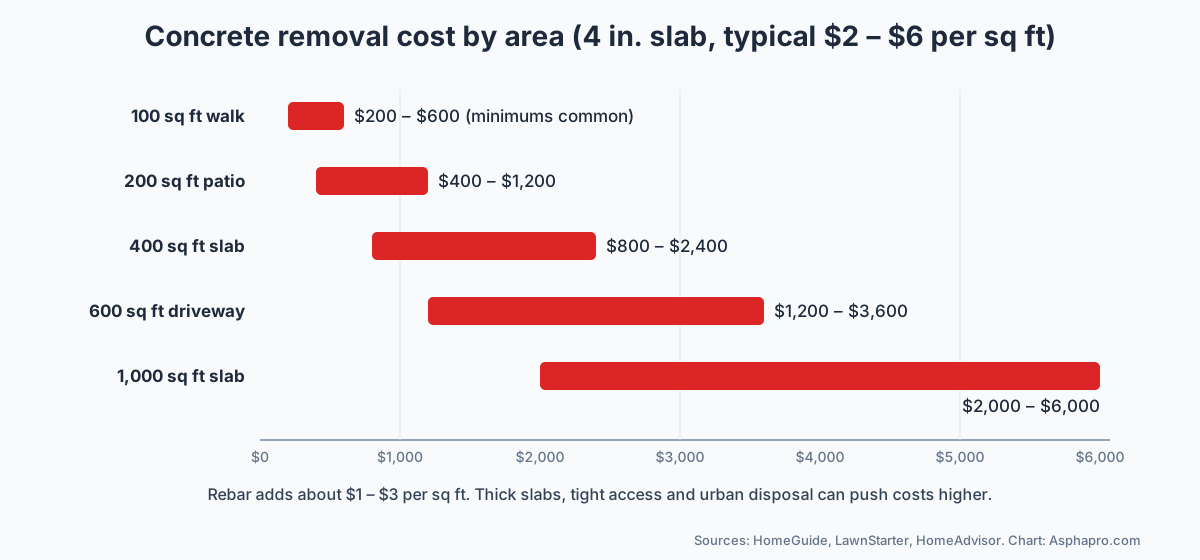
Concrete Removal Cost by Project
| Project | Typical size | Approx. debris (4 in.) | Removal at $2 – $6/sq ft |
|---|---|---|---|
| Walkway | 4 × 25 ft = 100 sq ft | about 2.5 tons | $200 – $600 (minimums common) |
| Small patio | 12 × 12 ft = 144 sq ft | about 3.5 tons | $288 – $864 |
| Patio | 16 × 20 ft = 320 sq ft | about 8 tons | $640 – $1,920 |
| Two-car slab or pad | 20 × 20 ft = 400 sq ft | about 10 tons | $800 – $2,400 |
| Driveway | 12 × 50 ft = 600 sq ft | about 15 tons | $1,200 – $3,600 |
| Large driveway | 20 × 40 ft = 800 sq ft | about 20 tons | $1,600 – $4,800 |
| Garage floor | 24 × 24 ft = 576 sq ft | about 14 tons | $1,150 – $3,460, more indoors |
| Concrete steps | per set | varies | often priced per job |
For slabs thicker than 4 inches, multiply the debris weight: a 6 inch slab makes about 75 pounds per square foot. Debris weights here use about 150 pounds per cubic foot; see how much a yard of concrete weighs.
Driveway Removal Cost
Driveways are the most common concrete removal job. For a typical 600 square foot driveway, expect roughly $1,200 to $3,600 at $2 to $6 per square foot, more with heavy rebar or thick concrete. When the removal is part of a replacement, many contractors include it in the new driveway price; HomeGuide lists old driveway removal at about $1 to $3 per square foot added to the new driveway cost. Driveway aprons at the street may need a permit and traffic control. See concrete driveway cost for replacement prices.
Patio and Walkway Removal Cost
Patio and walkway concrete removal is usually easier because these slabs are thinner and less reinforced than driveways, but they are often in backyards with limited access. If a skid steer or dump truck cannot reach the slab, the crew must break it up by hand and carry it out in wheelbarrows, which raises labor costs. Small walkways often hit the contractor's minimum charge. If you plan to replace the patio, ask for removal and the new slab in one quote; see the cost to pour a concrete slab and concrete sidewalk cost.
Garage Floor and Interior Slab Removal
Concrete removal inside a garage or basement costs more than removing an outdoor slab of the same size. Work must be done inside walls, dust must be controlled, the crew may need smaller equipment, and debris must be carried out through doors. Interior slabs may also hide plumbing, radiant heating or electrical conduit that must be protected. Expect quotes above the typical outdoor range.
What Affects Concrete Removal Cost
- Thickness: a 6 inch slab has 50 percent more concrete to break and haul than a 4 inch slab.
- Reinforcement: rebar and wire mesh must be cut and separated, adding about $1 to $3 per square foot.
- Access: skid steers and excavators work much faster than hand tools. Tight backyards cost more.
- Hauling distance: the trip to a landfill or recycling facility affects trucking costs.
- Disposal fees: often charged per ton; LawnStarter lists about $51 to $100 per ton.
- Location: urban areas with higher labor and disposal costs can reach $6 to $14 per square foot.
- Job size: small jobs carry minimum charges, so the price per square foot is higher.
- Site restoration: grading, topsoil or seeding after removal costs extra.
- Permits: some cities require permits for removal in the public right of way.
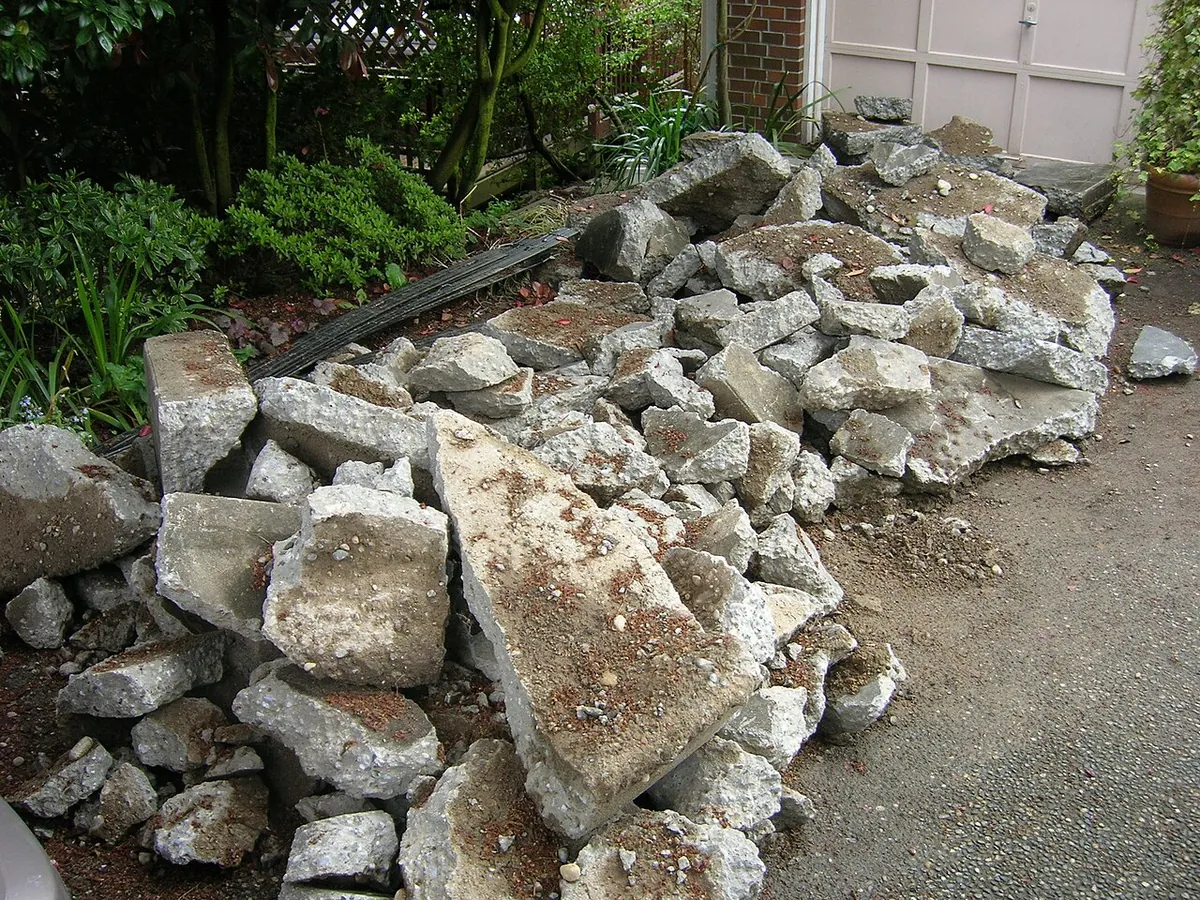
Photo: brewbooks, Wikimedia Commons, CC BY-SA 2.0
How Contractors Remove Concrete
Knowing how the job is done helps you understand a concrete removal quote and what you are paying for:
- Site check and utilities. The crew looks for buried lines, sprinkler pipes, drains and any plumbing under the slab, and calls 811 for utility marking.
- Protect surroundings. Nearby siding, windows, cars, plants and driveways are protected from flying chips and heavy equipment.
- Saw cut edges. Where the removal stops at a slab that will stay, such as a driveway meeting a garage floor, the crew saw-cuts a clean line first.
- Break the slab. Small jobs use jackhammers or electric breakers; larger jobs use a skid steer or mini excavator with a hydraulic breaker.
- Cut steel. Rebar and mesh are cut and pulled out, sometimes separated for recycling.
- Load and haul. Broken pieces are loaded into a dump truck or roll-off container and taken to a recycling yard or landfill.
- Clean up and grade. The area is raked and graded, ready for a new slab, lawn or landscaping.
Removing Footings, Steps and Posts
Not all concrete removal is flat slabs. Concrete steps are solid blocks and can be very heavy; they are usually broken in place with a breaker. Footings for old decks, fences and sheds are often removed by digging around them and pulling them out with a machine, or by breaking them below grade and leaving the bottom in place if allowed. Fence post footings can be pulled with a post puller or a jack. Foundation walls and thick footings are a much bigger job and usually require excavation equipment and permits. Contractors often price these items per piece or per job rather than per square foot. See concrete steps cost if you are replacing steps.
Protecting the House, Utilities and Landscape
Concrete removal near a house needs care. Breaking a patio that touches the foundation can chip the foundation or siding if done carelessly, so crews often saw-cut a gap along the house first. Heavy equipment can crack an existing driveway, crush sprinkler lines and rut lawns, so ask how equipment will reach the slab and whether plywood or mats will be used. Under-slab utilities such as gas, water and electrical lines, as well as drains and radon pipes in basements, must be located before breaking starts. Tree roots near the slab may be damaged during removal; if you want to keep a tree, tell the crew so they can work carefully.
What Happens After Concrete Removal
Once the old slab is gone, the ground underneath is often uneven and may contain old gravel base, sand or fill. If a new slab is going in, the crew may reuse the old base after regrading and compacting it, or add new crushed stone. If the area will become lawn or garden, the old base usually needs to be removed and replaced with topsoil, since grass grows poorly on compacted gravel. Ask whether grading, base removal, topsoil and seeding are included in the concrete removal cost, because they can add noticeably to the total.
Concrete Recycling: Where Old Concrete Goes
Much of the concrete removed from homes and roads is crushed and reused. Recycling yards break it into gravel-sized pieces, pull out steel with magnets, and sell the material as recycled aggregate or road base for driveways, parking areas and fill. Recycling keeps heavy debris out of landfills and often costs less than landfill disposal, especially for clean loads. Some recycling yards also sell recycled concrete base at a lower price than new crushed stone, which can be useful if you are building a new slab or gravel driveway. Compare crushed stone needs for your next project.
How Long Does Concrete Removal Take?
With equipment and good access, a crew can often remove a typical driveway or patio in a few hours to a day, including loading and hauling. Hand demolition of a backyard patio can take a full day or more. DIY removal of a 200 square foot patio with a rented demolition hammer often takes a weekend, mostly spent breaking, lifting and wheelbarrowing pieces. Large slabs and thick concrete take longer, as do jobs where debris must be carried a long way.
Concrete Removal Cost by Region
Concrete removal cost varies most with labor rates and disposal fees. In dense cities, limited access, traffic control, parking for trucks and higher disposal fees push prices up; LawnStarter notes urban removal can run about $6 to $14 per square foot. In suburban and rural areas with easy truck access and nearby recycling yards, prices are often near the low end of the $2 to $6 range. Long drives to a landfill or recycling yard add trucking time to every load.
Three Concrete Removal Cost Examples
Backyard patio, hand removal
A 12 × 16 foot patio, 4 inches thick, with no machine access. Two workers break and wheelbarrow the concrete to a dumpster at the street. At about $5 per square foot, 192 square feet costs about $960, plus the dumpster.
Driveway with skid steer
A 600 square foot driveway with wire mesh, easy access from the street. At about $3.50 per square foot including disposal, removal costs about $2,100.
Thick reinforced pad
A 400 square foot, 6 inch slab with rebar behind a garage. At about $6 per square foot plus $2 for rebar, removal costs about $3,200.
How to Dispose of Concrete
The cheapest way to dispose concrete is usually a concrete recycler, which charges less than a landfill and sometimes takes clean concrete free. Call ahead and ask what they accept, since many recyclers will not take concrete mixed with dirt, wood or trash.
Knowing how to dispose of concrete before you start saves time and money. Concrete is heavy and bulky, but it is also one of the most recycled building materials. Your main options:
1. Concrete recycling facilities
Many areas have recycling yards that crush concrete into gravel and road base. They often charge less than landfills for clean concrete, and some accept clean loads for free. "Clean" usually means no dirt, wood, trash or excessive rebar; some accept rebar, others do not. Call ahead.
2. Landfills and transfer stations
Most landfills accept concrete as construction debris, usually charged by weight. Rates vary by area; LawnStarter lists disposal at about $51 to $100 per ton. Some landfills have separate, lower rates for clean concrete.
3. Dumpster rental
Roll-off dumpsters work for DIY removal, but concrete is so heavy that haulers often require a special "heavy debris" or "clean concrete" container and limit how full it can be. A dumpster that holds yards of household trash may hold only a few yards of concrete before it reaches its weight limit. Ask about weight limits and overweight fees before you fill it.
4. Reuse it on site or give it away
Broken concrete, sometimes called "urbanite," can be reused to build garden walls, raised beds, stepping paths or fill under new slabs where allowed. Some people give away clean broken concrete through local listings to neighbors who need fill or garden material. This can save disposal fees for small amounts.
5. Junk removal companies
Junk removal services will load and haul concrete, often charging by truckload volume or weight. They are convenient for small amounts but can be expensive for large slabs.
DIY Concrete Removal
DIY concrete removal of a small walkway or thin patio can save a lot of money. You will need a way to break the concrete, pry bars to lift pieces, a wheelbarrow and a plan for disposal. Common tools:
- Sledgehammer: works on thin, unreinforced slabs up to about 4 inches, especially if the soil underneath is dug out first so the slab is unsupported.
- Electric demolition hammer or jackhammer: rentable by the day; much faster for thicker slabs.
- Pry bar and wedges: to lift and separate broken pieces.
- Bolt cutters or a grinder: to cut wire mesh and rebar.
- Skid steer with a breaker: for large slabs, rented with a trailer, if you are comfortable operating it.
See how to remove concrete for a full step-by-step guide.
Renting Equipment for DIY Concrete Removal
If you plan to remove concrete yourself, renting the right tool makes a huge difference. An electric demolition hammer, often called an electric jackhammer, is the most common rental for homeowners. It handles 4 inch patios and walkways well and plugs into a standard outlet. For thicker or reinforced slabs, a larger breaker or a pneumatic jackhammer with a towable compressor is faster but heavier and louder. For big driveways, some rental yards offer skid steers with hydraulic breaker attachments, plus a trailer, but these require experience to run safely. Add the rental cost of a heavy-debris dumpster or several trips to a recycling yard, and compare the total with a contractor quote. For small jobs, DIY usually wins; for large or reinforced slabs, the contractor's concrete removal cost often turns out to be worth it once you count time, effort and risk.
DIY vs Professional Concrete Removal
| Factor | DIY | Professional |
|---|---|---|
| Cost | Tool rental plus disposal | About $2 – $6 per sq ft or more |
| Speed | Days for a patio | Often hours with equipment |
| Best for | Small, thin, unreinforced slabs | Driveways, thick or reinforced slabs, large areas |
| Risks | Injury, damage to utilities and nearby surfaces | Insured crew handles it |
Cost to Remove Concrete vs Covering It
Before paying for concrete removal, consider whether the old slab can stay. If it is mostly sound, covering it can cost less than the cost to remove concrete and pour new:
- Resurfacing overlay: a thin cement overlay can refresh a worn but stable slab for about $3 to $5 per square foot; see concrete overlay cost.
- Pavers over concrete: pavers can sometimes be laid over a flat, stable slab; see can you lay pavers over concrete.
- Asphalt over concrete: on driveways, asphalt can be placed over a stable concrete base; see can you put asphalt over concrete.
- Leveling: sunken but intact slabs can often be lifted for about $3 to $6 per square foot with mudjacking; see concrete leveling cost.
Concrete removal makes the most sense when the slab is badly cracked, heaved, crumbling or in the way of a new design. Covering a failing slab usually just hides the problem for a short time.
Concrete Demolition Permits and Rules
Most private patio and driveway concrete demolition does not need a permit, but there are exceptions. Removing concrete in the public right of way, such as a sidewalk, curb or driveway apron, usually requires a city permit and may require approved contractors. Some cities regulate dust and noise, set work hours, or require debris to go to recycling. Removing concrete that is part of a structure, such as a foundation or retaining wall, typically needs a building permit. Ask your contractor who handles permits and whether the fee is part of the concrete removal cost.
Removal and Replacement as One Job
If you plan to pour new concrete, ask for a single concrete removal and replacement cost. One contractor handling both usually saves a mobilization fee and avoids gaps between the two jobs, and the removal crew can leave the base graded for the new slab.
If you plan to replace the concrete, ask for one quote that covers concrete removal and the new pour. A single contractor can schedule demolition and forming back to back, reuse or improve the existing base, and avoid a second mobilization charge. It also puts responsibility for grade and drainage in one place. Compare the combined price per square foot with separate removal and installation quotes. For replacement prices, see concrete cost per sq ft and the cost to pour a concrete slab.
Ways to Save on Concrete Removal
- Bundle removal with replacement so the same crew handles both.
- Recycle clean concrete instead of landfilling it.
- Reuse broken pieces on site for garden walls or paths.
- Do small, thin slabs yourself and hire out the big ones.
- Improve access by removing a fence section so equipment can reach the slab.
- Get several quotes and ask whether disposal is included.
Hidden Costs in Concrete Removal Quotes
- Minimum charges for small jobs, often several hundred dollars.
- Overweight dumpster fees when broken concrete exceeds the container limit.
- Extra thickness discovered after breaking starts, such as an old slab poured over another slab.
- Buried footings or old foundations under the slab.
- Repairs to sprinklers, lawns or nearby paving damaged by equipment.
- Base removal and topsoil if the area will become lawn or garden.
Ask how the contractor handles surprises before work begins, so the final concrete removal cost does not jump unexpectedly.
Questions to Ask Before Hiring
- Is your concrete removal cost per square foot or per job, and is disposal included?
- How will you handle rebar or wire mesh?
- What equipment will you use, and can it reach the slab without damaging the lawn or driveway?
- Will you recycle the concrete?
- Is grading or backfilling after removal included?
- Who calls 811 and handles any permits?
Frequently Asked Questions
How much does concrete removal cost?
About $2 to $6 per square foot for a typical 4 inch slab, or about $3 to $8 per square foot including disposal, according to HomeGuide.
How much does it cost to remove a concrete driveway?
About $1,200 to $3,600 for a 600 square foot driveway at $2 to $6 per square foot, and more with heavy rebar or thick concrete.
How do I dispose of concrete?
Take clean concrete to a recycling facility, use a heavy-debris dumpster, take it to a landfill that accepts construction debris, reuse it on site, or give it away for fill.
Does rebar make removal more expensive?
Yes. Reinforced concrete usually adds about $1 to $3 per square foot because the steel must be cut and separated.
How much does broken concrete weigh?
About 50 pounds per square foot for a 4 inch slab, so a 400 square foot patio produces about 10 tons of debris.
Do contractors haul away the concrete?
Most do, and disposal is often included in the price. Confirm in writing whether hauling and recycling or landfill fees are part of the concrete removal cost.
How long does concrete removal take?
With equipment and good access, many driveways and patios come out in a few hours to a day. Hand removal of a backyard patio can take a day or more, and DIY jobs often take a full weekend with a rented breaker.
Can I leave broken concrete in the ground?
Small amounts are sometimes used as fill or garden material, but buried concrete can block roots and drainage and cause problems for future digging. Check local rules before leaving debris on site, and keep a record of where anything was buried.
What is the cost to remove concrete steps?
Steps are often priced per job because they are solid and heavy. Small sets may cost a few hundred dollars to remove, and larger stoops more, depending on size and access.
Is concrete demolition cheaper with recycling?
Often, yes. Many recycling yards charge less than landfills for clean concrete, and some accept clean loads for free, which lowers the disposal part of the concrete removal cost.
How much does a dumpster for concrete cost?
It depends on your area and the container. Haulers usually require a heavy-debris container for concrete and set strict weight limits, so ask about overweight fees before you order.
Can I remove a concrete patio myself?
Yes, if it is thin and not heavily reinforced. Rent a demolition hammer, protect yourself from dust and flying chips, and plan disposal before you start.
Sources
- HomeGuide, "How much does concrete removal cost?" homeguide.com
- LawnStarter, "How much does concrete removal cost?" lawnstarter.com
- HomeAdvisor, concrete walkway and removal cost data. homeadvisor.com
- HomeGuide, "How much does a concrete driveway cost?" (old driveway removal). homeguide.com
- Image credits: skid steer photo by Grendelkhan (CC BY-SA 4.0) and rubble photo by brewbooks (CC BY-SA 2.0), via Wikimedia Commons. Chart by Asphapro.com.
Prices checked November 2026. They are national ranges; local prices can be higher or lower.
Related Guides
- How to cut concrete — saws, blades and dust safety
- Can you lay pavers over concrete? — sand-set vs mortar-set overlays
- Why does concrete crack? — causes, joints and prevention
- How long does concrete last? — lifespan by project