
Roof Cement and Concrete Roofs: Repairs, Tiles and Replacement
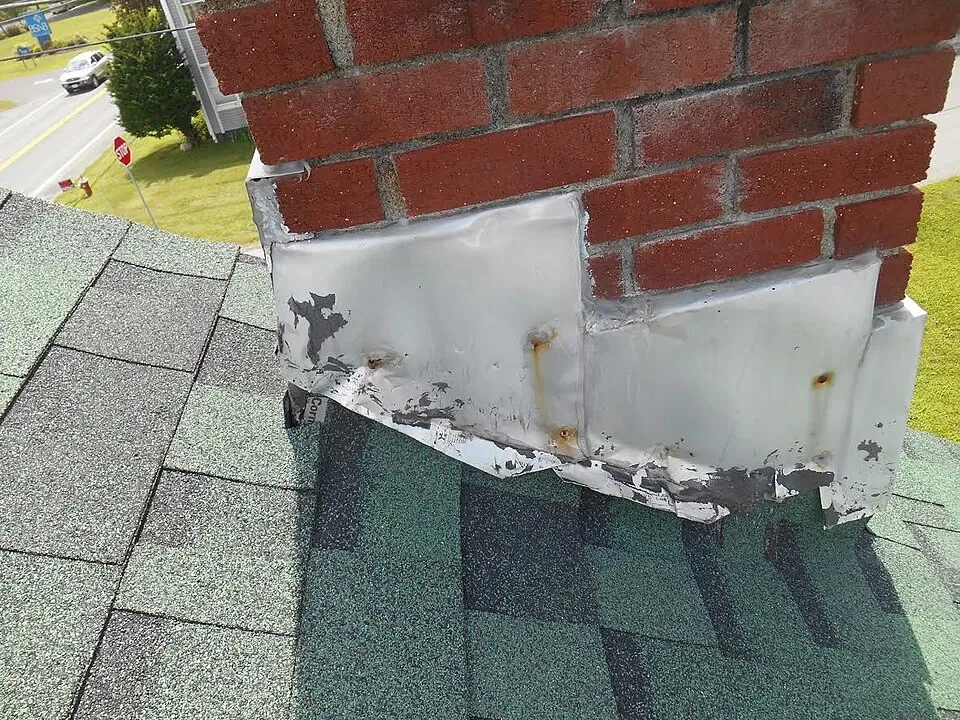
Photo: Sandul1234, Wikimedia Commons, CC BY-SA 4.0
Quick Answer
Roof cement, also called plastic roof cement or roofing cement, is a thick, trowel-grade blend of asphalt, solvents and reinforcing fibers used to seal flashing, small holes, cracks and gaps around chimneys, vents and skylights. It is not concrete, and it is meant for spot repairs, not for covering a whole roof. A gallon costs about $10 to $25 and a caulk-gun cartridge about $5 to $12. A concrete roof is something different: either a roof covered with concrete roof tiles, which weigh about 9 to 12 pounds per square foot and can last 50 years or more, or a flat concrete roof slab with a waterproof membrane on top. Roof tile replacement for a few broken concrete tiles usually costs about $300 to $1,000, while replacing an entire concrete tile roof often runs $10 to $20 or more per square foot.
The words "cement" and "concrete" show up in roofing in confusing ways. A homeowner with a leaking chimney buys a can of roof cement, which is really an asphalt mastic. A builder in Florida or Arizona puts on a concrete roof made of heavy molded tiles. A commercial building might have a flat concrete roof deck under a membrane, and an older house might have a cement roof of asbestos-cement or fiber cement shingles. The photo above shows the kind of chimney flashing where roof cement is most often used.
This guide explains what roof cement is and how to use it, the different types and their limits, concrete roof tiles and flat concrete roofs, cement roof products, roof tile replacement, and what each typically costs.
What Is Roof Cement?
Roof cement is a black, sticky, paste-like compound made mainly of asphalt (bitumen), with mineral fillers and fibers for body and petroleum solvents that keep it workable. When applied, the solvents slowly evaporate and the roof cement stiffens into a tough, flexible, waterproof layer that sticks to most roofing materials. Products sold in the US for this use are commonly made to ASTM D4586, the standard for asphalt roof cement; older formulas contained asbestos fibers, but modern roof cement is asbestos-free.
Despite the name, roof cement contains no Portland cement and does not harden like concrete. It is closer to a thick caulk or mastic. It is designed for small, targeted repairs and for sealing joints where different roofing parts meet, not as a full roof covering. See asphalt vs tar.
Types of Roofing Cement
Plastic roof cement. The standard trowel-grade product, sold in 1-gallon and 5-gallon cans. It is used for flashing, small holes, cracks and sealing shingle edges.
Wet-surface roof cement. Formulated to stick to damp or wet surfaces, for emergency patches during or right after rain.
Cartridge roof cement and sealants. The same type of material in caulk tubes, plus rubberized, polymer and urethane roof sealants, for sealing seams, nail heads and small gaps more neatly.
Lap cement. A thinner, brushable asphalt cement for sealing the overlaps of roll roofing. It is not interchangeable with thick plastic roof cement.
Elastomeric and rubberized roof cement. Asphalt or polymer blends with rubber added for more flexibility and better performance where joints move with temperature.
Fibered roof coatings. Thin, brushable asphalt coatings applied over whole low-slope roofs to protect and seal them, different from patching cement.
Where to Use Roof Cement
Chimney and wall flashing. Sealing the edges of step flashing and counterflashing where they meet brick or siding, and filling small gaps in the flashing. Badly installed or rusted flashing like the example above usually needs replacement, but roof cement can seal gaps temporarily.
Vent pipe boots and roof jacks. Sealing around the base of plumbing vents, exhaust fans and other penetrations.
Skylights. Sealing the perimeter where the skylight flashing meets the roofing.
Small holes and cracks. Patching nail holes, small punctures, and cracks in shingles, roll roofing and built-up roofs.
Loose shingle tabs. A dab of roof cement under a lifted shingle tab holds it down in wind.
Valleys and edges. Sealing the edges of valley flashing and drip edge in small spots.
Roof cement is not a good choice for large areas, for sealing joints that will move a lot, or on roofs where the manufacturer specifies another sealant, such as many single-ply membranes, metal roofs and tile roofs, where a compatible sealant should be used instead. See repair asphalt roof.
How to Apply Roof Cement
1. Work safely. Use a sturdy ladder, wear soft-soled shoes, and use fall protection on steep roofs. Do not work on wet, icy or windy days unless it is an emergency patch with a wet-surface product.
2. Clean the area. Remove loose granules, dirt, old crumbling sealant, rust and debris with a wire brush or scraper. Roof cement bonds best to clean, dry surfaces.
3. Apply with a trowel or putty knife. Spread a layer about 1/8 to 1/4 inch thick, working it into the gap or over the hole and extending a few inches beyond the damage. For cartridges, run a continuous bead and tool it smooth.
4. Reinforce larger repairs. For holes and cracks larger than about an inch, embed a piece of roofing fabric or fiberglass mesh in a first layer of roof cement, then cover it with a second layer. This three-course method makes a much stronger patch.
5. Let it cure. Roof cement skins over in hours but can stay soft underneath for days or weeks as solvents evaporate. Avoid walking on the repair, and keep pets and children off the roof area until it has firmed up.
6. Inspect regularly. Check repairs each spring and fall. Roof cement exposed to sun can dry, shrink and crack over a few years, so it often needs touching up.
Roof Cement Mistakes to Avoid
Using too much. Thick globs of roof cement crack, trap water and look messy. A thin, well-bonded layer lasts longer.
Covering up the real problem. Smearing roof cement over rusted, loose or badly installed flashing hides a leak for a while but does not fix it. Flashing that is damaged should be replaced.
Using it on the wrong roof. Asphalt roof cement can damage or fail on some single-ply membranes, and it is unsightly on tile and metal roofs. Use the sealant the roofing manufacturer recommends.
Relying on it as a permanent fix for large damage. A big leak, missing shingles or a sagging deck needs a proper repair by a roofer.
Emergency Leak Patches with Roof Cement
When a roof starts leaking during a storm, a quick roof cement patch can limit damage until a proper repair is possible. If it is safe to go up, use a wet-surface roof cement, clear standing water and debris from the spot as well as you can, and press the cement firmly into the gap or hole. For a torn shingle or small hole, embed a piece of roofing fabric or even a scrap of heavy plastic in the cement and cover it with another layer. Inside, put a bucket under the drip and poke a small hole in a bulging ceiling to let trapped water drain into it, which prevents the drywall from collapsing. Do not climb onto a steep, wet or icy roof, or work near power lines; a tarp fastened from a safe position, or a call to a roofer, is the safer choice. Treat any emergency roof cement patch as temporary and have the area inspected once the weather clears. Take photos of the damage and the patch for your records, since many insurance policies ask for proof that you took reasonable steps to limit further damage.
Choosing Between Repair and Replacement
Roof cement is the right tool when the roof is in decent shape overall and the problem is local: a gap in flashing, a lifted shingle, a cracked vent boot. If the roof is near the end of its life, has many leaks, or needs repeated patching every season, more roof cement is only delaying the inevitable. For concrete tile roofs, a few broken tiles call for roof tile replacement, while widespread leaks usually point to failing underlayment and a lift-and-relay. A roofer's inspection, often free or low cost, helps decide which is more economical over the next ten years. Ask for photos of the problem areas, so you can see for yourself whether a small roof cement repair, a few new tiles or a larger job makes sense, and get at least two opinions before committing to a full replacement.
What Is a Concrete Roof?
A concrete roof is a roof built with concrete rather than a light covering such as asphalt shingles. In homes, it usually means a roof covered with concrete roof tiles over a wood deck and underlayment. In commercial buildings, parking structures and many homes outside the US, it often means a flat or low-slope reinforced concrete roof slab, protected by a waterproof membrane. Both types are heavy, fire-resistant and long-lasting, and both need careful attention to waterproofing because the concrete itself is not waterproof. See is concrete waterproof.
Concrete Roof Tiles
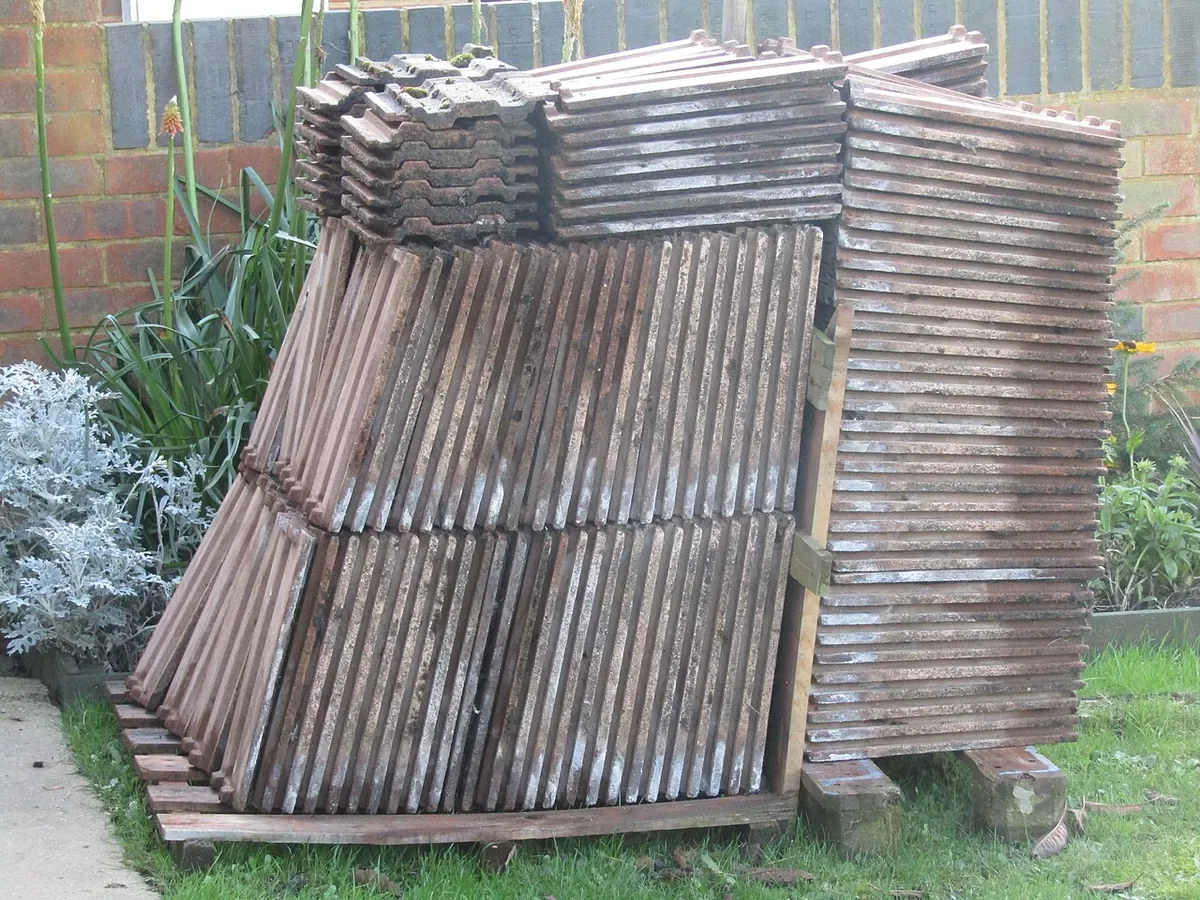
Photo: Kolforn, Wikimedia Commons, CC BY-SA 4.0
Concrete roof tiles are made from sand, cement, water and pigment, molded under pressure into flat, low-profile or high-profile S-shapes that imitate clay tile, slate or wood shakes. The stacked tiles in the photo above have been salvaged from an old roof for reuse, which is common because well-made concrete roof tiles outlast the underlayment beneath them.
Weight. A concrete roof of standard tiles weighs about 9 to 12 pounds per square foot, roughly 900 to 1,200 pounds per roofing square of 100 square feet, three to four times the weight of asphalt shingles. Lightweight concrete tiles are available at about 6 to 7 pounds per square foot. Because of the weight, an engineer or the tile manufacturer should confirm that the roof framing can carry tile before switching from shingles.
Lifespan. The tiles themselves commonly last 50 years or more. The underlayment beneath them, which is the real waterproof layer, usually lasts about 20 to 30 years and often has to be replaced before the tiles wear out. In a lift-and-relay job, roofers remove the tiles, replace the underlayment and battens, then reinstall the good tiles.
Performance. Concrete roof tiles resist fire, rot and insects, handle hail better than many coverings, and when properly fastened can meet high wind requirements in hurricane regions. Their thermal mass and the air space under curved tiles help keep attics cooler in hot climates, which is why they are popular in Florida, California, Arizona, Texas and Nevada. They can absorb water and may be damaged by repeated freeze-thaw in cold climates unless rated for it. See cement tile.
Flat Concrete Roofs
A flat concrete roof is a reinforced concrete slab, cast in place or made of precast hollow-core planks, that forms the top of a building. Flat concrete roof slabs are common on commercial buildings, apartment blocks, parking garages and, in many hot countries, single-family homes. They are strong enough to carry rooftop equipment, terraces, green roofs and even future floors.
A flat concrete roof must be built with a slight slope to drains, often about a quarter inch per foot, either in the slab itself or with tapered insulation or a sloped topping. On top goes a waterproofing system: a built-up asphalt roof, modified bitumen, a single-ply membrane such as TPO or EPDM, or a liquid-applied membrane. Insulation can sit above the slab under the membrane or above the membrane in an inverted roof. Without a good membrane and drainage, water ponds on the slab, finds cracks and leaks into the building, and in cold climates it can damage the concrete and reinforcement over time. See concrete slab thickness and metal decking for concrete.
Cement Roof Products
A cement roof can also mean a roof covered with cement-based products other than concrete tiles:
Fiber cement shingles and slates. Thin, flat panels of cement reinforced with cellulose or synthetic fibers, made to look like slate or wood shakes. They are lighter than concrete tile and fire-resistant, but some older products had problems with cracking and delamination.
Corrugated fiber cement sheets. Used on farm buildings, sheds and in many countries on homes.
Asbestos-cement roofing. Many older buildings have cement roof shingles or corrugated sheets that contain asbestos. They are generally safe if left undisturbed, but drilling, cutting, breaking or pressure washing them can release dangerous fibers. Testing and professional abatement are needed before repairs or removal.
Roof Tile Replacement
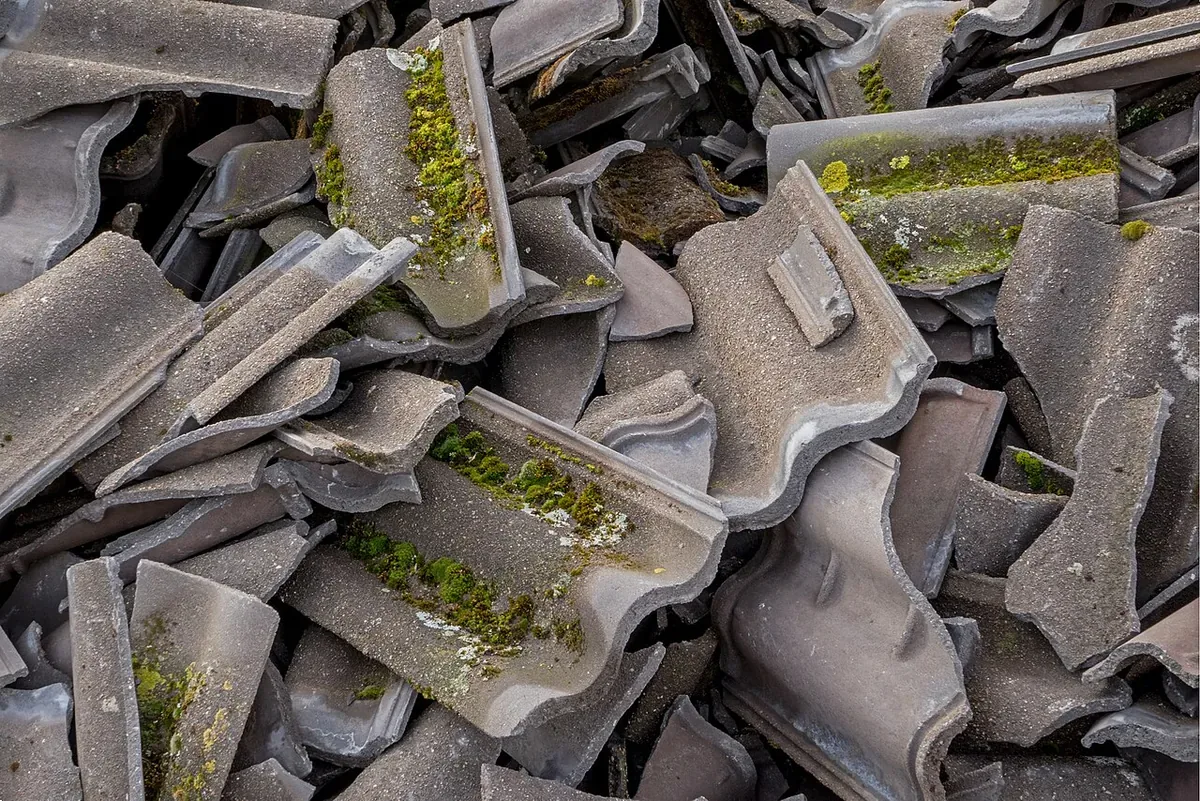
Photo: W.carter, Wikimedia Commons, CC0
Concrete roof tiles break from foot traffic, falling branches, hail and settling, and broken tiles like those above let water reach the underlayment. Roof tile replacement for a few tiles is a routine repair:
1. Find matching tiles. Look for spares left from the original job, the same profile and color from the manufacturer, or reclaimed tiles from a salvage yard. Older colors may have faded, so an exact match can be hard.
2. Remove the broken tile. Lift the tiles above it slightly with wedges, break out the damaged tile carefully, and pull or cut any nails or clips holding it.
3. Check the underlayment. Look for tears or rot underneath and repair them before closing up.
4. Install the new tile. Slide it into place, hook it over the batten if the roof uses them, and secure it with the fastener, clip or approved adhesive used on the rest of the roof. Some roofs use a dab of compatible tile adhesive or foam rather than nails on replacement tiles.
5. Avoid breaking more. Concrete tiles can crack under a person's weight in the wrong spot. Walk on the lower part of each tile where it is supported by the tile below, or hire a roofer who knows how to move across tile roofs.
When many tiles are broken or the underlayment is failing, a full roof tile replacement or lift-and-relay is usually more economical than repeated spot repairs.
Roof Cement vs. Roof Sealant vs. Caulk
Roof cement, roof sealants and caulks overlap, but each fits different jobs. Asphalt roof cement is thick, cheap and sticks well to asphalt shingles, roll roofing and built-up roofs, but it is black, can crack as it ages, and is not compatible with every material. Polymer and urethane roof sealants in caulk tubes cost more, stay flexible longer, come in colors and bond to metal, many membranes and masonry, so they are often better for sealing flashing edges, metal seams and joints that move. Ordinary indoor caulk, including most silicone and acrylic latex products not labeled for roofing, should not be used on a roof; it may not stand up to sun, heat and standing water. When in doubt, follow the roofing manufacturer's recommendations: the right product depends on the roof covering and the joint, not just on the name on the can.
Using Roof Cement in Cold or Hot Weather
Temperature affects how roof cement handles. In cold weather, it becomes stiff and hard to spread; store the can indoors at room temperature before use, and work in the warmest part of the day. Some products have a minimum application temperature printed on the label, often around 40°F, and the solvents evaporate more slowly in the cold, so cure takes longer. In hot weather, roof cement can become soft and runny on dark, sun-heated roofs, and fresh patches can sag on steep slopes. Apply it in the morning or evening and keep layers thin so it does not slump.
Removing Old Roof Cement
Over the years, layers of roof cement build up around chimneys, vents and valleys, especially after several repairs. Thick, cracked roof cement can hold water against flashing and hide rust. Before re-flashing or reroofing, roofers scrape off old roof cement with a stiff putty knife or scraper, which is easiest on a cool day when the material is brittle rather than gummy. Mineral spirits help clean residue from metal flashing and tools. On shingles, aggressive scraping can tear the mat, so damaged shingles near the old patch are often replaced. Never use a torch or heat gun to soften roof cement; it contains flammable solvents and asphalt.
Concrete Roof vs. Asphalt Shingles
Cost. Asphalt shingles cost much less up front, often about $4 to $8 per square foot installed, compared with about $10 to $20 or more for a concrete tile roof.
Lifespan. Architectural shingles typically last 20 to 30 years. A concrete roof of tiles can last 50 years or more, though its underlayment needs attention after 20 to 30 years.
Weight and structure. Shingles weigh about 2 to 4 pounds per square foot; concrete tiles weigh several times more, which can require stronger framing.
Weather. Concrete roof tiles resist fire and hail well and stay cooler in hot climates. Shingles are easier to repair and better suited to some cold-climate roofs.
Repairs. Shingle repairs often involve roof cement and new shingles; concrete tile repairs involve replacing individual tiles and, sometimes, the underlayment beneath. See how long an asphalt roof lasts.
Maintaining a Concrete Roof
A concrete roof needs little maintenance, but a yearly check prevents most problems. From the ground or with binoculars, look for cracked, slipped or missing tiles, especially after storms. Keep gutters and valleys clear of leaves so water drains freely. Trim branches that rub against or drop on the roof. Moss and algae can grow on concrete tiles in damp, shaded areas; gentle cleaning with a low-pressure wash or a cleaner made for tile roofs is safer than high pressure, which can erode the surface and void warranties. Concrete roof tiles may be resealed or recoated with products made for them to restore color, though this is mostly cosmetic. Inside the attic, look for water stains on the decking, which can show that the underlayment is failing before a leak reaches the ceiling.
Building Codes and Insurance for Concrete Roofs
Concrete roof tiles generally carry a Class A fire rating when installed as tested, which is the highest rating and can matter for homes in wildfire areas and for insurance. In hurricane regions such as Florida's high-velocity hurricane zones, building codes set strict rules for how tiles are fastened, with specific nails, screws, clips or approved foam adhesives, and roofs often need inspection. Insurers in these areas may offer discounts for roofs that meet wind mitigation standards and may ask for documentation of the roof's age and attachment method. For a flat concrete roof, codes cover drainage, overflow scuppers and the fire and wind ratings of the membrane system. Check local code requirements before any major repair or replacement.
Costs: Roof Cement, Concrete Roofs and Tile Replacement
Roof cement: about $10 to $25 per gallon can, $40 to $90 for 5 gallons, and $5 to $12 per caulk-gun cartridge. Wet-surface and rubberized versions cost more.
Small roof repair by a roofer using roof cement and flashing: commonly $200 to $600, with minimum service charges.
Concrete tile roof, new or full replacement: about $10 to $20 or more per square foot installed, depending on tile style, roof complexity, underlayment and region. A 2,000-square-foot roof often costs $20,000 to $40,000.
Lift-and-relay (new underlayment, reuse tiles): often $6 to $12 per square foot.
Roof tile replacement of a few tiles: about $300 to $1,000 for a service call, or roughly $10 to $25 per tile plus labor for larger repairs.
Flat concrete roof membrane replacement: commonly $6 to $15 per square foot depending on the system and insulation.
See how long an asphalt roof lasts and asphalt shingle roof replacement.
Frequently Asked Questions
What is roof cement used for?
Sealing flashing, vent boots, small holes and cracks, and holding down loose shingle tabs. It is for spot repairs, not whole roofs.
Can you apply roof cement in the rain?
Only wet-surface roof cement is made to stick to damp surfaces. Standard roof cement needs a dry surface.
How long does roof cement last?
Often several years, but exposed roof cement can dry and crack, so inspect it twice a year.
How heavy is a concrete roof?
Standard concrete roof tiles weigh about 9 to 12 pounds per square foot, much heavier than asphalt shingles.
How long do concrete roof tiles last?
The tiles often last 50 years or more; the underlayment typically needs replacement after 20 to 30 years.
Sources
- ASTM D4586: asphalt roof cement, asbestos-free
- National Roofing Contractors Association: roofing manuals and repair guidance
- Tile Roofing Industry Alliance: concrete and clay tile installation
- US EPA: asbestos in building products