
Asphalt vs Tar: What Is the Difference for Driveways, Sealers and Roofs?
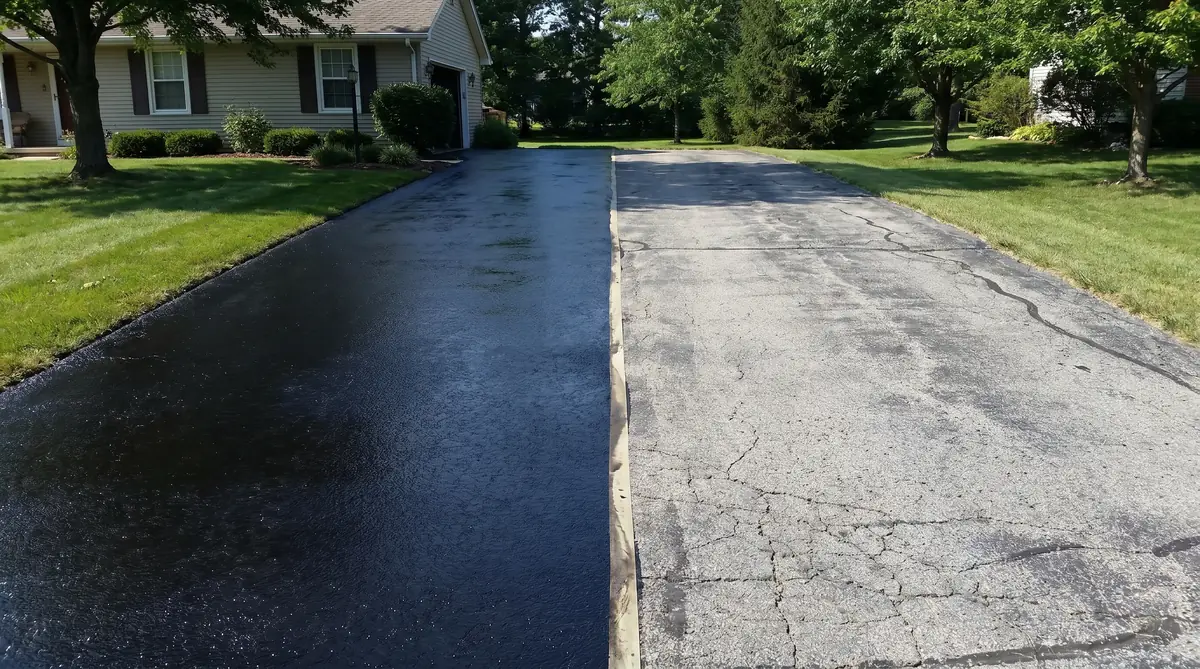
Quick Answer
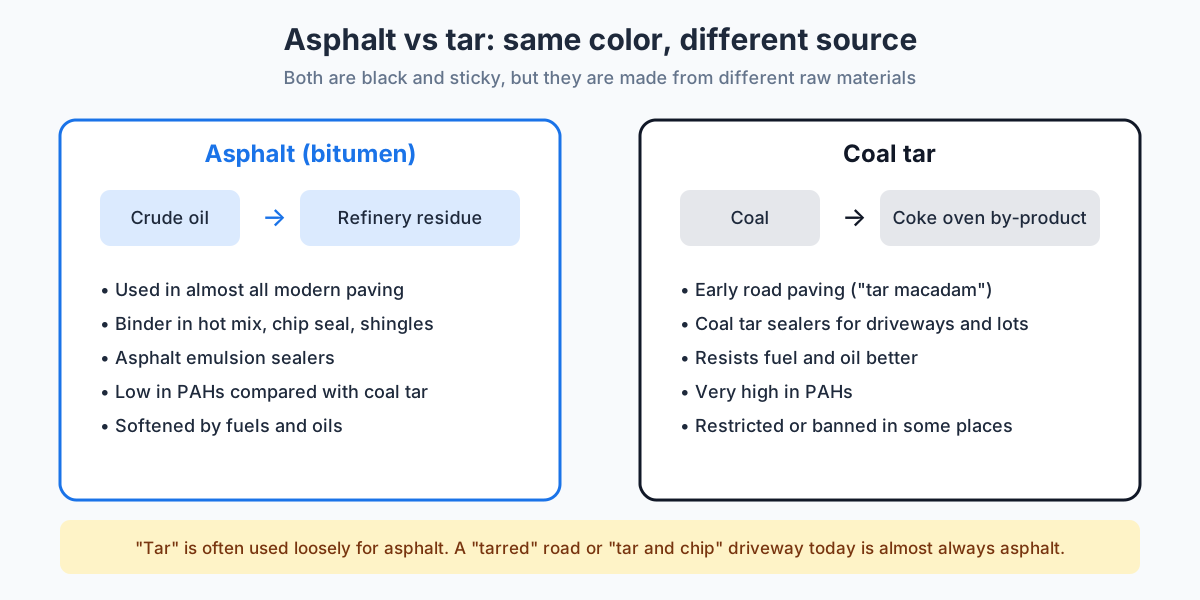
In the asphalt vs tar question, the key difference is the source. Asphalt (bitumen) is the heavy residue left when crude oil is refined. Coal tar is a by-product of heating coal to make coke. Both are black and sticky, but modern roads, driveways and shingles use petroleum asphalt. Today you mostly meet real coal tar in pavement sealers and some flat roofing. Coal tar sealer resists fuel and oil better, but it contains far higher levels of PAHs and is restricted or banned in several states and many cities. For most homeowners, asphalt-based products are the safer, more widely allowed choice.
People use "tar" and "asphalt" as if they were the same thing. We talk about tarring a road, getting tar on a car, a tar and chip driveway or a tar roof, when in most cases the material is actually asphalt. The confusion is old: early paved roads really did use coal tar, and the name stuck long after the industry switched to petroleum asphalt.
The tar vs asphalt difference matters today mostly when you buy products: driveway sealers, roofing materials and cleaners. This guide explains where each comes from, how they differ in performance, how coal tar vs asphalt sealers compare, what the health and environmental rules are, how "tar" is used in roofing and road terms, and which to choose. For the history of the word "tarmac", see our tarmac vs asphalt guide.
Where Asphalt and Tar Come From
Asphalt (bitumen)
When crude oil is distilled at a refinery, the lighter products such as gasoline, diesel and jet fuel boil off first. The heaviest fraction left at the bottom is asphalt, called bitumen in many countries. It is refined further to meet paving and roofing specifications. A small amount of asphalt also occurs naturally, for example in the Pitch Lake in Trinidad, but almost all asphalt used today comes from refineries.
Coal tar
Coal tar comes from coal, not oil. When coal is heated in the absence of air to make coke for steelmaking, it releases gases and a thick black liquid. That liquid is crude coal tar, which is refined into coal tar pitch and other products. Because it is a by-product of coke production, the supply of coal tar is tied to the steel industry rather than to oil refining.
Other "tars"
The word tar also covers products that have nothing to do with paving, such as pine tar made from wood (used on baseball bats and in traditional boat care) and tobacco tar. When people compare asphalt vs tar in the context of roads and driveways, they mean coal tar.
Asphalt vs Tar: Side-by-Side Comparison
| Asphalt (bitumen) | Coal tar | |
|---|---|---|
| Source | Crude oil refining | Coal coking (steelmaking by-product) |
| Main uses today | Paving, shingles, roofing, emulsion sealers | Some pavement sealers, some flat roofing, industrial uses |
| Resistance to gasoline and oil | Lower; fuels soften it | Higher |
| PAH content | Low compared with coal tar | Very high |
| Odor when applied | Milder | Strong |
| Skin irritation | Less | Can cause irritation and sun sensitivity |
| Regulation | Allowed everywhere | Sealers restricted or banned in several states and many cities |
Chemical and Physical Differences
Asphalt and coal tar look alike, but they are chemically different, and that is what drives the practical differences:
- Composition. Asphalt is a complex mix of large hydrocarbon molecules, often described in four groups: asphaltenes, resins, aromatics and saturates. Coal tar is made mostly of aromatic compounds, including a high share of PAHs.
- Fuel resistance. Because asphalt is itself a petroleum product, gasoline, diesel and motor oil dissolve and soften it. Coal tar is chemically different from petroleum, so fuels affect it much less. This is the main reason coal tar sealers became popular for gas stations and parking lots.
- Temperature behavior. Both soften in heat and stiffen in cold, but they respond differently. Asphalt binders are graded for climate so they stay workable in a given range of pavement temperatures.
- Aging. Both oxidize and harden in sunlight over time, which is why sealers are reapplied every few years.
- Odor and fumes. Coal tar products give off a strong, sharp smell when applied; asphalt products smell milder.
What the Difference Means for Your Driveway
For a homeowner, the tar vs asphalt difference comes down to three practical points. First, your driveway itself is asphalt, so anything you put on it should be compatible with asphalt: asphalt emulsion and acrylic sealers bond well, and cleaners should be asphalt-safe. Second, if you park leaking vehicles on the driveway, an asphalt-based sealer will be softened by oil drips more than coal tar would be, so clean drips promptly and use a drip pan. Third, if you live where coal tar sealers are restricted, you will simply be using asphalt-based or acrylic sealers, and they do the job well on residential driveways. See when to seal a new asphalt driveway for the first coat.
Is Asphalt the Same as Tar on Roads?
No. Modern roads, streets, parking lots and driveways in the U.S. are paved with hot mix asphalt: crushed stone and sand bound with petroleum asphalt. Coal tar was used in early paving in the late 1800s and early 1900s, including the original "tar macadam" roads, but petroleum asphalt replaced it through the 20th century as oil refining grew and asphalt proved easier to work with and more consistent. When someone says a road is "tarred", they almost always mean it is paved with asphalt. Our types of asphalt guide explains the mixes used today.
Coal Tar vs Asphalt Sealer
Driveway and parking lot sealers are where the asphalt vs tar choice is real today. Both kinds are sold as thin liquid coatings that are brushed, squeegeed or sprayed onto asphalt pavement every few years.
Coal tar sealers
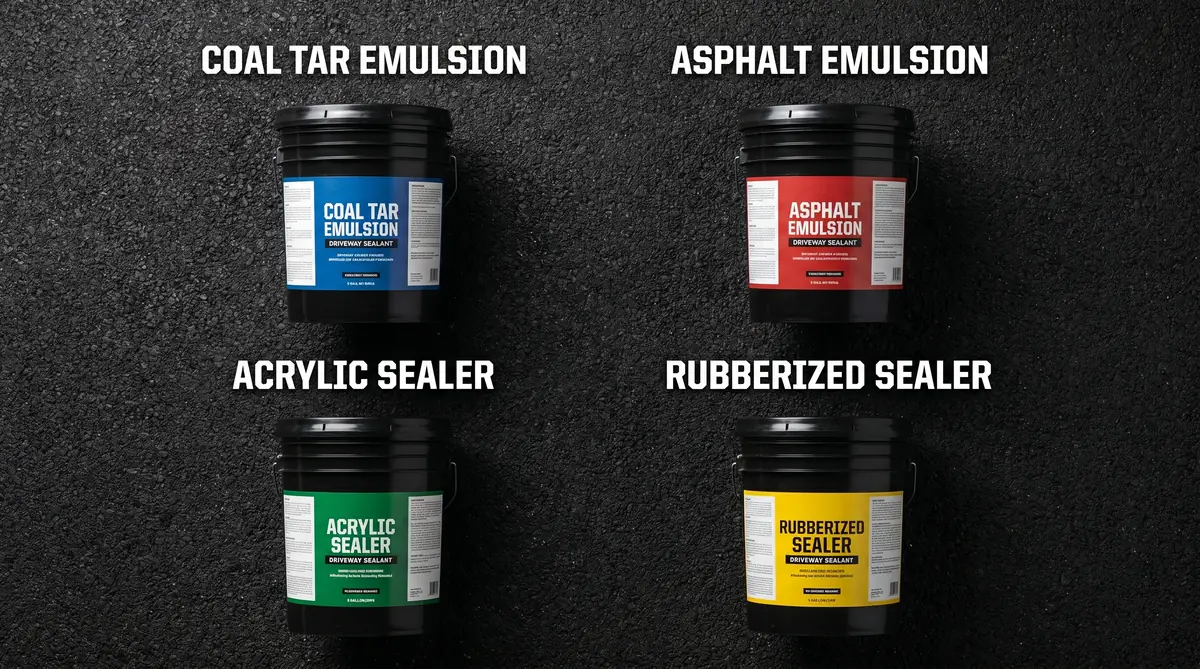
Coal tar emulsion sealers have long been popular with commercial sealcoating contractors, especially for parking lots and gas stations, because they resist gasoline, oil and deicers well and give a deep black finish. Their drawbacks are strong odor during application, skin and eye irritation for applicators, and very high levels of polycyclic aromatic hydrocarbons (PAHs).
Asphalt emulsion sealers
Asphalt emulsion sealers are made from refined asphalt suspended in water with clay and additives. They are easy to apply, lower in odor and much lower in PAHs, and they are sold in home improvement stores everywhere. They are less resistant to fuel spills than coal tar, so oil drips can soften them more, but for a home driveway that is usually a small trade-off.
| Sealer | Strengths | Weaknesses | Best for |
|---|---|---|---|
| Coal tar emulsion | Fuel and oil resistance, durable | High PAHs, odor, restrictions | Commercial lots where allowed |
| Asphalt emulsion | Lower PAHs, easy to use, allowed everywhere | Less fuel resistant | Home driveways |
| Acrylic / polymer | Durable, low odor, color options | Higher price | Premium driveways, courts |
See our asphalt sealer guide, asphalt emulsion sealer and asphalt sealer prices for products and costs, and when to seal a new asphalt driveway for timing.
Health and Environmental Concerns With Coal Tar
The biggest practical difference between tar and asphalt is PAH content. PAHs are a group of chemicals, several of which are considered probable or known human carcinogens. Research by the U.S. Geological Survey found that coal-tar-based pavement sealants contain PAH levels on the order of 1,000 times higher than asphalt-based sealants, and linked sealed pavement to elevated PAHs in house dust nearby and in stream sediments downstream. As the sealant wears, small particles are tracked indoors on shoes and washed into storm drains by rain.
Because of this, several U.S. states and many cities and counties have restricted or banned the sale or use of coal-tar-based sealants, and some large home improvement retailers stopped selling them. Rules vary by location and change over time, so check your state and local regulations before you buy or hire a sealcoating contractor. Ask the contractor which sealer they use; reputable companies will tell you.
Asphalt vs Tar in Roofing
Roofing is the other place people meet both materials. Most residential roofs use asphalt shingles, which are made with petroleum asphalt on a fiberglass mat. On flat and low-slope roofs, built-up roofing (BUR) uses layers of felt bonded with hot bitumen, and that bitumen can be either asphalt or coal tar pitch. Coal tar pitch roofs have a long track record on dead-level roofs because coal tar handles standing water well, but they are less common today and have similar handling concerns to coal tar sealers.
When people talk about patching a roof with "roofing tar", they usually mean asphalt-based roofing cement in a can or tube, used to seal flashing and small leaks. See our asphalt roof repair and asphalt vs architectural shingles guides for roofing details.
Tar and Chip vs Asphalt
"Tar and chip" is another name for chip seal: a layer of liquid binder sprayed onto a gravel base and covered with stone chips that are rolled in. Despite the name, modern tar and chip driveways use asphalt emulsion or hot asphalt as the binder, not coal tar. So the real comparison is between a chip seal surface and a hot mix asphalt surface, both made with asphalt. We cover that in detail in chip seal vs asphalt driveway cost and chip seal driveway cost.
Tar vs Bitumen vs Asphalt: The Words Explained
| Word | What it usually means |
|---|---|
| Asphalt (U.S.) | Either the binder or the finished pavement made with it |
| Bitumen | The petroleum binder itself (common term outside the U.S.) |
| Asphalt concrete / blacktop | Pavement of stone bound with asphalt |
| Coal tar / coal tar pitch | Binder made from coal, used in some sealers and roofs |
| Tarmac | Originally tar macadam; now often used for any asphalt surface, especially in the UK and at airports |
| "Tar" (everyday speech) | Usually asphalt |
So "tar vs bitumen" and "tar vs asphalt" are really the same comparison: coal-based versus petroleum-based binder.
Tar on Your Car: Asphalt or Coal Tar?
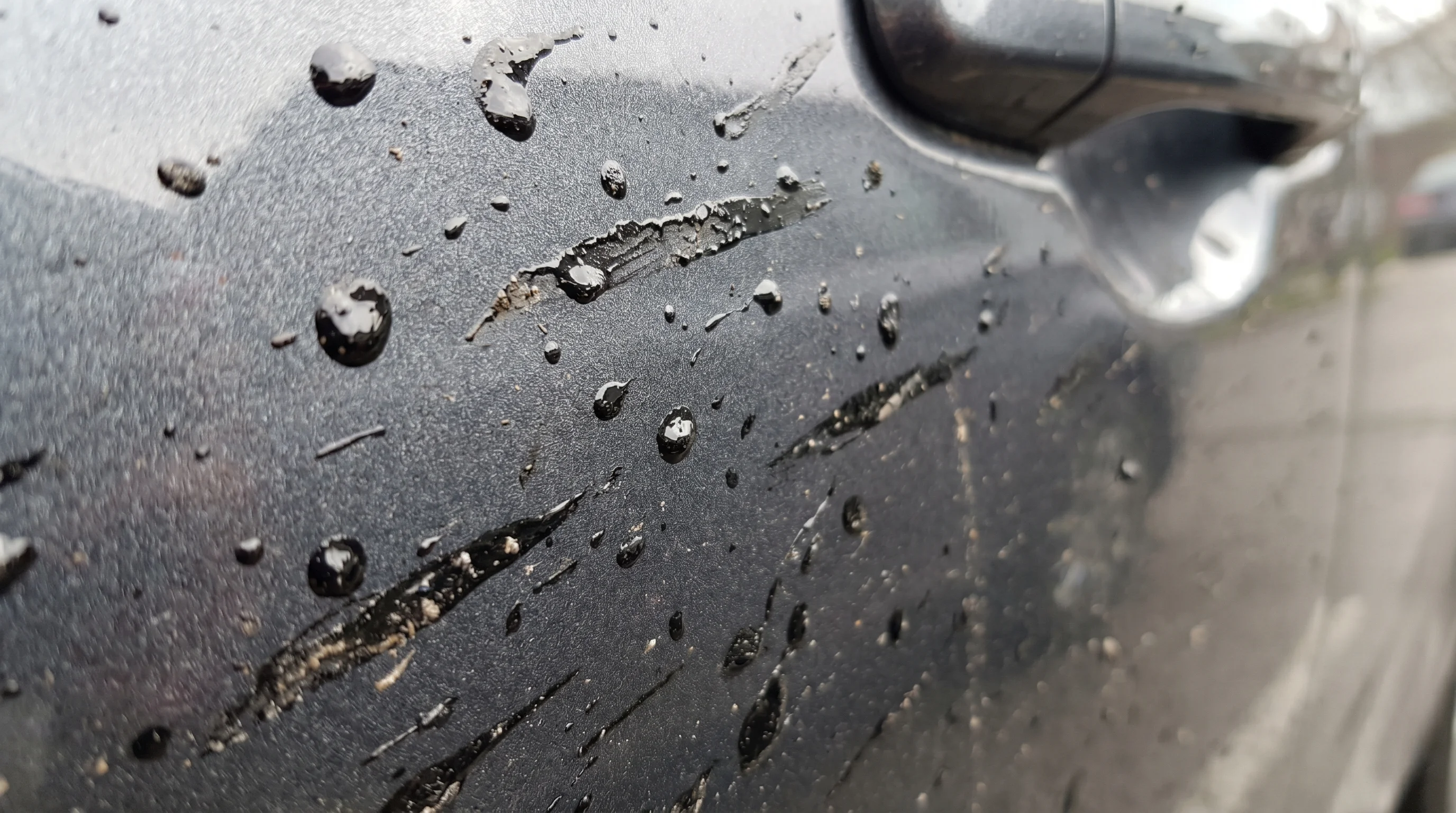
The black spots that splash onto cars from fresh road work or hot summer roads are asphalt, not coal tar. They come off with a dedicated bug-and-tar remover or a clay bar, used gently so you do not scratch the paint. Our guide on how to remove asphalt from a car covers the safe methods. For the reverse problem, oil on your driveway, see how to remove oil stains from asphalt.
Which Should You Use: Asphalt or Tar?
| Job | Use |
|---|---|
| Paving a driveway, lot or road | Hot mix asphalt |
| Sealing a home driveway | Asphalt emulsion or acrylic sealer |
| Sealing a commercial lot with heavy fuel drips | Coal tar only where legal; otherwise premium asphalt or polymer sealer |
| Patching a pothole | Asphalt cold patch or hot mix |
| Roof shingles | Asphalt shingles |
| Small roof leak or flashing | Asphalt roofing cement |
For nearly every homeowner job, the answer in the asphalt vs tar question is asphalt. The main exception is commercial sealcoating in places where coal tar is still allowed and fuel resistance is a priority.
Asphalt or Tar? Five Questions to Decide
- Is the job paving or sealing? For paving, the answer to asphalt or tar is always asphalt. Only sealers and some roofing still offer a real tar vs asphalt choice.
- What do local rules allow? If coal tar sealers are restricted where you live, the decision is made: use an asphalt or acrylic sealer.
- How much fuel and oil hit the surface? Gas stations and busy lots benefit most from fuel resistance; a home driveway rarely needs it.
- Who will apply it? Asphalt emulsion is friendlier for DIY. Coal tar products need more protective gear and care.
- Who uses the area? Around homes, schools and playgrounds, the lower-PAH asphalt option is the sensible choice.
Run through these and the asphalt vs tar decision is usually clear within a minute. For homes and home driveways, the answer to tar or asphalt is nearly always asphalt; for commercial lots, check the local rules on coal tar vs asphalt sealers first.
Asphalt and Tar in Everyday Language
Part of the confusion between asphalt and tar is just habit. Older generations grew up with tarred roads and the word stuck. "Tar" is short and easy to say, so people use it for any black, sticky road material. In the UK and Ireland, "tarmac" is the everyday word for asphalt driveways and roads. In the U.S., "blacktop" is common. Contractors usually say asphalt, hot mix or HMA. None of these everyday words is wrong in conversation, but when you buy products, the label matters: "coal tar" and "asphalt" are different materials with different properties and rules. When a quote or product says tar, ask whether it means coal tar or is just using the old name for asphalt.
Tar vs Asphalt by Use: Quick Summary
- Roads and driveways: asphalt. Tar and asphalt were once both used, but asphalt replaced tar.
- Driveway sealer: asphalt emulsion for most homes; coal tar vs asphalt only matters where coal tar is still allowed.
- Commercial lot sealer: coal tar or asphalt, depending on rules and fuel exposure.
- Roof shingles: asphalt.
- Flat roofs: asphalt or coal tar pitch, depending on the system.
- Roof patching: asphalt roofing cement, often called roofing tar.
- Car paint spots: asphalt, despite the "tar remover" name on the bottle.
How to Tell If a Sealer Is Coal Tar or Asphalt
- Read the label. Coal tar products say "coal tar", "refined tar" or "RT-12" type designations; asphalt products say "asphalt emulsion" or "asphalt-based".
- Check the safety data sheet. It lists coal tar pitch if present.
- Smell. Coal tar sealers have a strong, sharp, mothball-like odor; asphalt emulsions smell milder.
- Ask the contractor for the product name and data sheet before work starts.
Asphalt and Tar in Older Homes and Driveways
If you own an older property, you may run into coal tar in places you would not expect. Old driveways and parking areas may have years of coal tar sealer layered on top. Some older flat roofs were built with coal tar pitch, and old basement waterproofing sometimes used tar-based coatings. None of this needs to be removed just because it is there, but it matters when you renovate. Grinding, sanding or tearing out coal tar materials creates dust, so contractors should use dust control and proper disposal. When resealing an old driveway that has coal tar sealer on it, ask your contractor whether the new asphalt-based product is compatible, or whether a primer is needed first. In short, in older homes the asphalt vs tar question is about knowing what is already there before you work on it, so you can choose compatible products and handle old coal tar layers safely.
Is Asphalt Tar? Reading Product Labels
Labels are the most reliable way to answer "is asphalt the same as tar" for a specific product. Asphalt-based products use words like asphalt emulsion, asphalt-based, bitumen or petroleum asphalt. Coal tar products use coal tar, coal tar pitch, refined tar or a tar emulsion designation. Some packaging uses "tar" loosely in a brand name even when the product is asphalt-based, and "bug and tar remover" for cars is named for road asphalt, not coal tar. When the label is unclear, the safety data sheet lists the actual ingredients. Knowing the difference between tar and asphalt on a label matters most for sealers, because that is where the rules and the health concerns apply.
The Future of Asphalt and Tar
The long-term trend in the asphalt vs tar story is clear. Asphalt dominates paving and keeps evolving with warm mix, recycled content and better binders. Coal tar's remaining paving role, mainly sealers, has been shrinking as more states and cities restrict coal tar sealants and more retailers stop selling them. Asphalt-based, acrylic and polymer-modified sealers have improved to fill the gap, including for commercial lots. For most people, tar vs asphalt is now mainly a question of words rather than materials.
Cost: Coal Tar vs Asphalt Products
In stores, asphalt emulsion driveway sealers are widely available in a range of prices, from basic to premium formulas with added polymers and sand. Coal tar sealers are mainly sold through commercial suppliers, and where restrictions apply they may not be available at all. Professional sealcoating prices depend more on the job size, prep work and region than on whether the sealer is coal tar or asphalt. For current price ranges, see our asphalt sealer prices and sealcoating cost guides.
Working Safely With Asphalt and Tar Products
Whether you use asphalt or tar products, a few basic precautions apply:
- Wear chemical-resistant gloves, long sleeves, long pants and eye protection.
- Work in fresh air and avoid breathing fumes, especially with hot materials and coal tar products.
- Keep sealers off skin; coal tar can cause irritation and make skin more sensitive to the sun.
- Keep children and pets away until the product has cured.
- Never heat asphalt or tar products over an open flame at home; hot asphalt causes severe burns.
- Read the safety data sheet for any product you use.
Cleanup and Disposal
Wet asphalt emulsion sealer cleans up with water before it dries; dried sealer and coal tar products usually need a dedicated cleaner, so follow the label. Do not wash leftover sealer or rinse water into storm drains, where it flows untreated to streams. Let leftover sealer harden in the pail before disposal where local rules allow, or take it to a household hazardous waste collection site. Brushes and squeegees used for coal tar products should be cleaned or disposed of as the label directs.
Common Myths About Tar and Asphalt
"Roads are made of tar."
Not today. Roads are made of stone bound with petroleum asphalt. Coal tar paving belongs to the early 1900s.
"Black driveway sealer is tar."
Many are asphalt emulsions. Some are coal tar. Read the label; they are different products with different rules.
"Asphalt is just as risky as tar."
Both should be handled with care, but research has found coal tar sealants contain PAHs at levels far higher than asphalt-based sealants. That difference is why rules target coal tar sealers specifically.
"Tar lasts longer than asphalt."
For sealers, coal tar can resist fuel and wear well, but a well-applied asphalt or acrylic sealer reapplied on schedule protects a driveway effectively. For pavement itself, asphalt replaced tar decades ago because it performs better.
A Short History: From Tar Roads to Asphalt Roads
In the 1800s, roads were improved with layers of compacted crushed stone (macadam). To control dust and bind the stone, builders began spraying it with coal tar, which was readily available from gasworks. In the early 1900s, a patented process mixed tar with stone before laying, which gave us "tar macadam" and the word tarmac. As the petroleum industry grew, refined asphalt became cheaper, more consistent and safer to handle, and by the mid-20th century it had largely replaced coal tar in road building. Today coal tar's role in paving is mostly limited to sealers, and even that is shrinking. Read the full story in our tarmac vs asphalt guide.
Frequently Asked Questions
What is the difference between asphalt and tar?
Asphalt comes from refining crude oil; coal tar comes from heating coal. Coal tar contains far more PAHs and resists fuel better; asphalt is used for almost all modern paving.
Is asphalt the same as tar?
No, although people often call asphalt "tar". Roads and driveways today are paved with petroleum asphalt.
Is coal tar or asphalt sealer better?
Coal tar resists fuel and oil better; asphalt emulsion is lower in PAHs, milder to apply and allowed everywhere. For a home driveway, asphalt emulsion or acrylic sealer is the usual choice.
Is tar and chip the same as asphalt?
Tar and chip uses an asphalt binder today. It is a chip seal surface rather than hot mix asphalt pavement.
Why is coal tar sealant banned in some places?
Because of its very high PAH content, which research has linked to contamination in house dust and streams.
Does asphalt contain tar?
No. Paving asphalt is made from petroleum. Coal tar is a separate material that is not part of standard asphalt pavement.
Can you put an asphalt sealer over an old coal tar sealer?
Often yes, but compatibility depends on the products. Some manufacturers recommend a primer or specific product when switching. Check the new sealer's label or ask the manufacturer.
Is roofing tar asphalt?
Usually yes. Most "roofing tar" sold for repairs is asphalt-based roofing cement. Some flat roofs use coal tar pitch.
Sources
- U.S. Geological Survey, "Coal-Tar-Based Pavement Sealant and PAHs" — PAH levels and environmental findings. usgs.gov
- National Asphalt Pavement Association — asphalt pavement background. asphaltpavement.org
- Images and diagram: Asphapro.com.
Rules on coal tar sealers change; check your state and local regulations before buying or applying.