
Concrete Tile Guide: Cement Tile Flooring, Concrete Look Tile and Outdoor Concrete Tiles
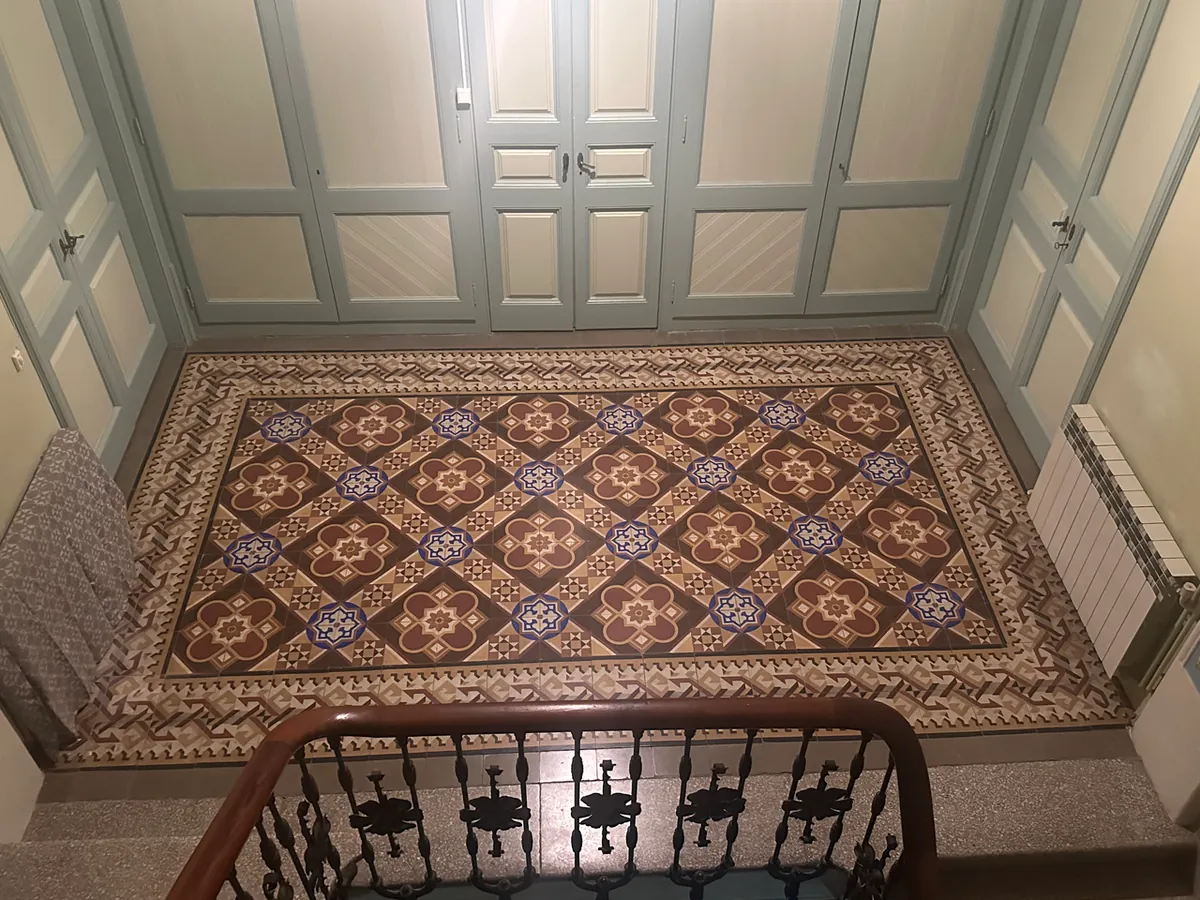
Photo: CamillaStrong, Wikimedia Commons, CC BY-SA 4.0
Quick Answer
Concrete tile covers three different products. Cement floor tiles (also called encaustic or hydraulic tiles) are handmade from cement, sand and pigment, pressed but not fired, usually about 8 by 8 inches and 5/8 inch thick, with the pattern running about 1/8 inch deep. They cost about $8 to $20 per square foot, must be sealed, and develop a soft patina. Concrete look tile is porcelain printed to look like concrete; it is harder, needs no sealing and costs about $3 to $10 per square foot. Outdoor concrete tiles and pavers are thicker cast concrete for patios, terraces and roofs. All concrete tile flooring is installed on a flat, solid base with thinset mortar, and installed costs usually run $15 to $35 per square foot for cement tile.
Concrete tile has come back into fashion. Patterned cement tiles fill bathrooms, kitchens, cafés and entry halls, and plain gray concrete tiles give floors and walls an industrial, modern look. The patterned floor in the photo above is a classic example of hydraulic cement tiles: a framed carpet of colorful pattern laid on a stair landing in an old European building, still in use after many decades. Outdoors, concrete tiles and pavers have covered terraces and roofs for even longer.
This guide explains what concrete tile is, how cement floor tiles are made, how they compare with concrete look porcelain tile and outdoor concrete tiles, the pros and cons of concrete tile flooring, how to install, seal and maintain it, and what it costs.
What Is Concrete Tile?
The term concrete tile is used loosely. In flooring stores it usually means cement tiles, also called encaustic cement tiles or hydraulic tiles, the colorful patterned tiles that originated in Spain and France in the 1850s and spread across Europe, Latin America, North Africa and the Caribbean. In roofing, concrete tiles are molded concrete roofing tiles that replace clay tiles. In landscaping, concrete tiles are thin concrete pavers and slabs for patios, terraces and walkways. And in modern interior design, concrete look tile is porcelain or ceramic made to look like concrete. They share a look or a raw material, but they behave very differently on a floor, so it helps to know which one you are buying.
True cement floor tiles are made without firing. A craftsman pours colored cement paste into a metal mold divided into the pattern, then fills the back with a dry mix of cement and sand, and a hydraulic press compacts the tile under great pressure. The tile then cures in water and air for several weeks. The colored layer is typically about 1/8 inch thick, so the pattern wears slowly and can be refinished. Common sizes are 8 by 8 inches (200 x 200 mm), with 6 by 6, 10 by 10, hexagons and other shapes available. Thickness is usually about 5/8 inch (15 to 16 mm). Because cement tiles are not fired, each tile has slight variations in color and edge, which gives the floor its handmade character.
Cement Tile Flooring: Pros and Cons
Cement tile flooring has many advantages. The patterns and colors are endless, from traditional Moroccan, Spanish and Victorian designs to bold modern graphics and plain solid colors. The color goes deep into the tile, so traffic wears it slowly. Properly sealed, cement tiles are durable enough for kitchens, bathrooms, entries and commercial floors, and floors more than a century old still exist across Europe and Latin America. Cement tiles feel softer and warmer underfoot than glossy porcelain and develop a soft patina over the years that many owners love. They are also made without kiln firing, which uses less energy than ceramic and porcelain tile.
The drawbacks are real. Cement tiles are porous, so they stain if they are not sealed and resealed. Acids, such as vinegar, lemon juice, wine and some cleaners, etch the surface. Cement tile flooring costs more than ceramic or porcelain, both to buy and to install, because the tiles are thicker, heavier and need careful handling, sealing before and after grouting, and slow, clean grouting. The tiles can chip at the edges if dropped or if the substrate moves. They change color slightly with sealers and age, which some see as patina and others as fading. And they are not ideal outdoors in freezing climates unless rated for it, because water absorbed into the tile can freeze and crack it.
Concrete Look Tile
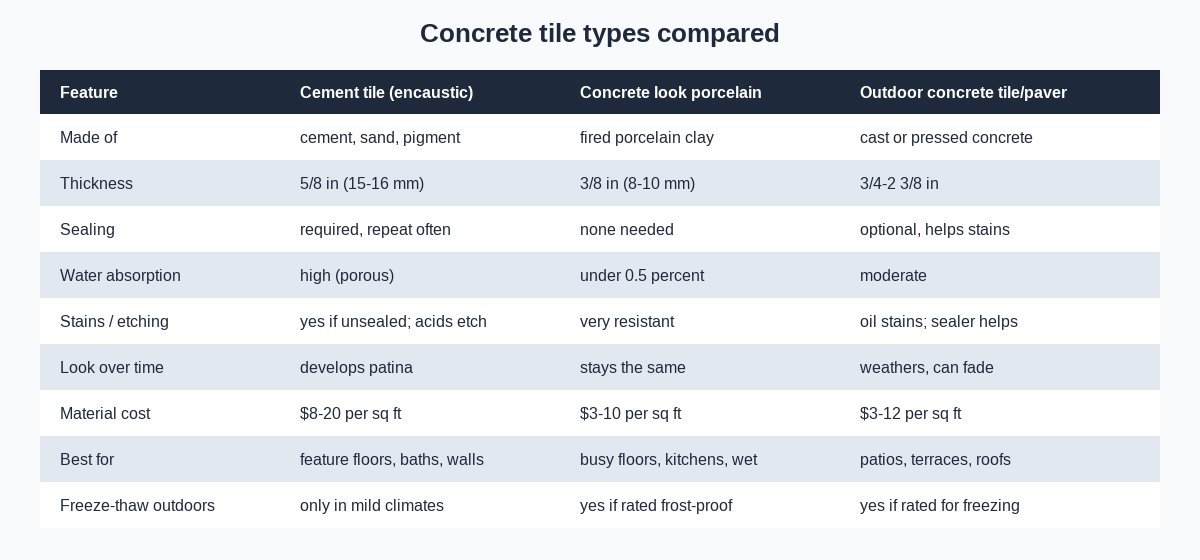
Concrete look tile is usually porcelain, printed or colored through the body to look like polished, troweled or raw concrete. Large formats, such as 24 by 24, 24 by 48 and 48 by 48 inches, mimic the seamless look of a concrete slab with fewer grout lines. Because porcelain is dense and fired at high temperature, it absorbs less than 0.5 percent water, resists stains and acids, needs no sealing, and handles freeze-thaw outdoors when rated frost-proof. It costs less than cement tile and is easier to maintain. The trade-off is that it is a copy: it does not have the depth, variation and patina of real concrete, and the printed pattern repeats across a large floor. For a busy kitchen, a basement, a bathroom or a commercial floor where low maintenance matters most, concrete look tile is often the practical choice. The chart above compares the three main types of concrete tile side by side.
If you want real concrete with no tiles at all, other options include polished concrete, a microcement or concrete overlay, or a stained and sealed slab. See polished concrete cost, microcement and concrete floors in homes.
Outdoor Concrete Tiles

Photo: Anna Frodesiak, Wikimedia Commons, CC0
Outdoor concrete tiles are thicker, stronger and rougher than indoor cement tiles. They include thin concrete pavers, patio slabs from about 12 by 12 to 24 by 24 inches, and terrace tiles for flat roofs and balconies, like the light gray concrete tiles being laid across the flat roof above, where they shade the waterproof membrane from strong sun. Outdoor concrete tile is cast or pressed with a textured or exposed aggregate surface for grip, often colored, and rated for freeze-thaw where needed. Common installations include patios on a sand or gravel base, tiles on pedestals over roof decks so water drains underneath, and tiles bonded to a concrete slab with exterior thinset. For a patio, outdoor concrete tiles on a compacted base work like pavers. On an existing concrete patio, they can be bonded directly if the slab is sound and drains well. See can you lay pavers over concrete, paving stones vs concrete and concrete patio ideas.
Cement floor tiles made for interiors should only be used outdoors in mild climates without hard freezes, and even then under a roof or in sheltered areas, sealed well. In cold climates, choose outdoor concrete tiles or porcelain rated for exterior use.
Concrete Floor Tiles vs a Poured Concrete Floor
People who love the look of concrete often weigh concrete floor tiles against a real poured or polished concrete floor. A concrete tile floor is installed room by room on an existing subfloor, works on upper floors and over wood framing, and can be replaced in sections if a few tiles crack or stain. Grout lines break up the surface, which some people like and others do not. A poured or polished concrete floor is seamless, very durable and often cheaper per square foot on a new slab, but it needs a concrete slab or a thick, heavy overlay, cracks are almost certain over time, and repairs are hard to hide. On an existing slab-on-grade house, grinding and polishing the slab or adding microcement may be the most direct route to a concrete look. On a wood-framed upper floor, a concrete floor tile in large format, or cement tiles with narrow joints, is usually the simpler and lighter answer. See concrete overlay cost and concrete grinding.
Comfort is similar either way: both are hard and cool underfoot, which feels great in hot climates and chilly in cold ones. Radiant floor heating under a concrete tile floor or inside a concrete slab solves that, and both work well with in-floor heat because concrete and cement tiles store and release warmth slowly. Area rugs soften the sound and feel of large hard floors. See heated concrete floor.
Choosing a Cement Floor Tile Pattern
Pattern is the main reason people choose a cement floor tile. Traditional designs include Moroccan stars and medallions, Spanish and Catalan florals, Victorian geometrics, Cuban and Mexican patterns, and simple checkerboards. Modern designs use bold graphics, terrazzo-like speckles, stripes and solid colors. A single cement tile pattern repeated across a room creates a rug-like effect; a central field framed by a border, like the landing at the top of this page, is a classic layout. Solid-color tiles can surround a patterned panel to make a rug in a larger room. Before ordering, lay out a few tiles on the floor or make a mockup in the supplier's design tool, because a pattern that looks great as a single tile can look busy across a big room. Colors also matter for upkeep: very light and very dark cement tiles show dirt, dust and wear more than mid tones.
Many suppliers also make the same pattern in different color combinations, so you can match a cement tile to cabinets, paint and fixtures. Custom colorways are possible for larger orders but add weeks of lead time, since each tile is handmade and cured for several weeks before shipping. When the pattern runs into walls, cabinets and doorways, plan where the cut tiles will fall so the design stays balanced, and order extra of the border and corner pieces, which tend to break first.
Cement Tiles: Flooring Performance in Real Homes
How do cement tiles perform after years of daily life? In homes where they were sealed properly and cleaned with gentle products, the answer is very well. Kitchens show the most wear, especially near the sink and stove, where water, grease and dropped pans take their toll; resealing every year or two keeps them in good shape. Entries and halls show patina along walking paths, which most owners find attractive. Bathrooms do well if splashes are wiped and acidic cleaners avoided. Problems mostly come from skipped sealing, wrong cleaners, or installation over a flexible base. Compared with glossy ceramic and porcelain, cement tiles flooring looks softer and more natural as it ages, rather than scratched. For buyers who want a floor that stays exactly as it was on day one, porcelain is the better fit; for those who like a floor that tells the story of the house, cement tile is a good choice.
Laying Concrete Tiles Outdoors
Outdoors, the base matters more than the tile. Outdoor concrete tiles laid on soil or a thin sand bed will rock, crack and settle. For patios and walkways, excavate, lay and compact 4 to 6 inches of crushed stone, add an inch of bedding sand or a mortar bed, and set the tiles with a slight slope away from the house, about 1/4 inch per foot. On an existing concrete slab, bond outdoor concrete tiles with exterior polymer-modified thinset, keep existing control joints open through the tile with movement joints, and make sure water drains off the surface. On roof decks and balconies, set the tiles on adjustable pedestals over the waterproof membrane so water runs underneath; this also lets the tiles be lifted for inspection. Sealing helps outdoor concrete tiles resist oil, leaves and algae, though many are left natural. See concrete walkway ideas and concrete pool deck repair.
In freezing climates, check the rating of the concrete tiles. Outdoor products made for freeze-thaw have low absorption and air entrainment; indoor cement tiles do not, and they can spall or crack after a few winters outside. Avoid deicing salts on any concrete tile outdoors, which damage the surface. See does salt damage concrete and best ice melt for concrete.
Concrete Roof Tiles
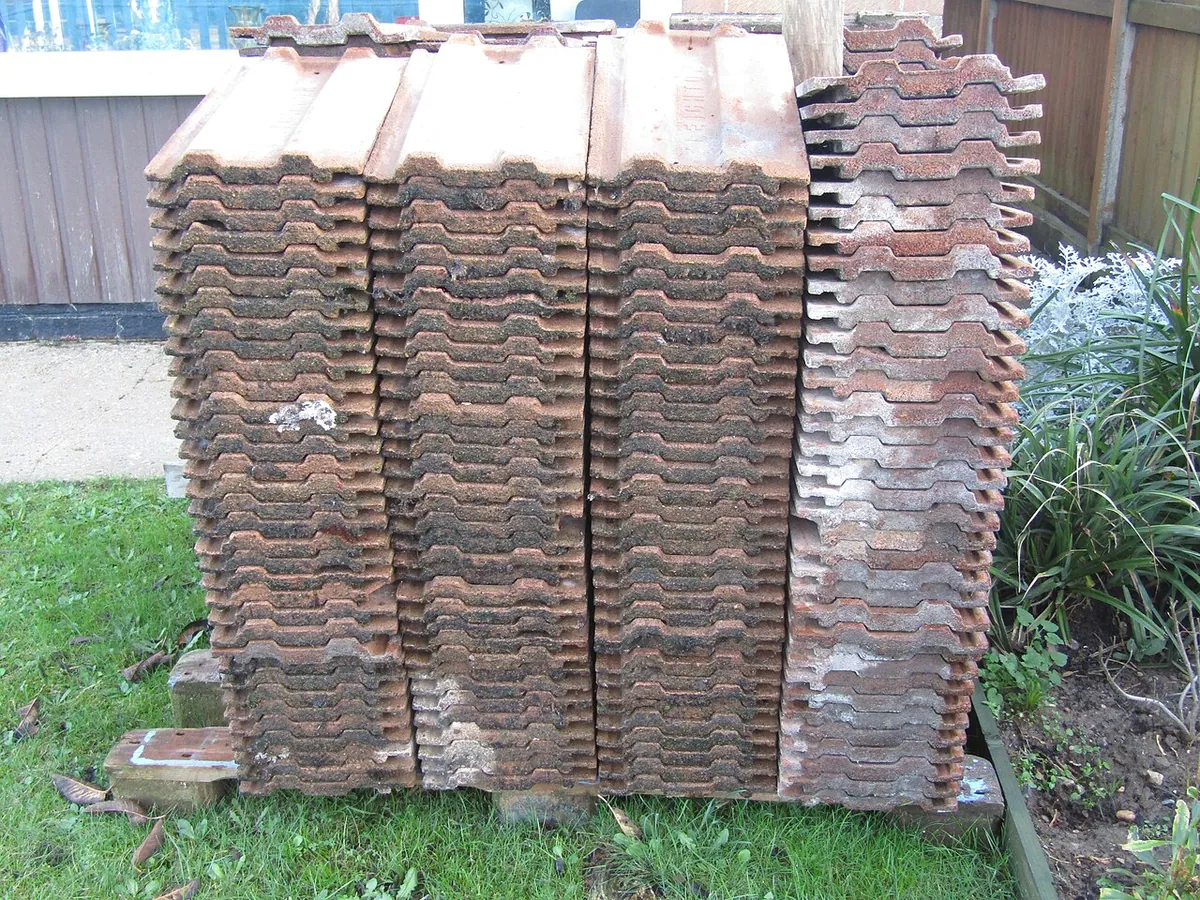
Photo: Kolforn, Wikimedia Commons, CC BY-SA 4.0
Concrete roof tiles are molded from sand, cement and pigment in shapes that interlock, like the reclaimed red tiles stacked on a pallet above, waiting to go back on a roof. They are a cheaper alternative to clay tiles, very common in the UK, Europe, Australia, Florida, California and the US Southwest. Concrete roof tiles last 50 years or more, resist fire, wind and hail, and come in flat, low-profile and high-profile shapes. They are heavy, about 9 to 12 pounds per square foot of roof, so the roof framing must be designed for them. The color is often a surface coating that can fade, and moss grows on the textured surface in damp climates. Reclaimed concrete roof tiles are often reused on extensions and outbuildings to match an existing roof. See how long concrete lasts and how to clean moss off concrete.
Installing Concrete Tile Flooring
Cement tile flooring installation follows normal tile practice, with extra care for the soft, porous surface. Start with a flat, solid, clean substrate: a concrete slab, cement backer board over a stiff wood subfloor, or a self-leveling underlayment. Cement tiles are heavy and rigid, so the floor must not flex; check that wood subfloors meet the tile industry's deflection limits for natural stone. Concrete slabs should be flat, cured, and free of cracks that move, sealers, paint and adhesive residues. An uncoupling membrane over a slab with minor cracks helps prevent cracks from telegraphing through the tile. See self-leveling concrete, how to fix cracks in concrete and how to lay tile on concrete.
Before installation, many manufacturers recommend applying a coat of penetrating sealer to the face of each cement tile, so grout and thinset cannot stain the porous surface. Lay out the floor from the center, dry-fitting the pattern so borders and cuts are balanced and the design lines up through doorways. Use a polymer-modified thinset mortar suited to the tile size, spread with a notched trowel, and back-butter each tile so it is fully supported with no voids. Set the tiles with narrow joints, usually 1/16 inch, keeping them flat with a level and a rubber mallet, gently. Clean any thinset off the face immediately with a damp sponge. Cut cement tiles with a wet saw. After the thinset cures, apply a second coat of sealer, then grout with a fine, unsanded grout in a color that does not contrast strongly, since dark pigments can stain light tiles. Work in small areas and clean the surface quickly and gently. Finally, seal the whole floor again, including the grout, once the grout has cured.
Sealing Cement Tiles
Sealing is the key to a good cement tile floor. Penetrating sealers soak into the pores and repel water and oil while keeping the matte, natural look. Topical sealers and waxes form a film on top, adding sheen and stain resistance but needing more maintenance and sometimes making the floor slippery. Most installers use two or three coats of a penetrating sealer made for cement tile, applied thinly with a lint-free cloth or roller, with excess wiped off before it dries. Test the sealer on a spare tile first, since some sealers darken colors. Reseal every one to three years in kitchens and baths, or whenever water stops beading and starts darkening the tile. In commercial and very busy floors, a combination of penetrating sealer and a sacrificial finish that can be stripped and renewed is common. See concrete sealer and how to seal concrete.
Cleaning and Caring for Concrete Tile Floors
Sweep or vacuum often, because grit wears the surface. Mop with a pH-neutral cleaner made for natural stone or cement tile, diluted in warm water. Avoid vinegar, lemon, bleach, ammonia and other acidic or strongly alkaline cleaners, which can etch the surface and break down the sealer. Wipe spills, especially oil, wine and juices, quickly. Use mats at entries and felt pads under furniture. Over the years, cement tiles develop a soft patina from use; many owners enjoy it. If a floor becomes worn, stained or dull, it can be deep-cleaned, lightly honed with fine abrasive pads by a professional, and resealed, which often restores much of its original color. Damaged individual tiles can be cut out and replaced with spares, so always keep a few extra tiles from the same batch, stored flat and dry, so a broken cement floor tile can be replaced years later with an exact match. See how to clean concrete floors and bleach on concrete.
Concrete Tile in Bathrooms and Kitchens
Cement tiles are popular for bathroom floors, shower walls, backsplashes and kitchen floors. In bathrooms, they work well on floors and walls outside the shower if sealed. Inside showers, they can be used, but they need waterproofing behind them, a good sealer, and regular resealing, and soap and hard water deposits must be cleaned with gentle, pH-neutral products rather than acidic shower cleaners. For kitchen floors and backsplashes, cement tile adds a strong design element, but oil and acid spills require quick cleanup. For homeowners who want the look with less care, a concrete look porcelain tile with a printed cement tile pattern is a lower-maintenance alternative. See concrete floors in homes.
Concrete Tile Costs
Material costs for cement tiles range from about $8 to $20 per square foot for standard patterns and sizes, and more for custom colors, designs and imported handmade tiles. Concrete look porcelain tile costs about $3 to $10 per square foot. Outdoor concrete tiles and pavers cost about $3 to $12 per square foot for material. Installation of cement tile flooring typically adds $8 to $20 per square foot, more than for porcelain because of sealing, careful grouting and the weight and fragility of the tiles. A finished cement tile floor often totals about $15 to $35 per square foot installed, plus subfloor preparation if needed. Outdoor concrete tiles on a prepared base cost about $10 to $25 per square foot installed. Order 10 to 15 percent extra for cuts, breakage and future repairs. See concrete cost per square foot and concrete floor coverings.
How to Choose the Right Concrete Tile
Start with where the tile will go and how it will be used. For a feature floor in an entry, a bathroom or a café with a strong pattern and character, real cement tiles are hard to beat. For large, open kitchens, basements and busy commercial floors where low maintenance matters, concrete look porcelain is usually the better choice. For patios, terraces, pool decks and roof decks, choose outdoor concrete tiles or porcelain pavers rated for exterior use and freeze-thaw if your climate needs it. Look at samples in your own light, wet and dry. Ask suppliers about sealing requirements, lead times for handmade tiles, and whether the tiles meet slip resistance standards for the space, such as the DCOF rating for wet areas. Buy all the tiles you need from the same production lot to avoid color differences.
Common Mistakes With Concrete Tile
The most common mistakes are skipping the pre-seal on cement tiles, which leads to grout and thinset stains that are very hard to remove; using sanded or dark grout that scratches or stains light tiles; installing on a flexible or uneven subfloor, which cracks tiles and grout; using acidic cleaners that etch the surface; forgetting to reseal; using indoor cement tiles outdoors in freezing climates; and not ordering enough extra tiles from the same batch. Another mistake is expecting cement tiles to look like glossy porcelain forever. They are a natural, living material that changes with use, and planning for that from the start leads to much happier owners.
Frequently Asked Questions
Are cement tiles good for floors?
Yes. Properly installed and sealed, cement floor tiles are durable enough for homes and commercial floors and can last for generations.
Do concrete tiles need to be sealed?
Cement tiles must be sealed before and after grouting and resealed every one to three years. Concrete look porcelain does not need sealing.
Can cement tiles be used outdoors?
Only in mild climates without hard freezes, preferably under cover. Use outdoor concrete tiles or frost-proof porcelain in cold climates.
How much does concrete tile flooring cost?
Cement tile often runs $15 to $35 per square foot installed. Concrete look porcelain is usually less.
What is the difference between cement tile and concrete look tile?
Cement tile is real cement, porous and handmade. Concrete look tile is fired porcelain printed to look like concrete.
Sources
- Tile Council of North America: TCNA Handbook for tile installation
- Portland Cement Association: concrete and cement products
- Interlocking Concrete Pavement Institute: concrete pavers and slabs
- National Roofing Contractors Association: concrete and clay tile roofing
Related Guides
- Concrete primer — types, prep and application
- How to lay tile on concrete — floors, patios and grouting
- Concrete tub — concrete bathtubs and bathrooms
- Heated concrete floor — hydronic and electric floor heating
- Concrete sink — vessel, integral and kitchen sinks
- Concrete floor coverings — flooring options over slabs
- Roof cement and concrete roofs — flashing repairs, concrete tiles and tile replacement
- Concrete board — backer board for shower walls and tile floors, installation and waterproofing