
Fiberglass vs Vinyl Pool: Which Is Better for Your Yard?
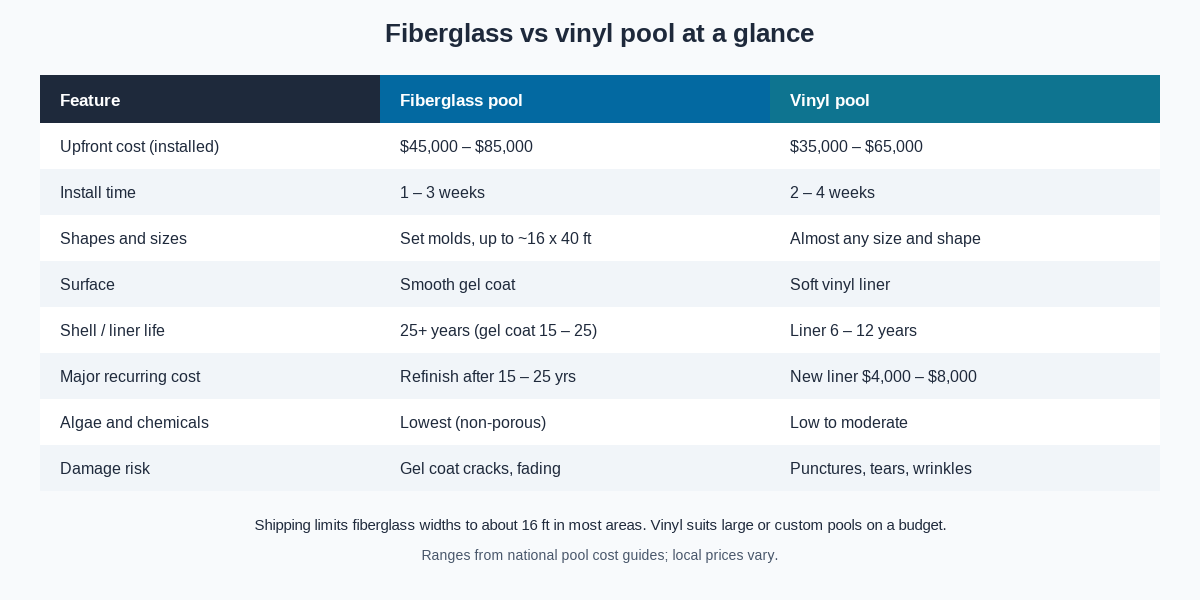
Chart: Asphapro.com
Quick Answer
In the fiberglass vs vinyl pool choice, a vinyl pool costs less up front, about $35,000 to $65,000 installed, and can be built in almost any size or shape, but the liner needs replacing every 6 to 12 years at about $4,000 to $8,000. A fiberglass pool costs more up front, about $45,000 to $85,000, installs faster, has a smooth, low-maintenance surface that resists algae and lasts 25 years or more, but comes in set shapes and widths up to about 16 feet. Over 20 years, total costs are often similar. Choose vinyl for a large or custom pool on a tighter budget; choose fiberglass for low upkeep and fast installation if a standard shape fits your yard.
Vinyl and fiberglass are the two most common types of inground pools after concrete. Both are cheaper and faster to build than a concrete pool, and both are popular with families. But they are built very differently, feel different underfoot, and age in different ways. Picking the right one depends on your budget now and later, the size and shape you want, how much maintenance you want to do, and your soil and climate.
This guide compares a fiberglass vs vinyl pool on every point that matters, from cost and installation to durability, maintenance and resale. If you are also considering concrete, see our comparison of concrete vs fibreglass swimming pool options and our guide to the concrete pool.
How a Vinyl Pool Is Built
A vinyl pool, also called a vinyl liner pool, is built on site. The crew digs the hole, then assembles wall panels made of steel or polymer around the edge, braced from behind. The floor is shaped from sand, vermiculite or a cement-based mix, often with a deep-end hopper. Plumbing, skimmers and returns are installed in the walls. Then a custom-made vinyl liner, a sheet of thick PVC usually 20 to 30 mil, is hung on a track at the top of the walls and pulled into place by a vacuum. The pool is filled, and the liner stretches to fit. Coping and the deck go on last.
Because the walls are panels and the liner is cut to fit, vinyl pools can be made in almost any size, depth and shape, from small plunge pools to large L-shapes and freeforms.
How a Fiberglass Pool Is Built
A fiberglass pool is made in a factory as a single shell. Layers of fiberglass and resin are built up in a mold, with a smooth gel coat on the inside surface. The finished shell is trucked to your home and lifted into a hole dug to match, then set on a level base of gravel or sand. The plumbing is connected, and the space around the shell is backfilled while the pool is filled with water, so pressure stays even on both sides. Coping and the deck go on last.
Because the shell is made in one piece and shipped by road, fiberglass pools come in set models, and most are no wider than about 16 feet. Lengths range from about 12 to 40 feet. Many models include built-in steps, benches and tanning ledges.
Fiberglass vs Vinyl Pool Cost
Upfront, a vinyl pool is usually the cheapest inground option. A typical 16 x 32 foot vinyl pool with basic equipment costs about $35,000 to $65,000 installed. A fiberglass pool of similar size costs about $45,000 to $85,000. Decking, fencing, landscaping, heating and other extras add the same to both. Prices vary widely by region, pool size, equipment and features.
Over time, the picture changes. A vinyl pool needs a new liner every 6 to 12 years, at about $4,000 to $8,000 each time including labor and water. Fiberglass pools often need fewer chemicals and less brushing, and their gel coat can last 15 to 25 years or more before refinishing is needed. Many comparisons find that over 15 to 20 years the total cost of the two is close. For liner pricing, see our guide on the cost of pool liner installation.
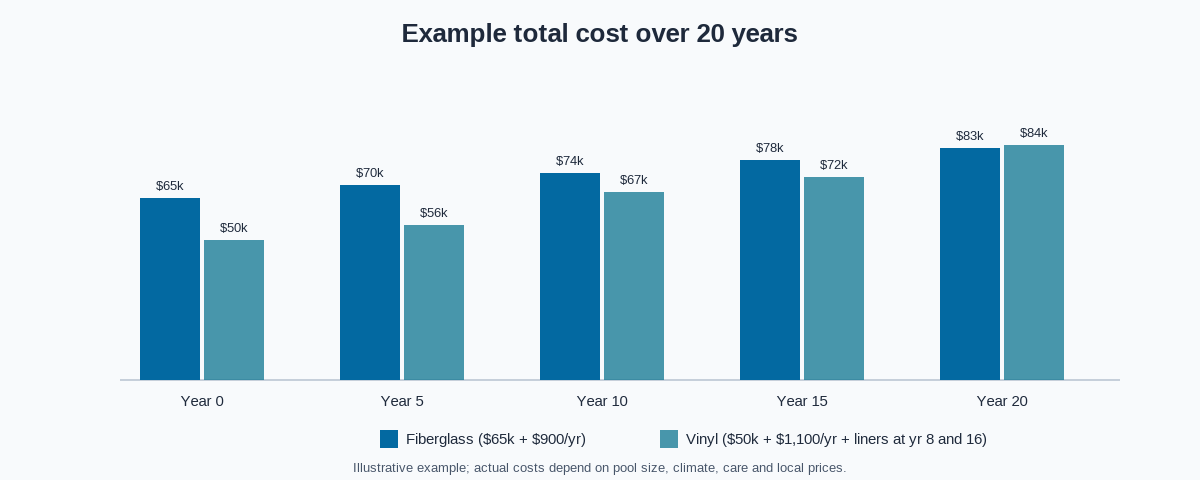
Chart: Asphapro.com
Fiberglass vs Vinyl Pool Installation Time
Fiberglass pools are the fastest to install. Once the permit is approved and the shell is delivered, the hole can be dug, the shell set and backfilled, and the pool filled in a few days, with decking and finishing done within one to three weeks. Vinyl pools take a little longer, usually two to four weeks, since walls, floor and liner are built on site. Both are much faster than a concrete pool, which often takes two to three months. See our guide to pool excavation cost for the digging stage.
Fiberglass vs Vinyl Pool Sizes, Shapes and Features
Size and shape are where a vinyl swimming pool has the clearest edge. Because the walls and liner are made to order, a vinyl pool can be almost any length, width and depth, including large family pools of 20 x 40 feet or more, deep diving ends and custom freeform shapes. Steps can be built-in panels or covered by the liner, and benches and tanning ledges can be added.
Fiberglass pools come in the shapes the manufacturer offers, and road shipping limits most shells to about 16 feet wide. Many companies offer dozens of models, from small plunge pools to 40-foot lap pools, often with built-in steps, benches, tanning ledges and spas. If one of the models fits your yard and plans, the limits may not matter. If you want a large or unusual shape, a vinyl pool or a concrete pool is usually the better choice.
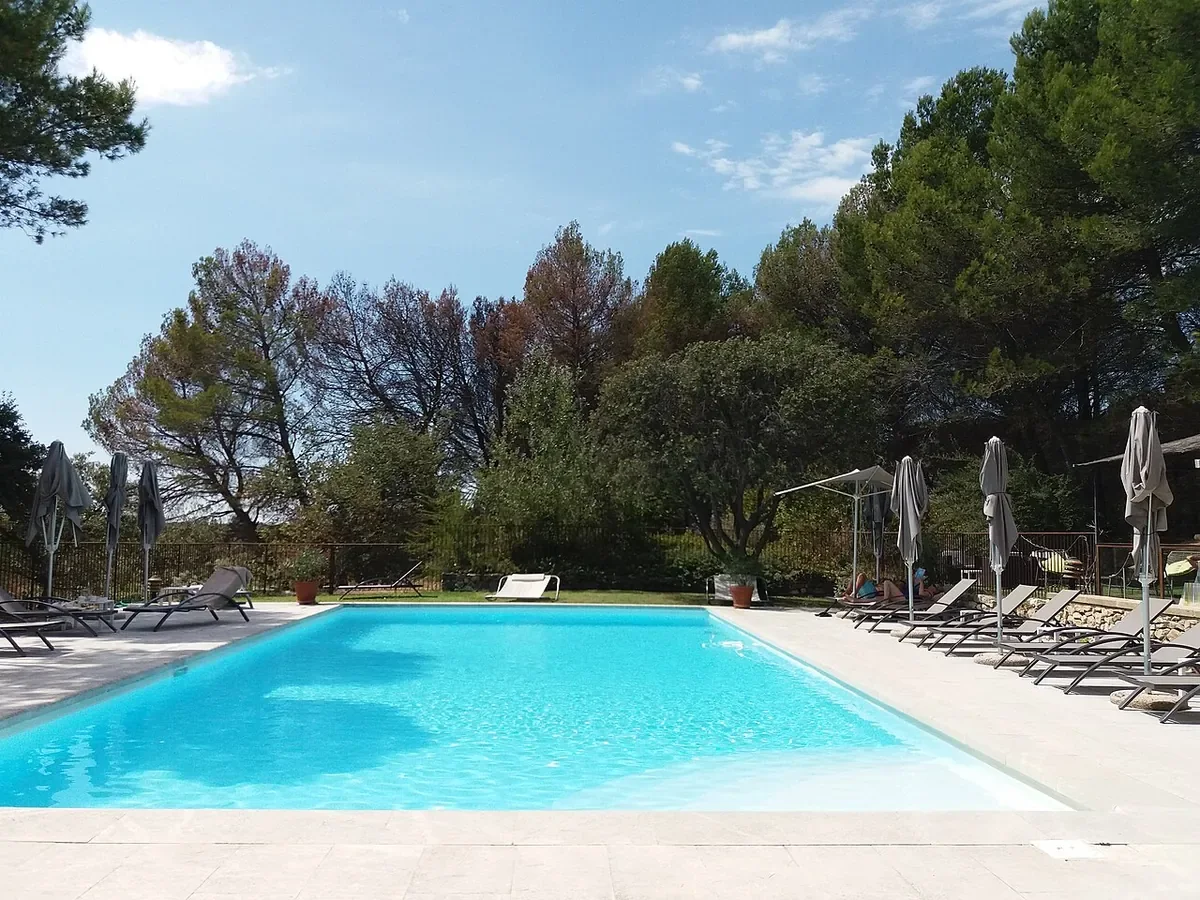
Photo: Georges Seguin (Okki), Wikimedia Commons, CC BY-SA 4.0
How a Fiberglass vs Vinyl Pool Feels Underfoot
The surface of a vinyl pool is soft and smooth, and many swimmers like how gentle it is on feet and knees. Liners come in many patterns and colors, from plain blue to tile-look borders and stone patterns. A fiberglass pool has a hard, glossy gel coat that feels slick and very smooth, with textured non-slip areas on steps and benches. Both are far smoother than plaster or pebble finishes in concrete pools, which can scrape skin.
Vinyl Pool vs Fiberglass Durability
The weak point of any vinyl pool is the liner. Sharp objects, pool toys with hard edges, dog claws and careless cleaning tools can puncture or tear it. Small holes can be patched, often underwater, but larger tears may mean replacing the liner. Over time, sun and chemicals make vinyl brittle and fade the pattern, especially above the waterline. Low water levels and poor chemistry can lead to wrinkles. Our guide on how to find a leak in a pool covers tracking down liner leaks.
Fiberglass shells are strong and flexible. The gel coat resists stains and is hard to scratch. But it can show spider cracks, blisters, fading or chalking over many years, and poor installation or ground movement can crack the shell. Repairs are possible but need a fiberglass specialist. When the gel coat finally wears, the pool can be refinished with new gel coat or a special pool paint.
Fiberglass vs Vinyl Pool Maintenance
Fiberglass pools are known for low maintenance. The non-porous gel coat gives algae little to cling to, so the pool needs less brushing and often less chlorine and algaecide. Fiberglass also does not raise pH or alkalinity the way new plaster does, so water chemistry tends to be steadier. A vinyl swimming pool is also fairly low maintenance compared with concrete: vinyl is smooth and non-porous, though algae can grow in folds and wrinkles. Vinyl owners need to keep chemistry balanced to protect the liner, since high chlorine and low pH can fade and weaken vinyl.
Both pool types work with chlorine, salt systems and other sanitizers. With salt systems, both are generally compatible, though steel-wall vinyl pools need attention to keep the walls protected from corrosion, and some fiberglass makers specify salt levels. For daily care tips, see our guide on how to maintain a saltwater pool.
Heating a Fiberglass or Vinyl Pool
Fiberglass shells insulate slightly better than vinyl over steel or polymer walls, and they hold heat a little longer. In practice, the difference is small compared with the effect of a cover, wind and shade. Both types benefit from a solar cover, which can cut heating costs by half or more. Both work with gas heaters, heat pumps and solar heating.
Vinyl Pools and Fiberglass Pools in Different Soils and Climates
Soil and groundwater matter for both types. Fiberglass shells can be pushed up by high groundwater if the pool is drained, so they need careful installation and hydrostatic valves in areas with a high water table. Vinyl pools are flexible and handle some ground movement, but liners can float or wrinkle if groundwater gets behind them while the pool is low. In cold climates, both types handle freezing well when the pool is properly winterized and kept full. Ask local builders which type works best in your soil; their experience is valuable.
Vinyl Liner Replacement
Every vinyl pool owner will replace the liner at some point. Signs it is time include fading, brittleness, wrinkles that will not relax, leaks that keep returning, and the liner pulling out of its track. Replacement involves draining the pool, removing the old liner, repairing the floor if needed, installing the new liner and refilling. It usually takes one to three days and costs about $4,000 to $8,000 for an average pool, more for large pools, thicker liners or extra repairs. A new liner also gives a chance to change the pattern and refresh the pool's look. See our guide to pool liner replacement cost.
Fiberglass Gel Coat Care
A fiberglass pool's gel coat lasts longest when the water stays balanced, especially calcium hardness and pH. Very low calcium or high chlorine can dull the surface, and high calcium can cause scale. Avoid abrasive brushes and harsh cleaners. When the gel coat eventually fades or chalks after 15 to 25 years, refinishing costs about $6,000 to $12,000 for an average pool.
Photo: Wikimedia Commons, CC BY-SA 3.0
Vinyl Pool and Fiberglass Warranties
Fiberglass shells often come with long structural warranties, sometimes lifetime for the original owner, plus shorter warranties on the gel coat surface, often 10 to 25 years with limits. Vinyl pool wall panels may carry long warranties too, but liner warranties are usually prorated and cover seam defects, not punctures or fading from chemicals. Read the details: what is covered, for how long, and whether the warranty transfers when you sell the home.
Resale Value of Vinyl Pools vs Fiberglass
A well-kept fiberglass or vinyl pool can appeal to buyers in warm areas. Buyers often see fiberglass as low maintenance and long-lasting, which can help. With a vinyl pool, buyers may ask how old the liner is, since a new liner may be due soon. A fresh liner can be a selling point. In either case, records of maintenance and repairs reassure buyers.
Vinyl vs Fiberglass Pool: Which Should You Choose?
Choose a vinyl pool if you want the lowest upfront cost, a large or custom shape, a deep diving end, or a soft surface, and you are comfortable budgeting for liner replacements. Vinyl is also a good fit when the best fiberglass shapes are too narrow or too small for your plans.
Choose a fiberglass pool if you want the fastest installation, the least weekly upkeep, a smooth and durable surface, and built-in features like steps and benches, and a standard model fits your yard and budget. Fiberglass appeals to owners who want to spend more time swimming and less time cleaning.
In the end, the vinyl vs fiberglass pool decision often comes down to your budget today, the shape you want, and how you feel about future liner costs versus a higher upfront price. Get quotes for both types from local builders, ask about soil and access, and compare total costs over 15 to 20 years before you decide.
Questions to Ask Pool Builders
Ask builders which type they install most and why. For vinyl, ask about wall material, liner thickness, liner warranty and the cost of future liners. For fiberglass, ask about the shell maker, gel coat warranty, delivery and crane access, and how they handle groundwater. For both, ask about the base and backfill method, what excavation is included, the equipment package, and the timeline. Clear answers help you compare a fiberglass vs vinyl pool quote fairly and avoid surprises later.
Vinyl Pool Liner Options
One advantage of a vinyl pool is the wide choice of liner patterns. Liners come in solid colors, tile-look borders, stone and pebble prints, and full-floor patterns that make the water look deep blue, turquoise or green. Darker liners hold heat a little better and hide dirt, while lighter liners make the water look bright and clear. Liner thickness usually ranges from 20 to 30 mil; thicker liners resist punctures better and often last longer, but cost more and can be harder to fit in cold weather. Some vinyl pools use textured liners on steps and benches for grip. When you replace a liner, you can change the look of the whole pool for a fraction of the cost of remodeling a concrete pool.
Fiberglass Pool Colors and Finishes
Fiberglass pools come in a range of gel coat colors, from white and light blue to dark gray and deep blue, and some have shimmering finishes with metallic or crystal flakes. Darker colors look dramatic and warm the water slightly, but may show fading and scratches sooner. The color is part of the shell, so it cannot be changed without refinishing. Many owners pick a fiberglass pool model and color together, using the maker's photos of finished pools to see how the water will look.
Common Myths About Vinyl Pools and Fiberglass Pools
"Vinyl pools look cheap." Older vinyl pools with plain liners and narrow coping may look basic, but modern vinyl pools with patterned liners, stone coping and good decking can look as good as any pool.
"Fiberglass pools never need work." Fiberglass pools need less work, not none. The water still needs testing and balancing, the filter needs cleaning, and the gel coat will eventually need refinishing.
"Vinyl liners puncture all the time." With normal care, liners rarely puncture. Most problems come from sharp objects, pets or neglecting water chemistry.
"Fiberglass pools pop out of the ground." A properly installed fiberglass pool kept full of water will not pop out. The risk comes when a pool is drained in an area with high groundwater, which is why draining should be done with care.
Choosing Between Them: Example Scenarios
A family with young children and a tight budget wants a large pool with plenty of shallow area. A 20 x 40 foot vinyl swimming pool gives the most water for the money and a soft surface for kids. They plan for a new liner in about 10 years.
A busy couple wants a pool they can enjoy without spending weekends on upkeep. A 14 x 30 foot fiberglass pool with a tanning ledge and built-in bench fits their yard. The higher upfront price is worth the lower maintenance to them.
An owner with a narrow city lot needs a long, narrow lap pool. Many fiberglass models are made for lap swimming, but a custom vinyl pool can be made exactly to the lot's shape. They get quotes for both and choose the one that fits the lot best.
These examples show that the fiberglass vs vinyl pool choice depends on the people who will use the pool as much as on the pool itself.
Above Ground Vinyl Pools
Most above ground pools also use vinyl liners, hung inside a steel or resin wall. If you are deciding between a vinyl pool above ground and an inground pool, an above ground vinyl pool costs far less, often $1,500 to $15,000 installed including a deck, but it does not last as long and does not add value to a home the way an inground pool may. See our guide on the cost of pool liner installation for above ground liner prices too.
Repairs Compared
Repairs on a vinyl pool are usually small and cheap until the liner needs replacing. A patch kit costs $10 to $30, and a pro can patch a tear underwater for $100 to $300. Wrinkles can sometimes be worked out by a pro, but bad wrinkles usually mean a new liner. Wall panel rust in older steel-wall vinyl pools can be a bigger job.
Fiberglass repairs are less frequent but need a specialist. Small gel coat cracks and blisters cost a few hundred to a couple of thousand dollars to fix. Structural cracks from poor installation or ground movement are rare but can be costly. Fading and chalking are cosmetic until you decide to refinish.
Accessories and Upgrades
Both types accept the same equipment: pumps, filters, heaters, salt systems, lights, automation, covers and water features. Automatic covers are easier to fit on rectangular pools, which both types offer. Fiberglass pools usually come with pre-set fittings in the shell, while a vinyl pool can place lights, returns and jets almost anywhere during the build. Deck-level spas, sun shelves and waterfalls can be added to both. Budget for these upgrades separately, since they add the same cost to either pool.
What Builders Say About Vinyl Pools
Builders who install vinyl pools often point to flexibility and value: a big, custom pool for less money, with a soft surface families like. Builders who install fiberglass pools point to speed, low maintenance and durability. Many builders install both types of vinyl pools and fiberglass shells, and will recommend one based on your yard, soil, budget and plans. When two good local builders recommend different types, compare their quotes side by side, including liner or refinishing costs over 20 years, and choose the one whose trade-offs you are happiest with.
Vinyl pools remain one of the most popular choices for families who want a large pool on a budget, while fiberglass keeps growing in popularity among owners who value low upkeep. Either can give many years of enjoyment when it is installed well, kept balanced and cared for properly.
Permits, Access and Delivery
Both pool types need a building permit, a barrier that meets code, and electrical work by a licensed electrician. Access affects them differently. A vinyl pool can be built through a narrow side yard, since wall panels and liners are carried in by hand and small machines can dig. A fiberglass shell arrives on a truck and is usually lifted over the house or fence by a crane, which needs a clear path, overhead clearance and a stable place for the crane to park. Crane costs often run $500 to $2,500 and are usually in the fiberglass price, but tight sites can add more. If your yard is hard to reach, ask the builder to confirm delivery before you sign.
Fiberglass vs Vinyl Pool: Key Points
- Vinyl pools cost less up front and come in any size or shape.
- Fiberglass pools cost more but install faster and need less upkeep.
- Vinyl liners need replacing every 6 to 12 years at $4,000 to $8,000.
- Over 20 years, total costs are often similar.
Frequently Asked Questions
Which lasts longer, fiberglass or vinyl?
A fiberglass shell usually lasts longer. Vinyl pool walls can last decades, but the liner in a vinyl pool must be replaced every 6 to 12 years, depending on sun, chemistry and care.
Is a vinyl pool cheaper than fiberglass?
Yes, up front. A vinyl pool is usually $10,000 to $20,000 cheaper to build. Over 15 to 20 years, liner replacements often close the gap with fiberglass.
Is a vinyl swimming pool hard to maintain?
No. A vinyl swimming pool is fairly easy to care for. Keep water balanced, avoid sharp objects, keep the water level steady and brush gently to protect the liner.
Can you put a salt system on a vinyl pool?
Yes. Most vinyl pools work well with salt systems. Check the wall panel and equipment makers' guidance on salt levels, and keep the water balanced so the liner and any metal parts last as long as possible.
Which is better in the fiberglass vs vinyl pool choice for cold climates?
Both work well when properly winterized and kept full. Ask local builders which type performs best in your soil and climate, and whether a vinyl pool or fiberglass shell is more common in your area.
Sources
- HomeGuide: Inground pool cost
- HomeGuide: Fiberglass pool cost
- Pool and Hot Tub Alliance
- US Department of Energy: Swimming pool covers