
Cost of Pool Liner Installation: What Vinyl Pool Liners Cost to Buy and Install
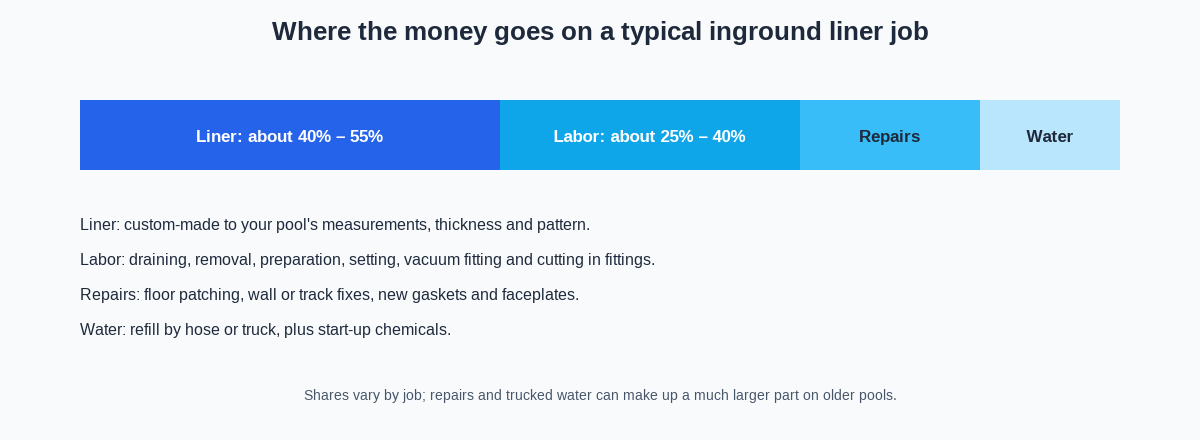
Chart: Asphapro.com
Quick Answer
The cost of pool liner installation depends on the pool type. A custom inground vinyl pool liner usually costs about $1,500 to $4,500 for the liner itself, and about $3,000 to $8,000 installed once draining, labor, fittings, minor repairs and refilling are included. An above ground pool liner costs about $150 to $1,000, plus $300 to $1,500 if a pro installs it. Price depends on pool size and shape, liner thickness (usually 20 to 30 mil), pattern, steps and benches, and the condition of the walls and floor. A vinyl liner usually lasts about 7 to 15 years inground and 5 to 9 years above ground.
A vinyl pool liner is the sheet of vinyl that holds the water in a vinyl liner pool. It is custom-made for inground pools from precise measurements, and made in standard sizes for above ground pools. The liner gives the pool its color and pattern, makes the surface smooth to the touch, and is the part that wears out and is replaced over the pool's life. Knowing what a swimming pool liner costs, and what installation adds, helps you plan both new vinyl pools and replacements.
This guide explains vinyl pool liners: what they are, what they cost by pool type and size, thickness and pattern choices, installation costs, extras, how vinyl liner pools compare with other pool types, how long liners last, and how to choose and care for one. For the replacement process step by step, see pool liner replacement cost.
What Is a Pool Liner?
A pool liner is a waterproof membrane made of PVC vinyl, printed with a pattern and coated to resist UV light and pool chemicals. In inground vinyl pools, the liner hangs from a bead track at the top of the walls and covers the walls and a smooth floor made of sand-cement or vermiculite. In above ground pools, the liner hangs over or snaps onto the top of the wall and covers a sand or pad base. The liner does not carry structural load; the walls, floor and soil do. Its job is to keep water in and give a comfortable, attractive surface.
Cost of Pool Liner Installation at a Glance
| Item | Typical cost |
|---|---|
| Inground vinyl liner (material) | $1,500 – $4,500 |
| Inground liner installed (typical job) | $3,000 – $8,000 |
| Above ground liner (material) | $150 – $1,000 |
| Above ground liner installation | $300 – $1,500 |
| Thicker liner upgrade (inground) | about $200 – $800 more |
| Vinyl-covered steps or benches | $300 – $1,500 more |
| New gaskets and faceplates | $50 – $300 |
| Refill water (hose to truck) | $50 – $2,000 |
These ranges come from national cost guides such as HomeGuide and Angi. Your swimming pool liner installation cost will depend on local labor rates, pool size, shape and condition.
Vinyl Pool Liners Cost by Inground Pool Size
| Pool size | Liner only (approx.) | Installed (approx.) |
|---|---|---|
| 12 x 24 ft | $1,500 – $2,500 | $3,000 – $5,500 |
| 16 x 32 ft | $1,800 – $3,200 | $3,800 – $6,500 |
| 18 x 36 ft | $2,000 – $3,600 | $4,000 – $7,000 |
| 20 x 40 ft | $2,400 – $4,500 | $4,500 – $8,500 |
Free-form shapes, deep ends, vinyl-covered steps and benches all raise the inground pool liner cost. Very large or unusual pools can exceed these ranges.
Above Ground Pool Liner Cost
| Above ground pool | Liner price (approx.) |
|---|---|
| 15 – 18 ft round | $150 – $400 |
| 21 – 24 ft round | $200 – $600 |
| 27 – 33 ft round | $300 – $800 |
| Ovals | $250 – $900 |
| Expandable (deep-end) liners | $400 – $1,000+ |
Above ground liners come in overlap, beaded, J-hook and unibead styles. Many owners install them themselves; see how to install an above ground pool liner.
Liner Thickness and Price
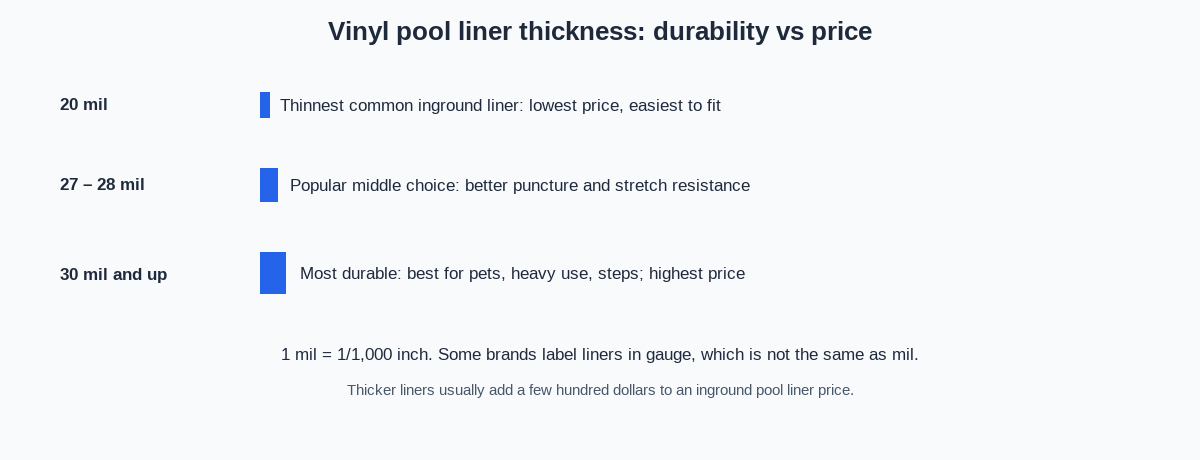
Chart: Asphapro.com
Inground vinyl pool liners usually come in 20, 27 or 28, and 30 mil thicknesses, sometimes thicker. Thicker liners resist punctures, stretching and wear better and may last longer, especially with pets, heavy use or vinyl-covered steps. They cost more and are a little stiffer to install. Many installers recommend a 27 or 28 mil liner as a good balance. Above ground liners are often listed in gauge, such as 20 or 25 gauge; gauge and mil are not the same, so compare actual thickness when possible.
Patterns, Colors and Features
- Tile border and patterned floor: the most popular look, mimicking tiled concrete pools.
- Solid colors: simple, classic and often slightly cheaper.
- Stone and natural patterns: lagoon-like looks; darker colors give deeper-looking water.
- Embossed or textured liners: add grip on steps and floors.
- UV and chemical-resistant coatings: help colors last longer.
Pattern choice usually has only a modest effect on vinyl pool liners cost, but premium designs and thicker printed layers cost more.
Steps, Benches and Special Features
Steps and benches in a vinyl pool are either covered with liner material or made as separate drop-in units. Vinyl-covered steps are built from a frame or foam form and covered by the main liner or a separate step liner; they look seamless but add to the pool liner cost and are a common wear point. Drop-in steps made of acrylic or fiberglass are installed before the liner and sealed with gaskets; they cost more up front but last longer and reduce liner wear. If your old vinyl-covered steps are wearing out, a liner replacement is a good time to consider switching to drop-in steps. Tanning ledges, swim-outs and safety ledges in vinyl pools also need extra liner work and careful measuring, which increases both the liner price and the installation time. See inground pool steps.
Lights, returns, skimmers and drains all need new gaskets and faceplates when a new liner goes in, so include those small parts in the budget.
What Pool Liner Installation Includes
- Measuring the pool precisely for a custom liner (inground).
- Ordering and waiting for fabrication, often one to four weeks.
- Draining the pool and removing the old liner (for replacements).
- Repairing and smoothing the walls and floor.
- Hanging the new liner and setting the bead.
- Vacuum-setting the liner so it fits tightly.
- Filling while removing wrinkles.
- Cutting in skimmers, returns, lights and steps with new gaskets and faceplates.
- Start-up chemistry.
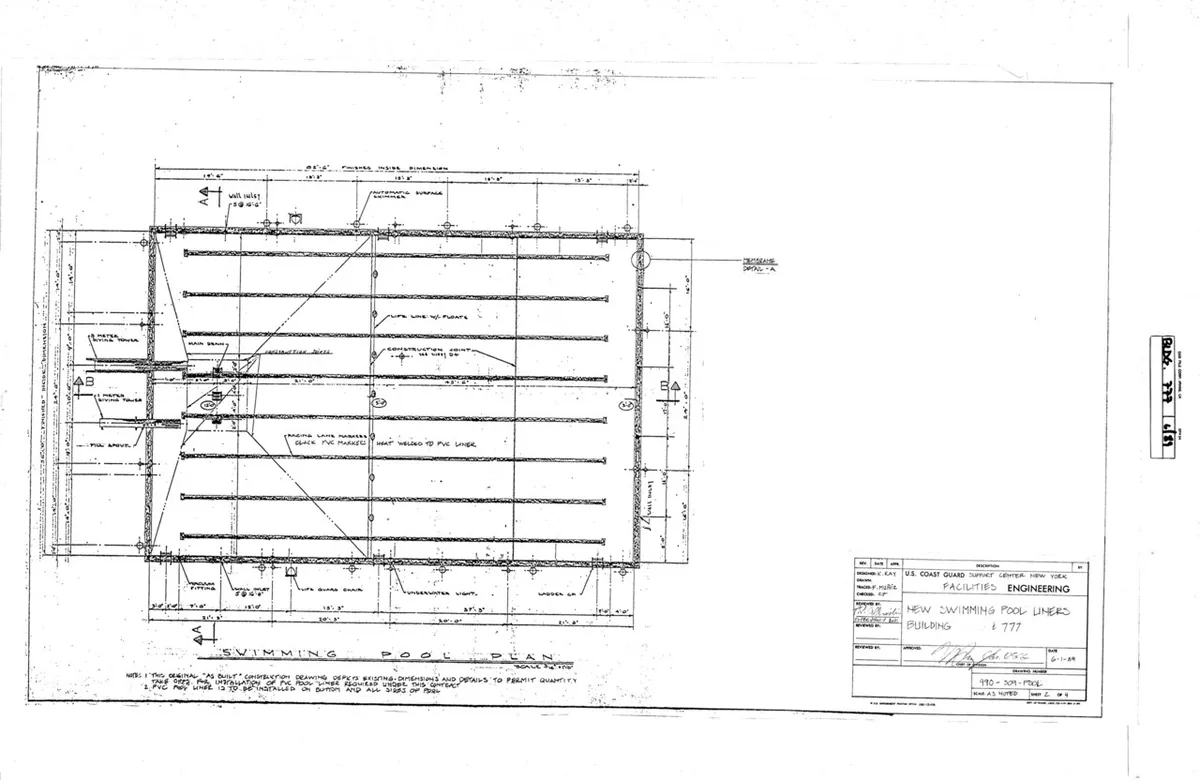
Drawing: U.S. Coast Guard facilities engineering, Wikimedia Commons, public domain
Vinyl Liner Pool Cost Compared With Other Pools
A vinyl liner pool is an inground pool built with a vinyl liner instead of plaster or fiberglass. Vinyl liner pool cost is usually the lowest of the three main inground types, often about $40,000 to $75,000 installed for a typical size, compared with about $55,000 to $100,000 for fiberglass and $65,000 to $120,000 or more for concrete. The trade-off is periodic liner replacement every 7 to 15 years. See vinyl inground pool cost and how much does a pool cost.
Vinyl Liner Pool Pros and Cons
Pros: the lowest up-front cost of the main inground pool types; a smooth, comfortable surface that is gentle on feet; good algae resistance compared with plaster; endless pattern and color choices; the ability to change the look of the pool with each new liner; and flexible shapes and sizes, including large pools.
Cons: the liner must be replaced every 7 to 15 years; vinyl can be punctured by sharp objects and pet claws; liners fade over time; water chemistry must be kept in range to avoid wrinkles and premature aging; and some buyers in warm regions prefer concrete or fiberglass pools. For many families, the low starting price and comfortable surface outweigh the periodic cost of a new liner.
Budgeting for Future Liner Replacements
If you own a vinyl liner pool, plan ahead for the next liner. Setting aside about $300 to $600 a year covers a typical inground liner replacement every 10 to 12 years. Track the installation date and the liner's warranty, watch for the signs of aging listed above, and book the replacement before the liner fails completely, ideally in late summer or fall when installers are less busy. Planning this way turns the cost of pool liner installation into a predictable maintenance expense rather than a surprise.
It also helps to replace other worn parts at the same time, such as faceplates, gaskets, the light niche gasket and the step covers, because the pool is already empty and the extra labor is small.
How Long Does a Pool Liner Last?
Inground liners usually last about 7 to 15 years; above ground liners about 5 to 9 years. Liner life depends on water chemistry, sun exposure, thickness, how the pool is used, and winter care. Low pH and high chlorine shorten liner life; so do sharp objects and pets. See how long do pool liners last.
How to Put In a Pool Liner (Overview)
For an above ground pool, putting in a liner means preparing a smooth base, hanging the liner, smoothing it as the water starts, and cutting in the skimmer and return. For an inground pool, the liner is custom-measured, set in the bead track, vacuumed tight and filled while fittings are cut in. Inground installation takes experience; above ground installation is a common DIY job.
How Vinyl Pool Liners Are Made
Inground vinyl pool liners are made to order. The installer sends the factory a set of measurements: length, width, depths at many points, the shape of the deep end, and the size and position of steps and benches. The factory cuts panels of printed vinyl and welds them together with heat or radio-frequency welding into a single bag-shaped liner that matches the pool. A bead is welded to the top edge so it can snap into the track. Quality depends on accurate measuring, strong welded seams and good vinyl with UV and chemical inhibitors. That is why the cost of pool liners for inground pools is higher than standard above ground liners, which are mass-produced in common sizes.
New Pool Liner Cost for New Construction
When a vinyl pool is first built, the liner is included in the pool package. On a new vinyl liner pool, the liner might represent a few thousand dollars of a $40,000 to $75,000 project. Choosing a thicker liner or a premium pattern at construction time costs relatively little compared with the total and can extend the time before the first replacement. Builders often offer a standard liner with upgrade options; ask how much each upgrade adds to the new pool liner cost.
Signs You Need a New Pool Liner
- Faded, chalky or rough vinyl.
- Wrinkles that do not smooth out.
- Brittle vinyl that cracks when pressed.
- The bead pulling out of the track.
- Repeated leaks or many patches.
- Stains that will not clean off.
- Visible outlines of the floor or wall beneath the liner.
Patch or Replace a Swimming Pool Liner?
Small holes and tears can be patched underwater with a vinyl patch kit for $10 to $30, or by a pro for $150 to $500. If the liner is young and the damage is isolated, patching is the right choice. If the liner is old, faded, brittle and leaking in several places, a new liner is better value. See pool leak repair cost.
Pool Liner and Installation Cost: Example Budgets
| Project | Details | Estimated pool liner and installation cost |
|---|---|---|
| 24 ft round above ground, DIY | Overlap liner, new cove and sand, owner installs | $300 – $700 |
| 24 ft round above ground, pro | Beaded liner, pro install | $800 – $2,000 |
| 16 x 32 ft inground | 20 mil printed liner, minor floor patching | $3,800 – $6,000 |
| 18 x 36 ft inground with steps | 28 mil liner, vinyl-covered steps, new faceplates | $4,500 – $7,500 |
| 20 x 40 ft inground, older pool | 30 mil liner, wall repairs, trucked water | $7,000 – $11,000+ |
Vinyl Liners and Saltwater Pools
Vinyl liners work well with saltwater systems, because vinyl is not affected by salt. The bigger concern in a vinyl liner pool with salt is metal parts such as wall panels, steps and ladders, which can corrode if water chemistry is poor. Choose resin or polymer components where possible, keep pH and alkalinity balanced, and follow the salt cell maker's guidance. See how to add salt to a pool.
Winter Care for Pool Liners
In cold climates, keep the water level up to support the liner over winter, use a good winter cover, and add winter chemicals. Never drain a vinyl pool for winter; the liner can shrink, pull out of the track and crack in the cold. Remove water from the cover regularly so it does not stretch or tear. See how to winterize a pool.
Liner Warranties
Most vinyl pool liners have a manufacturer's warranty, often pro-rated over many years, that covers seam failure and manufacturing defects. Warranties usually exclude fading, wrinkles from water chemistry, punctures and damage from draining. Installers may add a separate workmanship warranty for fit and fittings. Keep your liner paperwork and water test records.
Quality Differences Between Vinyl Pool Liners
Two liners with the same thickness and pattern can perform very differently. Differences come from the vinyl compound, the UV and fungicide additives, the print and top coat, and the quality of the welded seams. Better liners hold their color longer, resist chemical attack and stay flexible as they age. Ask the installer which manufacturer they use, what the warranty covers, and whether the liner has protective coatings on the printed surface. Paying a little more for a better swimming pool vinyl liner often pays back in extra years of service.
How Liner Color Changes Water Color
The liner color strongly affects how the water looks. Light blue and white liners make water look bright, clear and Caribbean blue, and make it easy to see the floor. Medium blue liners give a classic pool look. Dark blue, gray and black liners make water look deep and lake-like, hold slightly more heat from the sun, and hide minor debris, but show scale lines and white marks more. Many owners choose a light floor with a darker tile border for contrast. When choosing a liner pool pattern, look at large samples outdoors and, if possible, a filled pool with the same liner.
Liner Delivery Lead Times
Most custom inground liners take one to three weeks to make after the installer sends the measurements to the factory. In spring the wait can stretch to four or five weeks, because many owners order at the same time. Ordering in late fall or winter often gets a faster build and sometimes a lower pool liner installation price, since installers have more open dates. Above ground liners in standard sizes are usually in stock and can be fitted within days.
Pool Liner Installation Timeline
| Stage | Typical time |
|---|---|
| Measuring and quoting | A few days |
| Custom liner fabrication | 1 – 4 weeks |
| Draining and removal (replacement) | Half a day to a day |
| Repairs and preparation | A few hours to two days |
| Installing and vacuum-setting | Half a day |
| Filling and cutting in fittings | 1 – 3 days by hose |
Monthly Liner Care Checklist
- Test pH, alkalinity and chlorine; keep pH between 7.2 and 7.8.
- Inspect the bead track for any liner pulling out.
- Look for small holes, especially near steps and ladders.
- Check faceplates and fittings for leaks.
- Brush with a soft brush to prevent algae and stains.
- Watch the water level and do a bucket test if it drops quickly.
Choosing a Liner Installer
- Ask how they measure and who is responsible if the liner does not fit.
- Confirm the liner manufacturer, thickness, pattern and warranty.
- Ask what repairs, gaskets, faceplates and step covers are included.
- Ask who drains, disposes of water and refills.
- Ask for references and photos of recent installations.
Caring for a Vinyl Pool Liner
- Keep pH between 7.2 and 7.8 and alkalinity in range.
- Pre-dissolve granular chlorine and shock; never let granules sit on the liner.
- Use soft brushes and liner-safe cleaners.
- Keep sharp toys and pet claws away from the liner.
- Keep the water level up, especially in winter.
- Never drain a vinyl pool except to replace the liner.
For routine care, see how to clean a pool.
Vinyl Liner vs Plaster vs Fiberglass Surfaces
| Surface | Feel | Typical life | Renewal cost |
|---|---|---|---|
| Vinyl liner | Smooth, soft | 7 – 15 years | $3,000 – $8,000 per new liner |
| Plaster | Slightly rough | 7 – 12 years | $5,000 – $10,000 to replaster |
| Pebble | Textured | 15 – 20+ years | $9,000 – $15,000+ |
| Fiberglass gelcoat | Very smooth | 20+ years | $6,000 – $15,000 to refinish |
Vinyl liner pools have the lowest up-front cost and a renewal cost comparable to replastering, though liners usually need replacing a bit more often than pebble surfaces. The smooth vinyl surface resists algae better than plaster and feels comfortable underfoot. See pool resurfacing cost and concrete vs fibreglass swimming pool.
Pool Liner Cost by Region and Season
Vinyl liner pools are especially common in the Northeast and Midwest, where many installers compete and pool liner cost tends to be competitive. In spring, demand spikes and lead times for custom liners grow, so prices and waits can rise. Booking a liner replacement in late summer or fall often brings shorter waits. In regions where vinyl pools are less common, fewer installers may mean higher labor rates.
Common Liner Installation Problems
- Wrinkles from installing on a cold day, poor vacuum setting or wrong measurements.
- Bead popping out of the track, often from low water, stretched liners or damaged track.
- Leaks at faceplates if gaskets are misaligned or screws overtightened.
- Visible floor marks when the floor was not smoothed properly.
- Pattern misalignment at corners and steps.
Most problems are easier to fix in the first days after installation, so inspect the pool carefully as it fills and contact the installer right away if something looks wrong.
Cost of Vinyl Pool Liner Installed by a Pro vs DIY
For above ground pools, DIY installation is common and can save $300 to $1,500. For inground pools, the cost of a vinyl pool liner installed by a pro includes skills that are hard to replicate: accurate measuring, setting the bead, vacuum fitting, and cutting in fittings without leaks. A badly fitted inground liner may wrinkle, leak or fail early, wiping out any savings. Most owners hire professionals for inground liners and handle the draining and refilling themselves to save a little.
Questions to Ask About a Pool Liner Quote
- What is the liner thickness, manufacturer and pattern?
- Is the price for the liner only, or the liner and installation?
- Are new gaskets, faceplates and step covers included?
- How are hidden repairs to the floor and walls priced?
- Who drains and refills the pool, and is water included?
- What warranties cover the liner and the workmanship?
- How long until the liner arrives and the job is finished?
Cost of Pool Liner Installation: Key Points
- Inground vinyl liners cost about $1,500 to $4,500; installed jobs usually run $3,000 to $8,000.
- Above ground liners cost about $150 to $1,000, plus $300 to $1,500 for pro installation.
- Thickness, size, shape, steps, repairs and water drive the total.
- A good liner lasts about 7 to 15 years inground with balanced water and careful use.
Frequently Asked Questions
How much is a pool liner?
About $1,500 to $4,500 for an inground vinyl liner and $150 to $1,000 for an above ground liner, before installation. Size, thickness, pattern and features such as vinyl-covered steps set where your price falls in that range.
How much does pool liner installation cost?
Inground liner installation usually costs $3,000 to $8,000 including the liner; above ground installation adds $300 to $1,500 to the liner price.
What is a pool liner?
A pool liner is a vinyl membrane that lines the walls and floor of a vinyl liner pool, holding the water and giving the pool its color and pattern.
How much is a new pool liner for an inground pool?
A new inground pool liner usually costs about $1,500 to $4,500 for the liner, or about $3,000 to $8,000 including installation.
How much does it cost for a pool liner in an above ground pool?
About $150 to $1,000 for the liner, depending on size, thickness and style, plus installation if you hire a pro.
What is a pool liner made of?
PVC vinyl with printed patterns and protective coatings against UV light and chemicals. Better liners use stronger additives and top coats, which help the color and flexibility last longer.
Is a thicker pool liner worth it?
Often yes for busy pools, pets or vinyl steps; it costs a few hundred dollars more and resists punctures and stretching better, which can add years of use.
How long does it take to install a pool liner?
Inground liners take about one to three days of work plus filling; above ground liners about a day. Custom inground liners also need one to four weeks to be made after measuring.
Sources
- HomeGuide: Pool liner replacement cost
- Angi: Pool liner cost
- HomeAdvisor: Inground pool cost by type
- CDC: Healthy Swimming (water chemistry)