
Concrete vs Fibreglass Swimming Pool: Gunite vs Fiberglass Compared
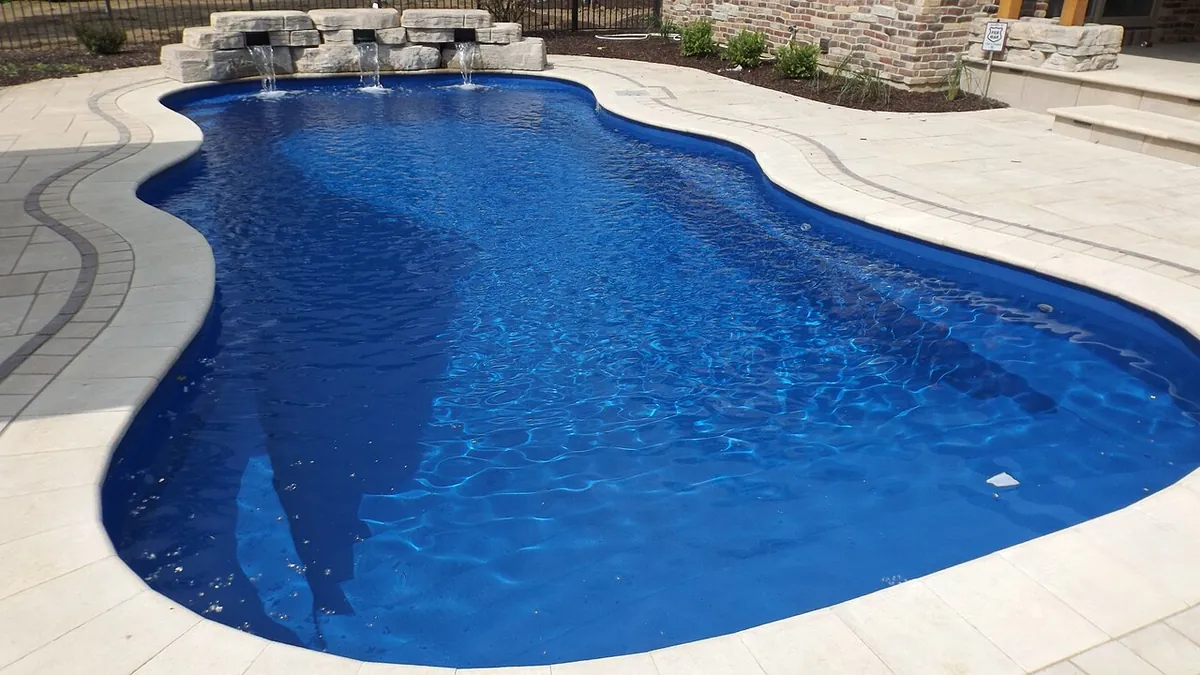
Photo: Barrier Reef Fiberglass Pools, Wikimedia Commons, CC BY-SA 4.0
Quick Answer
Concrete vs fibreglass swimming pool: a concrete (gunite or shotcrete) pool is built on site from steel and sprayed concrete, so it can be any shape, size and depth; it typically costs about $65,000 to $120,000 or more, takes 6 to 12 weeks to build, and needs resurfacing every 10 to 15 years. A fiberglass pool is a one-piece factory shell set in the ground by crane; it typically costs about $55,000 to $100,000, installs in 2 to 4 weeks, has a smooth surface that resists algae, and uses fewer chemicals, but its shape and size are limited to the maker's molds (usually no wider than about 16 feet). Choose concrete for custom design, large size or deep diving areas; choose fiberglass for faster installation and lower long-term maintenance.
Concrete vs fibreglass swimming pool (fiberglass in American spelling) is the question most pool buyers end up asking. The choice between a concrete pool and a fiberglass pool is the biggest decision in most inground pool projects. It affects the price, the timeline, how the pool looks and feels, how much time and money it takes to maintain, and what the pool needs over the next 20 or 30 years. Both are excellent choices for the right yard and the right owner, and both can last for decades.
This guide compares concrete vs fiberglass pools point by point: what each type is, up-front and long-term cost, installation, durability, surface feel, chemistry and algae, design flexibility, salt water, climate, resale value, and when vinyl is worth considering instead. For general background on concrete pools, see our concrete pool guide.
Concrete vs Fiberglass Pool at a Glance
| Factor | Concrete / gunite pool | Fiberglass pool |
|---|---|---|
| Typical installed cost | $65,000 – $120,000+ | $55,000 – $100,000 |
| Install time | 6 – 12 weeks | 2 – 4 weeks |
| Shape and size | Any shape, size and depth | Limited to factory molds; width usually 16 ft or less |
| Surface | Plaster, quartz, pebble or tile; slightly rough | Smooth gelcoat |
| Algae resistance | Lower (porous surface) | Higher (non-porous) |
| Chemical use | Higher; plaster raises pH | Lower |
| Major surface work | Resurface every 10 – 15 years | Refinish rarely, often after 20+ years |
| Structure lifespan | Decades; very durable shell | Decades; shell warranties often 25 years to lifetime |
| Best for | Custom designs, large pools, diving depth | Fast install, low maintenance, standard sizes |
What Is a Gunite Pool?
A gunite pool is a concrete pool built by spraying a dry concrete mix through a hose. At the nozzle, water is added and the mix is shot at high speed onto a cage of steel rebar, building up walls and floor about 6 to 12 inches thick. Shotcrete is a similar method using pre-mixed wet concrete. Both create a strong, monolithic shell that is then finished with plaster, quartz, pebble or tile.
People use "gunite pool", "concrete pool" and "cement pool" to mean the same thing: an inground pool with a sprayed concrete shell. Technically gunite is one application method; the result is reinforced concrete. If you are searching what is a gunite pool, the short answer is a custom-built concrete swimming pool. For a deeper look at gunite and shotcrete, see our guide to shotcrete vs gunite.
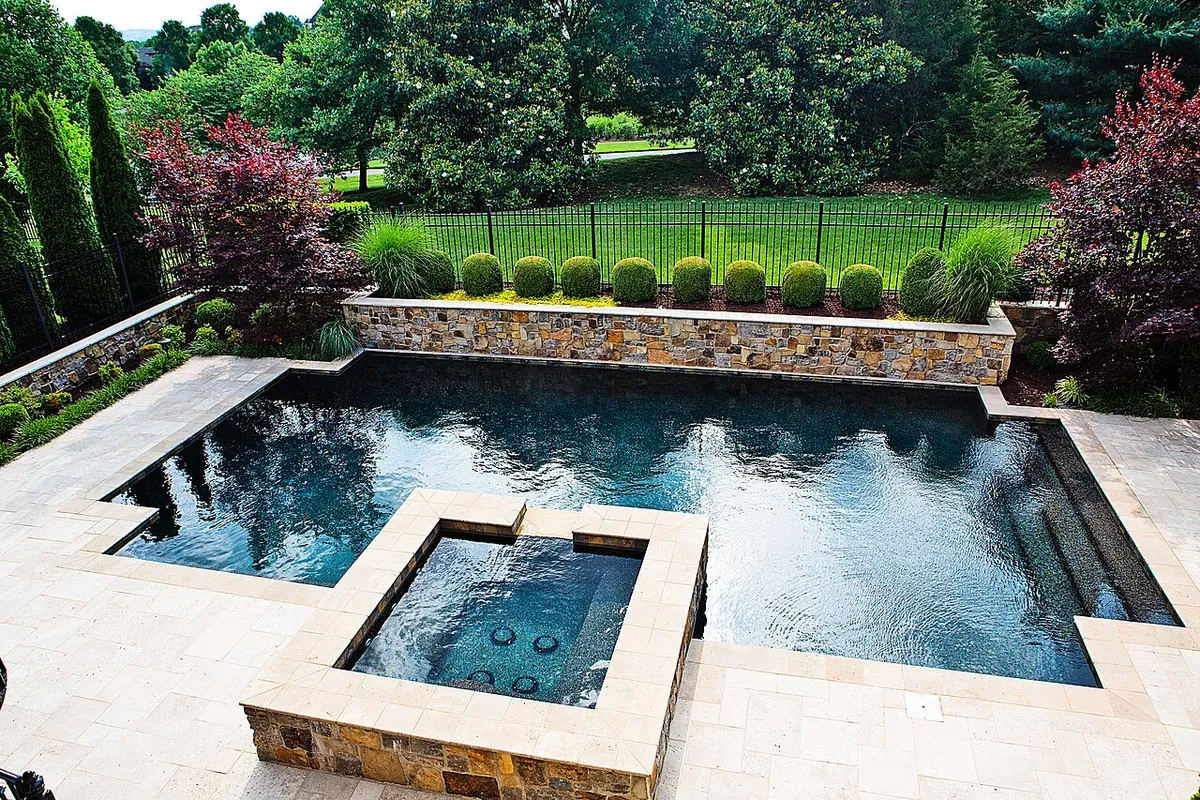
Photo: Tennesseecustompools, Wikimedia Commons, CC BY-SA 4.0
What Is a Fiberglass Pool?
A fiberglass pool is a single shell made in a factory by spraying layers of gelcoat, fiberglass and resin onto a mold. The finished shell is trucked to your home and lowered into a prepared hole by crane. Plumbing is connected, and the shell is backfilled with gravel or sand while it is filled with water. The surface is the smooth gelcoat applied in the factory, so there is no on-site plaster.
Because the shell must travel by road, fiberglass pools are limited in size. Most are no wider than about 16 feet and no longer than about 40 feet, and the deep end is usually 8 feet or less. Each manufacturer offers a catalog of shapes and sizes. See fiberglass swimming pool cost for prices by model size.
Cost: Concrete vs Fiberglass Pool
Up-front cost
Fiberglass pools often cost less than concrete pools of similar size, though the gap narrows for small pools and widens for large or custom pools. National cost guides place most fiberglass pools at about $55,000 to $100,000 installed and most concrete pools at about $65,000 to $120,000 or more. Fixr lists a typical concrete pool at around $50,000 to $90,000 before extras. Builder pricing that includes patio, fence and features runs higher for both types. For the full picture, see how much does a pool cost.
20-year cost of ownership
Long-term costs favor fiberglass for most owners. A concrete pool needs resurfacing about every 10 to 15 years, at roughly $6,000 to $15,000 each time (see pool resurfacing cost). Plaster also raises pH as it cures and ages, so concrete pools use more acid, and the rougher surface needs more brushing and sometimes more algaecide. Fiberglass shells usually go 20 years or more before refinishing, and use fewer chemicals.
| 20-year estimate | Concrete pool | Fiberglass pool |
|---|---|---|
| Resurfacing | 1 – 2 times, $6,000 – $30,000 | Usually none |
| Extra chemicals and acid | Higher, often $200 – $500 more per year | Lower |
| Acid washes and tile cleaning | Occasional | Rare |
| Typical extra 20-year cost | $10,000 – $35,000 more than fiberglass | Baseline |
These are planning estimates; actual costs depend on your water, climate and care. See cost to maintain a pool.
Installation: Time, Process and Disruption
Fiberglass pool installation is fast. After permits, the crew digs the hole, sets plumbing, lowers the shell by crane, levels it, and backfills while filling with water. The pool itself can be in the ground within a few days; with decking and electrical, most projects take 2 to 4 weeks. You need crane access, which can be a problem for very tight yards or over the house.
Concrete pool construction takes longer: excavation, steel, plumbing, gunite spraying, curing (often a few weeks), tile and coping, decking, then plaster and start-up. Expect 6 to 12 weeks or more, with weather delays. The upside is that access is easier, since gunite is pumped through hoses and does not need a crane.
Durability and Lifespan
Both types can last for decades when built well. A properly built gunite shell can last 50 years or more, though its interior finish wears out and is replaced every 10 to 15 years. Concrete shells can crack if the ground moves or the steel is poorly placed; such cracks need structural repair.
Fiberglass shells are flexible and strong. Most manufacturers offer long structural warranties. Problems include gelcoat fading, blistering or spider cracks on older or poorly made shells, and, in rare cases, bulging walls or floating if the pool is drained in wet ground. With a quality shell and correct installation, a fiberglass pool can last 30 years or more.
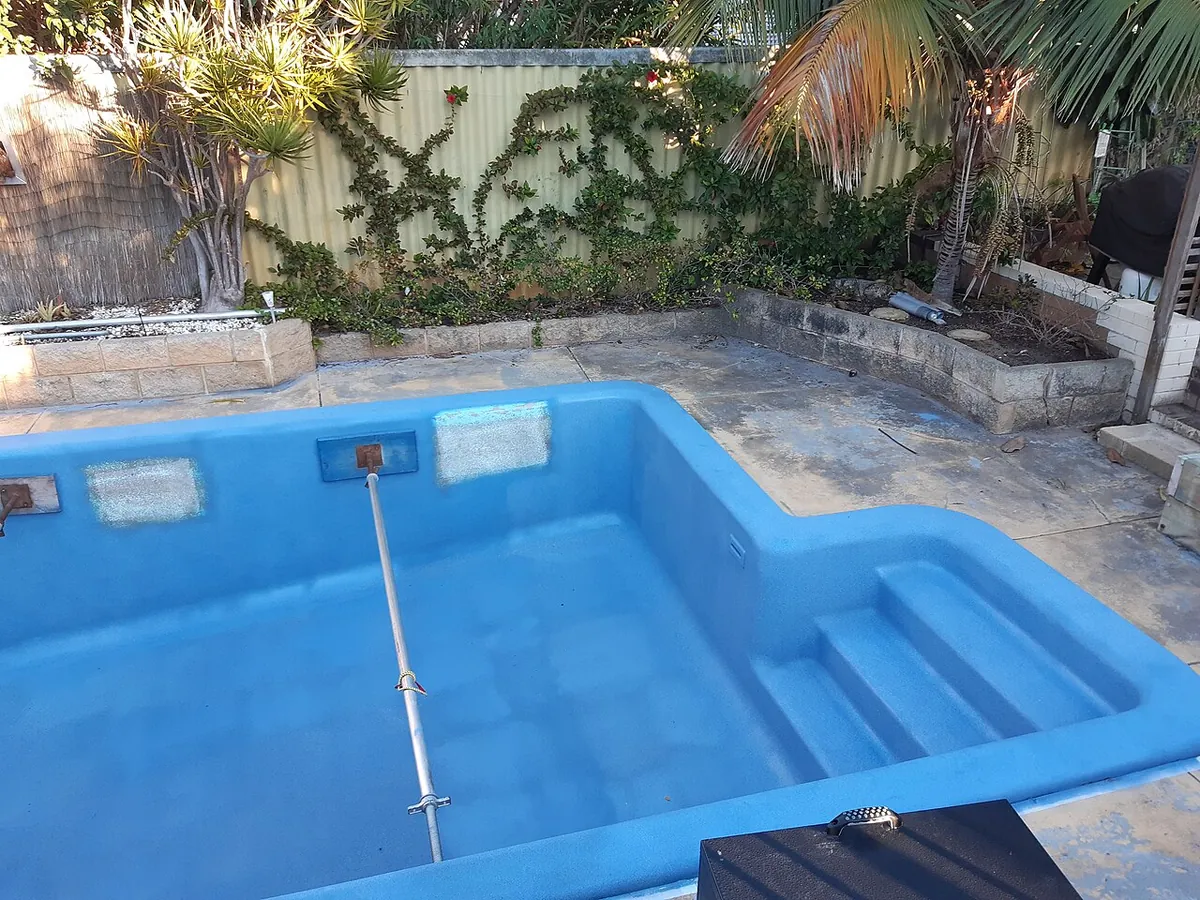
Photo: Calistemon, Wikimedia Commons, CC BY-SA 4.0
Surface Feel and Look
Fiberglass gelcoat feels smooth and slick underfoot. Many families with children prefer it because it does not scrape toes or knees. Concrete pools with plaster feel slightly rough; pebble finishes are more textured; tile is smooth. Concrete gives more design options: any color of plaster or pebble, full tile, glass beads, and natural-looking lagoon finishes. Fiberglass colors come from the factory, often with sparkle effects, and many models now include built-in tanning ledges, benches and steps.
Chemistry, Algae and Maintenance
The porous surface of plaster gives algae more places to grip and slowly releases lime that raises pH. Owners of concrete pools usually add acid regularly and brush weekly. Fiberglass is non-porous, so algae has a harder time taking hold, pH stays steadier, and weekly brushing is lighter. Both need the same basic routine: skimming, filtering, testing and sanitizing. See how to clean a pool.
Design Flexibility
Concrete wins on design. A gunite swimming pool can be any shape, from geometric to free-form, any length, any width, and any depth, including diving wells, beach entries, raised walls, spillover spas, infinity edges and swim-up bars. If you have an odd-shaped lot, a slope, or a specific design in mind, concrete is usually the answer.
Fiberglass designs are limited to what manufacturers make, but catalogs are larger than many people expect: rectangles, free-forms, plunge pools, pools with built-in spas, and models with tanning ledges and benches. If one of those fits your yard, fiberglass offers proven designs with no surprises.
Salt Water Compatibility
Both types work with salt chlorine generators. Fiberglass is often described as the most salt-friendly, because there is no plaster to affect and no exposed steel. Concrete pools work well with salt too, but balanced water matters, and some natural stone coping and decking need sealing to resist salt. See how to add salt to a pool and salt pool versus chlorine.
Climate, Soil and Site
- Cold climates. Both types handle freezing winters if properly winterized. Fiberglass flexes slightly with soil movement, which can help in freeze-thaw areas.
- High water tables. Fiberglass pools can lift if drained when groundwater is high, so draining must be done carefully. Concrete pools need hydrostatic relief valves for the same reason.
- Expansive clay soils. Both need proper engineering. Concrete may need extra steel; fiberglass needs correct backfill.
- Access. Fiberglass needs crane access; concrete can be built through a narrow side yard.
Resale Value
A pool's effect on home value depends mostly on the local market and the pool's condition, not the type. In warm regions where pools are common, buyers may expect a concrete pool with a quality finish, but a well-kept fiberglass pool is also attractive because of its low maintenance. Buyers are more concerned about worn surfaces, old equipment and leaks than about the shell type. See how much value does a pool add to a home.
Fiberglass vs Concrete Pool Cost by Size
| Pool size | Fiberglass pool (installed) | Concrete / gunite pool (installed) |
|---|---|---|
| Plunge pool, about 8 x 14 ft | $30,000 – $50,000 | $35,000 – $60,000 |
| 12 x 24 ft | $45,000 – $75,000 | $55,000 – $85,000 |
| 14 x 28 ft | $55,000 – $90,000 | $65,000 – $100,000 |
| 16 x 32 ft | $65,000 – $100,000 | $75,000 – $120,000 |
| Larger than 16 x 40 ft | Usually not available | $95,000 – $150,000+ |
These planning ranges show why fiberglass pools vs concrete pools is partly a size question: above about 16 feet wide, concrete is often the only option.
Gunite vs Fiberglass Pool: Common Problems and Repairs
Gunite pool problems. The most common repairs on a gunite pool are resurfacing worn plaster, replacing waterline tile, fixing cracked coping, and sealing leaks at fittings. Structural cracks are less common but costly. Plaster can etch, stain and scale if water chemistry is poor. See replaster pool cost and pool leak repair cost.
Fiberglass pool problems. On a fiberglass pool vs gunite pool, the typical issues are different: gelcoat fading or chalking in strong sun, small blisters on older shells, spider cracks in the gelcoat, and, rarely, bulging walls from poor backfill. Fiberglass refinishing is a specialist job but is needed far less often than plastering.
Pool Gunite: Shell Thickness and Steel
A quality gunite shell is usually at least 6 inches thick on walls and floor, thicker at the bond beam and in deep areas, with steel rebar spaced about 10 to 12 inches apart in both directions. Pool gunite should reach a design strength of about 4,000 psi or more. When comparing quotes for a concrete pool versus fiberglass, ask for the gunite thickness, steel size and spacing, and whether the shell is cured and inspected before plaster. Thin, poorly placed gunite is the main cause of structural cracks.
Concrete for swimming pool shells is a structural material, so the work should follow the plans and local codes. The finish (plaster, quartz or pebble) is the waterproof layer on top of the shell.
Fiberglass Pool vs Concrete for Families, Pets and Exercise
- Young children. Smooth fiberglass is kind to feet and knees; many models have wide steps and benches. Concrete pools can add shallow beach entries and large tanning ledges.
- Dogs. Dog claws can scratch gelcoat and wear vinyl; plaster and pebble resist claws better, though a fiberglass ledge gives dogs an easy way out.
- Lap swimming. Fiberglass lap pools exist, but long, narrow concrete pools can be made to any length.
- Diving. Safe diving needs a large, deep pool built to strict standards. That usually means concrete.
Heating a Concrete vs Fiberglass Pool
Fiberglass shells are slightly better insulators than concrete, so a fiberglass pool may warm up a little faster and hold heat a bit better. The difference is small compared with the effect of a good cover, sun exposure and wind. Concrete pools with dark finishes absorb more sun. For heating options, see how to heat a pool.
Myths About Fiberglass Pools vs Concrete
- "Fiberglass pools are cheap and flimsy." Quality fiberglass shells are strong and carry long warranties.
- "Concrete pools last forever with no work." The shell lasts, but the surface needs regular resurfacing.
- "Fiberglass pools are all small." Many models are 14 to 16 feet wide and 35 to 40 feet long.
- "You cannot use salt in a concrete pool." You can; keep water balanced and seal natural stone.
Building Steps Side by Side
| Stage | Gunite pool | Fiberglass pool |
|---|---|---|
| Design | Custom drawings, engineering | Pick a model and position |
| Excavation | Dig to the custom shape | Dig to match the shell, plus gravel base |
| Structure | Steel cage, plumbing, then gunite spraying | Shell delivered and set by crane |
| Curing | Shell cures for days to weeks | None needed |
| Edges | Tile and coping set on site | Coping or cantilevered concrete edge |
| Finish | Plaster, quartz, pebble or tile applied on site | Factory gelcoat |
| Fill and start-up | Careful plaster start-up for weeks | Fill while backfilling; simple start-up |
Warranties Compared
Warranties are another practical difference in a gunite vs fiberglass pool decision. Fiberglass manufacturers usually offer a structural warranty on the shell, often 25 years or lifetime, plus a shorter surface warranty on the gelcoat. Concrete pool builders typically warrant the shell structure for a set number of years, often 5 to 10 or longer, and the plaster or pebble finish carries a separate, shorter product warranty. Read what each warranty excludes: water chemistry problems, improper draining and ground movement are common exclusions for both types.
Fibreglass Pools in Australia, the UK and Elsewhere
Fibreglass swimming pools are very common in Australia, where several large manufacturers produce shells and many backyard pools are fibreglass. The same concrete vs fibreglass swimming pool trade-offs apply there: fibreglass for fast installation and low upkeep, concrete for custom designs. In the UK, where outdoor pools are less common, both types are built, often with heating and covers to extend a short season. Whatever the country, local builders and local climate should guide the final choice.
Environmental Considerations
Both pool types use energy and resources to build and run. Concrete pools use cement, a major source of carbon emissions, but last a very long time. Fiberglass shells use resins and glass fibers made from petrochemicals, and they ship long distances. Over the life of the pool, running choices matter more: a variable-speed pump, a good cover, solar or heat pump heating, and careful chemistry reduce energy, water and chemical use for either type.
What About Vinyl Pools?
Vinyl liner pools are the third main option and usually have the lowest up-front cost. Their liners need replacing every 7 to 15 years, and the liner can be punctured. They are popular in the Northeast and Midwest. If budget is the deciding factor, compare vinyl too; see vinyl inground pool cost and fiberglass vs vinyl pool. For all pool types side by side, see types of swimming pool.
Fiberglass or Concrete Pool: How to Choose
Choose a concrete pool if:
- You want a custom shape, a pool wider than about 16 feet, or a deep diving area.
- Your yard has awkward access for a crane.
- You want an infinity edge, raised walls, a beach entry or complex features.
- You prefer pebble, tile or a specific finish look.
Choose a fiberglass pool if:
- A standard size and shape fits your yard and needs.
- You want the pool installed quickly.
- You want lower long-term maintenance and chemical use.
- You like a smooth surface underfoot.
Concrete vs Fiberglass Pool: Real-World Examples
Small suburban yard, family with young children. A 12 x 24 ft fiberglass pool with a tanning ledge and wide steps fits well, installs in a few weeks, and is easy for parents to keep clean. A similar concrete pool would cost more and take longer, without a clear benefit for this family.
Large sloping yard with a view. A custom concrete pool with a raised wall, spillover spa and vanishing edge takes advantage of the slope. Fiberglass shells are not designed for this kind of layout, so concrete is the natural choice despite the higher price.
Narrow side-yard access, no crane access. A fiberglass shell cannot reach the backyard without a crane over the house, which may be impossible or costly. A gunite pool, pumped through hoses, solves the access problem.
Owners who want the lowest upkeep. A fiberglass pool with a salt system, variable-speed pump and automatic cover keeps weekly work and chemical costs low for years.
Owners who want diving. A large concrete pool built to diving standards is the safe option. Most fiberglass models are not designed for diving boards.
In each case, the yard, the budget and how the family uses the pool point clearly to one type. Visit finished pools of both kinds if you can, swim in them, and talk to owners about upkeep before you sign. Start with those three factors and the fiberglass or concrete pool decision usually becomes obvious.
Questions to Ask Pool Builders
- Which pool types do you install, and which do you recommend for my yard and why?
- What exactly is included: equipment, coping, deck area, electrical, permits?
- For concrete: shell thickness, steel spacing, finish product and warranty?
- For fiberglass: manufacturer, shell warranty, and how the shell is backfilled?
- What will maintenance and resurfacing or refinishing cost over 20 years?
Frequently Asked Questions
Is a fiberglass pool cheaper than a concrete pool?
Usually yes for similar sizes, and fiberglass usually costs less to maintain over time. Very small concrete pools can be close in price.
Which lasts longer, fiberglass or gunite?
Both can last decades. A gunite shell is extremely durable but needs a new interior finish every 10 to 15 years; a fiberglass shell rarely needs refinishing.
What is the difference between gunite and concrete pools?
Gunite is a way of applying concrete by spraying a dry mix that is wetted at the nozzle. A gunite pool is a type of concrete pool.
Is gunite in a pool the same as concrete?
Yes. Gunite in a pool is sprayed concrete that forms the shell; it is then covered by plaster or another finish.
Fiberglass vs concrete pool: which is better?
Neither is better for everyone. Fiberglass is faster and easier to maintain; concrete offers unlimited design and size. Your yard, budget, timeline and how you plan to use the pool decide which one fits best.
How long does it take to install a fiberglass pool vs a concrete pool?
A fiberglass pool usually takes 2 to 4 weeks from digging to swimming. A concrete pool usually takes 6 to 12 weeks because the shell must cure and the finish is applied on site.
Which pool type is easier to keep clean?
Fiberglass, because its smooth gelcoat resists algae and stains. Concrete pools need more brushing and more acid to control pH.
Can I add a spa to either pool type?
Yes. Concrete pools can have a fully custom spa; many fiberglass models include a built-in spa or can be paired with a separate fiberglass spa.
Do fiberglass pools crack?
Quality shells rarely crack structurally, but the gelcoat can develop small surface cracks over time, especially on older shells.
Can a fiberglass pool pop out of the ground?
It can lift if drained when groundwater is high. Never drain a fiberglass pool without professional advice, and plan any refinishing work for a dry season when the water table is low.
Which pool is best for cold climates?
Both work with proper winterizing. Vinyl and fiberglass are common in the North; concrete is used everywhere.
Can you put a fiberglass liner in a concrete pool?
Some companies apply fiberglass or composite coatings over concrete pools as a resurfacing option.
Sources
- HomeAdvisor: Inground pool cost by type
- Fixr: Concrete pool cost
- HomeAdvisor: Fiberglass pool cost
- River Pools: pool cost comparisons
- American Concrete Institute: shotcrete resources