
Types of Swimming Pool: A Complete Guide to Pool Types
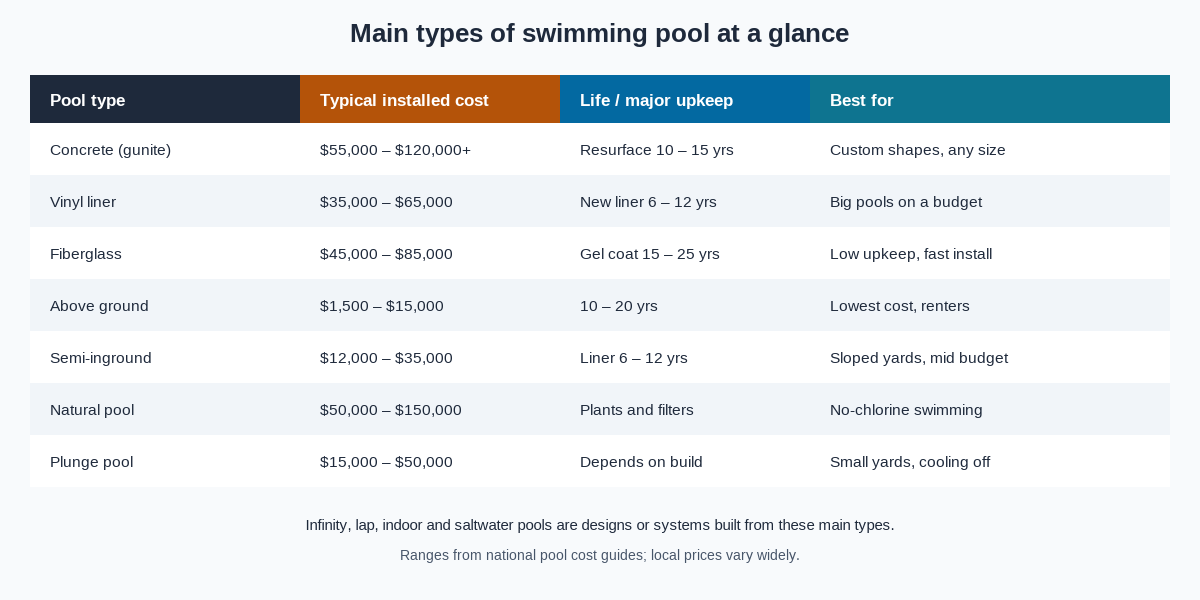
Chart: Asphapro.com
Quick Answer
The main types of swimming pool are inground pools, built from concrete (gunite or shotcrete), vinyl liner or fiberglass, and above ground pools, plus semi-inground pools in between. Concrete pools cost the most (about $55,000 to $120,000 or more) but can be any shape. Vinyl pools are the cheapest inground option ($35,000 to $65,000). Fiberglass pools ($45,000 to $85,000) install fastest and need the least upkeep. Above ground pools cost $1,500 to $15,000. Special designs include natural, plunge, lap, infinity and indoor pools, and any type can use a chlorine or saltwater system. Pools also use different filter types (sand, cartridge, DE), liners and heaters.
Choosing a pool starts with choosing a type. The type decides how much the pool costs, how long it takes to build, what shapes and sizes are possible, how it feels to swim in, and how much care it needs every year. There is no single best type; each suits different yards, budgets and plans.
This guide explains the different pool types in plain terms, from the three main kinds of inground pool to above ground, natural and plunge pools, and covers the equipment choices that come with every pool. For cost comparisons, see our guides to fiberglass vs vinyl pool and concrete vs fibreglass swimming pool choices.
Inground Pool Types
There are three main inground pool types, named for how the pool shell is built.
Concrete pools. Concrete pools are built on site. The crew digs the hole, sets steel reinforcing bars, and sprays concrete, called gunite or shotcrete, to form the walls and floor. The surface is finished with plaster, quartz, pebble or tile. Concrete pools can be any size, shape or depth and can include beach entries, tanning ledges, spas, waterfalls and infinity edges. They are the strongest and most customizable type, but they cost the most, take two to three months to build, and need resurfacing every 10 to 15 years. The rough surface can harbor algae, so they need more brushing and chemicals. See our guide to the concrete pool.
Vinyl liner pools. Vinyl pools have walls made of steel or polymer panels, a shaped floor, and a custom vinyl liner that holds the water. They are the lowest-cost inground pools, can be built in many sizes and shapes, and have a soft surface. The liner needs replacing every 6 to 12 years. See our guide on vinyl inground pool cost.
Fiberglass pools. Fiberglass pools are one-piece shells made in a factory, shipped to your home and set in the ground. They install quickly, often in a few weeks, and have a smooth gel coat surface that resists algae and needs less maintenance. Shapes and sizes are limited to the models available, and most are no wider than about 16 feet because of road transport limits.
Above Ground Pools
Above ground pools sit on top of the ground, with walls of steel, aluminum or resin and a vinyl liner. They are the cheapest type of pool, costing about $1,500 to $15,000 installed, often with a deck. They can be set up in days, moved or removed, and work well for renters, small budgets and families trying out pool ownership. They are usually round or oval and 48 to 54 inches deep. They last about 10 to 20 years and generally do not add home value. Soft-sided and frame pools are cheaper still but are seasonal.
Semi-Inground Pools
Semi-inground pools are partly buried, usually with 2 to 4 feet of wall below ground and the rest above, surrounded by a deck. They use strong wall systems and vinyl liners, cost about $12,000 to $35,000, and work well on sloped yards. They look more built-in than above ground pools but cost much less than full inground pools. See our guide to the cost of semi-inground pool options.
Special Types of Pool by Design
Beyond how the shell is built, many types of pool are named for their design or use. Most of these can be built in concrete, and some in fiberglass or vinyl.
Natural pools. Natural pools, also called swimming ponds, use plants and gravel filters instead of chlorine to keep water clean. A swimming zone is separated from a planted regeneration zone, and water circulates between them. They look like garden ponds, attract wildlife and need no chemicals, but they cost about $50,000 to $150,000, need space and careful design, and the water is not as clear as in a chlorinated pool.
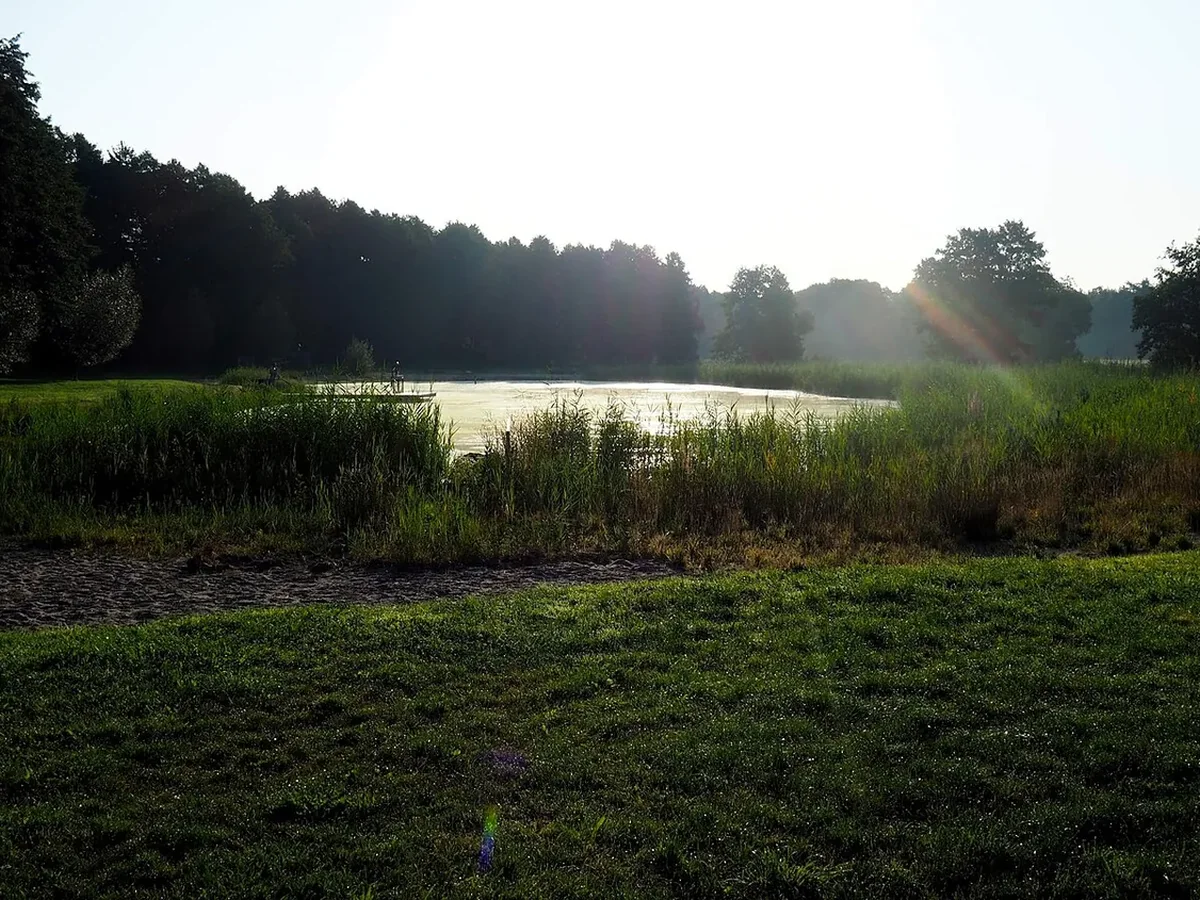
Photo: Ikar.us, Wikimedia Commons, CC BY 4.0
Plunge pools. Plunge pools are small, deep pools made for cooling off and relaxing rather than swimming laps. They are often 6 to 8 feet wide and 10 to 20 feet long, fit small yards, and can be heated like a spa in cooler months. See our guide on what is a plunge pool.
Lap pools. Lap pools are long and narrow, often 40 to 75 feet long and 8 to 10 feet wide, built for swimming laps. They suit side yards and fitness-focused owners.
Infinity pools. Infinity or vanishing edge pools have one or more walls that let water spill over into a catch basin, so the water seems to merge with the view beyond. They suit sloped lots with views and cost much more than standard pools. See our guide on what is an infinity pool.
Beach entry pools. Beach or zero-entry pools have a gently sloping floor that starts at deck level, like walking into the sea. They are great for children and people with limited mobility.
Spools. A spool is a small pool with spa features, such as jets and a heater, combining a plunge pool and a hot tub.
Indoor pools. Indoor pools are built inside the home or in a dedicated building. They can be used all year but need dehumidification, ventilation and heating, which add cost. See our guide on indoor pool cost.
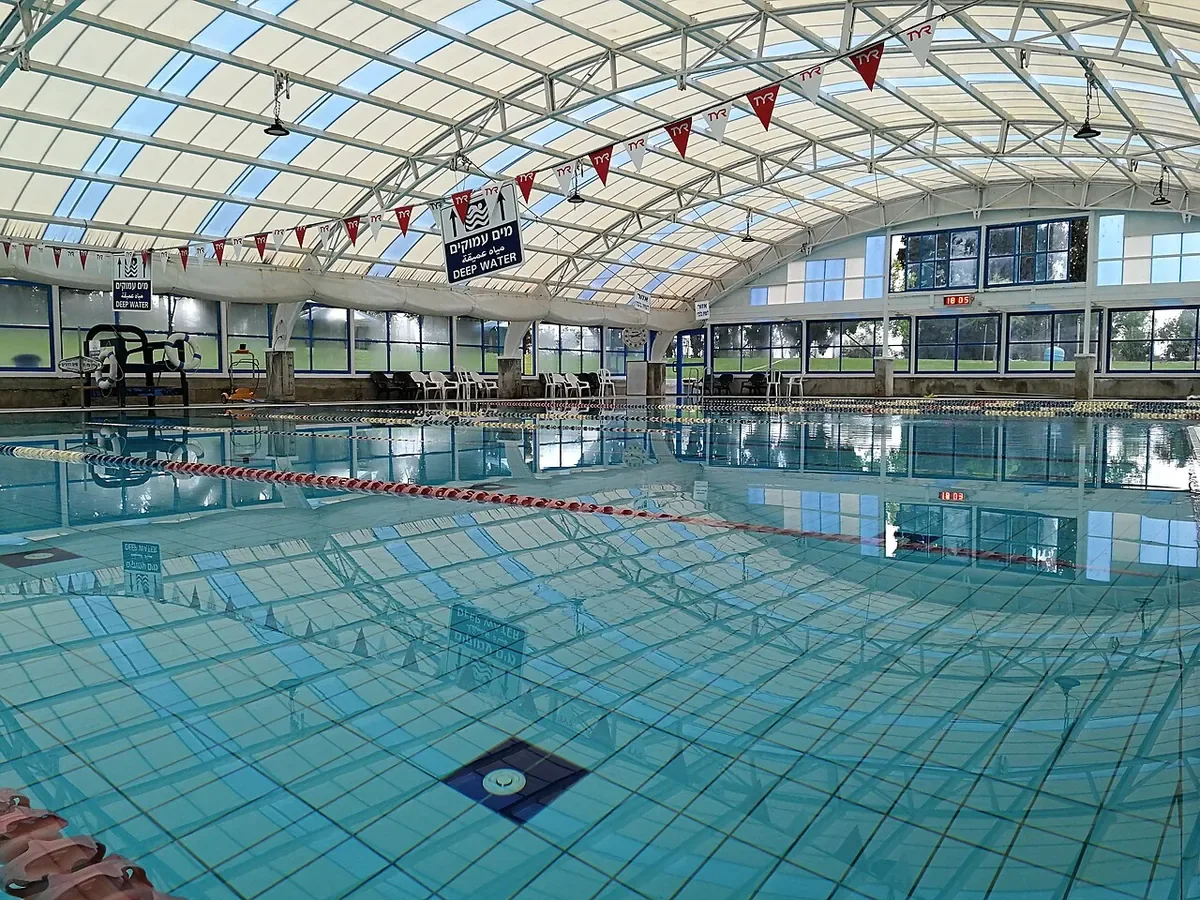
Photo: Laliv g, Wikimedia Commons, CC BY-SA 4.0
Chlorine vs Saltwater Pools
Another way to sort different pool types is by how the water is sanitized. Traditional chlorine pools use liquid chlorine, tablets or granules. Saltwater pools use a salt chlorine generator to make chlorine from dissolved salt, which gives steadier levels and softer-feeling water but requires a cell that must be cleaned and replaced every few years. Any type of inground or above ground pool can use either system. See our guide to salt pool versus chlorine.
Types of Pool Filters
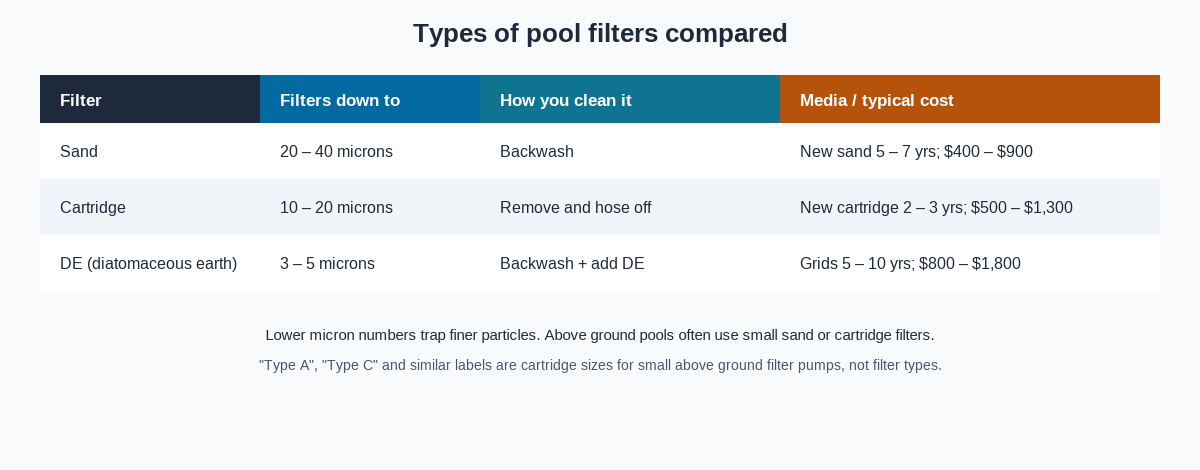
Chart: Asphapro.com
Every pool needs a filter, and there are three main types of pool filters. Sand filters pass water through a bed of special sand that traps dirt down to about 20 to 40 microns. They are simple, cheap and cleaned by backwashing, which reverses the flow to flush dirt out. The sand lasts 5 to 7 years. Cartridge filters use pleated fabric cartridges that trap particles down to about 10 to 20 microns. They do not need backwashing, which saves water, but the cartridges must be removed and hosed off several times a season and replaced every 2 to 3 years. DE filters use grids coated with diatomaceous earth powder and trap particles as small as 3 to 5 microns, giving the clearest water, but they need fresh DE after every backwash and more care.
When comparing pool filter types, sand is the easiest, cartridge is the water-saver, and DE is the finest. For care tips, see our guide on how to clean swimming pool filter media.
What Type of Sand for Pool Filter Use?
What type of sand for pool filter tanks should you use? Most sand filters use #20 silica pool filter sand, with grains of about 0.45 to 0.55 millimeters. Never use play sand or masonry sand, which is the wrong size and will either pass into the pool or pack too tight. Alternatives include zeolite, a porous mineral that traps finer particles, and filter glass, crushed recycled glass that filters finer and lasts longer. Check your filter's manual before switching media. See our guide on how to change sand in a Hayward pool filter.
Cartridge Size Labels on Small Filters
Small filter pumps sold with above ground and inflatable pools often use cartridges labeled with letters, such as Type A, Type C or Type D. These letters describe the size and shape of the cartridge for a given pump model, not a different kind of filter. A Type A pool filter cartridge, for example, is a short cartridge used in many small pumps, while a Type C pool filter cartridge is taller for larger pumps, and a Type I pool filter cartridge fits other pump sizes. Match the letter to your pump's manual when buying replacements, and rinse or replace the cartridge every one to two weeks during heavy use.
Types of Pool Liners
Vinyl pools use liners, and there are several types of pool liners. Inground liners are custom made to fit the pool's shape and depth, usually 20 to 30 mil thick, with patterns that range from solid blue to tile borders and stone prints. Above ground liners come in three main styles. Overlap liners hang over the pool wall and are held by coping strips; they are the cheapest and easiest to install. Beaded liners snap into a track at the top of the wall and allow a printed border to show. Expandable or J-hook liners hook over the wall and are often used in pools with a deep center. Knowing these types of above ground pool liners helps you buy the right replacement. See our guide to the cost of pool liner installation.
Types of Pool Heaters
There are four main types of pool heaters. Gas heaters (natural gas or propane) heat water quickly at any outdoor temperature and suit pools used on demand, but cost more to run. Heat pumps use electricity to pull heat from the air; they are much cheaper to run in warm and mild weather but slow down in cold air. Solar heaters circulate water through collectors on a roof or rack and cost almost nothing to run, but depend on sunshine. Electric resistance heaters are mainly used for small spas. See our guide on how to heat a pool.
Types of Pool Covers
Pool covers come in several types: solar covers that hold in heat, winter covers that keep debris out of a closed pool, mesh and solid safety covers anchored to the deck that can hold weight, and automatic covers that roll out on tracks at the push of a button. Each serves a different purpose and budget. See our guide on pool cover cost.
Types of Pool Bugs
Outdoor pools attract insects, and a few types of pool bugs show up often. Water boatmen and backswimmers are small swimming insects that feed on algae and other bugs; backswimmers can bite. Their presence often means algae is starting. Mosquito larvae appear in untreated or covered water. Water striders skate on the surface. Keeping chlorine in range, brushing to prevent algae, skimming daily and covering the pool when not in use keeps most bugs away.
Pool Types by Shape
Pools also come in many shapes, which can be built from most types. Rectangular pools are the most common, suit lap swimming, automatic covers and modern homes, and are the simplest to build. Kidney pools have a curved, bean shape that fits naturally in gardens. Freeform pools follow natural curves and suit landscaped yards with rocks and waterfalls. L-shaped pools separate a shallow play area from a deep or lap area. Roman and Grecian pools have rounded or angled ends for a classic look. Geometric pools use angles and straight lines for a contemporary style. Concrete pools can be any shape; vinyl pools can be most shapes; fiberglass pools come in the shapes the maker offers.
Pool Types by Depth
Depth affects how a pool is used. Sport or play pools have a flat or gently sloped floor, often 3.5 to 5 or 6 feet deep throughout, ideal for games, volleyball and families. Diving pools have a deep end of 8 feet or more, needed for safe diving boards, and must meet strict size and shape rules. Many owners now skip diving ends because of cost, safety and insurance. Shallow pools or wading areas, often with tanning ledges, suit young children and lounging. Choosing a depth that fits how you will use the pool can save money and space.
How to Choose Between Different Types of Swimming Pool
Start with your budget, including both the build and the long-term costs. If your budget is under $20,000, an above ground or semi-inground pool is the realistic choice. Between $35,000 and $65,000, vinyl and some fiberglass pools fit. Above $60,000, concrete and larger fiberglass pools become options.
Next, think about your yard. Narrow, sloped or hard-to-reach yards may rule out fiberglass shells, which need crane access. Small yards suit plunge pools and spools. Large yards with views suit concrete pools with infinity edges or features.
Then consider climate. In cold climates, vinyl and fiberglass pools are popular and handle freezing well when closed properly. In hot climates, concrete and fiberglass pools are common, and heat-resistant finishes and good shade matter.
Finally, think about maintenance and timing. If you want the least work, fiberglass is the leader. If you want the fastest installation, fiberglass or above ground pools are quickest. If you want full design freedom and plan to stay in the home long-term, concrete may be worth the cost.
Long-Term Costs of Each Pool Type
Over 20 years, the costs of different pool types get closer than their upfront prices suggest. Concrete pools need resurfacing every 10 to 15 years, at about $10,000 to $20,000 each time, and use more chemicals and brushing. Vinyl pools need new liners every 6 to 12 years at $4,000 to $8,000 each. Fiberglass pools may need gel coat refinishing after 15 to 25 years and use the fewest chemicals. Above ground pools are cheap but may need replacing after 10 to 20 years. All pools need equipment replacements, power and water. Comparing 20-year totals gives a fairer picture than the starting price alone. See our guide to the cost to maintain a pool.
Pool Types and Home Value
Inground pools are the only types likely to add home value, mainly in warm markets where pools are common. Above ground pools usually add nothing. Buyers tend to see fiberglass and concrete pools as permanent, premium features, while vinyl pools are valued too but buyers will ask about the liner's age. Natural pools appeal to some buyers but may puzzle others. See our guide on how much value does a pool add to a home.
How Long Each Pool Type Takes to Build
Build time differs a lot between pool types. Above ground pools can be set up in one to three days once the base is level. Fiberglass pools usually take one to three weeks after the permit and delivery. Vinyl pools take two to four weeks, since walls, floor and liner are built on site and the liner is custom ordered. Semi-inground pools take one to three weeks. Concrete pools take the longest, often two to three months, because the shell must cure before plastering, and each stage needs inspections. Natural pools can take two to four months, including planting. Weather, permits and site problems can add time to any type.
Types of Pool Pumps
Every pool needs a pump to move water through the filter, and pumps come in three types. Single-speed pumps run at one high speed and use the most electricity. Two-speed pumps have a high speed for cleaning and a low speed for daily filtering. Variable-speed pumps can run at many speeds, using far less power at low speeds, and can save hundreds of dollars a year. Federal efficiency rules in the United States now require most new pool pumps to be variable-speed or similarly efficient. Variable-speed pumps cost more up front but usually pay for themselves in a few seasons.
Types of Pool Sanitizer Systems
Besides traditional chlorine and salt systems, a few other sanitizer types are used. Mineral systems use silver and copper ions to help control bacteria and algae, allowing lower chlorine levels. Ozone generators inject ozone gas to oxidize contaminants, also reducing chlorine needs. UV systems pass water past ultraviolet light to kill germs in the equipment. Bromine is more common in spas than pools. These systems usually work alongside a small amount of chlorine rather than replacing it, since a residual sanitizer is still needed in the pool water itself.
Types of Pool Features
Many owners add features to their pool type. Attached spas share the pool's equipment and spill into the pool. Water features include sheer descents, rock waterfalls, bubblers and deck jets. Lighting ranges from single white lights to color-changing LED systems. Tanning ledges give a shallow lounging area. Slides and diving boards add fun but have safety and insurance considerations. Features are easiest and cheapest to plan before construction, especially in concrete pools. See our guide to pool ideas with waterfalls.
Pool Types for Small Yards
Small yards limit the choice of pool type but do not rule out a pool. Plunge pools, spools and compact fiberglass models are made for tight spaces. A narrow lap pool along a fence can fit where a wide pool cannot. A small rectangular vinyl or concrete pool with a simple deck can leave room for a patio and planting. Semi-inground pools and above ground pools with built-in decks also suit small lots. When space is tight, plan the pool with the fence, equipment pad, setbacks and walkways in mind, since these all take space. See our guide to swimming pool ideas for small backyard layouts.
Safety Requirements for All Pool Types
Whatever the type, most US towns require a barrier around residential pools: a fence at least 48 inches high with self-closing, self-latching gates, or a wall height that meets the same rules for above ground pools with removable ladders. Drain covers must meet anti-entrapment standards, and electrical work must follow pool rules for bonding and GFCI protection. Plan these requirements into the budget from the start, whichever type of pool you choose. See our guide to pool fence cost.
Getting Quotes for Different Pool Types
Once you have narrowed your choice to one or two pool types, get quotes from builders who specialize in each. Ask for itemized prices, clear timelines, written warranties and references, and visit pools they built years ago. Comparing two types side by side, with the same size, depth and features, makes the best choice much clearer and helps you avoid surprises later in the build.
Types of Swimming Pool: Key Points
- Inground pool types: concrete, vinyl liner and fiberglass.
- Above ground and semi-inground pools cost much less.
- Special designs include natural, plunge, lap, infinity and indoor pools.
- Filters come in sand, cartridge and DE types.
Frequently Asked Questions
What is the most common type of pool?
In the US, concrete and vinyl liner pools are the most common inground types, with fiberglass growing fast. Above ground pools are the most common overall, because they cost the least and are easy to set up.
Which pool type needs the least maintenance?
Fiberglass, because its smooth surface resists algae and does not affect water chemistry much. Of the different pool types, it usually needs the least brushing and the fewest chemicals.
What are the different types of swimming pool construction?
The different types of swimming pool construction are concrete (gunite or shotcrete), vinyl liner, fiberglass, above ground and semi-inground.
What type of sand for swimming pool filter tanks is best?
#20 silica pool filter sand is the standard. Zeolite and filter glass are approved alternatives for many filters, and both trap finer particles than sand.
What type of sand in pool filter tanks should I avoid?
Avoid play sand, masonry sand and beach sand. They are the wrong size and shape and can enter the pool or clog the filter.
What does Type A mean on swimming pool filters?
On small pumps, Type A is a cartridge size label. Swimming pool filters Type A cartridges fit specific pump models; check your manual before buying.
Which type of pool is cheapest to maintain?
Fiberglass pools usually cost the least to maintain because they need fewer chemicals and less brushing. Vinyl pools are next, and concrete pools usually cost the most to keep up.
Sources
- HomeGuide: Inground pool cost
- Pool and Hot Tub Alliance
- US Department of Energy: Heating your swimming pool
- ICC: International Swimming Pool and Spa Code