
Gravel vs Asphalt Driveway: Cost, Maintenance, Snow and Which One to Choose
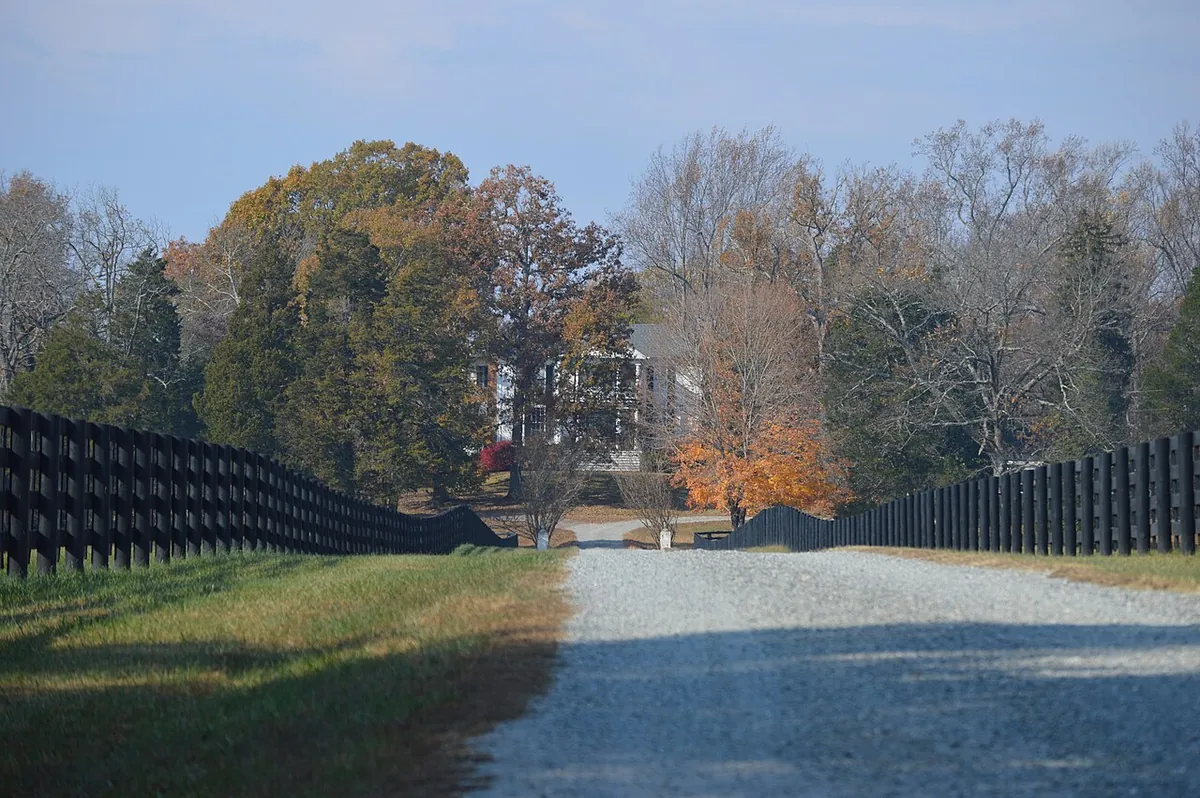
Photo: Nyttend, Wikimedia Commons, public domain
Quick Answer
In the gravel vs asphalt driveway decision, gravel wins on up-front cost at about $1.25 to $3 per square foot installed, against about $7 to $15 per square foot for a new asphalt driveway. Asphalt wins on convenience: no dust or ruts, easy snow removal, a clean finished look and 15 to 20+ years of life with sealing every 2 to 3 years. Gravel suits long rural driveways, tight budgets and DIY; asphalt suits suburban homes, cold snowy climates and anyone who wants low day-to-day upkeep. A chip seal surface sits in between at about $2 to $5 per square foot.
Few driveway decisions come up as often as gravel vs asphalt. A gravel driveway costs a fraction of asphalt, drains well and can be built or repaired by a homeowner with a rented skid steer. An asphalt driveway costs several times as much up front, but it is smooth, quiet, dust-free and easy to plow. Which one is better depends on the length of your driveway, your climate, your budget, how you use the driveway and what is normal in your neighborhood.
This guide compares a gravel driveway vs asphalt on every point that matters: installed cost per square foot and by driveway size, long-term cost including upkeep, maintenance work, snow, drainage, looks and home value, slopes and long rural lanes, the in-between options, and what it takes to convert a gravel driveway to asphalt later. Cost ranges come from published 2025–2026 data listed in the sources.
Gravel vs Asphalt Driveway at a Glance
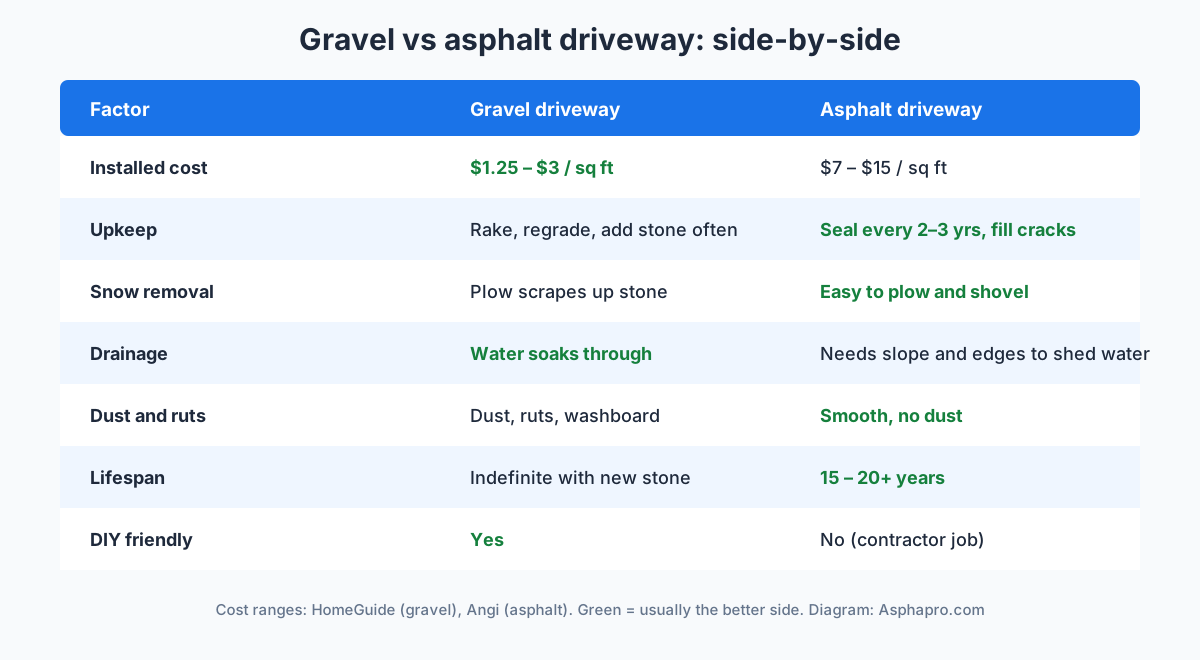
The short version: gravel is cheaper to build and easier to fix yourself, while asphalt is easier to live with day to day. The rest of this guide explains each line of that comparison and shows the numbers behind it.
Gravel Driveway Cost vs Asphalt
Up-front cost is where the gravel vs asphalt driveway comparison is most one-sided. National cost guides put the ranges at:
| Driveway type | Installed cost per sq ft | Source |
|---|---|---|
| Gravel driveway | $1.25 – $3 | HomeGuide |
| Gravel, DIY materials only | $0.50 – $1.50 | HomeGuide |
| Asphalt driveway (new) | $7 – $15 | Angi |
| Chip seal (middle option) | $2 – $5 | HomeGuide |
Here is what those ranges mean for real driveways:
| Driveway | Area | Gravel driveway | Asphalt driveway |
|---|---|---|---|
| 12 × 50 ft, one car | 600 sq ft | $750 – $1,800 | $4,200 – $9,000 |
| 20 × 40 ft, two car | 800 sq ft | $1,000 – $2,400 | $5,600 – $12,000 |
| 24 × 60 ft, wide | 1,440 sq ft | $1,800 – $4,320 | $10,080 – $21,600 |
| 12 × 300 ft, rural lane | 3,600 sq ft | $4,500 – $10,800 | $25,200 – $54,000 |
| 12 × 1,320 ft, quarter mile | 15,840 sq ft | $19,800 – $47,520 | $110,880 – $237,600 |
On a short suburban driveway the gap is a few thousand dollars. On a long rural lane it is tens of thousands, which is why most long country driveways are gravel. Large asphalt jobs often price per square foot toward the lower end of the range, so get real quotes for long lanes, but even then the difference is large. Run your own numbers with our gravel calculator and asphalt driveway calculator, and see our full guides to gravel driveway cost and asphalt driveway cost.
Long-Term Cost: Gravel vs Asphalt Over 20 Years
A fair gravel vs asphalt driveway comparison looks past day one. Gravel is cheap to build but needs regular top-ups and regrading. Asphalt costs more up front but needs comparatively little between sealcoats. Over 20 years the picture typically looks like this:
| Over 20 years | Gravel driveway | Asphalt driveway |
|---|---|---|
| Build | Low | High |
| Routine upkeep | Raking, filling ruts, regrading; new stone every few years | Crack filling; sealcoat every 2 – 3 years |
| Bigger work | Rebuild soft areas, fix drainage | Patching; possibly an overlay near the end |
| Your time | More | Less |
| Total cost | Usually still lower | Usually higher |
For most driveways, gravel stays the cheaper option in dollars even after 20 years of upkeep, especially if you do the work yourself. What asphalt buys you is time and convenience: far less raking, no ruts after rain, and a surface that does not move under tires or plows. If your time matters or you hire out every repair, the gap narrows.
Maintenance: What Each Driveway Needs
Gravel driveway maintenance
- Rake and fill ruts and potholes as they appear, especially after heavy rain.
- Regrade once or twice a year to restore the crown so water runs off the sides.
- Add new stone every few years as gravel is pushed into the soil, carried off by tires or thrown by plows.
- Control weeds along the edges and in low-traffic areas.
- Keep ditches and culverts clear so water does not soften the base.
Asphalt driveway maintenance
- Fill cracks every year or two before winter.
- Sealcoat every two to three years, starting about 6 to 12 months after paving (see when to seal a new asphalt driveway).
- Patch any potholes promptly.
- Keep edges supported with soil or stone so they do not crumble.
- Clean oil spills quickly; see how to remove oil stains from asphalt.
The real difference is frequency and effort. Gravel needs small amounts of work often; asphalt needs a little work every couple of years. Both need good drainage, which is the single biggest factor in how long any driveway lasts. Our asphalt driveway maintenance guide covers the asphalt routine in detail.
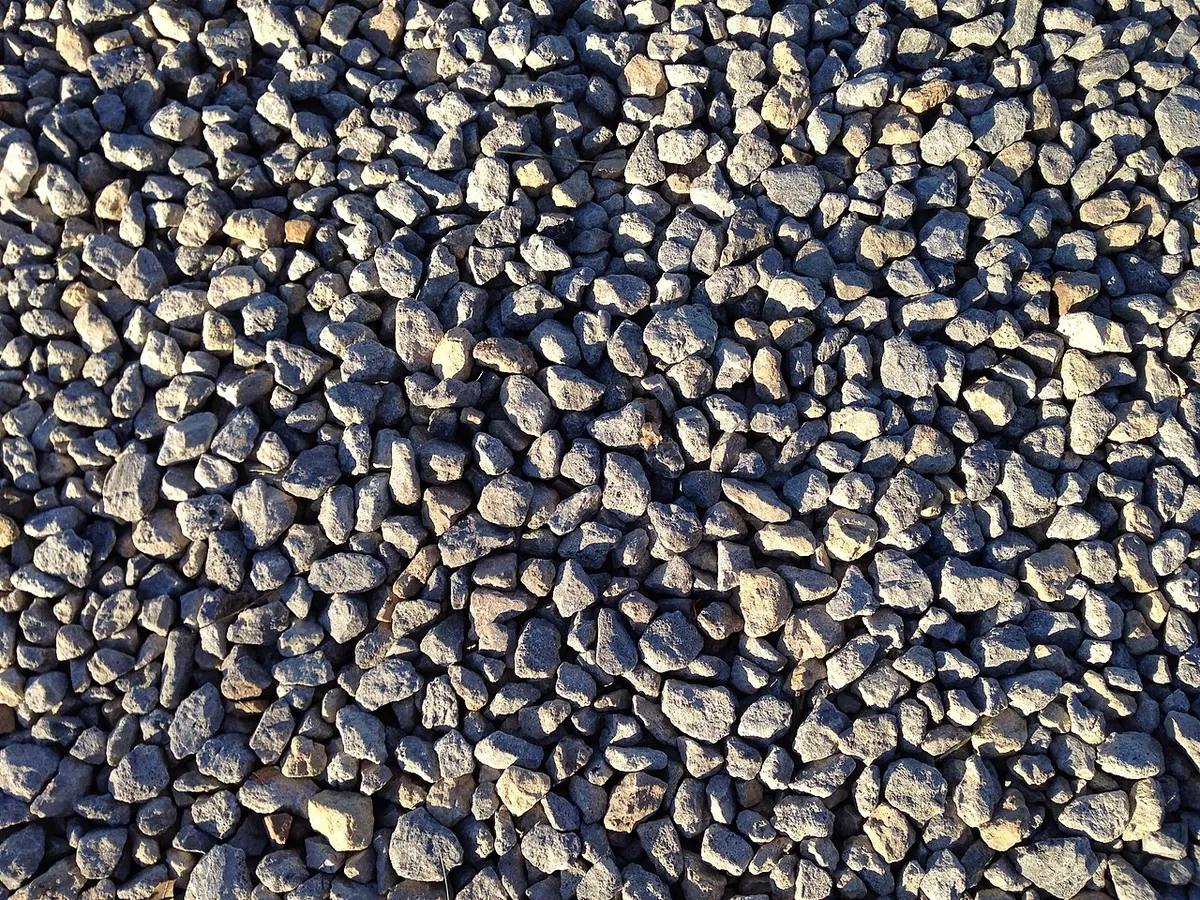
Photo: dankeck, Wikimedia Commons, CC0
Noise, Dust and Daily Use
Day-to-day experience is where many homeowners feel the gravel vs asphalt difference most. Gravel crunches under tires and footsteps, which some people like as an early warning of visitors and others find noisy. In dry weather, cars kick up dust that settles on the house, porch and parked cars. Stones get tracked into the garage and house, and loose gravel is hard on strollers, wheelchairs, bikes and roller skates. Asphalt is quiet, clean and smooth, so kids can ride and play on it and wheeled bins roll easily to the curb. Delivery drivers and visitors also tend to find a paved surface easier to walk on in dress shoes or in the rain. If the driveway doubles as a play area or you use a wheelchair or walker, asphalt or concrete is the more practical surface.
Snow and Ice: Gravel vs Asphalt
In snowy climates, snow removal often decides the gravel vs asphalt driveway question. Asphalt is smooth and firm, so a plow, snow blower or shovel glides over it and clears down to the surface. The dark color absorbs sunlight and helps melt the last layer of snow and ice.
Gravel is harder to clear. Plow blades and snow blowers dig into loose stone and throw it onto the lawn, where it damages mowers in spring. The usual fixes are to raise the plow blade slightly, fit plow shoes, set the snow blower's skid shoes high, or leave a thin packed layer of snow on the driveway over winter. Freeze-thaw cycles also soften gravel driveways in spring, causing ruts until the ground dries.
Salt and deicers affect both: they can speed up surface wear on asphalt, and they wash into the base of a gravel driveway. Sand gives traction on either without chemicals.
Drainage and Stormwater
Gravel has a real advantage here. Rain soaks through a gravel driveway into the ground instead of running off, which reduces puddles, runoff onto neighboring property and, in some places, stormwater rules that apply to paved surfaces. Some towns count asphalt as impervious surface for lot coverage limits or stormwater fees, while treating gravel differently; check local rules if you are close to a limit.
Asphalt sheds water, so it needs a slope or crown and somewhere for the water to go: a lawn, a swale, a ditch or a drain. Water pooling against an asphalt driveway edge or flowing under it is the most common cause of early failure. Porous asphalt, which lets water through, exists but is a specialty product more common on parking lots than driveways.
Looks, Home Value and Neighborhood Rules
In most suburban neighborhoods, an asphalt or concrete driveway is the norm, and a gravel driveway can look unfinished to buyers. Some HOAs require a paved driveway. In rural areas and on farms, the opposite can be true: a long gravel driveway is expected and fits the setting, and paving it rarely returns its cost at sale.
A well-kept gravel driveway with clean edging, a fresh layer of stone and good drainage can look attractive, especially with crushed limestone or decorative stone. A neglected one with ruts, weeds and bare spots looks worse than a neglected asphalt driveway. If you plan to sell soon in a suburban area, asphalt is usually the safer choice; if you are staying long term in the country, gravel is a sensible, practical option.
Long Driveways, Slopes and Heavy Vehicles
- Long rural lanes: gravel is usually the practical choice because of cost. Chip seal is the most common upgrade.
- Steep slopes: gravel can wash out on steep grades in heavy rain and loose stone gives poor traction for braking. Asphalt or chip seal holds up better on slopes, though steep asphalt can be slippery in ice. Check your grade with the driveway slope calculator.
- Heavy trucks and farm equipment: a thick, well-built gravel driveway handles heavy loads and is easy to repair. Asphalt needs extra thickness and base for regular heavy traffic, which adds cost.
- Turnarounds and parking pads: turning tires dig into gravel and scuff new asphalt; both benefit from a strong base.
Gravel vs Asphalt Driveway by Climate
| Climate | Gravel driveway | Asphalt driveway |
|---|---|---|
| Cold, snowy (Northeast, Midwest, mountains) | Plow damage and spring mud ruts | Easy snow removal; fill cracks before winter |
| Hot, sunny (South, Southwest) | Dust in dry spells; drains summer storms well | Softens in extreme heat; sealing slows sun damage |
| Very wet (Pacific Northwest, Gulf Coast) | Drains well but ruts on soft soils | Needs good slope and edges to shed water |
| Dry, windy plains | Dust and stone loss in wind | Stable, clean surface |
Cold climates tip the gravel vs asphalt driveway balance toward asphalt because of snow removal and spring thaw. In hot, dry climates gravel's dust is the main drawback, while asphalt needs regular sealing to resist the sun. In wet climates both work if drainage is done right; gravel's permeability is a plus, but soft soils can rut badly under gravel.
Building a Gravel Driveway That Lasts
A good gravel driveway is more than a load of stone dumped on the lawn. Most well-built gravel driveways use layers:
- Excavate and shape the subgrade, removing topsoil and organic material, with a crown or cross-slope for drainage.
- Optional geotextile fabric over soft or clay soils, to keep the stone from sinking into the mud.
- Base layer of larger crushed stone, compacted.
- Middle layer of medium crushed stone, compacted.
- Top layer of smaller crushed stone with fines (often called crusher run or dense grade), which packs into a firm surface.
Total depth commonly ranges from about 8 to 12 inches, deeper on soft soils or where trucks drive. Crushed, angular stone locks together; rounded pea gravel rolls under tires and is better for paths than driveways. Our gravel calculator and crushed stone calculator estimate tons for each layer.
Building an Asphalt Driveway That Lasts
An asphalt driveway is only as good as the base under it. A typical residential build uses a compacted crushed-stone base topped with 2 to 3 inches of compacted hot mix, often in one or two lifts. Thicker asphalt and base are used where heavy trucks or RVs park. The details that make the biggest difference are a firm, well-compacted base, a slope that sends water off the surface, supported edges, and proper compaction of the asphalt while it is hot. Our asphalt driveway installation page and is 2 inches of asphalt enough guide go deeper.
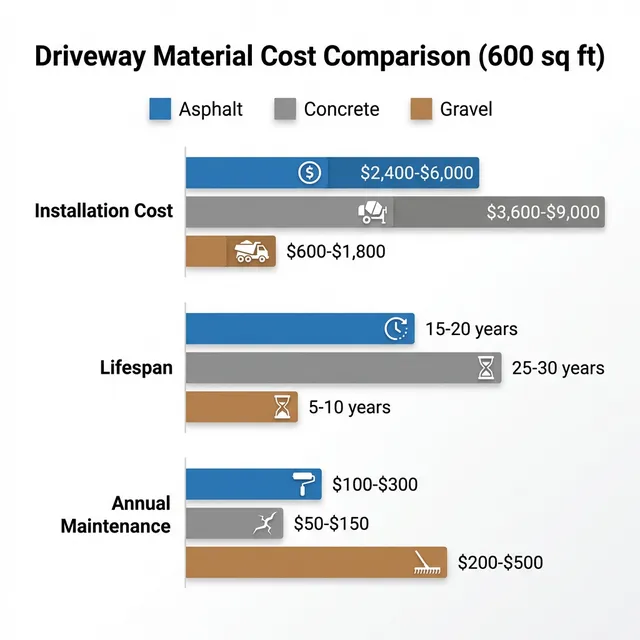
Worked Example: A 300-Foot Country Driveway
Picture a 12-foot-wide, 300-foot-long driveway to a rural home, with a turnaround of about 600 square feet. Total area: 3,600 + 600 = 4,200 square feet.
| Option | Cost per sq ft | Total for 4,200 sq ft |
|---|---|---|
| Gravel driveway | $1.25 – $3 | $5,250 – $12,600 |
| Chip seal over gravel | $2 – $5 | $8,400 – $21,000 |
| Asphalt driveway | $7 – $15 | $29,400 – $63,000 |
For this owner, gravel or chip seal saves tens of thousands of dollars. The deciding questions are how much snow they plow, whether they mind raking and topping up stone, and whether they plan to sell to suburban-minded buyers. Many choose gravel first, build it as a proper base, and add chip seal or asphalt on the first 50 to 100 feet near the house later, where looks and snow removal matter most.
Middle Options Between Gravel and Asphalt
If neither gravel nor asphalt feels right, there are in-between surfaces:
| Option | Cost per sq ft | What it is |
|---|---|---|
| Chip seal (tar and chip) | $2 – $5 | Asphalt binder with stone rolled in, over a gravel base |
| Asphalt millings | Low; varies by area | Ground-up old asphalt that packs harder than gravel |
| Stabilized gravel grids | Varies | Plastic grids that hold gravel in place |
Chip seal is the most popular middle ground: it looks like a country road, stops dust and loose stone, sheds water and costs far less than asphalt. See chip seal driveway cost. Millings are another budget upgrade that compacts into a firmer, darker surface than gravel; see asphalt millings cost and recycled asphalt driveway.
Converting a Gravel Driveway to Asphalt
Many people start with gravel and pave later, and that works well. An existing gravel driveway often becomes the base for the asphalt, which can lower the paving cost compared with building from bare soil. The usual steps are:
- Check the existing gravel: depth, firmness and drainage.
- Dig out soft or muddy spots and replace them with crushed stone.
- Add crushed stone where needed to reach the base depth the contractor recommends.
- Grade the base with a crown or slope and compact it thoroughly.
- Pave with hot mix asphalt, usually 2 to 3 inches compacted for a driveway.
Rounded pea gravel and decorative stone are poor bases; crushed angular stone with fines locks together much better. If your gravel driveway has been in place for years and is firm, ask contractors whether it can stay as the base. Our road base calculator estimates the extra stone needed, and the asphalt tonnage calculator the hot mix.
Upgrading a Gravel Driveway Without Paving
If your gravel driveway is the problem but asphalt is out of budget, these upgrades fix most complaints for a fraction of the cost:
- Top-dress with crushed stone that has fines (crusher run or dense grade), then compact it. It packs into a much firmer, less dusty surface than clean stone.
- Restore the crown and cut side ditches so water leaves the driveway instead of sitting in ruts.
- Add edging of timber, steel or stone to keep gravel out of the lawn.
- Install gravel stabilizer grids on soft spots, slopes or parking areas.
- Add a culvert where the driveway crosses a low area or ditch.
These steps often make a gravel driveway pleasant enough that the gravel vs asphalt driveway question stops being urgent, and they also prepare the base if you pave later.
Environmental Differences
Gravel lets rain soak into the ground, which reduces runoff and recharges soil moisture. Asphalt sheds water, so the runoff needs somewhere to go, and paved surfaces absorb and re-radiate more heat in summer. On the other side, asphalt is one of the most widely recycled construction materials: old asphalt is routinely ground up and reused in new pavement, and asphalt millings are reused as driveway material. Gravel is a natural, simple material, but quarrying and trucking replacement stone every few years has its own footprint. For most homeowners, drainage rules and local conditions matter more than these differences.
What About Concrete?
Concrete is the third option many people weigh alongside a gravel vs asphalt driveway. HomeGuide puts plain gray concrete at about $4 to $8 per square foot, which in many markets lands between gravel and asphalt, although some cost guides quote concrete higher. Concrete lasts the longest, often 25 to 30 years or more, stays cooler and lighter in color, and needs little maintenance beyond sealing and joint care. Its downsides are cracking that is hard to repair invisibly, damage from deicing salt in cold climates, and a long cure time before you can drive on it. Our asphalt vs concrete driveway cost guide compares the two paved options in depth.
Common Mistakes With Gravel and Asphalt Driveways
- Gravel too thin. Two or three inches of stone on topsoil turns to mud and ruts within a season.
- Wrong stone. Rounded pea gravel or decorative stone rolls under tires and never firms up.
- No crown or ditches. Water sitting on or beside the driveway destroys gravel and asphalt alike.
- Asphalt on a weak base. A thin asphalt layer over soft ground cracks early, no matter how good the asphalt is.
- Unsupported asphalt edges. Without soil or stone backfill, edges crumble under tires.
- Skipping maintenance. A gravel driveway that is never regraded, or an asphalt driveway that is never crack-filled, ages much faster.
Questions to Ask Before You Decide
- How long is the driveway, and how much would each option cost for the full length?
- How much snow do you get, and how do you clear it?
- Does your HOA or town require a paved surface or limit impervious area?
- Do you plan to sell within a few years?
- Will you maintain it yourself, or pay someone?
- Is the driveway steep, shaded or wet?
- Do heavy trucks, trailers or farm equipment use it?
Answer these honestly, ideally with real quotes for both surfaces in hand, and the gravel vs asphalt driveway choice usually becomes clear. When it does not, chip seal is often the compromise that fits.
Which Should You Choose?
| Your situation | Better choice |
|---|---|
| Long rural driveway, tight budget | Gravel (or chip seal) |
| Suburban home, HOA or resale soon | Asphalt |
| Heavy snow, you plow or snow-blow | Asphalt |
| You enjoy DIY and have equipment | Gravel |
| Steep slope | Asphalt or chip seal |
| Drainage limits or impervious-surface rules | Gravel |
| Want low day-to-day upkeep | Asphalt |
| Want to pave later | Gravel now, built as a proper base |
Pros and Cons Summary
Gravel driveway
- Lowest cost to build
- DIY friendly
- Drains naturally
- Easy to repair
- Dust, ruts and loose stone
- Harder to plow
- Frequent upkeep
- Weeds at edges
Asphalt driveway
- Smooth, clean, dust-free
- Easy snow removal
- 15 – 20+ years of life
- Expected in suburban areas
- Several times the cost
- Needs sealing every few years
- Sheds water; needs drainage
- Contractor job
Can You Build Either One Yourself?
Gravel is one of the few driveway surfaces a homeowner can install. With a rented skid steer or small tractor, a load of crushed stone and a plate compactor or roller, you can build or rebuild a gravel driveway in a weekend; the main skills are grading for drainage and compacting in layers. Asphalt is a contractor job: hot mix has to be spread evenly and rolled while hot, and the equipment is specialized. What you can do yourself before paving is clear the area and improve drainage, which can lower the quote.
Frequently Asked Questions
Is gravel cheaper than asphalt for a driveway?
Yes. Gravel is about $1.25 to $3 per square foot installed versus about $7 to $15 for new asphalt. Upkeep narrows the gap over time but usually does not close it.
Which lasts longer, gravel or asphalt?
Asphalt typically lasts 15 to 20+ years before major work. Gravel can last indefinitely with regular new stone and grading, but the surface needs attention every year or two.
Is gravel or asphalt better for snow?
Asphalt is much easier to plow and shovel. Gravel gets thrown by plows and snow blowers unless the blade is raised.
Can you pave over a gravel driveway?
Yes. A firm gravel driveway often becomes the base for asphalt after regrading, topping up and compacting.
Does asphalt add more home value than gravel?
In suburban areas, usually yes in buyer appeal. In rural areas, gravel is common and expected.
What is the cheapest hard-surface upgrade from gravel?
Chip seal, at about $2 to $5 per square foot, is the usual budget upgrade from gravel to a hard, dust-free surface.
Sources
- HomeGuide, "How much does a gravel driveway cost?" — $1.25 to $3 per sq ft installed and DIY material costs. homeguide.com
- Angi, asphalt driveway cost and "Gravel vs. Concrete Driveway" — asphalt $7 to $15 per sq ft and gravel comparisons. angi.com
- HomeGuide, chip seal driveway cost — $2 to $5 per sq ft. homeguide.com
- Image credits: hero photo by Nyttend (public domain) and gravel close-up by dankeck (CC0), both via Wikimedia Commons. Scorecard diagram by Asphapro.com.
Prices checked November 2026. They are national ranges; local quotes can be higher or lower.
Related Guides
- How long does concrete last? — lifespan by project