
How to Remove Oil Stains From Asphalt: Fresh Spills, Set-In Stains and Old Shadows
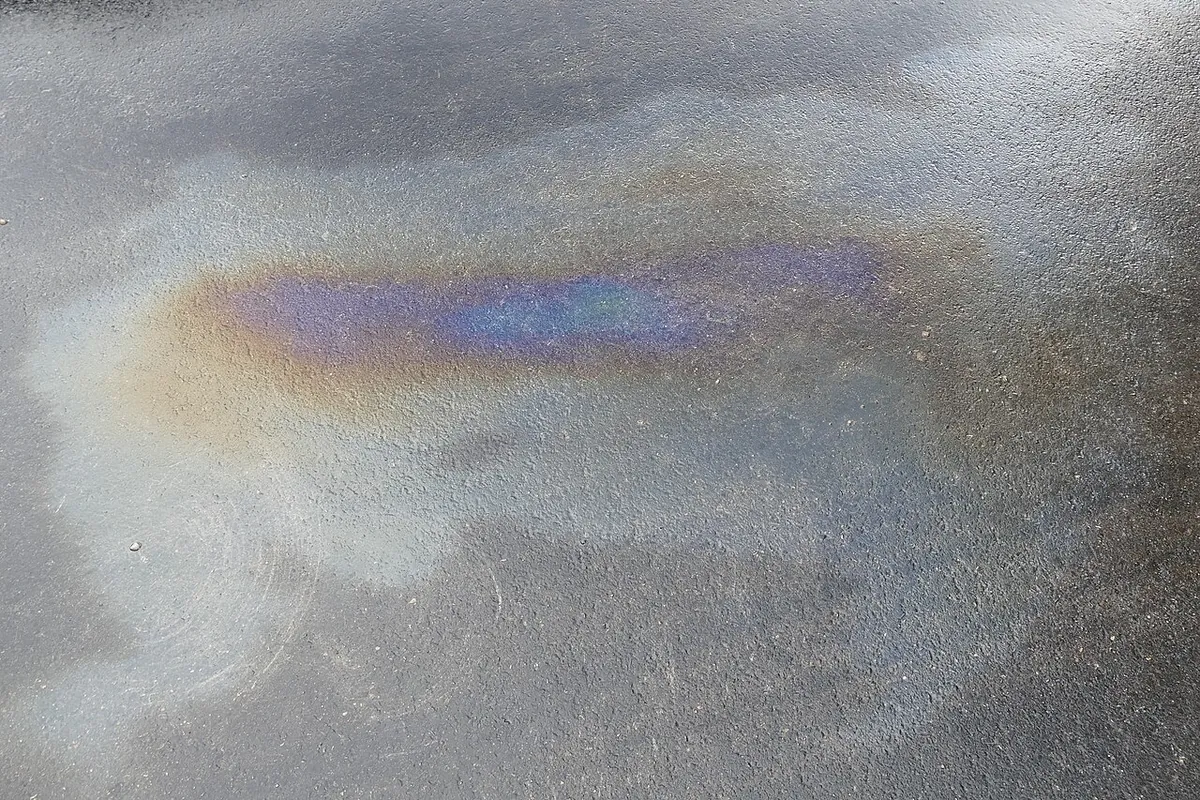
Photo: Kritzolina, Wikimedia Commons, CC BY-SA 4.0
Quick Answer
To remove oil stains from asphalt, act by stain age. Fresh spill: blot it, cover it with clay cat litter, sawdust or baking soda, grind it in and leave it for several hours, sweep it up, then scrub with dish soap and warm water using a stiff nylon brush. Set-in stain: use an asphalt-safe, water-based degreaser or an enzyme (oil-eating) cleaner and repeat. Old shadow: clean what you can, apply an oil spot primer and sealcoat over it. Never use gasoline, paint thinner or strong solvents: asphalt is a petroleum product and they will soften your driveway.
Oil stains on asphalt are tricky in a way they are not on concrete. Concrete is a mineral surface, so you can attack an oil stain with strong degreasers and a hard scrub. Asphalt is held together by bitumen, which is itself a petroleum product. Anything strong enough to dissolve motor oil can also dissolve the binder that keeps the stones in your driveway in place. The goal when you remove oil stains from asphalt is to lift the oil without damaging the surface.
This guide covers how to remove oil stains from asphalt step by step for fresh spills, stains that have set in, and old shadows that will not wash out; which products are safe on an asphalt driveway and which are not; how to deal with soft spots where oil has already damaged the surface; and how to stop new stains from forming.
Why Oil Stains on Asphalt Are Different
Motor oil, transmission fluid and power steering fluid soak into the tiny pores of an asphalt driveway, and because they are chemically similar to the asphalt binder, they mix with it. That causes two problems:
- The stain is hard to lift. Oil does not just sit on top; it becomes part of the surface film.
- The asphalt softens. Repeated drips in one place, often under the engine of a parked car, slowly soften the binder. The surface can turn spongy, then start to lose stones and form a shallow pothole.
Gasoline is worse than oil because it is a stronger solvent and evaporates while it works. A gasoline spill can leave a soft, dull spot within minutes. That is why speed matters most when you remove oil from asphalt: the less time a spill sits, the less it penetrates and the less damage it does.
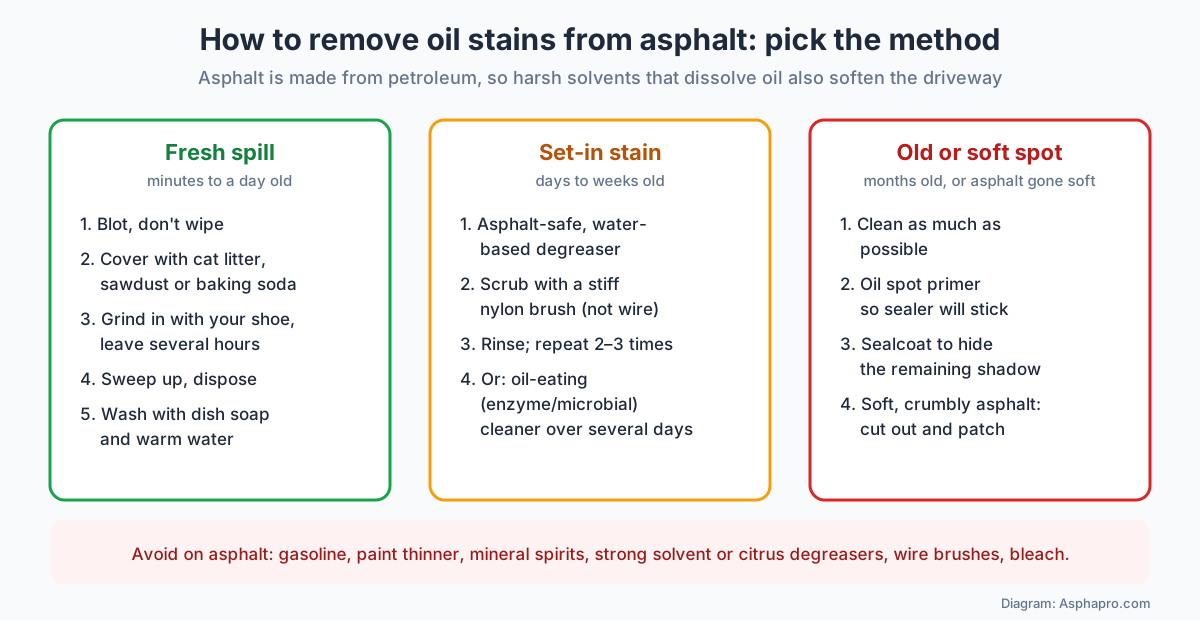
How to Remove Fresh Oil Stains From Asphalt
If the oil is still wet, you have the best chance of removing the stain completely. Work quickly:
- 1
Blot, do not wipe
Press paper towels or old rags onto the spill to soak up as much liquid oil as you can. Wiping spreads the oil over a bigger area and pushes it into the surface.
- 2
Cover with an absorbent
Pour a thick layer of clay cat litter, sawdust, baking soda or cornstarch over the stain. Clay litter works best on larger spills; baking soda and cornstarch are fine powders that pull oil out of small stains.
- 3
Grind it in and wait
Step on the absorbent and twist your shoe to grind it into the surface. Leave it for several hours or overnight, covered if rain is likely.
- 4
Sweep up and dispose
Sweep the oily absorbent into a bag. Do not hose it into the street; dispose of it with your household waste or at a recycling center if your area requires it.
- 5
Wash with dish soap
Squirt liquid dish soap onto the spot, add a little warm water, and scrub with a stiff nylon brush for a few minutes. Dish soap is made to break up grease and is gentle on asphalt.
- 6
Rinse lightly
Rinse with a garden hose and let the area dry. Repeat the soap scrub if a mark remains.
How to Remove Set-In Oil Stains From an Asphalt Driveway
Stains that have been there for days or weeks have soaked in and partly bonded with the surface. You will usually need a cleaner and a few rounds of work.
Method 1: Asphalt-safe degreaser
Choose a water-based degreaser that the label says is safe for asphalt. Many driveway cleaners are designed for concrete and contain strong solvents that are fine on concrete but harmful on an asphalt driveway. Apply the degreaser to the dry stain, let it sit for the time on the label, scrub with a nylon brush, and rinse. Two or three rounds are normal for removing oil stains from asphalt that have been there a while.
Method 2: Enzyme or microbial cleaner
Enzyme and microbial ("oil-eating") cleaners contain bacteria or enzymes that break oil down over time. You spray or pour them on, keep the area damp as directed, and let them work for several days, sometimes reapplying. They are slow but gentle, which makes them well suited to asphalt. They work best in warm weather.
Method 3: Dish soap poultice
For a mild stain, mix dish soap with baking soda or cat litter into a thick paste, spread it over the stain, cover it with plastic to keep it moist, and leave it overnight. The soap loosens the oil and the powder pulls it out. Scrape off, scrub and rinse.
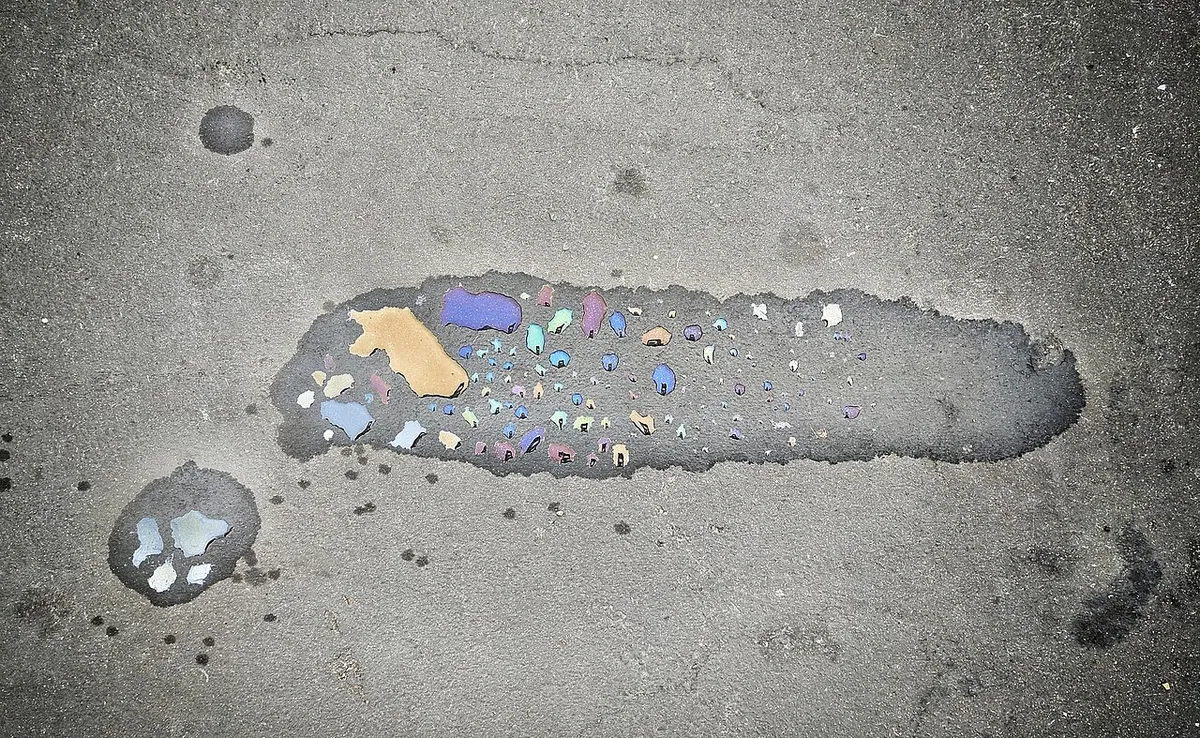
Photo: Hyle Chu, Wikimedia Commons, CC BY-SA 3.0
Worked Example: A Drip Stain Under a Parked Car
Here is how removing oil stains from asphalt looks in a typical case: a dark stain about two feet across, under where the car parks every night, a few weeks old, with fresh drips on top.
- Day 1, evening. Move the car. Blot the fresh drips with paper towels. Pour about an inch of clay cat litter over the whole stain, grind it in with your shoe, and leave it overnight. Put a drip pan where the car will park.
- Day 2, morning. Sweep up the litter and bag it. Wet the area lightly, apply dish soap, and scrub for five minutes with a stiff nylon brush. Rinse with a hose. The fresh oil should be gone and the old stain lighter.
- Day 2, afternoon. Once dry, apply an asphalt-safe, water-based degreaser, wait the time on the label, scrub and rinse. Repeat once.
- Over the next week. If a shadow remains, try an enzyme cleaner, keeping it damp as directed.
- Next sealcoating. Prime whatever shadow is left with oil spot primer and sealcoat the driveway.
Most driveway stains end up as a faint shadow after this, and the sealcoat hides it. Check the spot with a screwdriver as you clean; if it feels soft, plan a small patch repair instead of more scrubbing.
Home Remedies: What Works and What Does Not
Searches for how to remove oil stains from asphalt turn up all kinds of household tips. Here is how the common ones hold up on an asphalt driveway:
| Home remedy | Works on asphalt? | Notes |
|---|---|---|
| Clay cat litter | Yes, for fresh oil | The best first step on any wet spill |
| Baking soda | Yes, for small stains | Good absorbent; mix with dish soap for a paste |
| Cornstarch | Yes, for small stains | Similar to baking soda |
| Dish soap | Yes | Gentle degreaser, safe on asphalt |
| Powdered laundry detergent | Sometimes | Can help as a scrub paste; rinse well |
| Cola | Not really | Leaves sugar; no better than soap |
| Oven cleaner | Avoid | Harsh chemicals, risk to the surface and to you |
| Gasoline or thinner | No | Dissolves the asphalt binder |
The pattern is simple: absorbents and mild soaps are safe and useful; strong chemicals and solvents either do not help or damage the driveway.
How Long Does It Take?
| Stain | Time to clean | Likely result |
|---|---|---|
| Fresh spill (minutes to hours) | A few hours with absorbent, then a 10-minute scrub | Often fully removed |
| Set-in stain (days to weeks) | One to three cleaning rounds over a day or two | Mostly removed, faint shadow |
| Old stain (months or more) | Days with enzyme cleaner, or prime and seal | Lightened, then hidden by sealcoat |
Cleaning Oil Stains on Asphalt in Cold Weather
Cold weather makes oil thicker and slows soaps, degreasers and enzyme cleaners. If you can, blot and cover a fresh spill with absorbent right away and leave the full cleaning for a mild, dry day. Enzyme cleaners in particular need warmth to work. Avoid using lots of water when temperatures are near freezing, because water left on the driveway can freeze in cracks. In winter, the main goal is to get the liquid oil off the surface quickly; the final clean and any sealcoating can wait until spring.
Can You Pressure Wash Oil Off Asphalt?
A pressure washer is useful for rinsing away oil that you have already loosened with soap or degreaser, but pressure alone will not remove a set-in oil stain from asphalt. Used carelessly, it can also damage the surface. Asphalt is softer than concrete, and a narrow, high-pressure jet held close can blast out the fine sand and stone between the larger aggregate and leave a rough patch.
- Use a wide fan tip (25 or 40 degree), not a zero-degree or turbo nozzle.
- Keep the wand moving and well back from the surface.
- Pre-treat the stain with soap or an asphalt-safe degreaser first.
- Use warm water if your machine allows it; it helps loosen oil.
- Catch or soak up the dirty water rather than washing oil into a storm drain.
What Not to Use on Asphalt
- Gasoline, kerosene, diesel. Petroleum solvents dissolve asphalt and are a fire hazard.
- Paint thinner, mineral spirits, acetone. Same problem; they soften the surface.
- WD-40 and penetrating oils. They add more oil and solvent to the stain.
- Strong solvent or citrus degreasers made for concrete or engines, unless the label says they are safe on asphalt.
- Wire brushes. They scratch out the fine material and loosen stones. Use stiff nylon instead.
- Bleach. It does not break down oil, can lighten the surface unevenly and harms plants and lawns at the edges.
- Muriatic acid. Sometimes used on concrete; it does nothing useful for oil on asphalt and is hazardous.
Products That Are Safe on Asphalt
| Product | Best for | How it works |
|---|---|---|
| Clay cat litter | Fresh, wet spills | Soaks up liquid oil |
| Baking soda / cornstarch | Small fresh stains | Fine powder pulls oil out of pores |
| Sawdust | Larger fresh spills | Cheap, absorbent |
| Liquid dish soap | Fresh and light stains | Breaks up grease without solvents |
| Water-based asphalt-safe degreaser | Set-in stains | Emulsifies oil so it rinses away |
| Enzyme / microbial cleaner | Set-in and old stains | Breaks oil down over days |
| Oil spot primer + sealcoat | Old shadows | Seals and hides what will not come out |
Choosing an Oil Stain Remover for Asphalt
Store shelves are full of driveway cleaners, and many are made for concrete. When you remove oil from asphalt with a bought cleaner, read the label for these points:
- "Safe for asphalt" stated clearly on the label. If it only mentions concrete, assume it is not.
- Water-based rather than solvent-based. Solvent cleaners work fast on concrete but attack asphalt.
- Biodegradable or enzyme-based formulas are gentle on asphalt and on the lawn at the edges of the driveway.
- Clear dwell time and rinse directions, so you do not leave the product on longer than it should be.
Test any product on a small, hidden corner of the driveway first, and wear gloves and eye protection while you work. If the surface turns dull, sticky or soft, rinse it off and stop.
Oil Stains on Asphalt vs Concrete
It is worth knowing why advice for concrete does not transfer. Removing oil stains from concrete often uses strong solvent degreasers, poultices with solvents, or even mild acids, because concrete is chemically very different from oil. On asphalt, the same products soften and break down the surface. So when you look up how to remove oil from an asphalt driveway, ignore methods written for concrete garage floors and stick to absorbents, mild soaps, asphalt-safe degreasers and enzyme cleaners. On the plus side, oil stains on asphalt are far less visible than on light-gray concrete, and a fresh sealcoat hides most of what remains.
Oil Stains on New Asphalt
Fresh asphalt stays relatively soft for months while it cures, and it is especially sensitive to oil and fuel during that time. Be extra careful with leaking vehicles, lawn mowers and gas cans on a new driveway. If a spill happens, blot and absorb immediately and wash gently with soapy water; do not scrub hard on new asphalt. Sealcoating should usually wait until the asphalt has cured, so avoid using sealer as a quick cover on a brand-new driveway. Our guide on how long asphalt takes to dry and cure explains the timeline.
How to Hide Old Oil Stains on Asphalt
Some old oil stains on asphalt never fully come out; the oil has become part of the surface. The practical answer is to clean as much as you can and then cover what remains.
- Clean the stain with dish soap or an asphalt-safe degreaser, rinse and let it dry completely.
- Apply an oil spot primer. Sealcoat does not stick well to oily asphalt and can peel off that spot. An oil spot primer, sold next to driveway sealers, seals in the remaining oil so the sealcoat can bond.
- Sealcoat the driveway. A fresh coat of sealer gives the whole surface an even black color and hides the shadow. See our guides to asphalt sealer and sealcoating cost, and the sealcoating calculator for how much sealer you need.
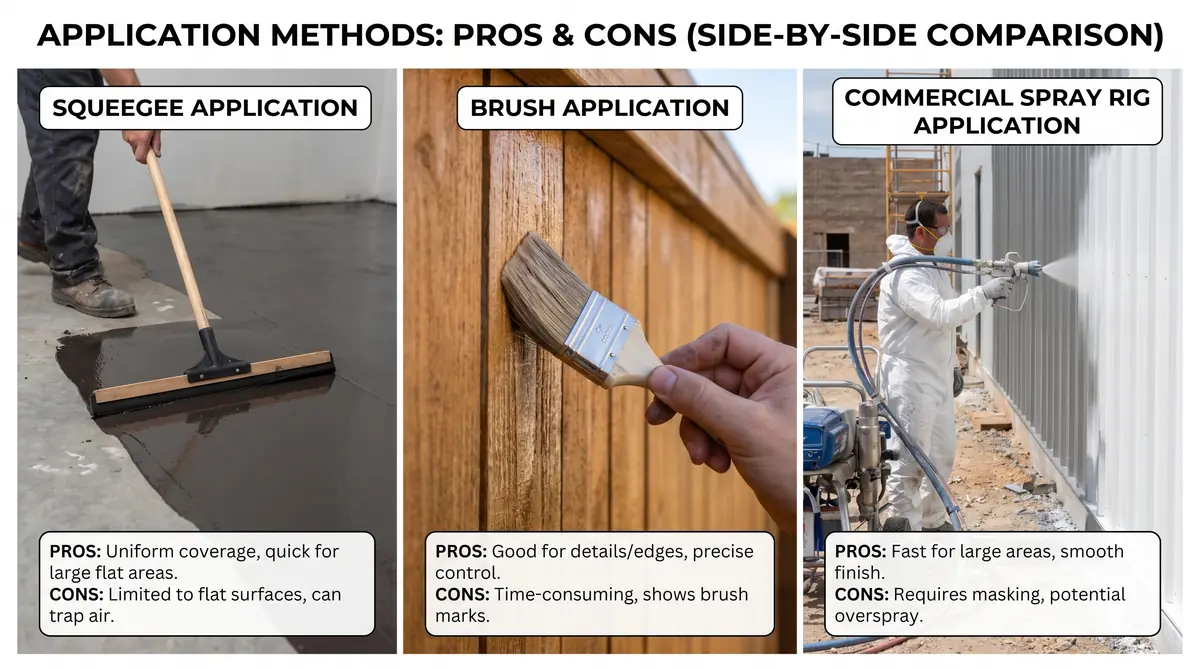
When Oil Has Damaged the Asphalt
Press on the stained area with a screwdriver or your thumb. If it is soft, sticky or crumbly, or stones come loose when you scrub, the oil has already broken down the asphalt there. Cleaning will not fix that. The damaged area needs to be repaired:
- Small, shallow soft spots: scrape out the soft material, clean the edges and fill with cold patch, compacted firmly. Our how to fix a pothole guide walks through the method.
- Larger areas: have the area cut out and hot patched. See asphalt repair cost for typical prices.
After repair, prime and sealcoat the patch along with the rest of the driveway so it blends in.
Removing Other Fluids From Asphalt
| Fluid | Risk to asphalt | What to do |
|---|---|---|
| Motor oil | Stains, softens over time | Absorbent, dish soap, asphalt-safe degreaser |
| Gasoline | Softens quickly | Absorb immediately, rinse with soapy water, ventilate, no flames |
| Transmission / power steering fluid | Stains (often reddish), softens | Same as motor oil |
| Brake fluid | Can damage surfaces | Absorb, wash with soapy water |
| Coolant (antifreeze) | Little effect on asphalt, toxic to pets | Absorb and wash away quickly; keep pets clear |
| Grease | Stains | Scrape off excess, then dish soap or degreaser |
For any large fuel spill, keep ignition sources away, absorb what you can and check local rules for disposal. Coolant tastes sweet to animals and is poisonous, so clean it up right away.
How to Prevent Oil Stains on Asphalt
- Fix the leak. A dripping car is the source of most oil stains on asphalt driveways.
- Use a drip pan or mat under cars that leak, or a piece of cardboard as a temporary catch.
- Keep the driveway sealcoated. A sealed surface resists oil penetration and makes cleanup easier. Coal-tar and asphalt-emulsion sealers differ in fuel resistance; see our asphalt sealer guide.
- Do oil changes off the driveway or over a large drip tray.
- Clean spills the same day. The faster you act, the easier it is to remove oil stains from asphalt completely.
Oil Stains in Garages and Carports With Asphalt Floors
Some garages, carports and barns have asphalt floors rather than concrete, and they collect oil stains faster than a driveway because cars and equipment sit in the same spot for months and rain never rinses the surface. The same rules apply: absorbent first, mild soap, asphalt-safe cleaners, and no solvents. Because the floor stays dry and out of the sun, enzyme cleaners can work well there in warm months. Sweep the floor often so dirt does not mix with the oil into a gritty film. A rubber garage mat or drip tray under each vehicle stops most new stains, and it is much easier to clean the mat than the floor.
Oil Stains on Asphalt Parking Lots
Commercial lots get oil stains in every parking space. Property managers usually do not try to clean each one; instead they sweep regularly, treat heavy spots with an absorbent and a degreaser, prime the worst areas, and sealcoat the whole lot every two to three years. Badly softened areas around dumpsters and loading zones are cut out and patched. See our asphalt parking lot cost guide for maintenance and resurfacing prices.
When to Call a Professional
Most homeowners can remove oil stains from asphalt themselves. A professional cleaning or sealcoating company makes sense when the whole driveway is spotted with old stains and due for sealcoating anyway, when a large fuel spill has softened a wide area, or for commercial lots with many stained spaces. Sealcoating crews clean and prime oil spots as part of the job, so combining the two is efficient. For repair of softened areas, an asphalt contractor can cut out and hot patch them so they last.
Keeping Oil Out of Storm Drains
When you remove oil stains from asphalt, remember where the rinse water goes. Water from driveways often runs into storm drains that flow straight to streams and lakes without treatment. Soak up oil with an absorbent before washing, use only as much water as you need, and dispose of the oily absorbent with your trash or at a local hazardous waste drop-off if your area asks for that. Used motor oil itself should go to an auto parts store or recycling center that accepts it.
- Fresh oil stains on asphalt: blot, cover with cat litter or baking soda, wait, sweep, scrub with dish soap.
- Set-in oil stains on asphalt: water-based, asphalt-safe degreaser or an enzyme cleaner, two or three rounds.
- Old oil stains from asphalt that will not lift: oil spot primer, then sealcoat.
- Soft or crumbly spots: cut out and patch, then seal.
- Never use gasoline, thinner or strong solvents to remove oil from asphalt.
- Keep oily rinse water and used absorbent out of storm drains.
Frequently Asked Questions
How do I remove oil stains from asphalt without damaging it?
Use only absorbents, dish soap, a stiff nylon brush and cleaners labeled safe for asphalt. Rinse with a garden hose or a pressure washer on a wide fan setting, and never use petroleum solvents.
What removes oil stains from asphalt?
Absorbents (clay cat litter, sawdust, baking soda) for fresh oil, dish soap and a nylon brush for the residue, and an asphalt-safe water-based degreaser or enzyme cleaner for set-in stains.
How do I remove oil stains from an asphalt driveway that are years old?
Clean as much as you can with soap or a degreaser, then apply an oil spot primer and sealcoat the driveway. Very old stains rarely come out completely.
Does WD-40 or gasoline remove oil from asphalt?
Do not use them. They are petroleum solvents that dissolve the asphalt binder and can leave a soft, damaged spot.
Can you pressure wash oil off asphalt?
Only to rinse after you have loosened the oil with soap or degreaser. Use a wide fan tip and keep your distance to avoid stripping the surface.
Does Coca-Cola remove oil from asphalt?
It is a popular tip, but soda has no real advantage over dish soap and leaves sticky sugar behind. Dish soap and an absorbent work better.
Does baking soda remove oil stains from asphalt?
Baking soda absorbs fresh oil well and makes a good scrubbing paste with dish soap. It works best on small, recent stains and is safe on asphalt.
Is it bad to leave oil on an asphalt driveway?
Yes. Oil softens the asphalt binder over time, and repeated drips in one spot can turn the surface soft and crumbly. Clean spills promptly and fix leaks.
Will sealcoating cover oil stains?
Yes, mostly. Clean the stain and apply an oil spot primer first, or the sealer may peel in that spot.
Sources
- U.S. Environmental Protection Agency, stormwater guidance for homeowners — keep oil and automotive fluids out of storm drains. epa.gov
- Manufacturer label directions for driveway sealers and oil spot primers — primer use before sealcoating.
- Image credits: hero photo by Kritzolina (CC BY-SA 4.0) and drip-stain photo by Hyle Chu (CC BY-SA 3.0), both via Wikimedia Commons. Diagram and sealcoating image by Asphapro.com.
Always test any cleaner on a small hidden area of your driveway first and follow the product label.
Related Guides
- How to remove rust stains from concrete — oxalic acid and safe methods
- How to get blood out of concrete — enzyme cleaners and disinfecting
- How to get tire marks off concrete — degreasers and hot tire pickup
- How to clean concrete without a pressure washer — brush, hose and the right cleaner