
How Long Does Concrete Last? Lifespan by Project and How to Extend It
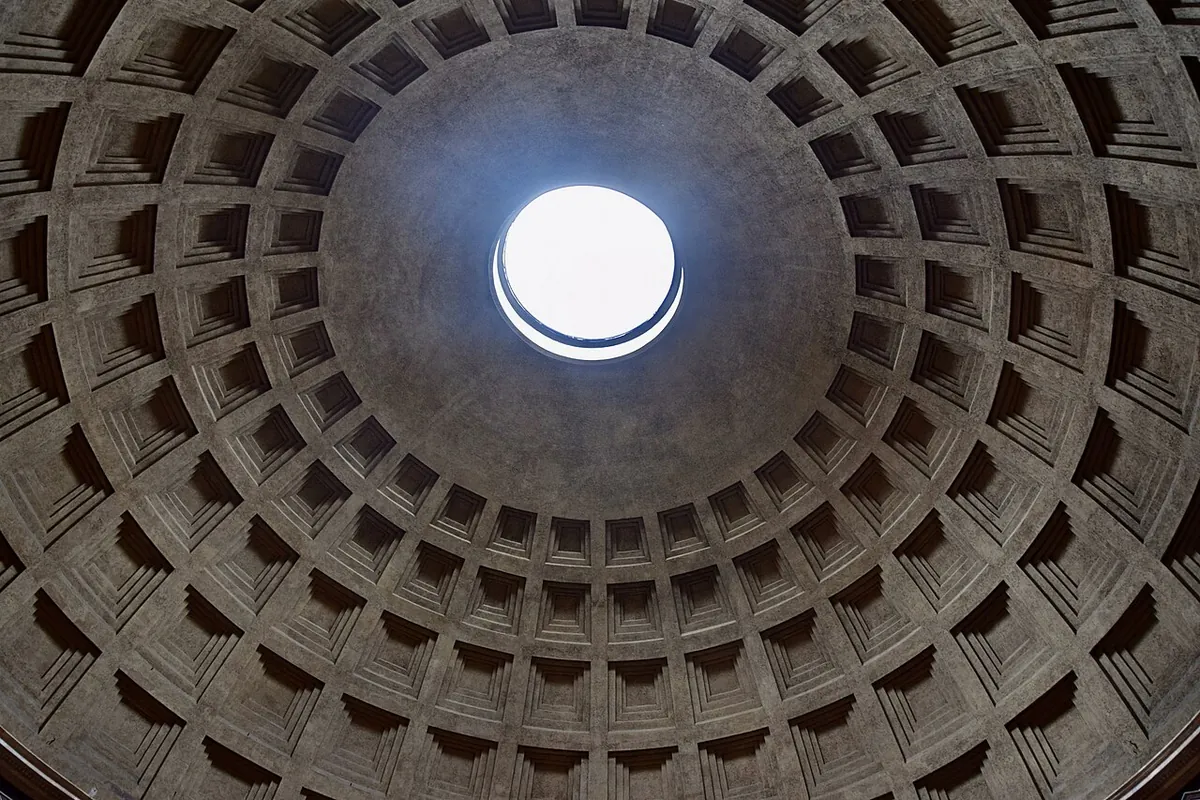
Photo: Ank Kumar, The Pantheon dome, Rome, Wikimedia Commons, CC BY-SA 4.0.
Quick Answer
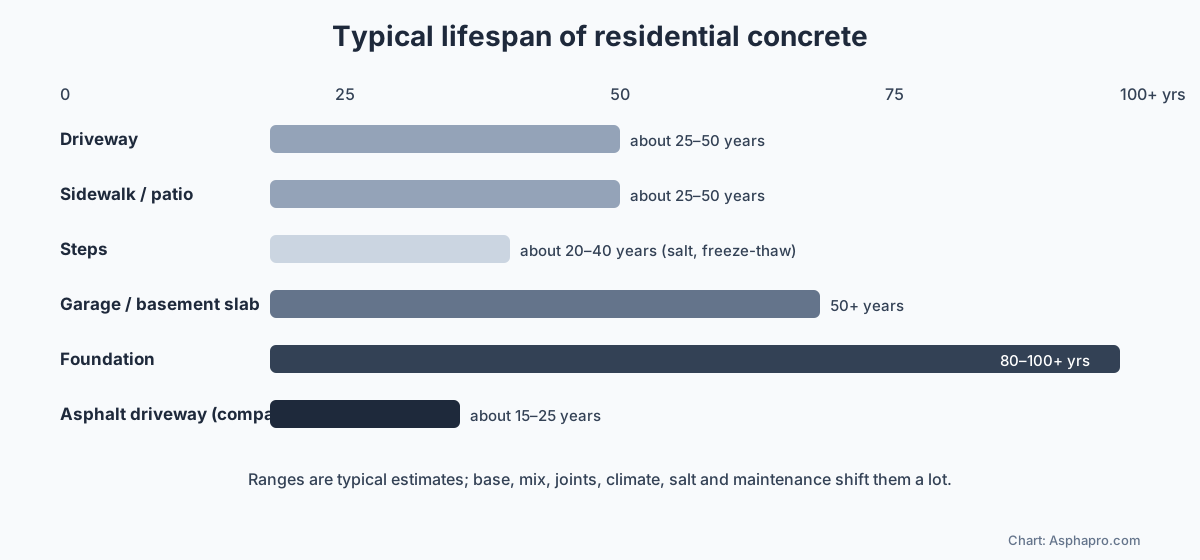
How long concrete lasts depends on what it is and how it was built and treated. As typical estimates, a well-built concrete driveway, sidewalk or patio often lasts about 25 to 50 years, steps exposed to salt often 20 to 40 years, interior garage and basement slabs 50 years or more, and foundations 80 to 100 years or longer. Some concrete lasts far longer: the Pantheon's dome in Rome, built of Roman concrete, has stood for nearly 1,900 years. The biggest factors are the base, the mix and water content, joints, curing, climate and freeze-thaw, deicing salt, drainage and maintenance.
Concrete is one of the most durable building materials people use. It does not rot, rust or burn, and it gets stronger for a long time after it is poured. But concrete does wear out. Driveways crack and heave, steps flake, and old foundations can deteriorate. Knowing how long concrete lasts helps you plan replacements, compare materials and decide whether to repair or replace.
This guide answers how long concrete lasts for common home projects, explains what shortens or extends its life, and covers signs that concrete is near the end of its service life.
Concrete Lifespan by Project
How long will concrete last on your project? It depends mostly on what it is and how it was built. These are typical ranges for well-built residential concrete:
Concrete driveways
A properly built concrete driveway, with a compacted base, adequate thickness, good joints, air-entrained concrete in cold climates and sensible deicer use, commonly lasts about 25 to 50 years. Many last longer. Driveways fail early from poor base, thin edges under heavy vehicles, tree roots, frost heave, and salt damage. Compared with asphalt, which typically lasts about 15 to 25 years with regular sealcoating, concrete usually lasts longer but costs more up front. See concrete driveway cost and asphalt vs concrete driveway cost.
Sidewalks and patios
Walks and patios carry lighter loads than driveways and often last 25 to 50 years or more. Tree roots, settlement and frost heave are the usual reasons they are replaced, more than wear. See concrete sidewalk cost.
Steps
Exterior steps take the most salt, water and freeze-thaw of any home concrete, and they often have thin edges and nosings. They commonly show scaling and cracking within 20 to 40 years, sooner with heavy salt use. See how to fix concrete steps and concrete steps cost.
Garage floors and basement slabs
Interior slabs are protected from weather, so they often last 50 years or more. Garage floors near the door see salt and water from cars, so the apron area wears first. Basement slabs mostly crack from shrinkage and settlement but rarely wear out.
Foundations
Concrete foundations are designed to last the life of the house, often 80 to 100 years or longer. Problems come from poor drainage, expansive soils, water pressure, poor original construction or corroding reinforcement, not from the concrete simply wearing out.
Commercial and infrastructure concrete
Bridges, highways and buildings are designed for specific service lives, often 50 to 100 years or more for major structures, using high performance concrete and careful detailing. See types of concrete.
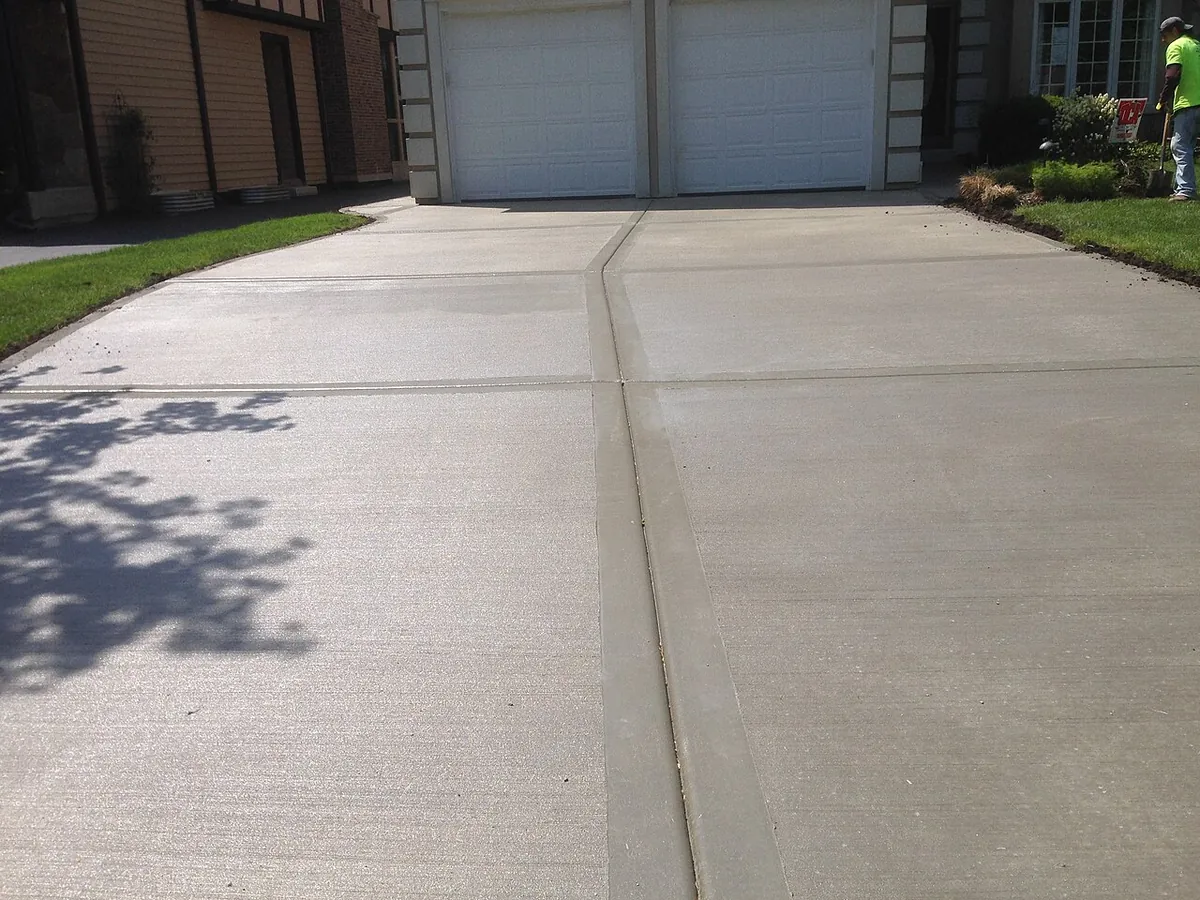
Photo: Catalano Concrete, Wikimedia Commons, CC BY-SA 4.0
Why Roman Concrete Lasted 2,000 Years
Roman concrete in structures like the Pantheon, completed around 125 AD, still stands. It was made with lime, volcanic ash (pozzolana) and rock, a different chemistry from modern portland cement concrete. Researchers have found that Roman marine concrete formed durable minerals over time and, in some studies, that lime clasts in the mix helped it self-heal small cracks. Just as important, the Pantheon's dome has no steel reinforcement to rust, which is a major cause of deterioration in modern concrete. Modern concrete is far stronger and faster to build with, but steel corrosion, deicing salts and freeze-thaw cycles limit its life in many uses.
What Shortens Concrete Life
- Poor base: soft or uncompacted ground lets slabs settle and crack.
- Too much water in the mix: weaker, more porous concrete that scales and wears faster.
- No air entrainment in cold climates: freeze-thaw damage and scaling.
- Bad finishing and curing: weak surfaces that dust and flake.
- Missing or poor joints: random cracking that lets water in.
- Deicing salts: scaling and rebar corrosion. See does salt damage concrete.
- Poor drainage: water undermining slabs and freezing under edges.
- Tree roots: lifting and cracking.
- Overloading: heavy trucks on thin slabs.
- Corroding reinforcement: rust expands and cracks the concrete.
- Chemical attack: sulfate soils, acids and certain deicers.
What Makes Concrete Last Longer
The answer to how long does concrete last is mostly decided before and during the pour. These steps add years, often decades, to concrete lifespan:
- A solid, well-drained base: remove topsoil, compact the subgrade, and place compacted gravel. Uniform support prevents settlement cracks. See how to build concrete forms.
- The right thickness: 4 inches for walks and patios, often 5 to 6 inches for driveways with heavier vehicles. See how thick a concrete driveway should be.
- A durable mix: adequate strength, a low water-cement ratio, and air entrainment for freeze-thaw climates. See what concrete is made of.
- No water added on site: it weakens the concrete and shortens its life.
- Good joints: spaced and cut correctly so cracks form where planned.
- Reinforcement placed right: rebar or mesh in the middle of the slab, with enough concrete cover to protect it from corrosion.
- Proper finishing: no troweling bleed water into the surface.
- Curing for about a week: moist curing or curing compound so the surface reaches full strength.
- Drainage: slopes that shed water and downspouts directed away from slab edges.
Maintenance That Extends Concrete Lifespan
- Seal exterior concrete: a penetrating sealer every few years reduces water and salt absorption. See how to seal concrete.
- Seal cracks and joints: keep water from reaching the base and freezing under the slab. See why concrete cracks.
- Limit deicing salt: shovel first, use sand, and use deicers sparingly. Never use deicers in the first winter.
- Clean stains promptly: oil and chemicals can degrade surfaces over time. See how to remove oil stains from concrete.
- Keep heavy loads off: do not park dumpsters, RVs or heavy equipment on slabs not designed for them.
- Manage trees: keep large trees away from paving or use root barriers.
- Level sunken slabs early: raising a settled slab before it cracks badly is much cheaper than replacement. See concrete leveling cost.
Signs Concrete Is Near the End of Its Life
- Widespread cracking across many panels, not just at joints.
- Large areas of scaling, with exposed stone and pitting.
- Sections that have sunk or heaved several inches, creating trip hazards.
- Crumbling edges and joints.
- Spalls with exposed, rusting rebar.
- Water pooling across the surface because the slab has lost its slope.
- Repairs that keep failing within a year or two.
If several of these show up at once, replacement is often more cost-effective than ongoing repairs. If only one or two panels are bad, replacing just those panels can extend the life of the rest. See concrete repair cost and concrete removal cost.
Repair or Replace?
| Condition | Usual choice |
|---|---|
| Hairline cracks, sound surface | Seal cracks; seal surface |
| Light scaling or stains | Clean, seal or resurface |
| One or two sunken panels, otherwise sound | Level the panels |
| Moderate scaling over large areas, sound base | Resurface or overlay |
| Severe cracking, heaving, crumbling | Replace |
| Roots or base failure under a section | Replace that section and fix the cause |
How Climate Changes How Long Concrete Lasts
Climate is one of the biggest factors in concrete lifespan. In mild climates with few freezes, exterior concrete often lasts at the upper end of its range or beyond, because there are few freeze-thaw cycles and little deicing salt. In cold climates with many freeze-thaw cycles each winter, exterior concrete takes more punishment, and quality and maintenance matter much more. In hot, dry climates, the risks are early cracking from fast drying during construction and expansive clay soils that move slabs. Coastal areas see salt air and spray that corrode reinforcement. So when someone asks how long does concrete last, the honest answer always includes "where?"
How Long Does a Concrete Driveway Last Compared With Other Materials?
| Driveway material | Typical lifespan | Upkeep |
|---|---|---|
| Concrete | about 25–50 years | Seal every few years, seal joints |
| Asphalt | about 15–25 years | Sealcoat every few years, fill cracks |
| Pavers | often 25–50+ years | Re-sand joints, reset pavers |
| Gravel | ongoing | Add gravel, regrade regularly |
See how long an asphalt driveway lasts and gravel driveway cost for comparisons.
Does Concrete Get Stronger With Age?
Yes, up to a point. Concrete gains strength through hydration, which continues as long as there is moisture and unreacted cement. Most strength is gained in the first 28 days, the standard age for strength testing, but concrete keeps gaining slowly for months and years. Concrete with fly ash or slag can gain significant strength after 28 days. This is one reason old concrete can be very hard. But strength is not the same as durability. A strong slab can still be destroyed by settlement, roots, salt or rusting rebar. See how long concrete takes to cure.
What Happens to Concrete as It Ages
Understanding how concrete changes over the decades explains why its lifespan varies so much.
The first year
Concrete gains most of its strength in the first month and continues drying for many months. Shrinkage cracks appear. The surface is most vulnerable to deicing salt and freeze-thaw damage in its first winter, because it is still saturated and not at full strength.
Years 1 to 10
A well-built slab looks much the same. Joint sealants and sealers start to wear and need renewal. Any base problems, such as poorly compacted fill or a utility trench, show up as settlement. Tree roots begin to push on nearby slabs.
Years 10 to 25
Surface wear becomes visible in traffic paths. In cold climates, unsealed concrete exposed to salt may begin to scale. Carbonation, a slow reaction between carbon dioxide in the air and the cement paste, moves inward from the surface. Carbonation lowers the concrete's alkalinity; when it reaches steel reinforcement, the steel loses its natural protection and can start to rust if moisture and oxygen are present. Dense, well-cured concrete with enough cover over the steel slows this process greatly.
Years 25 to 50 and beyond
This is when many driveways, walks and patios reach the end of their service life, especially where salt, roots, frost or poor original work have taken a toll. Others, built well and maintained, keep going. Foundations and interior slabs, protected from weather, typically continue serving far longer.
Cost Per Year: Why Lifespan Matters
When comparing materials, the cheapest option to install is not always the cheapest to own. A concrete driveway usually costs more up front than asphalt or gravel, but if it lasts twice as long with less maintenance, its cost per year of service can be lower. To compare, divide the installed cost plus expected maintenance by the number of years you expect it to last. Include sealing, crack repair, and for asphalt, regular sealcoating. For a home you plan to stay in for decades, how long concrete lasts can make it the better value. For a short stay, a lower up-front cost may matter more. See concrete cost per square foot and is asphalt cheaper than concrete.
Buying a Home With Old Concrete: What to Check
- Driveway and walks: look for wide or offset cracks, sunken panels, scaling and trip hazards. Ask the age if known.
- Steps: check for crumbling edges, loose railings and separation from the house.
- Garage floor: cracks are common; look for heaving, sinking, and water coming up through cracks.
- Foundation: horizontal cracks, bowing walls, stair-step cracks in block, efflorescence and water stains in the basement suggest moisture or soil pressure. Have a professional look if you see these.
- Drainage: watch where water goes during rain; poor drainage shortens concrete life everywhere.
Replacement costs for a driveway or steps can be significant, so factor visible problems into your offer.
Checklist: Making a New Slab Last 50 Years
If you want a new driveway or patio to reach the top of the typical concrete lifespan range, ask your contractor to confirm each of these:
- Topsoil and organic material removed; subgrade compacted.
- At least 4 inches of compacted gravel base, more on poor soils.
- Correct thickness for the loads.
- Ready-mix with appropriate strength, air-entrained in freeze-thaw areas, ordered at a reasonable slump with no water added on site.
- Reinforcement on chairs at mid-depth.
- Joints planned, spaced about 2 to 3 times the thickness in feet, and cut on time.
- Isolation joints at the house, steps and other slabs.
- Proper finishing with no bleed water worked in.
- Curing compound or moist curing for about a week.
- Slope for drainage, with downspouts directed away.
- Sealed before the first winter if timing allows, and no deicers that first winter.
Concrete built this way, and resealed every few years, has the best chance of answering the question "how long does concrete last" with "longer than I'll own the house."
Concrete Lifespan Questions by Situation
How long does a concrete driveway last in a cold climate?
In places with many freeze-thaw cycles and heavy road salt, how long a concrete driveway lasts depends heavily on air entrainment, sealing and salt habits. A well-built, air-entrained, sealed driveway can still reach 30 years or more. One built without air entrainment, salted heavily from its first winter, may scale badly within 10 to 15 years.
How long does a concrete driveway last in a warm climate?
With little freezing and no salt, the concrete lifespan of a driveway is limited mostly by the base, roots, expansive soils and heavy loads. Many last 40 to 50 years or more.
How long does concrete last under a house?
Foundation and basement concrete is protected from weather and traffic, so how long concrete lasts there depends on drainage, soil and construction quality. Most foundations serve for the life of the home.
How long does concrete last before it needs sealing?
New exterior concrete can usually be sealed once it has cured and dried enough per the sealer label. Penetrating sealers typically need renewal every few years. Regular sealing is one of the easiest ways to make sure concrete lasts longer in salt and freeze-thaw areas.
How long does concrete last after a resurfacing?
A resurfacer or overlay on sound, clean concrete can add many years of service. Its own lifespan depends on bonding, traffic and climate; a thin cosmetic resurfacer will not last as long as the slab underneath. See concrete overlay cost.
How long does concrete last in a pool deck?
Pool decks see constant water and, with saltwater pools, chlorides. With sealing and good drainage, they commonly last as long as other patios, but cracking and surface wear often lead to resurfacing within 15 to 25 years.
How long does concrete last compared with pavers?
Pavers set on a good base can last decades, and individual pavers can be replaced, so a paver surface can last as long as concrete with repairs. See stamped concrete vs pavers.
In every one of these cases, the same pattern holds: how long concrete lasts is decided by the base, the mix, the joints, the curing, the climate and the care it gets. Two identical-looking slabs can have very different lifespans.
Contractor Warranties and Realistic Expectations
Most concrete contractors offer a limited warranty on workmanship, often one to a few years, covering defects like major scaling or structural cracking that results from poor work. Warranties almost never cover hairline shrinkage cracks, damage from deicing salt in the first winter, tree roots, settlement from poor drainage you control, or damage from heavy vehicles the slab was not designed for. Read the warranty before signing and ask what the contractor does to make concrete last: base prep, mix, air content, joints, curing and sealing.
It also helps to set expectations. Concrete is not maintenance-free. It will develop some cracks, sealers wear off, and exterior concrete in harsh climates takes a beating. But with modest care, most homeowners get decades of service, which is why concrete remains the most common choice for driveways, walks and foundations.
Concrete Compared With Other Building Materials
Wood decks and fences often need major repair or replacement in 15 to 30 years, depending on wood type, treatment and climate. Asphalt driveways usually need resurfacing or replacement after about 15 to 25 years. Brick and stone masonry can last a century or more but need repointing of mortar joints over time. Properly protected steel lasts a long time but rusts if its coating fails. Concrete sits near the top of this list for durability, especially in foundations and protected slabs, and its main enemies, water, salt, freezing and rusting steel, are all things that good design and maintenance can control.
That durability is a big reason concrete is used for structures meant to last generations, from foundations and dams to bridges and, as the Pantheon shows, domes that have stood for almost two thousand years.
Simple Yearly Care Plan
A few minutes each season goes a long way toward stretching concrete lifespan:
- Spring: rinse off winter salt and grit, check for new cracks, scaling and sunken panels, and clear debris from joints.
- Summer: clean oil and other stains, trim tree roots and plants near edges, and check that downspouts drain away from slabs.
- Fall: seal cracks and joints, reseal the surface if water no longer beads, and stock sand or a concrete-friendlier deicer.
- Winter: shovel early, use deicers sparingly, and push slush off the concrete.
Homeowners who follow a routine like this often find their concrete lasts well past the typical range. Those who skip it often find out how long concrete lasts the hard way, with a surprise replacement bill. Keep a simple note of when you sealed and repaired each slab, so you know when the next round of care is due and can show buyers that the concrete has been looked after.
So, how long does concrete last? For most homes, a well-built slab that gets basic care can last a generation or more, and foundations far longer. The difference between 15 years and 50 years is rarely luck; it is the base, the mix, the joints, the curing, the climate and the care, all things you can influence.
When Replacing Makes More Sense Than Repairing
Sometimes the best way to get more years from concrete is to stop patching it. If a driveway has been leveled twice and keeps sinking, the base underneath is the problem, and only replacing the section with a proper base will fix it. If scaling covers most of a walk and the concrete under the scale is soft, an overlay may peel off within a few seasons. If roots are under several panels, cutting them and pouring new concrete with a root barrier is often the long-term answer. A new slab built with the lessons above will usually outlast several rounds of repairs on a failing one, and it resets the clock on concrete lifespan for decades to come, which is usually the cheaper path over time.
Frequently Asked Questions
How long does concrete last?
Typically 25 to 50 years for driveways, walks and patios, 50+ years for interior slabs, and 80 to 100+ years for foundations, with good construction and care.
How long does a concrete driveway last?
Commonly about 25 to 50 years, longer with a good base, proper joints, air-entrained concrete and limited salt.
Does concrete get stronger over time?
Yes. It gains most strength in the first month and keeps gaining slowly for years while moisture is present.
Does concrete last longer than asphalt?
Usually. Concrete driveways often last 25 to 50 years versus about 15 to 25 for asphalt with maintenance.
Why has Roman concrete lasted so long?
Its lime and volcanic ash chemistry forms durable minerals, and structures like the Pantheon have no steel to rust.
Can old concrete be restored?
Often. Cracks can be sealed, sunken slabs leveled, and worn surfaces resurfaced if the base is sound.
How long do concrete steps last?
Often 20 to 40 years. Salt, freeze-thaw and thin edges make steps wear faster than flat slabs.
How long does a concrete patio last?
Commonly 25 to 50 years or more, if roots, settlement and frost are kept in check.
Does sealing concrete make it last longer?
Yes. Sealing reduces water and salt absorption, slowing scaling and corrosion.
How long does a concrete foundation last?
Usually 80 to 100 years or longer with good drainage and construction.
Sources
- Portland Cement Association, concrete durability and strength development. cement.org
- American Concrete Institute, durability guidance. concrete.org
- Lifespan ranges are typical industry estimates for residential concrete and vary widely with construction and climate.
- Image credits: Pantheon photo by Ank Kumar (CC BY-SA 4.0); driveway photo by Catalano Concrete (CC BY-SA 4.0), both Wikimedia Commons; chart by Asphapro.com.
Checked November 2026.
Related Guides
- Does salt damage concrete? — deicers, scaling and protection
- How to reseal concrete — sealer types and dry times