
Pool Deck Ideas: Materials, Layouts and Design Tips for Every Pool
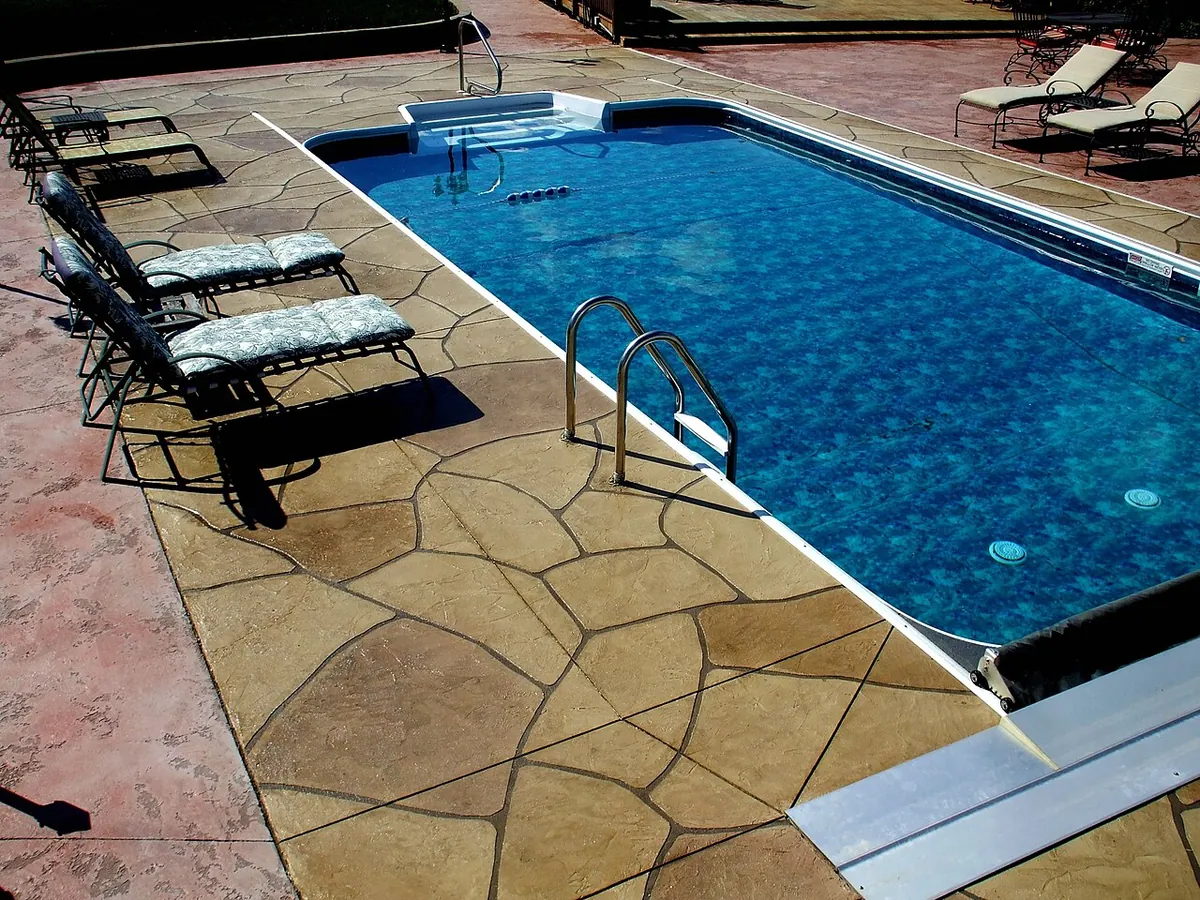
Photo: Wikimedia Commons, CC BY 2.0
Quick Answer
The best pool deck ideas start with the surface. Broom-finished concrete is the most affordable durable pool decking, about $8 to $15 per square foot installed; stamped or stained concrete adds pattern and color for about $12 to $20; pavers and travertine run about $15 to $35 and stay cooler underfoot; porcelain tile gives a modern look; and wood or composite decking suits raised and above ground pools. Plan at least 4 to 6 feet of deck on the sides you walk on and 8 to 12 feet where you want lounge chairs or dining. Choose light, slip-resistant finishes, slope the deck away from the pool, and add shade, lighting and planters to turn a pool deck into an outdoor room.
The pool deck is the part of the pool you use most, even when you are not swimming. It is where you sit, eat, dry off, watch children and entertain. A good pool deck is safe underfoot, comfortable in the sun, easy to clean and attractive enough that you want to be there. A poor one is hot, slippery, cracked or too small to use.
This guide collects practical pool deck ideas: how to choose pool decking materials, how big the deck should be, layout ideas for large and small yards, ideas for above ground pools, shade and lighting, cool and slip-resistant surfaces, and rough costs. For the technical side of building a concrete deck, see our guide to pool deck concrete.
Pool Decking Materials Compared
| Material | Typical installed cost per sq ft | Heat underfoot | Upkeep |
|---|---|---|---|
| Broom-finish concrete | $8 – $15 | Moderate; light colors stay cooler | Seal every few years; crack repair |
| Stamped or stained concrete | $12 – $20 | Moderate; darker colors get hot | Reseal every 2 – 3 years |
| Spray-texture coating (cool deck) | $4 – $8 over existing concrete | Cool | Recoat over time |
| Concrete pavers | $15 – $30 | Moderate | Re-sand joints; easy repairs |
| Travertine and natural stone | $20 – $40 | Cool (travertine) | Seal; can be porous |
| Porcelain tile or pavers | $20 – $40 | Varies with color | Low; grout care |
| Wood decking | $15 – $35 | Moderate | Stain or seal regularly |
| Composite decking | $25 – $50 | Can get hot in sun | Low |
These are rough planning ranges; local prices vary. For concrete details such as thickness, joints and finishes, see pool deck concrete.
Concrete Pool Deck Ideas
Concrete is the most common pool decking because it is durable, affordable and can take many looks:
- Broom finish. A light broom texture gives good grip at low cost. Light gray or tinted concrete stays cooler than dark finishes.
- Exposed aggregate. The top layer of cement is washed away to show small stones, giving a textured, slip-resistant surface.
- Stamped concrete. Patterns such as flagstone, slate, wood plank or brick, with integral color and a release agent for depth. Stamped concrete pool decks look like stone at a lower price.
- Stained concrete. Acid or water-based stains give variegated color.
- Spray-texture or knockdown finishes. Coatings applied over concrete to create a cool, textured surface, popular in hot climates.
- Saw-cut patterns. Decorative saw cuts create a tile-like grid on plain concrete and double as control joints.
For more on finishes, see types of concrete finishes, stamped concrete vs pavers and concrete staining. If an existing concrete deck looks tired, resurfacing can be cheaper than replacing it; see concrete pool deck resurfacing.
Paver, Stone and Tile Pool Deck Ideas
Concrete pavers are individual units set on a compacted base. They come in many shapes and colors, flex with ground movement without cracking, and are easy to repair by lifting and resetting a few units. Lighter colors stay cooler.
Travertine is a favorite around pools because it stays relatively cool and has a natural, textured look. Use tumbled or textured travertine for grip and seal it to resist stains and salt.
Natural stone such as flagstone, limestone, bluestone or sandstone gives a high-end look. Some stones get very hot or are porous; ask your supplier which stones suit pool decks in your climate.
Porcelain pavers and tile are dense, stain-resistant and available in stone and wood looks. Choose products rated for outdoor wet areas with a slip-resistant texture.
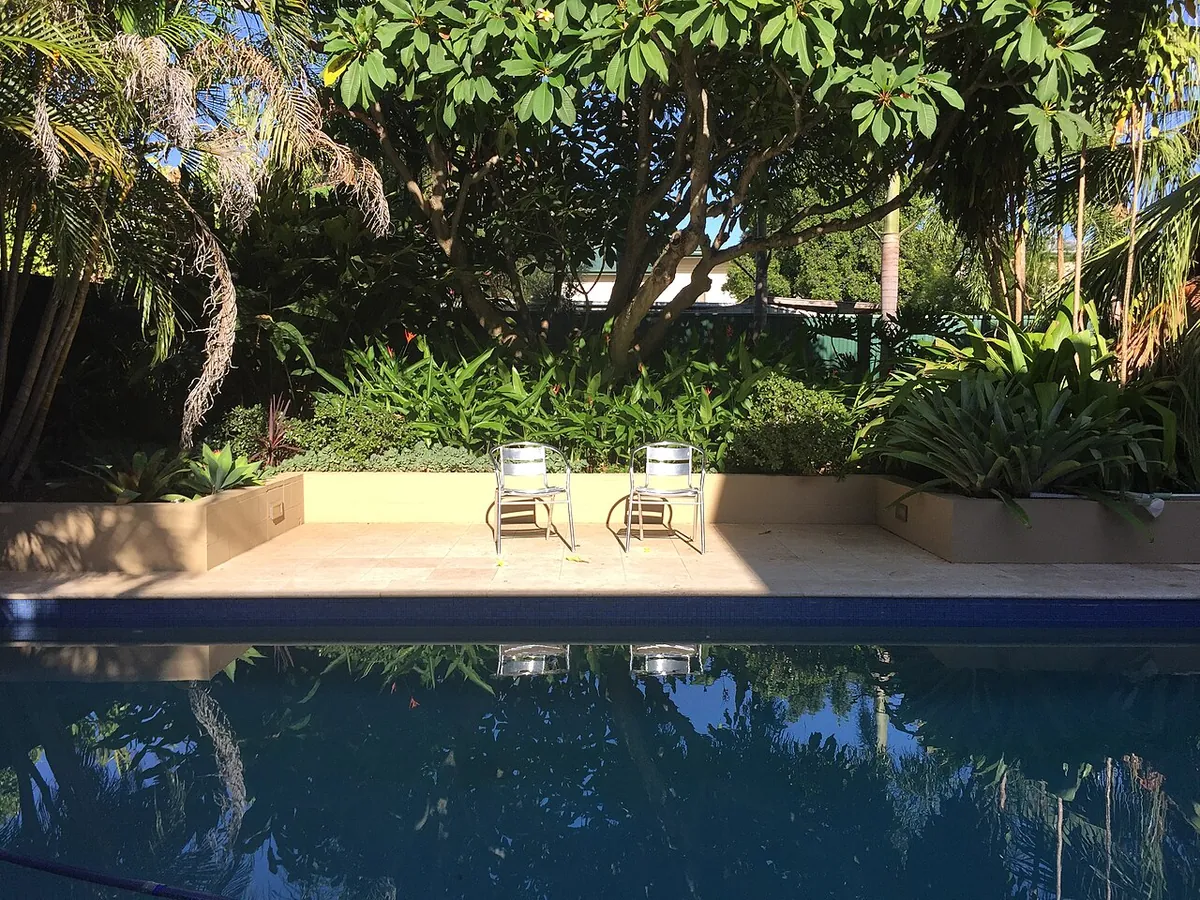
Photo: Kgbo, Wikimedia Commons, CC BY-SA 4.0
Wood and Composite Pool Decking
Wood and composite decks are common for raised pools, above ground pools, sloped yards and pools next to a house deck. Pressure-treated lumber is the budget choice; cedar and tropical hardwoods look richer; composite and PVC decking resist rot and splinters and need little upkeep. Some composite boards get hot in direct sun, so look at heat ratings and choose lighter colors. Leave gaps for drainage and use stainless or coated fasteners near chlorinated water. For decks around above ground pools, see above ground swimming pool deck ideas and how to build a deck around a pool.
How Big Should a Pool Deck Be?
Size the pool deck by how you will use it:
- Walkways: at least 4 feet around the pool so people can pass safely; many local codes set minimums.
- Lounge areas: about 8 to 12 feet deep for chaise lounges with walking space.
- Dining: about 12 x 12 feet for a table for four to six.
- Outdoor kitchen or bar: plan separately with room for traffic.
A common rule of thumb is a deck area at least equal to the water surface, and often double it for families who entertain. A 16 x 32 ft pool (512 sq ft of water) might have 600 to 1,000 square feet of pool decking.
Pool Deck Layout Ideas
- Uneven border. A narrow walkway on the far side and a wide entertaining zone on the house side uses space well.
- Sun shelf and lounge zone. Place lounge chairs where they get afternoon sun, next to a tanning ledge.
- Separate zones for dining, lounging and play, divided by planters or changes in material.
- Raised spa or bond beam wall as a seat wall along the deck.
- Steps and levels on sloped yards, with each level serving a purpose.
- Pathways linking the pool deck to the house, gate and equipment area.
Small Pool Deck Ideas
In a small yard, the deck must work hard:
- Keep one side of the deck wide and the others narrow.
- Use built-in benches and planters instead of bulky furniture.
- Choose light colors to make the space feel larger.
- Use the same material inside and out to visually extend the house.
- Pick compact furniture and stackable chairs.
- Consider a plunge pool with a generous deck instead of a larger pool with a cramped deck; see what is a plunge pool.
For more, see swimming pool ideas for small backyards.
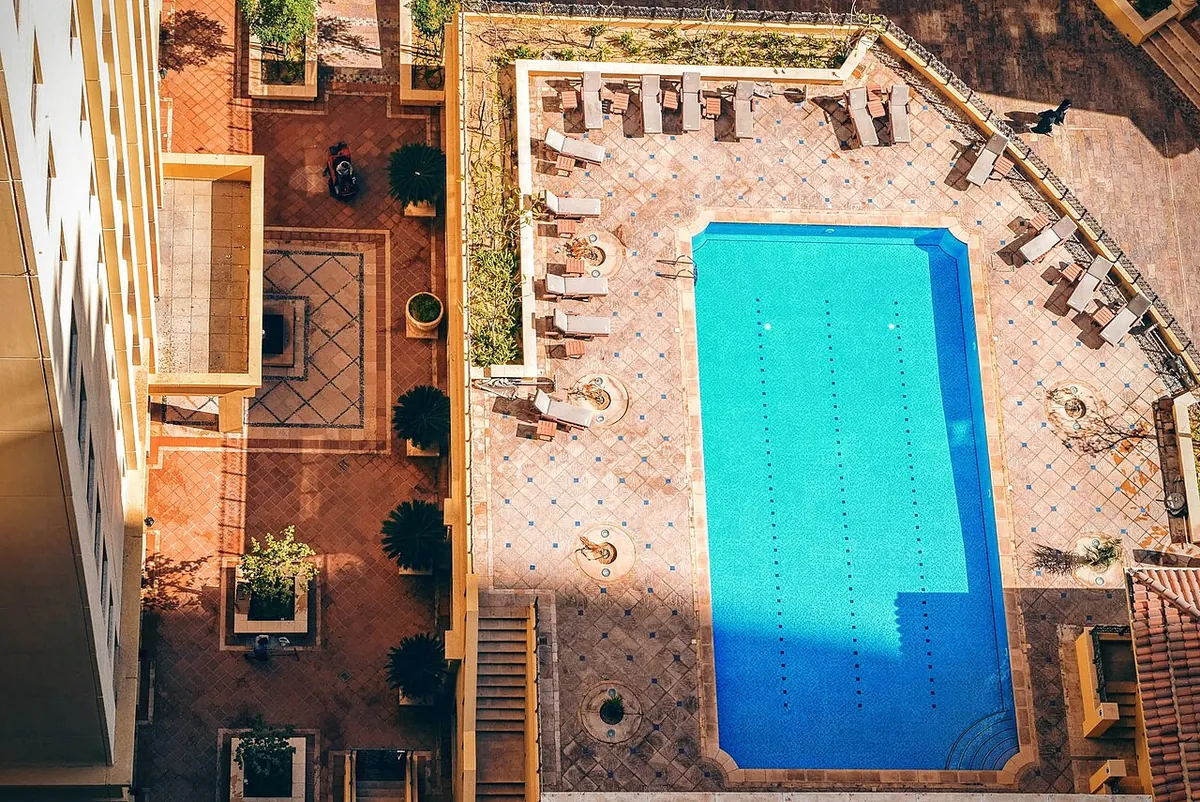
Photo: Tim Gouw, Wikimedia Commons, CC0
Cool and Slip-Resistant Pool Deck Surfaces
Two practical problems ruin many pool decks: heat and slipperiness.
- Choose light colors. White, beige and light gray surfaces stay much cooler than dark gray, brown or black.
- Pick cool materials. Travertine and spray-texture cool deck coatings are known for staying comfortable.
- Add texture. Broom finishes, exposed aggregate, textured coatings and tumbled stone give grip when wet.
- Avoid glossy sealers or add a grit additive to sealers on concrete and pavers.
- Plan drainage. Slope the deck away from the pool at about 1/8 to 1/4 inch per foot and use deck drains where needed.
- Add shade to keep parts of the deck cool.
Shade Ideas for Pool Decks
- Pergolas over lounge or dining areas; see pool pergola ideas.
- Shade sails stretched between posts.
- Large cantilever umbrellas that can be moved with the sun.
- Covered patios or cabanas attached to the house or freestanding.
- Trees planted at a distance where leaves will not fall in the pool.
Pool Deck Lighting Ideas
- Step lights on deck stairs and level changes.
- Low-voltage path lights along walkways.
- Uplights on trees, walls and water features.
- String lights over dining areas.
- Lighted planters and seat walls.
- Underwater pool lights to light the whole area; see how to replace a pool light.
Railings, Planters and Finishing Touches
Pool deck railing ideas matter on raised decks: aluminum, glass panel and cable railings keep views open. Railings must meet height and spacing rules, and pool barrier rules are often stricter. Planters soften hard surfaces; choose plants that drop few leaves. Seat walls double as retaining walls and extra seating. Fire features extend evenings by the pool. Outdoor showers keep sand and grass out of the water. See landscaping ideas for inground pools.
Pool Deck Ideas for Inground Pools
Inground pools are usually surrounded by a ground-level deck tied into the coping. Coping choice matters: poured concrete coping matches a concrete deck; stone or paver coping frames the water. For the coping options, see concrete pool coping and pool coping ideas. For more layouts, see deck ideas for inground pools.
Pool Deck Design Ideas by Style
Modern. Large-format porcelain pavers or smooth concrete in light gray, crisp straight lines, a rectangular pool, minimal planting and linear lighting. Built-in benches and a raised wall with a sheer descent keep the look clean.
Resort or tropical. Travertine or light stamped concrete, palms and lush planting in raised beds, a cabana or pergola, lounge chairs on a wide sun deck, and a swim-up shelf. This is one of the most requested swimming pool deck ideas in warm climates.
Mediterranean. Warm-toned stone or tile, terracotta planters, olive trees and lavender, a covered loggia for shade, and mosaic accents near the waterline.
Natural or rustic. Irregular flagstone or stamped flagstone concrete, boulders, native grasses and a pool with a natural shape. Earth tones help the pool blend into the landscape.
Family and play. Durable, slip-resistant broom concrete or pavers, a wide shallow area, shade over the main deck, an outdoor shower and storage for toys.
Swimming Pool Decking Ideas for Different Climates
Hot, sunny climates. Light colors, cool deck coatings, travertine and plenty of shade. Avoid dark stone and dark composite boards that get painfully hot.
Freeze-thaw climates. Choose materials rated for freezing, use air-entrained concrete, seal pavers and stone, and plan good drainage so water does not freeze on the deck. Pavers handle ground movement well.
Wet or humid climates. Textured, quick-draining surfaces and mildew-resistant sealers. Leave space between deck boards for drainage.
Coastal areas. Salt air and salt pools call for sealed stone, stainless fasteners and salt-resistant materials.
Pool Deck Ideas on a Budget
- Pour plain broom concrete now and add a decorative coating or stain later.
- Use concrete for most of the deck and a small paver or stone accent near the steps.
- Build only the deck you need now; add more pool decking later as a phase.
- Choose standard paver shapes and colors instead of custom stone.
- Use movable umbrellas and planters instead of fixed shade structures at first.
- Resurface a sound old deck instead of tearing it out.
Pool Deck Renovation Ideas
If your pool deck is cracked, stained or dated, you have several options short of a full replacement. Thin decorative overlays and spray-texture coatings refresh sound concrete. Pavers or porcelain can sometimes be laid over existing concrete if heights allow. Cracks and settled slabs can be repaired or lifted. See concrete pool deck repair and concrete pool deck resurfacing. If the whole pool is being updated, plan the deck with the remodel; see pool remodel cost.
Mixing Materials on One Pool Deck
Combining materials is one of the most effective pool deck ideas. A few examples: stone coping with a concrete deck; a paver border around a stamped concrete field; a wood or composite platform for lounging next to a concrete walkway; or tile accents at steps and spa edges. Keep the palette to two or three materials and repeat colors from the house so the deck feels connected. Transitions between materials need careful detailing so there are no trip edges and water drains away from the pool.
Pool Decks for Families, Kids and Pets
- Prioritize slip-resistant textures and avoid smooth, glossy finishes.
- Keep walkways clear and wide around the shallow end.
- Use shade over seating where adults supervise.
- Choose durable surfaces that tolerate dog claws and toys.
- Install self-closing gates and keep furniture away from fences so children cannot climb them; see pool fence cost.
- Place an outdoor shower or foot rinse near the entry to keep the water cleaner.
Caring for Your Pool Decking
- Concrete: seal every few years, keep joints filled, and clean mildew and stains promptly.
- Pavers: top up joint sand, use polymeric sand to limit weeds, and seal if desired.
- Stone: seal to resist stains and salt; avoid acid cleaners on limestone and travertine.
- Wood: clean and re-stain or seal regularly; replace damaged boards.
- Composite: wash with soap and water; avoid harsh scrubbing.
Keep debris off the deck to reduce what ends up in the pool; see how to clean a pool.
Pool Deck Safety and Building Rules
Local codes often set minimum walkway widths around pools, require slip-resistant surfaces, and set rules for drainage, electrical outlets near the water, and railings on raised decks. Pool barrier rules, which control fences and gates, also affect the deck layout. Check with your building department before designing the pool deck, especially for raised decks, decks attached to the house, and decks over 30 inches high.
Pool Deck Ideas for Above Ground Pools
Above ground pools pair naturally with wood or composite decks. Popular layouts include a small platform at the steps, a half-wrap deck along one side, and a full wraparound deck that makes the pool look built-in. Keep the deck freestanding with its own footings, add a lockable gate at the stairs, and leave access to the pump and filter. Above pool deck ideas for small budgets include a simple ground-level paver pad at the ladder and a few steps up to a small landing. See above ground swimming pool deck ideas.
Outdoor Kitchens and Dining on the Pool Deck
A pool deck becomes an outdoor living room when it includes cooking and dining. Place a grill or outdoor kitchen downwind of the pool and lounge area, at least several feet from the water, so smoke and splashes stay apart. Use durable, stain-resistant surfaces near the kitchen, because grease and food spills are harder to clean from porous stone. A covered dining area near the house keeps the walk to the indoor kitchen short.
Water and Fire Features at the Deck
Deck jets that arc water into the pool, bubblers on a tanning ledge, sheer descents from a raised wall and rock waterfalls all start at the deck edge. They add sound and movement and can be lit at night. Fire bowls on a raised wall or a fire pit in a seating area extend evenings by the pool. Plan gas lines and plumbing before the pool decking is poured. See pool ideas with waterfalls.
Pool Deck Planning Checklist
- List how you will use the deck: lounging, dining, cooking, play, entertaining.
- Sketch zones and walkways around the pool, house and gate.
- Choose a main material and one or two accent materials.
- Plan drainage, slopes and expansion joints at the coping.
- Plan shade, lighting, outlets and any gas or water lines.
- Check local codes for walkway width, barriers and raised deck rules.
- Get quotes that list area, thickness or base, finish, and sealing.
Common Pool Deck Mistakes
- Making the deck too narrow to walk past furniture.
- Choosing a dark, hot material for a sunny yard.
- Using a glossy sealer that becomes slippery when wet.
- Sloping the deck toward the pool, which washes dirt into the water.
- Forgetting expansion joints between the coping and deck.
- Planting trees that drop leaves and needles into the pool.
- Leaving no room or access for pool equipment.
Hiring a Pool Deck Contractor
Pool decks are built by pool builders, concrete contractors, hardscape companies and deck builders. Ask for photos of pool decks they built several years ago, not just new ones, to see how finishes hold up. Ask about base preparation, reinforcement, joint placement, drainage and the sealer they recommend. Get two or three quotes for the same design and materials. For concrete-specific questions, see pool deck concrete.
Pool and Deck Planning for New Pools
If you are building a new pool, design the pool and deck together. The pool shape, steps and benches affect where people enter and exit, which sets the main walkways. The coping type affects how the deck meets the pool edge. Equipment location, gas lines, electrical outlets and lighting all need routes under or beside the deck before it is poured or laid. Builders usually pour the deck after the pool shell, plumbing and coping are complete, and before final plaster or start-up. Budget for the deck from the start: on many projects, the pool and deck together cost noticeably more than the pool alone. See how much does a pool cost.
Think about how the pool and deck will look from inside the house as well. Many owners spend more time looking at the pool than swimming in it, so align the main view from the family room or kitchen with a focal point such as a water feature, a planter or a seating area.
Swimming Pool Deck Ideas That Add Function
- Built-in storage benches for towels, toys and cleaning tools.
- A pool equipment screen or fence to hide pumps and filters.
- A covered bar counter facing the pool.
- Hose bibs and outlets placed where you need them for cleaning.
- Deck drains in low spots to stop puddles.
- Hooks and racks for the pool pole, net and life ring.
What a Pool Deck Costs
| Deck size | Broom concrete | Stamped concrete | Pavers or travertine |
|---|---|---|---|
| 400 sq ft | $3,200 – $6,000 | $4,800 – $8,000 | $6,000 – $14,000 |
| 700 sq ft | $5,600 – $10,500 | $8,400 – $14,000 | $10,500 – $24,500 |
| 1,000 sq ft | $8,000 – $15,000 | $12,000 – $20,000 | $15,000 – $35,000 |
Tear-out of an old deck, drainage work, coping and steps add to these figures. For concrete pricing, see patio pavement price and our square footage calculator.
Pool Deck Ideas: Key Takeaways
- Pick pool decking for heat, grip and upkeep first, then for looks.
- Give the deck at least 4 feet of walkway and a wide zone for lounging or dining.
- Concrete is the value choice; pavers and travertine are the cooler, premium choice.
- Mix two or three materials and repeat colors from the house.
- Plan shade, lighting, drainage and equipment access before the deck is built.
Frequently Asked Questions
What is the best material for a pool deck?
For most budgets, light-colored broom or textured concrete. For a cooler, high-end look, travertine or quality pavers. The best choice also depends on your climate, how much shade you have and how much upkeep you are willing to do.
What is the cheapest pool deck?
Plain broom-finished concrete, or a cool deck coating over sound existing concrete. Both give a durable, slip-resistant surface at the lowest cost.
Which pool deck stays coolest?
Light-colored travertine and spray-texture cool deck coatings stay coolest; dark stone and dark composite get hottest.
How wide should a pool deck be?
At least 4 feet for walkways and 8 to 12 feet where you want lounge chairs or tables.
What is a pool deck?
The paved or decked area around a pool, used for walking, lounging and entertaining, usually connected to the pool's coping. It also keeps dirt and grass away from the water and gives swimmers a safe, firm place to enter and exit.
How do you keep a pool deck from getting hot?
Choose light colors, travertine or a cool deck coating, add shade, and hose the deck down on very hot days. Avoid dark stone and dark composite boards in full sun.
What are good small pool deck ideas?
Keep one wide side for seating and narrow walkways elsewhere, use built-in benches and planters, choose light colors, and use compact furniture to make a small pool deck feel larger.
Is wood or composite better for a pool deck?
Composite needs less upkeep and will not splinter, but some boards get hot in sun. Wood costs less up front but needs regular sealing. Both suit raised and above ground pools better than ground-level inground decks.
How long does a concrete pool deck last?
A well-built concrete pool deck often lasts 25 years or more with sealing and joint maintenance. Surface coatings may need refreshing every 5 to 10 years.
Can you put pavers over an existing concrete pool deck?
Sometimes, if the concrete is sound and there is enough height at doors and coping. Thin pavers or tile overlays are often used.
Sources
- HomeAdvisor: Pool deck cost
- Concrete Network: Pool deck ideas
- Interlocking Concrete Pavement Institute
- U.S. CPSC: Pool and spa safety