
Pool Enclosure Cost: Screen, Retractable and Glass Swimming Pool Enclosures
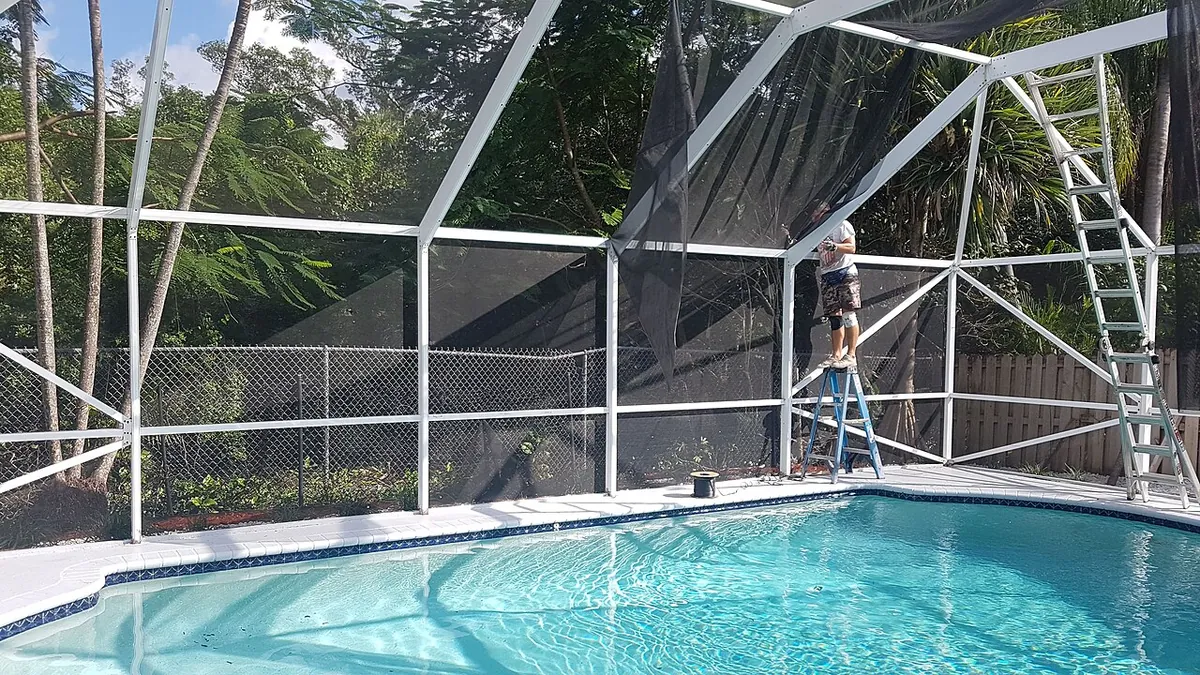
Photo: SergioMiami, Wikimedia Commons, CC BY-SA 4.0
Quick Answer
Pool enclosure cost depends on the type. A pool screen enclosure (aluminum frame with insect screen) typically costs about $5 to $15 per square foot installed, or roughly $4,000 to $14,000 for an average pool and more for large or two-story cages, according to HomeGuide; HomeAdvisor, Angi and Fixr put screen enclosures at about $8 to $15 per square foot. Retractable polycarbonate or glass enclosures cost far more, about $40 to $200 per square foot, often $20,000 to $100,000 or more. Fully indoor pool enclosures built as a room or building cost the most. Rescreening an existing enclosure usually costs about $7 to $9 per square foot. Permits, engineering for wind loads and the slab under the enclosure can add to the total.
Pool enclosures are a standard part of backyard pools in Florida and other warm, buggy places, and they are growing in popularity elsewhere. A screened pool keeps out leaves, insects, lizards and some debris, adds a layer of safety, and turns the pool and deck into an outdoor room. A glass or polycarbonate enclosure goes further, extending the swim season and making the pool usable in rain or cool weather.
This guide breaks down swimming pool enclosure cost by type, size and material, explains what drives the price, covers rescreening and repairs, permits and hurricane rules, the pros and cons of each option, and how to get a fair quote. For the cost of the pool itself, see how much does a pool cost.
Pool Enclosure Cost at a Glance
| Enclosure type | Cost per sq ft | Typical total |
|---|---|---|
| Screen enclosure (pool cage) | $5 – $15 | $4,000 – $14,000 average; $20,000+ for large or two-story |
| Screen enclosure with solid roof section | $12 – $25 | $10,000 – $30,000+ |
| Retractable polycarbonate enclosure | $40 – $200 | $20,000 – $100,000+ |
| Glass or sunroom-style enclosure | $100 – $300+ | $50,000 – $200,000+ |
| Indoor pool building | Varies widely | $100,000+ beyond the pool |
| Full rescreen of an existing cage | $7 – $9 | $2,500 – $6,000+ |
Figures come from HomeGuide, HomeAdvisor, Angi, Fixr and Bob Vila. Square footage usually refers to the floor area covered by the enclosure, which includes the pool and the deck inside the cage.
Pool Screen Enclosure Cost
A pool screen enclosure, often called a pool cage, is a framework of aluminum beams and posts covered with fiberglass or polyester screen. It is bolted to the deck and often to the house. The pool screen enclosure cost depends mainly on the area covered, the height and roof style, the screen type and local wind codes.
| Area covered | Example | Estimated screen enclosure cost |
|---|---|---|
| 400 sq ft | Small pool with narrow deck | $3,000 – $6,000 |
| 800 sq ft | Typical pool and deck | $6,000 – $12,000 |
| 1,200 sq ft | Large pool and deck | $9,000 – $18,000 |
| 2,000 sq ft | Pool, spa, deck and lanai | $15,000 – $30,000+ |
Roof styles. Flat or mansard roofs are the simplest. Dome, gable and hip roofs give more height and a better look but use more material. Two-story cages that attach to the second floor of a house cost the most.
Screen types. Standard 18x14 fiberglass screen is the most common. Heavier "pool and patio" screens, no-see-um screens for tiny insects, and privacy or solar screens that block sun and views cost more. Super-strength screen is often used on lower walls where pets and children push on it.
Frame finish. White and bronze powder-coated aluminum are standard. Custom colors and heavier frames for high wind zones add cost.
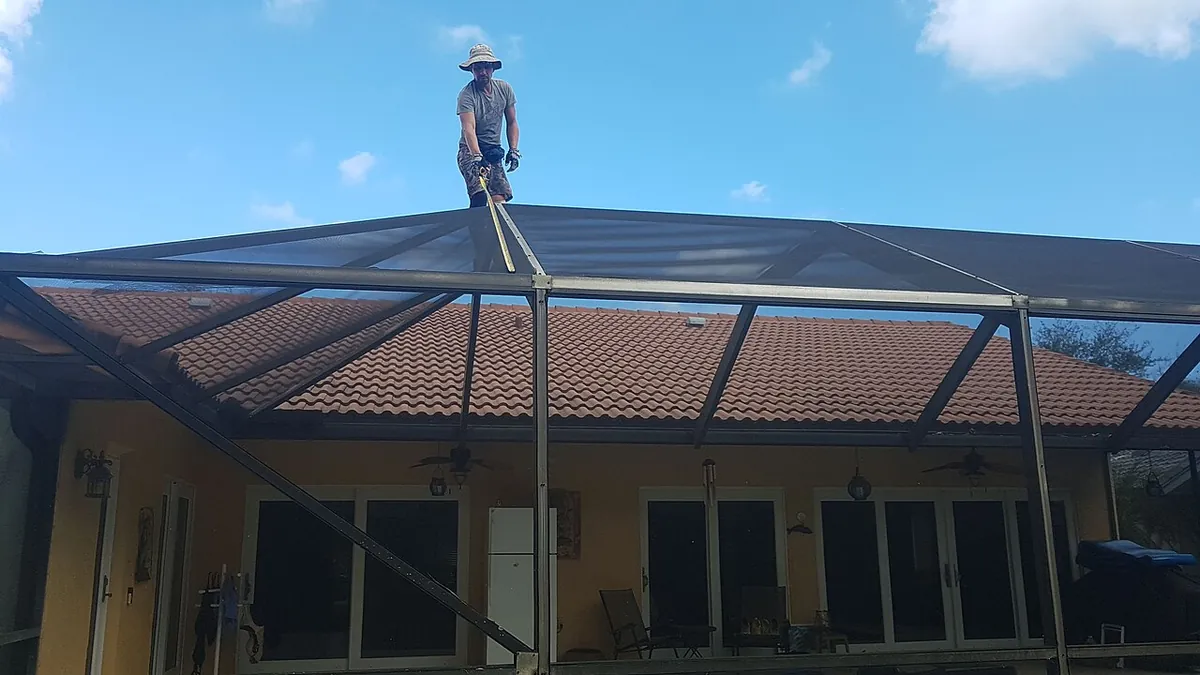
Photo: SergioMiami, Wikimedia Commons, CC BY-SA 4.0
Retractable Pool Enclosure Cost
Retractable pool enclosures use telescoping sections of aluminum and polycarbonate or glass that slide over each other on tracks. Closed, they act like a greenhouse, warming the water and keeping out rain and debris; open, the pool feels outdoors. Retractable pool enclosure cost is much higher than screen, about $40 to $200 per square foot according to cost guides, often $20,000 to $100,000 or more for a residential pool. Low-profile models that sit just above the water cost less than tall, walk-in models with room for lounge chairs.
Retractable enclosures are popular in cooler climates, where they can add months to the swim season and cut heating costs. They also act as a barrier and keep the pool much cleaner.
Indoor Pool Enclosures Cost
A fully enclosed indoor pool, built as an addition or separate building, is the most expensive option. Beyond the pool itself, you pay for the structure, insulation, glazing, and especially humidity control: dehumidifiers, ventilation and moisture-resistant materials are essential, or condensation will damage the building. Indoor pool enclosures cost often adds $100,000 or more to a project, and running costs are higher. See indoor pool cost for the full picture.
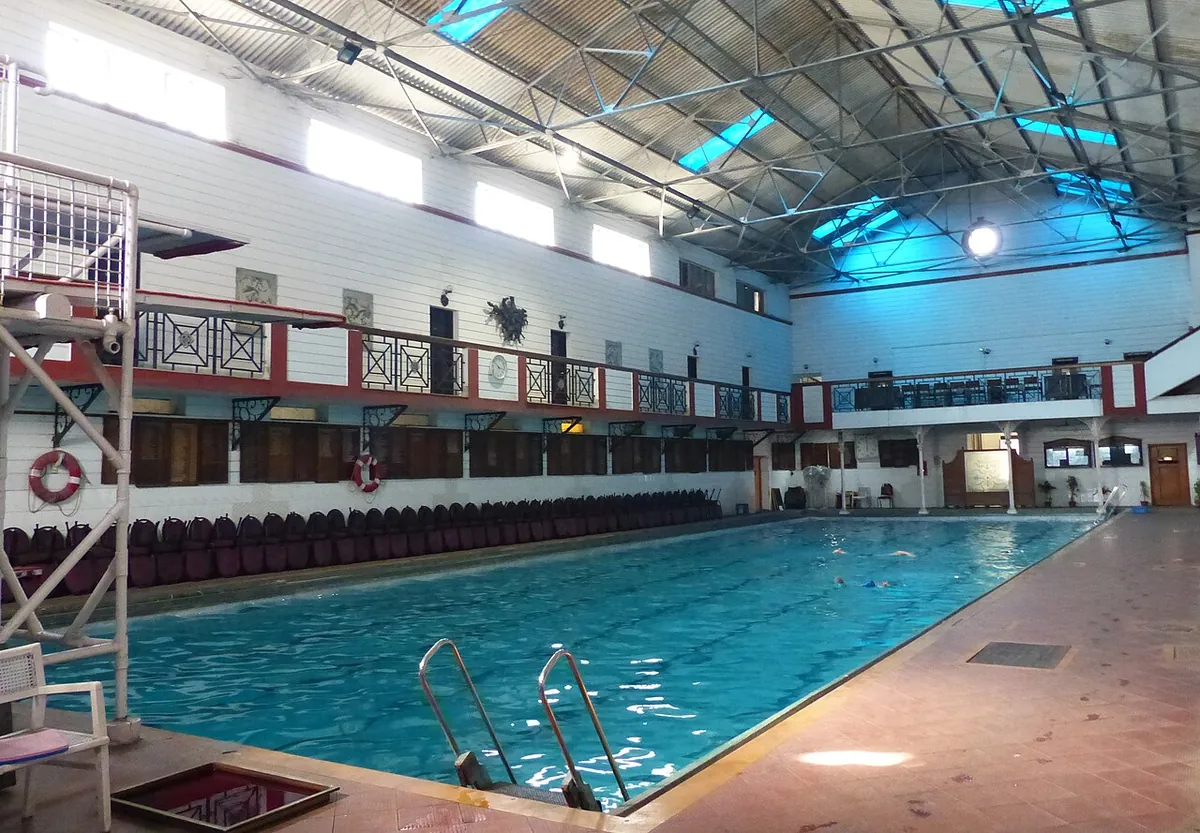
Photo: Paul Hamilton, Wikimedia Commons, CC BY-SA 2.0
What Affects Swimming Pool Enclosure Cost
- Size: the floor area covered and the height.
- Type: screen, retractable or fixed glass.
- Roof design: flat, mansard, dome, gable or hip.
- Attachment: freestanding or attached to the house, and at what height.
- Wind and building codes: high-wind zones need heavier framing and engineering.
- Foundation: enclosures need a solid footing or a thickened deck edge. A new or repaired deck adds cost; see pool deck concrete.
- Doors: number of doors, self-closing hardware and pet doors.
- Gutters and kick plates: aluminum kick plates along the bottom and gutter work where the cage meets the roof.
- Permits and engineering: several hundred to a few thousand dollars.
- Removal of an old enclosure: often $1,000 to $3,000.
Rescreening and Repair Costs
Screens wear out. Sun, storms, pets and age cause tears, sagging and brittle screen. Rescreening replaces the screen but keeps the frame. Cost guides put full rescreening around $7 to $9 per square foot of screen including materials and labor; a 600 square foot area works out to roughly $4,200 to $5,400. Individual panel replacement costs much less, often $50 to $150 per panel. Common repairs:
- Panel replacement after tears.
- Spline replacement where screen has pulled out of the channel.
- Door repairs and self-closing hardware.
- Frame repairs after storm damage, including bent beams and loose bolts.
- Cleaning and painting the aluminum frame to restore its look.
Most screen lasts about 10 to 15 years, depending on sun exposure and storms. Many owners rescreen the roof first, because it takes the most sun and debris, and the walls later.
Permits, HOA Rules and Hurricane Codes
Most towns require a permit for a pool screen enclosure because it is a structure attached to the home or deck. In hurricane areas, enclosures must be engineered for local wind speeds. Many enclosures are designed so screens blow out in extreme winds, which protects the frame. Some homeowners remove roof panels before major storms on contractor advice. HOAs often control frame color, height and placement. Your installer should pull the permit and provide engineering drawings.
Pool Enclosure Cost by Region
Florida. The largest market for screened pools, with many installers and competitive prices, but strict wind codes. Coastal high-velocity hurricane zones require heavier engineering, which raises pool screen enclosure cost. Rescreening is a regular expense because of sun and storms.
Texas, Arizona and the Gulf Coast. Screened pools are common near the coast and in buggy areas; desert areas use more shade structures than screens. Prices are often near national averages.
Northern and cooler states. Screen enclosures are less common, but retractable and glass enclosures are popular to extend a short season. Fewer installers can mean higher prices and longer lead times.
Installation Process and Timeline
- Site visit and design. The installer measures the deck, checks footings and the house attachment, and designs the frame and roof style.
- Engineering and permit. Drawings are prepared for local wind loads; permits can take days to weeks.
- Footings or deck work. Many enclosures need a footing or a thickened edge at the perimeter of the deck.
- Frame installation. Aluminum beams and posts are bolted to the deck and house; this usually takes one to three days.
- Screening. Screen is rolled into the frame channels with spline.
- Doors, kick plates and gutters.
- Final inspection.
From contract to completion, most pool screen enclosures take two to eight weeks, mostly due to permits and scheduling. The on-site work itself is often less than a week. Retractable and glass enclosures take longer because they are custom-built.
Choosing the Screen Mesh
| Screen type | What it does | Cost impact |
|---|---|---|
| Standard 18x14 fiberglass | Keeps out most insects; good visibility | Baseline |
| 20x20 no-see-um | Blocks tiny biting insects | Slightly more |
| Heavy-duty pet screen | Resists tears from pets and kids | More; often used on lower panels |
| Solar or shade screen | Blocks more sun and heat; adds privacy | More; can cool the pool |
| Privacy screen | Very tight weave; limits views in | More; reduces views out too |
Solid and Insulated Roof Options
Some owners combine a screen enclosure with a solid roof section over part of the deck, using insulated aluminum panels. This creates a shaded, rain-protected seating area while the pool stays open to the sky through screen. A partial solid roof raises the swimming pool enclosure cost per square foot for that section to roughly $12 to $25 or more, depending on the panel thickness and finishes, and it usually needs stronger framing and engineering.
Enclosures for Above Ground Pools
Above ground pools can also be enclosed. Options include freestanding screen rooms built around the pool and deck, inflatable or frame pool domes that sit over the pool like a tent, and lightweight solar dome covers that act like a mini greenhouse. These cost far less than permanent cages, often a few hundred to a few thousand dollars, but are less durable. See how to put up an above ground pool.
Maintaining a Screened Pool Enclosure
- Hose down screens a few times a year to remove pollen, dust and mildew.
- Wash the frame with mild soap and rinse; avoid harsh cleaners that damage the finish.
- Check spline and panels for loose screen after storms.
- Keep doors closing and latching, especially if the enclosure acts as a safety barrier.
- Clear gutters where the cage meets the roof.
- Tighten loose bolts and watch for corrosion at the base.
Hurricane Preparation for Pool Enclosures
In hurricane areas, owners should follow the installer guidance for their enclosure. Common advice includes securing loose furniture inside the enclosure, never tying tarps to the frame, and in some cases cutting or removing specific roof screen panels before a major storm so wind can pass through and the frame survives. A properly engineered enclosure is designed to shed screens in extreme winds. After a storm, inspect for bent beams and loose connections before using the area.
Insurance and Pool Enclosures
Screen enclosures are often covered under homeowners policies as other structures, but many policies in hurricane-prone areas exclude or limit coverage for screen enclosures, or apply a separate windstorm deductible. Check your policy before you build, and keep photos and receipts. Some owners choose to self-insure the screen and rely on coverage for the frame.
Example Pool Enclosure Budgets
| Project | Details | Estimated cost |
|---|---|---|
| Small screened pool | 500 sq ft, mansard roof, standard screen | $4,000 – $7,500 |
| Typical screened pool and lanai | 1,000 sq ft, dome roof, no-see-um screen, two doors | $9,000 – $16,000 |
| Two-story cage | 1,500 sq ft attached to second floor, engineered for high winds | $18,000 – $35,000 |
| Retractable enclosure | 16 x 32 ft pool, low-profile polycarbonate | $25,000 – $60,000 |
| Rescreen only | 1,000 sq ft of screen area | $4,000 – $9,000 |
Questions to Ask Pool Enclosure Installers
- Are you licensed and insured for aluminum structures in this county?
- Does the price include engineering, permits, footings and removal of an old cage?
- What wind speed is the design rated for?
- What screen type is included, and what do upgrades cost?
- How many doors, and are they self-closing and self-latching?
- What warranties cover the frame, screen and workmanship?
- How long until installation, and how long on site?
Types of Swimming Pool Enclosures Compared
| Swimming pool enclosure | Best for | Main trade-off |
|---|---|---|
| Screen pool enclosure | Warm, buggy climates; keeping debris out | Screens need replacing every 10 to 15 years |
| Screen enclosure with solid roof section | Shade and rain cover over seating | Higher cost; less sun on the deck |
| Retractable enclosure | Longer seasons in cool climates | High pool enclosure cost |
| Fixed glass or sunroom enclosure | Year-round use | Very high cost; needs ventilation |
| Indoor pool building | Full indoor swimming | Highest cost; dehumidification required |
What a Pool Screen Enclosure Price Includes
A written pool screen enclosure price should list everything you are paying for. Look for:
- The covered area in square feet and the height at the house and at the outer edge.
- Roof style and beam sizes, plus the wind rating.
- Screen type for the roof, walls and lower panels.
- Number and type of doors, closers and latches.
- Kick plates, chair rails and gutters.
- Footing or deck work needed to anchor the frame.
- Engineering, permit fees and inspections.
- Removal and disposal of an old pool enclosure.
- Warranty terms for frame, screen and labor.
Two quotes with the same headline pool screen enclosure cost can differ widely once these details are compared. Ask each company to price the same design.
Screened In Pool Enclosure vs Lanai Screen
A screened in pool enclosure usually covers the pool and the deck around it, while a lanai screen covers a patio area next to the house. Many Florida homes combine both in one structure. Extending a screened pool enclosure to include a lanai adds area and height, and if the cage attaches to the roof line, the engineering and connection details cost more. A combined pool and lanai cage often gives the best value per square foot because the structure shares beams and walls.
Is a Screened Pool Enclosure Worth It?
For many pool owners in warm, humid climates, a screened pool enclosure pays back in comfort and lower upkeep. Fewer leaves and insects in the water mean less skimming, smaller chemical bills and a cleaner filter. Evenings by the pool are more pleasant without mosquitoes. Many buyers in Florida and along the Gulf Coast expect screened pool enclosures, so a sound cage can help a home sell. The case is weaker in cooler, drier regions with fewer insects, where a fence and a cover may give most of the benefits for less money.
DIY Screen Pool Enclosure Kits
Small screen pool enclosure kits and screen room kits are sold for above ground pools, hot tubs and small decks. They can save money for simple, low structures, but most full-size enclosures for inground pools need engineering, permits and secure anchoring to resist wind, so they are installed by licensed contractors. DIY work is more realistic for rescreening a few panels: with a spline roller, new spline and screen, a handy owner can replace panels at a fraction of the cost of a service call.
Pool Enclosure Screen Cost Over Time
Plan for pool enclosure screen cost over the life of the frame, not just the first install. If the aluminum frame lasts 25 to 30 years and the screen lasts 10 to 15 years, you will likely rescreen once or twice. At about $7 to $9 per square foot of screen, rescreening a typical cage can cost several thousand dollars each time. Choosing a durable screen at the start, keeping it clean, and repairing small tears early keeps lifetime swimming pool screen enclosure cost lower.
Benefits of a Pool Enclosure
- Fewer insects and a more comfortable evening pool area.
- Less debris in the pool, which reduces cleaning time and chemical use; see cost to maintain a pool.
- Reduced evaporation and, for solid enclosures, a warmer pool.
- Added safety when doors are self-closing and latched, though local codes may still require other barriers.
- More usable outdoor living space.
- Some UV protection, especially with tighter-weave or solar screens.
Drawbacks to Consider
- Cost, both up front and for rescreening.
- Less sun on the pool, which can mean slightly cooler water with screens.
- Storm risk in hurricane areas.
- Visual impact on views and the look of the home.
- Maintenance: cleaning the frame and screen, fixing tears.
Pool Enclosures and Pool Safety
A pool enclosure can be part of a layered safety plan, but it is not automatically a safety barrier. To work as one, every door into the enclosure from the yard should be self-closing and self-latching, with latches out of a child's reach, and the screen walls must be strong enough not to be pushed through. Doors from the house into the enclosure count as well; many codes require door alarms or self-closing doors there. Because screen can be torn or cut, many safety experts recommend combining an enclosure with other layers: door alarms, a pool alarm, constant adult supervision and swimming lessons. The U.S. Consumer Product Safety Commission's Pool Safely campaign describes these layers of protection.
Pool Enclosure Lighting, Fans and Extras
Once a pool enclosure is built, owners often add features that make the space more usable: ceiling fans under a solid roof section, string or recessed lighting along beams, outdoor speakers, misting systems, and outdoor kitchens inside the cage. Each adds cost and may need electrical permits. Plan the wiring with the enclosure contractor so conduit can be hidden in the frame where possible. Good lighting also helps safety at night; see how to replace a pool light for underwater lighting.
Pool Enclosure vs Pool Fence
A pool fence is cheaper and is the standard safety barrier in most places. An enclosure costs more but adds bug and debris protection and outdoor living space. In many areas, a screened enclosure with self-closing, self-latching doors can serve as the pool barrier, but rules vary, so check local code. See pool fence cost and swimming pool fence ideas.
Pool Enclosure Ideas
Popular enclosure styles include a picture-window design with larger panels and fewer beams for better views, dome roofs for height over diving boards or slides, combined pool and lanai cages, and partial enclosures that cover only the deck. For more design inspiration, see pool enclosure ideas.
How to Save on a Pool Enclosure
- Get at least three quotes for the same area, height and screen type.
- Choose a simple roof style unless you need height.
- Plan the enclosure with the pool build, so footings and deck are designed for it.
- Use standard screen on most panels and upgraded screen only where needed.
- Rescreen in phases if the frame is sound.
- Keep screens clean and repair small tears early to extend their life.
Frequently Asked Questions
How much does a pool screen enclosure cost?
About $5 to $15 per square foot installed, or roughly $4,000 to $14,000 for an average pool and deck, more for large or two-story cages.
How much does it cost to rescreen a pool enclosure?
Full rescreening usually costs about $7 to $9 per square foot of screen; single panels cost much less.
How much is a retractable pool enclosure?
Roughly $40 to $200 per square foot, often $20,000 to $100,000 or more.
How long does a pool enclosure last?
Aluminum frames can last decades; screens usually last 10 to 15 years, less in harsh sun or after storms, and longer when kept clean.
Do pool enclosures add home value?
In places like Florida, buyers often expect a screened pool, so an enclosure in good condition can help a home sell.
Do I need a permit for a pool enclosure?
Usually yes, and in high-wind areas the enclosure must be engineered for local wind loads. Your installer normally handles the permit and inspections.
Can I install a pool screen enclosure myself?
Rescreening panels is a common DIY job, but building a full pool screen enclosure usually requires engineering, permits and secure anchoring, so most owners hire a licensed contractor.
What is the cheapest swimming pool enclosure?
A basic screen enclosure with a flat or mansard roof and standard screen is the cheapest permanent option. Above ground pool domes and covers cost even less but are less durable.
How long does it take to build a pool enclosure?
On-site work for a screen enclosure usually takes a few days, but permits and scheduling often stretch the whole project to two to eight weeks. Custom retractable and glass enclosures take longer.
Does a pool enclosure keep the water warmer?
Screens reduce wind and evaporation a little but also shade the pool. Solid retractable or glass enclosures warm the water noticeably.
Sources
- HomeGuide: Pool enclosure cost
- HomeAdvisor: Pool enclosure cost
- Angi: Pool screen enclosure repair cost
- Fixr: Swimming pool enclosure cost
- Bob Vila: Pool screen enclosure cost
- Florida Building Code: screen enclosure wind requirements