
How to Get Rid of Algae in Pool Water: Every Type, Step by Step
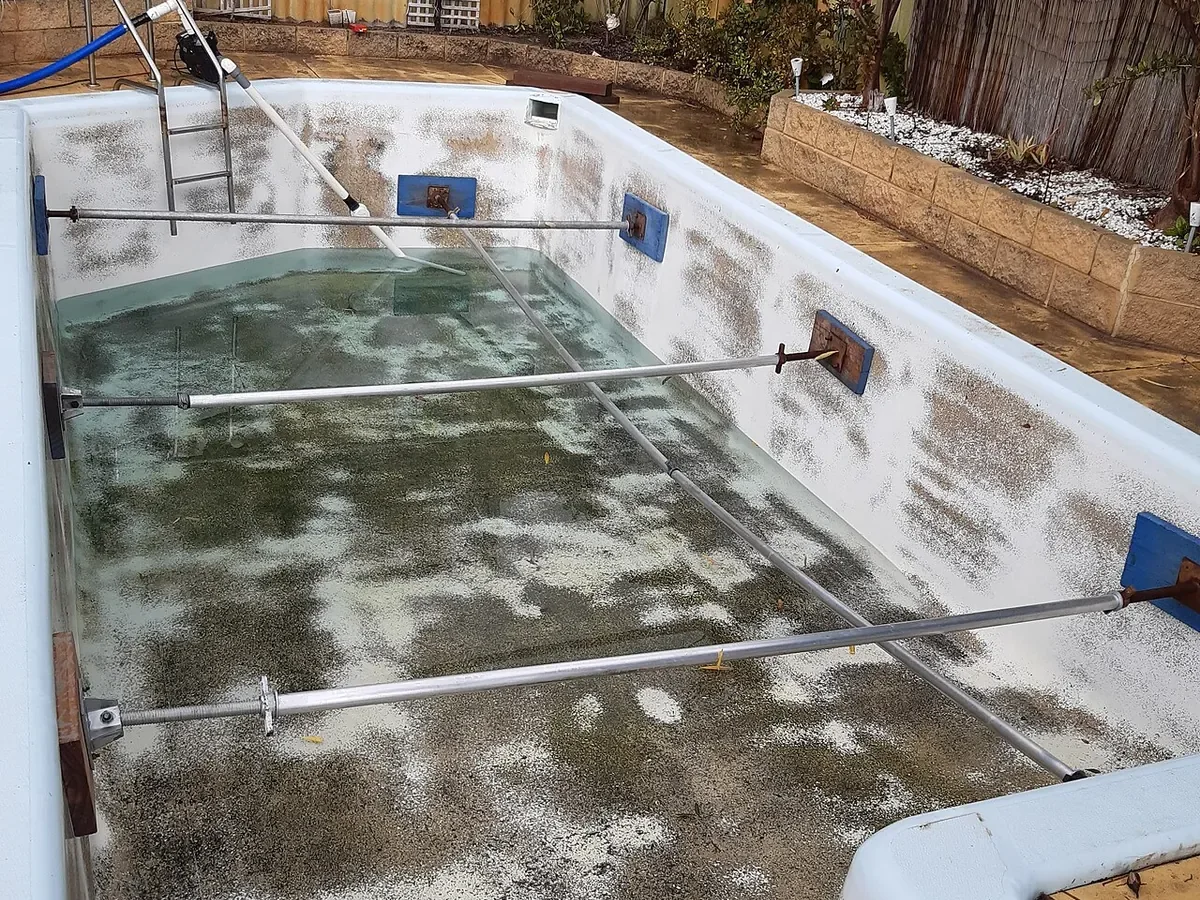
Photo: Calistemon, Wikimedia Commons, CC BY-SA 4.0 (cropped)
Quick Answer
How to get rid of algae in pool water: (1) identify the type: green (most common), yellow or mustard, black, or pink slime; (2) balance pH to about 7.2 to 7.4; (3) brush every surface hard, using a stainless brush on plaster for black algae; (4) shock to a high free chlorine level and keep it there, re-dosing as chlorine drops, until the water is clear and chlorine holds overnight; (5) run the filter 24 hours a day and clean it often; (6) vacuum dead algae, to waste if possible; (7) after the pool algae is gone, use a maintenance dose of algaecide and keep chlorine steady to prevent regrowth. Green algae often clears in 1 to 4 days; mustard and black algae can take a week or more of repeated treatment.
Algae is the most common water problem in pools. Microscopic spores blow in with dust, ride in on swimsuits and toys, and arrive with rain. When chlorine falls too low, or when circulation and filtration leave dead spots, algae multiplies fast, especially in warm, sunny weather. It turns water green or cloudy, makes surfaces slimy, uses up chlorine, and can stain plaster and vinyl.
This guide explains how to get rid of algae in pool water of every type, what causes algae in a pool, how to kill algae quickly, how much algaecide to use, how to handle stubborn black and mustard algae, and how to keep algae from coming back. If your whole pool has turned green, see our step-by-step guide on how to clean a green pool.
Types of Pool Algae
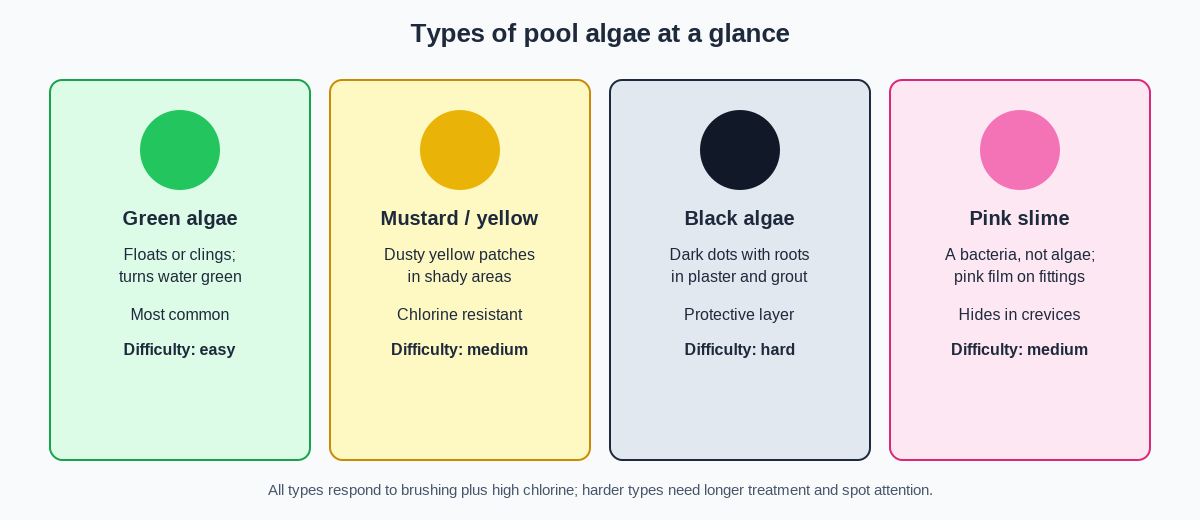
Chart: Asphapro.com
Green algae
Green algae is the most common type of pool algae. It can float in the water, turning it green or cloudy, or cling to walls and corners as a slippery film. It responds well to shock, brushing and filtration and usually clears in a few days.
Yellow or mustard algae
Mustard algae looks like yellow or brown dust or pollen on the walls and floor, usually in shady areas. It brushes off easily but quickly returns, because it resists normal chlorine levels and can hide on pool toys, swimsuits and equipment. Killing it takes higher chlorine for longer, plus cleaning everything that has been in the pool.
Black algae
Black algae appears as dark blue-green or black dots, often on plaster and grout. It has a protective outer layer and roots that grow into the surface, so it survives normal chlorine and regrows from the roots if not fully killed. It is the hardest type to get rid of; see how to get rid of black algae in a pool.
Pink slime
Pink slime is a bacteria rather than an algae. It forms a pink or reddish film in corners, around lights, fittings and skimmers. Brushing and high chlorine kill it, but it often hides in equipment, so cleaning the filter thoroughly is important.
What Does Pool Algae Look Like?
- Green water or a green film on walls and steps: green algae.
- Yellow-brown dusty patches in shady corners that brush away easily but come back: mustard algae.
- Dark spots that do not brush off and feel rough: black algae.
- Slimy pink or orange film around fittings: pink slime.
- Cloudy water and slippery surfaces even without color: early algae growth.
Stains can look like algae. If a spot does not feel slimy and does not change when you rub a chlorine tablet on it, it may be a metal or organic stain instead.
What Causes Algae in a Pool?
- Low free chlorine from heat, sun, rain, heavy swimming or missed doses.
- High pH, which makes chlorine much less effective.
- High cyanuric acid (stabilizer), which slows chlorine down.
- Poor circulation and dead spots behind ladders, steps and in corners.
- Dirty or undersized filters and short pump run times.
- Nutrients such as phosphates and nitrates from fertilizer, leaves and rain.
- Contaminated toys, swimsuits and equipment carrying spores, especially for mustard algae.
- Warm water and sunlight, which speed algae growth.
How to Kill Algae in a Pool: Step by Step
Step 1: Test and balance
Test free chlorine, pH, alkalinity and cyanuric acid. Lower pH to about 7.2 to 7.4 so chlorine is most effective. If cyanuric acid is very high, plan for a partial drain or much higher chlorine. See how to lower pH in a pool.
Step 2: Clean the filter and baskets
Start with a clean filter, empty the skimmer and pump baskets, and remove debris with a leaf rake.
Step 3: Brush everything
Brush walls, floor, steps, benches, corners, behind ladders and around lights and fittings. Brushing breaks algae's protective layers so chlorine can reach it. Use a stainless steel brush on plaster and concrete, and nylon on vinyl and fiberglass.
Step 4: Shock
Add shock at dusk, in front of a return with the pump running. For algae, the goal is not a single dose but a high free chlorine level maintained until the pool algae is dead. Many owners use a target chlorine level linked to their cyanuric acid level and test several times a day, adding chlorine whenever it drops. Liquid chlorine and calcium hypochlorite are the usual choices; see how much chlorine to add to a pool and when to shock a pool.
Step 5: Filter around the clock
Run the pump 24 hours a day and clean or backwash the filter whenever pressure rises. Dead algae clogs filters quickly.
Step 6: Repeat brushing and shocking
Brush at least once or twice a day and keep chlorine high. Test in the morning: if chlorine dropped a lot overnight, algae is still present.
Step 7: Vacuum
When dead algae settles as gray or white dust, vacuum it, to waste if you have a sand or DE filter. See how to vacuum a pool.
Step 8: Confirm it is gone
The pool algae is gone when the water is clear, surfaces feel smooth, and chlorine holds overnight with little loss. Then rebalance and return to normal chlorine.
How to Get Rid of Algae in Pool Water Quickly
If you need to get rid of algae in the pool fast, combine all the levers at once: lower pH first, brush thoroughly, use a strong dose of liquid chlorine or cal-hypo at dusk, run the pump continuously and clean the filter as often as needed. A clarifier can help the filter catch fine particles once the pool algae dies. Light green algae can clear in a day or two; heavier blooms take longer. Shortcuts such as algaecide alone rarely work quickly, because algaecide does not replace chlorine.
Pool Algaecide: When and How Much to Use
Pool algaecide is a chemical that kills or slows algae. There are several types:
- Quaternary ammonium ("quat") algaecides: inexpensive, good for prevention, can foam if overdosed.
- Polyquat algaecides: non-foaming, longer-lasting, more expensive; popular for weekly prevention.
- Copper-based algaecides: strong against algae but can stain pools and turn hair green if metals build up.
- Sodium bromide products: used with chlorine against mustard algae.
How much algaecide to put in a pool depends on the product and your pool volume; follow the label exactly, because concentrations differ widely. In general, a larger initial dose is used after treatment, followed by a smaller weekly maintenance dose. Algaecide works best as a backup to chlorine, not as a substitute.
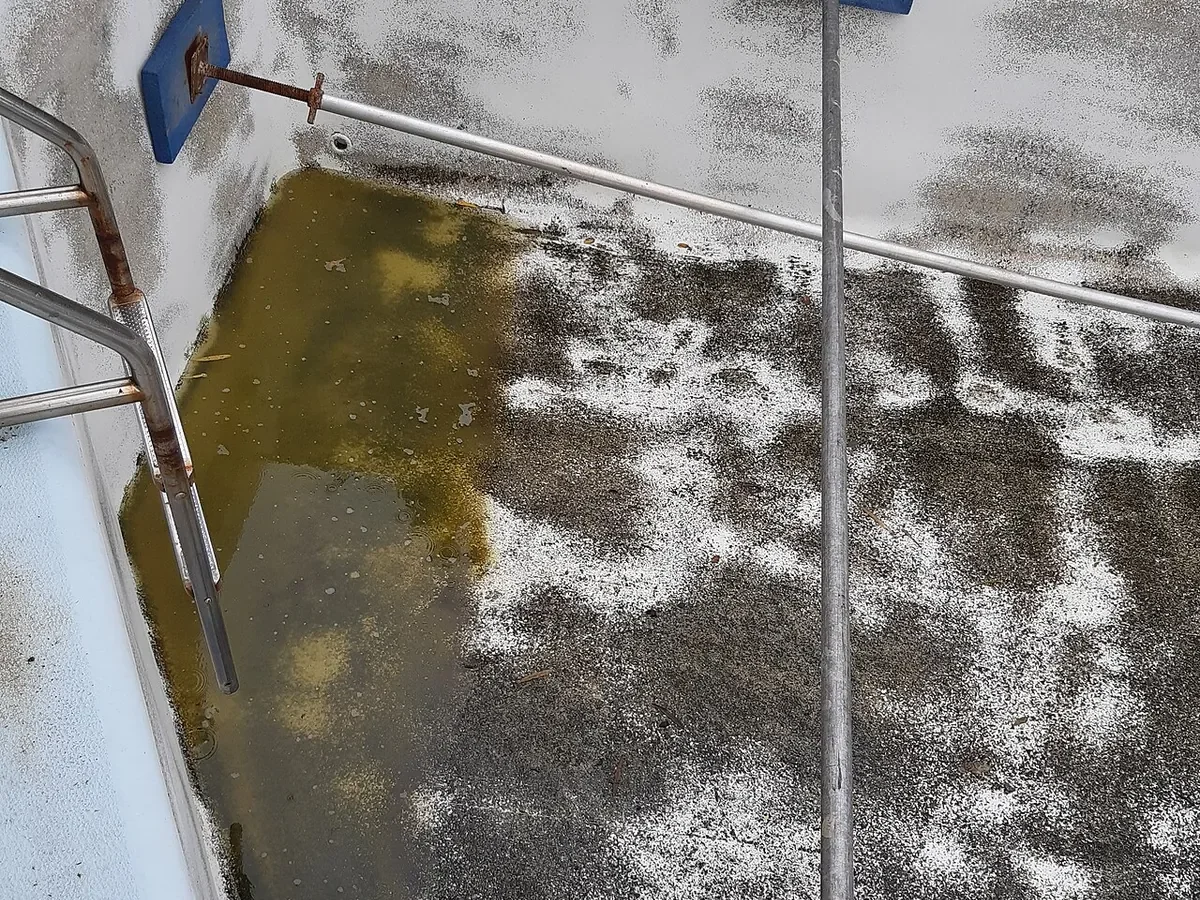
Photo: Calistemon, Wikimedia Commons, CC BY-SA 4.0 (cropped)
Algae in My Pool: The First Three Checks
When you first spot algae in your pool, check three things before you buy anything:
- Chlorine and pH. Low chlorine or high pH explains most pool algae. Test both and correct pH first.
- Pump and filter. Is the pump running long enough, and when was the filter last cleaned? Algae in a swimming pool often follows a filter that has been neglected.
- Stabilizer level. If cyanuric acid is high, normal chlorine doses will not kill algae, and you will need more chlorine or a partial drain.
Fixing the cause is just as important as killing the pool algae, or it will return within days.
How to Remove Algae From Pool Surfaces and Equipment
Killing algae in the water is only half the job. To remove algae from the pool completely, clean everything it touches:
- Walls, floor and steps: brush daily during treatment.
- Behind ladders, rails and lights: remove ladders if possible and brush behind them.
- Skimmer throats and baskets: scrub them; algae hides in dark areas.
- Filter: backwash sand and DE filters thoroughly; soak cartridges in a cleaning solution or replace them after a heavy bloom.
- Pool toys, floats and covers: wash them with a chlorine solution and let them dry in the sun.
- Pool tools: rinse brushes, nets and vacuum heads in chlorinated water.
This full pool algae removal stops spores from reinfecting the water once chlorine returns to normal.
Swimming Pool Algae by Season
Spring. Pools often open with algae after winter, especially under mesh covers. Shock heavily at opening and brush daily for the first week.
Summer. Heat, sun and heavy use burn through chlorine; algae can appear within a day or two of missed testing. Test more often and shock after heat waves.
Fall. Leaves bring nutrients and stains. Skim often and keep chlorine up until closing.
Winter. Cold water slows algae, but closed pools can still bloom on warm days. Closing chemicals and a good cover help; see how to winterize a pool.
Algaecide for Pool Prevention: How to Use It
Algaecide for a pool is most useful as prevention once the water is clean. After killing algae with chlorine, add the initial dose recommended on the label, then a weekly maintenance dose. Add algaecide with the pump running, away from skimmers, and not at the same time as shock, because high chlorine can reduce some algaecides' effect. Choose a non-foaming polyquat for routine use, or a product made for mustard or black algae when those are a recurring problem. Avoid copper algaecides if your water already has metals or if you have light-colored plaster that could stain.
Pool Algae vs Pollen vs Stains
Pollen floats as a yellow-green film on the surface and collects in skimmers; it does not cling to walls like algae and skims off easily. Metal stains are flat, do not brush off, and often appear after shocking; vitamin C rubbed on a metal stain often lightens it. Organic stains from leaves are brown and fade with chlorine and brushing. Knowing the difference saves money, because treating pollen or stains as algae wastes chemicals.
What It Costs to Get Rid of Pool Algae
For most pools, killing algae costs $30 to $200 in chlorine, pH adjusters and perhaps algaecide or clarifier, plus water if you vacuum to waste. Severe blooms or black algae cost more because they take longer. A pool service may charge $150 to $800 or more for algae treatment, depending on severity and visits. See cost to maintain a pool.
How to Get Rid of Mustard (Yellow) Algae
- Wash swimsuits, toys, floats and pool tools, or soak them in chlorinated water, because mustard algae hides on them.
- Brush all surfaces well, especially shady areas.
- Raise chlorine to a high level and keep it there for several days.
- Consider a sodium bromide product designed for mustard algae, used with chlorine as directed.
- Clean or chemically treat the filter.
- Keep chlorine high a few days after it seems gone, then add algaecide for prevention.
See how to get rid of mustard algae in a pool for a full guide.
How to Get Rid of Black Algae
- Brush each spot hard with a stainless brush to break the protective layer.
- Rub a chlorine tablet directly on spots (on plaster only), or place granular chlorine on them.
- Shock to a high chlorine level and keep it high for days, brushing daily.
- Use a black-algae algaecide if needed.
- Check grout lines, steps and lights, where black algae often roots.
Black algae can take one to two weeks or more to defeat fully. If roots remain, it returns.
Algae in Pebble, Plaster, Vinyl and Fiberglass Pools
Pebble finishes have many crevices where algae can hide, so brushing and higher chlorine for longer are needed. How to get rid of algae in a pebble pool is the same process, with extra attention to brushing.
Plaster pools tolerate stainless brushes and spot treatment with tablets.
Vinyl pools need nylon brushes and pre-dissolved shock to avoid bleaching the liner.
Fiberglass pools resist algae best because the surface is smooth and non-porous; algae usually wipes off easily.
A Simple Pool Algae Treatment Log
Keeping a short log during treatment makes it much easier to see whether you are winning. Each morning and evening, write down free chlorine, pH, how the water looks, and how much chlorine you added. A table like the one below works well:
| Time | Free chlorine | pH | Water | Action |
|---|---|---|---|---|
| Day 1, evening | 0.5 ppm | 7.9 | Green, walls slimy | Lower pH, shock, brush |
| Day 2, morning | 4 ppm (dropped fast) | 7.5 | Green-blue | Add chlorine, brush, clean filter |
| Day 2, evening | 10 ppm | 7.4 | Blue, cloudy | Brush, keep filtering |
| Day 3, morning | 8 ppm (holding) | 7.4 | Hazy | Vacuum to waste, add clarifier |
| Day 4 | Holding overnight | 7.4 | Clear | Rebalance, add algaecide |
The numbers here are only an example; your target chlorine depends on your stabilizer level. The pattern is what matters: chlorine use falls as the pool algae dies, and when chlorine holds overnight while the water is clear, the treatment is complete.
Safety Tips When Treating Pool Algae
Wear gloves and eye protection when handling shock, acid and algaecide. Add chemicals to water, never water to chemicals, and never mix chemicals together. Keep swimmers out until chlorine returns to the normal range for swimming. Store products apart, in a cool, dry, ventilated place, and follow every label. Algaecides are registered pesticides in the United States, so using them according to the label is a legal requirement as well as a safety step.
Can You Swim in a Pool With Algae?
It is best not to. Algae itself is usually not dangerous, but its presence means chlorine is too low to protect against germs, and cloudy water hides swimmers in trouble. Algae also makes steps and floors slippery. Wait until the water is clear and chlorine is back in the normal range.
Will Pool Shock Kill Algae?
Yes, chlorine shock is the main weapon against algae, but only if the chlorine level stays high enough for long enough. A single bag of shock is often not enough for an established bloom. Non-chlorine shock does not reliably kill algae.
When to Call a Pool Professional for Algae
Most algae problems can be handled by owners, but a professional is worth calling when black algae keeps returning despite weeks of treatment, when a pool has been neglected for months and is dark green or black, when cyanuric acid is so high that a partial drain and refill is needed, or when equipment problems such as a failing pump or filter keep undermining your efforts. A pro can test the water fully, including phosphates and metals, diagnose circulation dead spots, and in severe cases recommend draining and acid washing a plaster pool. Ask for a written plan with the number of visits, the chemicals used and the expected total cost before work starts.
How to Prevent Algae in a Pool
- Keep free chlorine in range daily and test two or three times a week.
- Keep pH between 7.2 and 7.8.
- Keep cyanuric acid moderate; avoid letting it climb from stabilized tablets.
- Run the pump long enough to turn over the water at least once a day.
- Brush weekly, including corners and steps.
- Clean the filter when pressure rises.
- Shock after storms, heat waves and heavy use.
- Use a weekly dose of algaecide as a backup.
- Keep leaves and debris out, and use a cover.
For a full weekly routine, see how to clean a pool.
How Do I Get Rid of Pool Algae in an Above Ground Pool?
Getting rid of pool algae in an above ground pool follows the same steps, with a few cautions. Use a nylon brush and pre-dissolve granular shock or use liquid chlorine to protect the vinyl liner. Above ground pools often have small filters, so clean them more often during treatment, and consider a spare cartridge to swap in. Because the water volume is smaller, chlorine doses are smaller, and a pool algae problem can often be cleared in a day or two. Check the area where the wall meets the floor (the cove), where algae often hides in above ground pools.
Killing Algae in a Saltwater Pool
Salt cells make chlorine slowly, so they cannot produce enough to kill an algae bloom. To kill algae in a saltwater pool, add liquid chlorine or shock directly, brush, and filter as in any pool, then return the salt cell to normal output once the water is clear. Clean the salt cell afterward, because algae treatment and high pH can cause scale. Salt pools that keep getting algae often need a higher cell output setting, longer pump run time, or a lower pH.
How to Get Rid of Algae in Pool Water Without Chemicals?
There is no reliable chemical-free way to kill an algae bloom in a chlorinated pool. Brushing, vacuuming and filtering remove some algae, and UV or ozone systems can help keep water cleaner, but chlorine (or another approved sanitizer) is still needed to kill algae and protect swimmers from germs. Natural swimming pools use plants and biological filters instead, but they are designed differently from the start and accept some algae as part of the system.
How to Get Rid of Algae in Pool: Key Points
- Identify the type of pool algae: green, mustard, black or pink slime.
- Lower pH, brush hard and shock to a high chlorine level, then keep it high until the algae is gone.
- Filter around the clock, clean the filter often and vacuum dead algae to waste.
- Treat toys, tools and the filter so spores do not return.
- Prevent algae in the pool with steady chlorine, balanced pH, good circulation and weekly brushing.
Frequently Asked Questions
What kills algae in a pool the fastest?
A high chlorine level held until the pool algae is gone, combined with brushing, balanced pH and 24-hour filtering. Liquid chlorine or calcium hypochlorite shock added at dusk works fastest.
How long does it take to get rid of pool algae?
Green algae often clears in 1 to 4 days; mustard and black algae can take one to two weeks or more, especially in plaster and pebble pools.
How much algaecide should I put in my pool?
Follow the product label for your pool volume; strengths differ widely between brands and types. Use algaecide after treatment and then a smaller weekly dose for prevention, adding it with the pump running.
Why does algae keep coming back in my pool?
Usually low chlorine, high pH, high stabilizer, poor circulation, a dirty filter, or contaminated toys and equipment. Fix the cause as well as the symptom, or the pool algae returns within days.
How do I remove algae from my pool walls?
Brush the walls daily with a stiff brush during treatment, keep chlorine high, and spot treat stubborn patches. On plaster, rubbing a chlorine tablet on small spots helps; on vinyl, use only liner-safe products.
Does algaecide kill algae or prevent it?
Both, but it works best as prevention. To kill an existing bloom, rely on chlorine, brushing and filtration, then use algaecide to help stop regrowth.
What causes mustard algae in a pool?
Mustard algae thrives in shady areas with low circulation and is often carried in on swimsuits, toys and equipment from other water. It survives normal chlorine, so it returns unless everything is cleaned and chlorine stays high for several days.
How do you kill algae in a pool overnight?
Light algae can sometimes clear overnight with balanced pH, a strong shock at dusk, thorough brushing and 24-hour filtering. Heavier algae takes several days.
Is pool algae harmful?
Most pool algae is not directly harmful to swimmers, but its presence signals low sanitizer, can shelter bacteria, makes surfaces slippery and clouds the water, so it should be cleared before swimming.
Can I use bleach to kill pool algae?
Unscented household bleach is sodium hypochlorite like liquid pool chlorine, but usually weaker; pool chlorine is more practical for large doses. Never use scented or splash-less bleach, which contains additives you do not want in pool water.
Sources
- CDC: Healthy Swimming
- Pool & Hot Tub Alliance: water chemistry resources
- U.S. EPA: Algaecides are registered pesticides; follow label directions
- CDC: Pool chemistry and operation guidance