
How to Take Off Spray Paint From Concrete, Plus Paint, Epoxy and Adhesive
Quick Answer
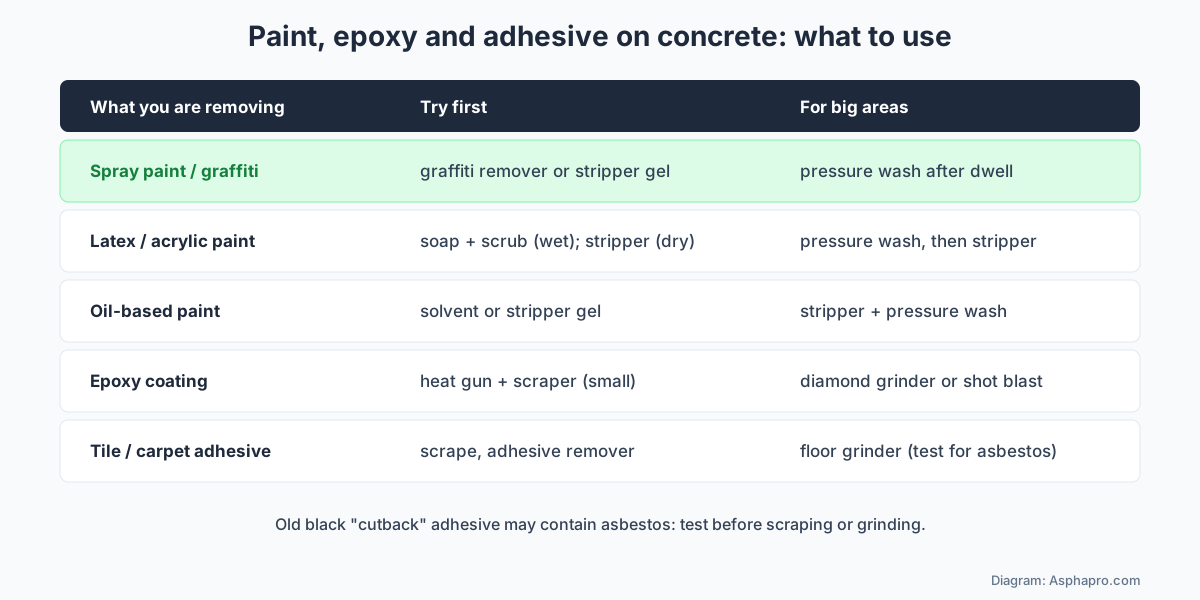
To take off spray paint from concrete, apply a graffiti remover or a gel paint stripper made for masonry, let it dwell as the label says (often 15 minutes to several hours), scrub with a stiff nylon brush and rinse with a pressure washer. Repeat for any shadow. To take paint off concrete over a larger area, use a stripper plus pressure washing, or for thick coatings, mechanical removal. To remove epoxy from concrete, use a heat gun and scraper for small spots or a diamond grinder for floors. To remove adhesive from concrete, scrape, then use an adhesive remover or a grinder, and test old black adhesive for asbestos first.
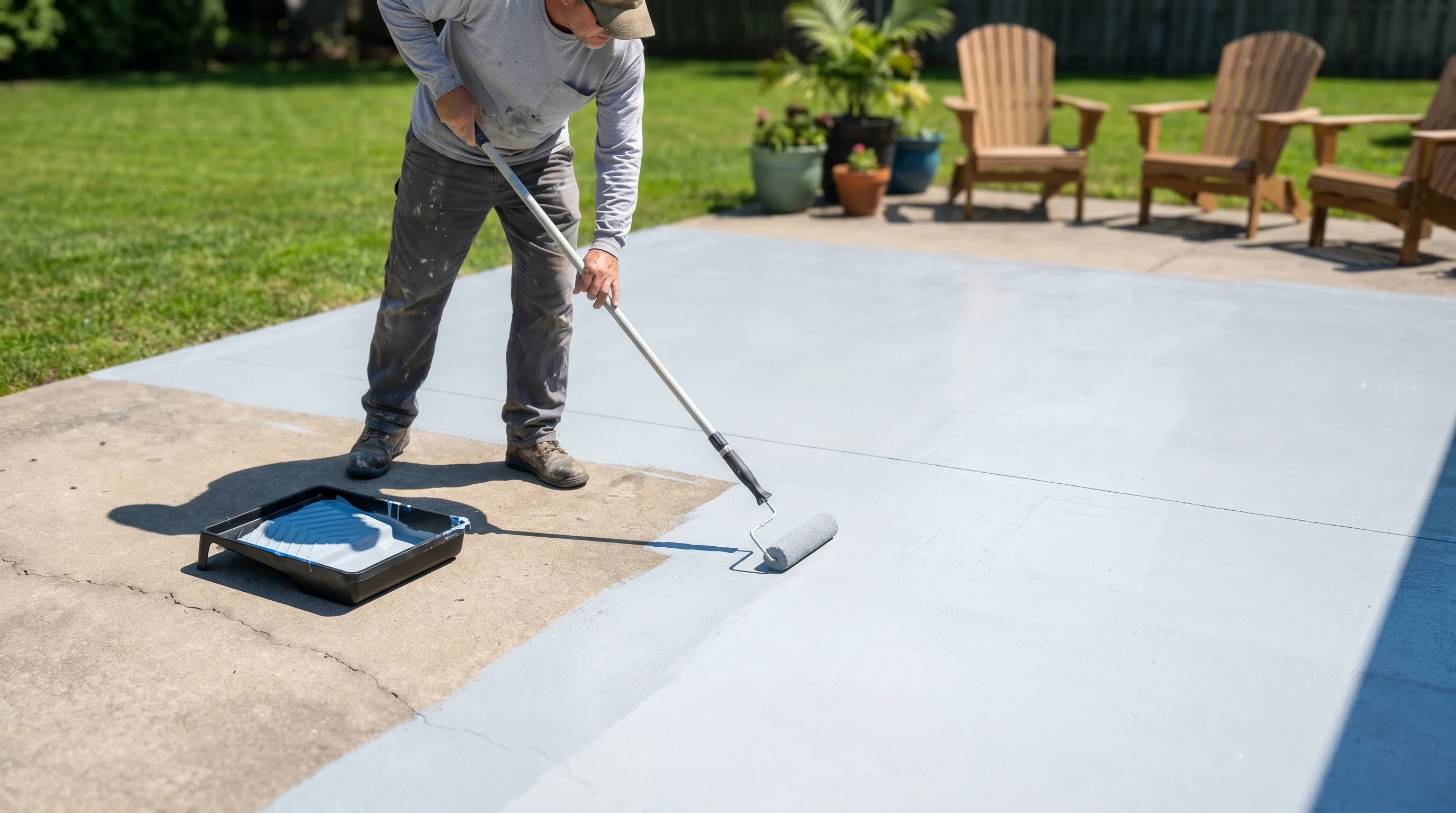
Paint ends up on concrete in many ways: a spray paint project on the driveway, graffiti on a wall, drips from painting the house, an old painted garage floor that is peeling, an epoxy coating that failed, or glue left behind after pulling up tile or carpet. Concrete is porous, so paint and glue grip into the pores, which is why simple scrubbing rarely works.
This guide explains how to take off spray paint from concrete step by step, how to take paint off concrete of every common type, how to remove epoxy from concrete floors, and how to remove adhesive from concrete safely, including the asbestos risk with older flooring glue.
Identify What You Are Removing
The right method depends on what is on the concrete. A few quick checks help:
- Spray paint: thin, often bright, with overspray edges. Usually enamel or acrylic lacquer.
- Latex (water-based) paint: softens with rubbing alcohol on a rag. Common for house paint drips and many concrete paints.
- Oil-based (alkyd) paint: does not soften with alcohol but may soften with mineral spirits.
- Epoxy: thick, hard, glossy coating, often on garage floors, sometimes with color flakes. Does not soften with solvents easily.
- Concrete stain: soaks in rather than sitting on top; see the section on stains below.
- Adhesive: left after tile, vinyl or carpet removal. Black, tar-like glue is often older cutback adhesive.
Test a hidden spot: rub a little rubbing alcohol on the paint with a white rag. If color comes off, it is likely latex. If not, try lacquer thinner on a small area; if it softens, it is likely lacquer or enamel. Hard coatings that resist both are usually epoxy or urethane.
Why Paint Sticks So Well to Concrete
Concrete is full of small pores and has a slightly rough surface, even when it looks smooth. Paint flows into those pores while wet and locks in as it dries, creating a mechanical grip. Coatings like epoxy add a chemical bond on top of that. This is great when you want paint to last, and frustrating when you want to remove paint from a driveway or floor.
It also explains why the age of the paint matters. Fresh paint sits mostly on the surface and has not fully cured, so it comes off with soap, solvent or a quick stripper. Paint that has cured for months has bonded deeper and needs longer dwell times, more scrubbing or grinding. With spray paint, the thin layer dries fast, but the pigment can soak into porous concrete within minutes, which is why a faint ghost often remains after the first cleaning.
Working in Sections
For anything bigger than a few square feet, work in sections of about 3 by 3 feet or 4 by 4 feet. Apply stripper to one section, cover it if needed, and move to the next while the first dwells. Then scrape and rinse sections in the same order. This keeps the stripper from drying out, lets you judge dwell time, and makes the job less overwhelming. Mark finished sections with tape so you do not lose track on a large patio. When every section is done, give the whole area one final rinse so no stripper residue is left behind in the joints and low spots.
What You Need
- Graffiti remover or gel paint stripper rated for concrete and masonry.
- Plastic scraper and a stiff-blade floor scraper.
- Stiff nylon scrub brush.
- Pressure washer with a 15- or 25-degree tip or surface cleaner.
- Plastic sheeting to cover strippers and protect plants.
- Chemical-resistant gloves, goggles, long sleeves and a respirator suited to the product.
- For epoxy and large areas: a diamond floor grinder with dust collection (often rented).
- For adhesive: an adhesive remover made for concrete and a floor scraper.
How to Take Off Spray Paint From Concrete
How to take spray paint off concrete depends on how fresh it is. Wet paint wipes up with a rag and a solvent; dried spray paint needs a stripper or a graffiti remover, followed by scrubbing and a rinse.
- Act soon: fresh spray paint is easier to remove than paint that has cured for weeks.
- Protect the area: cover plants and nearby surfaces with plastic; wet surrounding grass.
- Apply remover: brush on a graffiti remover or gel stripper made for masonry, extending past the edges.
- Let it dwell: follow the label. Many work in 15 to 30 minutes; some newer, safer gels need several hours. Cover with plastic if the label says, so it does not dry out.
- Scrub: agitate with a stiff nylon brush.
- Rinse: pressure wash, working from the edges toward the center so you do not spread the paint.
- Repeat: a ghost image often remains after the first round. A second application usually removes it.
For small fresh spots, a rag with lacquer thinner or acetone can lift spray paint from smooth concrete, but on rough concrete it can push dissolved paint deeper. Strippers that hold paint in a gel and get rinsed off work better on porous surfaces.
How to Take Paint Off Concrete: Latex and Oil-Based
Wet latex paint
Wipe up fresh latex drips right away with a damp rag. Then scrub with warm water and dish soap. Do not let it dry if you can help it.
Dried latex paint
Small dried drips can be scraped with a plastic scraper after softening with warm water or rubbing alcohol. For larger areas, use a paint stripper, then scrub and pressure wash.
Oil-based paint
Use a stripper rated for oil-based paint or a solvent such as mineral spirits for small spots. Larger areas need a gel stripper, dwell time under plastic, scraping and pressure washing. Ventilate well and keep solvents away from flames.
Painted concrete floors and patios
Removing paint from a whole patio or garage floor is a bigger job. A good approach is to pressure wash first to remove loose, peeling paint, then apply stripper to what remains in sections, scrape and rinse. For thick or many layers, mechanical removal with a grinder or shot blaster is often faster. See concrete paint for painting options after removal.
How to Remove Epoxy From Concrete
Epoxy is designed to bond permanently to concrete, so removing it is mostly mechanical work.
Small spots and drips
- Warm the epoxy with a heat gun on a low setting until it softens. Do not overheat; it can smoke and give off fumes.
- Scrape with a stiff floor scraper or putty knife while it is soft.
- Repeat until removed, then clean residue with a solvent recommended by the epoxy maker.
Whole garage floors
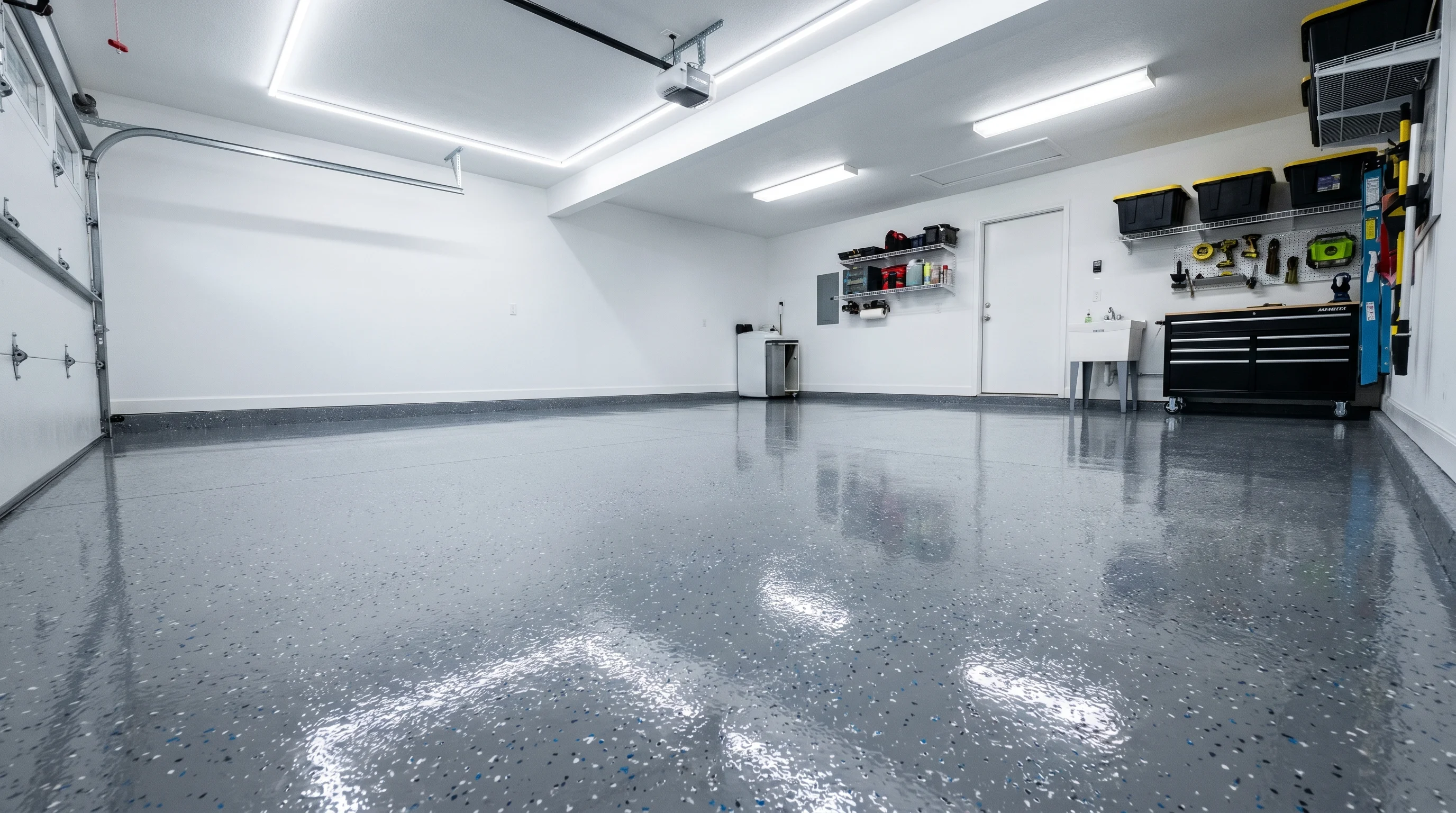
For a full epoxy floor, the standard method is a diamond floor grinder with a dust collection vacuum. Rental grinders are available, but they are heavy and take practice. Contractors use larger grinders or shot blasters, which leave a clean profile ready for a new coating. Some epoxy strippers exist, but they are slow and messy on full floors.
If an epoxy floor is peeling, the cause is usually poor prep, moisture in the slab or a weak, one-part product. Before recoating, the floor should be ground, checked for moisture and coated with a proper system. See concrete coating cost.
How to Remove Adhesive From Concrete
After pulling up tile, vinyl or carpet, you usually find glue on the slab. Removing it is necessary before most new floors.
Asbestos warning
Older black adhesives, often called cutback or mastic, and some older vinyl tiles may contain asbestos. The EPA advises that asbestos-containing materials are generally not hazardous when left intact, but sanding, grinding or dry scraping can release fibers. If your home or floor is older and you see black adhesive, have a sample tested by an accredited lab before you disturb it. If it contains asbestos, follow local rules, which often call for a licensed abatement contractor.
Removing non-asbestos adhesive
- Scrape off as much adhesive as possible with a long-handled floor scraper.
- Apply an adhesive remover made for concrete, following the label. Many newer removers are low-odor and water-based.
- Let it dwell, then scrape the softened glue.
- Clean residue with the product's recommended cleaner and let the slab dry.
- For thick residue or a smooth finish, use a floor grinder with dust collection.
Some flooring can go over thin, well-bonded adhesive residue, but many new floors require a clean slab. Check the new flooring maker's instructions.
Types of Paint Strippers for Concrete
Not all strippers work the same way. Picking the right type saves time and keeps you safer.
| Type | How it works | Best for | Cautions |
|---|---|---|---|
| Solvent-based gel | Solvents soften and lift paint film | Spray paint, enamel, oil-based paint | Fumes; ventilate; flammable |
| Caustic (alkaline) stripper | High pH breaks down oil-based paint binders | Many layers of old paint | Burns skin; neutralize after |
| Low-odor / biodegradable gel | Slower-acting solvents such as soy or benzyl alcohol blends | Indoor use, homeowners | Longer dwell, often hours |
| Graffiti remover | Blend made for paint on masonry | Spray paint and markers on walls and slabs | Follow dwell time exactly |
| Adhesive remover | Softens mastic and flooring glue | Tile, vinyl and carpet glue | Test old glue for asbestos first |
Strippers containing methylene chloride are restricted for consumer use in the U.S. because of serious health risks, so most products on store shelves now use other active ingredients. Read the label carefully and match it to the paint type and to concrete or masonry.
Mechanical Removal Methods
For big areas, thick coatings and epoxy, machines often beat chemicals. They also leave the concrete clean and profiled, ready for a new coating.
| Method | What it does | Good for | Notes |
|---|---|---|---|
| Diamond grinder | Spinning diamond discs grind off the coating | Epoxy, paint, adhesive on floors | Needs dust collection; rental available |
| Shot blaster | Steel shot blasts the surface and is recycled | Large garage and commercial floors | Mostly contractor equipment |
| Scarifier | Rotating cutters chip off thick layers | Thick coatings, uneven surfaces | Leaves a rough texture |
| Soda or sand blasting | Media blasted at pressure | Walls, graffiti, detailed surfaces | Messy; containment needed |
| Hot pressure washer | Heat and pressure lift softened paint | After stripper on driveways and walls | Not enough alone for bonded paint |
Graffiti on Walls and Vertical Concrete
Graffiti is usually spray paint or marker on block walls, retaining walls, foundations and sidewalks. Gel removers cling to vertical surfaces better than liquids. Work from the bottom up when applying so drips do not create clean streaks below, and rinse from the top down. On textured or split-face block, use a brush to work the remover into the grooves. Remove graffiti quickly; studies of graffiti programs often note that fast removal discourages repeat tagging. After cleaning, consider an anti-graffiti coating, which makes future paint easier to wash off. For block walls, see concrete block wall cost.
A Worked Example: Peeling Paint on a Garage Floor
Say a garage floor was painted with a one-part latex floor paint ten years ago. It is peeling under the tires and flaking near the door, and the homeowner wants a new epoxy coating.
- They check the home's age and the paint: the home is newer than 1978, and a lead test kit is negative.
- They pressure wash with a surface cleaner, which removes most of the loose, peeling paint.
- For well-bonded paint in the middle of the floor, they rent a diamond floor grinder with a dust vacuum and wear a respirator and hearing protection.
- Grinding removes the remaining paint and leaves the slab with a light profile.
- They vacuum thoroughly, check for moisture coming up through the slab, and apply a two-part epoxy following the system instructions.
For this kind of job, grinding is faster than chemical stripping and leaves the surface ready for the new coating. Chemical strippers would need many rounds and still require prep afterward.
Driveways, Patios, Garages and Basements
- Driveways and sidewalks: spray paint and paint drips are usually small areas. Graffiti remover or gel stripper, then a pressure washer, is the standard method.
- Patios: painted or coated patios that are peeling can be pressure washed, then stripped or ground. Choose a breathable concrete stain or a proper coating next time.
- Garage floors: paint and epoxy are best removed by grinding, especially before a new coating.
- Basement floors and walls: ventilation is the main concern, so choose low-odor strippers or mechanical methods with dust control. Paint that peels on basement walls is often a sign of moisture coming through the concrete; fixing water issues comes first.
After Removal: Clean and Prep
Once paint, epoxy or adhesive is gone, the concrete needs to be cleaned before you do anything else.
- Rinse away all stripper residue. Caustic strippers often need neutralizing with a mild acid rinse, as the label directs.
- Let the slab dry fully, usually a day or more.
- Check for moisture by taping a square of plastic to the floor for a day; condensation underneath suggests moisture coming up.
- For a new coating, follow the system's surface profile requirements, which usually call for grinding or shot blasting.
- Patch cracks and spalls before recoating. See concrete repair cost.
Troubleshooting
A ghost image of the spray paint remains
Pigment soaked into the pores. Apply the remover again with a longer dwell time under plastic, or use a poultice made with the remover and an absorbent powder.
The stripper dried and did nothing
It needs to stay wet. Cover it with plastic, work in shade, and apply a thicker layer.
The concrete looks lighter after cleaning
Strippers and pressure washing clean the surface deeper than the surrounding slab. Clean the whole area evenly to blend.
Epoxy will not come off with a heat gun
Cured industrial epoxies are very hard. Use a grinder for anything larger than small drips.
DIY vs Pro
Small spray paint marks and paint drips are good DIY jobs that need only a remover, a brush and a pressure washer. Rental stores offer floor grinders and dust vacuums by the day, which can make garage floor paint removal manageable for a handy homeowner. For large floors, thick epoxy, possible lead paint or asbestos adhesive, a contractor with commercial equipment and proper training is the safer and often faster choice. Many coating contractors include removal of the old coating in their price for a new floor; ask for removal and prep to be listed separately so you can compare quotes.
Pressure Washing Paint Off Concrete
A pressure washer alone can remove loose, peeling paint and some old latex, but it rarely removes well-bonded paint without a stripper. Tips:
- Use a 15- or 25-degree tip for paint, or a surface cleaner for even results. Avoid 0-degree tips, which can etch concrete.
- Machines around 3,000 PSI or higher work best for paint.
- Let a stripper do the work first; pressure washing then rinses the softened paint off.
- Collect paint chips; they can contain lead if the paint is old.
Lead Paint Safety
Paint applied before 1978 may contain lead. If you are removing old paint from concrete near an older home, do not dry sand, grind or pressure wash it without precautions. The EPA's lead-safe guidance recommends wet methods, containment, and proper cleanup and disposal of chips and dust. Test kits are sold at hardware stores, and certified renovators can handle lead-safe removal.
Concrete Stains vs Paint
Acid stains and water-based concrete stains soak into the concrete rather than forming a film, so strippers do not remove them well. Removing a stain usually means grinding off the top layer of concrete. If you want to change the color, it may be easier to stain darker or apply a coating over it.
Safety Tips
- Read the product label and safety data sheet.
- Wear chemical-resistant gloves, goggles and long sleeves.
- Use a respirator suited to the product, especially with solvents and indoors.
- Ventilate garages and basements well.
- Keep flammable solvents away from water heaters, pilot lights and sparks.
- Use dust collection with grinders; concrete dust contains crystalline silica, which OSHA regulates because it can harm the lungs.
- Protect plants and keep stripper runoff out of storm drains.
Household Methods for Small Spots
If you only need to remove paint from a small spot and do not want to buy a stripper, a few household options can help, with limits.
- Hot water and dish soap: lifts fresh latex paint before it dries. It does nothing for dried spray paint.
- Rubbing alcohol: softens dried latex paint on small drips so it can be scraped and scrubbed.
- Acetone or lacquer thinner: dissolves fresh spray paint on smooth concrete. Blot, do not rub, and follow with soap and water. On porous concrete it may spread the stain.
- Citrus-based removers: a gentler option for small spray paint spots on driveways and walks.
- Baking soda paste with hot water: a mild scrub that can help lift softened latex.
- Hot vinegar: can soften small latex spots but rarely helps with spray paint and can etch concrete with repeated use.
For anything larger than a dinner plate, a proper graffiti remover or paint stripper saves time and gives a more even result.
Preventing Paint, Epoxy and Glue Messes
- Lay drop cloths or plastic before spray painting or painting near concrete.
- Use a spray booth or cardboard box for small spray paint projects instead of painting on the driveway.
- Keep a rag and a bucket of water nearby to wipe latex drips before they dry.
- When mixing epoxy, work on a sheet of plastic and wipe drips right away with the maker's recommended solvent.
- Apply anti-graffiti coatings on walls that get tagged.
- Seal bare concrete so paint has a harder time soaking into the pores; see how to seal concrete.
Quick Reference by Situation
- How to take off spray paint from concrete driveways: graffiti remover or gel stripper, dwell, scrub, pressure wash, repeat once for the shadow.
- How to take paint off concrete patios that are peeling: pressure wash loose paint, strip what remains in sections, scrape and rinse.
- How to take paint off concrete garage floors: grind with a diamond grinder and dust vacuum, especially before a new coating.
- How to remove epoxy from concrete drips: heat gun on low and a scraper.
- How to remove epoxy from concrete floors: diamond grinding or shot blasting by a pro.
- How to remove adhesive from concrete after tile or carpet: test for asbestos if the glue is black or old, then scrape, use adhesive remover and grind if needed.
- How to take off spray paint from concrete walls: gel remover applied bottom-up, scrubbed and rinsed top-down, then an anti-graffiti coating.
Frequently Asked Questions
What is the best way to remove spray paint from concrete?
A graffiti remover or gel stripper made for masonry, left to dwell, scrubbed and pressure washed off. Repeat for any shadow.
Will a pressure washer remove paint from concrete?
It removes loose and peeling paint. For bonded paint, use a stripper first, then pressure wash.
How do you remove epoxy from concrete?
Small spots: heat gun and scraper. Whole floors: diamond grinder or shot blaster.
How do you remove adhesive from concrete?
Scrape, use an adhesive remover and scrape again, or grind. Test old black adhesive for asbestos first.
Does vinegar remove paint from concrete?
Hot vinegar can soften some latex paint on small spots, but it is not effective on most paints and can etch concrete.
Can acetone remove spray paint?
Yes, on small fresh spots, but on porous concrete it can push dissolved paint deeper. A gel stripper is better for most jobs.
How long does paint stripper take on concrete?
From 15 minutes for fast solvent removers to several hours for low-odor gels. Follow the label and keep it wet.
Can you paint over old paint on concrete instead?
Only if the old paint is well bonded and clean. Peeling paint must be removed or the new coat will peel too.
How do you get paint off a concrete wall?
Use a gel graffiti remover or stripper, which clings to vertical surfaces, scrub and rinse from the top down.
Is grinding the best way to remove paint from a garage floor?
For whole floors, yes. A diamond grinder with dust collection removes paint and epoxy and preps the floor for a new coating.
Sources
- U.S. EPA, Asbestos: protect your family (guidance on disturbing asbestos-containing materials). epa.gov
- U.S. EPA, Lead-safe renovation guidance. epa.gov
- OSHA, Respirable crystalline silica. osha.gov
- Manufacturer labels for paint strippers, graffiti removers and adhesive removers.
- Image credits: images and chart by Asphapro.com.
Always follow product labels and local rules. Checked November 2026.
Related Guides
- How to remove rust stains from concrete — oxalic acid and safe methods
- How to get tire marks off concrete — degreasers and hot tire pickup
- How to remove oil stains from concrete — fresh spills and old stains