
How to Get Tire Marks Off Concrete: Scuffs, Burnouts and Hot Tire Pickup
Quick Answer
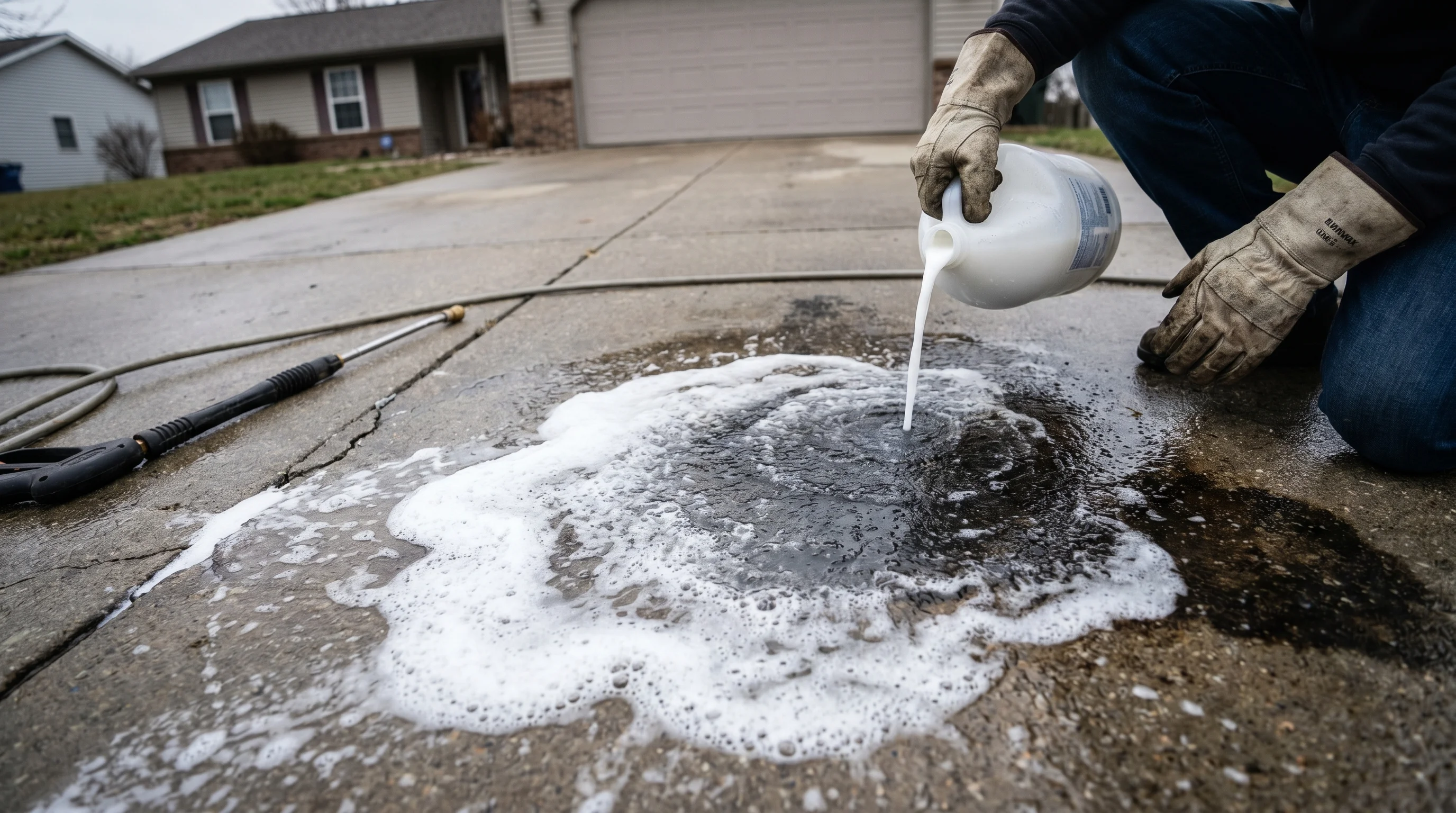
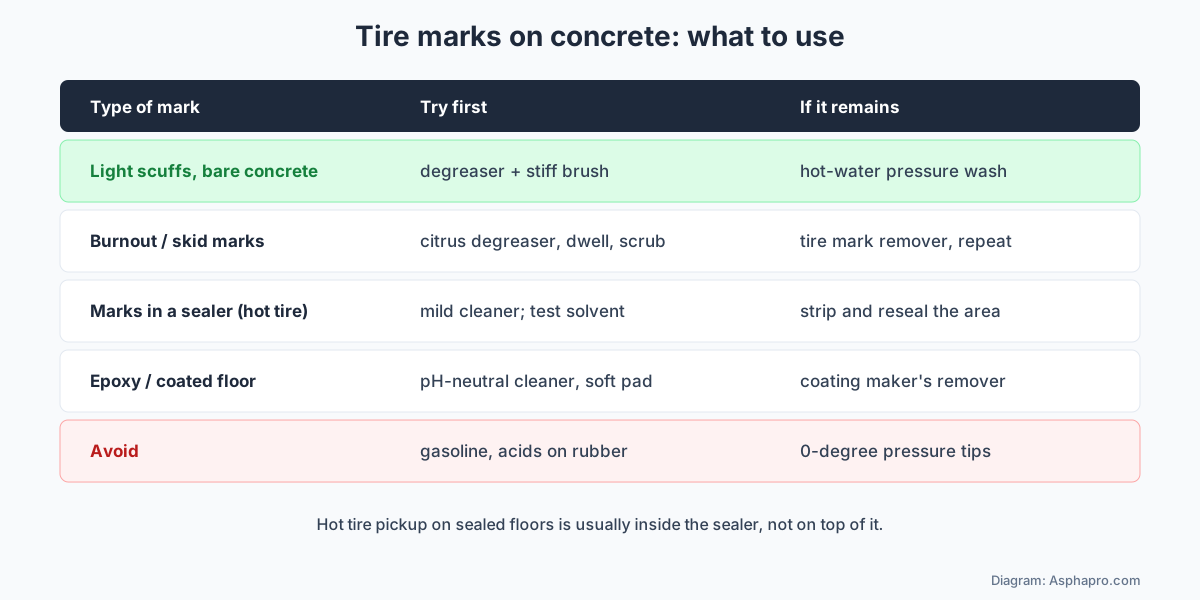
To get tire marks off concrete, wet the area, apply a concrete degreaser or citrus degreaser, let it sit 10 to 15 minutes, and scrub hard with a stiff nylon brush, then rinse. For heavy skid or burnout marks, repeat or use a tire mark remover and finish with a hot-water pressure wash. On a sealed garage floor, dark tire marks are often hot tire pickup: chemicals from warm tires migrate into the sealer, so the mark is inside the coating. Mild cleaners may not work; the fix is often stripping and resealing that area with a tougher coating.
Black tire marks on a driveway or garage floor are common and annoying. They come from turning wheels in place, parking on the same spot every day, quick starts, burnouts, and warm tires sitting on a sealed floor. The good news is that most tire marks on bare concrete come off with the right cleaner and some scrubbing. The tricky case is a sealed or coated garage floor, where the mark may be part of the sealer itself.
This guide explains how to get tire marks off concrete step by step, how to remove tire marks from concrete that is sealed, coated or decorative, why hot tire pickup happens, and how to get rid of tire marks on concrete for good.
What Tire Marks Are Made Of
Tires are a blend of natural and synthetic rubber, carbon black, oils, plasticizers, antioxidants and other compounds. When a tire scrubs against concrete, it leaves behind three kinds of residue:
- Rubber particles: tiny bits of tread worn off by friction, especially in skids, burnouts and tight turns.
- Carbon black: the black pigment that gives tires their color and makes the marks dark.
- Oils and plasticizers: chemicals that keep rubber flexible. Heat from driving softens and draws these out of the tire.
On bare concrete, these sit on the surface and in the top of the pores, mixed with road dirt and oil. A degreaser breaks the oily binder so the rubber and carbon black can be scrubbed and rinsed away. On a sealed surface, plasticizers can soften and soak into the sealer, which is why those tire marks behave differently.
What You Need
- Concrete degreaser or citrus-based degreaser.
- A tire mark remover or rubber mark remover for heavy marks.
- Stiff nylon scrub brush or a deck brush on a pole.
- Bucket, hose and hot water if possible.
- Pressure washer, ideally hot water, with a surface cleaner attachment.
- Gloves and eye protection.
- For coated floors: a pH-neutral cleaner and a soft scrub pad.
Step 1: Sweep and Pre-Rinse
Sweep away loose dirt, sand and grit. Then wet the area with water. Pre-wetting keeps degreaser from soaking straight into dry concrete, so more of it stays on the tire marks where it can work. On hot days, keep the area damp; cleaners stop working once they dry.
Step 2: Apply Degreaser and Let It Dwell
Apply a concrete degreaser or citrus degreaser directly on the tire marks, following the label dilution. Citrus degreasers contain d-limonene, a solvent from orange peels that is good at softening rubber and oily residue. Let the product sit 10 to 15 minutes, or as directed. Do not let it dry.
Step 3: Scrub Hard
Scrub the tire marks firmly with a stiff nylon brush, working back and forth along the mark and then across it. Most of the work happens here: the degreaser loosens the residue, but scrubbing lifts it out of the texture. A deck brush on a long handle lets you put more weight into it on a driveway.
Step 4: Rinse or Pressure Wash
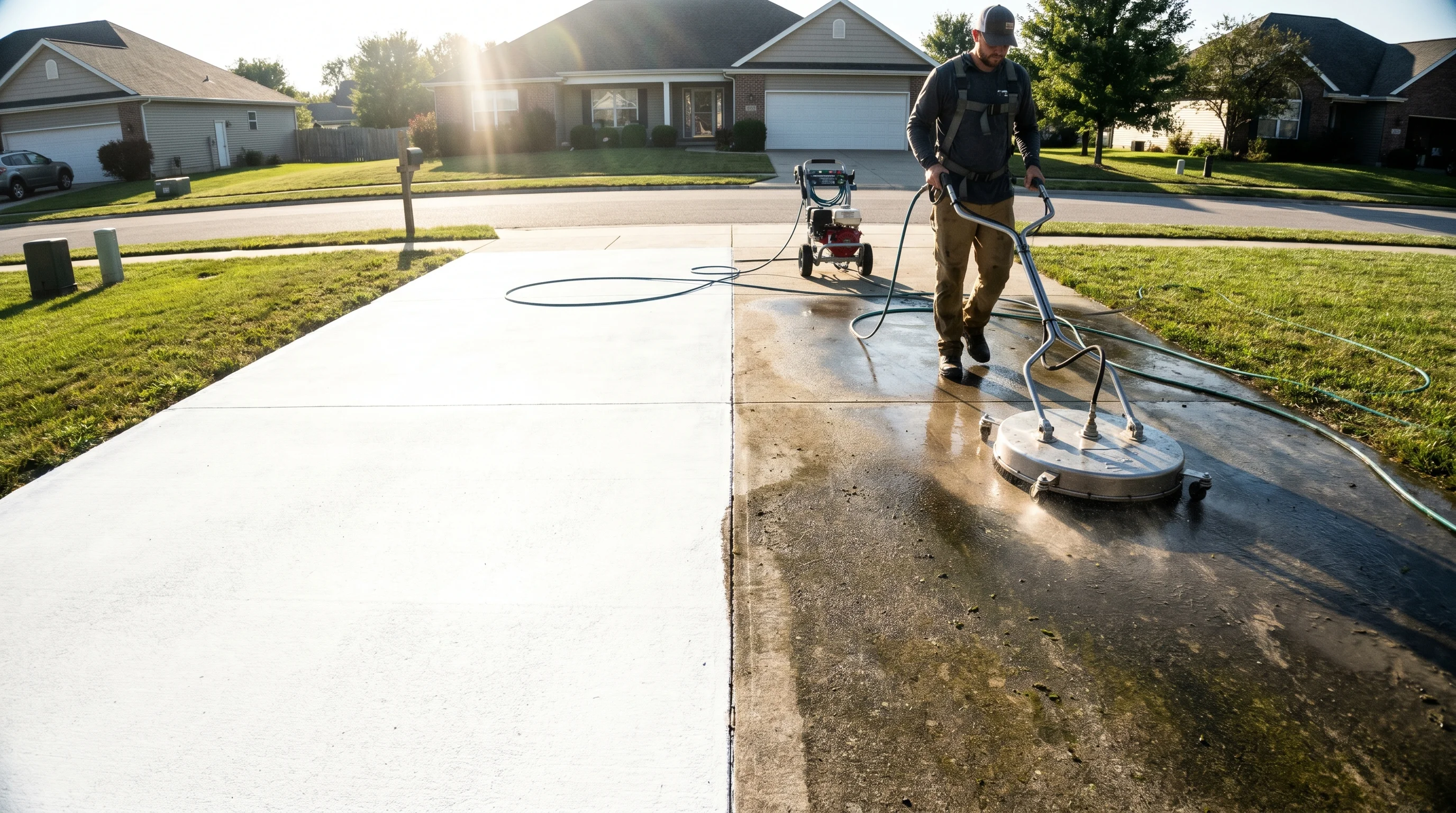
Rinse the loosened residue off with a hose, or use a pressure washer for better results. Hot water cuts rubber and oil far better than cold, so if you have stubborn marks, a rental hot-water unit can make a big difference. Use a surface cleaner attachment or a 25-degree tip, keep the wand moving, and avoid narrow 0-degree tips that can etch or stripe concrete.
Step 5: Repeat or Use a Tire Mark Remover
If the tire marks are lighter but still visible, repeat steps 2 to 4. For heavy burnout or skid marks, a dedicated tire mark remover is stronger than a general degreaser. These products are formulated for rubber and are often used by parking garages, warehouses and car dealerships. Follow the label, wear gloves and eye protection, and rinse thoroughly.
Hot Tire Pickup and Tire Marks in Sealed Floors
If you sealed your garage floor and now see dark tire marks right where the car parks, you are likely dealing with hot tire pickup or plasticizer migration. Here is what happens:
- Driving heats tires, softening the rubber and its plasticizers.
- When a warm tire sits on a sealer, especially an acrylic or a soft, thin coating, the plasticizers move from the tire into the sealer.
- The sealer softens and can stick to the tire. When the car leaves, it may pull up bits of sealer, or leave dark, rubber-stained areas inside the coating.
Because the stain is in the sealer, scrubbing the surface often does not help. Options include:
- Try a mild cleaner first: some light marks are only on top.
- Test a solvent: some sealer makers recommend a specific solvent that can re-dissolve and level the stained sealer. Test in a hidden area, follow the label, and ventilate.
- Strip and reseal: remove the stained sealer with a stripper, clean, and apply a fresh coat.
- Upgrade the coating: a fully cured epoxy, polyurea or polyaspartic system is far more resistant to hot tire pickup than thin acrylic sealers; see concrete coating cost.
How to Remove Tire Marks From Concrete Garage Floors With Epoxy
A good epoxy or polyaspartic garage floor resists most tire marks, and the marks that do appear usually sit on top. Clean them with a pH-neutral cleaner and a soft scrub pad or soft-bristle brush. Avoid harsh degreasers and solvents unless the coating maker approves them, because they can dull or soften the finish. If marks are inside the coating or the coating is peeling under the tires, the floor may have been coated without proper prep or with a low-grade product. A pro can sand and recoat the affected area.
How to Get Rid of Tire Marks on Concrete Driveways
Driveway tire marks are usually dirt, rubber and oil in a broom-finished surface. They tend to show up where cars turn the wheels while stopped, at the bottom of a slope, or where the car enters from the street.
- Degrease and scrub the marks, then pressure wash the entire driveway for an even look.
- Treat any oil drips separately; see how to remove oil stains from concrete.
- Once clean and dry, seal with a penetrating sealer, which is less prone to hot tire pickup than film-forming acrylics.
Burnout and Skid Marks
Burnout and skid marks are heavier and wider than everyday scuffs. They leave more rubber, often melted into the surface by heat. Use a strong citrus degreaser or tire mark remover, give it more dwell time, scrub, and use a hot-water pressure washer. Several rounds are normal. On very porous concrete, a faint shadow may remain after cleaning.
Sealed, Stamped and Colored Concrete
Decorative concrete is usually sealed, so tire marks may be in the sealer. Start with mild cleaners and a soft brush, test any stronger product, and avoid high pressure that can strip sealer or color. If marks are in the sealer, a contractor can strip and reseal. See stamped concrete vs pavers for upkeep differences.
Why Marks Show Up Where They Do
Most homeowners notice the same pattern: dark arcs where the front wheels sit, a stripe at the bottom of a sloped driveway, and smudges at the garage entry. These come from how cars move at low speed.
- Turning while stopped: when you turn the steering wheel with the car not moving, the front tires twist against the concrete and grind off a thin layer of rubber. This is called dry steering, and it leaves curved smears.
- Stopping and starting on a slope: tires grip harder at the bottom of a driveway, where the car brakes and pulls away.
- The same parking spot every day: repeated heat and pressure in one place build up residue and, on sealed floors, plasticizer stains.
- Wet or dirty tires: tires carry road grime, oil and brake dust onto a clean slab and press it in.
- Performance and soft-compound tires: softer rubber leaves marks more easily than hard all-season tires.
Knowing the cause helps you prevent the next round. Rolling the car slightly while turning the wheel, for example, cuts dry steering marks a lot.
Types of Tire Mark Removers
| Product type | How it works | Good for | Cautions |
|---|---|---|---|
| Water-based concrete degreaser | Surfactants and alkaline builders lift oily residue | Everyday scuffs on bare concrete | Rinse well; may dull sealers |
| Citrus degreaser (d-limonene) | Natural solvent softens rubber | Heavier marks, burnouts | Strong scent; ventilate indoors |
| Dedicated rubber mark remover | Blend of solvents and surfactants for rubber | Skid marks, warehouses, parking areas | Read label; test on coatings |
| pH-neutral floor cleaner | Gentle surfactants | Epoxy and polyaspartic floors | Slow on heavy marks |
| Sealer stripper | Dissolves the sealer layer | Marks inside acrylic sealers | Removes sealer; reseal after |
Start at the top of the table and work down. Most driveway marks never need more than a degreaser and a good brush.
Pressure Washer Tips
A pressure washer turns a long scrubbing job into a short one, but how you use it matters.
- Pressure: around 3,000 PSI is common for driveway cleaning. Lower pressure with hot water often cleans better than higher pressure with cold.
- Hot water: hot-water pressure washers soften rubber and melt oily residue. They are available at many equipment rental stores.
- Surface cleaner: the round, spinning attachment cleans evenly and stops the zebra stripes a wand can leave.
- Tips: use 25-degree or 40-degree tips for edges. Do not use a 0-degree tip on concrete.
- Distance: keep the wand 8 to 12 inches from the surface and moving.
- Detergent: apply degreaser with a low-pressure soap nozzle first, let it dwell, then switch to a cleaning tip.
For sealed, stamped or older soft concrete, drop the pressure and test first so you do not strip sealer or expose aggregate.
A Worked Example: Sealed Garage With Hot Tire Marks
Say a homeowner rolled a glossy acrylic sealer onto a bare garage floor in spring. By summer, there are four dark patches under the tires, and the sealer has peeled in one spot.
- They try a degreaser and stiff brush. The surface looks cleaner, but the dark patches stay; the stain is inside the sealer.
- They check the sealer label. The maker recommends a specific solvent to re-wet and redistribute the acrylic. They test a hidden corner with good ventilation. It softens the sealer but the marks remain.
- They decide to remove the sealer under the parking area with a sealer stripper, scrub, rinse and let the floor dry.
- Rather than another thin acrylic, they hire a contractor to grind and apply a polyaspartic coating rated for hot tires, waiting the full cure time before parking.
The lesson: on sealed floors, cleaning treats the symptom. The lasting fix is a coating that can handle hot tires.
Which Garage Floor Finishes Resist Tire Marks
| Finish | Hot tire resistance | Notes |
|---|---|---|
| Bare concrete | No pickup, but stains easily | Marks clean off with degreaser |
| Penetrating sealer (silane, siloxane, silicate) | Good; no film to soften | Repels water and oil, keeps a natural look |
| Acrylic sealer (film-forming) | Poor to fair | Most prone to hot tire pickup |
| DIY one-part epoxy paint | Fair | Often lifts if prep was weak |
| Professional two-part epoxy | Good | Needs proper grinding and full cure |
| Polyaspartic / polyurea | Very good | Fast cure, high abrasion and chemical resistance |
For costs, see concrete coating cost and polished concrete cost. Polished concrete has no coating to stain, and marks clean off with a neutral cleaner.
Commercial Floors and Parking Areas
Warehouses, parking garages, loading docks and car dealerships deal with constant tire and forklift marks. Facilities usually use auto scrubbers with a rubber mark remover and a scrub brush or pad, on a regular schedule. Non-marking forklift tires reduce the problem at the source. For outdoor lots, a hot-water pressure wash with a surface cleaner and a mark remover is the standard approach.
Safety and Runoff
- Wear gloves and eye protection with degreasers and solvents.
- Ventilate garages by opening doors and using a fan, especially with citrus or solvent products.
- Keep solvents away from water heaters, pilot lights and sparks.
- Do not wash degreaser and rubber residue into storm drains; sweep, absorb or direct rinse water to landscaping only if the product label allows.
- Never mix cleaning chemicals.
Hiring a Pro
Pressure washing companies handle driveway tire marks routinely, often as part of a full driveway cleaning. Coating contractors handle hot tire damage in sealed garages, usually by grinding off the failed coating and applying a better system. Ask what products they use, whether they capture runoff, and, for coatings, what the hot tire rating and warranty are.
Poultice Method for Stubborn Shadows
When scrubbing and pressure washing leave a gray shadow, carbon black and oil have soaked into the pores. A poultice can pull them back up.
- Mix an absorbent powder such as diatomaceous earth, talc or fine clay cat litter with a citrus degreaser into a thick paste.
- Spread it about 1/4 inch thick over the shadow.
- Cover with plastic, tape the edges and leave it overnight.
- Remove the plastic, let it dry, scrape it off, scrub lightly and rinse.
- Repeat if the shadow is lighter but still there.
The same method is used for old oil drips, so it is worth doing both kinds of stains at once if your driveway has them.
Tire Marks vs Brake Dust and Rubber Mat Stains
Not every dark mark under a car is a tire mark. Brake dust from the wheels is a fine, gray-black powder of metal and pad material that can leave sooty patches near where the wheels sit. It often contains iron, which can turn orange over time; for that, see how to remove rust stains from concrete.
Rubber-backed mats and some cheap garage mats can also stain concrete. The same plasticizers that cause hot tire pickup can leach out of the mat backing into a sealer or bare concrete, leaving a mat-shaped shadow. Clean it like a tire mark, and choose mats labeled non-staining for coated floors.
Seasonal Tips
Tire marks are easiest to clean in warm, dry weather, when degreasers work faster and the concrete dries quickly. Hot tire pickup is worst in summer, when tires and floors are hottest, and right after a new coating is applied. In winter, tires bring salt, sand and slush into the garage, which grinds into the surface and makes marks darker. Rinse salt off a garage floor regularly; see does salt damage concrete. If you plan to coat a garage floor, spring or fall usually gives the best curing temperatures.
DIY Supplies Checklist
Most of what you need is inexpensive and reusable:
- A gallon of concrete or citrus degreaser covers many driveway cleanings.
- A stiff deck brush with a long handle saves your back.
- A garden pump sprayer applies degreaser evenly over wide marks.
- A pressure washer can be rented by the day if you do not own one; hot-water units cost more to rent but cut cleaning time.
- A surface cleaner attachment is often available as a rental add-on.
- Gloves, safety glasses and rubber boots.
If you are planning repairs or a full refresh of the slab, compare the cost of a deep clean against resurfacing; see concrete overlay cost.
Household Options
- Dish soap and hot water: fine for light, fresh scuffs; needs lots of scrubbing.
- Baking soda paste: mild abrasive for small marks.
- Laundry detergent powder: contains surfactants similar to degreasers.
- WD-40: can soften rubber on small marks; follow with degreaser to remove the oily residue it leaves.
What Not to Use
- Gasoline or lacquer thinner: fire and health hazards; can damage sealers.
- Muriatic acid: does not remove rubber and etches concrete.
- Narrow pressure tips: can etch lines into the surface.
- Wire brushes on decorative surfaces: can scratch color and sealer.
Troubleshooting
The tire marks faded but a gray shadow is left
Some carbon black has soaked into the pores. Repeat with longer dwell time and hot water, or use a poultice made from absorbent powder and degreaser overnight.
The cleaned area is lighter than the rest
Pressure washing or strong cleaners removed years of dirt. Wash the whole slab evenly.
New tire marks keep appearing on a sealed floor
The sealer is too soft for hot tires. Consider a hot-tire-resistant coating or parking mats.
Cleaning Schedule
A little routine care keeps tire marks from building into a big job. For a typical home driveway and garage:
- Weekly or as needed: sweep or blow off grit, sand and leaves so tires do not grind them in.
- Monthly: spot clean fresh tire marks and drips with degreaser and a brush while they are light.
- Twice a year: pressure wash the whole driveway, ideally in spring and fall.
- Every few years: reapply a penetrating sealer on bare concrete, following the product's schedule.
- Garage coatings: mop with a pH-neutral cleaner and rinse off winter salt.
Keeping up with light marks is far easier than removing years of buildup in one afternoon. It also means you can stick with mild cleaners, which are kinder to sealers, nearby plants and your own hands.
Does the Concrete Itself Matter?
Yes. Dense, well-finished concrete with a hard troweled surface holds onto less residue than old, weathered concrete with exposed sand and stone. A slab that was overwatered during the pour or finished poorly tends to have a weak, dusty surface that soaks up rubber and oil. If your driveway is badly worn, cleaning may only go so far; resurfacing or replacement may be the better long-term choice. See concrete driveway cost and concrete leveling cost.
How to Prevent Tire Marks on Concrete
- Avoid turning the steering wheel while the car is stopped.
- Let a new sealer or coating cure fully before parking; follow the product's drive-on time.
- Choose a hot-tire-resistant coating for garage floors.
- Use parking mats or tire mats where the car sits.
- Sweep and wash the driveway a few times a year so marks do not build up.
- Seal bare concrete with a penetrating sealer to make cleaning easier.
Quick Reference by Situation
- How to get tire marks off concrete driveways: degreaser, scrub, hot-water pressure wash.
- How to remove tire marks from concrete garage floors that are sealed: mild cleaner, then test solvent, then strip and reseal.
- How to get rid of tire marks on concrete from burnouts: tire mark remover, long dwell, repeat.
- How to get tire marks off concrete coated with epoxy: pH-neutral cleaner and soft pad.
Frequently Asked Questions
What removes tire marks from concrete?
A concrete or citrus degreaser with a stiff brush, followed by a hot-water pressure wash. Heavy marks may need a tire mark remover.
Why does my garage floor have tire marks?
Usually hot tire pickup: plasticizers from warm tires migrate into a soft sealer and stain it from inside.
Can you pressure wash tire marks off concrete?
Pressure washing helps, especially with hot water and degreaser, but alone it rarely removes heavy tire marks.
Does WD-40 remove tire marks?
It can soften small marks. Follow with a degreaser to remove the oily film it leaves.
How do I prevent hot tire pickup?
Use a fully cured epoxy, polyaspartic or polyurea coating, follow the drive-on time, or use parking mats.
Are tire marks permanent on concrete?
Usually not on bare concrete. Marks inside a sealer may need stripping and resealing.
How long should degreaser sit on tire marks?
Usually 10 to 15 minutes, or as the label says. Keep it wet; it stops working when dry.
Will vinegar remove tire marks?
Not well. Vinegar is a mild acid and does little to rubber or oily residue. Use a degreaser.
Can I seal my driveway to prevent tire marks?
A penetrating sealer helps marks clean off more easily and does not suffer hot tire pickup like film-forming acrylics.
How long before I can park on a new garage coating?
It depends on the product. Many need several days before vehicle traffic. Follow the drive-on time on the label.
Sources
- Manufacturer instructions for concrete degreasers, citrus degreasers and tire mark removers.
- Coating manufacturer guidance on hot tire pickup and plasticizer migration in garage floor sealers.
- Image credits: images and chart by Asphapro.com.
Always follow product labels. Checked November 2026.
Related Guides
- How to get blood out of concrete — enzyme cleaners and disinfecting
- How to remove paint from concrete — spray paint, epoxy and glue
- How to clean concrete without a pressure washer — brush, hose and the right cleaner