
Indoor Pool Cost: What an Indoor Swimming Pool Costs
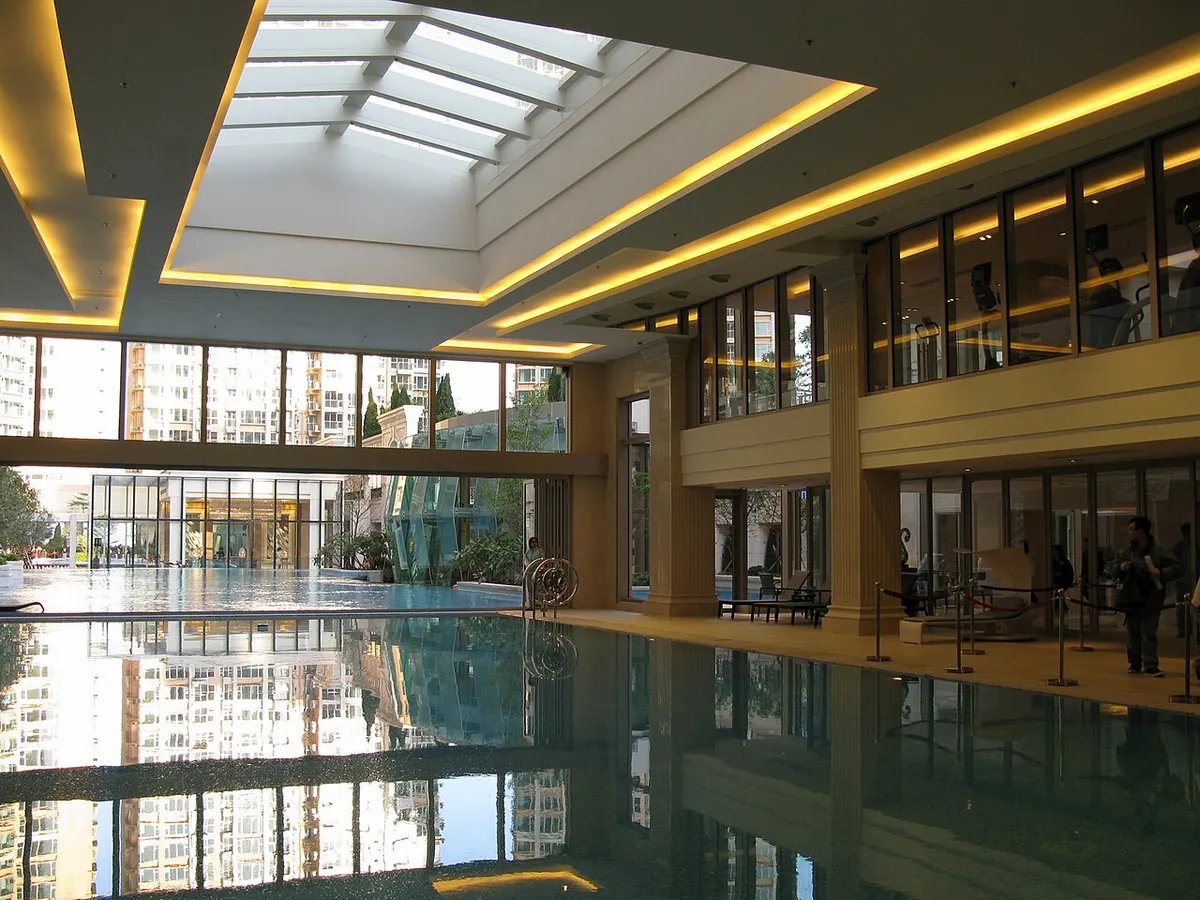
Photo: Baycrest, Wikimedia Commons, CC BY-SA 2.5
Quick Answer
Indoor pool cost for a residential indoor swimming pool is usually $60,000 to $250,000 or more. The pool itself costs about $35,000 to $105,000, but the room around it often costs as much or more: $50,000 to $250,000+ for a new pool house or addition, or $10,000 to $70,000 to convert an existing space such as a basement or garage. A dedicated pool dehumidifier and HVAC system adds $10,000 to $55,000, and is essential to prevent mold and damage. Retractable enclosures over an outdoor pool cost $15,000 to $100,000. Expect to spend about $3,000 to $10,000 a year to run an indoor pool.
An indoor swimming pool lets you swim every day of the year, no matter the weather. It stays clean, needs no winter closing and can double as a home gym and spa. It is also one of the most expensive home projects you can take on, because you are building two things at once: a swimming pool and a room built to handle constant warm, humid, chlorinated air.
This guide breaks down indoor pool cost by every major part: the pool, the room or enclosure, dehumidification and ventilation, heating, finishes, design and permits. It also covers yearly running costs, indoor pool ideas and how to keep the price down. For outdoor pool prices, see how much does a pool cost.
Indoor Pool Cost at a Glance
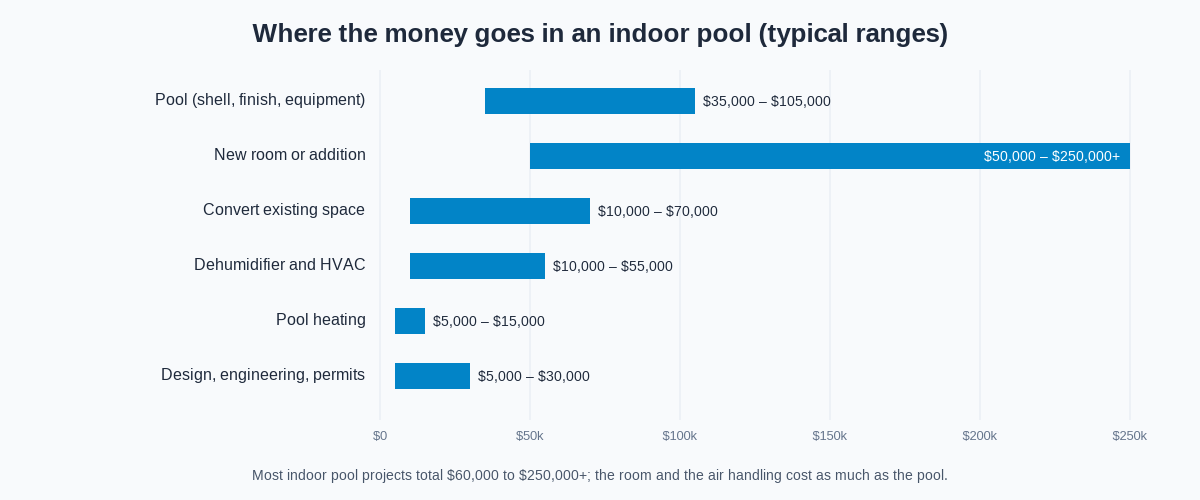
Chart: Asphapro.com
| Indoor pool project | Typical total cost |
|---|---|
| Small pool in an existing room (basement, garage) | $60,000 – $150,000 |
| Pool with a new attached addition | $150,000 – $400,000+ |
| Detached pool house with pool | $150,000 – $500,000+ |
| Retractable enclosure over an outdoor pool | $15,000 – $100,000 (enclosure only) |
| Swim spa installed indoors | $30,000 – $90,000 |
| Indoor plunge pool | $40,000 – $100,000 |
Prices vary widely with size, location and finish level. A modest lap pool in a converted garage costs far less than a large pool in a glass-walled addition with stone finishes.
Indoor Pool Cost by Component
The pool itself: $35,000 to $105,000
An indoor pool is usually concrete or fiberglass. Concrete allows any shape and size and is common for custom indoor pools. Fiberglass shells install fast but need crane or large-door access, which can be hard indoors unless the room is built around the shell. Vinyl liner pools work indoors too. Indoor pools often skip deep ends and diving boards to keep the ceiling height reasonable.
The room: $50,000 to $250,000+
The pool room must handle humidity, chlorine and heat. That means vapor barriers on walls and ceilings, corrosion-resistant framing and fasteners, moisture-resistant drywall or panels, insulated glass, and floors that drain. Building a new addition is the largest cost in most projects. Converting an existing basement, garage or barn costs less but may need structural work, drainage and new insulation.
Dehumidification and HVAC: $10,000 to $55,000
A typical indoor pool evaporates many gallons of water a day into the air. Without proper dehumidification, condensation forms on windows and walls, leading to mold, rot, rust and peeling paint. A dedicated pool dehumidifier controls humidity (usually 50% to 60%) and often recovers heat from the moist air to warm the pool water or room. Ducts must supply dry air along windows and exterior walls, and exhaust fans remove chlorine byproducts.
Heating: $5,000 to $15,000
Indoor pools are usually kept at 80 to 84 °F, with room air a few degrees warmer to reduce evaporation. Heat pumps, gas heaters or heat recovered by the dehumidifier warm the water.
Design, engineering and permits: $5,000 to $30,000
Indoor pools need architects or designers who understand pool rooms, structural engineering for the pool and building, mechanical design for the air system, and permits for building, electrical, plumbing and the pool itself.
Indoor Pool Running Costs
Indoor pool cost does not stop when construction ends. An indoor swimming pool costs more to run than an outdoor one, because the air system runs all year. Typical yearly costs for a residential indoor pool:
| Item | Typical yearly cost |
|---|---|
| Dehumidifier and ventilation power | $1,000 – $4,000 |
| Pool water heating | $500 – $2,500 |
| Room heating and cooling | $500 – $2,500 |
| Chemicals | $300 – $800 |
| Pump power | $200 – $600 |
| Maintenance and service | $500 – $1,500 |
| Total | about $3,000 – $10,000+ |
A pool cover is the single best way to cut indoor pool running costs. Covering the pool when it is not in use can cut evaporation by 90% or more, which lowers the load on the dehumidifier and the heater. The US Department of Energy notes that covers can cut indoor pool energy use and ventilation needs significantly. Automatic covers make this effortless.
Building Materials for an Indoor Pool Room
Materials are a big part of indoor pool cost. The warm, humid air in an indoor pool room is hard on ordinary building materials. Good choices include:
- Walls and ceilings: cement board, moisture-resistant panels or PVC wall and ceiling panels, with a continuous vapor barrier on the warm side.
- Framing: treated wood, steel with corrosion-resistant coatings, or masonry. Glulam beams with proper finishes are common for exposed ceilings.
- Fasteners and hardware: stainless steel (316 grade near the water) to resist chlorine corrosion.
- Windows: insulated glass with thermally broken frames to reduce condensation; supply dry air along the glass.
- Floors: slip-resistant porcelain tile, stone or textured concrete, sloped to drains.
- Lighting: fixtures rated for wet, corrosive locations.
- Paint: epoxy or acrylic coatings made for humid spaces.
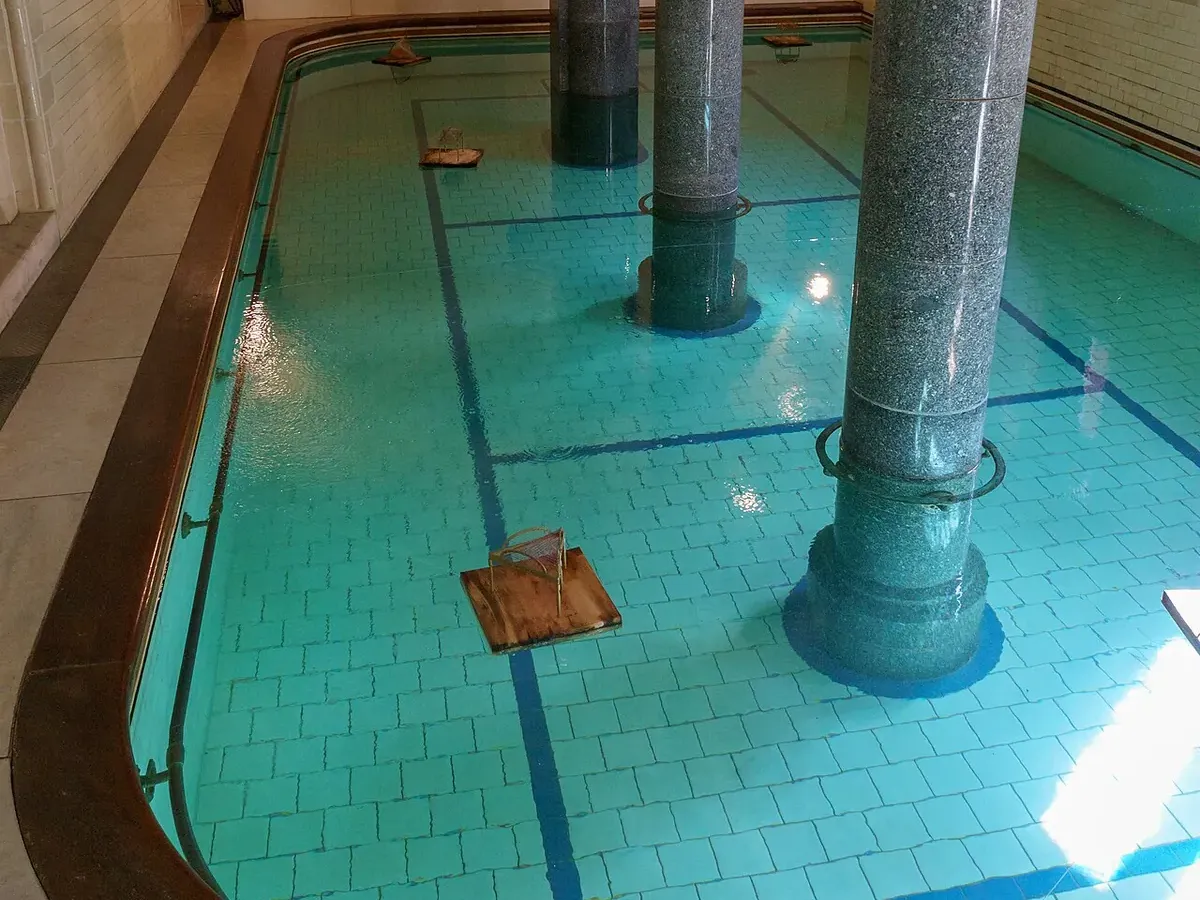
Photo: Colin, Wikimedia Commons, CC BY-SA 4.0 (cropped)
Pool Enclosures: A Lower-Cost Alternative
If the full indoor pool cost is out of budget, an enclosure over an outdoor pool gives many of the same benefits:
| Enclosure type | Typical cost | Notes |
|---|---|---|
| Screen enclosure | $5,000 – $25,000 | Keeps bugs and leaves out; not for winter |
| Low telescoping enclosure | $15,000 – $50,000 | Slides open; extends the season |
| High telescoping enclosure | $40,000 – $100,000+ | Walk-in height; near year-round use in mild climates |
| Sunroom-style glass enclosure | $50,000 – $150,000+ | Permanent; needs dehumidification |
For more detail, see pool enclosure cost.
Converting a Basement, Garage or Barn
Converting an existing space is often the lowest-cost way to get an indoor swimming pool, and it can cut indoor pool cost sharply. Key points:
- Basements: digging deeper inside a basement is complex, and groundwater can be a problem. Above-floor pools, swim spas or plunge pools set into the floor are more realistic. Ventilation to the outside is essential.
- Garages: a slab-on-grade garage can be excavated for a pool. Walls and roof need insulation, vapor barriers and new finishes, and the garage door is often replaced with a wall and windows.
- Barns and outbuildings: large open spaces suit pools, but structures often need reinforcement and full insulation.
In all cases, the dehumidification system and moisture protection are the same as for a new room, and they should be designed before work starts.
Example Indoor Pool Budgets
These examples show how indoor pool cost changes with the size of the indoor swimming pool and the type of room.
| Project | Main items | Estimated total |
|---|---|---|
| Swim spa in a sunroom | Swim spa, floor reinforcement, dehumidifier, finishes | $40,000 – $90,000 |
| Lap pool in converted garage | 8 x 30 ft pool, insulation, vapor barrier, dehumidifier | $90,000 – $180,000 |
| New addition with 16 x 32 pool | 600 – 900 sq ft addition, pool, full HVAC | $250,000 – $500,000+ |
| Telescoping enclosure on existing pool | Enclosure only | $25,000 – $80,000 |
Indoor vs Outdoor Pool
| Factor | Indoor pool | Outdoor pool |
|---|---|---|
| Build cost | $60,000 – $250,000+ | $35,000 – $100,000 |
| Season | Year-round | Months, depending on climate |
| Cleaning | Little debris | Leaves, dirt, pollen |
| Running cost | Higher (air system) | Lower, but seasonal opening and closing |
| Privacy and safety | Easy to lock and control | Needs fencing |
| Resale value | Limited buyer pool | Strong in warm markets |
How to Save on Indoor Pool Cost
These steps keep indoor pool cost under control without giving up a good indoor swimming pool.
- Choose a smaller pool: a lap pool or plunge pool means a smaller room and smaller air system.
- Convert existing space instead of building new.
- Consider a swim spa instead of a pool.
- Use an automatic cover to cut the size and running cost of the dehumidifier.
- Keep the design simple: rectangular shapes and standard finishes.
- Hire experienced designers who have built pool rooms; mistakes with moisture are very costly to fix.
- Get several bids for the pool, the building and the mechanical system.
What Drives Indoor Pool Cost Up or Down
- The room: building a new room is the biggest single factor in indoor pool cost. Converting a space you already have can cut the total by half or more.
- Pool size: every extra foot of indoor swimming pool needs a larger room, a bigger air system and more heat, so size affects indoor pool cost far more than it does outdoors.
- Ceiling height: a diving board or slide needs a tall room, which adds a lot to framing, glass and heating.
- Glass: large windows and skylights look great in an indoor swimming pool room but cost more and make condensation control harder.
- Air system quality: a heat-recovery dehumidifier costs more up front but lowers running costs for the life of the indoor swimming pool.
- Finishes: stone, glass tile and wood ceilings raise indoor pool cost; porcelain tile and PVC panels keep it lower.
- Site access: getting machines into a finished house or tight lot adds labor.
- Location: labor and building costs vary widely by region.
Planning an Indoor Swimming Pool Step by Step
- Decide how you will use it. Exercise, family fun, therapy or entertaining each lead to a different indoor swimming pool size and shape.
- Choose the space. New addition, pool house, conversion or enclosure. This choice sets most of the indoor pool cost.
- Hire a design team with natatorium experience: architect, structural engineer and a mechanical engineer for the air system.
- Design the air system first. Size the dehumidifier and ducts for the pool area, water temperature and room temperature, and plan where dry air will wash windows and outside walls.
- Get permits for the building, pool, electrical, plumbing and mechanical work.
- Build the structure with vapor barriers and corrosion-resistant materials.
- Build the pool and install the equipment, usually in a separate, ventilated equipment room.
- Finish the room, start up the air system before filling, and commission everything together.
Getting the air system right is the most important step. Many indoor swimming pool problems, from foggy windows to rotting roofs, come from undersized or badly designed dehumidification, and fixing them later adds heavily to indoor pool cost.
Indoor Pool Ideas by Space
Indoor pool ideas for a small room
A swim spa, a plunge pool or a narrow lap pool fits a room as small as 15 x 25 ft. Light-colored walls, mirrors and good lighting make a small indoor swimming pool room feel larger.
Indoor pool ideas for a large addition
A full-size pool with a spa, lounge seating, a kitchenette and folding glass walls to a patio creates a year-round entertaining space. Wood or tongue-and-groove ceilings and stone floors give a warm, resort feel.
Indoor pool ideas for wellness
Pair a heated lap pool or swim spa with a sauna, steam room, cold plunge and shower. Warm water therapy is popular for joint pain and recovery, and a small indoor swimming pool used this way gets daily use.
Indoor residential pool ideas for cold climates
In cold regions, an indoor swimming pool is the only way to swim most of the year. Focus on insulation, triple-pane glass and heat recovery. Many owners in snowy states choose a modest pool size and spend more on the building envelope, which keeps both the indoor pool cost and the heating bills under control.
Air Quality and Safety in an Indoor Swimming Pool
Chlorine reacts with sweat and other waste to form chloramines, which cause the familiar "pool smell" and can irritate eyes and lungs. In an indoor swimming pool, these build up in the air unless fresh air is brought in and stale air is exhausted near the water surface. Good practices:
- Bring in enough outside air as set by the mechanical design.
- Exhaust air at low level near the pool, where chloramines collect.
- Shower before swimming to reduce waste in the water.
- Consider UV or ozone systems, which break down chloramines.
- Install slip-resistant floors, handrails and good lighting.
- Lock the room or add door alarms if children live in or visit the home.
Maintaining an Indoor Swimming Pool
An indoor swimming pool needs less cleaning than an outdoor pool, since there are no leaves or pollen, but the room and air system need regular care. Test water two or three times a week, clean the filter on schedule, and service the dehumidifier at least once a year: clean coils and filters, check drains and controls. Inspect windows, ceilings and corners for condensation or stains, which are early warnings of air problems. Keep the pool covered when not in use. Good upkeep protects the building and keeps long-term indoor pool cost predictable.
Indoor Pool Cost by Region
Building costs vary widely. In lower-cost regions of the South and Midwest, a converted-space indoor swimming pool may cost $60,000 to $120,000, while a similar project in the Northeast, California or Pacific Northwest can cost $100,000 to $200,000 or more. A new addition multiplies these differences, since the room is the largest part of indoor pool cost. Cold climates also raise the price of insulation, glazing and heating, but these are the places where an indoor swimming pool adds the most months of use.
More Indoor Pool Ideas
Here are more indoor pool ideas to consider when planning an indoor swimming pool.
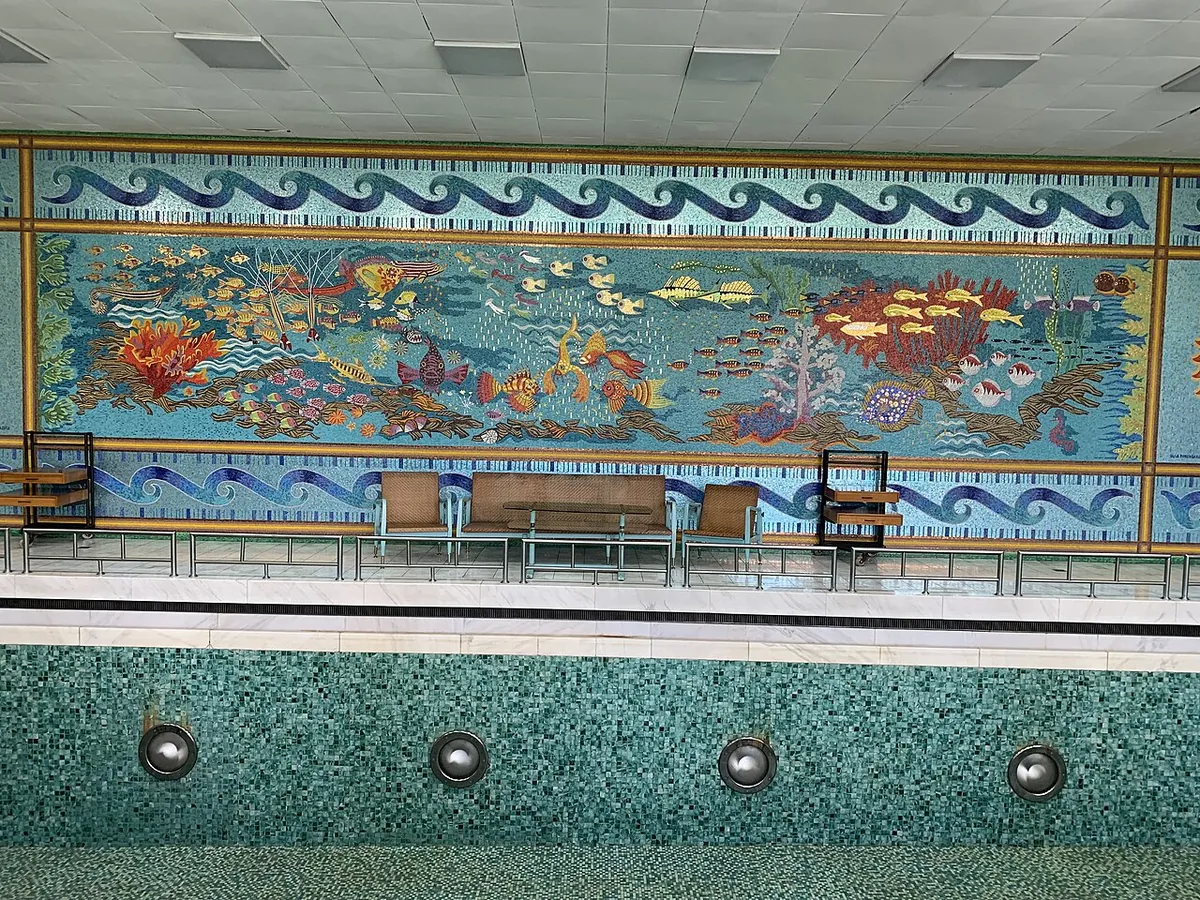
Photo: Chainwit., Wikimedia Commons, CC BY 4.0
- Lap pool in a basement: a long, narrow pool for daily exercise.
- Pool with glass walls that open onto a patio in summer.
- Swim spa room: a compact swim spa with jets in a small sunroom.
- Plunge pool and spa suite combined with a sauna and steam room.
- Pool house with a kitchenette, changing room and lounge.
- Mosaic murals and underwater lighting for a dramatic look.
- Retractable roof or enclosure to switch between indoor and outdoor.
- Movable pool floor that rises to cover the pool and create a usable room (luxury option).
Common Mistakes With Indoor Swimming Pools
- Undersized dehumidification. The most common and costly mistake. It leads to condensation, mold and damaged roofs and walls.
- No vapor barrier, or one with gaps at outlets, windows and roof joints.
- Ordinary steel fasteners and fixtures that rust within a few years.
- Too much glass without dry air supplied along it, causing constant fogging and dripping.
- Room air cooler than the water, which increases evaporation and humidity.
- Skipping the cover. An uncovered indoor swimming pool loses water and heat all night and overworks the air system.
- Placing equipment in the pool room, where humid, chlorinated air corrodes it. Use a separate equipment room.
Avoiding these mistakes protects the investment and keeps long-term indoor pool cost down.
Indoor Pool Cost vs a Swim Spa
For many households, a swim spa gives most of the benefits of an indoor swimming pool at a fraction of the price. A swim spa is 12 to 20 feet long with a current to swim against, plus seats and jets. Installed indoors with proper ventilation, it typically costs $30,000 to $90,000, compared with $60,000 to $250,000+ for a full indoor pool. It needs a much smaller room and air system, uses less energy, and heats quickly. The trade-off is less space for play and groups. If your main goal is daily exercise or therapy, compare the total indoor pool cost with a swim spa before you commit.
Finishes and Features for an Indoor Swimming Pool
Finishes set the look of an indoor swimming pool room and affect both upfront and long-term costs. Popular choices include porcelain tile floors with a slip-resistant texture, tile or plaster pool finishes in light colors that make the water bright, wood or PVC ceilings, and stone or tile accent walls. Underwater LED lights and dimmable room lighting change the mood from bright daytime swimming to a calm evening soak. Many owners add a hot tub or a spa bench inside the pool, a sound system rated for damp rooms, and a changing room or shower next to the pool. Each extra adds to indoor pool cost, so choose the features you will use most.
Financing an Indoor Swimming Pool
Because indoor pool cost is high, most owners finance at least part of the project. Common options include a home equity loan or line of credit, a cash-out refinance, construction loans for large additions, and pool loans from specialty lenders. Compare interest rates and terms, and remember to budget for running costs as well as the build. A lender may require full plans and contractor bids before approving a large indoor swimming pool project.
Is an Indoor Pool Right for You?
An indoor swimming pool makes the most sense if you live in a cold or rainy climate, plan to stay in the home for many years, and will swim often, whether for fitness, health or family time. It makes less sense if you might move soon, if the pool would be used mainly in summer, or if the yearly running costs would strain the budget. Talk to a designer about a few options, from a swim spa to a full pool house, and compare the total indoor pool cost of each over ten years, including energy and maintenance, before you decide.
Indoor Swimming Pool Timeline
A typical indoor swimming pool project runs through these stages:
- Design and engineering: 1 to 3 months, including the air system design.
- Permits: 1 to 3 months, depending on the town.
- Site work and foundations: 2 to 6 weeks.
- Pool shell and plumbing: 2 to 8 weeks.
- Building shell, roof and windows: 1 to 4 months for a new room.
- Mechanical, electrical and finishes: 1 to 3 months.
- Start-up and fill: 1 to 2 weeks.
Plan on 4 to 12 months from first design to first swim. Delays in permits or the dehumidifier delivery are common, so build some slack into the schedule and the budget. A 10% to 15% contingency on top of the quoted price is wise.
Indoor Pool Cost: Key Points
- Indoor pool cost is usually $60,000 to $250,000+.
- The room and air handling cost as much as the pool itself.
- A dedicated dehumidifier is essential and costs $10,000 to $55,000.
- Running costs are about $3,000 to $10,000 a year.
Frequently Asked Questions
How much does an indoor pool cost?
Usually $60,000 to $250,000 or more, including the pool, the room and the dehumidification system.
Is an indoor pool worth it?
For owners who swim year-round, often yes. It rarely returns its full cost when selling.
How much does it cost to run an indoor swimming pool?
About $3,000 to $10,000 a year for power, heating, chemicals and service, with the dehumidifier as the biggest single cost.
Can I add an indoor swimming pool to an existing house?
Yes, as an addition or by converting a room, if the lot, structure and zoning allow it. An engineer must confirm the foundation and framing, and the air system must be designed so moisture does not move into the rest of the house.
Do indoor pools cause mold?
Only if humidity is not controlled. A properly sized pool dehumidifier, vapor barriers and good air flow prevent mold and rot.
What is the cheapest way to have an indoor pool?
A swim spa or small plunge pool in an existing room, or a telescoping enclosure over an existing outdoor pool.
How long does it take to build an indoor pool?
Usually 4 to 12 months, including design, permits, the building work, the pool and the air system.
Does an indoor pool add home value?
It may add some value in high-end markets, but it rarely returns its full cost. Many buyers see the running costs as a drawback.
What temperature should an indoor pool be?
Water at 80 to 84 °F, with room air 2 to 4 °F warmer and humidity at 50% to 60%.
Do I need a special insurance policy for an indoor pool?
Tell your insurer; most homeowner policies can cover it with higher liability limits, but premiums may rise.
Sources
- HomeGuide: Indoor pool cost
- Angi: Indoor pool cost
- US Department of Energy: Pool covers and evaporation
- ASHRAE Handbook: Natatorium design