
Plunge Pool Cost: How Much Is a Plunge Pool?
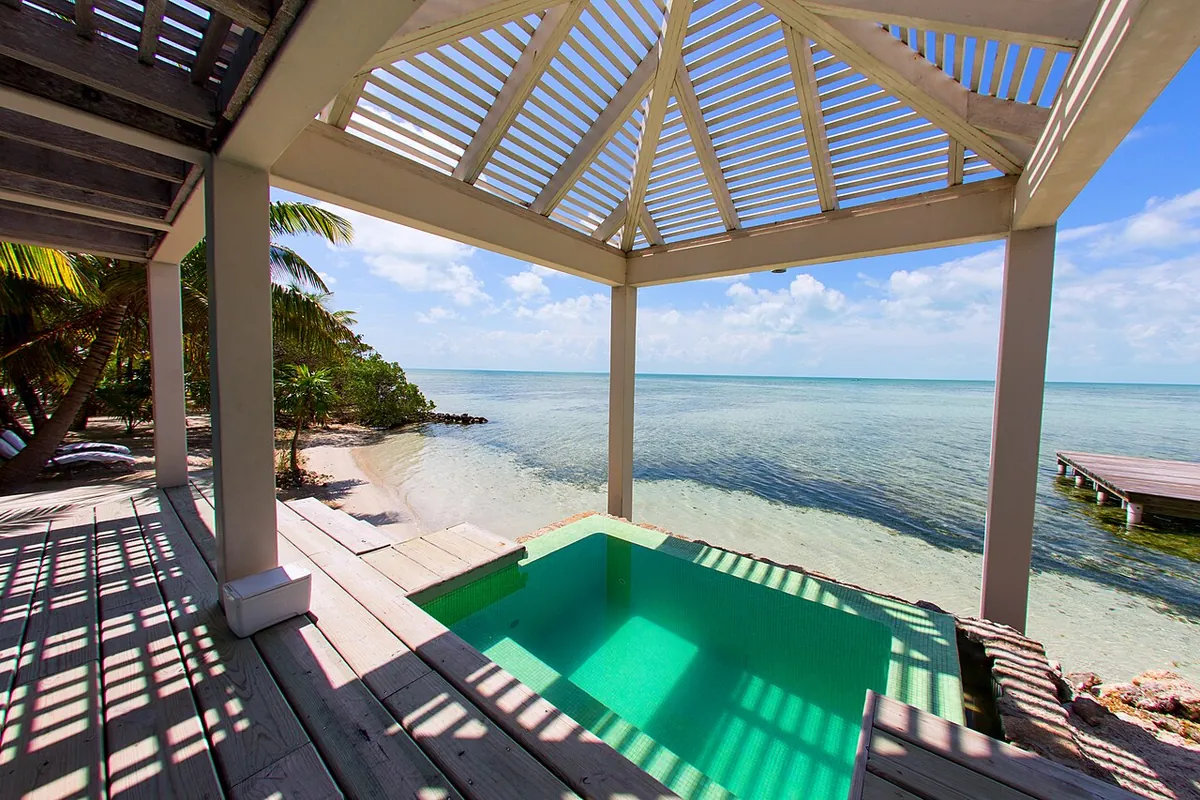
Photo: Cayo Espanto Private Island, Wikimedia Commons, CC BY-SA 4.0
Quick Answer
Plunge pool cost for most inground models is about $15,000 to $50,000 installed. A fiberglass plunge pool runs about $15,000 to $40,000, a precast concrete plunge pool (often called a "plungie" in Australia) about $25,000 to $50,000, and a custom concrete plunge pool $30,000 to $70,000+. Above ground plunge pool cost is about $5,000 to $25,000, shipping container pools $20,000 to $45,000, and a DIY stock tank plunge pool $1,500 to $4,000. Heating, decking, fencing and a cover add $5,000 to $30,000. Running costs are low, often $500 to $1,500 a year.
A plunge pool, also called a dipping pool, is a small, fairly deep pool made for cooling off, soaking and relaxing rather than swimming laps. Typical plunge pools measure about 6 x 10 to 10 x 16 feet and 4 to 6 feet deep. They fit small yards, courtyards and rooftops, and they cost far less to run than a full-size pool. Many owners heat them in cooler months so they work like a large spa.
This guide breaks down plunge pool cost by type and size, explains plunge pool prices for installation and extras, covers running costs, and compares a plunge pool with a hot tub and a standard pool. For other small pool options, see swimming pool ideas for small backyard.
Plunge Pool Cost at a Glance
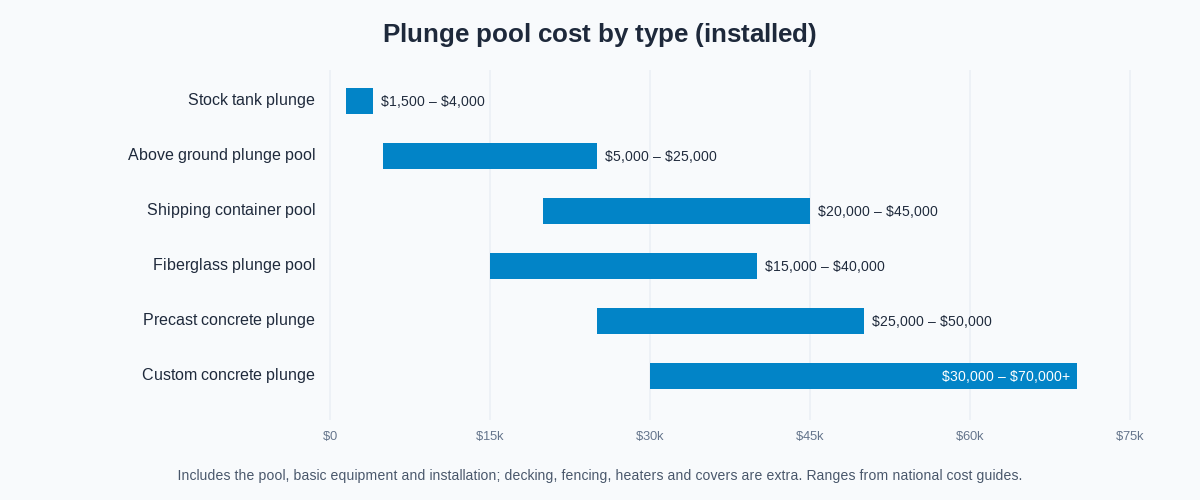
Chart: Asphapro.com
| Plunge pool type | Typical installed cost | Install time |
|---|---|---|
| Stock tank plunge (DIY) | $1,500 – $4,000 | 1 – 2 days |
| Above ground plunge pool | $5,000 – $25,000 | 1 – 7 days |
| Shipping container pool | $20,000 – $45,000 | 1 – 3 weeks |
| Fiberglass plunge pool | $15,000 – $40,000 | 1 – 3 weeks |
| Precast concrete plunge pool | $25,000 – $50,000 | 1 – 3 weeks |
| Custom concrete (gunite) plunge pool | $30,000 – $70,000+ | 6 – 12 weeks |
These plunge pool prices come from national cost guides and typical builder quotes. They include the pool, basic filtration equipment and installation on an accessible, level site. Costs are higher on slopes, in tight city lots that need cranes, and in high-cost regions.
Plunge Pool Cost by Type
Fiberglass plunge pools: $15,000 to $40,000
Fiberglass plunge pools are factory-made shells, often with built-in benches and steps. The shell alone costs about $5,000 to $15,000; installation, equipment and a basic surround make up the rest. They install quickly, have a smooth, low-maintenance surface and use few chemicals. Delivery needs truck and crane access.
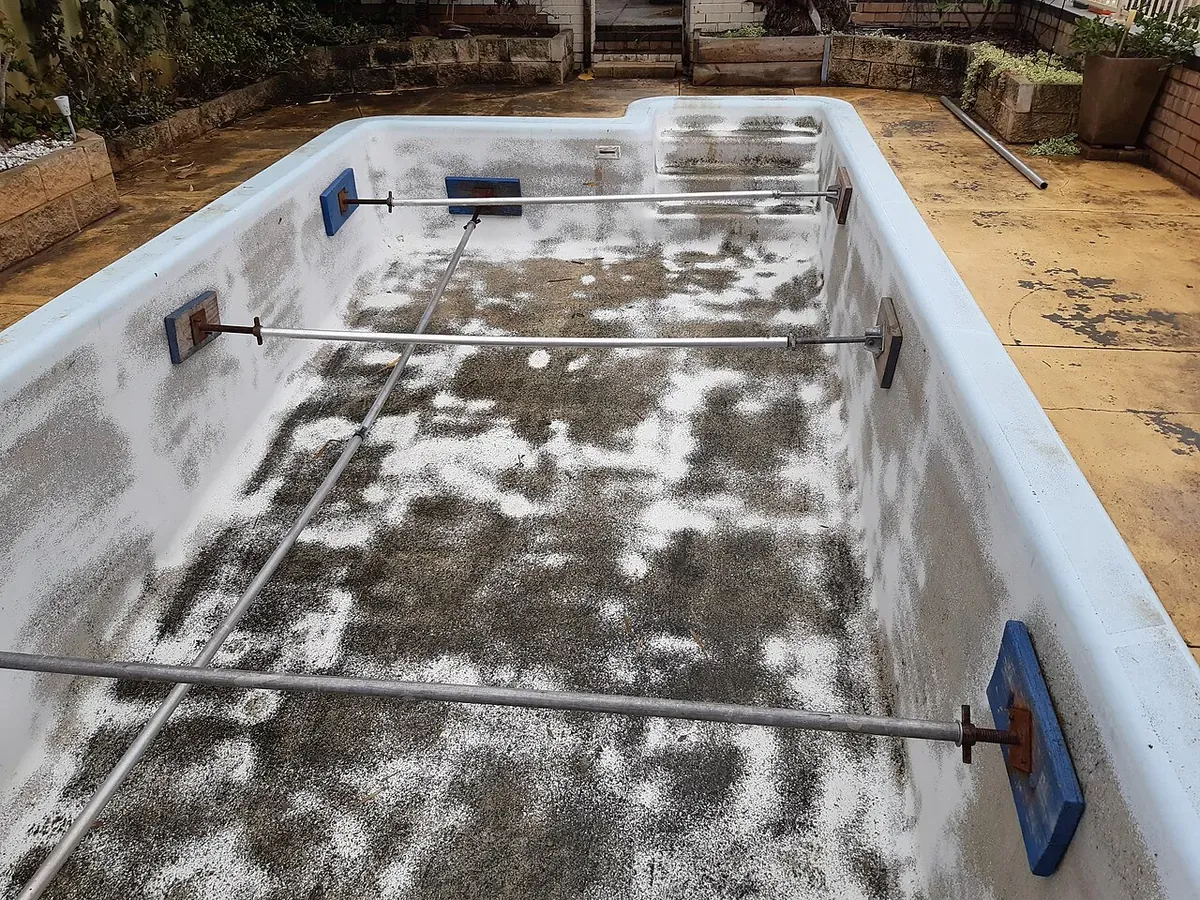
Photo: Calistemon, Wikimedia Commons, CC BY-SA 4.0
Precast concrete plunge pools: $25,000 to $50,000
Precast concrete plunge pools are cast in a factory and delivered in one piece. In Australia they are widely called "plungies," and searches for plungie pool cost usually mean this type. They are very strong, can be installed fully inground, partly inground or above ground, and often come with a tile or render finish. They are heavy, so crane access and a solid base are essential.
Custom concrete plunge pools: $30,000 to $70,000+
A gunite or shotcrete plunge pool can be any shape, depth and finish, including infinity edges, raised walls, built-in spas and swim jets. Custom concrete costs the most because design, excavation, steel and plumbing costs do not shrink much with size.
Shipping container pools: $20,000 to $45,000
Converted steel shipping containers, usually 20 or 40 feet long and about 8 feet wide, make long, narrow plunge pools with windows and decks. They can sit above ground, partly sunk or fully inground. Choose a builder who lines and protects the steel properly to prevent corrosion.
Above ground plunge pools: $5,000 to $25,000
Above ground plunge pool cost covers a range of products, from resin or steel-walled plunge tubs to wooden or composite-clad pools set on a deck or pad. They need little excavation and can move with you if you relocate.
Stock tank plunge pools: $1,500 to $4,000
A galvanized livestock tank with a small pump and filter is the cheapest plunge pool. It is popular for small yards and rentals. For more options, see DIY inground pool kits.
Plunge Pool Prices by Size
Plunge pool prices rise with size, but size has less effect on plunge pool cost than you might expect, because excavation setup, equipment, permits and design are similar for all small pools. Still, larger plunge pools need more material and water.
| Size | Water (approx.) | Typical inground cost |
|---|---|---|
| 6 x 10 ft | 1,800 – 2,700 gal | $15,000 – $35,000 |
| 8 x 12 ft | 2,900 – 4,300 gal | $18,000 – $40,000 |
| 10 x 16 ft | 4,800 – 7,200 gal | $22,000 – $50,000 |
| 8 x 20 ft (container style) | 4,800 – 6,000 gal | $20,000 – $45,000 |
Depth also matters. Many plunge pools are 4.5 to 5.5 feet deep so adults can stand with water at chest or shoulder height. Deeper plunge pools cost more to dig and hold more water to heat.
What Is Included in Plunge Pool Installation?
- Design and permits
- Excavation (or a pad for above ground models)
- Delivery and crane (for fiberglass and precast)
- Setting and leveling the pool
- Plumbing, pump, filter and basic controls
- Electrical bonding and hookup
- Backfill and a basic coping or surround
Crane hire alone can cost $1,000 to $5,000 for a tight city lot where the pool must be lifted over the house. Ask your installer to visit the site before quoting.
Extra Plunge Pool Costs
Extras can add a lot to plunge pool cost. These are the most common add-ons.
| Extra | Typical cost |
|---|---|
| Heat pump or gas heater | $2,500 – $6,000 |
| Swim jet (counter-current) | $2,000 – $8,000 |
| Spa jets and air blower | $1,000 – $4,000 |
| Deck or paving around the pool | $3,000 – $15,000 |
| Safety fence | $1,500 – $6,000 |
| Automatic or rigid safety cover | $2,000 – $10,000 |
| Salt system | $1,000 – $2,000 |
| LED lighting | $500 – $2,000 |
| Crane access | $1,000 – $5,000 |
Plunge Pool Running Costs
Low running costs are a big advantage over a full pool. Small water volume keeps running costs low. Typical yearly costs:
- Chemicals: $150 to $400.
- Pump power: $100 to $350.
- Heating: $300 to $1,500, depending on climate, how warm you keep it and whether you use a cover.
- Filter and small parts: $50 to $200.
Many owners heat a plunge pool to 85 to 95 °F in winter and let it cool in summer. A good cover is essential if you heat it; for pool covers and heating, see swimming pool heater cost.
Plunge Pool vs Hot Tub vs Full Pool
| Factor | Plunge pool | Hot tub | Full-size pool |
|---|---|---|---|
| Typical cost | $15,000 – $50,000 | $4,000 – $16,000 | $35,000 – $100,000+ |
| Size | 6 x 10 – 10 x 16 ft | About 7 x 7 ft | 14 x 28 – 20 x 40 ft |
| Use | Cool off, soak, float; heated soak in winter | Hot soaking, jets | Swimming, play, groups |
| Running cost per year | $500 – $1,500 | $400 – $1,200 | $1,200 – $3,000+ |
| Yard space | Small | Very small | Large |
A plunge pool sits between a hot tub and a full pool. It gives room to move, cool off in summer and soak in winter, without the space and cost of a full pool. For hot tub prices, see hot tub cost.
Dipping Pools: A Long History
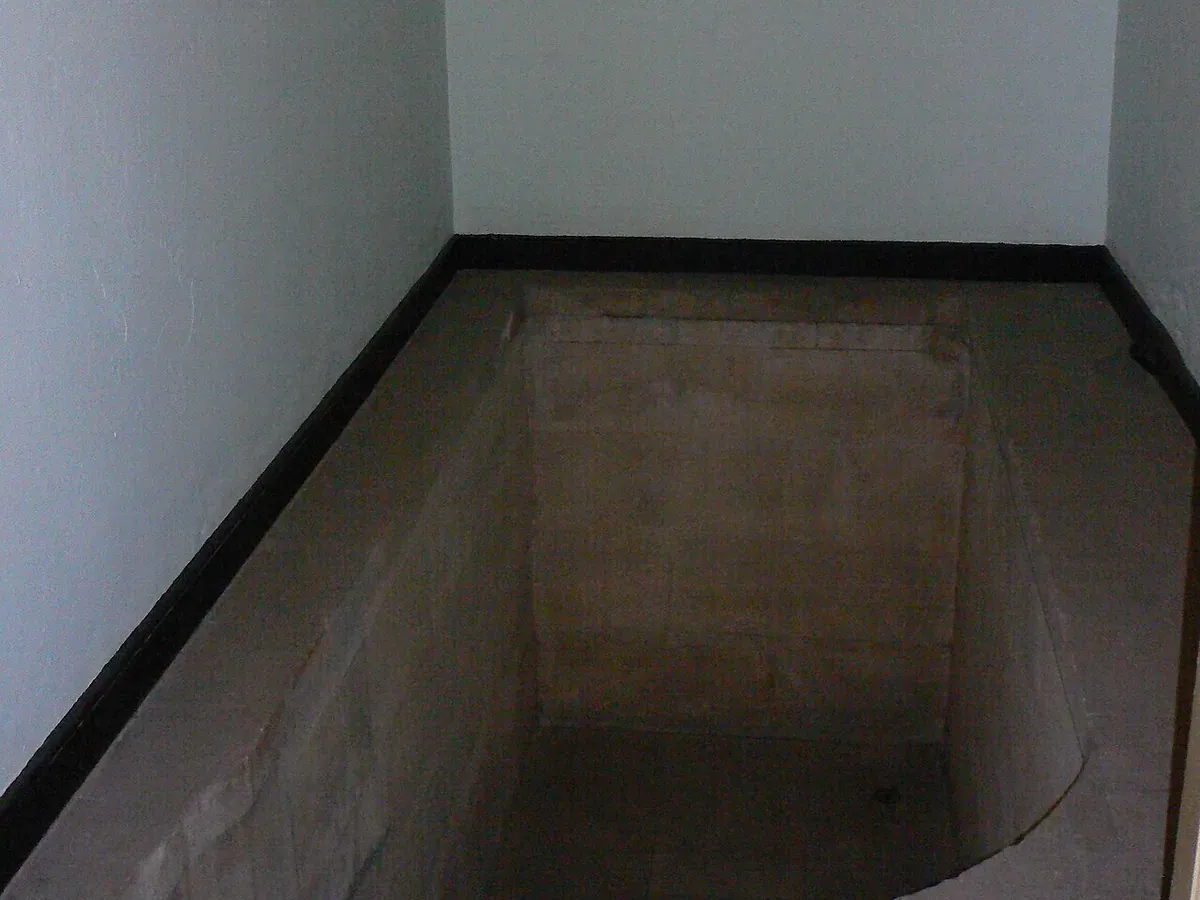
Photo: Heather Cowper, Wikimedia Commons, CC BY 2.0 (cropped)
Plunge pools are not new. Cold dipping pools were common in Roman baths and in British country houses of the 1700s, where owners took cold plunges for health. Today's dipping pool is usually heated and used year-round, but the idea is the same: a small, deep pool you step into rather than swim across. The modern dipping pool cost is a fraction of a full pool, which is a big part of its popularity in small city gardens.
How to Save on Plunge Pool Cost
These tips can lower plunge pool cost by thousands without giving up quality.
- Choose fiberglass or a standard precast model rather than custom concrete.
- Pick a site with easy access to avoid a large crane bill.
- Keep extras simple: a basic heater and a good cover give most of the comfort.
- Consider above ground or semi inground installation with a timber or composite surround.
- Get several quotes and compare what is included.
- Install off-season when installers have more availability.
Plunge Pool Design Ideas
- Raised plunge pool with a wide stone edge for sitting.
- Plunge pool with a deck on two sides and loungers.
- Courtyard plunge pool surrounded by planting and walls.
- Rooftop plunge pool (with structural engineering).
- Plunge pool and outdoor shower combination.
- Infinity-edge plunge pool on a sloped site with a view.
- Cold plunge and hot spa pairing for contrast therapy.
Is a Plunge Pool Worth the Cost?
For many households, yes. A plunge pool gives you water to cool off in on hot days and, if heated, a warm soak on cold nights, in a footprint that fits almost any yard. Plunge pool cost is lower than a full pool, running costs are a fraction, and cleaning takes minutes. They are especially good value for couples, small families, people who want water for relaxation or therapy rather than lap swimming, and homes with small or sloped yards.
A plunge pool is less suited to families with several active children who want to swim, play games and dive, or to anyone who wants to swim real laps without a swim jet. In those cases, a small full pool of about 12x24 feet may be the better choice; see how much does a 12x24 inground pool cost.
Choosing the Right Plunge Pool Type
Start with your site and budget. If a truck and crane can reach the yard and you want a fast, low-maintenance pool, a fiberglass plunge pool usually gives the best value. If you want something very strong that can sit partly above ground with a finished edge, a precast concrete plunge pool is a good fit. If your yard has an odd shape, a slope or you want special features like an infinity edge or a built-in spa, custom concrete is the flexible option, at a higher plunge pool cost. A shipping container pool suits long, narrow sites and modern designs, and it can be moved later. Above ground and stock tank plunge pools are best for tight budgets, rentals and anyone who may move soon.
Think about use too. For cooling off in summer, an unheated fiberglass or precast pool is enough. For year-round soaking, budget for a heater, a quality insulated cover and possibly spa jets. For exercise, add a swim jet and choose a longer model, at least 12 to 16 feet.
How a Plunge Pool Is Installed
- Site visit and design: the installer checks access, soil, slope, utilities and where the equipment will go.
- Permits: most towns require a building permit, electrical permit and an approved barrier plan.
- Excavation: the hole is dug a little larger than the shell, or a pad is prepared for above ground models.
- Base: a compacted gravel or concrete base is placed and leveled.
- Delivery and placement: the shell is lifted in by crane and leveled.
- Plumbing and electrical: pipes, pump, filter, heater and lights are connected and bonded.
- Backfill and fill: the pool is filled with water as gravel is backfilled around it.
- Surround: coping, paving or decking finishes the edge.
For prefabricated pools, the on-site work often takes only one to three weeks once permits are approved.
Cold Plunge Pools and Tubs
Cold plunging, sitting in water at about 40 to 60 °F for a few minutes, has become popular for recovery and wellness. A dedicated cold plunge tub with a chiller costs about $1,000 to $10,000 or more, far less than a full plunge pool. Some owners pair a heated plunge pool with a small cold tub for contrast therapy. If you want a plunge pool mainly for cold dips, ask about adding a chiller; it can cost $2,000 to $6,000 and adds to running costs in summer.
Above Ground Plunge Pool Cost in Detail
Above ground plunge pool cost depends on materials. Steel or resin-wall plunge tubs with simple filters start around $5,000 installed. Timber- or composite-clad plunge pools with insulated walls, built-in steps and quality equipment run $10,000 to $25,000. Precast concrete and container pools can also sit above ground, at prices similar to inground installs minus most of the excavation. Above ground plunge pools need a level, strong base, usually a concrete pad or compacted gravel, able to support 300 to 500 pounds per square foot when full. A deck around the pool can make it look built-in.
Plunge Pool Cost by Region
Plunge pool prices vary with local labor, crane access and permit costs. Owners in the South and Southwest often pay toward the low end of the ranges in this guide. In dense cities such as New York, Boston, San Francisco and Los Angeles, crane lifts over houses, tight streets and higher labor rates can push the cost of a plunge pool to the top of the range or beyond. In Australia, where plunge pools are very popular, precast "plungies" are common and widely available.
Plunge Pool Safety
A plunge pool is deep enough to be a drowning risk for young children, even though it is small. Install a code-compliant fence with a self-closing gate, or a lockable rigid safety cover where local rules allow it as the barrier. Keep the water clean and balanced, use non-slip surfaces at the edge, and add handrails if older people will use the pool. If you heat the water above about 95 °F, follow the same guidance as for hot tubs on soak time and temperature.
Example Plunge Pool Budgets
These three examples show how plunge pool cost adds up in real projects.
Budget backyard dip: about $6,000 to $9,000
An above ground resin plunge pool, 8 ft across, set on a gravel pad with a small timber deck on one side, a cartridge filter and a basic cover. No heater. This is the lowest cost of a plunge pool that still feels permanent, and it can be moved later.
Mid-range fiberglass plunge pool: about $28,000 to $40,000
An 8 x 14 ft fiberglass shell with a bench, installed inground with crane delivery, a variable-speed pump, a heat pump, a concrete surround, an aluminum fence and a rigid cover. Plunge pool prices in this range are the most common for suburban yards.
Custom concrete plunge pool: about $55,000 to $85,000
A 10 x 16 ft gunite plunge pool with a raised spillover wall, tile, spa jets, a swim jet, LED lights, a paver patio and an automatic cover. Custom design pushes plunge pool cost close to the price of a small full pool.
How Much Is a Plunge Pool to Run Each Month?
Once it is built, how much is a plunge pool to keep? In summer, with no heating, most owners spend about $30 to $70 a month on chemicals and pump power. In cooler months, heating a plunge pool to spa temperatures can add $50 to $150 a month, depending on climate, heater type and how well it is covered. That is far lower than heating a 20,000 gallon pool, which is why many people choose a heated plunge pool over a large pool in cooler regions.
Dipping Pool Cost in the UK and Europe
In the UK and parts of Europe, "dipping pool" is the common term. Dipping pool cost there follows the same pattern as in the US: prefabricated fiberglass or concrete dipping pools are the most affordable, and custom builds the most expensive. Because many European gardens are small, dipping pools are often the only realistic option for a garden pool, and they are frequently heated for year-round use. Check local planning and building rules, which may differ from US codes.
Getting Accurate Plunge Pool Prices
To compare quotes fairly, ask each installer for a line-by-line price that separates the shell, delivery and crane, excavation, equipment, electrical, surround, fence, heater and cover. Ask what happens if they hit rock or groundwater, and how that changes plunge pool cost. Confirm warranty terms on the shell, the surface and the equipment, and who handles permits and inspections. Detailed quotes make it easy to see real differences in plunge pool prices, rather than comparing a basic quote with an all-inclusive one.
Maintaining a Plunge Pool
Plunge pool upkeep is simple. Test chlorine and pH two or three times a week, and more often when the water is hot or heavily used. Skim leaves, empty the skimmer basket and brush the walls weekly. Clean or replace the filter cartridge every few weeks in season. Because the water volume is small, chemical levels change quickly, so add products in small doses and retest. Drain and refill a heated plunge pool every year or two to reset the water, much like a hot tub. Keeping a cover on when the pool is not in use cuts heat loss, evaporation and cleaning. With this routine, a plunge pool stays clear with about 30 minutes of work a week, which keeps the long-term plunge pool cost low.
Plunge Pool Warranties
Compare warranties when you compare plunge pool prices. Fiberglass and precast shells often carry structural warranties of 10 years to a lifetime, while surface finishes may be covered for 5 to 15 years. Pumps, heaters and controls usually have 1 to 3 year warranties. Ask what voids the warranty, such as poor water chemistry or draining the pool without approval, and keep records of maintenance and water tests.
Plunge Pool Cost: Key Points
- Most inground plunge pools cost $15,000 to $50,000 installed.
- Above ground plunge pools cost $5,000 to $25,000; stock tanks $1,500 to $4,000.
- Heating, decks, fences and covers add $5,000 to $30,000.
- Yearly running costs are often $500 to $1,500.
Frequently Asked Questions
How much is a plunge pool?
Most cost $15,000 to $50,000 installed inground, $5,000 to $25,000 above ground, and $1,500 to $4,000 for a stock tank.
What is a dipping pool?
A dipping pool is another name for a plunge pool: a small, deep pool for cooling off and soaking.
How much does a plunge pool cost to install?
Installation is usually included in the $15,000 to $50,000 range. On its own, installing a fiberglass or precast shell costs about $5,000 to $20,000, depending on access and site work.
What is the cost of a plunge pool compared with a small pool?
A plunge pool usually costs $5,000 to $20,000 less than a 12x24 inground pool of the same type, and much less to run.
What is a plungie pool and what does it cost?
"Plungie" is an Australian term for a precast concrete plunge pool. Plungie pool cost is similar to other precast plunge pools, about $25,000 to $50,000 installed.
Is a plunge pool cheaper than a hot tub to run?
Usually not by much. A plunge pool holds several times more water, so heating it costs more, but it can be left unheated in summer. A hot tub is cheaper to run all year but gives less room.
Can I install a plunge pool myself?
Stock tank and some above ground plunge pools are DIY-friendly. Inground fiberglass and precast pools need excavation, crane work and licensed electrical, so most owners hire a pro.
Can a plunge pool be heated year-round?
Yes. Many owners keep it warm in winter like a large spa. Use a heat pump or gas heater and a tight cover.
What is the cheapest plunge pool?
A stock tank plunge pool, at about $1,500 to $4,000, is the lowest plunge pool cost. It is small and simple but works well for cooling off.
Does a plunge pool need a fence?
Usually yes. Most codes treat plunge pools like other pools when they are deeper than 18 to 24 inches.
How long does a plunge pool last?
Fiberglass and precast concrete plunge pools last 25 years or more with care. Equipment such as pumps and heaters lasts 8 to 15 years.
What is the cost of plunge pool maintenance?
Usually $500 to $1,500 a year for chemicals, power and heat, less if you do not heat it.