
Swimming Pool Heater Cost: What It Costs to Buy, Install and Run a Pool Heater
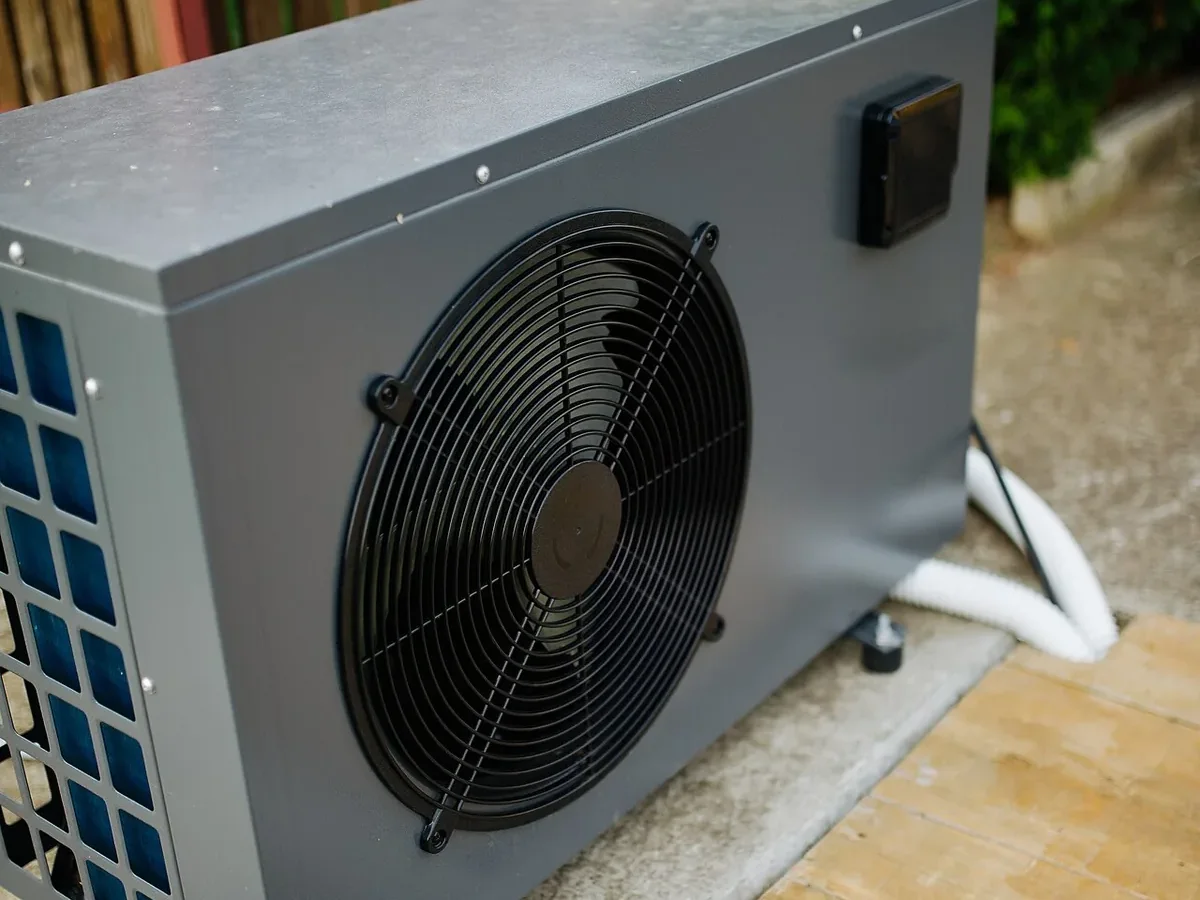
Photo: Nenad Stojkovic, Wikimedia Commons, CC BY 2.0 (cropped)
Quick Answer
Swimming pool heater cost is typically about $1,500 to $6,500 installed, depending on the type. According to HomeGuide, a gas or propane pool heater costs about $1,500 to $4,500 installed, an electric heat pump about $2,000 to $6,000, an electric resistance heater about $1,200 to $6,000, and solar pool heating about $2,500 to $6,500; HomeAdvisor puts the typical project at around $3,000. Running costs matter as much as the purchase: gas and electric resistance heaters can cost $200 to $500 a month to run in season, heat pumps about $50 to $150, and solar about $10 to $25 (mostly pump power). Most pool heaters last about 8 to 15 years; solar systems often last longer.
A heater can turn a pool you use for three months into one you use for six or more. It can also become one of the biggest costs of pool ownership if you choose the wrong type for your climate or run it without a cover. The right choice depends on how often you swim, how warm you want the water, your climate, and your local gas and electricity prices.
This guide explains swimming pool heater cost in detail: purchase and installation prices by type, running costs, how to size a heater, what installation includes, replacement cost and lifespan, and the best ways to lower heating bills. For other heating options, see how to heat a pool.
Swimming Pool Heater Cost at a Glance
| Heater type | Installed cost | Typical monthly running cost in season | Typical lifespan |
|---|---|---|---|
| Natural gas heater | $1,500 – $4,500 | $200 – $500 | about 5 – 10 years |
| Propane heater | $1,500 – $4,500 plus tank | often higher than natural gas | about 5 – 10 years |
| Electric heat pump | $2,000 – $6,000 | $50 – $150 | about 10 – 15 years |
| Electric resistance heater | $1,200 – $6,000 | $200 – $500 | about 10 – 15 years |
| Solar pool heating | $2,500 – $6,500 (up to $9,500) | $10 – $25 | 15 – 20+ years |
Installed price ranges come from HomeGuide, Angi and HomeAdvisor; Angi lists heat pumps at about $2,500 to $7,500 and HomeAdvisor lists solar systems up to about $9,500. Running costs depend heavily on local energy prices, climate, pool size, target temperature and whether you use a cover.
Gas and Propane Pool Heater Cost
Gas pool heaters burn natural gas or propane to heat water passing through a heat exchanger. They heat quickly regardless of air temperature, which makes them ideal for pools heated only on weekends, for spas, and in cool climates. Inground pool heaters running on gas are typically sized from about 150,000 to 400,000 BTU.
- Up-front cost: the unit is relatively inexpensive, and installation is usually $1,500 to $4,500 total.
- Gas line: running a new gas line to the equipment pad can add a few hundred to a few thousand dollars, depending on distance and meter capacity.
- Propane: homes without natural gas need a propane tank, which may be leased or bought.
- Running cost: high; gas heaters can cost $200 to $500 or more per month if run often.
- Lifespan: often 5 to 10 years, shorter with poor water chemistry.
Gas pool heater cost makes the most sense when you need heat on demand rather than all the time.
Heat Pump Pool Heater Cost
A heat pump pool heater uses electricity to move heat from the outdoor air into the pool water, much like an air conditioner in reverse. It produces several units of heat for each unit of electricity, so it costs far less to run than electric resistance or gas in warm and mild climates. Heat pumps work best when air temperatures are above about 50°F and heat more slowly than gas.
- Up-front cost: about $2,000 to $6,000 installed, more for large units.
- Electrical: needs a dedicated 240-volt circuit; panel upgrades add cost.
- Running cost: often $50 to $150 per month in season.
- Lifespan: often 10 to 15 years.
The U.S. Department of Energy notes that heat pump pool heaters cost more to buy than gas heaters but typically have much lower annual operating costs. For pools heated through a long season, a heat pump usually has the lowest total cost over its life after solar.
Electric Resistance Pool Heater Cost
Electric resistance heaters work like a kettle: electric elements heat water directly. They are compact and cheap to buy in small sizes but expensive to run for large pools. They are most practical for small pools, spas and hot tubs. Expect about $1,200 to $6,000 installed and high running costs if used often for a full-size pool.
Solar Pool Heater Cost
Solar pool heating pumps pool water through collector panels, usually on a roof or rack, where the sun warms it. The pool pump does the work, so running costs are very low. Solar can raise water temperature several degrees over an unheated pool and extend the season by weeks or months in sunny climates.
- Up-front cost: about $2,500 to $6,500 installed for many homes, more for large arrays.
- Panel area: often 50% to 100% of the pool's surface area, depending on climate and the heat you want.
- Running cost: about $10 to $25 per month for extra pump time.
- Lifespan: 15 to 20 years or more for quality collectors.
- Limits: cannot heat on cloudy days or at night; works best with a cover.
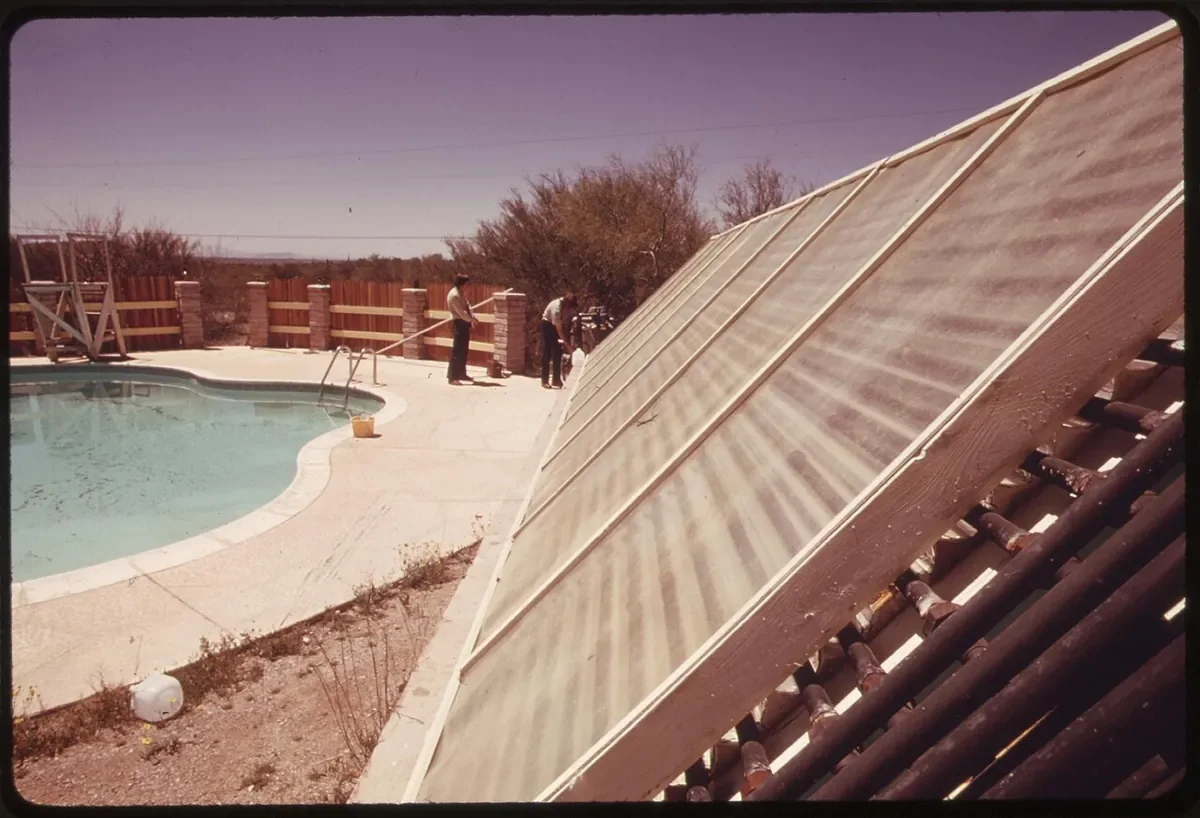
Photo: U.S. National Archives (Documerica), Wikimedia Commons, public domain
Simple do-it-yourself solar setups and solar covers cost far less; see DIY solar pool heater.
Pool Heater Installation Cost
Pool heater installation cost is part of every quote. Installation usually includes:
- A level equipment pad or base.
- Plumbing the heater into the return line after the filter, with bypass valves.
- Gas piping and venting for gas heaters, with clearances to windows and walls.
- A dedicated electrical circuit for heat pumps and electric heaters.
- Bonding the heater to the pool's equipotential bonding grid.
- Permits and inspections.
- Start-up and testing.
Simple replacements of a like-for-like heater cost the least. New installations that need new gas lines, electrical service upgrades or roof work for solar cost the most. Installation commonly adds $500 to $2,500 or more to the price of the heater itself.
Pool Heater Replacement Cost
Replacing an old heater with the same type usually costs less than a first install, because gas lines, wiring and plumbing are already in place. Expect roughly $1,500 to $5,000 for most replacements. Switching types, for example from gas to a heat pump, adds electrical work. Before replacing a failing heater, ask whether repair makes sense; common repairs such as igniters, pressure switches and thermostats cost a few hundred dollars, while a failed heat exchanger often means replacement.
How Long Do Pool Heaters Last?
| Heater type | Typical lifespan | What shortens it |
|---|---|---|
| Gas or propane | about 5 – 10 years | Low pH, high chlorine, corrosion, poor venting |
| Heat pump | about 10 – 15 years | Salt air, dirty coils, poor water balance |
| Electric resistance | about 10 – 15 years | Scale on elements |
| Solar | 15 – 20+ years | Sun damage, freeze damage if not drained |
Balanced water is the biggest factor in how long a pool heater lasts. Low pH and high chlorine eat heat exchangers; high calcium leaves scale. Tablet chlorinators should be installed after the heater with a check valve, so concentrated chlorine never flows back into it.
How to Size a Pool Heater
Pool heaters are sized by output: BTUs for gas heaters and BTUs or kilowatts for heat pumps. Sizing depends on:
- Pool surface area (most heat is lost from the surface).
- Desired temperature rise above the average air temperature.
- Climate and wind exposure.
- Whether you use a cover.
- How fast you want to heat (weekend heating needs more capacity than steady heating).
A common rough approach for heat pumps is to multiply the pool surface area by the desired temperature rise and a climate factor, then choose a unit at or above that output. A pool heater calculator from a manufacturer or the Department of Energy guidance can help. Undersized heaters run constantly and may never reach the target; oversized gas heaters cost more up front but heat quickly.
Running Cost: How Much Does It Cost to Heat a Pool?
Running costs depend on how warm you keep the water, how long the season is, and whether you cover the pool. Rough monthly costs in season:
- Solar: $10 to $25 for extra pump time.
- Heat pump: $50 to $150 in mild weather.
- Gas or propane: $200 to $500 or more.
- Electric resistance: similar to or above gas for a full-size pool.
Raising the temperature by a few degrees increases the cost noticeably, and heating in cold, windy weather costs much more than in calm, sunny weather. For a detailed breakdown, see how much does it cost to heat a pool.
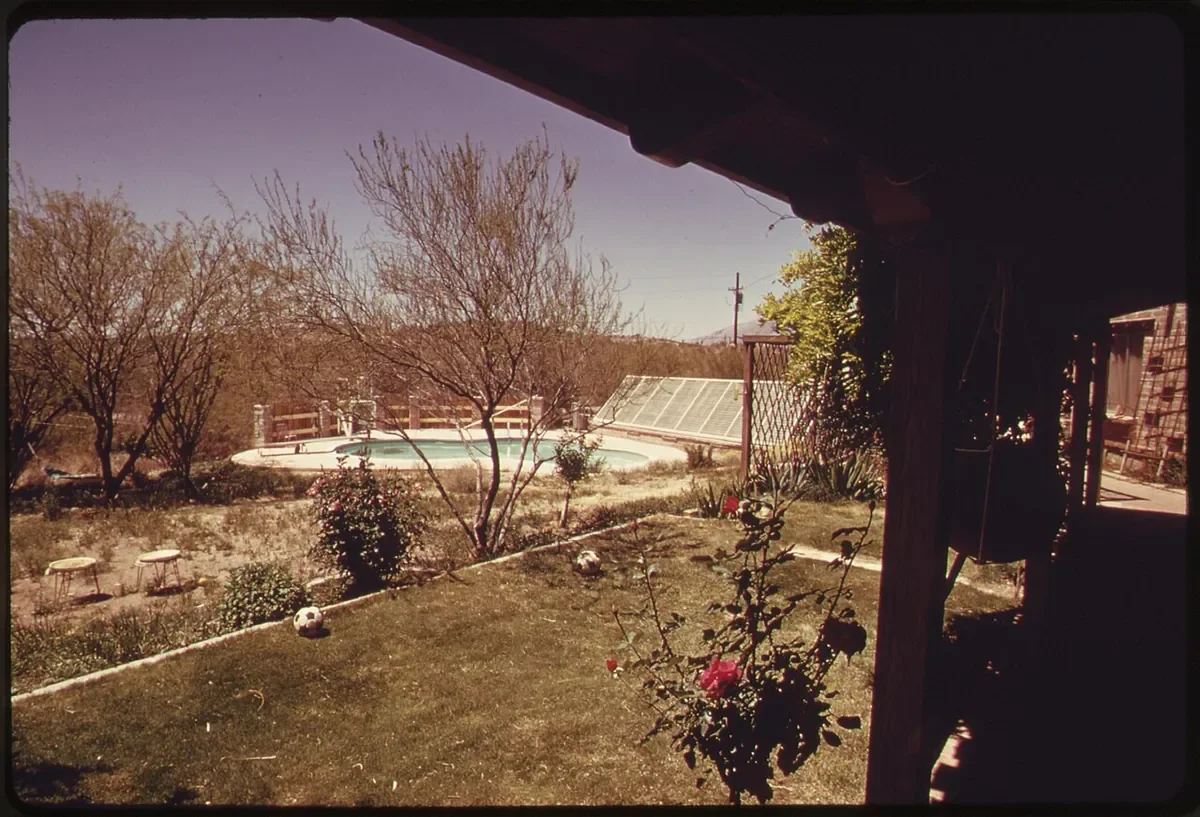
Photo: U.S. National Archives (Documerica), Wikimedia Commons, public domain
Which Pool Heater Is Best for Your Climate?
Hot, sunny climates (Florida, Arizona, Southern California): solar or a heat pump is usually best. Many owners need heat only in spring and fall.
Mild climates: heat pumps work well most of the season; solar adds free heat on sunny days.
Cool climates and short seasons: gas heaters are common because they heat quickly in cool air, especially for weekend use. Pairing gas with a cover and solar reduces costs.
Spas and hot tubs attached to pools usually use gas or electric heat because they need fast, high-temperature heating.
Heating Inground Pools vs Above Ground Pools
Inground pool heaters are larger and installed permanently with the pool equipment. Above ground pools can use smaller gas heaters, heat pumps, solar panels or solar mats, and solar covers. Because above ground pools hold less water, the cost of heater for pool water in an above ground pool is lower to buy and run. See how to put up an above ground pool.
Pool Heater Cost by Pool Size
| Pool | Typical gas heater | Typical heat pump | Estimated installed cost |
|---|---|---|---|
| Above ground, up to 15,000 gal | 100,000 – 200,000 BTU | 50,000 – 90,000 BTU | $1,000 – $3,500 |
| Inground, 15,000 – 20,000 gal | 250,000 – 300,000 BTU | about 100,000 – 120,000 BTU | $2,000 – $5,000 |
| Inground, 20,000 – 30,000 gal | 300,000 – 400,000 BTU | about 120,000 – 140,000 BTU | $2,500 – $6,000 |
| Large pool with spa | 400,000 BTU | Large unit or two units | $3,500 – $7,500+ |
These are rough planning figures; correct sizing depends on surface area, climate and the temperature you want. Bigger inground pool heaters cost more to buy, but an undersized unit costs more in frustration and run time.
Heating a Spa vs Heating a Pool
Spas need fast heat to around 100 to 104°F, so attached spas usually share a gas heater with the pool, or use a large heat pump with a long warm-up time. Heating only the spa is quick and relatively cheap because it holds a few hundred gallons. Heating the whole pool is a much bigger job. If you mainly want a warm spa and a cooler pool, a gas heater used on demand for the spa, plus solar for the pool, is a popular combination.
Pool Heater Features That Affect Price
- Output (BTU or kW): larger units cost more.
- Efficiency: higher-efficiency gas heaters and heat pumps with higher COP ratings cost more up front and less to run.
- Heat exchanger material: cupronickel and titanium resist corrosion better, especially with salt pools.
- Low-NOx models: required in some areas for gas heaters.
- Reversible heat pumps: can heat or cool the water, useful in very hot climates.
- Digital controls and automation for scheduling and remote control.
- Quiet operation: lower-noise heat pumps cost more but matter near bedrooms and neighbors.
Common Pool Heater Repairs and Costs
| Problem | Typical repair | Approx. cost |
|---|---|---|
| Gas heater will not light | Igniter, flame sensor or gas valve | $150 – $600 |
| Heater cycles on and off | Pressure switch, dirty filter, low flow | $100 – $400 |
| Leaking heat exchanger | Exchanger replacement | $800 – $2,000+ (often replace heater) |
| Heat pump not heating | Refrigerant, fan motor, sensor, dirty coil | $200 – $1,200 |
| Control board failure | New board | $300 – $800 |
| Solar panel leak | Panel patch or replacement | $100 – $500 per panel |
If repairs approach half the cost of a new heater and the unit is more than 7 to 10 years old, replacement usually makes more sense.
Maintaining a Pool Heater
- Keep water balanced: pH 7.4 to 7.6 and proper alkalinity and calcium protect the heat exchanger.
- Keep the filter clean so flow through the heater stays strong.
- Clear leaves and debris around heat pumps and gas heater vents.
- Schedule a yearly service for gas heaters to check burners, igniters and venting.
- Winterize heaters and solar panels in freezing climates by draining water.
- Install chlorinators after the heater, with a check valve.
Permits and Safety for Gas Pool Heaters
Gas heaters need correct gas pipe sizing, venting and clearances from windows, doors and property lines. Most areas require a permit and inspection for new gas lines and heater installations. Heaters must be installed by qualified technicians, and carbon monoxide safety rules apply if a heater is near living spaces. Heat pumps and electric heaters need electrical permits for new circuits. Ask your installer to handle permits and keep the final inspection record.
Example Pool Heater Budgets
| Scenario | Heater choice | Estimated cost |
|---|---|---|
| Above ground pool, short season | Small heat pump or solar panels plus cover | $1,000 – $3,000 |
| Inground pool in Florida | Heat pump | $3,000 – $6,000 installed |
| Inground pool in the Northeast, weekend use | Natural gas heater | $2,500 – $5,000 installed, plus gas line if needed |
| Sunny region, long season | Roof-mounted solar | $3,500 – $7,000 installed |
| Pool and spa | Gas for spa plus solar for pool | $6,000 – $12,000 |
How to Lower Pool Heating Costs
- Use a cover. Most heat loss is from evaporation; a cover can cut heating costs dramatically. See pool cover cost.
- Lower the temperature a few degrees; each degree adds cost.
- Block wind with fences, hedges or screens.
- Heat only when you swim if you have gas; keep steady temperatures with heat pumps.
- Combine solar with another heater to cut fuel use.
- Keep the heater clean and water balanced so it runs efficiently.
- Run the pump efficiently; see how long to run a pool pump.
Is a Pool Heater Worth the Cost?
For many families, yes. A heater can double the number of comfortable swimming days, which spreads the cost of the pool over more use. In warm climates, a heat pump or solar system often pays for itself in extended use. In cooler areas, a gas heater for weekends and holidays is a common compromise. If you rarely swim outside midsummer, a solar cover alone may be enough. See cost to maintain a pool for how heating fits the overall budget.
How Much Is a Pool Heater Without Installation?
If you are asking how much is a pool heater on its own, the unit price is only part of the swimming pool heater cost. Typical equipment-only prices are roughly:
- Gas pool heater: about $1,000 to $3,000 for common residential sizes.
- Heat pump pool heater: about $1,500 to $5,000.
- Electric resistance heater: a few hundred dollars for small spa units to several thousand for pool sizes.
- Solar pool heater kits: a few hundred dollars for small above ground kits to several thousand for full inground systems.
Installation, gas or electrical work and permits then add to the pool heater cost. A low equipment price can be misleading if your home needs a new gas line or a larger electrical panel.
Inground Pool Heaters: Choosing the Right Type
For inground pool heaters, the choice usually comes down to gas versus heat pump, with solar as an add-on or a stand-alone option in sunny regions. Gas inground pool heaters are best when you want fast heat on demand, such as heating the pool for a weekend or heating an attached spa. Heat pump inground pool heaters are best when you want to keep the pool warm through a long season at a lower running cost. Solar is best when roof space and sun are plentiful. Many owners compare the cost of pool heaters for inground pools over five or ten years, not just the purchase price, and that comparison usually favors heat pumps and solar for regular use.
Electric Pool Heater Cost Compared
"Electric pool heater" can mean either a heat pump or an electric resistance heater, and the difference matters. An electric resistance heater costs less to buy in small sizes but is expensive to run for a full-size pool. A heat pump costs more up front but uses far less electricity for the same heat. When you compare electric pool heater cost, check which type you are being quoted and ask for the expected monthly running cost at your electricity rate.
Solar Pool Heater Cost Compared With a Heat Pump
Solar pool heater cost is similar to a heat pump up front for many homes, often $2,500 to $6,500 installed, but solar has almost no running cost and a longer life. A heat pump heats on cloudy days and at night, while solar cannot. In sunny climates, solar alone may give enough warmth; in mixed climates, solar plus a heat pump gives warm water most of the season with lower bills than a heat pump alone. The cost to install solar pool heater panels rises if the roof needs repairs first or if long plumbing runs are needed.
Pool Heater Cost: Key Points
- Swimming pool heater cost is usually $1,500 to $6,500 installed; the average project is around $3,000.
- Gas pool heater cost is lowest to buy but highest to run.
- Heat pumps cost more to buy and much less to run in mild weather.
- Solar has the lowest running cost and the longest life.
- Pool heater installation cost rises with new gas lines, electrical upgrades and long plumbing runs.
- A cover is the cheapest way to cut heating costs with any heater for pool water.
Frequently Asked Questions
How much does a pool heater cost installed?
Most pool heaters cost $1,500 to $6,500 installed, with the average project around $3,000. New gas lines, electrical upgrades or large solar arrays push the total higher, while simple replacements of the same type usually cost less.
What is the cheapest pool heater to run?
Solar pool heating is the cheapest to run, followed by heat pumps. Gas and electric resistance heaters cost the most to run, especially in cool, windy weather or when the pool is left uncovered.
How long does a pool heater last?
Gas heaters often last 5 to 10 years, heat pumps and electric heaters 10 to 15 years, and solar systems 15 to 20 years or more.
How much does it cost to replace a pool heater?
Usually $1,500 to $5,000 for a like-for-like replacement, more if you switch heater types or need new gas or electrical service, or if the old unit is hard to remove.
What size pool heater do I need?
It depends on pool surface area, desired temperature rise, climate and whether you use a cover. Use a sizing calculator or ask a pool pro.
How much does a gas pool heater cost to run?
Often $200 to $500 or more per month in season, depending on gas prices, pool size, target temperature and whether you cover the pool.
Can I install a pool heater myself?
Plumbing a heater into the return line is within reach for some owners, but gas lines, venting and electrical circuits should be done by licensed pros, and most areas require permits.
Do pool heaters work with salt water pools?
Yes, but choose a heater with a corrosion-resistant heat exchanger, such as cupronickel or titanium, and keep salt and pH in the recommended range.
How much is a heater for an above ground pool?
Small heat pumps, gas heaters and solar kits for above ground pools usually cost about $1,000 to $3,500 installed, and solar covers cost much less.
Is a heat pump or gas heater better for a pool?
Heat pumps are better for steady heating in mild weather; gas is better for fast heating and cool climates. Many owners in mixed climates use a heat pump for the pool and gas for an attached spa, or add solar panels to cut running costs further.
Sources
- HomeGuide: Pool heater cost
- Angi: Pool heater installation cost
- HomeAdvisor: Pool heater cost
- U.S. Department of Energy: Heat pump swimming pool heaters
- U.S. Department of Energy: Solar swimming pool heaters
- U.S. Department of Energy: Gas swimming pool heaters