
What Is a Plunge Pool? A Complete Guide
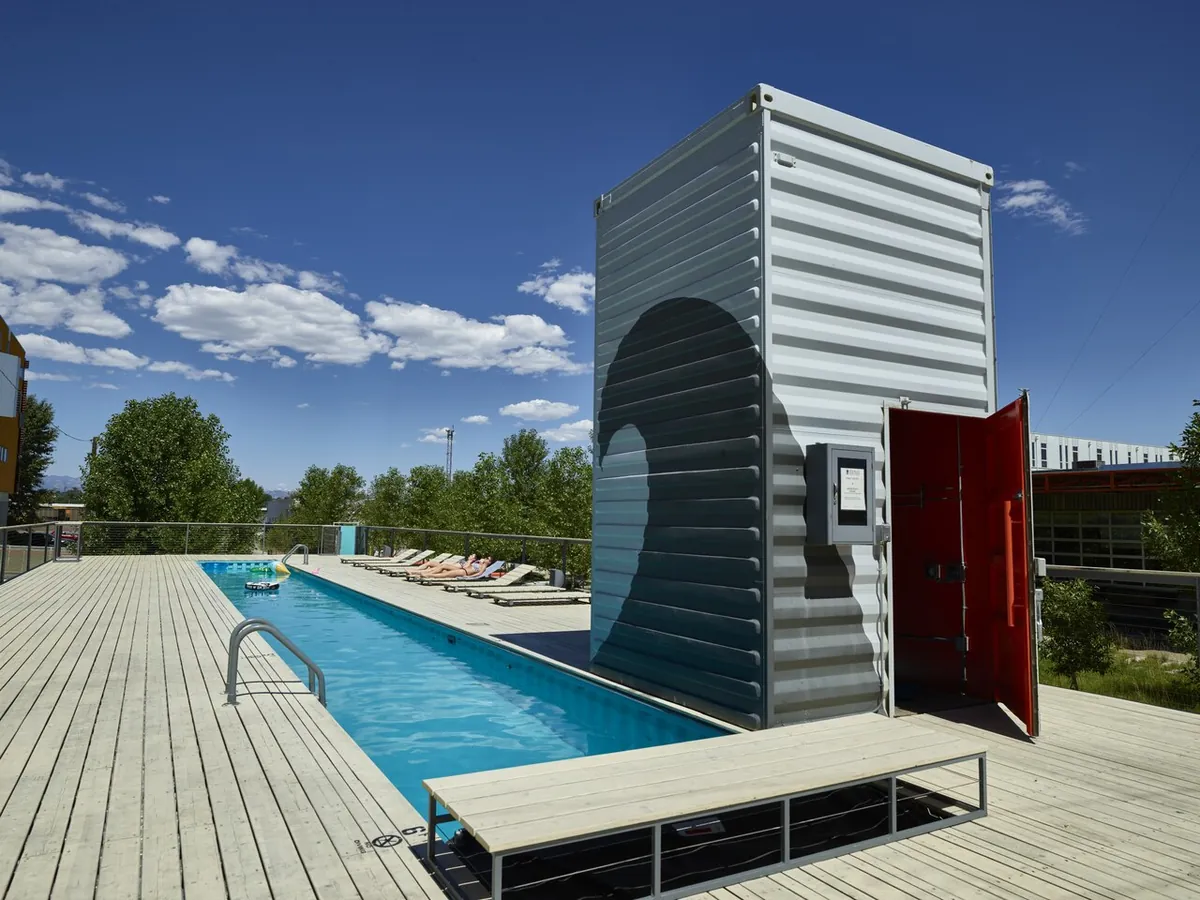
Photo: Carol M. Highsmith, Library of Congress / Wikimedia Commons, public domain
Quick Answer
What is a plunge pool? A plunge pool is a small, relatively deep pool built for cooling off, soaking and floating rather than swimming laps. Typical plunge pool dimensions are about 6 x 10 to 10 x 16 feet and 4 to 6 feet deep, holding roughly 2,000 to 7,000 gallons. Plunge pools come as fiberglass shells, precast concrete units, custom concrete, converted shipping containers, above ground models and DIY stock tanks. They can be heated like a big spa or kept cold as a cold plunge pool. Most cost $15,000 to $50,000 installed inground, and far less to run than a full-size pool.
Not everyone needs a full swimming pool. Many people mostly want a place to cool off on hot days, sit in the water with a drink, float, or take a warm or cold dip for health. A plunge pool does all of that in a fraction of the space and cost of a standard pool, which is why plunge pools have become one of the fastest-growing pool types for city yards, small lots, rooftops and vacation homes.
This guide explains what a plunge pool is, typical plunge pool size and dimensions, the main types (fiberglass, precast, concrete, container, above ground and DIY), cold plunge pools, installation, backyard plunge pool ideas, and how a plunge pool compares with a hot tub and a full pool. For prices, see plunge pool cost.
What Is a Plunge Pool Used For?
What is plunge pool use in daily life? Most owners use it in a few simple ways.
The word "plunge" describes how people use it: you step or dip in, rather than swim across. Common uses:
- Cooling off in hot weather.
- Soaking and relaxing, often with built-in benches and jets.
- Warm-water therapy when heated to 85 to 95 °F.
- Cold plunging for recovery, at about 40 to 60 °F.
- Exercise with a swim jet that creates a current to swim against.
- Play for small children (with supervision and a safety barrier).
Plunge Pool Size and Dimensions
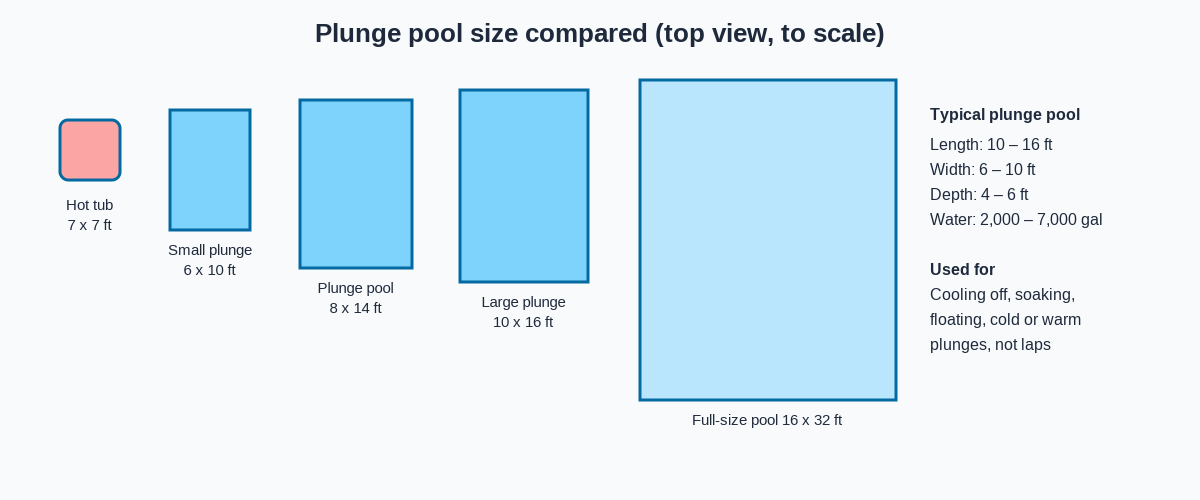
Diagram: Asphapro.com
| Plunge pool size | Typical depth | Water (approx.) | Good for |
|---|---|---|---|
| 6 x 10 ft | 4 – 5 ft | 1,800 – 2,200 gal | 1 – 3 people, tiny yards |
| 8 x 12 ft | 4.5 – 5.5 ft | 3,200 – 4,000 gal | Couples and small families |
| 8 x 14 ft | 4.5 – 5.5 ft | 3,800 – 4,600 gal | Families, with benches |
| 10 x 16 ft | 5 – 6 ft | 6,000 – 7,200 gal | Groups, swim jets |
| 8 x 20 ft (container) | 4 – 5 ft | 4,800 – 6,000 gal | Long, narrow yards |
Most plunge pools are deep enough that adults can stand with water at chest or shoulder height, which makes them feel more like a pool than a hot tub. Unlike lap pools, they are short, so swimming is limited unless you add a swim jet.
Types of Plunge Pools
Fiberglass plunge pool
A fiberglass plunge pool is a one-piece factory shell with a smooth gelcoat, often with molded benches, steps and a ledge. Fiberglass plunge pools are quick to install (often in a few days once the hole is dug), use fewer chemicals and resist algae. They must be delivered by truck and lifted in by crane.
Precast concrete plunge pool
A precast plunge pool is cast from concrete in a factory and delivered in one piece. Precast plunge pools are very strong and can be installed fully inground, partly inground or above ground. Many are finished with tile or render. They are very heavy, so site access and a crane are essential.
Custom concrete plunge pool
Concrete plunge pools built on site with gunite or shotcrete can be any shape and finish, with infinity edges, raised walls, tiled spa benches and waterfalls. They cost the most and take the longest to build, but offer total design freedom.
Prefab and prefabricated plunge pools
"Prefab plunge pool" covers any factory-made unit: fiberglass, precast concrete, steel container and modular panel pools. A prefabricated plunge pool shortens building time and makes costs more predictable than a custom pool.
Shipping container plunge pool
Steel shipping containers converted into pools are long and narrow, usually 8 feet wide and 20 or 40 feet long. They can include windows in the side, built-in steps and decks on top. They can sit above ground or be partly buried.
Above ground plunge pool
An above ground plunge pool sits on a pad or deck. Options range from resin and steel plunge tubs to timber-clad pools and precast units set at ground level. They need little excavation and are a good choice on rocky or sloped sites, or for renters.
DIY plunge pool and plunge pool kits
A DIY plunge pool can be as simple as a galvanized stock tank with a small pump and filter, or a plunge pool kit with panels or a small shell that a handy owner installs. Stock tanks cost $1,500 to $4,000 all in; kits range more widely. See DIY inground pool kits.
What Is a Cold Plunge Pool?
A cold plunge pool is a plunge pool kept cold, usually 40 to 60 °F, for short dips. Cold plunging has become popular with athletes and wellness fans, often after a sauna or hot tub. Some owners chill a full plunge pool with a dedicated chiller; others use a small cold plunge tub (often a few hundred gallons) with a built-in chiller and filter. A dedicated cold plunge tub costs about $1,000 to $10,000 or more, far less than an inground pool, while a chilled inground plunge pool adds $2,000 to $6,000 for a chiller plus higher summer power costs. Anyone with heart conditions or other health concerns should talk to a doctor before cold plunging.
A Short History of the Plunge Pool
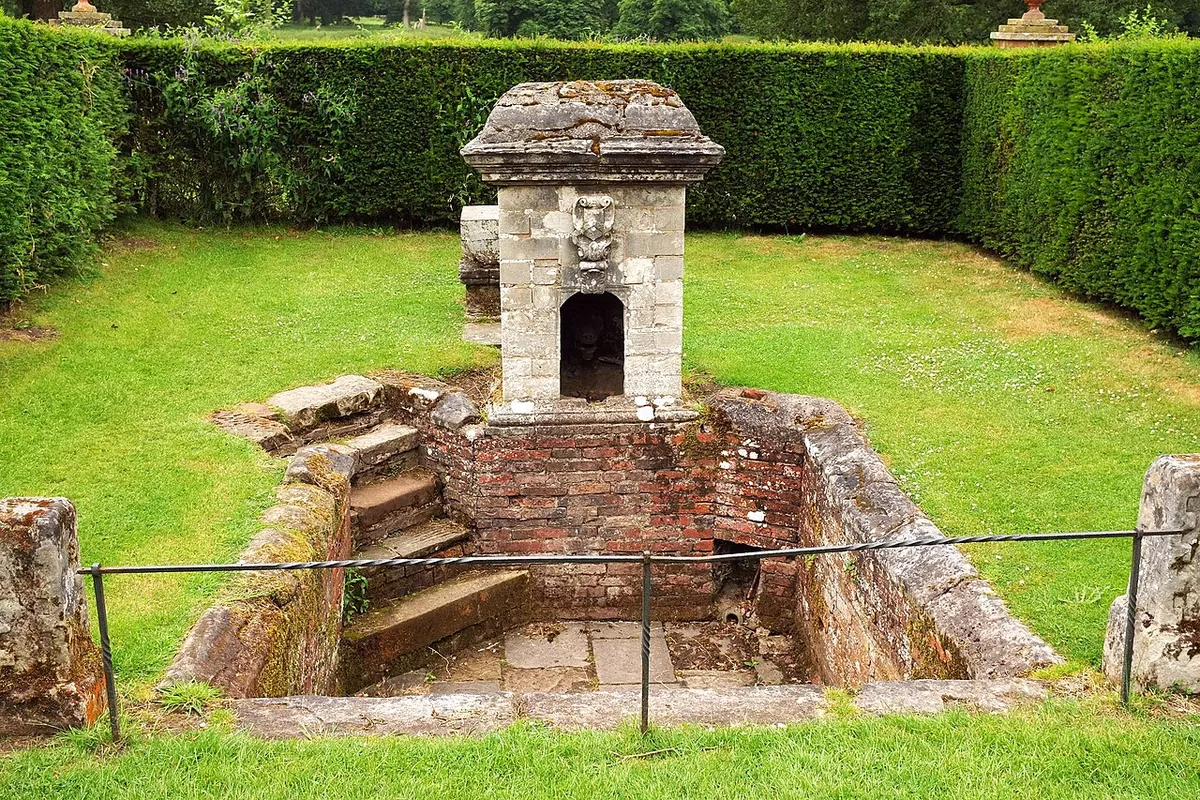
Photo: Derek Harper, Wikimedia Commons, CC BY-SA 2.0
Plunge pools are an old idea. The Romans used a cold pool (the frigidarium) after hot baths. In 18th-century Britain, wealthy households built cold plunge pools in gardens and grottos, believing cold dips were good for health. Many survive today as garden features. The modern plunge pool takes the same simple idea, a small, deep pool you step into, and adds filtration, heating, jets and modern materials.
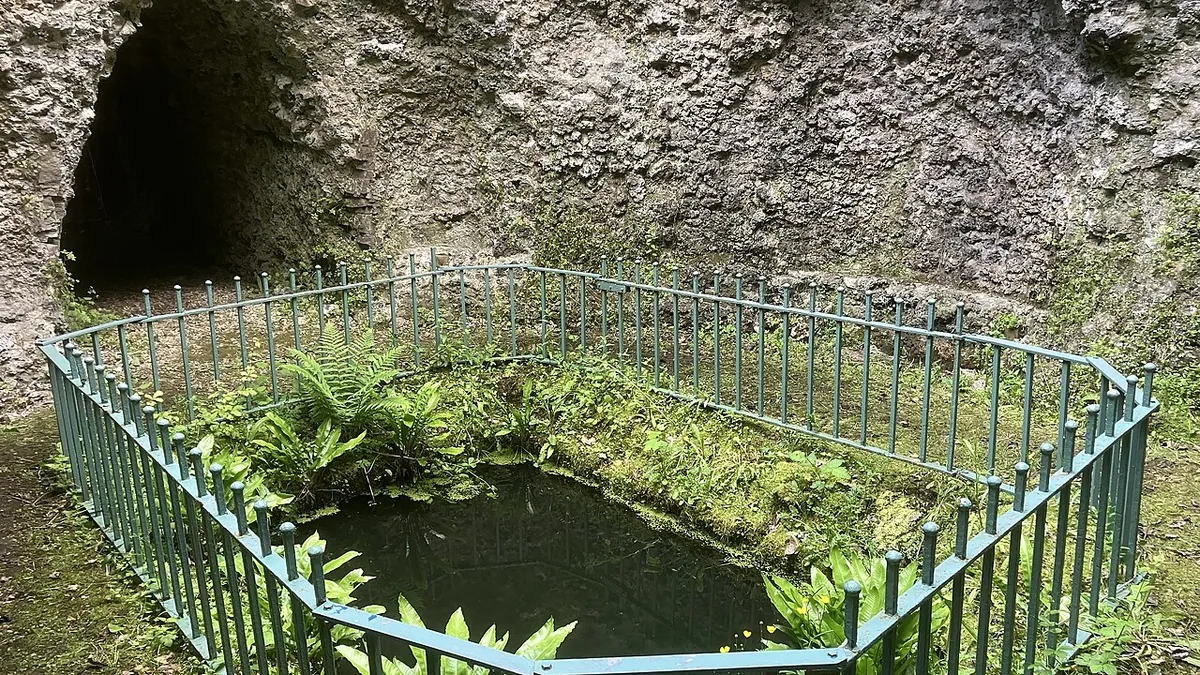
Photo: Mikeluffbristol, Wikimedia Commons, CC0
Plunge Pool Installation: What to Expect
Plunge pool installation is faster and simpler than a full pool, especially for prefab models:
- Design and permits: choose the type and size, check setbacks, and apply for building and electrical permits.
- Site preparation: dig the hole (or prepare a pad for above ground models), set a compacted gravel or concrete base, and plan crane access.
- Placement: the shell is lifted in and leveled.
- Plumbing and electrical: the pump, filter, heater and lights are connected and bonded by licensed trades.
- Backfill and fill: the pool is filled with water while gravel is backfilled around it.
- Finishing: coping, deck, fence and landscaping.
A prefabricated plunge pool can often be swimmable within one to three weeks after permits; custom concrete takes two to three months.
Backyard Plunge Pool Ideas
- Plunge pool with deck: set a fiberglass or container pool into a timber or composite deck for a clean, modern look.
- Courtyard plunge pool: surround a small pool with walls, planting and a bench for a private retreat.
- Raised plunge pool: a precast or concrete pool raised 18 to 24 inches with a wide edge for sitting.
- Plunge pool with a water feature: a sheer descent or scupper on a back wall; see pool ideas with waterfalls.
- Hot and cold pair: a heated plunge pool next to a cold plunge tub for contrast therapy.
- Rooftop plunge pool: a lightweight fiberglass or steel pool on an engineered roof deck.
- Plunge pool with pergola: shade over one end for summer, open sky over the rest.
Plunge Pool vs Hot Tub vs Regular Pool
| Feature | Plunge pool | Hot tub | Regular pool |
|---|---|---|---|
| Size | 6 x 10 – 10 x 16 ft | About 7 x 7 ft | 14 x 28 – 20 x 40 ft |
| Depth | 4 – 6 ft | About 3 ft | 3.5 – 8 ft+ |
| Water temperature | Cool to warm, any | Hot (100 – 104 °F) | Cool to warm |
| Uses | Cool off, soak, float, plunge | Hot soak, jets | Swim, play, groups |
| Typical cost | $15,000 – $50,000 | $4,000 – $16,000 | $35,000 – $100,000+ |
A plunge pool sits between a hot tub and a regular pool. It is the better choice if you want to cool off in summer and stand in the water, but still want a small, easy-to-maintain pool.
Pros and Cons of Plunge Pools
Pros
- Fits small yards, courtyards and rooftops.
- Lower build and running costs than a full pool.
- Quick to heat and easy to cover.
- Fast installation for prefab types.
- Can be used warm or cold.
Cons
- Not suited to lap swimming without a swim jet.
- Limited room for groups and active play.
- Still needs a fence, permits and regular care.
- Crane access can be costly in tight sites.
Choosing Plunge Pool Sizes and Measurements
When comparing plunge pool sizes, think about how many people will use it at once and what they will do. For one or two people who want to cool off and float, a 6 x 10 foot pool is enough. For a family that wants to sit together on benches, 8 x 12 to 8 x 14 feet works well. If you want to add a swim jet for exercise, look for at least 12 to 16 feet of length so you have room to stroke without hitting the wall.
Check plunge pool measurements against your yard after adding setbacks and a deck. Most towns require pools to be set back several feet from property lines and buildings, and you need 3 to 4 feet of walking space around at least two sides. Measure the access path too: prefab shells need a clear route for the truck and a crane reach to the hole. A pool that fits on paper but cannot be delivered is a costly surprise.
Plunge Pool Inground vs Plunge Pool Above Ground
A plunge pool inground sits with its top at deck level. It looks built-in, blends with landscaping and is easy to step into from the patio. It needs excavation, a solid base and backfill, and usually costs more. On a flat, accessible lot, an inground plunge pool is the classic choice.
A plunge pool above ground sits on a pad or deck with its walls exposed or clad in timber, stone or composite. It is a good fit for rocky ground, high water tables, sloped yards, rooftops and rentals. Installation is quicker and cheaper, and some models can be moved. The trade-off is that you climb steps to get in, and the sides lose more heat in cold weather unless insulated.
Many owners choose a middle path: setting a precast or fiberglass plunge pool partly into the ground, with 18 to 24 inches exposed as a sitting edge.
Installing a Plunge Pool: Site Checklist
- Access: can a truck and crane reach the yard, or will the pool need to be lifted over the house?
- Utilities: call 811 to mark buried lines before digging.
- Soil and water table: rock or high groundwater may favor above ground or semi-inground installation.
- Base: a compacted gravel or concrete base must be level and strong enough for the full weight of water.
- Equipment location: pump, filter and heater need a ventilated spot within a short pipe run.
- Electrical: a dedicated circuit with GFCI protection and proper bonding by a licensed electrician.
- Drainage: plan where rainwater and overflow will go.
- Barrier: a fence or lockable safety cover as required by code.
Installing a plunge pool with a good checklist avoids delays and extra costs on installation day.
Cheap DIY Plunge Pool Options
If budget is tight, a cheap DIY plunge pool can still give you cool water on hot days:
- Stock tank plunge pool: a 6 to 10 ft galvanized tank with an above ground pool pump and filter. Set it on level gravel or pavers. Total cost about $1,500 to $4,000.
- DIY plunge pool kit: some makers sell small modular panel kits or resin shells with fittings and equipment for owners to assemble. Follow the instructions closely for the base and electrical.
- Timber-framed liner pool: a box frame with a heavy liner, built on a deck. Needs careful design so the frame can hold the water pressure.
- Large cold plunge tub: a small insulated tub with a chiller for cold dips only.
Even a DIY plunge pool needs filtration, sanitizer, a cover and, in most areas, a barrier. Use a licensed electrician for anything that plugs into permanent wiring near water.
Plunge Pool Maintenance
Plunge pool upkeep is quick because the water volume is small. Test chlorine and pH two or three times a week, more often if the water is heated. Skim leaves daily in fall, empty the skimmer basket and brush the walls weekly, and clean the filter when the pressure rises. Small volumes change fast, so add chemicals in small doses and retest. Drain and refill a heated plunge pool every year or two, as you would a hot tub. A cover keeps out debris, cuts evaporation and holds heat. Most owners spend 20 to 40 minutes a week on a plunge pool.
Plunge Pool Rules and Safety
Because a plunge pool is deep, building codes usually treat it as a pool, not a spa. That means a permit, a barrier at least 48 inches tall with a self-closing gate (or a code-approved safety cover where allowed), anti-entrapment drain covers and GFCI-protected wiring. Supervise children at all times, keep the cover locked when not in use, and set heated pools to safe temperatures for soaking. Check your local rules before you choose a design, because some areas treat small pools differently.
Features to Consider in a Plunge Pool
- Built-in benches: most plunge pool time is spent sitting, so benches along one or two walls are worth it.
- Wide steps: easy entry for children and older swimmers, and extra seating.
- Swim jet: a counter-current unit lets you swim in place for exercise.
- Spa jets and air blower: massage jets turn a heated plunge pool into a large spa.
- Heater: a heat pump or gas heater for warm soaks in cooler months.
- Chiller: for owners who want a cold plunge pool in summer.
- LED lighting: for evening use and a dramatic look.
- Automatic or rigid cover: keeps heat in and adds safety.
- Salt system: softer-feeling water with steady chlorine.
Where to Put a Plunge Pool
Because plunge pools are small, there are more choices for where they go. Popular spots include next to a patio or outdoor kitchen, in a sunny corner of the yard, on a terrace with a view, beside a sauna or pool house, and on a reinforced roof deck. Put the pool where you can see it from the house, in afternoon sun if you want warmer water, and away from trees that drop leaves. Keep the equipment pad close but out of sight and away from bedroom windows, since pumps and heat pumps make some noise.
Plunge Pools for Vacation Homes and Rentals
Plunge pools are popular for vacation homes and short-term rentals because they cost less to build and run, are easier to keep clean between guests, and photograph well. A heated plunge pool can be marketed year-round. Choose durable finishes, an automatic cover, remote monitoring of water chemistry and temperature, and a clear set of pool rules for guests. Check local rental and pool safety rules before listing.
How Much Does It Cost to Run a Plunge Pool?
Running a plunge pool is cheap compared with a full pool. With only 2,000 to 7,000 gallons, chemicals cost about $150 to $400 a year. A small variable-speed pump uses $100 to $350 of electricity a year. Heating is the main variable: an unheated plunge pool adds nothing, while keeping a covered plunge pool at spa-like temperatures through a cool season can cost $300 to $1,500 a year depending on climate and the heater. A good cover is the single best way to keep these costs down.
Is a Plunge Pool Right for You?
A plunge pool is a great fit if you have a small or sloped yard, want water mainly for cooling off and relaxing, prefer low upkeep and running costs, or want a warm soak and cold dip option without building a full pool. It is less suited if your family wants to swim laps (unless you add a swim jet), play pool games with friends, or dive. Many families who cannot fit or afford a full pool find that a well-designed plunge pool gives them most of what they wanted from a pool, every day of the year.
If you are ready to compare prices, our guide on plunge pool cost covers each type in detail, and 12x24 inground pool cost shows what the next size up costs.
Common Questions People Mix Up About Plunge Pools
A few terms get confused when people search for what is a plunge pool:
- Plunge pool vs dipping pool: the same thing. "Dipping pool" is more common in the UK.
- Plunge pool vs cocktail pool: a cocktail pool is a plunge pool designed for sitting and socializing, with benches and a ledge, often shallower.
- Plunge pool vs spool: a "spool" is a small pool that can be heated like a spa; most heated plunge pools are spools.
- Plunge pool vs swim spa: a swim spa is a long, above ground spa with a strong current for swimming; it is usually shallower than a plunge pool.
- Plunge pool vs natural plunge pool: in nature, a plunge pool is the deep pool worn into rock at the base of a waterfall. Backyard plunge pools borrow the name.
Plunge Pool Materials Compared
Fiberglass plunge pools have the smoothest surface and the lowest chemical use, and they install fastest. Precast concrete plunge pools are the strongest and handle above ground or rooftop settings well, but they are the heaviest. Custom concrete allows any shape but costs the most and takes the longest. Steel container pools have a distinctive industrial look but need good coatings and liners to prevent corrosion. Resin and timber above ground models are the lightest and easiest to place. Choose the material that fits your site first, then your style and budget.
What Is a Plunge Pool: Key Points
- A plunge pool is a small, deep pool for cooling off, soaking and dipping.
- Typical sizes are 6 x 10 to 10 x 16 feet and 4 to 6 feet deep.
- Types include fiberglass, precast, concrete, container, above ground and DIY.
- They can be heated or used as cold plunge pools.
Frequently Asked Questions
Whats a plunge pool compared with a regular pool?
A plunge pool is much smaller and usually deeper for its size, made for dipping and soaking rather than swimming laps.
How deep is a plunge pool?
Usually 4 to 6 feet, deep enough to stand in with water at chest or shoulder height. Some cocktail-style pools are a little shallower.
Is a small plunge pool worth it?
For many households, yes. A small plunge pool gives water to cool off and soak in for far less than a full pool, and running costs are low.
Do plunge pools need a permit?
Almost always. Most towns treat plunge pools like other pools and require building and electrical permits, plus a safety barrier.
Can kids use a plunge pool?
Yes, with close supervision. Plunge pools are deep for their size, so young children need an adult in arm's reach.
Can a plunge pool be heated?
Yes. A heat pump or gas heater can keep it warm, and a tight cover holds the heat. Many owners heat plunge pools for year-round use.
Can I build a DIY plunge pool?
A stock tank or above ground plunge pool is a realistic DIY project. Inground fiberglass and precast pools need excavation, a crane and licensed electrical work.
What is the best material for a plunge pool?
Fiberglass for low maintenance and fast install, precast concrete for strength and flexible placement, custom concrete for design freedom.
Do plunge pools need filters?
Yes. Like any pool, a plunge pool needs a pump, filter and sanitizer to stay clean and safe, even if it is small.
How long does a plunge pool last?
Fiberglass and precast concrete shells last 25 years or more. Equipment lasts 8 to 15 years.
Sources
- HomeGuide: Plunge pool cost
- Angi: Plunge pool cost
- CPSC: Pool and spa safety
- ICC: International Swimming Pool and Spa Code