
Swimming Pool Tile Ideas: Waterline, Mosaic and Full-Tile Designs
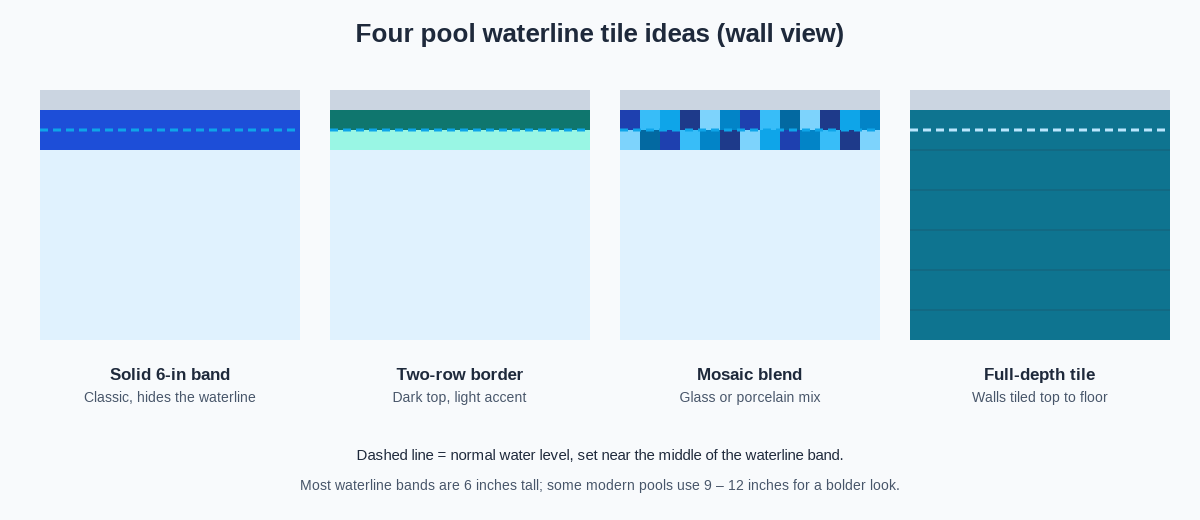
Diagram: Asphapro.com
Quick Answer
The most popular swimming pool tile ideas start with the waterline: a 6-inch band of tile around the top of the pool walls that hides the line of scum and scale where the water meets the wall. Classic choices are a solid blue or gray band; modern pool waterline tile ideas include large-format porcelain, dark slate looks, and glass mosaic blends that shimmer in the sun. Beyond the waterline, you can add step edge tiles, mosaic accents on the floor, tiled spas and benches, or a full-tile pool. Porcelain costs about $20 to $45 per square foot installed, glass $35 to $100, and a waterline band for an average pool usually runs $1,500 to $5,000. Choose frost-resistant, pool-rated tile and use the right grout.
Tile is the jewelry of a swimming pool. It frames the water, protects the most exposed part of the walls, and sets the style of the whole backyard. A single row of the right tile can make a plain plaster pool look custom, while a full mosaic or glass interior can make a pool the centerpiece of a property.
This guide collects practical swimming pool tile ideas, from simple waterline bands to bold mosaics, and explains materials, colors, costs and care. If your current tile is damaged, see our guides on replacing pool tile cost and how to clean pool tile.
Why Pools Have Waterline Tile
The waterline is where oils, sunscreen, dirt and minerals collect. On a plaster or painted wall, that line turns into a gray or white ring that is hard to scrub off. Pool waterline tile gives a hard, smooth, easy-to-clean surface right where buildup forms. It also protects the plaster from wear caused by waves and changing water levels, and it adds color and pattern at eye level, where people notice it most.
Most waterline pool tiles are installed in a 6-inch band around the top of the walls, with the normal water level set near the middle of the band. Some modern pools use a taller 9- to 12-inch band, or tile the whole wall, for a bolder look.
Classic Pool Waterline Tile Ideas
Solid blue band. A single row of 6 x 6 inch blue tile is the classic look, simple and timeless. Deep cobalt makes the water look richer; lighter blues feel airy.
Two-tone border. A darker top row and a lighter lower row, or a thin accent strip of glass between two rows of porcelain, adds detail without being busy.
Patterned deco tiles. Hand-painted or printed tiles with waves, scrolls or Spanish and Mediterranean patterns, set every few feet or as a continuous border.
Mosaic sheets. Small 1-inch or 2-inch mosaic tiles on mesh sheets, in a single color or a blend, wrap easily around curves on freeform pools.
Modern Pool Waterline Tile Ideas
Modern pool waterline tile ideas favor clean lines and natural or neutral colors. Large-format porcelain tiles, such as 6 x 24 or 12 x 24 inches, in gray, charcoal or white give a sleek, continuous band with fewer grout lines. Slate-look and concrete-look porcelain pairs well with gray decks and dark pool finishes. Glass tile in a single color, such as aqua or deep teal, adds shimmer without pattern. Some modern pools skip contrast and match the tile to the coping or the deck, for a seamless, architectural look.
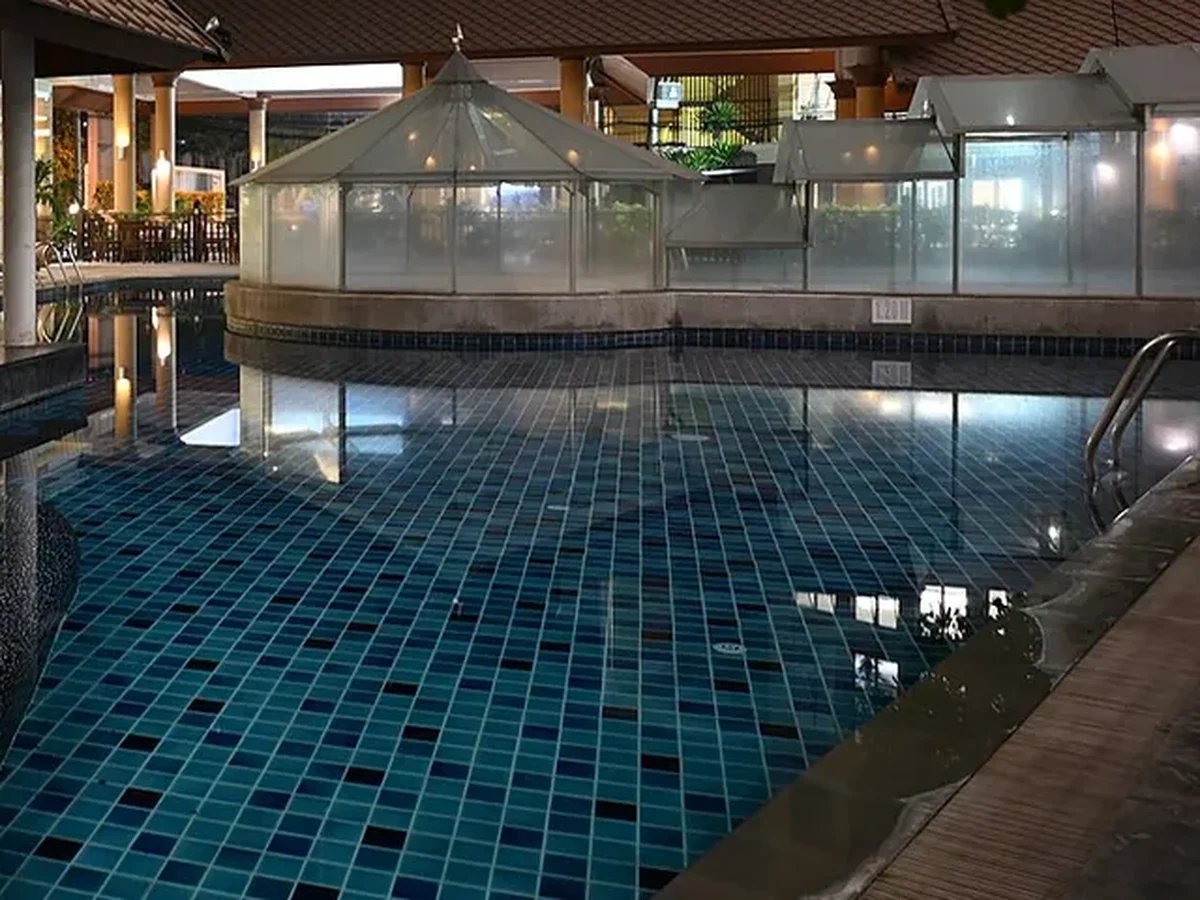
Photo: PattayaPatrol, Wikimedia Commons, CC BY-SA 4.0
Swimming Pool Tiles by Material
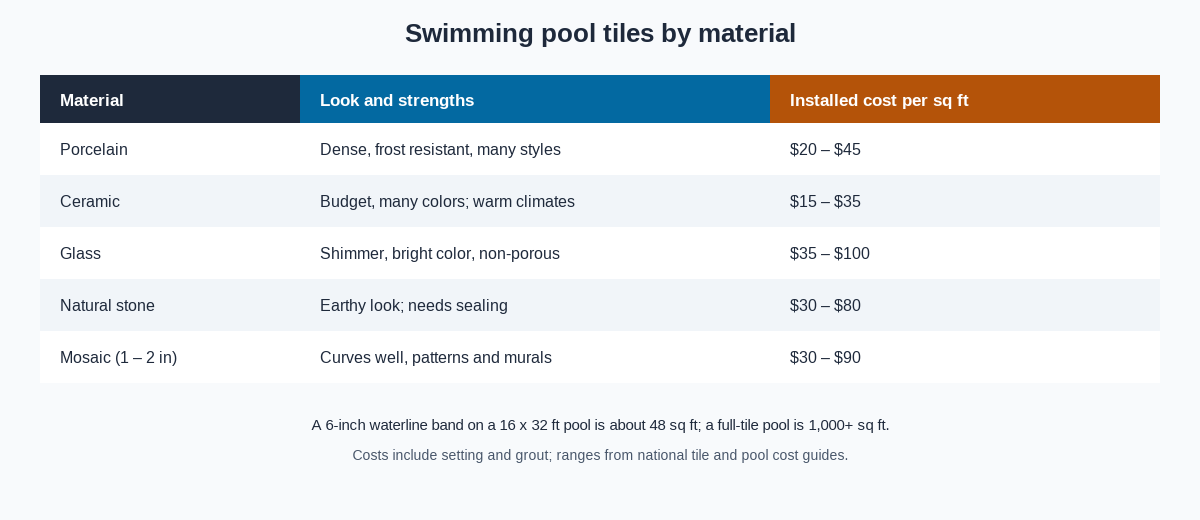
Chart: Asphapro.com
Porcelain is the most common choice for swimming pool tiles today. It is dense, absorbs very little water, resists frost and chemicals, and comes in countless colors and textures. Ceramic is cheaper and offers many colors but absorbs more water, so it suits warm climates better than cold ones. Glass tile is non-porous, colorful and reflective, giving the most striking look, but it costs more and needs skilled installation. Natural stone, such as travertine, slate or limestone, gives an earthy look and is often used on spillways and coping, but it needs sealing and careful chemistry. Mosaics in any of these materials let you create patterns, gradients and pictures.
How Pool Waterline Tile Color Changes Water Color
Tile color has a big effect on how the water looks. Deep blue and cobalt tiles make water look deep and rich, the classic "swimming pool blue." Aqua, turquoise and light blue tiles give a tropical, Caribbean look, especially with white or light plaster. Gray and charcoal tiles create a modern, lake-like look and make the water appear darker and more natural. Green and teal tiles suit natural settings and stone decks. White and beige tiles brighten the water and pair well with light finishes. When choosing swimming pool tiles, look at samples outdoors, in sun and shade, and under water if you can, because colors shift a lot once wet.
Swimming Pool Tile Ideas Beyond the Waterline
Tile works well in many places besides the waterline. Step edges marked with a contrasting tile strip help swimmers see each step, and many codes require them. Bench and swim-out edges get the same treatment. Depth markers on the waterline or deck are often made of tile with numbers. Spas can be fully tiled inside, or have tiled walls and a plaster floor. Spillways and waterfalls look striking in glass or stone tile. Floor accents, such as a medallion, a dolphin or a turtle mosaic, add a playful touch. Racing lanes in dark tile on the floor and walls give a sporty look for lap pools.
Mosaic Pool Tile Ideas
Mosaics are among the most creative pool tile ideas. Small tiles, usually 1 to 2 inches, are mounted on mesh sheets and can wrap curves, steps and benches easily. A mosaic blend mixes several shades of blue, green or gray for a shimmering, natural look. Gradient mosaics start dark at the waterline and fade lighter, or the reverse. Patterned mosaics use classic designs such as Greek key borders, waves or diamonds. Custom murals can show sea creatures, logos or scenes on the floor or walls, though these are costly and need skilled installers. Glass mosaics are the most popular for shimmer; porcelain mosaics cost less and are very durable.
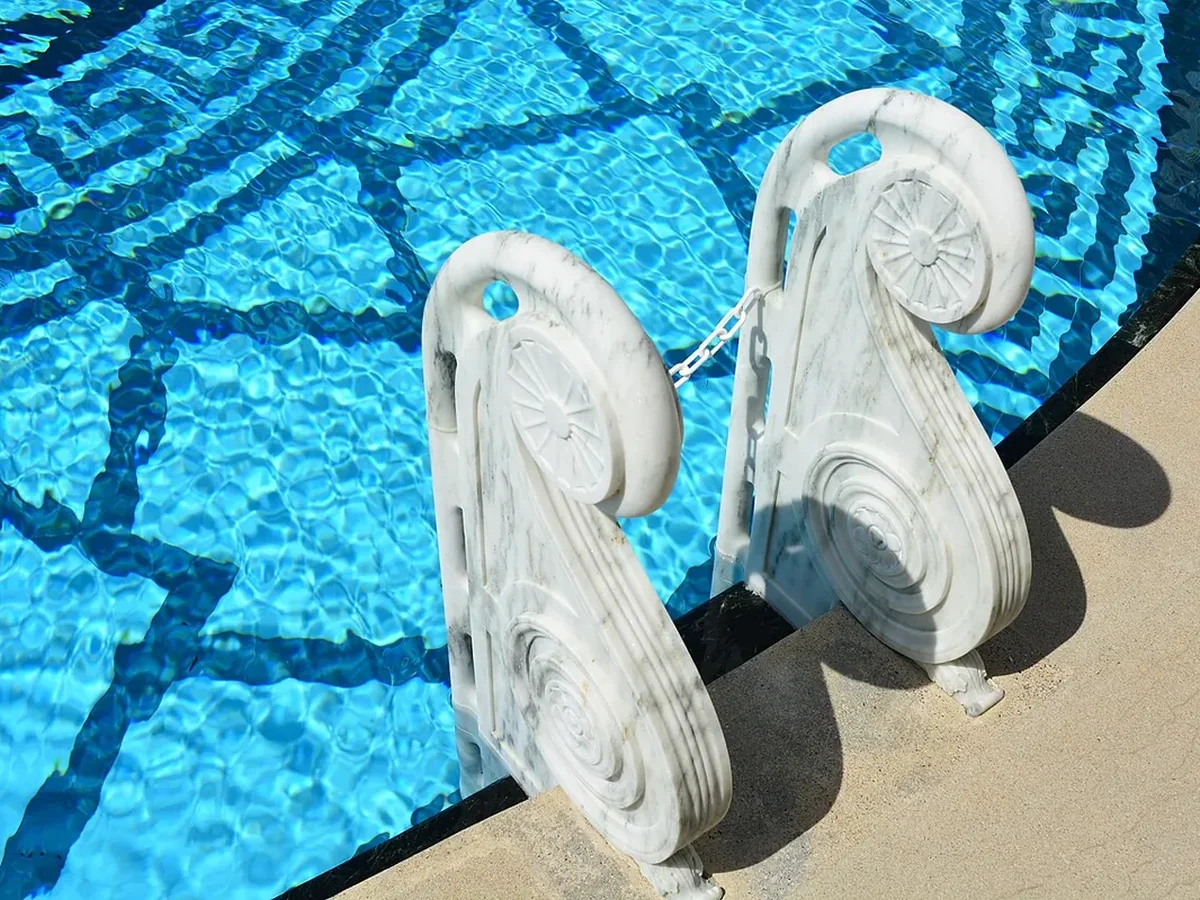
Photo: Joe Mabel, Wikimedia Commons, CC BY-SA 4.0
Full-Tile Pools: A Swimming Pool With Tiles Everywhere
A swimming pool with tiles covering every surface, walls and floor, is the most luxurious option. Full-tile pools are common in Europe, in resorts and in high-end homes. Tile is extremely durable, does not etch or stain like plaster, and can last 30 years or more with good care. The downside is cost: tiling a whole 16 x 32 foot pool means about 1,000 square feet or more of tile, often $30,000 to $100,000 depending on material and labor. Glass mosaic full-tile pools are at the top of the price range. Many owners get a similar effect by tiling the waterline and steps and using a dark or colored plaster or pebble finish on the rest.
Pairing Swimming Pool Tiles With Coping and Decking
The waterline tile sits right below the coping, the cap on the pool edge, so the two should be chosen together. A dark waterline tile under light stone or concrete coping gives a crisp contrast. A tile that matches the coping color gives a calm, seamless look. Natural stone coping such as travertine pairs well with earthy tile colors, while modern concrete or porcelain coping suits gray and charcoal tile. The deck should tie in too: a gray deck with gray-blue tile, or a warm travertine deck with aqua tile. For coping options, see our guide to concrete pool coping.
Budget Pool Tile Ideas
Beautiful pool tile does not have to be expensive. Standard 6 x 6 inch porcelain in a single color is the most affordable waterline pool tile, and it still looks clean and classic. Use glass or decorative tile only as a thin accent strip or in a few feature spots, such as step edges or the spa, rather than all around. Choose a mosaic blend in porcelain instead of glass for a similar look at a lower price. If you are resurfacing anyway, replacing only the waterline tile and step edges gives the biggest visual change for the money. See our guide to pool resurfacing cost for combining tile and finish work.
Installing Pool Waterline Tiles
Pool waterline tiles must be installed with materials rated for constant water exposure. Installers use a polymer-modified thinset mortar made for submerged use, and either a cement-based grout with additives or an epoxy grout, which resists stains and chemicals best. The surface behind the tile must be sound and clean. Tiles are set level, with a consistent grout joint, and the top row usually sits just under the coping. In freezing climates, tile and grout must be frost resistant, and the pool water is usually lowered below the tile line for winter to reduce ice damage. Installation in a new pool happens before plastering. Replacing tile in an existing pool means lowering the water, removing the old tile and setting new tile, often during a resurfacing.
Tile for Pool Waterline in Cold Climates
Freezing and thawing is the main enemy of tile in cold regions. Water that gets behind tiles or into porous tile can freeze, expand and pop tiles off the wall. Choose porcelain or glass tile with very low water absorption, rated for frost. Use quality thinset and grout, and make sure the bond behind each tile is complete with no voids. Lower the water level below the tile line when closing the pool, and keep the cover tight so ice does not press on the tile. With these steps, tile for pool waterline use can last decades in cold climates.
Caring for Swimming Pool Tiles
Swimming pool tiles stay beautiful with simple care. Brush the waterline every week with a tile brush or sponge, and use a pool tile cleaner for oily rings. Keep pH, alkalinity and calcium hardness in range to prevent white calcium scale, which is the main enemy of tile. If scale forms, remove it with a scale remover and a pumice stone on porcelain and ceramic tile, or a soft brush on glass. Check grout lines each season and regrout any loose or missing areas, since gaps let water behind the tile. For more, see our guide on how to clean pool tile.
Swimming Pool Tile Ideas for Safety
Pool codes often require contrasting tile or markings on step edges and benches so swimmers can see them. Depth markers are required on many pools, usually on the deck and at the waterline. Tiles on steps, benches and floors should be slip resistant, with a textured finish or small mosaics that add grout lines for grip. Avoid sharp-edged tiles in areas where swimmers sit or walk, and make sure all edges are smooth. A qualified pool builder will know local rules for your pool.
Waterline Pool Tile Ideas by Pool Style
Modern pools. For modern pool tile ideas, choose large-format porcelain or a single-color glass mosaic in gray, charcoal, white or deep teal. Keep the grout color close to the tile so the band reads as one strip. Pair it with a dark plaster or pebble interior, slim concrete coping and a large-format porcelain deck.
Mediterranean pools. Use hand-painted deco tiles with blue and white patterns, terracotta accents and travertine coping. A Greek key or wave border works well, and blue mosaic step edges complete the look.
Tropical pools. Bright aqua and turquoise glass mosaics, sometimes with green or sand tones, match palm trees, white decks and pebble interiors. A mosaic turtle or fish on the floor adds fun.
Traditional pools. A classic 6 x 6 inch blue porcelain band, with matching step edges and a light plaster interior, never goes out of style. Add a darker accent row for a little detail.
Natural and rustic pools. Stone-look porcelain, slate or tumbled travertine tile in earthy greens, browns and grays suits pools with boulders, waterfalls and planted surroundings.
These waterline pool tile ideas show how the right band ties the pool into the style of the house and garden.
Pool Tiles Ideas for Spas, Steps and Benches
Spas offer a great place to try bolder pool tiles ideas, since they are small and close to the eye. A fully tiled spa in glass mosaic, with a spillway into the pool, creates a focal point. Steps and benches can be outlined with a band of contrasting tile, or covered completely in mosaics. A tiled tanning ledge looks smart but can be slippery, so choose small mosaics or textured tile there. A row of tile on the riser of each step helps swimmers see the steps under water.
How Much Do Swimming Pool Tiles Cost?
The cost of swimming pool tiles depends on the material, the area and the labor. For a waterline band only, an average 16 x 32 foot pool has about 100 linear feet of waterline, or about 48 to 50 square feet for a 6-inch band. With porcelain at $20 to $45 per square foot installed, the band costs about $1,000 to $2,250 in tile and setting, and total jobs often run $1,500 to $5,000 including removal of old tile, prep and grout. Glass waterline tile can run $3,000 to $8,000 or more. Adding step edges, spa tile and accents adds to the cost. Full-tile pools cost $30,000 to $100,000 or more. Prices vary by region and installer.
How to Choose Swimming Pool Tile
Start with how the pool will look from the house and the deck, since the waterline is what you see most. Choose two or three tile samples and look at them outdoors next to your coping and deck samples, wet and dry. Check that the tile is rated for pools and for frost if you live where it freezes. Ask about the grout color, which changes the look as much as the tile. Consider cleaning: smooth porcelain and glass are the easiest to keep clean, while textured or porous tiles show scale more. Finally, think about how long you plan to keep the pool; a timeless choice ages better than a trend if you plan to sell in a few years.
Waterline Tile for Pools Being Resurfaced
Many owners change waterline tile for pools during resurfacing, since the pool is already drained and the crew is working on the walls. Replacing tile at the same time saves on draining, setup and labor, and ensures the new tile and finish match. If your existing tile is in good shape, you can keep it and resurface around it, but old, chipped or calcium-stained tile next to a fresh finish will look worn. Ask your resurfacing contractor for a combined quote.
Common Mistakes With Swimming Pool Tiles
Using tile that is not rated for pools is the most common mistake, leading to cracked, faded or loose tiles. Others include choosing a tile that shows scale easily in hard water areas, picking a grout color that stains quickly, setting the water level too high or too low relative to the band, and skipping slip-resistant tile on steps and ledges. Some owners also choose a busy pattern that clashes with the coping or deck; keeping a simple palette usually looks best.
Above Ground and Vinyl Pools
Vinyl liner pools usually do not have real tile; instead, the liner has a printed tile border at the top. Many liner patterns copy popular waterline tile looks, from classic blue squares to mosaic blends and stone borders. When you replace a vinyl liner, you can choose a new printed border to change the look. Some vinyl pools add real tile on concrete steps or spas. For fiberglass pools, tile is sometimes added along the waterline as an upgrade, set into a recessed band in the shell.
More Swimming Pool Tile Ideas to Try
Ombre walls. Tile the walls from dark at the waterline to light at the floor for a sense of depth.
Black waterline with white plaster. A bold, graphic look that makes the water edge stand out.
Pebble-look mosaic. Round flat tiles that look like river stones, great for beach entries and tanning ledges.
Glass tile spillway. A raised spa or water wall covered in glass mosaic catches the light as water flows over it.
Tile lane lines. Dark tile stripes on the floor and target crosses on the end walls for lap swimmers.
Tile around lights. A ring of contrasting tile around each pool light makes it a feature at night.
Wood-look porcelain. Plank-style porcelain at the waterline that matches a wood-look deck, giving a warm, natural feel without the upkeep of real wood.
Mixing a few of these swimming pool tile ideas, such as a simple waterline band with a glass spa and tile lane lines, can give a pool a custom look without tiling every surface. Choose one feature to stand out and keep the rest calm, so the pool looks planned rather than busy, and use the same tile color on step edges and benches to tie it together.
Working With a Tile Installer
Pool tile is specialist work. Look for installers or pool builders who have tiled pools before and can show finished jobs. Ask what thinset and grout they use, how they handle expansion joints, and how long they guarantee their work. For glass tile and mosaics, ask about their experience, since glass needs special trowels, white thinset and careful handling. Get written quotes that list the tile, the area, prep and removal of old tile, grout type and cleanup. A good installer will also check your water level plans so the waterline tile sits right where the water meets the wall, and will clean grout haze from the tile face before the pool is filled.
Planning Tile in a New Pool Build
If you are building a new pool, plan the tile early with your builder. Decide on the waterline band height, the tile size, and any accent areas such as step edges, benches, the spa and floor details. The builder needs to know the tile thickness to set the coping and finish heights correctly. Choose the interior finish at the same time, since the color of plaster or pebble changes how the tile looks. Order a little extra tile, about 5% to 10%, for cuts, breakage and future repairs, and store the spare tiles with the pool records. Matching an old tile years later is often impossible, so those spares can save you from replacing a whole band when a few tiles crack.
Thinking through these details at the start helps every swimming pool tile choice work together, from the first row at the waterline to the last step edge, and gives you a pool that looks finished, clean and personal for years.
Swimming Pool Tile Ideas: Key Points
- A 6-inch waterline band is the most common and practical tile idea.
- Porcelain is durable and affordable; glass gives the most shimmer.
- Modern looks use large-format, neutral or single-color tiles.
- Use pool-rated, frost-resistant tile and the right grout.
Frequently Asked Questions
What is the best tile for a pool waterline?
Porcelain and glass are the best choices of tile for pool waterline bands. Both resist water, chemicals and frost when rated for pools, and both are easy to clean.
How much does pool waterline tile cost?
About $1,500 to $5,000 for an average residential pool, depending on tile type and pool size. Glass pool waterline tile and decorative borders cost more than plain porcelain.
What is a waterline swimming pool tile?
A waterline swimming pool tile is the band of tile at the top of the pool walls, where the water surface meets the wall. It hides scum lines, protects the finish and adds color where people look most.
How tall should a waterline tile band be?
Most bands are 6 inches tall. Modern designs sometimes use 9 to 12 inches or full-wall tile. Set the normal water level near the middle of the band so the waterline tile hides scum lines as the level rises and falls.
How long do swimming pool tiles last?
Quality porcelain and glass swimming pool tiles can last 20 years or more. Grout may need repair sooner, especially in pools with hard water or poor chemistry.
Can I put new tile over old pool tile?
Usually no. Old tile should be removed so the new waterline pool tile bonds directly to a sound, clean surface.
Sources
- Tile Council of North America
- HomeGuide: Pool tile replacement cost
- Pool and Hot Tub Alliance
- ICC: International Swimming Pool and Spa Code