
Pool Inspection Cost: What a Swimming Pool Inspection Costs and Covers
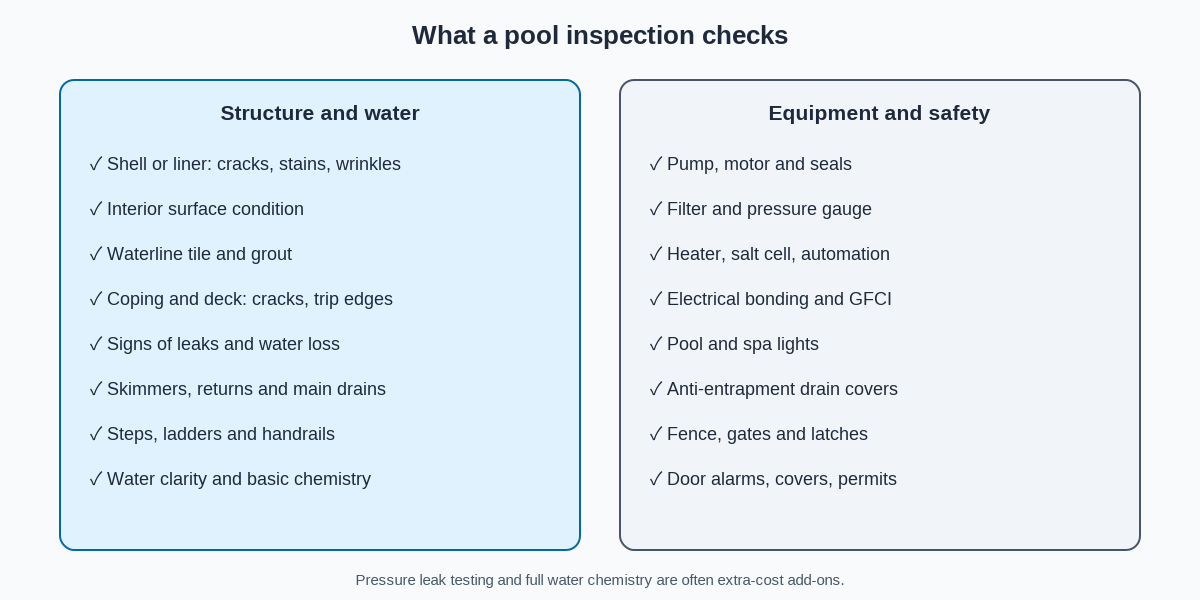
Diagram: Asphapro.com
Quick Answer
Pool inspection cost is usually about $125 to $500, with many quotes near $300. Bob Vila lists $125 to $250, HomeGuide reports an average around $350, and Thumbtack data runs from about $85 to $499. A standard home inspection usually does not include the pool, so a swimming pool inspection is booked as an add-on or with a separate pool inspector; bundling with a home inspection often lowers the price. A pool inspection typically checks the shell or liner, tile and coping, deck, plumbing and signs of leaks, pump, filter, heater and other equipment, electrical bonding and GFCI protection, lights, drain covers, and fences, gates and alarms. Pressure leak testing and a full water chemistry analysis usually cost extra. Pool inspections are most valuable before buying a home with a pool.
A pool is one of the most expensive features a home can have, and one of the most expensive to repair. A cracked shell, a leaking line under the deck or a failing heater can cost thousands of dollars. A pool inspection is a relatively small cost that tells you what you are buying, or what your pool needs, before those problems become emergencies.
This guide explains pool inspection cost in detail: typical prices, what affects them, what a swimming pool inspection covers, optional add-ons, pool inspections when buying or selling a home, annual and permit inspections, how to choose an inspector, and what to do with the inspection report. For repair prices that often follow an inspection, see pool leak repair cost and pool remodel cost.
Pool Inspection Cost at a Glance
| Type of pool inspection | Typical cost |
|---|---|
| Pool inspection added to a home inspection | $100 – $300 |
| Stand-alone pool inspection by a pool specialist | $200 – $500 |
| Pool and attached spa inspection | $250 – $600 |
| Pressure leak test (add-on) | $100 – $500 |
| Water chemistry analysis (add-on) | $25 – $100 |
| Electrical inspection by an electrician | $100 – $300 |
| Municipal permit inspection for a new pool | Included in permit fees in many towns |
Figures come from Bob Vila, HomeGuide, Angi and Thumbtack. Pool inspection prices vary with the region, the size and complexity of the pool, and how much the inspector tests.
What Affects Pool Inspection Cost
- Pool size and type: large pools, pools with spas, water features and automation take longer to inspect.
- Inspector type: a home inspector doing a visual pool inspection usually charges less than a pool specialist with testing equipment.
- Scope: a basic visual pool inspection costs less than one that includes leak testing, pressure testing every line, and water chemistry.
- Season: in cold climates, pools may be closed in winter, limiting what can be tested and sometimes requiring a return visit.
- Region: high-cost areas and busy real estate seasons push prices up.
- Bundling: booking a pool inspection with a home inspection often brings a discount.
- Report detail: photo-rich reports with repair estimates take more time.
What a Swimming Pool Inspection Covers
The pool structure
The inspector looks at the shell or liner for cracks, delamination, stains, rough or worn plaster, blisters on fiberglass, and wrinkles, tears or fading on vinyl. They check the waterline tile and grout, the coping for loose or cracked pieces, and the deck for cracks, settlement, trip hazards and drainage. A pool inspection on a concrete pool pays special attention to cracks that may be structural rather than cosmetic.
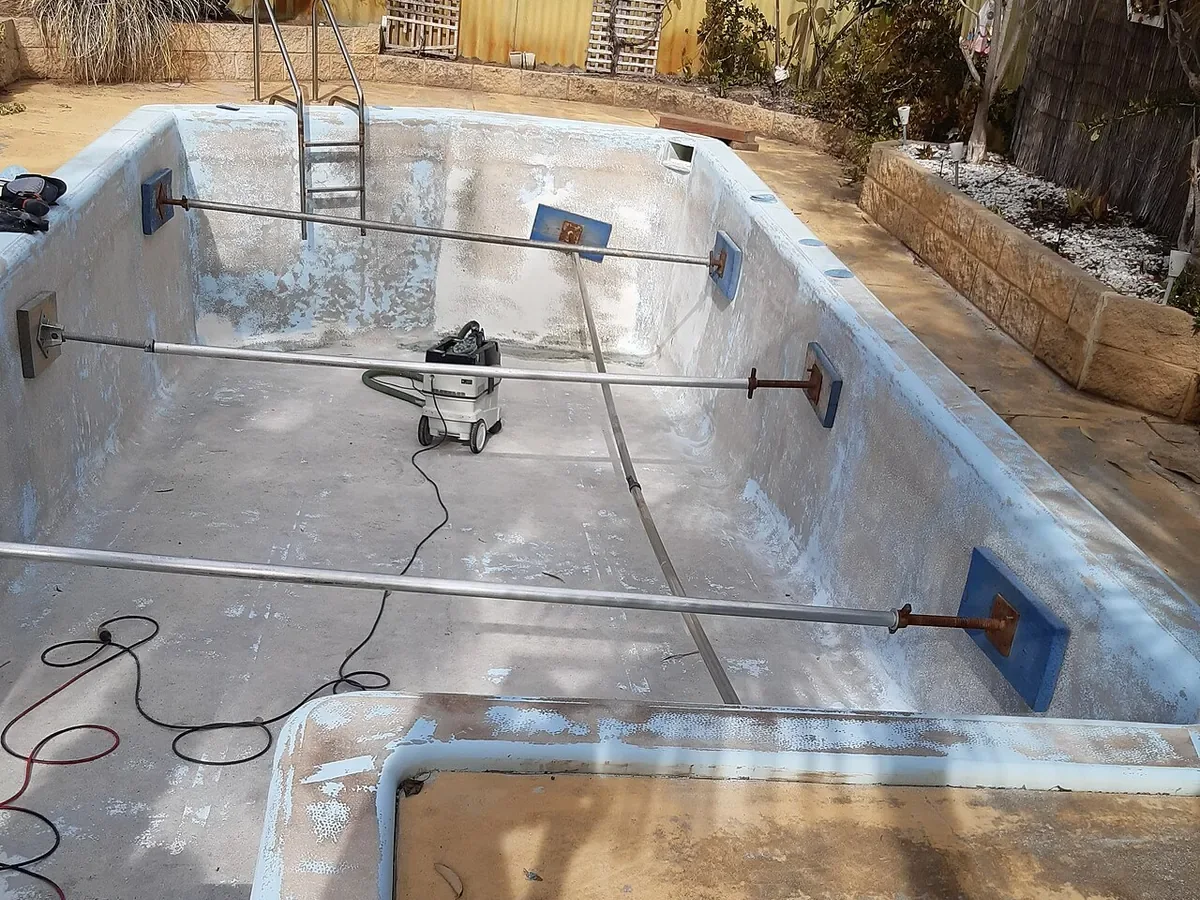
Photo: Calistemon, Wikimedia Commons, CC BY-SA 4.0 (cropped)
Water, leaks and plumbing
A visual pool inspection looks for signs of leaks: low water, wet spots around the pool or equipment, eroded soil, cracked or separated skimmers, and gaps at fittings. The inspector notes water clarity and may test basic chemistry. A full leak detection, with dye tests and pressure testing of each line, is usually a separate service; see how to find a leak in a pool.
Equipment
The inspector runs and checks the pump and motor, the filter and its pressure gauge, valves, the heater, salt cell, chlorinator, automation and any automatic cleaner. They note the age and condition of each piece, any leaks at the equipment pad, unusual noises, and whether the equipment appears correctly sized and installed.
Electrical safety
Electrical safety is one of the most important parts of a swimming pool inspection. The inspector checks for GFCI protection on pool equipment and receptacles, visible bonding of metal parts, the condition of the light and junction box, and clearances from overhead wires. Problems here can be serious shock hazards. Some inspectors recommend a licensed electrician for a deeper check.
Safety features
A pool inspection also covers barriers and safety equipment: fence height and condition, self-closing and self-latching gates, door and pool alarms if present, safety covers, anti-entrapment drain covers, ladders, handrails, steps and depth markings. The U.S. Consumer Product Safety Commission's guidance on pool barriers and drain safety is a common reference.
Pool Inspection Add-Ons
- Pressure leak testing: each plumbing line is isolated and pressurized to see if it holds.
- Electronic leak detection: listening equipment to find buried leaks.
- Water chemistry lab test: a full panel including metals and dissolved solids.
- Heater combustion and safety check for gas heaters.
- Infrared scan of equipment and electrical connections.
- Diving inspection of the main drain and lights without draining.
Each add-on raises pool inspection cost but can reveal problems a visual inspection cannot. For a home purchase, leak testing is often worth it if the pool loses water or the seller cannot show water bills.
Pool Inspections When Buying a Home
Pool inspections are most common during home purchases. Because a standard home inspection usually treats the pool as outside its scope, buyers who skip a separate pool inspection can end up with costly surprises. A pre-purchase swimming pool inspection helps you:
- Understand the condition and remaining life of the surface, equipment and deck.
- Spot safety issues that must be fixed, such as missing GFCI protection or unsafe drain covers.
- Find leaks or structural problems before closing.
- Negotiate repairs or a price reduction based on documented issues.
- Plan a budget for future work such as resurfacing or a new liner.
If you are buying in winter and the pool is closed, ask the inspector what can and cannot be checked, and consider a holdback or follow-up pool inspection when the pool is opened. The National Association of Realtors also advises buyers to ask for maintenance records, permits for the pool and any recent repairs.
Pool Inspections When Selling a Home
Some sellers order a pool inspection before listing. A pre-listing pool inspection lets you fix small problems, gather records and show buyers the pool is in good shape. It can reduce last-minute negotiations. Simple fixes found during a pool inspection, such as replacing a cracked skimmer lid, adding a self-latching gate, or repairing a light, are cheap compared with a price reduction.
Annual Pool Inspections
Even without a sale, an annual pool inspection can catch problems early. Many pool service companies offer a yearly check at opening or closing. They look at equipment, seals, the surface, drain covers and safety features. For owners who do their own maintenance, a yearly professional pool inspection is a good second set of eyes.
Permit and Code Inspections
New pools and major remodels need building permits, and local building departments carry out inspections at stages such as excavation, steel, bonding, electrical, barrier and final. These pool inspections confirm the work meets code. The cost is usually part of the permit fees. Ask your builder which inspections are required and keep copies of the approvals, because buyers may ask for them later.
Insurance Pool Inspections
Some insurers ask for photos or an inspection of the pool, fence and safety features when you add a pool to a policy, especially for diving boards and slides. Requirements vary, but a swimming pool inspection report can help show the pool meets the insurer's conditions.
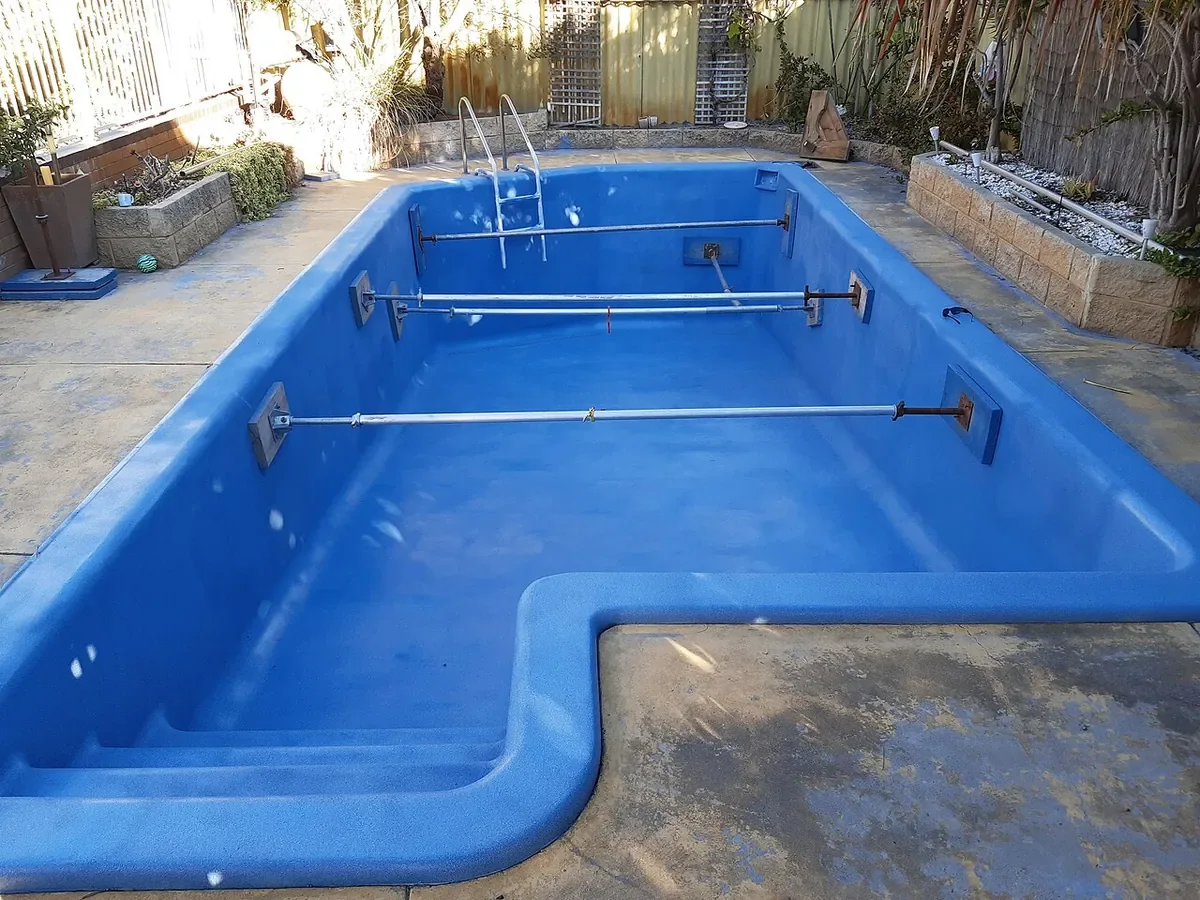
Photo: Calistemon, Wikimedia Commons, CC BY-SA 4.0
Pool Inspection Cost by Region
Pool inspection cost follows local demand and labor rates. In Florida, Arizona, Texas and California, where pools are common and many homes for sale have one, inspectors offer pool inspections routinely and prices are often in the $150 to $350 range for a standard visual pool inspection. In regions where pools are less common, fewer inspectors offer the service, so a swimming pool inspection may cost more or require a separate pool company. High-cost metro areas and peak buying seasons in spring and early summer push prices toward the top of the range.
What a Pool Inspection Does Not Cover
Even a thorough pool inspection has limits. Most visual pool inspections do not:
- Guarantee there are no hidden leaks in buried plumbing, unless a pressure test is added.
- Inspect inside walls, under decks or beneath the shell.
- Predict exactly how long equipment will last.
- Test every function of complex automation systems.
- Confirm the pool was built with permits, unless the inspector checks records.
- Evaluate soil stability or engineering issues.
Read the inspector's agreement to see what the pool inspection includes and excludes. If something worries you, ask for a specialist: a leak detection company, a licensed electrician, or a structural engineer.
Pool Inspections by Pool Type
Concrete and gunite pools. The pool inspection focuses on plaster or pebble condition, cracks in the shell, tile and coping, and the bond beam. Hollow-sounding plaster, rust stains from steel, or wide cracks can point to costly repairs.
Vinyl liner pools. The inspector checks the liner for fading, brittleness, wrinkles, tears and leaks, and the walls and coping for corrosion or bowing. Liner age is a key point, because a new liner is a major expense.
Fiberglass pools. The inspection looks for blisters, spider cracks, fading gelcoat and any bulging walls. Structural issues are rare but serious.
Above ground pools. A pool inspection for an above ground pool checks the wall, uprights, top rails, liner, ground level, ladder, deck and equipment. Many home inspectors treat above ground pools as personal property and exclude them, so ask.
Spa and Hot Tub Inspections
Attached spas and portable hot tubs add jets, heaters, blowers and covers to inspect. A spa inspection checks the shell, jets, heater, pumps, controls, GFCI protection and the cover. Adding a spa usually raises pool inspection cost by $50 to $150. See hot tub cost.
Preparing for a Pool Inspection
Sellers can help the pool inspection go smoothly by making sure the pool is open, clean and running, all equipment has power, the breaker panel is labeled, gates are unlocked for access, and maintenance records, permits and warranties are available.
Buyers should schedule the pool inspection early in the contingency period, ask the seller to have the pool running, attend if possible, and ask the inspector to explain any safety items in person.
A Simple DIY Pool Inspection for Owners
Between professional pool inspections, owners can check the basics each month:
- Press the GFCI test button and confirm it trips and resets.
- Check that gates self-close and latch from any open position.
- Look for loose coping, cracked tiles and trip edges on the deck.
- Inspect drain covers for cracks or missing screws.
- Watch the water level for unusual loss.
- Listen to the pump for new noises and look for drips at the equipment pad.
- Check ladders and handrails for looseness.
Write down what you find and fix small problems promptly. For routine care, see how to clean a pool.
Pool Inspections After Storms
After hurricanes, floods or major storms, a pool inspection is worth considering. Flooding can contaminate the water and damage equipment, wind can damage screen enclosures and fences, and debris can crack tiles or clog lines. Many insurers want documentation of storm damage, so a swimming pool inspection report with photos can support a claim. See pool enclosure cost for screen repairs.
Commercial and HOA Pool Inspections
Public, apartment, hotel and HOA pools are inspected by local health departments, often several times a year, for water chemistry, safety equipment, drain covers, signage and records. These pool inspections follow health codes and are separate from private home inspections. HOAs and property managers often hire pool companies for regular inspections to stay ready for health department visits.
How to Choose a Pool Inspector
- Qualifications: look for home inspectors with pool training or certification, or pool professionals who offer inspections.
- Scope: ask exactly what the pool inspection includes and what costs extra.
- Equipment: ask whether they run all equipment, test GFCIs, and offer leak testing.
- Sample report: ask to see a sample pool inspection report.
- Insurance: confirm they carry errors and omissions and general liability coverage.
- Independence: for a purchase, choose someone not tied to a repair company to avoid conflicts of interest.
Reading a Pool Inspection Report
A good pool inspection report lists each item checked, its condition, photos, and recommendations, usually sorted into safety issues, repairs needed and items to monitor. Focus first on safety items such as electrical bonding, GFCI protection, drain covers and barriers. Then look at major costs such as structural cracks, leaks, failing equipment and worn surfaces. Use the report to get repair quotes; see pool resurfacing cost and pool liner replacement cost.
Common Problems Found in Pool Inspections
| Problem | Why it matters | Typical fix cost |
|---|---|---|
| Missing or failed GFCI protection | Shock hazard | $100 – $500 |
| Old or non-compliant drain covers | Entrapment hazard | $100 – $500+ |
| Leaking skimmer or fittings | Water loss, soil erosion | $50 – $500 |
| Worn plaster or old liner | Comfort, algae, leaks | $3,500 – $15,000 |
| Aging pump or heater | Higher bills, failure risk | $800 – $6,500 |
| Cracked coping or deck | Trip hazards, water intrusion | $500 – $10,000+ |
| Gate that does not self-latch | Child safety | $50 – $300 |
Pool Inspection Cost Examples
| Situation | Scope | Estimated pool inspection cost |
|---|---|---|
| Buying a home with a simple vinyl pool | Visual pool inspection added to home inspection | $100 – $250 |
| Buying a home with a gunite pool and spa | Pool specialist, equipment check, spa, GFCI testing | $300 – $550 |
| Pool losing water before purchase | Pool inspection plus pressure leak test | $400 – $900 |
| Annual check for a current owner | Service company inspection at opening | $100 – $250 |
| Post-storm inspection for insurance | Pool, equipment and enclosure with photo report | $200 – $500 |
What Happens After the Pool Inspection
After the pool inspection, sort the findings into three groups. First, safety items that should be fixed immediately, such as electrical problems, unsafe drain covers or broken gate latches. Second, repairs that affect value or cause ongoing costs, such as leaks, worn surfaces or failing equipment. Third, items to monitor, such as minor cracks or equipment nearing the end of its life. For a home purchase, use the report to ask the seller for repairs, a credit or a lower price. For your own pool, use it to plan a repair budget and schedule work in the off-season, when contractors may be more available.
How Often Should a Pool Be Inspected?
There is no single rule, but common practice is:
- Before buying a home with a pool, always.
- Once a year for a quick professional pool inspection, often at opening.
- After major storms, floods or nearby construction.
- Before a remodel, to plan the full scope of work.
- When the pool starts losing water or equipment acts up.
Regular pool inspections spread the cost of upkeep over time and help avoid sudden large repair bills. Keep each report with your pool records, because a history of inspections and repairs also reassures buyers if you sell the home later.
Pool Inspection vs Pool Service Visit
A pool inspection and a pool service visit are different. A service technician cleans the pool, balances the water and may notice obvious problems, but is usually not hired to document the full condition of the pool. A pool inspection is a structured assessment with a written report covering structure, equipment, electrical and safety items. Some pool service companies offer both; if you hire one for a pre-purchase swimming pool inspection, make sure you receive a written report and that the company is not simply selling repairs. For ongoing care, a regular service visit plus an annual pool inspection gives good coverage at a moderate cost.
Pool Inspection Checklist for Buyers
When you review a pool inspection report as a buyer, make sure these questions are answered:
- How old are the surface or liner, pump, filter and heater, and what is their remaining life?
- Are there signs of leaks, and was a leak test done?
- Is all pool equipment on GFCI protection and properly bonded?
- Do the drain covers meet current safety standards?
- Do the fence and gates meet local barrier rules?
- Were permits pulled for the pool and any major work?
- What repairs are needed now, and what will they cost?
- What will the pool likely need in the next five years?
The answers turn the pool inspection cost into real savings, because they show what to negotiate and what to budget. Pair the report with a look at the seller's maintenance records and recent water and power bills for a full picture.
Swimming Pool Inspection for New Construction
If you are building a new pool, the building department's inspections check code compliance, but they do not check workmanship in detail. Some owners hire an independent pool inspection at key stages, such as before gunite, before plaster or at final, to confirm steel placement, plumbing pressure tests, bonding and finish quality. This extra swimming pool inspection costs a few hundred dollars per visit and can catch problems while they are still easy to fix.
Is a Pool Inspection Worth the Cost?
For most buyers, yes. A pool inspection cost of a few hundred dollars is small next to the cost of a single major pool repair. Even for current owners, a periodic swimming pool inspection helps plan repairs and keeps the pool safe. The value is greatest for older pools, pools with spas or water features, pools that lose water, and homes being bought during the off-season when problems are harder to see.
Pool Inspection Cost: Key Points
- Pool inspection cost is usually $125 to $500, often around $300.
- A standard home inspection rarely covers the pool in detail, so book a swimming pool inspection separately or as an add-on.
- Leak testing, water chemistry and electrical checks by an electrician cost extra.
- Pool inspections are most valuable before buying a home, after storms and before remodeling.
- Use the report to fix safety items first, then plan repairs and budgets.
Spending a few hundred dollars on a pool inspection is one of the most cost-effective steps a pool buyer or owner can take, because it turns unknown risks into a clear list of priorities and prices.
Frequently Asked Questions
How much does a pool inspection cost?
Usually about $125 to $500, with many inspections around $300. Add-ons such as leak testing and lab water tests cost extra.
Does a home inspection include the pool?
Usually not in detail. Many inspectors offer a pool inspection as an add-on, or you can hire a pool specialist who also tests equipment and safety features.
How long does a pool inspection take?
A typical pool inspection takes about one to two hours, longer with leak testing or a spa. The written report usually arrives within one to three days, often with photos of each issue found.
Can a pool be inspected in winter?
Partly. Closed pools limit testing of equipment and leaks. Ask for a follow-up inspection when the pool is opened, and consider asking the seller to hold funds in escrow until then.
What does a pool inspector look for?
The shell or liner, tile, coping, deck, leaks, equipment, electrical safety, lights, drain covers and barriers.
Who pays for a pool inspection when buying a home?
The buyer usually pays for the pool inspection as part of their due diligence, just like the home inspection. Sellers sometimes pay for a pre-listing pool inspection to share with buyers.
Can a pool fail inspection?
A private pool inspection reports conditions rather than passing or failing. Municipal permit inspections can fail if work does not meet code, and the contractor must fix it before approval.
Do I need a pool inspection for an above ground pool?
It is less common, but a quick check of the wall, liner, ladder, equipment and electrical can still be useful, especially if the pool stays with the house.
Is a pool inspection required by law?
Not for most private home sales, though some areas require barrier or safety compliance checks. New pools and remodels require permit inspections.
Should I get a leak test during a pool inspection?
If the pool loses water, the seller has no records, or the pool is old, a leak test is often worth the extra cost.
Sources
- HomeGuide: Pool inspection cost
- Bob Vila: Pool inspection cost
- Angi: Pool inspection checklist
- Thumbtack: Pool inspection cost
- National Association of Realtors: Buying a home with a pool
- U.S. CPSC: Pool and spa safety