
Do You Need a Permit for an Above Ground Pool? Rules, Costs and Steps
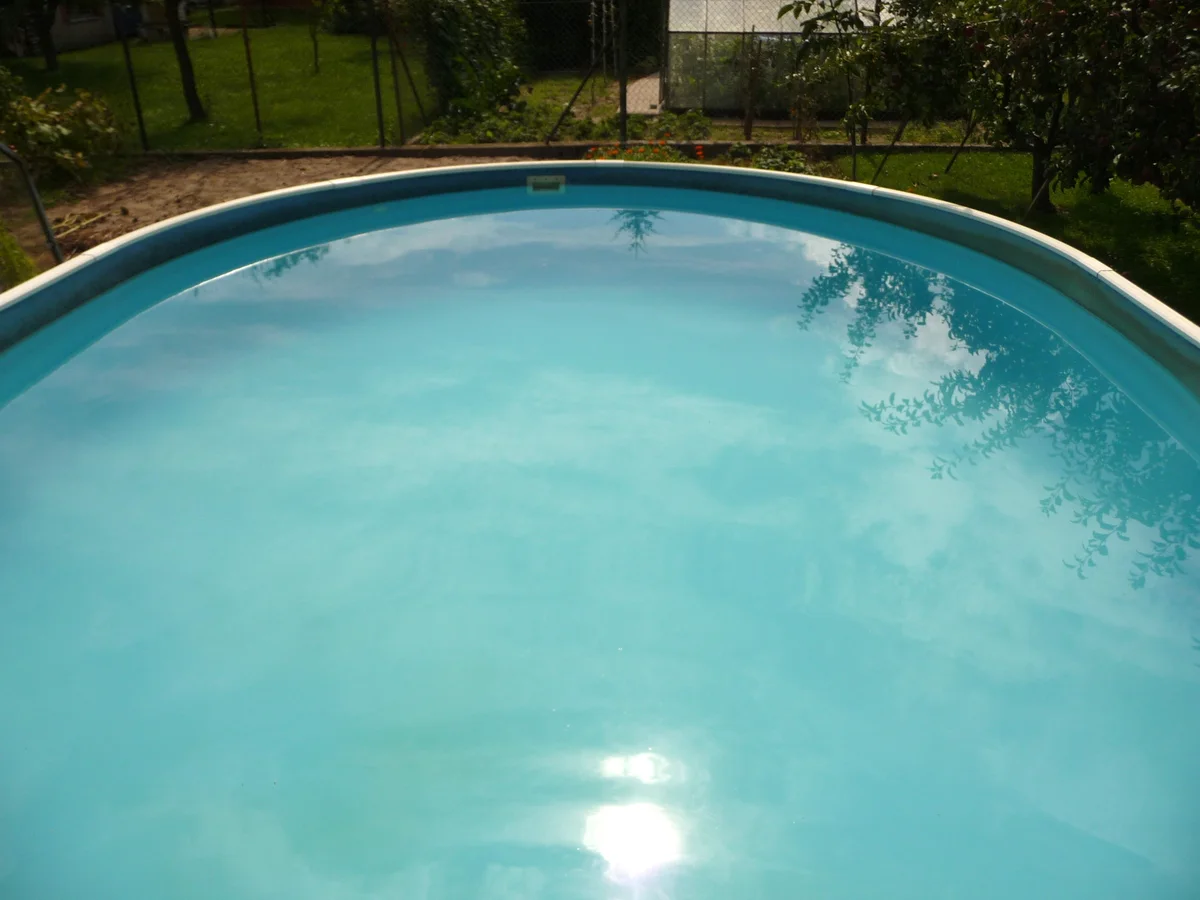
Photo: Sevela.p, Wikimedia Commons, CC BY-SA 3.0
Quick Answer
In most of the US, yes: you need a permit for an above ground pool if it can hold more than 24 inches of water, which covers almost every hard-sided pool with 48 to 54-inch walls and many large frame pools. The International Residential Code, which most states adopt, exempts only prefabricated pools less than 24 inches deep from a building permit. You usually also need an electrical permit for a new outlet or circuit, and the pool must meet barrier rules: a 48-inch wall or fence, a ladder that is removed or locked, and self-closing, self-latching gates. Permits typically cost $50 to $500. Rules vary, so check with your city or county before you buy or set up the pool.
Above ground pools feel temporary. You buy a kit, level the ground, set up the wall and fill it with a hose. Many owners never think about paperwork. But in most towns, a pool that can hold more than about two feet of water is treated as a swimming pool under the building code, with the same safety rules as an inground pool. So the question "do you need a permit for an above ground pool" usually has a simple answer: if it is deep enough to swim in, probably yes.
This guide explains when you need a permit for an above ground pool, which pools are usually exempt, what the permit covers, how much it costs, how to apply and what happens if you skip it. It is general information, not legal advice; your local building department has the final word. For setup costs, see above ground pool installation cost.
Do You Need a Permit for an Above Ground Pool? The 24-Inch Rule
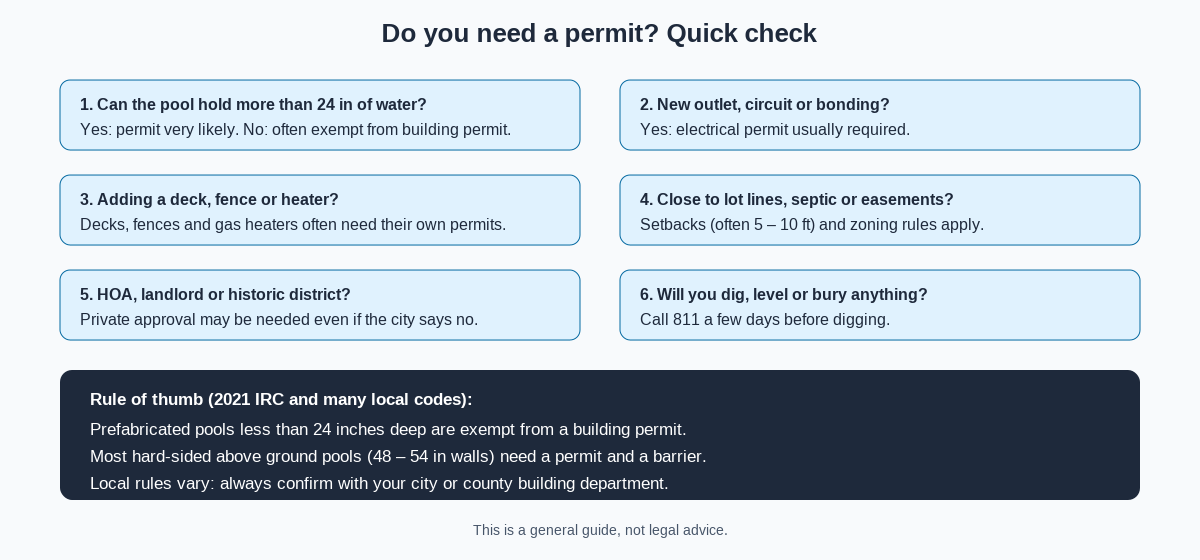
Chart: Asphapro.com
Most US cities and counties base their rules on the International Residential Code (IRC) and the International Swimming Pool and Spa Code (ISPSC). The IRC lists work that does not need a building permit, and that list includes prefabricated swimming pools that are less than 24 inches deep. The ISPSC and IRC also define a swimming pool as a structure intended for swimming or recreational bathing that can contain water over 24 inches deep, including above ground and on-ground pools.
In practice, this means:
- Inflatable and small kiddie pools under 24 inches deep usually do not need a building permit.
- Frame pools 30 inches or deeper, and most easy-set pools over 24 inches, usually do.
- Hard-sided steel, resin and aluminum pools with 48 to 54-inch walls almost always do.
- Semi-inground pools always do, since they also involve excavation.
Note the wording: what counts is how much water the pool can hold, not how much you plan to put in. A 48-inch pool filled to 20 inches still counts as a pool deeper than 24 inches. Some local codes use a different depth, such as 18 inches, or a surface area or volume threshold, and a few states have their own codes. That is why the chart above is a quick check, not a final answer to "do you need a permit for an above ground pool" in your town.
Why Do You Need a Permit for an Above Ground Pool? What It Covers
A pool permit lets the building department check that the pool is safe and legal. Reviewers and inspectors usually look at:
Location and setbacks. Many towns require the pool to sit a set distance from property lines, often 5 to 10 feet, and away from septic systems, wells, easements, overhead power lines and the house. Some limit pools to back or side yards.
Barrier. The pool must have a barrier that keeps young children out. This is the biggest part of most above ground pool permits.
Electrical. Pumps, lights and heaters need GFCI protection, proper wiring, correct distances from the water and, in many cases, equipotential bonding of metal parts.
Structure. If you add a deck or stairs, they must meet deck and stair codes.
Drainage. Some towns check where backwash and drain water will go.
Do You Need a Permit for an Above Ground Pool Fence? Barrier Rules
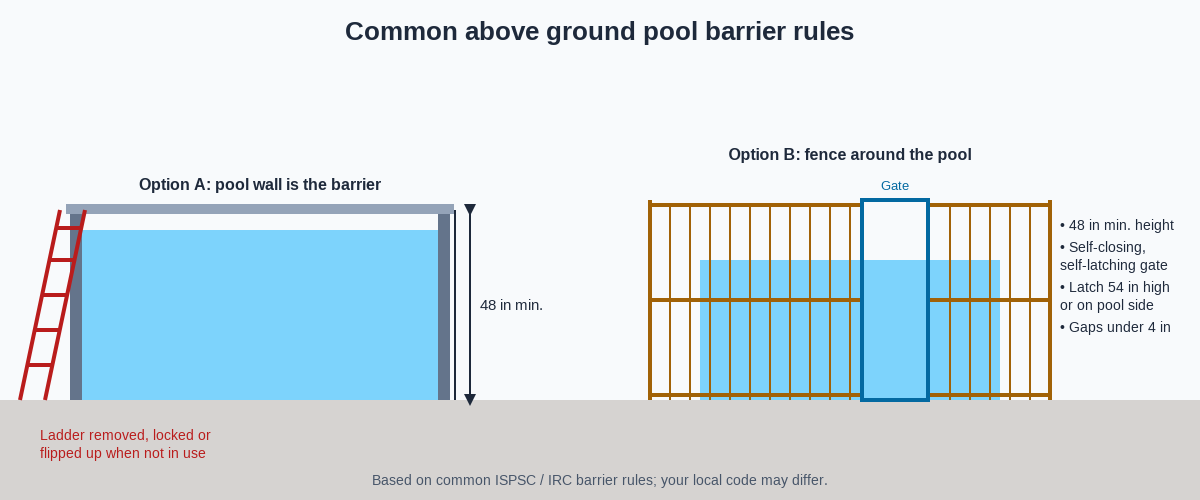
Diagram: Asphapro.com
The ISPSC and IRC barrier rules, which many towns adopt with local changes, include these common requirements:
Height. The barrier must be at least 48 inches high, measured from the ground on the outside.
Pool wall as barrier. The wall of an above ground pool can serve as the barrier if it is at least 48 inches high and cannot be easily climbed. In that case, the ladder or steps must be removed, locked or flipped up when the pool is not in use, or surrounded by their own barrier with a self-closing, self-latching gate.
Fence or deck barrier. If your pool wall is shorter than 48 inches, or you have a deck that gives access to the pool, you need a fence or a railing barrier on the deck. Gates must open outward, away from the pool, and be self-closing and self-latching, with the latch at least 54 inches above the ground or on the pool side with no openings near it.
No footholds or gaps. Openings in the barrier must be small enough that a 4-inch sphere cannot pass through. Objects like chairs, filters or planters must not be placed where a child could use them to climb over.
House as barrier. If a wall of the house forms part of the barrier, doors leading to the pool may need alarms or self-closing hardware.
For fence options and prices, see pool fence cost, DIY pool fence and swimming pool fence ideas. For steps that meet barrier rules, see pool steps above ground.
Do You Need an Electrical Permit for an Above Ground Pool?
Even if your town does not require a building permit for a small pool, adding a new outlet, circuit or hardwired pump usually needs an electrical permit. The National Electrical Code sets rules for pools, including GFCI protection for pump outlets and receptacles near the pool, minimum distances between outlets and the pool wall, and bonding of metal parts of permanently installed pools. Cord-and-plug pumps must be plugged into a GFCI-protected outlet, and extension cords should not be used. Many towns require a licensed electrician for this work. Ask about the electrical side when you ask whether you need a permit for an above ground pool.
Deck, Heater and Fence Permits
A deck around an above ground pool is a structure with its own rules: footings, beam and joist sizes, railings, stairs and ledger connections. Many towns require a deck permit, especially if the deck is more than 30 inches above the ground or attached to the house. See above ground swimming pool deck ideas. A gas pool heater needs a gas line, which usually requires a plumbing or gas permit. A new fence may need its own fence permit, with height and material rules.
HOA, Landlord and Insurance Approval
Even if the city says no permit is needed, your homeowners association may require approval for any pool, especially if it is visible from the street. Some HOAs ban above ground pools entirely. If you rent, the lease may forbid pools or require landlord consent. You should also tell your home insurance company. Pools increase liability risk, and insurers may require a fence, a locking ladder or a higher liability limit. Some insurers exclude certain features such as slides or diving boards. Skipping these approvals can cause bigger problems than skipping the city permit.
Do You Need a Permit for an Above Ground Pool, and What Does It Cost?
Permit fees vary widely. Many towns charge a flat fee of $50 to $250 for an above ground pool. Others base the fee on project value, which can bring the total to $300 to $500 or more, especially if separate electrical, fence and deck permits are needed. Some towns require a site plan drawn to scale, and a few require a survey, which can cost several hundred dollars if you do not already have one. Re-inspection fees may apply if the first inspection fails. Factor these costs in when you plan your budget.
Do You Need a Permit for an Above Ground Pool? How to Apply
1. Call or check the website of your building department. Ask: do you need a permit for an above ground pool of my size, what setbacks apply, and what barrier and electrical rules must I follow?
2. Check HOA and deed rules. Get written approval before you buy the pool if your HOA requires it.
3. Prepare a site plan. Draw your lot showing the house, property lines, the pool location with distances, the fence or barrier, the equipment and the electrical source. Many towns accept a hand-drawn plan on a copy of your plat or survey.
4. Gather pool details. The pool maker's specification sheet, wall height and volume, and details of any deck, fence or heater.
5. Apply and pay the fee. Many towns accept applications online. Simple pool permits are often approved in a few days to two weeks; busy departments may take longer.
6. Call 811 before digging. Even leveling ground or setting deck footings can hit buried lines. The 811 service is free in the US.
7. Build and schedule inspections. Typical inspections cover electrical rough-in, the barrier and a final inspection before the pool is used.

Photo: Tony Webster, Wikimedia Commons, CC BY-SA 2.0 (details blurred)
Many towns give you a permit card like the one above. Post it where the inspector can see it, often in a front window, until the final inspection is passed.
What Happens If You Skip the Permit?
Skipping the permit may seem harmless, but it can cost more later. If a neighbor complains or an inspector notices the pool, you may get a stop-work order or a fine, and you may have to apply after the fact, often at a higher fee. If the pool does not meet setback or barrier rules, you may have to move it, add a fence or take it down. An unpermitted pool can cause problems when you sell the home, since buyers' inspectors and some towns check permit records. Most importantly, if a child is hurt, an unpermitted pool without a proper barrier can expose you to serious liability, and your insurer may deny coverage.
Do You Need a Permit for an Above Ground Pool That Is Temporary?
Many people assume a pool that is taken down each fall does not need a permit. Most codes do not treat seasonal pools differently: if it can hold more than 24 inches of water, it is a pool. Some towns do have simpler rules or fees for seasonal or portable pools, so ask. Either way, the barrier and electrical safety rules still apply each season the pool is up.
Do You Need a Permit for an Above Ground Pool in Every State?
There is no single national rule. Most states adopt the IRC and ISPSC, often with changes, and then cities and counties enforce them and may add their own requirements. Some states write their own codes. Florida, for example, uses the Florida Building Code, which has its own residential swimming pool safety rules. California's Swimming Pool Safety Act requires new residential pools and spas built under a permit to have at least two of seven listed drowning prevention features, such as a removable mesh fence, a safety cover, door alarms or a self-closing, self-latching device on doors to the pool. Rural counties may have lighter rules than large cities, while some towns in the Northeast and Midwest set strict setback rules for any pool. Because of this patchwork, the only reliable answer to "do you need a permit for an above ground pool" comes from your local building department. Search your town or county name with "pool permit" to find the right page, or call and ask.
Questions to Ask Your Building Department
When you call, have your pool's size and wall height ready and ask these questions:
- Do you need a permit for an above ground pool of this size and depth here?
- What setbacks apply from property lines, the house, septic systems and easements?
- Can the pool wall serve as the barrier, and what ladder or step rules apply?
- Do I need a separate electrical, fence or deck permit?
- What drawings or documents do you need, and can I apply online?
- How much is the fee, and how long does review take?
- Which inspections are required, and how do I schedule them?
- Are there rules for draining or backwashing pool water?
Write down the name of the person you spoke with and the date. If they tell you no permit is needed, ask for that in writing or note the code section, in case questions come up later.
Do You Need a Permit for an Above Ground Pool When Renting?
Tenants face two sets of rules. First, the building code applies regardless of who owns the property, so if the town requires a permit, someone must get it, and usually the property owner must sign the application. Second, the lease may ban pools or require written permission. Landlords worry about liability, water damage and lawn damage, and their insurance may not cover a tenant's pool. Ask the landlord before buying, get permission in writing, and agree on who will handle the permit, the barrier and the removal of the pool when you move out.
Do You Need a Permit for an Above Ground Pool You Are Moving or Replacing?
Moving a pool to a different spot in the yard, or replacing an old pool with a bigger one, usually counts as new work. The new location must meet setbacks, and the new pool must meet the current barrier and electrical rules, even if the old pool was approved years ago under older rules. Replacing a pool of the same size in the same place may be simpler, but many towns still want a new permit. Taking a pool down entirely rarely needs a permit, though you may need to cap or remove electrical circuits properly. When in doubt, ask whether you need a permit for an above ground pool replacement before you order the new kit.
Common Reasons Pool Inspections Fail
Inspectors see the same problems again and again. A ladder that cannot be locked or removed. A gate that does not close and latch by itself, or a latch mounted too low. Chairs, filters, planters or a deck placed against the pool wall where a child can climb. A pump plugged into an outlet without GFCI protection, or an extension cord. Outlets too close to the pool wall. A pool set closer to the property line than allowed. A deck without proper railings or stair handrails. Fixing these before the inspection saves a re-inspection fee and a delay. If you know you need a permit for an above ground pool, plan the barrier and the electrical work first, then set up the pool.
Safety Beyond the Permit
Passing inspection is the minimum. The CPSC recommends layers of protection: barriers, door and pool alarms, covers, constant adult supervision, swimming lessons for children and CPR training for adults. Remove the ladder every time you leave the pool area, keep toys out of the water when the pool is not in use so children are not tempted, and keep a phone and a throwing float near the pool. A safe pool is the real goal behind every rule about whether you need a permit for an above ground pool.
Above Ground Pool Permits and Water Discharge
Some towns also regulate where pool water goes. Draining or backwashing chlorinated water into a storm drain, a creek or a neighbor's yard may be banned or limited, because chlorine harms fish and other wildlife. Common rules ask you to stop adding chlorine and let levels drop close to zero before draining, to drain slowly onto your own lawn so the water soaks in, or to drain to the sanitary sewer through a cleanout where allowed. Saltwater pools may face extra limits because salt harms plants and soil. Ask about drainage when you apply, and plan a spot for backwash water before you set up the filter.
Timeline: From Permit to First Swim
A realistic timeline for a typical hard-sided above ground pool looks like this. Week one: call the building department and the HOA, draw the site plan and apply. Weeks one to three: wait for approval, which may be a few days or a couple of weeks. Meanwhile, call 811 and order the pool and barrier parts. After approval: level the site, have the electrician install the outlet or circuit and get the electrical inspection if one is required. Then assemble the pool, install the ladder or steps and any fence or gate, and call for the final inspection. Once it passes, fill the pool, balance the water and swim. Planning the permit first means the pool is legal from day one, and you avoid tearing down work later. For setup help, see how to put up an above ground pool and how to level an above ground pool.
Do Pool Installers Pull the Permit?
Many professional above ground pool installers include the permit in their price or will pull it for a fee, usually $100 to $300 on top of the town's charges. Ask about this when you get quotes, and make sure the contract says who is responsible for the permit and inspections. If you buy a pool kit and install it yourself, the permit is your job. Either way, the property owner is ultimately responsible for following local rules, so confirm that the permit was issued and the final inspection passed.
Do You Need a Permit for an Above Ground Pool: Examples
12-foot frame pool, 30 inches deep. In a town using the IRC, this pool can hold more than 24 inches of water, so a permit and a barrier are likely required. The owner uses a removable ladder and plugs the pump into an existing GFCI outlet more than the required distance from the pool. The town charges a $75 permit fee.
24-foot round steel pool with 52-inch walls. The wall serves as the barrier. The owner adds a locking flip-up ladder, a new GFCI outlet installed by an electrician under an electrical permit and a site plan showing a 10-foot setback. Total permit fees: about $200.
18 by 33 foot oval pool with an attached deck. The deck needs a deck permit and a railing barrier with a self-closing, self-latching gate at the top of the stairs. Building, deck and electrical permits total about $450.
8-foot inflatable pool, 20 inches deep. In the same town, no building permit is needed, though the pump must use a GFCI outlet and the pool should be emptied or covered when not in use.
Do You Need a Permit for an Above Ground Pool: Key Points
- Pools that can hold more than 24 inches of water usually need a permit.
- Small inflatable and kiddie pools under 24 inches are usually exempt.
- Barriers: 48 inches high, lockable or removable ladders, self-closing gates.
- Electrical, deck and fence work often need separate permits.
- Fees are usually $50 to $500; always confirm local rules.
Frequently Asked Questions
Do you need a permit for an above ground pool under 24 inches?
Usually not a building permit, under the IRC exemption for prefabricated pools less than 24 inches deep. Electrical rules still apply.
Do I need a fence around my above ground pool?
Not always. A pool wall at least 48 inches high can serve as the barrier if the ladder is removed or locked when the pool is not in use. Shorter pools or pools with decks often need a fence or deck railing.
How long does it take to get a pool permit?
Simple above ground pool permits are often issued in a few days to two weeks.
Can I put up an above ground pool without telling my HOA?
Not if your HOA rules require approval. Check your covenants first; some HOAs ban above ground pools.
Who checks if I have a pool permit?
Building inspectors, code enforcement officers responding to complaints, and sometimes home buyers' inspectors when you sell.
Does homeowners insurance cover above ground pools?
Often yes, but you should tell your insurer. They may require a barrier or a higher liability limit.
Do you need a permit for an above ground pool with a deck?
Usually yes. The pool needs a permit if it can hold more than 24 inches of water, and the deck often needs its own permit, with a railing barrier and a self-closing, self-latching gate at the stairs.
Sources
- ICC: International Residential Code, permit exemptions
- ICC: International Swimming Pool and Spa Code
- CPSC: Pool and spa safety
- Call 811: Know what's below