
Concrete Fence Guide: Precast, Poured and Block Fences, Fences on Concrete and Cost
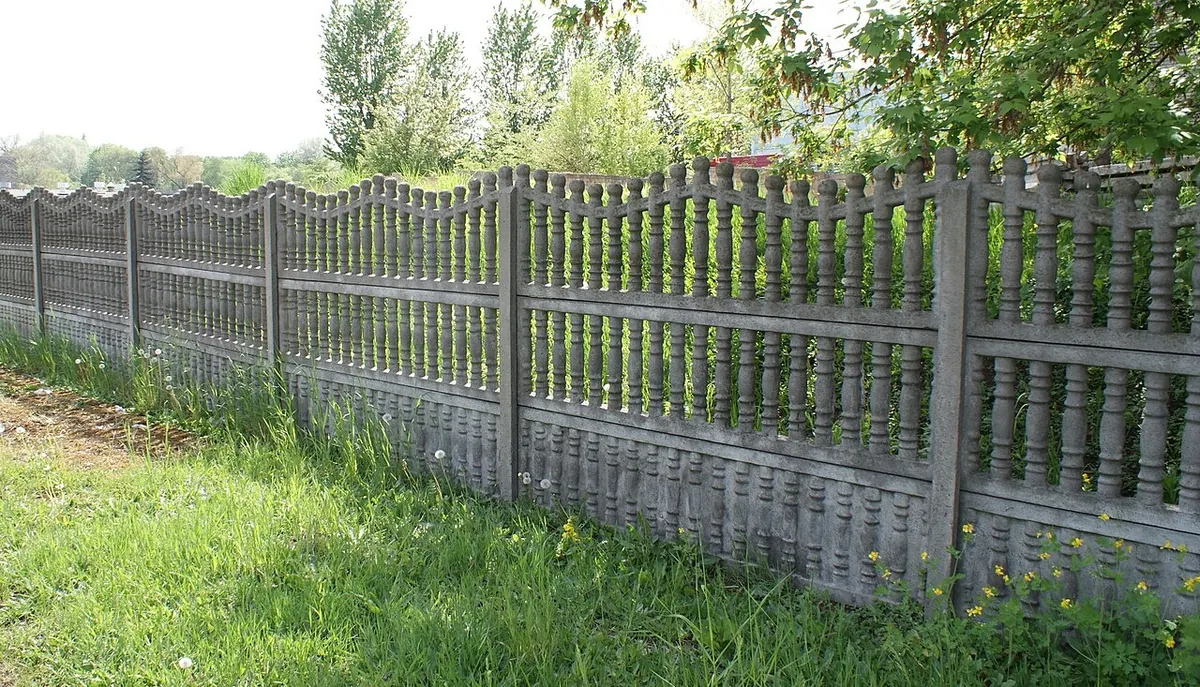
Photo: Natur783, Wikimedia Commons, CC BY-SA 4.0
Quick Answer
A concrete fence is a fence or privacy wall made of concrete, most often precast panels that slide into slotted concrete posts, but also poured walls and concrete block. Concrete fences are strong, fireproof, rot-proof, termite-proof, very good at blocking noise and wind, and can last 50 years or more. Decorative panels can look like stone, brick or wood. Expect to pay about $40 to $100 per linear foot installed for a 6 foot precast concrete fence, compared with roughly $20 to $50 for wood. For a wood, vinyl or metal fence on concrete, posts are fixed with surface-mount brackets or set in holes cored through the slab, and many homeowners use concrete post holders (metal anchors set in concrete) to keep wood posts off the ground.
When most people picture a fence, they think of wood boards, vinyl panels or chain link. In much of Europe, Latin America, Asia and parts of the US, though, the concrete fence is a familiar sight, from simple panel fences around industrial yards to decorative balustrade-style fences in front of houses, like the one in the photo above. In recent years, interest in concrete fences has grown among homeowners who are tired of replacing rotting wood every 15 years, who want better privacy and noise reduction, or who live in areas exposed to wildfire, hurricanes or termites.
This guide explains the main types of concrete fence, how precast concrete fences are installed, decorative options, the pros and cons, how to install a fence on concrete, concrete post holders for wood posts, maintenance and costs, including the cost of replacing an old fence.
Types of Concrete Fence
Precast panel and post fences
The most common concrete fence is the precast post and panel system. Reinforced concrete posts have vertical grooves, or slots, on their sides. The posts are set in concrete footings at a spacing that matches the panel length, typically 6 to 8 feet, and precast concrete panels, each about 1 to 2 feet tall, are lowered into the slots and stacked until the fence reaches its full height, often 6 to 8 feet. Panels can be plain, textured, or cast with a decorative face. The photo below shows a utilitarian version in Estonia: stacked horizontal panels between slotted posts.
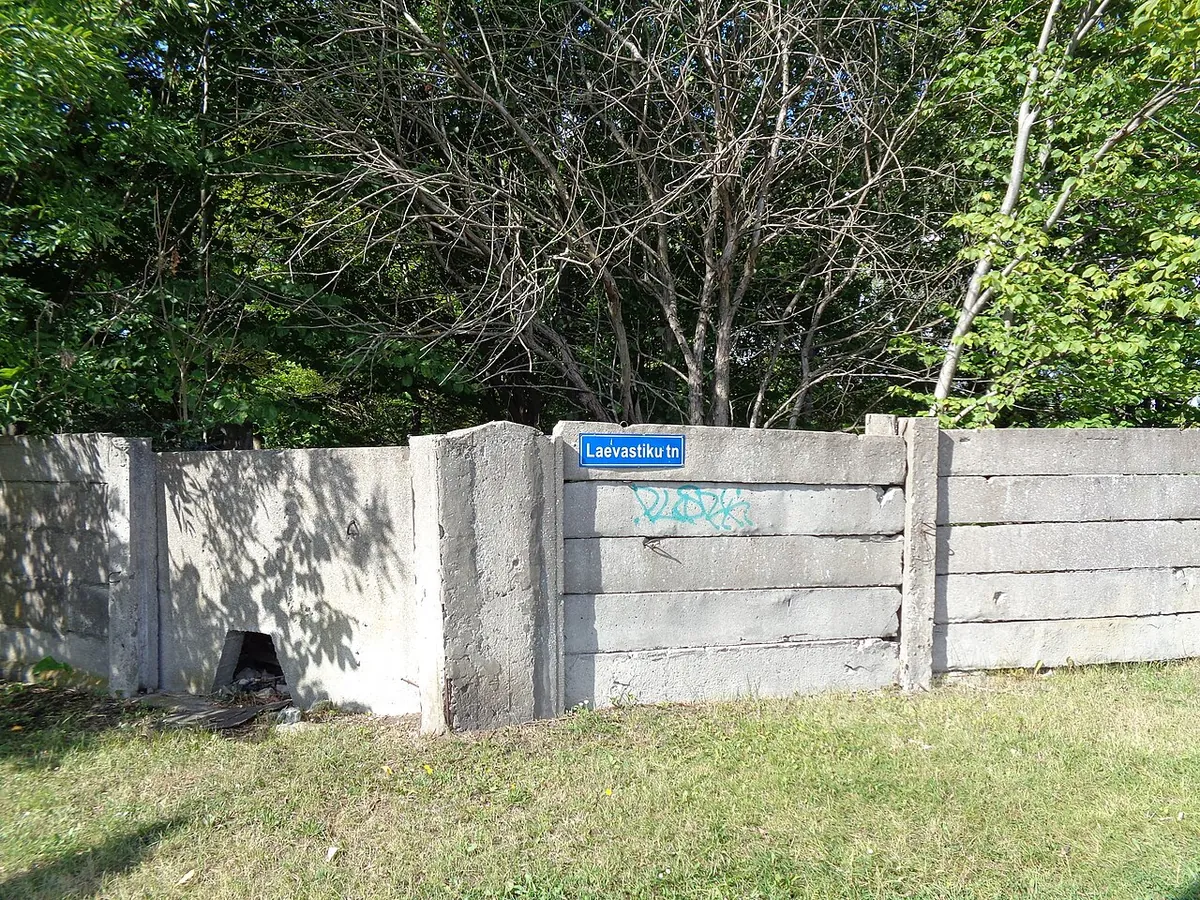
Photo: Pjotr Mahhonin, Wikimedia Commons, CC BY-SA 4.0
Precast fences are popular because the parts are made in a factory, the panels can be handled by two or three people or a small machine, and installation is quick once the posts are set. Panels can also be replaced individually if damaged. See precast concrete.
Decorative concrete fences
Decorative precast concrete fences come in many styles, from the baluster design in the first photo, which looks like a stone railing, to panels that imitate stacked stone, brick, stucco or wood boards. Wood-look concrete fences have become popular in the US, with panels that are cast from molds of real wood and then stained, so they look like a board fence from a few feet away but will never rot. Tops can be flat, arched or scalloped, and posts can have decorative caps. See decorative concrete.
Poured concrete walls
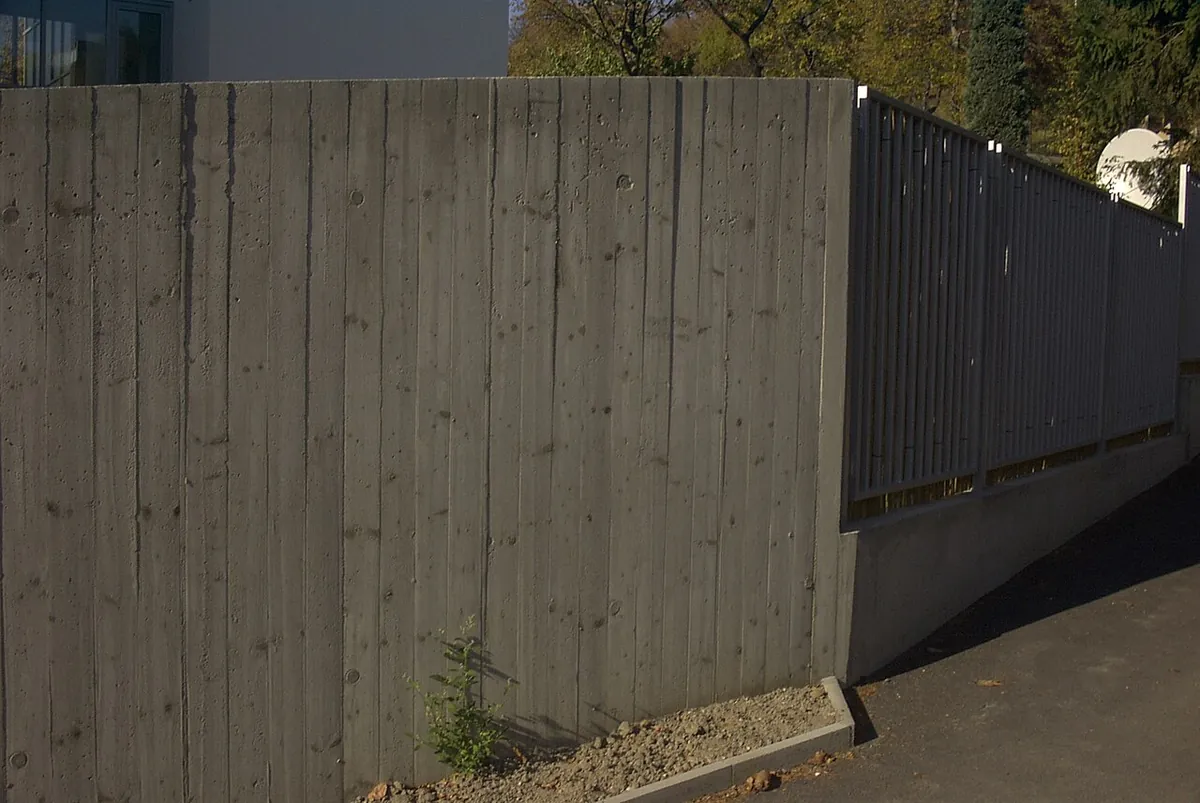
Photo: Lad.Raj, Wikimedia Commons, CC BY-SA 4.0
A poured, or cast-in-place, concrete fence is built like a thin concrete wall on a footing, with rebar inside. Modern homes often use board-formed concrete, cast against rough boards so the grain shows in the surface, as in the photo above, sometimes combined with a metal railing on a low concrete base. Poured walls are seamless, very strong and can follow slopes and curves, but they take more labor, forms and engineering than precast panels. See how to build concrete forms and concrete retaining walls.
Concrete block fences
Concrete block, or CMU, fences are common in the southwestern US, where they are called block walls, and in many hot countries. Hollow blocks are laid in mortar on a concrete footing, with rebar and grout in some cells, then stuccoed, painted or left as decorative split-face block. Block fences are strong, private and quiet, and very common between houses in places like Arizona, Nevada and Southern California. See concrete block wall cost and concrete blocks.
Concrete posts with other fencing
Concrete posts are also used with wood, wire or metal fencing. In the UK, slotted concrete posts with wood panels and concrete gravel boards at the bottom are a standard garden fence. Farm fences often use concrete posts with wire. See concrete fence posts.
Pros and Cons of a Concrete Fence
Durability. A concrete fence can last 50 years or more with little maintenance. It does not rot, warp, rust or attract termites.
Privacy and noise. Solid concrete fences block views completely and reduce traffic and neighbor noise far better than wood or vinyl, which is why concrete is used for highway sound walls.
Security and strength. A concrete fence is hard to climb, cut or break through, and they resist high winds when properly built. They are also fireproof, a major advantage in wildfire areas. See can concrete burn.
Low maintenance. No painting or staining is needed unless you want to, though sealing helps keep it clean.
Disadvantages. The upfront cost is higher than wood, chain link or vinyl. The parts are heavy, so installation needs equipment and more labor. Plain panels can look industrial. Changes and repairs to a concrete fence are harder. Concrete fences need strong footings, and tall ones may need engineering and permits. Cracked panels can look unsightly, though they can be replaced.
How a Precast Concrete Fence Is Installed
1. Plan and permit. Confirm property lines, local fence height limits, setbacks and HOA rules, and get a permit if required. Most cities limit backyard fences to 6 to 8 feet and front yard fences to 3 to 4 feet. Call 811 to locate underground utilities.
2. Lay out the line. Stake the fence line with string, and mark the post locations at exactly the panel spacing, measured to the center of each post.
3. Dig post holes. Holes are typically 10 to 12 inches across and about a third of the post height deep, often 2.5 to 3 feet for a 6 foot fence, and below the frost line in cold climates. Taller fences and windy sites need deeper, wider holes.
4. Set the first posts. Set the end and corner posts in concrete, plumb and aligned with the string, at the correct height. Many installers set two posts, slide in the bottom panel to confirm spacing, then continue.
5. Set the line posts. Set each post with a bottom panel in place as a spacer, so the next post lands at the right distance. Brace posts while the concrete cures. See how to mix concrete and dry pour concrete.
6. Stack the panels. After the footing concrete has cured for a few days, lower the remaining panels into the slots, one on top of another, using a small crane, telehandler or several workers, depending on panel weight.
7. Cap and finish. Add post caps or top rails, and seal or paint if desired.
A crew can often install 100 to 200 feet of precast concrete fence in a few days once the posts are set. On slopes, the fence is stepped, with each section set level and the posts at different heights.
Installing a Fence on Concrete
Sometimes the fence needs to go on top of existing concrete, such as a patio, driveway, pool deck, sidewalk or retaining wall. There are three main ways to install a fence on concrete.
Surface-mount brackets. Metal base plates are bolted to the concrete with concrete anchors or screws, and the post is attached to the bracket. This is the simplest method for wood, vinyl and aluminum fences and railings on a slab. Use anchors rated for the wind load on the fence, at least 4 inches from the edge of the slab, and check that the concrete is thick and sound enough. Surface mounts work best for shorter fences, railings and fences that do not carry much wind load. See types of concrete anchors and concrete bolts.
Core drilling. For taller and stronger fences, holes are core drilled through the slab and into the ground below, then posts are set in concrete through the holes. This gives the strength of a buried post in an area already covered by concrete. See concrete core drilling.
Cast-in sleeves. For new pours, metal or plastic sleeves are set in the concrete where posts will go, so posts can be inserted and grouted later. This is common for pool fences on pool decks, where safety barriers must meet code. See pool deck concrete.
Whichever method you use, make sure water drains away from the base of the post, seal around it, and choose corrosion-resistant hardware.
Concrete Post Holders for Wood Posts
On a wood fence, posts usually rot first at the ground line, where they are wet and exposed to fungi and insects. A concrete post holder solves that problem by keeping the wood off the ground. Post holders, sometimes called post bases, post anchors or post supports, are galvanized steel brackets that hold the bottom of the post a little above the ground or concrete surface. There are several types.
Set-in-concrete holders have a long leg or spike that is embedded in a concrete footing, with a U-shaped bracket or cup on top that holds the post. You pour the concrete in post holder footings, set the holder in the wet concrete, check its height and alignment, and bolt the post in once the concrete has cured. This keeps the post an inch or so above the concrete, so it drains and dries.
Bolt-down holders are bolted to an existing slab or footing with concrete anchors, the same as surface-mount brackets.
Drive-in spikes are hammered into the ground without concrete; they are quick but less stable and not recommended for tall or windy fences.
Concrete post holders make wood posts last much longer and make them easy to replace later without digging out old concrete. They are common for pergolas, decks, carports and garden fences. The disadvantage is that a post standing on a bracket is less stiff than a post buried in the ground, so fences in windy areas may need more posts or bracing. See how to anchor a post to concrete and concrete fence posts.
Footings and Foundations for Concrete Fences
A concrete fence is heavy and catches a lot of wind, so the foundation is critical. Precast post fences rely on deep, concrete-filled post holes. Poured and block fences need a continuous reinforced concrete footing, usually at least 12 to 16 inches wide and 8 to 12 inches thick, set below frost depth. Tall walls, walls on slopes, walls that also retain soil, and walls in high-wind or earthquake zones should be engineered. Poor footings lead to leaning, cracking and toppled sections. See concrete footings and rebar in concrete.
Maintenance of Concrete Fences
A concrete fence needs little care. Wash off dirt, mildew and moss with a pressure washer or concrete cleaner every few years. Apply a penetrating sealer to reduce water absorption, staining and efflorescence, especially in freeze-thaw climates. Repaint or restain decorative panels when they fade. Replace cracked panels and check that posts remain plumb. Keep sprinklers from soaking the fence and keep soil from piling up against it. See how to clean concrete, concrete sealer and efflorescence on concrete.
Cement Fence vs Concrete Fence
Many people search for a cement fence when they mean a concrete fence. Cement is the binding powder inside concrete, not a building material on its own, so a fence is almost never made of cement alone. What people call a cement fence is usually one of three things: a precast concrete panel fence, a concrete block wall finished with cement stucco, or a fence made of fiber cement boards, which are thin panels of cement, sand and cellulose fibers that look like wood siding. Fiber cement fencing is lighter and cheaper than a true concrete fence and is installed on metal or wood posts like a board fence, but it is less solid, less soundproof and can crack if hit. When comparing quotes, ask exactly which material is being offered, how thick the panels are, how the posts are made, and how the fence is anchored. See cement vs concrete.
Concrete Fence Design Ideas
A concrete fence does not have to look like an industrial yard. Some of the most popular design approaches for homes are:
Wood-look panels. Panels cast from real wood boards, then stained brown, gray or cedar tones, give the warm look of a board fence without rot or warping. From the street, most people cannot tell the difference.
Stone and brick textures. Panels molded with stacked stone, fieldstone, ledgestone or brick patterns, stained in several colors, look like masonry walls at a fraction of the cost of real stone.
Smooth modern walls. Smooth or board-formed poured concrete with clean lines suits modern architecture, often paired with horizontal metal slats or wood panels on top of a low concrete base.
Mixed materials. Concrete posts or a low concrete wall with wood, metal, glass or vinyl infill panels combines the strength of concrete at the base, where rot and damage usually start, with lighter, more open materials above.
Planting. Climbing plants, vines and shrubs soften a long concrete fence. Leave space for planting beds along the fence, and use trellis wires fixed with concrete anchors. See concrete raised beds.
Color. Stains, masonry paint and integral color can make a concrete fence match the house or blend into the landscape. See how to paint cinder blocks and concrete staining.
Building Codes, Wind and Safety
Because concrete fences are heavy and catch wind like a sail, building departments treat tall ones as structures. Many US jurisdictions require a permit and engineered footings for masonry and concrete walls over 6 feet, or over 4 feet in some areas, and all fences must stay within height limits and setbacks set by zoning. In hurricane and high-wind regions, panel and post sizes, reinforcement and footing depths are engineered for local wind speeds. In earthquake zones, unreinforced block walls are a known hazard; modern codes require reinforced, grouted cells and proper footings. Pool barrier fences must meet specific height, gap and gate requirements regardless of material. A concrete fence built on a property line may need a survey and the neighbor's agreement, and it should never block drainage between lots; leave openings or gaps at the bottom where water needs to flow. See concrete trench drain.
DIY or Hire a Contractor?
Installing a short concrete fence with lightweight precast panels is possible for a strong, experienced DIYer with helpers, especially when using a kit from a local precaster that includes posts, panels and instructions. The critical steps are accurate post spacing, plumb posts and good footings; a post set an inch off can mean panels that do not fit. Heavier panels, tall fences, long runs, slopes, poured walls and block walls are usually best left to professionals with the right equipment. Many precast fence companies sell and install their own systems, and some will supply materials for homeowners who want to install them. Get at least three quotes and ask about the footing design, panel thickness and reinforcement, warranty, and who handles permits.
Concrete Fences in Different Climates
In cold climates, the main concerns are frost heave and freeze-thaw damage. Post footings must go below frost depth, the concrete should be air-entrained, and sealing helps keep water out of the panels. Avoid letting snow piles and deicing salt sit against the fence. In hot, dry climates, concrete fences stay cool to the touch in shade but can radiate stored heat in the evening, and light colors reduce heat gain. In coastal areas, use well-made, dense concrete with enough cover over the reinforcing steel, because salt air can corrode steel and crack the concrete over time. In wildfire areas, a concrete fence acts as a firebreak instead of a fuse leading flames to the house, which is a key reason fire-safety guidance recommends noncombustible fencing within 5 feet of buildings. See does salt damage concrete.
Is a Concrete Fence Right for You?
A concrete fence is a good fit if you want a fence that lasts for decades, blocks noise and views, resists fire, wind and termites, and needs little upkeep, and you are willing to pay more upfront. It is especially worth considering along busy roads, between close neighbors, around pools and yards in wildfire areas, and anywhere a wood fence has rotted out more than once. A concrete fence is less suitable if you need a temporary or movable fence, if access for trucks and equipment is very limited, if local rules restrict masonry fences, or if budget is the main concern today. A middle path is a wood or vinyl fence on concrete posts or concrete post holders, which fixes the most common failure point of wood fences at a modest extra cost. Whatever you choose, a fence on concrete footings, built plumb and well drained, will outlast one thrown together in a hurry.
Gates in a Concrete Fence
Gates are the weak point of many fences, and a concrete fence is no exception. A heavy gate hung on a concrete fence post needs a post designed for it: usually a larger, reinforced gate post or a steel post set in a deep concrete footing, with hinge plates cast in or attached with heavy-duty anchors. Wide driveway gates are often hung on separate steel posts or concrete pillars so their weight and movement do not stress the fence panels. Sliding gates need a level concrete track or a cantilever frame on its own footing. Plan gate locations before ordering a precast concrete fence, because gate posts and openings are special parts, and leave a small gap under gates so they clear the ground as the seasons change. For pool areas, use self-closing, self-latching gates that meet local pool barrier codes.
Concrete Fence Cost
Typical installed costs per linear foot in the US are:
| Fence type (6 ft high) | Installed cost per linear ft | Typical life |
|---|---|---|
| Precast concrete panel fence | $40 to $100 | 50+ years |
| Decorative or wood-look concrete fence | $60 to $150 | 50+ years |
| Concrete block wall, stuccoed | $50 to $120 | 50+ years |
| Poured or board-formed concrete wall | $80 to $200+ | 50+ years |
| Wood privacy fence | $20 to $50 | 15 to 20 years |
| Vinyl privacy fence | $30 to $60 | 20 to 30 years |
A 150 foot precast concrete fence typically costs $6,000 to $15,000 installed, compared with $3,000 to $7,500 for wood. Over 40 or 50 years, however, a wood fence may be replaced two or three times, which can make the concrete fence the cheaper option over its life. Costs rise with height, decorative finishes, slopes, rocky soil and difficult access.
Fence Replacement Cost
Many homeowners consider a concrete fence when an old fence needs replacing. Typical fence replacement cost includes removing and disposing of the old fence, usually $3 to $5 per linear foot, plus the new fence. Replacing 150 feet of wood privacy fence with new wood typically costs $3,500 to $8,500 in total. Replacing it with vinyl costs about $5,000 to $10,000, and with a precast concrete fence about $6,500 to $16,000. If the old posts are set in concrete, removing them adds labor; reusing post holes for a new concrete fence rarely works because spacing differs. See how to remove concrete and concrete removal cost.
Frequently Asked Questions
How long does a concrete fence last?
Typically 50 years or more. Concrete does not rot or rust, and individual panels can be replaced if damaged.
Is a concrete fence cheaper than wood?
Not upfront; concrete usually costs 2 to 3 times more to install. Over its life it can be cheaper because wood fences need replacing every 15 to 20 years.
How do you put a fence on concrete?
Use surface-mount post brackets bolted with concrete anchors, or core drill holes through the slab and set posts in concrete. Cast-in sleeves work for new pours.
What is a concrete post holder?
A galvanized steel bracket set in or bolted to concrete that holds a wood post above the ground so it does not rot.
Do I need a permit for a concrete fence?
Often yes, especially for fences over 6 feet or masonry walls. Check local zoning, setbacks and HOA rules.
Sources
- National Precast Concrete Association: precast walls and fences
- International Residential Code: fences and walls, wind loads
- National Concrete Masonry Association: concrete masonry fence walls
- FHWA: noise barrier design
Related Guides
- Concrete raised beds — block, poured and beds on concrete
- Concrete railroad ties — prestressed ties and reuse in landscaping