
How to Clean Pool Tile: Remove Calcium, Stains and Scale
Photo: PattayaPatrol, Wikimedia Commons, CC BY-SA 4.0
Quick Answer
To clean pool tile, first find out what the buildup is. For a gray or brown ring of oils and dirt, scrub with a pool tile cleaner and a soft brush or sponge. For green or black algae in the grout, scrub with a stiff nylon brush and shock the pool. For white, crusty calcium buildup on pool tile, lower the water a few inches, apply a scale remover or a diluted muriatic acid gel, then scrub with a pumice stone or a nylon brush and rinse. Hard gray calcium silicate that does not fizz with acid usually needs a pumice stone, a plastic scraper or professional bead blasting, which typically costs $300 to $900. Keep pH, alkalinity and calcium in range to prevent new scale.
Waterline tile is the first thing people notice in a pool. A clean band of blue or patterned tile makes the whole pool look sharp, while a white crust or a brown ring makes even clear water look neglected. Tile also protects the pool shell at the waterline, where water levels rise and fall and splash and evaporation leave deposits behind.
This guide explains how to clean pool tile for every kind of buildup: oils, dirt, algae and the hard white calcium scale that gives pool owners the most trouble. It covers DIY methods, when to drain and when not to, what professional pool tile cleaning involves, what it costs, and how to keep tiles clean afterward. If your tile is cracked or loose rather than just dirty, see our guide to replacing pool tile cost.
What Builds Up on Pool Tile?
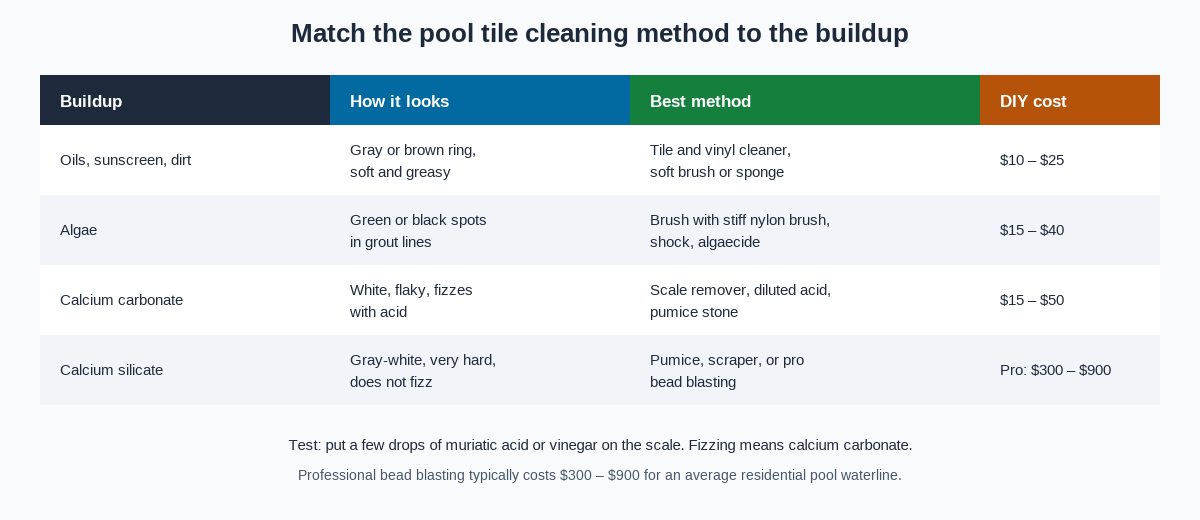
Chart: Asphapro.com
Oils, sunscreen and dirt. Body oils, lotions, hair products, pollen and airborne dust float on the surface and stick to the tile at the waterline, forming a gray, brown or yellow ring. This film is soft and greasy and comes off with the right cleaner and some scrubbing.
Algae. Green, black or mustard algae can grow in grout lines and on rough tile, especially in shaded corners and steps. Black algae has deep roots and needs firm brushing and higher chlorine.
Calcium carbonate scale. This is the most common white buildup. When water evaporates at the waterline, dissolved calcium is left behind and forms a white, flaky or chalky crust. It forms faster when pH, alkalinity, calcium hardness or water temperature are high. It is the easiest scale to remove because it dissolves in acid.
Calcium silicate scale. Older or long-neglected scale can turn into calcium silicate, which is gray-white, glassy and very hard. It does not fizz with acid and usually needs mechanical removal with pumice, scrapers or bead blasting.
To tell the two kinds of calcium apart, put a few drops of muriatic acid or white vinegar on the scale. If it fizzes, it is mostly calcium carbonate. If nothing happens, it is likely calcium silicate.
Tools and Supplies for Pool Tile Cleaning
- Pool tile and vinyl cleaner: a non-foaming cleaner made for pools.
- Soft and stiff nylon brushes, including a small hand brush for grout.
- Pool tile sponge or eraser: a melamine-style sponge works well on light stains.
- Pumice stone: a block or a pumice stone on a pole for calcium scale.
- Calcium or scale remover: a gel or liquid made to dissolve pool scale.
- Muriatic acid: for stubborn calcium carbonate, diluted and used with care.
- Plastic scraper or a putty knife with a plastic blade.
- Gloves, eye protection and old clothes when using acid.
- Garden hose and a bucket of clean water for rinsing.
How to Clean Pool Tile: Step by Step
Step 1: Balance the water
Before you start, test pH, alkalinity and calcium hardness. If pH is high, lower it to about 7.2 to 7.4 first. Slightly lower pH helps dissolve scale and stops new deposits from forming while you work.
Step 2: Lower the water level a few inches
For light cleaning, you can work right at the waterline. For calcium removal, lower the water 3 to 6 inches below the scale line so you can apply cleaners to dry tile without them being diluted. You can pump the water out with a submersible pump or set the filter to Waste. Do not lower the water below the skimmer opening while the pump is running, or the pump will draw air.
Step 3: Start with the gentlest method
Spray or wipe pool tile cleaner on the tile, let it sit for a minute, then scrub with a soft brush or a tile sponge. Rinse with water. This removes oils, dirt and light stains. For many pools, this is all you need every week or two.
Step 4: Remove calcium carbonate
For white scale that fizzes, apply a calcium remover gel or liquid following the label, or brush on a diluted acid solution, often 1 part muriatic acid to 10 parts water for light scale and up to 1 to 4 for heavy scale. Let it sit for a few minutes, scrub with a stiff nylon brush, then rinse well. Work in small sections. Keep acid off the grout as much as possible, because acid also dissolves grout.
Step 5: Use pumice for stubborn spots
Wet the pumice stone and the tile, then rub gently in small circles. Keep the stone wet the whole time, and test on a hidden spot first. Pumice is safe on most ceramic and porcelain tile but can scratch glass tile, glossy decorative tile and some stone. Never use pumice on vinyl or fiberglass.
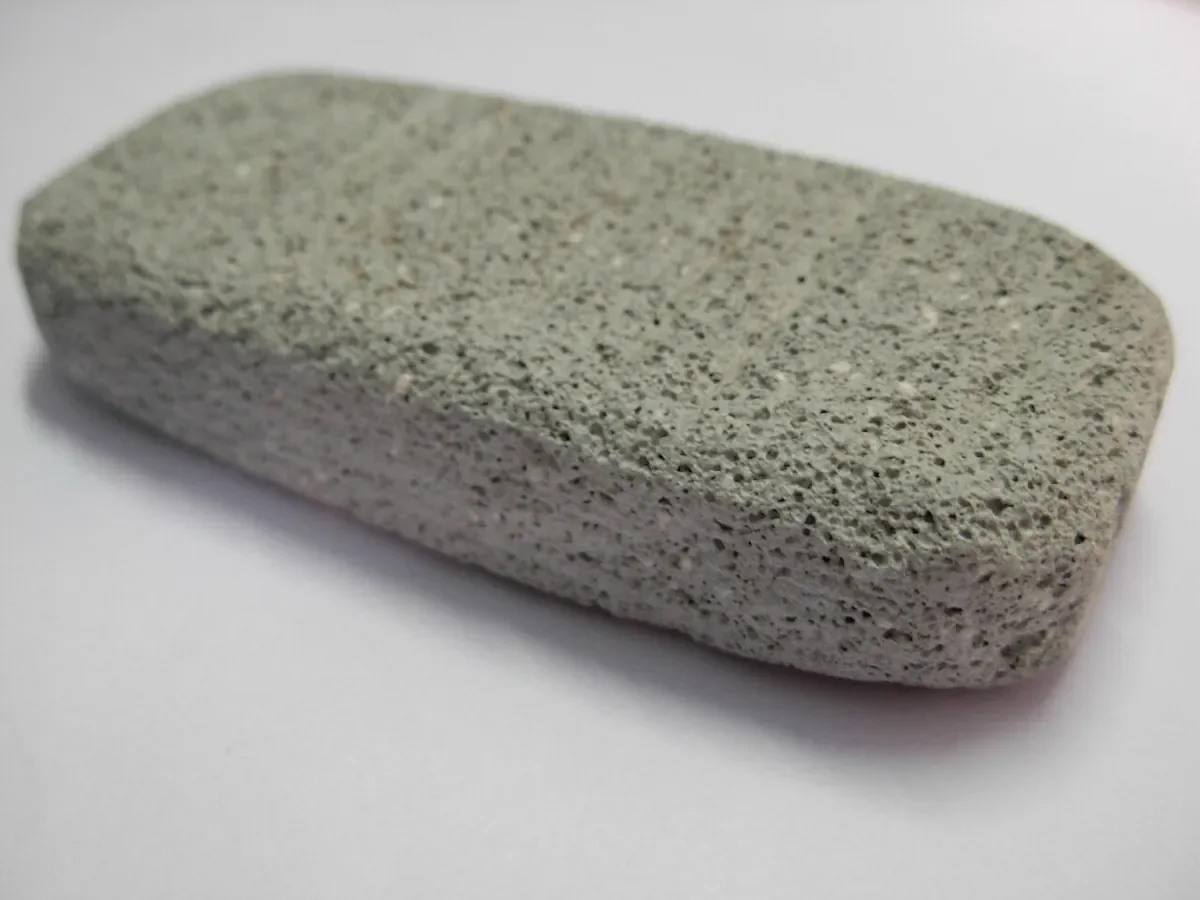
Photo: Ambuj Saxena, Wikimedia Commons, CC BY 2.0
Step 6: Scrape hard scale
For thick calcium silicate, a plastic scraper can chip off layers before you finish with pumice. Work slowly, holding the blade at a low angle so you do not chip the tile glaze.
Step 7: Rinse, refill and rebalance
Rinse the tile well and refill the pool. Retest the water, since the acid and fresh water change pH and alkalinity, and adjust as needed.
How to Remove Calcium From Pool Tile Without Draining
You do not need to drain the pool to remove calcium from pool tile. Lowering the water a few inches below the scale line is enough. If you cannot lower the water, use a calcium remover made to work underwater, or rub the scale with a pumice stone on a pole. Underwater, acid-based gels are diluted quickly, so mechanical methods work better there.
Some products are added to the whole pool to slowly dissolve scale by lowering the water's tendency to form deposits. These scale and stain treatments can help with light scale over a few weeks but rarely remove heavy buildup on their own. Use them alongside brushing and pumice.
How to Clean Tile in Swimming Pool Steps and Corners
Steps, benches and corners trap debris and are where algae starts. Use a small hand brush with stiff nylon bristles to scrub the grout lines, then brush the dirt toward the main drain. A tile sponge reaches into tight curves at step edges. If black algae appears in grout, scrub hard enough to break its protective layer, then shock the pool to a high chlorine level and brush daily until it is gone.
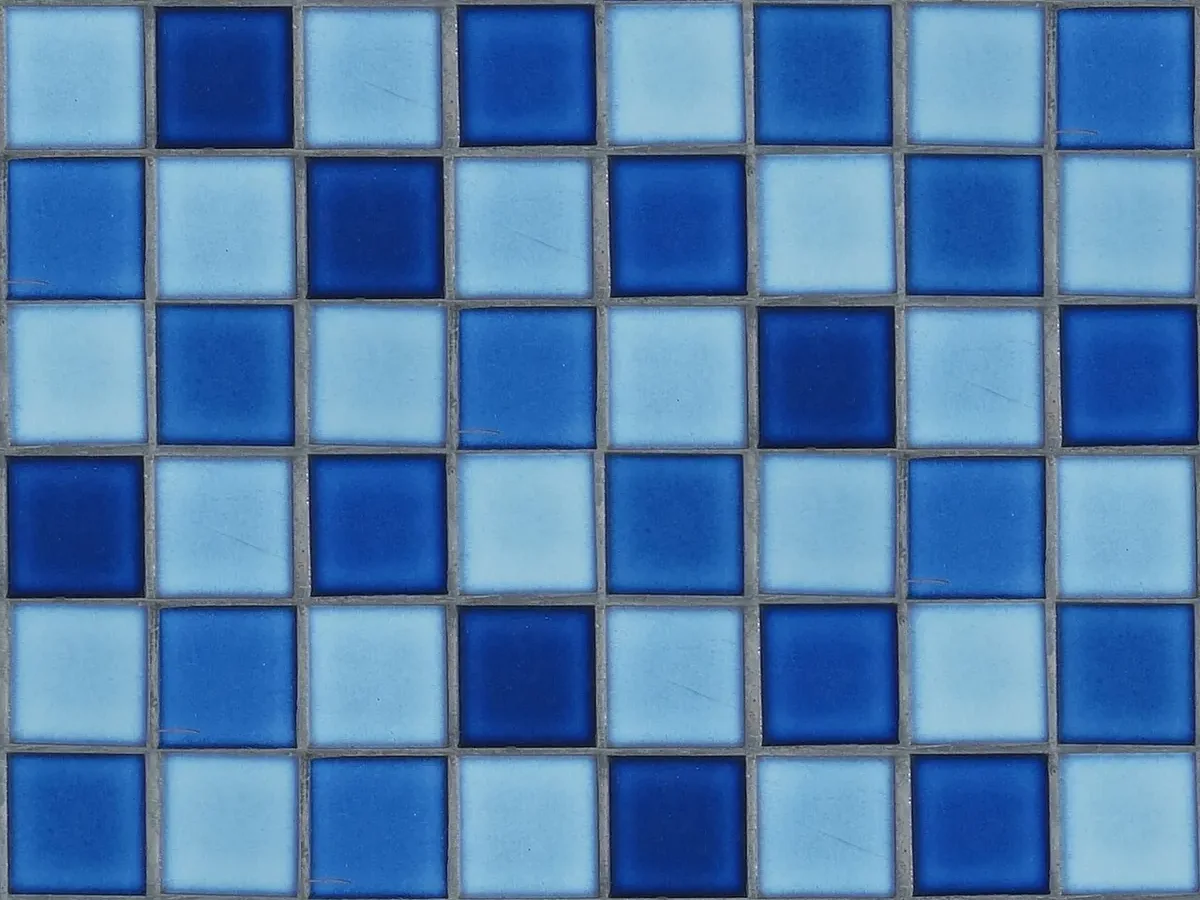
Photo: Sisters.seamless, Wikimedia Commons, CC0
Cleaning Different Types of Pool Tile
Ceramic and porcelain tile are the most common and the toughest. They can handle pool tile cleaner, diluted acid and gentle pumice.
Glass tile is easily scratched. Use only soft brushes, sponges and non-abrasive cleaners. For scale on glass tile, use a calcium remover gel and a soft nylon brush, and leave tough cases to professionals using fine media.
Natural stone such as travertine, slate and limestone can be etched by acid. Use pH-neutral cleaners, and ask a professional before using any acid or scale remover on stone.
Professional Pool Tile Cleaning
When scale is thick, hard or widespread, professional pool tile cleaning is often faster and safer than DIY. The most common method is bead blasting: a technician lowers the water below the tile line and sprays a fine media, usually glass beads or sodium bicarbonate, at the tile under air pressure. The media removes scale without damaging properly chosen tile. The job usually takes a few hours for an average residential pool.
Sodium bicarbonate blasting is softer and is often used on glass tile. Glass bead blasting is more aggressive and works on hard calcium silicate on ceramic and porcelain tile. Pros also clean the coping and any rock waterfalls with the same tools if needed.
Pool Tile Cleaning Service Cost
- Basic tile scrubbing as part of regular service: often included in weekly pool service, or $100 to $250 as a one-time visit.
- Residential pool tile cleaning with bead blasting: about $300 to $900 for an average pool, depending on the length of the tile line and the amount of scale.
- Heavy calcium silicate removal or large pools: $900 to $1,500 or more.
- Extras: draining and refilling, rebalancing chemicals, cleaning stone coping or water features.
Prices are usually quoted by the linear foot of tile, often $5 to $15 per linear foot, with a minimum charge. When you look for affordable pool tile cleaning, get at least three pool tile cleaning quotes. Ask each company what method they use, whether they protect the plaster and equipment, whether draining is included, and whether they guarantee results. A swimming pool tile cleaning service that offers a sealer after blasting can help slow new buildup.
Why Calcium Builds Up on Pool Tile
Every pool loses water to evaporation, often a quarter inch or more a day in hot, dry weather. Pure water leaves, but the calcium, salts and minerals dissolved in it stay behind. At the waterline, a thin film of water constantly wets and dries on the tile as small waves lap against it. Each time it dries, a tiny layer of minerals is left on the tile surface. Over weeks and months, those layers stack up into the white crust that owners know as scale.
Water chemistry decides how fast this happens. Water with high pH, high alkalinity, high calcium hardness or high temperature is more likely to drop calcium out of solution. Pool pros use the Langelier Saturation Index to measure this tendency: a positive number means the water is likely to form scale, and a negative number means it is likely to dissolve plaster and grout instead. Keeping the index near zero is the best long-term way to avoid calcium buildup on pool tile.
Fill water matters too. If your tap water is hard, every top-up adds more calcium. Pools in desert regions often face heavy scale because of hard water and high evaporation together. Saltwater pools can also form scale faster, because the salt cell raises pH and can deposit calcium on nearby surfaces.
How to Remove Calcium Buildup on Pool Tile: Light, Medium and Heavy
Knowing how to remove calcium buildup on pool tile starts with judging how thick it is. Light buildup is a thin white haze or a few spots that you can feel but not see much. A tile sponge or a soft brush with a calcium remover usually takes it off in a few minutes per section. Light buildup is common in pools that get brushed often and have balanced water.
Medium buildup is a clear white band, maybe a few millimeters thick, that feels rough. This needs a scale remover gel, given time to work, and firm scrubbing with a stiff nylon brush or a pumice stone. Expect to spend an afternoon on a typical residential pool. Lowering the water level a few inches makes this much easier.
Heavy buildup is a thick, crusty band, sometimes several millimeters deep with layers you can see, often mixed with gray calcium silicate. This is the point where DIY work becomes slow and tiring, and where many owners call a professional pool tile cleaning company for bead blasting. If you want to try yourself, plan on several sessions with pumice and scrapers, working small sections.
How to Remove Calcium Deposits From Pool Tile Safely With Acid
Acid is the most effective chemical for how to remove calcium deposits from pool tile, but it needs care. Muriatic acid is strong and gives off fumes, so work outdoors with good airflow, and wear chemical-resistant gloves, eye protection and old clothes. Always add acid to water, never water to acid, and mix in a plastic bucket.
Start with a weak solution, about 1 part acid to 10 parts water, and brush it onto the scale with a nylon brush. Watch for fizzing, which means the acid is dissolving calcium carbonate. If the scale is still there after a few minutes, rinse, then try a stronger mix. Rinse each section with clean water as you finish, so acid does not keep eating into the grout. Many owners prefer ready-made calcium remover gels, which cling to vertical tile and are easier to control than liquid acid.
Never mix acid with chlorine products, and keep children and pets away from the work area. Any acid that drips into the pool will lower pH and alkalinity a little, so test the water when you finish.
Pool Calcium Removal on Plaster and Pebble Surfaces
Calcium does not only build up on tile. Pool calcium removal on plaster or pebble finishes uses similar tools but more care. Calcium nodules, small rough bumps that form where water seeps through cracks, can be ground down with a pumice stone or a special nodule tool. Widespread white scale on plaster is usually treated by lowering pH slightly for a period of time, often with a scale treatment product, while brushing daily. In severe cases, a pool may need an acid wash, which means draining the pool and washing the plaster with diluted acid. That job removes a thin layer of plaster and should be done by a professional. For finish options and repair costs, see our guides to the concrete pool and concrete pool deck repair.
How to Clean Swimming Pool Tiles Every Week
The easiest way to keep tiles clean is to make it part of weekly pool care. Learning how to clean swimming pool tiles each week takes only about 10 to 15 minutes for a typical pool. Use a tile brush or a tile sponge on a pole and work around the waterline while you skim and brush the walls. Use a pool tile cleaner on any gray or brown spots. This removes oils and fresh mineral film before it can harden into scale.
Weekly cleaning pool tile also lets you see small problems early: a loose tile, cracked grout, black algae starting in a corner or a stain near a return. Catching these early keeps repair costs low and stops small problems from spreading.
Should You Hire a Pool Tile Cleaning Service?
DIY tile cleaning is fine for light to medium buildup. A pool tile cleaning service makes sense when scale is heavy, when the tile is glass or delicate, when you cannot safely lower the water, or when you simply do not have the time. Professionals have bead blasting rigs, the right media for each tile type and experience protecting plaster, coping and equipment. Many also offer a sealer after cleaning to slow new buildup.
Residential pool tile cleaning usually takes a few hours for an average pool. Some companies offer professional pool tile cleaning on a yearly or twice-yearly schedule, which keeps scale from ever getting thick and usually costs less per visit than a heavy cleaning. When comparing companies, ask whether they hold insurance, how they handle water disposal, and whether they rebalance the water after the job.
Common Mistakes When Cleaning Pool Tile
The most common mistake is using the wrong tool on the tile. Metal scrapers, wire brushes and steel wool scratch tile glaze and leave rust stains. Pumice on glass tile leaves permanent haze. Strong acid left on grout for too long dissolves the grout and loosens tiles. Another common mistake is cleaning the tile but ignoring the water chemistry, so the same scale returns in a few weeks. Finally, some owners lower the water too far with the pump still running, which lets the pump run dry and can damage it.
How to Clean Pool Tile With Household Products
If you only have light buildup, some household products can help you clean pool tile before you buy anything special. White vinegar is a mild acid that slowly dissolves fresh calcium spots; spray it on dry tile above the waterline, let it sit for 10 to 15 minutes, then scrub and rinse. Baking soda made into a paste with water is a gentle scrub for oily rings and works without scratching most tile. A melamine sponge works well on fresh stains and light scale on ceramic tile.
Avoid dish soap and household cleaners that foam, because the foam ends up in the pool and is hard to remove. Never use bleach-based bathroom cleaners or mix products, and keep ammonia-based glass cleaners away from the pool, since ammonia reacts with chlorine. Household methods are fine for small jobs, but for a full band of scale, pool-specific scale removers and pumice save a lot of time.
How to Remove Calcium Buildup From Pool Tile in a Saltwater Pool
Saltwater pools tend to have more scale than chlorine pools, mainly because the salt cell pushes pH up and because scale often forms on tile near the returns, where cell-treated water first enters the pool. The method for how to remove calcium buildup from pool tile in a salt pool is the same as any other: lower the water, apply a scale remover, scrub with pumice or a nylon brush, rinse and rebalance. The key difference is prevention. Keep pH at 7.4 to 7.6, keep alkalinity lower at about 60 to 80 ppm, and clean the salt cell when it shows scale. For the full routine, see our guide on how to maintain a saltwater pool.
How Often Should Pool Tile Be Cleaned?
Light pool tile cleaning should happen every week as part of brushing. A deeper scale treatment with a remover and pumice is usually needed once or twice a season in pools with hard water or high evaporation, and less often in pools with soft water and well-balanced chemistry. Professional bead blasting is usually needed every 2 to 5 years, if at all, depending on how quickly scale returns. Keeping a log of your water tests and cleaning dates helps you spot patterns and plan ahead.
How to Prevent Calcium Buildup on Pool Tile
- Keep pH at 7.4 to 7.6 and alkalinity at 80 to 120 ppm.
- Keep calcium hardness in range, usually 200 to 400 ppm for plaster pools.
- Brush the tile line every week with a tile brush or sponge.
- Keep the water level steady, because rising and falling levels leave rings.
- Use a pool cover to cut evaporation.
- Use a scale inhibitor if you have hard fill water.
- Watch the Langelier Saturation Index (LSI), which combines pH, alkalinity, calcium and temperature to show if water will scale or etch.
How to Clean Pool Tile: Key Points
- Identify the buildup: oils, algae, calcium carbonate or calcium silicate.
- Use tile cleaner and a soft brush for oils and dirt.
- Use scale remover, diluted acid and pumice for calcium carbonate.
- Hard calcium silicate usually needs pumice, scraping or bead blasting.
- Professional bead blasting costs about $300 to $900.
Frequently Asked Questions
What is the best thing to clean pool tile with?
For everyday cleaning, a pool tile cleaner and a tile sponge or soft brush. For calcium, a scale remover and a pumice stone.
Can I use vinegar to clean pool tile?
Yes, for light calcium spots. White vinegar is a mild acid. It works slowly and is best on small areas above the waterline.
Will a magic eraser clean pool tile?
Melamine sponges work well on light stains and fresh scale on ceramic tile. They wear out quickly on heavy buildup.
Do I need to drain my pool to clean the tile?
No. Lowering the water a few inches below the tile line is enough for most DIY cleaning and for professional bead blasting.
Can pool tile cleaning damage grout?
Strong acid and hard scrubbing can wear grout. Rinse acid off quickly, use nylon brushes on grout lines, and regrout any areas that are loose or missing.
How long does professional pool tile cleaning take?
Most residential jobs take two to five hours, plus time to lower and refill the water. Larger pools, rock features and very heavy scale can stretch the job to a full day.
Sources
- CDC: Pool chemistry and testing
- Trouble Free Pool: Pool water chemistry
- Swim University: How to remove calcium from pool tile
- HomeGuide: Pool cleaning service cost