
Pool Resurfacing Cost: What It Costs to Resurface a Pool in 2026
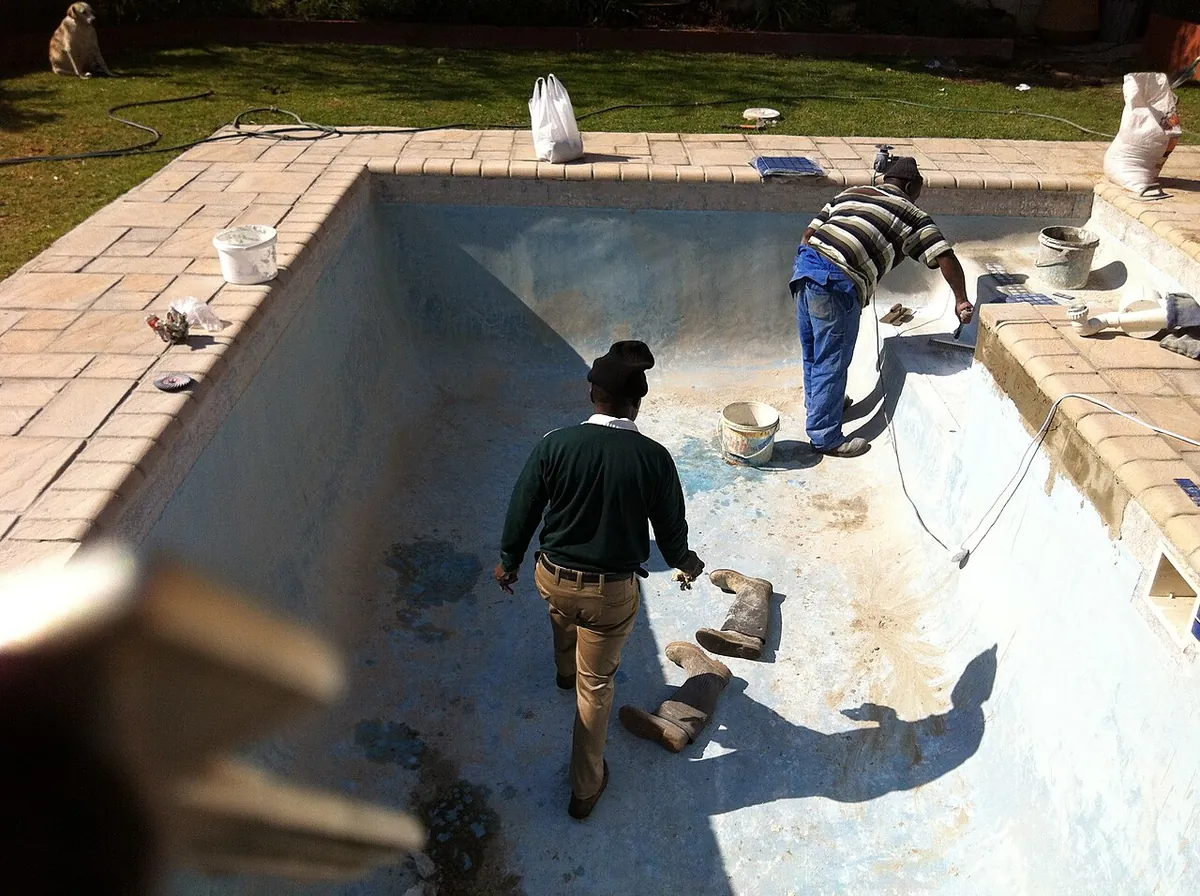
Photo: Duane.clive, Wikimedia Commons, CC BY-SA 3.0
Quick Answer
Pool resurfacing cost for a typical residential pool is about $6,000 to $15,000, according to national cost guides, with Angi reporting an average near $11,000. Per square foot of pool surface, expect roughly $4 to $8 for plaster, $7 to $10 for quartz, $7 to $15 for pebble and $8 to $30 or more for tile. Pool paint is the cheapest refinish at about $1 to $2 per square foot in materials but lasts only a few years. A whole-pool pebble system often costs $9,000 to $13,000. Fiberglass pool resurfacing (a new gelcoat or coating) commonly costs $6,000 to $15,000. Most plaster finishes last about 10 years; quartz and pebble last 10 to 20 years or more.
Every concrete or gunite pool needs a new interior finish eventually. The surface that touches the water, usually plaster, quartz or pebble, slowly wears from chemicals, sun and brushing. When it becomes rough, stained, blotchy or starts to flake, it is time to resurface the pool. Fiberglass pools last longer but can also need refinishing as the gelcoat fades or blisters.
This guide explains pool resurfacing cost in detail: prices by finish, cost per square foot, cost by pool size, what is included, how gunite pool resurfacing and fiberglass pool resurfacing work, how long each surface lasts, the process step by step, and how to get a fair price. If you are planning bigger changes, see pool remodel cost.
Pool Resurfacing Cost at a Glance
| Finish | Cost per sq ft | Typical whole-pool cost | Lifespan |
|---|---|---|---|
| Pool paint (epoxy or acrylic) | $1 – $2 materials; $3 – $6 installed | $1,500 – $5,000 | 2 – 7 years |
| White plaster (marcite) | $4 – $8 | $5,000 – $9,000 | 7 – 12 years |
| Colored plaster | $5 – $9 | $6,000 – $10,000 | 7 – 12 years |
| Quartz aggregate | $7 – $10 | $7,000 – $12,000 | 10 – 15 years |
| Pebble aggregate | $7 – $15 | $9,000 – $15,000+ | 15 – 20+ years |
| Full tile (porcelain or glass) | $8 – $30+ | $15,000 – $50,000+ | 20+ years |
| Fiberglass refinishing | about $6 – $10 | $6,000 – $15,000 | 10 – 15 years |
These figures are drawn from Angi, HomeGuide, HomeAdvisor and Bob Vila. Prices vary by region, pool size, access and the condition of the shell. The total cost to resurface a pool also includes draining, prep, tile and fitting work, and start-up chemicals, so compare whole-job quotes rather than material prices alone.
Swimming Pool Resurfacing Cost by Finish
Plaster
Plaster, also called marcite, is a mix of white cement and marble dust troweled onto the pool shell. It is the traditional and cheapest durable pool finish, which keeps pool resurfacing cost low: roughly $4 to $8 per square foot, or about $5,000 to $9,000 for an average pool. Plaster gives a smooth, bright surface and classic light-blue water. Its downside is life span. Plaster is softer than aggregate finishes, so it etches and stains sooner, especially if water chemistry is poorly kept. Expect about 7 to 12 years. Colored plaster costs a little more and can show mottling over time. For a closer look at this option, see replaster pool cost.
Quartz
Quartz finishes add crushed quartz to the plaster mix. The quartz is harder than marble dust, so the surface resists staining and etching better and lasts longer. Quartz pool resurfacing typically costs $7 to $10 per square foot, a few thousand dollars more than plain plaster for an average pool. Quartz comes in many colors, and many owners see it as the best value finish because it lasts noticeably longer for a moderate increase in cost.
Pebble
Pebble finishes mix small smooth stones with cement. After troweling, the top layer of cement is washed off to expose the pebbles. The result is very durable and has a natural look and a textured feel underfoot. Pebble pool resurfacing usually costs $7 to $15 per square foot, and HomeAdvisor reports that branded pebble systems often cost $9,000 to $13,000 for a whole pool. Pebble can last 15 to 20 years or more, which brings its cost per year close to plaster. Some people find the texture rough on feet; polished pebble versions are smoother.
Tile
A fully tiled interior is the most expensive way to resurface a pool, from about $8 to more than $30 per square foot depending on porcelain or glass tile and pattern. It can last decades and gives a high-end look. Most pools only use tile at the waterline and on steps, with plaster or aggregate elsewhere. See replacing pool tile cost.
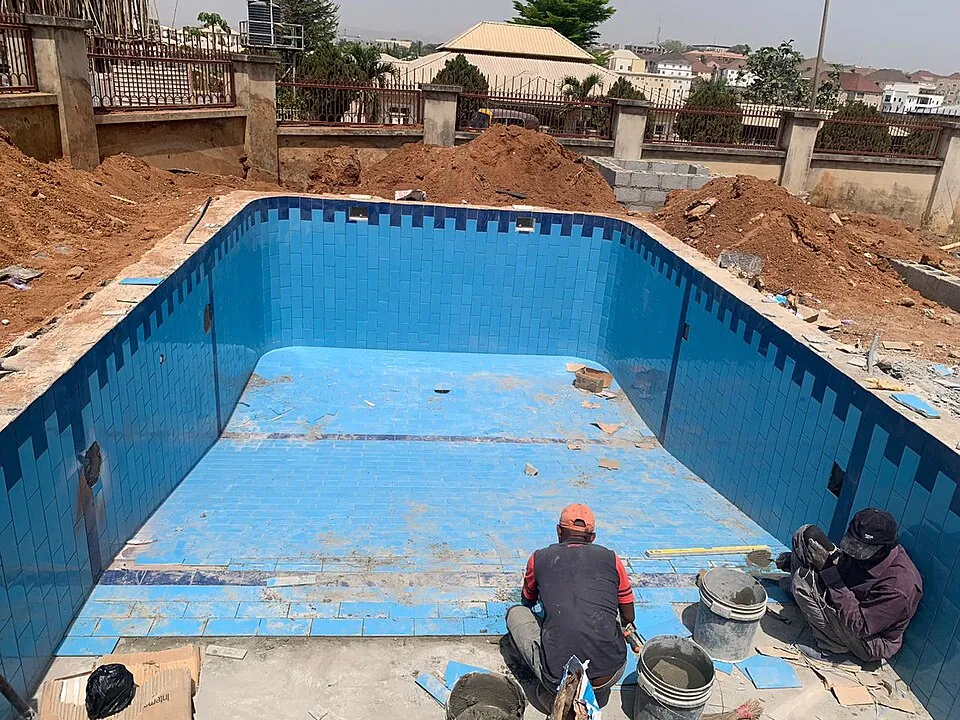
Photo: Accuratecy051, Wikimedia Commons, CC BY-SA 4.0
Pool paint
Epoxy or acrylic pool paint is the lowest-cost refinish, about $1 to $2 per square foot in materials, or $3 to $6 per square foot when a contractor does the prep and painting. Paint is common on older commercial pools and as a short-term fix. It needs repainting every few years, and switching from paint back to plaster requires removing the paint first, which adds cost later. Epoxy lasts longer than acrylic but costs more.
Fiberglass refinishing
Fiberglass pool resurfacing is different from plastering. The pool is drained, the gelcoat is sanded or ground, any blisters or cracks are repaired, and a new gelcoat, vinyl ester coating or specialty paint is sprayed or rolled on. Fiberglass pool resurfacing cost is commonly $6,000 to $15,000 depending on size and the system used; Bob Vila cites about $6,500 per 1,000 square feet of surface. Fiberglass pools need this rarely, often after 15 to 25 years, so long-term cost is low. Refinishing should be done by a specialist, because poor bonding can cause the new coating to peel.
Pool Resurfacing Cost per Square Foot
To estimate pool resurfacing cost per square foot, you first need the interior surface area, which includes the floor and walls, not just the water surface. A quick estimate for a rectangular pool is:
- Floor area: length × width.
- Wall area: perimeter × average depth.
- Total surface = floor area + wall area, plus about 10% for steps, benches and slopes.
Example. A 16 x 32 ft pool with an average depth of 5 ft has a floor area of 512 square feet and walls of (16 + 16 + 32 + 32) × 5 = 480 square feet. That is 992 square feet, or about 1,090 with steps and slopes. At $6 per square foot for plaster, the cost to resurface the pool is about $6,500; at $9 for quartz, about $9,800; at $12 for pebble, about $13,000. Our square footage calculator can help with the areas.
Cost to Resurface a Pool by Size
| Pool size (avg depth 5 ft) | Interior surface | Plaster | Quartz | Pebble |
|---|---|---|---|---|
| 12 x 24 ft | about 680 sq ft | $3,500 – $5,500 | $5,000 – $7,000 | $5,500 – $10,000 |
| 14 x 28 ft | about 860 sq ft | $4,500 – $7,000 | $6,000 – $8,500 | $7,000 – $13,000 |
| 16 x 32 ft | about 1,090 sq ft | $5,500 – $8,500 | $7,500 – $11,000 | $8,500 – $16,000 |
| 20 x 40 ft | about 1,600 sq ft | $8,000 – $12,500 | $11,000 – $16,000 | $12,000 – $24,000 |
These pool resurfacing cost ranges include typical prep but not new tile, coping or equipment. Small pools often have a minimum job charge, so the cost per square foot rises for very small pools and spas.
What the Price to Resurface a Pool Includes
A full quote for swimming pool resurfacing normally covers:
- Draining the pool and disposing of the water according to local rules.
- Surface removal or prep. Old plaster is chipped out, ground or hydro-blasted so the new finish bonds. Full chip-outs cost more but give the best bond.
- Repairs. Filling cracks, fixing hollow spots and replacing fittings.
- Bond coat where needed to help the new finish adhere.
- Applying the finish, usually in one day for plaster and aggregates.
- Refilling without stopping, so no water line forms on the new surface.
- Start-up chemistry. Brushing and careful chemical balancing for the first two to four weeks while the surface cures.
Extras that commonly come up during a pool resurface: replacing waterline tile ($3,000 to $6,000), new coping ($3,000 to $20,000), new light niches or fittings, drain cover upgrades, and fixing leaks found once the pool is empty. Filling the pool can cost a few hundred dollars more if you use a water truck; see swimming pool filling cost.
Gunite Pool Resurfacing
Most pools that need resurfacing are gunite or shotcrete pools with a plaster or aggregate finish. Gunite pool resurfacing costs the same as the finish chosen, usually $6,000 to $15,000, because the gunite shell itself stays in place. Bob Vila puts plastering a gunite or concrete pool at about $3 to $5 per square foot for basic plaster labor and material, with aggregates higher. Resurfacing a gunite swimming pool is also the time to repair shell cracks: hairline cracks are routed and filled, while structural cracks may need staples or epoxy injection. For background on how these pools are built, see our concrete pool guide.
Fiberglass Pool Resurfacing: Can You Resurface a Pool With Fiberglass?
There are two different questions here. Resurfacing a fiberglass pool means refinishing an existing fiberglass shell, covered above. Resurfacing a pool with fiberglass means putting a fiberglass coating over a concrete pool. Some companies offer fiberglass or composite linings for concrete pools, applied as layers of resin and mat. These can cost as much as or more than pebble, often $10,000 to $20,000 or more, but give a smooth, non-porous surface that uses fewer chemicals. Results depend heavily on the installer, so ask for warranties and references before choosing this route.
How Long Pool Resurfacing Lasts
The real comparison is cost per year of service, not just the price to resurface the pool:
| Finish | Typical cost | Typical life | Approx. cost per year |
|---|---|---|---|
| Paint | $3,000 | 4 years | $750 |
| Plaster | $7,000 | 10 years | $700 |
| Quartz | $9,000 | 13 years | $690 |
| Pebble | $12,000 | 18 years | $670 |
On this basis, the more durable finishes are close to plaster in cost per year and need fewer disruptions. Good water chemistry is the biggest factor in how long any surface lasts. Low pH and low calcium hardness dissolve plaster; high pH and high calcium leave scale. Keep a steady routine; see cost to maintain a pool.
Cost of Resurfacing a Pool by Region
The cost of resurfacing a pool follows local labor rates and demand. In large pool markets such as Florida, Arizona, Texas and Southern California, there are many plaster crews and prices are competitive, though spring and early summer fill schedules quickly. In the Northeast and Midwest, the season is shorter, so the price to resurface a pool can be higher in peak months and crews may be booked months ahead. Water cost for refilling also varies widely: in some desert cities, refilling a 20,000-gallon pool costs far more than in rainy regions.
As a rule of thumb, how much to resurface a pool in a high-cost metro can run 15% to 30% above the national ranges in this guide, while rural areas with lower labor rates may come in under them. Ask local contractors for current prices and book early.
Choosing the Right Resurfacing for Your Situation
Selling soon. If you plan to sell within a few years, a clean white or light-colored plaster finish usually gives the best return. Buyers notice a fresh surface, and the cost to resurface the pool stays at the low end.
Staying long term. Quartz or pebble makes more sense, because the resurface pool cost is spread over more years and you avoid a second job a decade from now.
Hard water or high-use pools. Pebble and quartz handle scale and heavy use better than plain plaster. If your area has very hard water, plan on regular tile cleaning and careful calcium control whatever surface you choose.
Very old pools. When resurfacing a gunite swimming pool that is 30 or more years old, budget for extra repairs. Old plumbing, fittings and tile often need replacing at the same time, which raises the gunite pool resurfacing cost by a few thousand dollars but avoids draining again soon.
Painted pools. Many older pools have epoxy paint over plaster. Switching to plaster or aggregate means removing the paint by sandblasting or grinding first. Expect the cost to resurface the pool to rise by $1,000 to $3,000 for paint removal.
Resurfacing Fiberglass Pool Shells Step by Step
Resurfacing a fiberglass pool follows its own process:
- Drain the pool carefully. Fiberglass shells can shift or bulge if left empty, so the job is scheduled to keep the pool empty only as long as needed.
- Sand or grind the old gelcoat to give a clean surface for bonding.
- Repair blisters, cracks and spider-web cracking with resin and fiberglass mat.
- Apply the new gelcoat, vinyl ester or specialty pool coating, usually by spray.
- Cure, then refill and balance the water.
When you resurface a fiberglass pool with a quality system, the new finish can last 10 to 15 years or more. Fiberglass pool refinishing is a niche trade, so ask how many fiberglass pools the company has refinished and what the warranty covers.
Pool Refinish or Patch?
Small problems do not always need a full pool refinish. A few chips, a small hollow spot or a stained step can often be patched for a few hundred dollars, sometimes without draining using underwater patch compounds. Patches rarely match the color exactly, though, and widespread wear means patching only delays the inevitable. If more than about 10% to 15% of the surface is damaged, resurfacing the pool is usually the better choice.
Signs It Is Time to Resurface a Pool
- Rough patches that scratch feet or snag swimsuits.
- Stains that do not come out with brushing or an acid wash.
- Etching, pitting or a chalky surface.
- Delamination: hollow areas or flakes of plaster coming loose.
- Visible cracks or exposed gunite.
- Leaks through the surface or around fittings.
- Fading or blistering on a fiberglass pool.
Sometimes an acid wash, which removes a thin layer of plaster to brighten it, can buy a year or two for a few hundred dollars. It removes material, though, so it shortens the life of thin or old plaster.
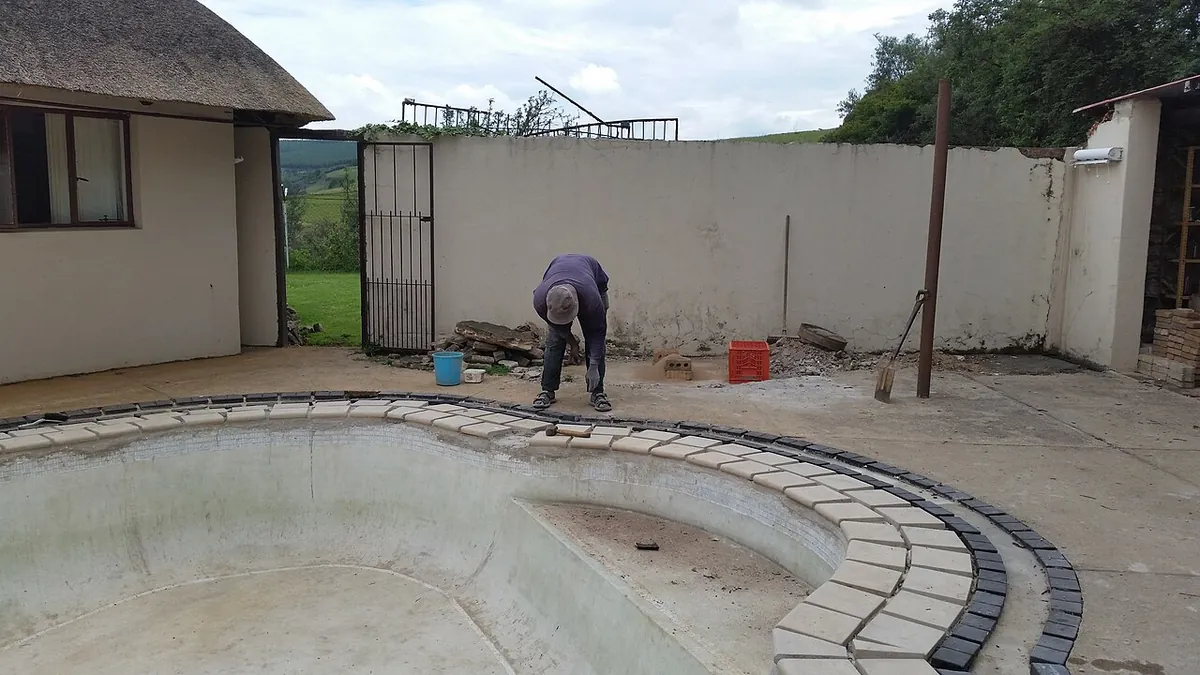
Photo: PhillFli, Wikimedia Commons, CC BY-SA 4.0
How Do You Resurface a Pool? The Process
- Inspection and quote. The contractor checks the surface, tile, coping, fittings and shell.
- Drain. A submersible pump empties the pool. Groundwater can push an empty pool upward, so contractors watch hydrostatic pressure and may open relief valves.
- Prep. Old plaster is removed or roughened; loose areas are chipped out; tile and fittings are protected or replaced.
- Repairs and bond coat.
- Application. A crew mixes and trowels the new finish in one continuous session for an even surface. For pebble, the cement is washed back to expose the stones.
- Fill. Water goes in right away, filling continuously.
- Start-up. Daily brushing and gradual chemical adjustment for several weeks while the new surface cures.
Most jobs take 3 to 7 days of work, plus filling and start-up. Resurfacing a swimming pool yourself is not practical for plaster or aggregate finishes, which require a skilled crew working quickly. Painting is the only realistic DIY option.
What Affects the Cost to Resurface a Pool
- Size and shape. More surface means more material and labor; complex shapes take longer.
- Finish choice. The biggest single factor.
- Prep needed. A full chip-out or removing paint costs more than roughening sound plaster.
- Repairs. Cracks, hollow spots and leak repairs add cost.
- Tile and coping work done at the same time.
- Region. Labor rates and demand vary.
- Season. Spring is busy; fall and winter may be cheaper in warm climates.
- Water costs to refill, especially where water is expensive.
Questions to Ask Before You Pay to Resurface a Pool
Pool resurfacing cost quotes can look similar and still describe very different jobs. Ask each contractor:
- Which exact finish product and color will you use, and how thick will it be applied?
- Will you chip out the old surface completely, or grind and bond over it?
- Does the swimming pool resurfacing cost include tile, fittings, drain covers and start-up chemicals?
- What does the warranty cover, for how long, and does it depend on my water chemistry?
- How will you handle cracks or hollow areas found after draining, and at what price?
- Who handles draining, water disposal and refilling?
Clear answers make it easy to compare pool resurfacing cost between companies and avoid surprise charges. A written scope also protects you if the finish fails early, because the warranty terms and the start-up steps are on paper from the beginning.
Ways to Save on Pool Resurfacing
- Get at least three itemized quotes that name the exact finish product, prep method and warranty.
- Schedule outside peak season if your climate allows.
- Bundle tile, coping and light work with the resurface to avoid draining twice.
- Choose a durable finish if you plan to stay; the cost per year is often lower.
- Follow the start-up instructions exactly; poor start-up shortens surface life.
- Keep water chemistry balanced to delay the next resurface.
Pool Resurfacing Cost Calculator: Quick Method
A pool resurfacing cost calculator does three things: finds your interior surface area, multiplies by a finish price, and adds fixed costs. Do it yourself like this:
- Measure length, width, shallow depth and deep depth.
- Average depth = (shallow + deep) ÷ 2.
- Surface = (length × width) + (2 × (length + width) × average depth), plus 10%.
- Multiply by your finish price per square foot.
- Add $500 to $2,000 for draining, prep extras, fittings and start-up, plus any tile or coping work.
Frequently Asked Questions
How much does it cost to resurface a pool?
Most pool resurfacing costs $6,000 to $15,000. Plaster sits at the low end of the pool resurfacing cost range, pebble and tile at the high end.
How much does pool resurfacing cost per square foot?
About $4 to $8 for plaster, $7 to $10 for quartz, $7 to $15 for pebble and $8 to $30 or more for tile, per square foot of interior surface.
What is the difference between pool refinishing and resurfacing?
The terms are used the same way. Pool refinishing cost and pool resurfacing cost refer to applying a new interior finish.
How often should you resurface a pool?
Plaster usually every 7 to 12 years, quartz every 10 to 15, pebble every 15 to 20 or more. Fiberglass pools need refinishing far less often.
Can you resurface a pool without draining it?
No. Plaster, aggregate and tile finishes require a drained, dry, prepared shell. Some underwater patching products exist for small repairs only.
How long after resurfacing can you swim?
Many contractors allow swimming once the water is balanced, often within a few days to a week, but follow your contractor's start-up schedule, which can restrict some activities for a month.
Is pebble worth the extra cost?
For owners staying many years, often yes: pebble lasts longer, so its cost per year is similar to plaster.
How much does fiberglass pool resurfacing cost?
Fiberglass pool resurfacing cost is about $6,000 to $15,000 for most residential fiberglass pools, depending on size and the coating system.
What is the cheapest way to resurface a pool?
Painting is the cheapest way to resurface a pool, followed by standard white plaster. Paint must be redone every few years, so plaster is usually cheaper over time.
How much is it to resurface a pool that is 15,000 gallons?
A 15,000-gallon pool often has 700 to 900 square feet of interior surface, so resurfacing typically costs about $4,500 to $8,000 with plaster or $6,500 to $12,000 with quartz or pebble.
Can I resurface a pool with fiberglass?
Yes. Some companies apply fiberglass or composite linings over concrete pools. Prices are usually similar to or higher than pebble, and installer skill matters a lot.
Should I replace the tile when I resurface the pool?
If the waterline tile is cracked, loose or badly scaled, yes. Replacing it during the resurface avoids draining twice and usually costs $3,000 to $6,000 extra. Sound tile can be cleaned and kept.
What color pool finish is best?
White and light finishes give classic light-blue water and show the pool floor clearly. Darker finishes give deeper blue or lagoon colors and hold a little more heat, but show scale and fading sooner.
Does homeowners insurance cover pool resurfacing?
Normal wear is not covered. Sudden damage from a covered event may be; check your policy. See home warranty pool coverage for warranty plans.
Sources
- Angi: How much does pool resurfacing cost?
- HomeGuide: Pool resurfacing cost
- HomeAdvisor: Pool replastering cost
- Bob Vila: Pool resurfacing cost
- Homewyse: Cost to resurface a pool