
Pool Coping Ideas: Materials, Edges and Designs for Every Pool
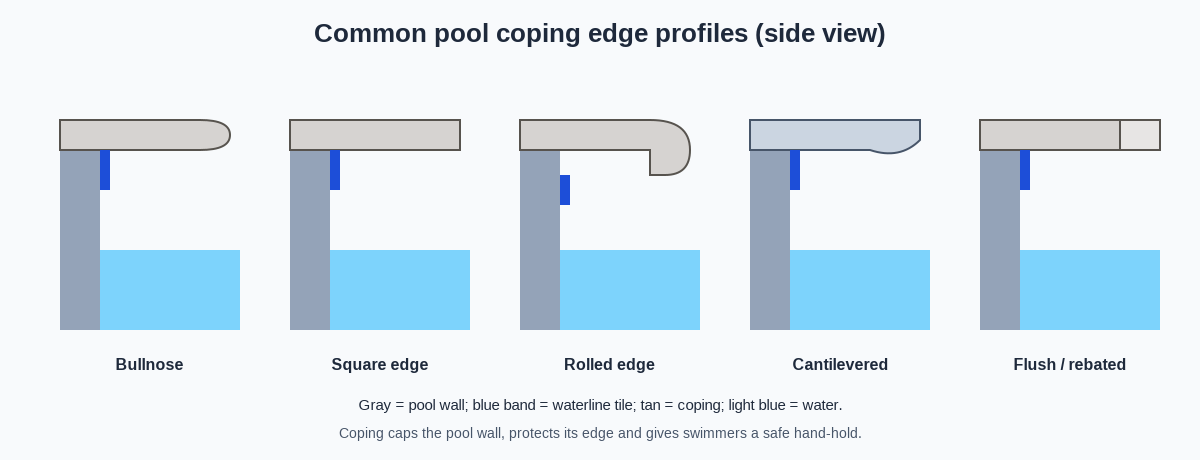
Diagram: Asphapro.com
Quick Answer
Pool coping is the cap of stone, concrete, brick or other material that covers the top edge of the pool wall, between the water and the deck. Popular pool coping ideas include travertine for a cool, elegant look, bluestone or limestone for a classic natural edge, poured or cantilevered concrete for a seamless modern look, brick for a traditional style, and pavers or porcelain that match the deck. Edges come in bullnose, square, rolled and flush profiles. Installed coping usually costs about $20 to $80 per linear foot, or roughly $2,000 to $7,500 for an average 16 x 32 foot pool.
Coping may be a small strip of material, but it does a lot. It frames the pool, protects the top of the wall from water and weather, gives swimmers something to hold, and ties the pool to the deck and the rest of the yard. Choosing the right swimming pool coping can change the look of a pool more than almost any other detail.
This guide explains what pool coping is, then walks through coping ideas by material, edge style and color, with costs and tips for choosing and caring for it. For concrete coping in depth, see our guide to concrete pool coping.
What Is Pool Coping?
What is pool coping? It is the material that caps the top of the pool's walls. On a concrete pool, coping sits on top of the bond beam, the thick concrete edge at the top of the walls, and usually overhangs the water by an inch or two. On a vinyl pool, coping may be an aluminum or plastic track that holds the liner, often covered by a concrete or stone cap. On a fiberglass pool, coping covers the shell's flange and ties it to the deck.
Coping has three main jobs. It seals the top of the pool wall, keeping water from getting behind the shell or liner. It gives a smooth, safe edge to sit on and hold, without sharp corners. And it directs splash water away from the pool and onto the deck drain, rather than back into the pool or behind the wall. Good coping also makes the transition between pool and deck look finished.
Pool Coping Ideas by Material
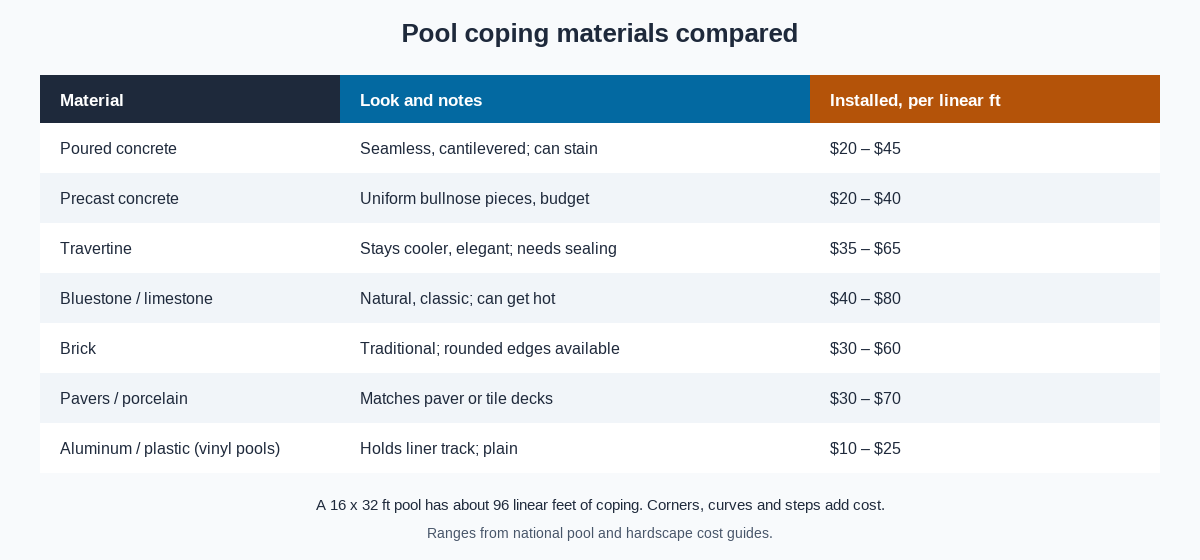
Chart: Asphapro.com
Travertine. Travertine is one of the most popular pool coping ideas. This natural stone stays cooler underfoot than most materials, has a soft, light color, and works with many styles from Mediterranean to modern. It is porous, so it should be sealed, and it can be damaged by salt water and acid if not cared for.
Bluestone and limestone. These dense natural stones give a classic, refined edge. Bluestone ranges from blue-gray to lilac and brown and suits traditional homes. Limestone is lighter and softer in color. Both can get hot in strong sun, especially darker bluestone.
Poured concrete. Poured-in-place concrete coping is formed and poured right on the pool edge. It can be shaped into a cantilevered edge that flows into the deck with no joint, a popular choice for clean, modern pools. It is affordable and durable but can crack and stain over time.
Precast concrete. Precast coping comes in pre-made pieces, often with a rounded bullnose edge, in several colors and textures. It is cost-effective and easy to replace piece by piece.
Brick. Brick coping gives a warm, traditional look and pairs well with brick homes and patios. Special bullnose bricks give a rounded edge. Brick is porous and needs sealing in freezing climates.
Pavers and porcelain. Paver coping matches paver decks and comes in many colors. Porcelain coping, often a thick large-format tile with a rounded edge, gives a sleek, stain-resistant finish that matches porcelain decks.
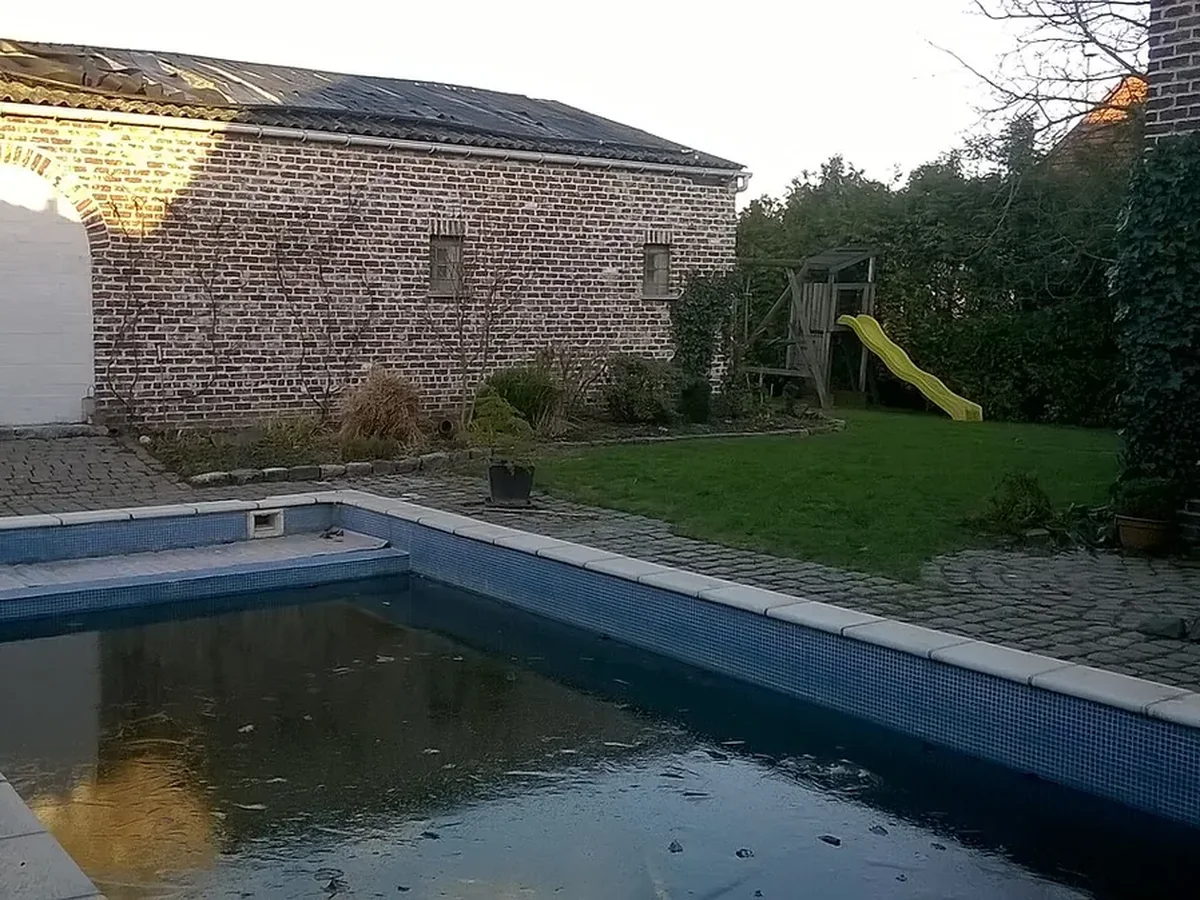
Photo: Qui, Wikimedia Commons, CC BY-SA 4.0
Pool Coping Edge Profiles
The edge profile changes both the look and the feel of the pool coping. Bullnose coping has a rounded front edge, the most common profile because it is comfortable to sit on and grip. A full bullnose is rounded top and bottom; a half bullnose is rounded only on top. Square edge coping has a crisp, flat front for a clean, modern look; edges are usually eased slightly so they are not sharp. Rolled edge coping curves down toward the water, giving a strong hand-hold, and is common on precast concrete. Cantilevered coping is poured concrete that extends from the deck over the pool edge with no joint between them, giving a smooth, continuous surface. Flush or rebated coping sits level with the deck, sometimes with the deck pavers continuing right to the edge, for a minimal look.
Swimming Pool Coping Ideas by Style
Modern. Modern swimming pool coping ideas favor square edges, large-format stone or porcelain, and gray, charcoal or white tones. A thin, flush coping with a dark waterline tile below looks sleek. Cantilevered concrete with a smooth finish creates a seamless look between deck and pool.
Mediterranean. Light travertine with a bullnose edge, terracotta accents and blue tile gives a warm, coastal look. Tumbled travertine with softened edges and a matching deck suits Spanish and Tuscan-style homes.
Traditional. Bluestone or limestone with a bullnose edge, paired with a brick or stone deck, suits colonial and classic homes. Brick coping in a warm red pairs well with brick patios.
Natural and rustic. Rough-cut flagstone, natural boulders at the pool edge, and earthy colors blend the pool into a garden setting. Rock coping with a waterfall can make a pool look like a pond.
Tropical. Light travertine or coral-colored stone with palms and white decks gives a resort feel. Pale coping reflects heat and stays comfortable underfoot in hot climates.
Pool Coping Colors and Contrast
Color sets the tone of the coping pool edge. Light colors such as cream, ivory and light gray stay cooler, make the pool look larger and brighter, and suit sunny climates. Darker colors such as charcoal and blue-gray look bold and modern but can get hot. Contrasting coping, such as dark coping with a light deck, outlines the pool shape and draws the eye. Matching coping and deck give a calm, unified look. Think about how the pool coping will look next to the waterline tile, the interior finish and the house. Bring samples outdoors and look at them in sun and shade, wet and dry.
Matching Swimming Pool Coping to Tile and Deck
Coping is the bridge between the waterline tile and the deck, so the three should be planned together. A common approach is to pick the deck material first, then coping that either matches or contrasts with it, then a waterline tile that complements both. For example, a travertine deck with matching travertine coping and a blue glass tile; or a gray concrete deck with dark bluestone coping and a white porcelain tile. Avoid too many different patterns: if the tile is busy, keep the pool coping and deck simple. See our guide to swimming pool tile ideas for tile pairings.
Budget Pool Coping Ideas
Precast concrete coping is the most affordable stone-look option and comes in several colors and edges. Poured concrete coping with a broom finish is also budget-friendly, especially when poured with the deck. Pavers used as coping can cost less than natural stone while matching a paver deck. Brick is moderate in cost and suits traditional settings. If you love natural stone but have a tight budget, use stone for the pool coping only and a less expensive material, such as stamped or broom-finished concrete, for the deck.
Pool Coping for Vinyl and Fiberglass Pools
Vinyl pools often use extruded aluminum or plastic coping that holds the liner bead in a track. This coping is functional and inexpensive but plain. Many vinyl pools add a cantilevered concrete deck that hides the track, or use special coping stones with a hidden track that holds the liner while looking like stone. Fiberglass pools have a flange at the top of the shell; coping is set on top of it with flexible mortar or poured as a concrete collar. Because fiberglass shells can move slightly, builders often leave an expansion joint between the pool coping and deck. Ask your builder which coping systems work with your pool type.
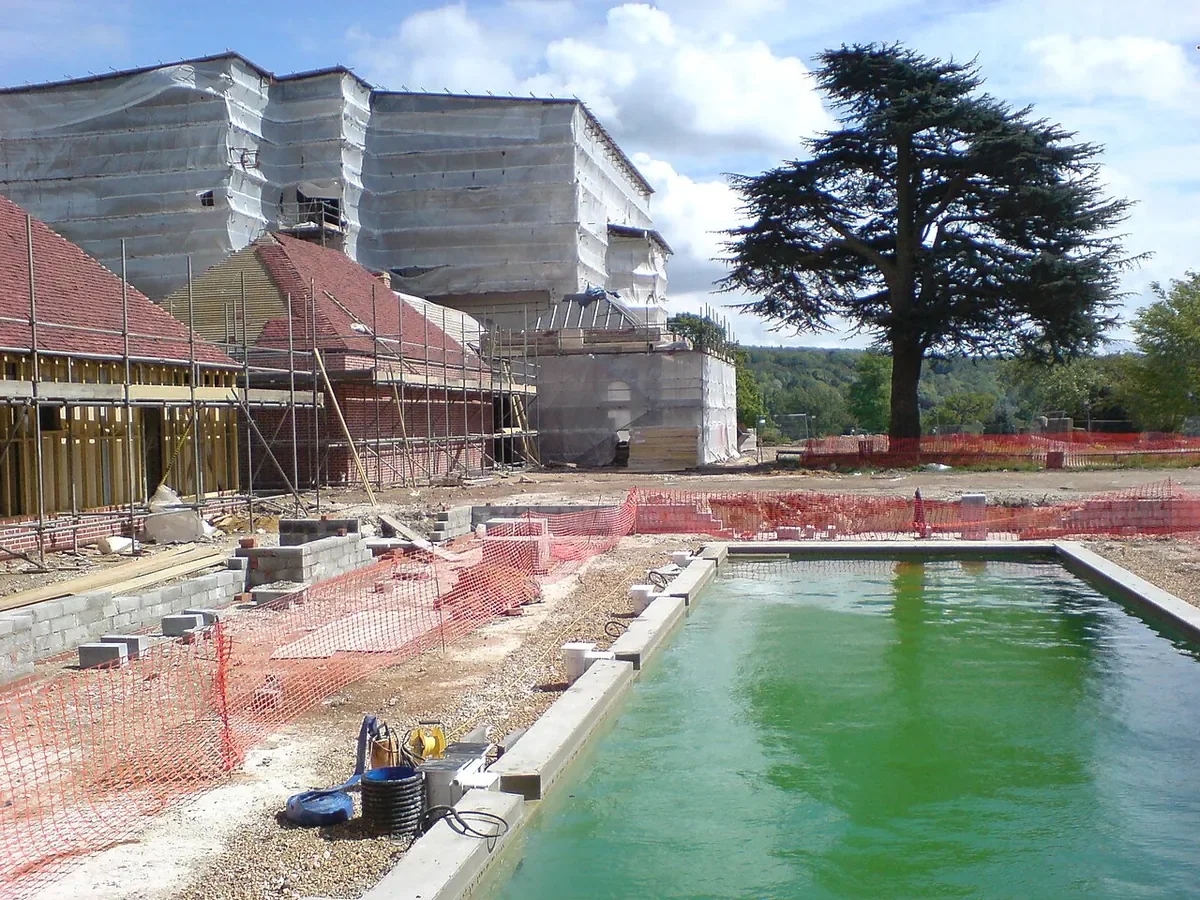
Photo: Ali zaybak, Wikimedia Commons, public domain
How Pool Coping Is Installed
On a concrete pool, coping is set after the shell is built and before the waterline tile and plaster. The installer spreads mortar on the bond beam, sets each coping piece with the right overhang, checks it for level and alignment, and leaves a small slope toward the deck so water drains away from the pool. Joints between pieces are filled with mortar or grout. An expansion joint, filled with a flexible sealant, is placed between the pool coping and the deck, because the deck and pool move differently with temperature and soil changes. Without that joint, coping can crack or pop loose. Cantilevered concrete coping is formed with foam or forms along the pool edge and poured at the same time as the deck.
Pool Coping Cost
Coping is priced by the linear foot. A 16 x 32 foot rectangular pool has about 96 linear feet of coping. Installed costs run roughly $20 to $45 per foot for poured or precast concrete, $35 to $65 for travertine, $40 to $80 for bluestone and limestone, $30 to $60 for brick, and $30 to $70 for pavers and porcelain. For an average pool, that is about $2,000 to $7,500. Curves, steps, raised spa walls and corner pieces add cost. Replacing old coping adds demolition, typically $5 to $15 per linear foot, and may require repairing the bond beam beneath.
Replacing Pool Copings
Old pool copings crack, chip, loosen or fade over time. Signs it is time to replace coping include loose or rocking pieces, cracks that let water behind the wall, sharp chipped edges, and mortar joints washing out. Coping is often replaced during a remodel or resurfacing, when the pool is drained and the waterline tile may be replaced too. Replacing coping alone is possible, but care is needed not to damage the tile below. See our guides on pool resurfacing cost and replacing pool tile cost.
Caring for Swimming Pool Coping
Natural stone, concrete and brick coping should be sealed with a penetrating sealer every one to three years to resist water, salt, chemicals and stains. Clean coping with a pH-neutral cleaner and a soft brush, and rinse splash-out regularly, especially in salt water pools, where salt crystals can damage soft stone. Check the expansion joint each year and replace cracked or missing sealant. Fix loose pieces quickly before water gets behind them. In freezing climates, keep water away from the pool coping joints in winter to avoid frost damage.
More Pool Coping Ideas to Consider
Raised spa coping. A raised spa wall topped with the same coping as the pool ties the two together. A wider coping on the spa makes a comfortable seat.
Wide coping for seating. Extra-wide pool coping, 16 to 24 inches deep, creates a ledge where people can sit with their feet in the water.
Dark coping with light water. Charcoal or black pool coping around a white or light-blue pool makes the water glow and the shape stand out.
Contrasting coping with a lawn edge. In garden pools, pool coping that meets lawn on one side gives a soft, natural edge while protecting the wall.
Waterfall or spillway coping. A section of coping cut to let water spill into the pool from a raised wall or spa adds sound and movement.
Lighting under coping. LED strip lights hidden under the coping overhang wash the waterline tile with light at night.
Mixed materials. Stone pool coping on the main pool and wood-look porcelain on a sun shelf, or brick around a spa and concrete around the pool, can create zones while staying tied together by color.
Comfort and Safety
Because people sit, stand and walk on pool coping barefoot, comfort and safety matter. Light-colored stone and travertine stay cooler in the sun than dark stone and concrete. Textured or honed finishes give better grip than polished ones, which can be slippery when wet. Rounded edges are more comfortable to sit on and less likely to scrape skin. The coping should overhang the pool wall by about 1 to 2 inches to form a hand-hold, and the whole edge should be smooth and free of sharp chips. Contrasting coping color also helps swimmers see the pool edge clearly.
Pool Coping in Salt Water Pools
Salt water splash can damage soft natural stone over time. Salt crystals form in the pores as water evaporates and slowly break down the surface, causing pitting and flaking. In salt pools, choose dense stone such as granite or quality bluestone, or porcelain and precast concrete made for salt exposure. Seal natural stone pool coping well and reseal it more often, rinse splash-out with fresh water, and keep salt levels at the cell maker's recommendation rather than higher. See our guide on how to maintain a saltwater pool.
Pool Coping Cost Examples
Budget precast. A 14 x 28 foot pool with about 84 linear feet of precast concrete bullnose coping at $25 per foot costs about $2,100 installed.
Travertine upgrade. A 16 x 32 foot pool with 96 feet of travertine coping at $50 per foot costs about $4,800, plus about $600 for corner and step pieces.
Bluestone on a freeform pool. A 110-foot freeform pool with bluestone coping cut to the curves at $70 per foot costs about $7,700.
Replacement on an older pool. Removing 96 feet of old brick coping at $10 per foot and installing new travertine at $55 per foot costs about $6,240, plus any bond beam repairs found during demolition.
Common Pool Coping Mistakes
The most common mistake is skipping or filling in the expansion joint between the pool coping and the deck, which leads to cracked and loose coping as the deck and pool move. Another is choosing dark stone in a hot climate, making the edge too hot to touch. Using porous stone without sealing in a salt water or freeze-thaw climate shortens its life. Picking a highly polished finish can make the edge slippery. Finally, choosing coping in isolation, without looking at it next to the deck and tile, can lead to a clash of colors and styles.
Pool Coping Ideas for Small Pools and Plunge Pools
In small pools and plunge pools, pool coping makes up a big share of what you see, so it has a strong effect on style. Wide coping can double as seating around a small pool, giving more places to sit without adding deck space. Light coping makes a small pool feel larger and brighter. A single material for coping and deck, with no contrast, makes a compact yard feel calm and open. For plunge pools used like a spa, a raised wall with wide coping on one side gives a comfortable perch. See our guide on what is a plunge pool for layout ideas.
Coping on Raised Walls, Spas and Infinity Edges
Raised walls around spas and water features need coping too, often thicker and wider than the pool coping so people can sit on them. Many designs use the same stone for both to keep the look unified, with bullnose edges on the seating sides. Infinity edges are different: the vanishing wall has no coping on the spill side, just a smooth, precise weir that lets water flow over evenly. The other sides of an infinity pool use normal coping. Pool coping on raised walls should be sealed well, since water runs over and around it more than on flat edges.
Pool Coping and Deck Drainage
Good pool coping helps keep water out of the pool and away from the shell. Coping should slope slightly toward the deck, so splash-out and rain run away from the water. The deck should then slope toward drains or the lawn. If coping slopes toward the pool, dirt and fertilizer can wash in, and water can sit at the waterline. The expansion joint between coping and deck must be sealed so water does not get under the coping and behind the pool wall, where it can cause leaks, freeze damage or shifting. When you replace or add a deck, check that the coping and deck work together for drainage. See our guide to the concrete pool deck.
Choosing a Pool Coping Installer
Coping is skilled work. Look for pool builders, masons or hardscape contractors who have installed pool coping in the material you want and can show finished jobs that are several years old. Ask how they set the coping, what mortar and sealant they use, how they handle the expansion joint, and whether they will remove and reset any loose pieces at no charge within a warranty period. For natural stone, ask where the stone comes from and whether it is rated for pool use. Get itemized quotes that list the coping, corners, steps, demolition and sealing, so you can compare them fairly.
How to Choose Swimming Pool Coping
Start with your climate. In hot, sunny areas, choose light, cool stone such as travertine or light limestone. In freezing climates, pick dense, frost-resistant pool coping and seal it well. Next, consider your pool type: concrete pools accept any coping, while vinyl and fiberglass pools may need specific systems. Then think about style and budget: precast concrete for value, travertine for comfort and elegance, bluestone for classic looks, poured concrete for modern lines. Look at samples next to your tile and deck, and at swimming pool coping on finished pools in your area. Finally, plan the edge profile and overhang for comfort, and make sure your installer includes a proper expansion joint. Following these swimming pool coping ideas and steps will give a pool edge that looks great and lasts for decades.
Pool Coping Maintenance Schedule
A simple schedule keeps pool coping in top shape. Each week in the swim season, rinse splash-out and sweep debris from the coping. Each month, look for loose pieces, cracked joints and stains. Each spring, clean the coping with a stone-safe cleaner and inspect the expansion joint. Every one to three years, reseal natural stone, brick and concrete coping. Fix problems as soon as they appear, since a loose piece or open joint lets water reach the bond beam and can lead to much larger, more costly repairs later.
Pool Coping and Pool Covers
If you plan an automatic or safety cover, choose pool coping with the cover in mind. Automatic covers often run in tracks mounted on or under the coping, which needs a straight, level edge. Safety cover anchors are drilled into the deck near the coping, so the deck material matters too. Tell your builder about cover plans before the coping is set, so tracks and anchors fit cleanly.
Pool Coping Ideas: Key Points
- Coping caps the pool wall, protects it and gives a safe edge.
- Travertine, bluestone, concrete, brick and pavers are the main choices.
- Profiles include bullnose, square, rolled, cantilevered and flush.
- Expect about $20 to $80 per linear foot installed.
Frequently Asked Questions
What is coping on a pool?
The cap of stone, concrete, brick or other material that covers the top of the pool wall and borders the deck. Pool coping seals the wall, gives a safe hand-hold and frames the water.
What is the best coping for a pool?
Travertine is a top choice for comfort and looks. Poured concrete is best for modern, seamless designs, and precast concrete for budgets. In salt pools, choose dense stone or porcelain.
What is swimming pool coping made of?
Swimming pool coping is usually made of natural stone, poured or precast concrete, brick, pavers or porcelain. Vinyl pools may use aluminum or plastic coping that holds the liner.
How long does pool coping last?
Well-installed stone and concrete pool coping can last 20 to 30 years or more. Mortar joints and sealant need care every few years, and sealing stone helps it resist salt, chemicals and frost.
Is pool coping the same as the deck?
No. Coping is the edge cap on the pool wall; the deck is the surface around the pool. They are often made of the same or matching materials, with an expansion joint between them.
Can I replace pool coping without draining the pool?
Often you only need to lower the water a few inches below the tile line, but damaged bond beams or tile may require more draining. Your installer will check the wall once the old coping is off.
Sources
- HomeGuide: Pool coping cost
- Natural Stone Institute
- Concrete Network: Concrete pool decks and coping
- ICC: International Swimming Pool and Spa Code