
Replacing Pool Tile Cost: What Pool Tile Replacement Costs in 2026
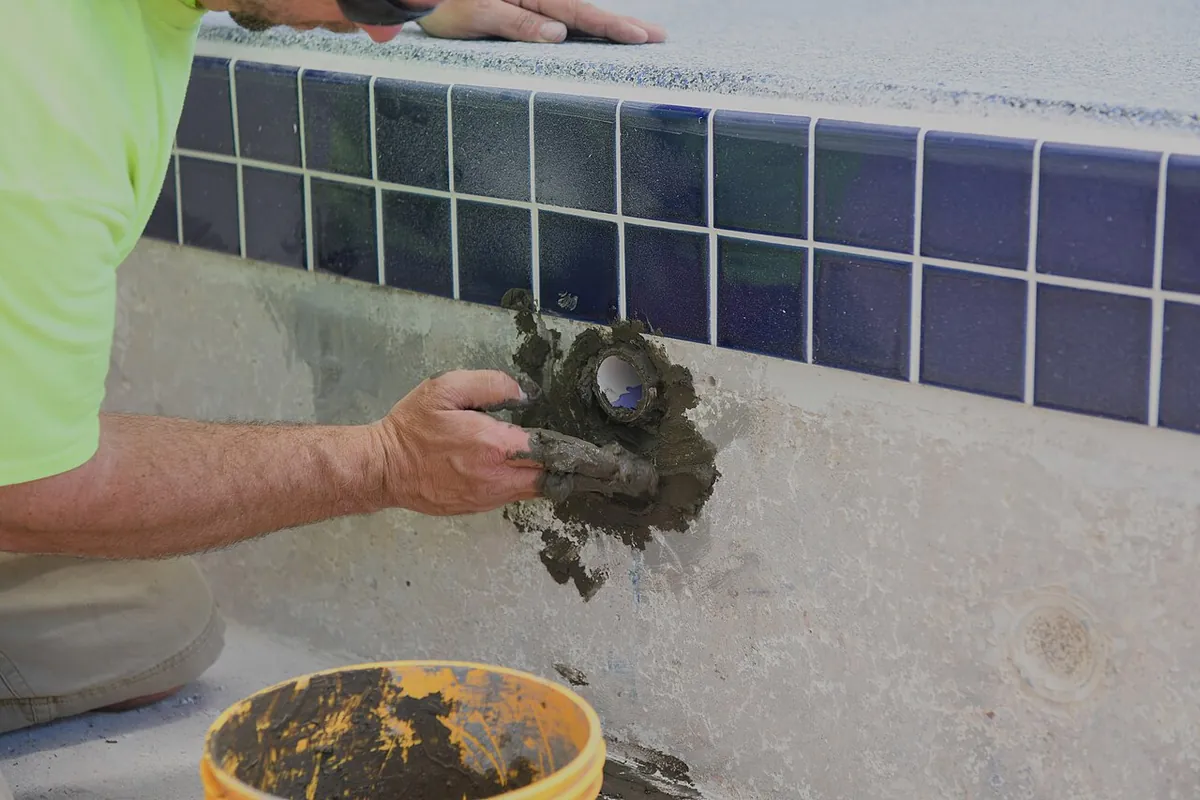
Photo: US Space Force, Wikimedia Commons, public domain
Quick Answer
Replacing pool tile cost for a typical 16 x 32 ft inground pool is about $1,500 to $5,500 for a new ceramic or porcelain waterline tile band, $2,500 to $7,000 for natural stone and $3,500 to $10,000 for glass tile. Most contractors price pool tile replacement at about $15 to $100 per linear foot of a 6-inch band, or $25 to $100 per square foot installed. Fixing a few loose or broken tiles costs $200 to $800. A full swimming pool tile replacement on an all-tile pool, or a retile done with resurfacing, runs $10,000 to $30,000 or more.
Pool tile does more than look good. The band of tile at the water line protects the pool shell where water level rises and falls, makes it easy to wipe away scum and scale, and gives the pool a finished edge. Over time, tile cracks from freeze-thaw cycles and ground movement, grout washes out, scale builds up, and tiles pop off the wall. When that happens, you have a choice: repair a few tiles or replace the whole band.
This guide explains replacing pool tile cost in detail: prices by tile material, labor and prep costs, spot repairs versus full waterline replacement, full pool tile replacement, what drives the price, when to replace tile together with coping or resurfacing, DIY versus hiring a pro, and how to save money.
Replacing Pool Tile Cost at a Glance
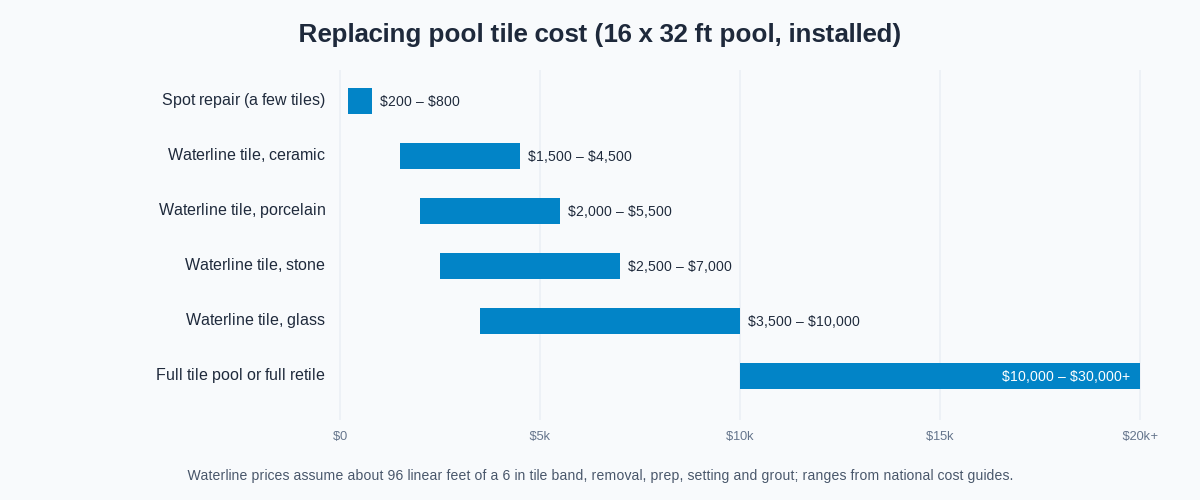
Chart: Asphapro.com
| Job | Typical cost |
|---|---|
| Reset or replace a few loose tiles | $200 – $800 |
| Regrout waterline tile | $500 – $1,500 |
| Waterline tile replacement, ceramic (16 x 32 pool) | $1,500 – $4,500 |
| Waterline tile replacement, porcelain | $2,000 – $5,500 |
| Waterline tile replacement, natural stone | $2,500 – $7,000 |
| Waterline tile replacement, glass | $3,500 – $10,000 |
| Step and bench edge tile | $300 – $1,500 |
| Full tile pool or full retile | $10,000 – $30,000+ |
| Calcium removal from tile (bead blasting) | $300 – $900 |
Ranges are based on national cost guides such as HomeGuide, Angi and Fixr, and on typical contractor pricing per linear foot. Prices are higher in large cities and for custom patterns.
Pool Tile Replacement Cost per Linear Foot and Square Foot
Most pools have a waterline tile band about 6 inches tall, sometimes 9 or 12 inches. Contractors usually quote pool tile replacement per linear foot of the pool's perimeter:
| Tile material | Material per sq ft | Installed per linear foot (6 in band) | Installed per sq ft |
|---|---|---|---|
| Ceramic | $2 – $15 | $15 – $45 | $25 – $60 |
| Porcelain | $4 – $20 | $20 – $55 | $30 – $75 |
| Natural stone | $5 – $30 | $25 – $70 | $35 – $90 |
| Glass | $15 – $60 | $35 – $100 | $50 – $100+ |
Perimeter examples: a 12 x 24 ft pool has about 72 linear feet; a 16 x 32 ft pool about 96 feet; a 20 x 40 ft pool about 120 feet. Freeform pools have longer perimeters than their size suggests. Multiply the perimeter by the per-foot price to estimate replacing pool tile cost for your pool.
Pool Tile Types and Their Costs
Ceramic tile
Ceramic is the lowest-cost pool tile and comes in many colors. It must be rated for pools (frost-resistant and low water absorption) for outdoor use in cold climates. Glazed ceramic is easy to clean. Expect pool tile replacement with ceramic to last 15 to 25 years.
Porcelain tile
Porcelain is denser and more durable than ceramic and absorbs less water, so it handles freezing better. It costs slightly more and comes in many styles, including stone and wood looks. Porcelain is a common choice for waterline tile replacement in cold regions.
Natural stone tile
Travertine, slate and other stones give a natural look. Stone must be sealed and is more prone to staining, scaling and salt damage, especially in salt water pools. It usually costs more to install because pieces vary in thickness.
Glass tile
Glass tile sparkles in the sun and comes in bright colors and mosaic blends. It does not fade and resists stains, but it costs the most and needs skilled installers with special adhesives. Glass tile is often used in luxury pools and for accent bands.
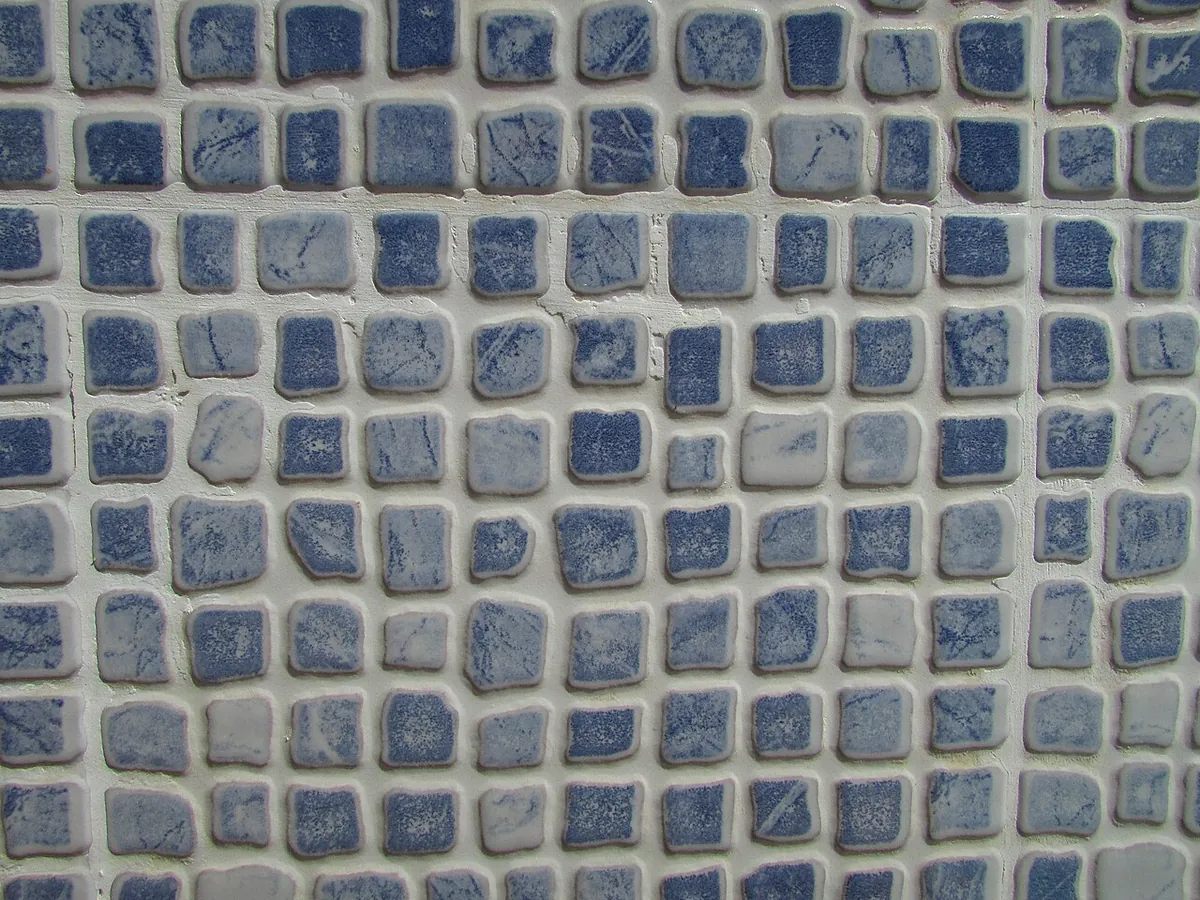
Photo: Kolforn, Wikimedia Commons, CC BY-SA 4.0
What Is Included in Pool Tile Replacement?
- Lowering the water below the tile line, usually 6 to 18 inches, or draining the pool for full retiles. See how to drain a pool.
- Removing old tile and setting bed: chipping out tile and old mortar with hammers and chisels.
- Repairing the substrate: patching the bond beam or wall where it is damaged.
- Setting new tile: with pool-rated thinset mortar, keeping lines straight and level.
- Grouting: with a pool-rated cement or epoxy grout.
- Curing: grout and mortar usually need a few days before refilling.
- Refilling and balancing: refill the pool and rebalance the water.
What Affects Replacing Pool Tile Cost?
- Pool size and shape: perimeter length and the number of corners and curves.
- Tile material: glass and stone cost more than ceramic and porcelain.
- Band height: a 12-inch band costs about twice as much as a 6-inch band.
- Removal difficulty: old mortar that is hard to remove adds labor.
- Wall damage: cracks or a damaged bond beam add repair costs.
- Draining: lowering or draining the pool, plus water to refill.
- Accent tile: step edges, depth markers and mosaic designs.
- Coping: replacing coping at the same time adds cost but often saves labor overall.
- Location: labor rates vary by region.
Signs You Need Pool Tile Replacement
These signs tell you when pool tile replacement, or at least a repair, is due.
- Loose or hollow-sounding tiles. Tap tiles with the handle of a screwdriver; a hollow sound means the tile has lost its bond.
- Missing tiles that leave bare mortar or shell exposed to water.
- Cracked tiles in a line, which often follow a crack in the bond beam behind them.
- Grout washing out or crumbling, leaving gaps between tiles.
- Heavy calcium scale that will not come off with normal cleaning.
- Faded, stained or dated tile you no longer like, especially during a remodel.
- Sharp edges that can cut swimmers.
Loose tile is more than a cosmetic problem. Water gets behind it and into the bond beam, where freezing and thawing push more tiles off and can crack the concrete. Fixing a few tiles early keeps the replacing pool tile cost low.
Why Pool Tile Fails
Knowing why tile fails helps you avoid paying for pool tile replacement again too soon.
- Freeze-thaw cycles: water behind the tile freezes, expands and breaks the bond. This is the main cause in cold climates, and why pools should be winterized with the water lowered below the tile.
- Ground and deck movement: settling soil, expansive clay and a deck pushing against the coping crack the bond beam and the tile on it. A flexible expansion joint between deck and coping helps.
- Poor installation: wrong mortar, no back-buttering, or tile set on a dirty or weak surface.
- Water chemistry: low pH and low calcium dissolve grout; high pH and calcium leave scale.
- Age: even good tile jobs often need attention after 15 to 25 years.
Calcium Scale on Pool Tile: Clean or Replace?
Scale is one of the most common reasons owners ask about replacing pool tile cost, but it can often be cleaned off.
White crusty deposits along the waterline are calcium carbonate or calcium silicate scale. Before you pay for pool tile replacement, see whether cleaning will solve the problem:
| Cleaning method | Cost | Best for |
|---|---|---|
| Pumice stone and tile cleaner (DIY) | $20 – $60 | Light scale on ceramic and porcelain |
| Professional tile cleaning | $200 – $500 | Moderate scale |
| Bead blasting (glass or soda media) | $300 – $900 | Heavy calcium on most tile types |
Do not use pumice on glass tile, which scratches. Bead blasting with the right media is safe for glass when done by a pro. If tiles come off during cleaning, the bond was already failing, and replacement is the better path. Keep pH and calcium in range after cleaning to slow new scale.
Grout and Mortar for Pool Tile
Pool tile needs materials made for constant water contact:
- Thinset mortar: a polymer-modified thinset rated for submerged use, applied to both the wall and the back of the tile.
- Cement grout: sanded, pool-rated cement grout is the most common and lowest cost.
- Epoxy grout: costs more and is harder to install, but resists stains, chemicals and washout better. Many contractors recommend epoxy for glass tile.
Regrouting alone costs $500 to $1,500 on an average pool and makes sense when tiles are solid but grout is washing out.
DIY Pool Tile Replacement
Doing it yourself is the biggest way to cut replacing pool tile cost. Handy owners can do small repairs and even a full waterline band, saving most of the labor cost. A DIY waterline job on a 16 x 32 pool typically costs $400 to $2,000 in tile and materials. Here are the basic steps:
- Lower the water about 6 inches below the bottom of the tile line.
- Chip off the old tile and mortar with a hammer and a wide chisel, or an electric chipping hammer. Wear eye protection.
- Clean the wall with a wire brush and patch any damaged areas with hydraulic cement or a pool patching mortar.
- Snap a level line around the pool so the new band is straight.
- Mix pool-rated thinset, spread it on the wall with a notched trowel, back-butter each tile or sheet, and press it in place.
- Use spacers to keep grout lines even, and check level often.
- Let the thinset cure (usually 24 hours), then grout, wiping off excess with a damp sponge.
- Let the grout cure as directed (often 3 to 7 days for cement grout) before refilling.
Working on a pool wall from a deck is hard on knees and back, and glass tile and stone are tricky to set. For those, or if the bond beam is damaged, hire a pool tile contractor.
Example Pool Tile Replacement Budgets
These examples show how replacing pool tile cost changes with size, material and scope.
| Project | Details | Estimated cost |
|---|---|---|
| Small repair | Reset 15 loose tiles, regrout 10 ft | $350 – $700 |
| Basic waterline refresh | 12 x 24 ft pool, ceramic, 72 ft | $1,300 – $3,200 |
| Mid-range band | 16 x 32 ft pool, porcelain, 96 ft, step edges | $2,500 – $6,000 |
| Glass mosaic upgrade | Freeform pool, 130 ft glass mosaic | $5,000 – $13,000 |
| Full remodel | New tile, coping and plaster | $15,000 – $35,000+ |
Spot Repair vs Full Waterline Tile Replacement
If only a few tiles are loose or cracked, a spot repair costs $200 to $800. The contractor removes the loose tiles, cleans the area, resets matching tiles and grouts them. The challenge is matching color and size; many older pools use tiles that are no longer made. Keep leftover tiles from any new job for future repairs.
Full pool tile replacement of the waterline band makes sense when many tiles are loose, grout is failing all around, tiles are badly stained or scaled, or you are resurfacing or remodeling anyway. A new band costs more but gives a uniform look and a fresh start.
Replacing Pool Tile With Coping and Resurfacing
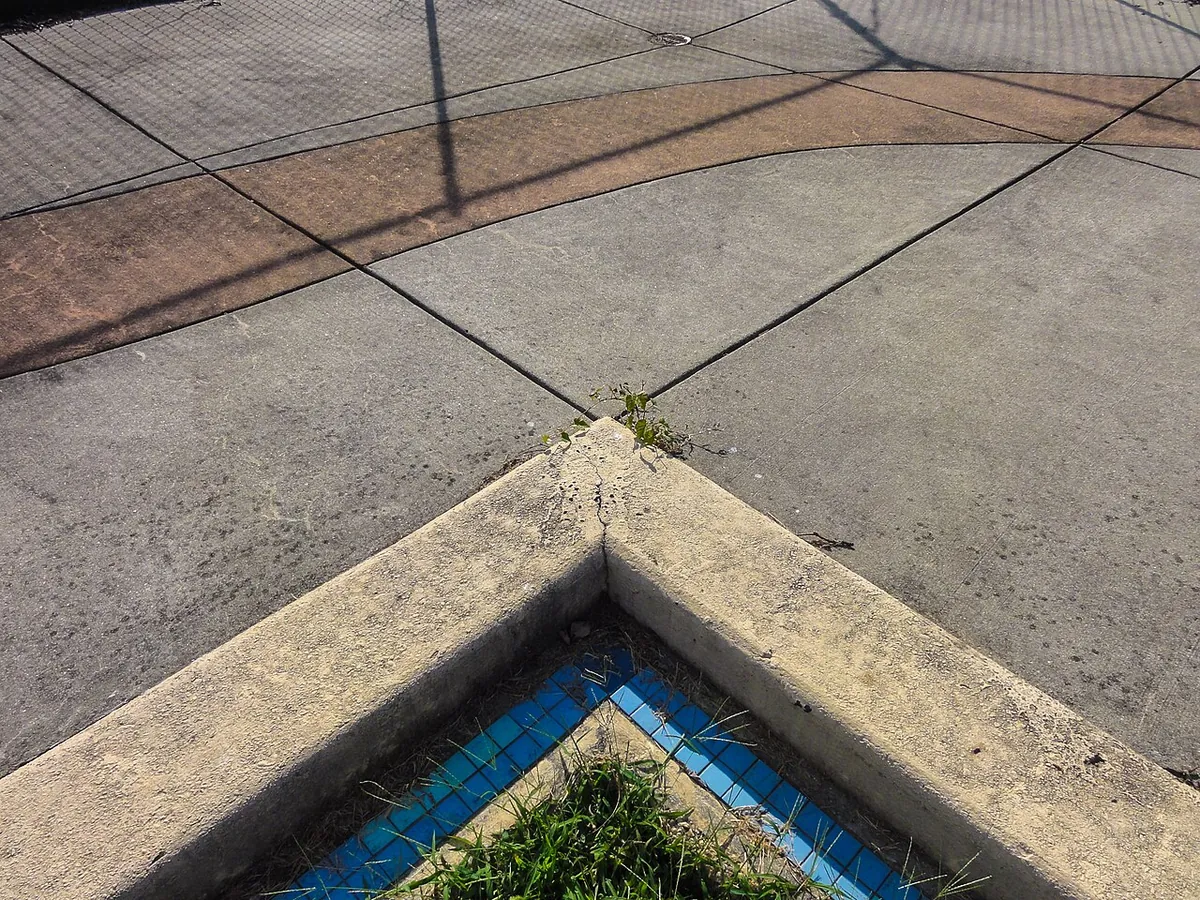
Photo: Graham Coreil-Allen, Wikimedia Commons, CC BY-SA 4.0
Waterline tile, coping and the pool surface wear out at about the same pace. Many owners replace them together during a pool remodel, which avoids damaging new tile when replacing coping or plaster later. For combined prices, see pool resurfacing cost and pool remodel cost. For coping styles, see concrete pool coping.
Tile in Fiberglass and Vinyl Pools
Concrete and gunite pools are the ones most often tiled. Fiberglass pools sometimes have a tile band set into a recess at the top of the shell or on the bond beam; replacing it follows similar steps but must not damage the gelcoat. Vinyl pools usually have a printed "tile" pattern on the liner instead of real tile, so swimming pool tile replacement in a vinyl pool means a new liner; see pool liner replacement cost.
How to Choose a Pool Tile Contractor
The contractor you pick affects both replacing pool tile cost and how long the new tile lasts.
- Ask for photos of recent pool tile jobs, not just bathroom or kitchen tile.
- Ask what thinset and grout they use and whether they are rated for submerged use.
- Confirm who lowers and refills the water, and who removes old tile debris.
- Ask whether bond beam repairs are included or priced separately.
- Get a written warranty on labor (one to five years is common).
- Compare at least three written quotes with the same tile and band size.
How Long Does Pool Tile Replacement Take?
A swimming pool tile replacement of the waterline band on an average pool usually takes 3 to 7 days: a day to lower the water and remove old tile, a day or two for repairs and setting, a day for grout, and several days of curing before refilling. Full retiles take 1 to 3 weeks. Spring and fall are popular times, so book early.
What to Expect Day by Day
Here is how a typical waterline pool tile replacement goes on an average backyard pool:
- Day 1: the crew lowers the water, protects the deck, and removes old tile and mortar. Debris is bagged and hauled away.
- Day 2: damaged areas of the bond beam are patched, the wall is cleaned, and a level line is snapped. Setting of the new tile begins.
- Day 3: tile setting is finished, including step edges and any accent pieces.
- Day 4: the tile is grouted and cleaned.
- Days 5 to 7: the grout cures. Then the pool is refilled and the water balanced.
Weather can stretch this schedule. Rain on fresh grout or freezing nights can delay the work, so many contractors avoid the coldest months.
Replacing Pool Tile Cost Compared With Other Pool Repairs
| Project | Typical cost |
|---|---|
| Pool tile replacement (waterline band) | $1,500 – $10,000 |
| Coping replacement | $2,000 – $8,000 |
| Replastering | $4,000 – $10,000 |
| Pool deck resurfacing | $3,000 – $10,000 |
| Full pool remodel | $15,000 – $60,000+ |
Of these jobs, replacing pool tile cost is often the lowest, and new tile has a big effect on how the whole pool looks. For deck work done at the same time, see concrete pool deck resurfacing.
How to Make New Pool Tile Last
- Keep pH at 7.4 to 7.6 and calcium hardness in range to prevent both etching and scale.
- Brush the tile line weekly with a soft tile brush.
- Use a tile cleaner made for pools; avoid harsh abrasives on glass.
- In cold climates, lower the water below the tile line when closing for winter.
- Maintain the expansion joint between deck and coping so deck movement does not push on the tile.
- Fix any loose tile right away.
Pool Tile Design Ideas
Replacing tile is a chance to update the look of the pool. Popular choices include blue and turquoise glass blends for a bright, resort feel; gray or charcoal porcelain for modern pools; stone-look porcelain for natural settings; and a contrasting accent row or step-edge tile for safety and style. Light tile shows scale less; dark tile shows it more but hides dirt. Ask for samples and look at them wet, in sunlight, at the pool.
Replacing Pool Tile Cost by Region
Labor makes up half or more of replacing pool tile cost, so where you live matters. Typical ranges for a 16 x 32 ft waterline band in porcelain:
| Region | Typical pool tile replacement cost |
|---|---|
| South and Southeast (TX, FL, GA) | $2,000 – $4,500 |
| Southwest (AZ, NV) | $2,200 – $5,000 |
| Midwest | $2,200 – $5,000 |
| Northeast | $2,800 – $6,500 |
| California and Pacific coast | $3,000 – $7,000 |
Busy pool regions have more tile contractors, which keeps swimming pool tile replacement prices competitive. In areas with few pools, a contractor may travel, adding to the bill.
Is Pool Tile Replacement Worth It?
For most pools with loose, cracked or scaled tile, yes. Pool tile replacement protects the bond beam from water damage, removes sharp edges, makes cleaning easier and gives the pool a fresh look for 15 to 25 years. Spread over that time, replacing pool tile cost works out to roughly $100 to $400 a year for a typical waterline band. If the plaster and coping are also worn, combining all three in one project usually gives better value than doing them years apart.
If your tile is solid and the only problem is scale or dirty grout, cleaning or regrouting may be enough, at a fraction of the price of swimming pool tile replacement.
Ways to Lower Replacing Pool Tile Cost
- Choose ceramic or porcelain instead of glass or stone; you can still add a glass accent row.
- Keep a 6-inch band rather than a taller one.
- Book in the off-season, late fall or winter in warm climates, when contractors have more time.
- Combine projects such as tile, coping and plaster to share draining and setup costs.
- Lower the water yourself before the crew arrives, if the contractor agrees.
- Fix loose tiles early so a small repair does not grow into full pool tile replacement.
- Get several quotes with identical tile and scope so they are easy to compare.
Safety During Pool Tile Work
Old tile edges and chisel chips are sharp, and a pool with lowered water is a fall hazard. Keep children and pets away from the work area, mark the edge of the deck, and do not let anyone swim until the job is finished and the water is balanced again. If your pool is older than about 1980, ask the contractor whether old adhesives or coatings could contain asbestos or lead, and have them tested before removal; this can add to replacing pool tile cost, but it protects your family and the crew.
Once the new tile is in, a weekly brushing and steady water chemistry will keep your pool tile replacement looking new for many seasons.
Replacing Pool Tile Cost: Key Points
- Waterline tile replacement on a 16 x 32 ft pool costs $1,500 to $10,000 depending on material.
- Pool tile replacement runs about $15 to $100 per linear foot installed.
- Spot repairs cost $200 to $800.
- Full swimming pool tile replacement costs $10,000 to $30,000+.
- Replacing tile with coping and resurfacing saves labor overall.
Frequently Asked Questions
How much does it cost to replace pool tile?
About $1,500 to $5,500 for a ceramic or porcelain waterline band on an average pool, and up to $10,000 for glass.
Do you have to drain a pool to replace tile?
Not fully for waterline tile. The water is lowered 6 to 18 inches below the tile. Full retiles require draining.
How much does pool tile replacement cost per foot?
About $15 to $45 per linear foot for ceramic, $20 to $55 for porcelain, $25 to $70 for stone and $35 to $100 for glass, for a standard 6-inch waterline band.
Can pool tile be replaced without removing the coping?
Usually, yes. Most waterline tile sits below the coping and can be chipped out and reset without touching it. If the coping is loose or the tile runs under it, the contractor may need to lift the coping first, which raises the price.
How long does pool tile last?
Usually 15 to 25 years with good installation and water care. Glass and porcelain often last longer than ceramic in cold climates.
Can I replace just a few pool tiles?
Yes. Spot repairs cost $200 to $800. The hardest part is finding matching tile, so keep spares after any swimming pool tile replacement.
Is swimming pool tile replacement covered by insurance?
Rarely. Most policies exclude wear, freeze damage and settling. Sudden damage from a covered event, such as a falling tree, may be covered.
Should I replace pool tile and coping at the same time?
Often, yes. Coping removal can damage the tile below it, so doing both together avoids paying twice for labor and draining.
What is the cheapest pool tile replacement option?
Pool-rated ceramic tile in a standard 6-inch band, installed when the water is lowered, not drained. A DIY job costs even less, mainly for tile and materials.
Does replacing pool tile cost more for a saltwater pool?
Not much. Choose salt-resistant porcelain or glass and a quality grout. Natural stone needs more sealing in salt pools.
How soon can I refill the pool after tile replacement?
Usually 3 to 7 days, depending on the grout and weather. Follow the grout maker's instructions.
Sources
- HomeGuide: Pool tile replacement cost
- Angi: Cost to retile a pool
- Fixr: Pool tile replacement cost
- Tile Council of North America