
Pool Pergola Ideas: Poolside Pergola Designs, Materials and Costs
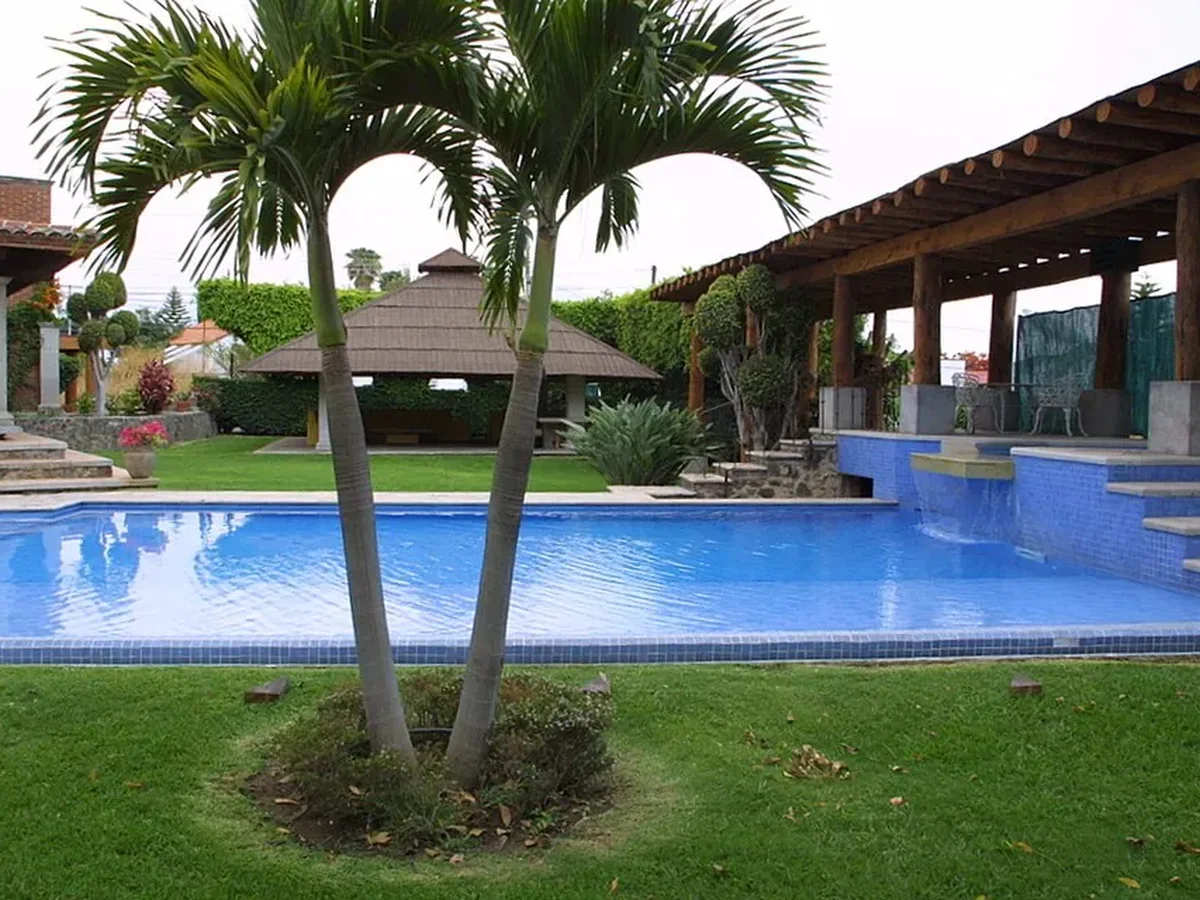
Photo: Fernando González del Cueto, Wikimedia Commons, CC BY 2.5
Quick Answer
The best pool pergola ideas put shade where people sit, not over the water. Popular designs include a poolside lounge pergola over chairs or daybeds, a pergola over an outdoor kitchen or bar, a cabana-style pergola with curtains, a pergola that links the house to the pool, and a louvered pergola with an adjustable roof. For materials near pool water, aluminum, vinyl and cedar hold up best. A 12 x 12 foot poolside pergola costs about $2,500 to $10,000 installed for wood, vinyl or aluminum, and $12,000 to $30,000 for a louvered model. Keep posts at least a few feet from the water, avoid plants that drop leaves into the pool, and check setback, permit and electrical rules before you build.
A pool is great in the water and hard work out of it. On hot afternoons, the deck can get too hot to walk on, and there is often nowhere to sit in the shade between swims. A pool pergola fixes that. It gives a shaded place to lounge, eat or watch children, frames the pool area like an outdoor room, and adds a strong design feature to the backyard.
This guide collects practical pool pergola ideas for different yards and budgets, explains which materials handle pool water and chemicals, shows where to place a pergola by a pool, and covers costs and rules. For more backyard ideas around the water, see our pool deck ideas.
Why Add a Pergola by a Pool?
A pergola by a pool does three things well. First, it gives filtered shade, which keeps people cooler and protects skin during long pool days. Second, it defines space: a pool pergola marks out a lounging area, dining area or bar the way walls mark out a room indoors. Third, a poolside pergola adds height and structure to a pool area that is mostly flat, which makes the whole yard look more finished.
Unlike a solid roof, a classic pool pergola has open rafters that let light and air through. That keeps the area bright and breezy and avoids the dark, closed feel of a covered patio. If you want more shade, you can add slats, fabric, a retractable canopy or climbing plants. If you want rain protection, a louvered or solid-roof pergola does the job.
15 Pool Pergola Ideas and Poolside Pergola Designs
1. Poolside lounge pergola. The most common of all poolside pergola ideas is a simple pergola over a row of loungers or daybeds along one side of the pool. It gives a shaded place to rest between swims and keeps towels and drinks in the shade. A 10 x 16 or 12 x 20 foot pergola covers four to six loungers.
2. Outdoor kitchen pergola. A poolside pergola over a grill, counter and bar seating turns the pool area into a place to cook and eat. Keep the grill under an open section of the roof or use a vent hood, and keep cooking areas well back from the water.
3. Dining pergola. A pool pergola over a dining table between the house and the pool gives a shaded place for meals. Add string lights or a ceiling fan for evening use.
4. Cabana-style pergola. Add outdoor curtains, a daybed and a small table to a poolside pergola for a resort-style cabana. Curtains can be drawn for privacy or shade and tied back for views of the pool.
5. Attached pergola from the house. A pool pergola attached to the back of the house can shade the patio and lead toward the pool, linking indoor and outdoor living. This is a good choice when the pool is close to the house.
6. Freestanding pergola at the far end. A freestanding pool pergola across the far end of the pool creates a focal point you see from the house. It works well with a raised spa, water feature or fire pit.
7. Pergola over a spa or hot tub. A poolside pergola over a spa gives shade by day, privacy at night, and a frame for lights and curtains. It also protects the spa cover from sun damage. See our hot tub deck ideas for more.
8. Louvered pergola. A louvered pergola has a roof of rotating aluminum blades that open for sun and close for shade or rain. It is the most flexible design and works well in climates with strong sun and sudden storms.
9. Pergola with retractable canopy. A fabric canopy that slides along the rafters gives full shade when you need it and open sky when you do not. It costs far less than a louvered roof.
10. Curved or arched pergola. A curved pergola follows the shape of a freeform pool or a curved patio edge and softens a square yard.
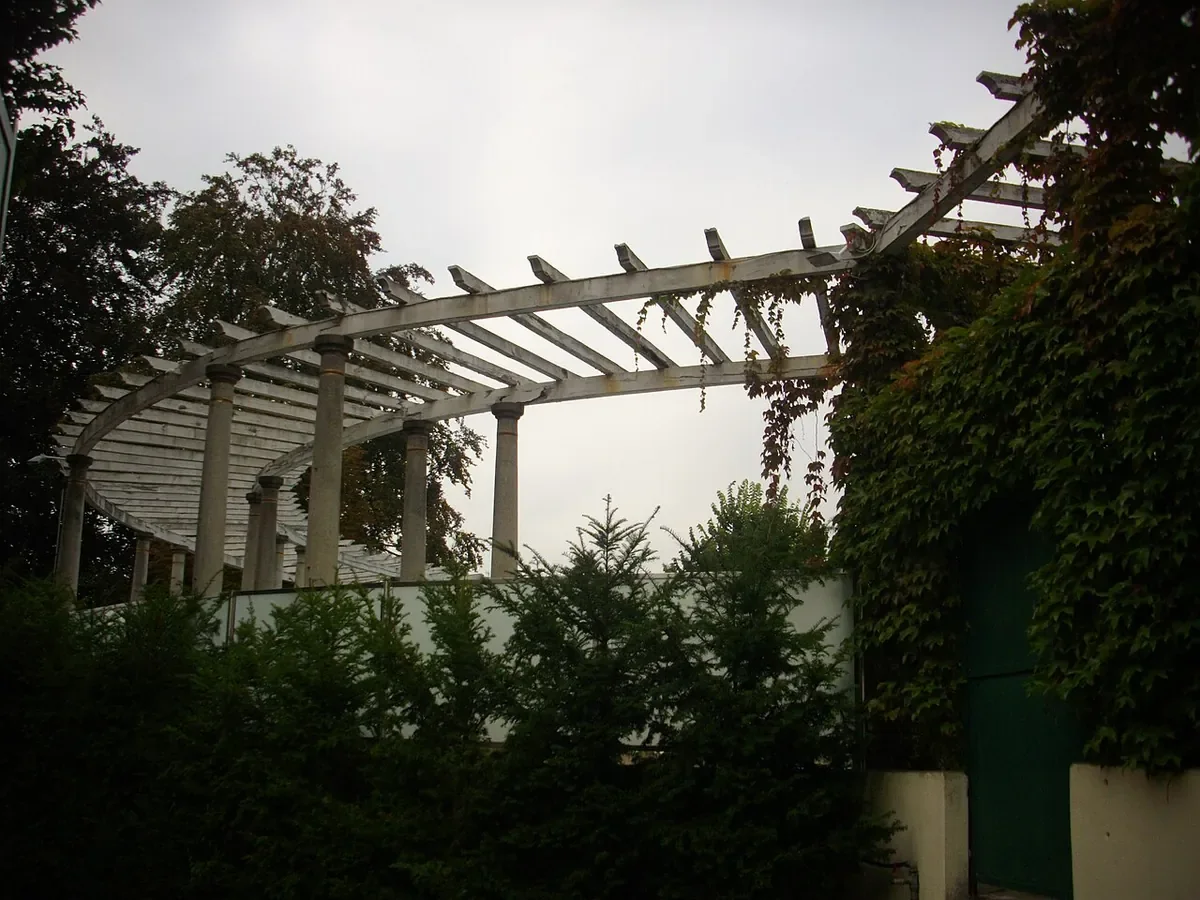
Photo: Fab5669, Wikimedia Commons, CC BY-SA 3.0
11. Pergola with climbing plants. Vines such as jasmine, wisteria, grapes or climbing roses on a pool pergola give living shade and scent. Choose plants that do not drop many leaves or petals into the water, and keep them trimmed back from the pool edge.
12. Pergola with privacy screens. Slatted screens on one or two sides of a poolside pergola block neighbors' views and wind while keeping the open feel.
13. Pool house pergola. A pool pergola attached to a pool house, shed or equipment enclosure extends the shaded area and ties the structures together.
14. Modern steel or aluminum pergola. Slim black or white metal pergolas with flat roofs suit modern homes and rectangular pools.
15. Above ground pool pergola. A small pergola on an above ground pool deck adds shade and style. Build it on its own posts and footings, and keep it clear of the pool wall. Our guide to above ground swimming pool deck ideas has layout tips.
Where to Put a Pergola: Pool Layout Tips
The best place for a pool pergola is where people already gather and where shade is missing. Watch your pool area on a few summer afternoons and notice where people move chairs to find shade. That is usually the right spot. In most yards, the west or southwest side of the pool gets the hottest afternoon sun, so a poolside pergola on that side shades the deck when it matters most.
Keep the pergola close enough to the water to be part of the pool area, but not so close that posts block walkways or drip onto the deck. A gap of at least 4 to 6 feet between the pool edge and the posts leaves room to walk. Make sure the pool pergola does not block the view of the water from the house, which matters for watching children. Also think about trees and plants: a pergola under a tree catches leaves and sap, and climbing plants on the pergola will drop leaves where they grow.
Materials for a Swimming Pool Pergola
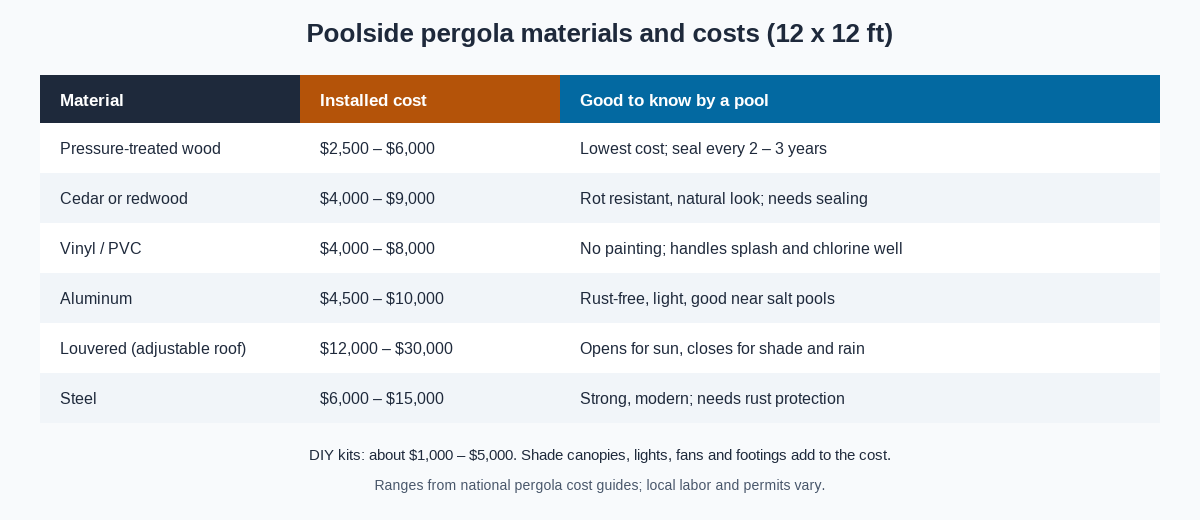
Chart: Asphapro.com
A swimming pool pergola lives in a harsh place. It faces sun, splashing water, chlorine or salt in the air, and wet bare feet. Pressure-treated pine is the cheapest wood but needs regular sealing and can check and warp. Cedar and redwood resist rot and insects naturally and look beautiful, but they still need sealing. Vinyl pergolas never need painting, resist moisture and chemicals and stay cool to the touch. Aluminum pergolas are light, strong and rust-free, which makes them a top choice near salt water pools. Steel pergolas are strong and sleek but must be powder-coated or galvanized and checked for rust.
Whatever the material, use stainless steel or hot-dipped galvanized hardware, set posts on proper footings or anchors, and choose finishes made for wet outdoor use. If the swimming pool pergola sits on an existing concrete deck, make sure the slab can carry post loads, or add footings. Our guide to the concrete pool deck covers deck slabs around pools.
Pool Pergola Cost
The cost of a pool pergola depends on size, material, design and site work. A 12 x 12 foot pressure-treated wood pergola costs about $2,500 to $6,000 installed, cedar $4,000 to $9,000, vinyl $4,000 to $8,000, aluminum $4,500 to $10,000, steel $6,000 to $15,000, and a louvered pergola $12,000 to $30,000. DIY kits cost about $1,000 to $5,000. Extras such as canopies, lights, fans, outdoor curtains, electrical runs and new footings add to the total.
Sizing a Poolside Pergola
Size a poolside pergola for what will go under it. Two loungers and a side table need about 8 x 10 feet. Four loungers in a row need about 8 x 16 to 10 x 20 feet. A dining table for six needs about 12 x 12 feet, so chairs can be pulled out and people can walk around. An outdoor kitchen with a counter and bar stools often needs 12 x 16 feet or more. Add 2 to 3 feet on each side if you want the shade to cover the furniture for more hours of the day, since shade moves with the sun.
Height matters too. Most pool pergola designs are 8 to 10 feet tall at the beams. Taller pergolas feel open and grand but give less shade on the ground, because the sun reaches under the edges more. Lower pergolas give more shade but can feel closed in. If you plan ceiling fans or hanging lights, allow at least 8 feet of clear height below them.
Shade Options for a Pergola Pool Area
An open-rafter pergola gives about 20% to 40% shade, depending on rafter spacing and direction. That is often enough for a light, airy feel, but on very hot days you may want more. The simplest upgrade is to add more slats across the top, at closer spacing or at an angle, so the sun is blocked for more of the day. Running slats east to west blocks more of the midday sun.
Fabric canopies are a popular choice for a pergola pool area. Slide-on or retractable canopies made of outdoor fabric give 80% to 100% shade and can be pulled back in the evening. Shade sails stretched across the top add color and shade at low cost. Clear polycarbonate panels block rain while letting light through, and they are good for outdoor kitchens. A louvered roof gives full control: open for sun, angled for filtered light, and closed for full shade and rain.
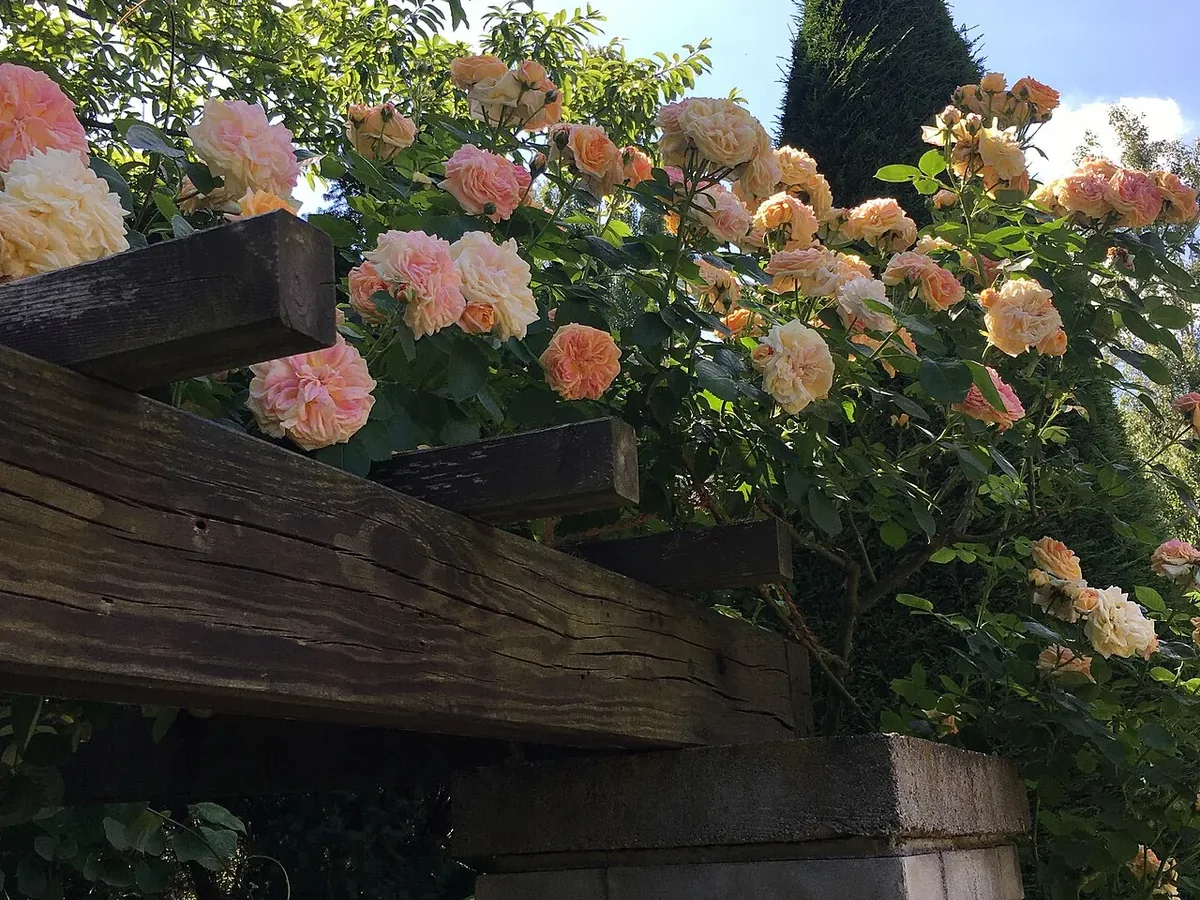
Photo: Punteador, Wikimedia Commons, CC BY-SA 4.0
Plants for Swimming Pool Pergolas
Plants soften swimming pool pergolas and add living shade, but they need careful choice near water. Good choices are evergreen vines that drop few leaves, such as star jasmine, and vines that are easy to keep trimmed. Climbing roses look beautiful but drop petals and have thorns, so keep them on the side away from the water and away from walkways. Grapes give dense summer shade but drop fruit and attract wasps. Wisteria is stunning in spring but heavy and messy, and it needs a very strong structure. Bougainvillea suits warm climates but has thorns and drops bracts.
Whatever you plant, train it on the top and the far side of the pool pergola, not the side facing the pool, and cut it back regularly so leaves and flowers do not end up in the skimmer. Plant in large pots or beds with good drainage, and keep fertilizer and garden soil from washing onto the pool deck.
Lighting, Fans and Heat for a Pool Pergola
Adding power to a pool pergola makes it useful from morning to night. String lights draped across the rafters are the easiest upgrade and give a warm glow for evening swims and dinners. Recessed lights in the beams, post lights and LED strips under the rafters give a cleaner look. Ceiling fans rated for wet locations help on still, humid days. Outdoor heaters, either infrared electric or gas, can extend use into cool evenings.
All electrical work near a pool must follow the National Electrical Code, which sets minimum distances between the water and outlets, lights and fans, and requires GFCI protection. Most codes keep receptacles at least 6 feet from the pool edge and limit overhead lights and fans close to the water. Hire a licensed electrician who knows pool rules, and get a permit for the work.
Pergola by Pool Safety Tips
A pergola by pool areas needs a few extra safety checks. Keep posts and planters far enough from the pool fence that children cannot use them to climb over it. Make sure the pergola does not block the line of sight from the house to the water. Anchor the structure well against wind, especially if it has a canopy or solid roof that can catch gusts. Use rounded edges and smooth finishes where people walk barefoot, and keep the area under the pool pergola free of trip hazards like cords and loose pavers. Do not build a pool pergola so close to the pool that its roof drips onto the coping, which can make the deck slippery and wash dirt into the water.
Permits and Rules for Poolside Pergolas
Many towns treat poolside pergolas as accessory structures and require a permit when they are attached to the house, larger than a set size (often 120 to 200 square feet), taller than a set height, or have electrical work or a solid roof. Setback rules may limit how close a pergola can be to property lines. Homeowners associations often have their own design rules. Check with your building department and HOA before you order materials, and keep the approved plans on hand during construction.
DIY Pool Pergola Kits
A DIY kit is the cheapest way to add a pool pergola. Kits come in wood, vinyl and aluminum, usually in sizes from 8 x 8 to 12 x 16 feet, and include posts, beams, rafters and hardware. A handy owner with a helper can usually build a kit pergola in one or two weekends. The hardest parts are setting the posts level and square and lifting the beams. Check that the kit's post bases work with your deck or patio, and add footings if the existing slab is thin. Kits cost about $1,000 to $5,000 for materials, which can save half or more compared with a custom pergola.
Pergola Pool Ideas for Small Yards
Small yards can still fit a pergola. A narrow pergola along a fence, only 6 to 8 feet deep, gives shade over a bench or two loungers without taking space from the pool deck. A pool pergola attached to the house shades the patio and frees the rest of the yard. A corner pergola fits neatly at the end of a small pool. For more small-space ideas, see our guide to swimming pool ideas for small backyard spaces. These pergola pool ideas show that shade and style do not need a big lot.
Pool Pergola Ideas by Style
Modern. A modern pool pergola uses clean lines, a flat roof, slim posts and dark metal or smooth white finishes. It suits rectangular pools, concrete decks and homes with large windows. Add hidden LED lights in the beams and a louvered roof for a sleek look.
Mediterranean. A Mediterranean poolside pergola uses thick wood beams, stucco or stone columns, terracotta pots and climbing vines. It pairs well with freeform pools, stone coping and warm-colored decks.
Rustic. A rustic pool pergola uses rough-sawn timber, heavy posts and exposed joinery. It fits country homes and natural pools, especially with stone walls, fire pits and simple outdoor furniture.
Tropical. A tropical poolside pergola has a bamboo or thatch-look roof, palms and bright cushions, giving a resort feel. Use real or synthetic thatch on top of the rafters for deep shade.
Classic. A classic white pool pergola with round columns and evenly spaced rafters suits traditional homes. Paint or vinyl keeps it bright, and climbing roses or jasmine add a garden touch.
Combining a Pool Pergola With Other Features
A pool pergola works best when it connects with the rest of the yard. Put a fire pit or outdoor fireplace near one end of the pergola for cool evenings, keeping it well clear of the roof and any fabric. Add an outdoor TV or speakers mounted on a post for game days, using weatherproof equipment and proper wiring. Place a bar counter along one side of a poolside pergola so swimmers can order a drink from the deck. Pair the pergola with a pool house or storage cabinet for towels, toys and pool supplies. A path of pavers or stepping stones from the house to the pergola makes it feel like part of the plan, not an afterthought.
Water features also pair well with pergolas. A sheer descent or a raised spa wall under or beside a poolside pergola creates a focal point and the sound of falling water while you relax in the shade. For more on water features, see our guide to pool ideas with waterfalls.
Caring for a Pool Pergola
A pool pergola needs simple care to last. Rinse it with fresh water a few times a season to remove chlorine or salt residue, especially on metal parts and fasteners. Clean wood pergolas and reseal them every two to three years with a water-repellent stain. Check vinyl for cracks and loose caps. Inspect aluminum and steel for scratches in the coating and touch them up to prevent corrosion. Tighten bolts and check post bases each spring, and trim plants before they get heavy. Take down fabric canopies before storms and in winter, and store them dry. With regular care, a well-built swimming pool pergola can last 15 to 30 years or more, depending on the material.
Planning Your Pool Pergola Step by Step
Start by deciding what the pool pergola is for: lounging, dining, cooking or all three. Measure the furniture you want under it and add walking room. Watch the sun for a few days to find where shade is needed most. Choose a style and material that match the house and the pool. Check permit, setback and HOA rules. Get quotes from two or three builders, or price a kit if you plan to build it yourself. Plan electrical work early so wiring can be run before the deck or patio is finished. Finally, choose shade extras such as slats, a canopy or plants, and lighting for evening use. Following these steps keeps your poolside pergola on budget and makes sure it fits the way you use the pool.
Pool Pergola Ideas: Key Points
- Put shade over seating, dining and bars, not over the water.
- Aluminum, vinyl and cedar handle pool conditions best.
- A 12 x 12 ft pergola costs about $2,500 to $10,000; louvered $12,000 to $30,000.
- Keep posts back from the pool edge and keep the water visible from the house.
Frequently Asked Questions
How far should a pergola be from a pool?
Leave at least 4 to 6 feet between the pool edge and the posts for walking space. Local codes may set other limits.
Do I need a permit for a pool pergola?
Often, especially for attached pergolas, large freestanding ones and any with electrical work. Check with your building department and HOA before you build a pool pergola.
What is the best material for a pool pergola?
Aluminum and vinyl are the easiest to care for near pool water. Cedar is the best wood choice for a natural look. Steel needs good rust protection, especially near salt pools.
Can a pergola go over a pool?
Usually not over the water itself. Most swimming pool pergolas shade the deck beside the pool, because posts in or at the edge of the pool get in the way and leaves and drips fall into the water.
How much shade does a poolside pergola give?
An open-rafter poolside pergola gives about 20% to 40% shade. Adding slats, a canopy or a louvered roof can raise that to 80% to 100%.
How long does a pool pergola last?
Treated pine lasts about 10 to 15 years, cedar 15 to 20, vinyl and aluminum 20 to 30 or more with basic care.
Will a pool pergola make the pool colder?
Not much, if it shades the deck rather than the water. A pool pergola that shades part of the water in the afternoon may lower the water temperature slightly.
Can I put a pool pergola on pavers?
Yes, if the posts sit on proper footings under the pavers or on anchors set in concrete. Pavers alone are not enough to hold a pool pergola against wind.
Sources
- HomeGuide: Pergola cost
- American Wood Council: Deck and outdoor structure guide (DCA 6)
- NFPA 70: National Electrical Code
- ICC: International Swimming Pool and Spa Code