
Concrete Pool Coping: Types, Installation, Expansion Joints, Repair and Cost
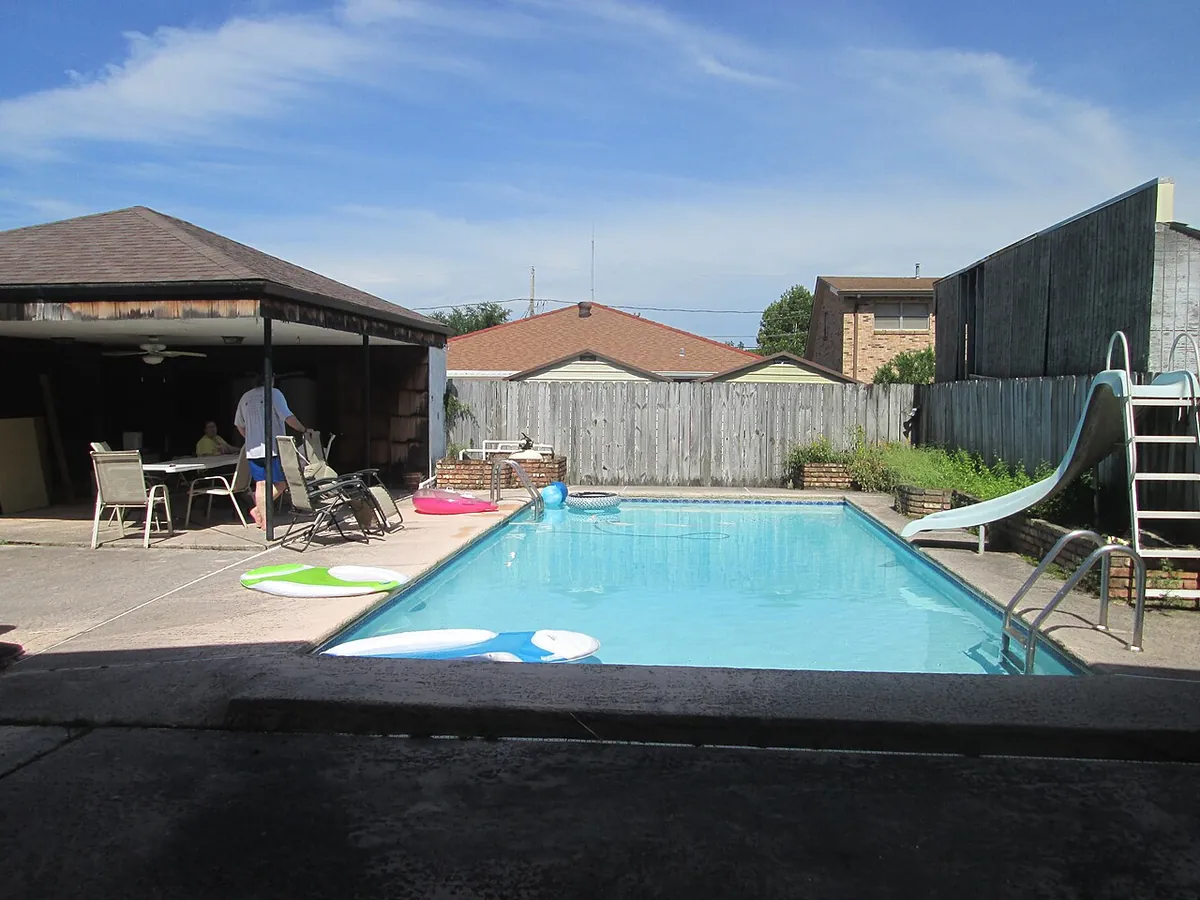
Photo: Infrogmation of New Orleans, Wikimedia Commons, CC BY-SA 4.0
Quick Answer
Concrete pool coping is the cap along the top edge of a pool wall, between the waterline tile and the deck. It protects the bond beam, keeps deck water out of the pool, gives swimmers a firm edge to hold, and finishes the look. The two main types are poured (cantilever) coping, formed and cast with the deck in one piece, and precast concrete coping, factory-made bullnose or square units set in mortar on the bond beam. Coping is usually about 12 inches wide with a 1.5 to 2 inch overhang into the pool. A flexible expansion joint between coping and deck is essential to prevent cracks. New concrete coping for pools costs roughly $25 to $60 per linear foot installed; repairs range from a few hundred dollars for joints to several thousand for full replacement.
Coping is a small part of a pool, but it does a lot of work. It caps the top of the pool shell, carries foot traffic, sheds water away from the pool, gives the deck a clean edge and frames the whole pool visually. On the Louisiana backyard pool in the photo above, a smooth, rounded concrete edge runs around the pool and blends into the poured deck, with a blue tile line just below it. That simple edge is one of the most common styles of swimming pool concrete coping, and one of the hardest working.
This guide explains what concrete pool coping does, the main types and profiles, how poured and precast coping are installed, why the joint between coping and deck matters so much, how to seal, maintain and repair cement pool coping, and what new coping and repairs cost.
What Pool Coping Does
Pool coping serves several purposes at once. First, it protects the bond beam, the thick reinforced top of the pool wall, from water, weather and impact. Without coping, water would soak into the top of the shell and the edge of the deck, and freeze-thaw cycles, chemicals and foot traffic would wear it away. Second, it directs splash water and rain away from the pool: coping is sloped slightly toward the deck so dirty water, leaves and lawn clippings flow away rather than into the pool. Third, it gives swimmers a firm, comfortable handhold and a place to sit with their legs in the water. Fourth, it separates the pool structure from the deck, allowing them to move independently, which prevents cracking. Fifth, it finishes the look of the pool, framing the water and connecting the pool to the surrounding patio and landscape. See concrete pool.
Types of Concrete Pool Coping
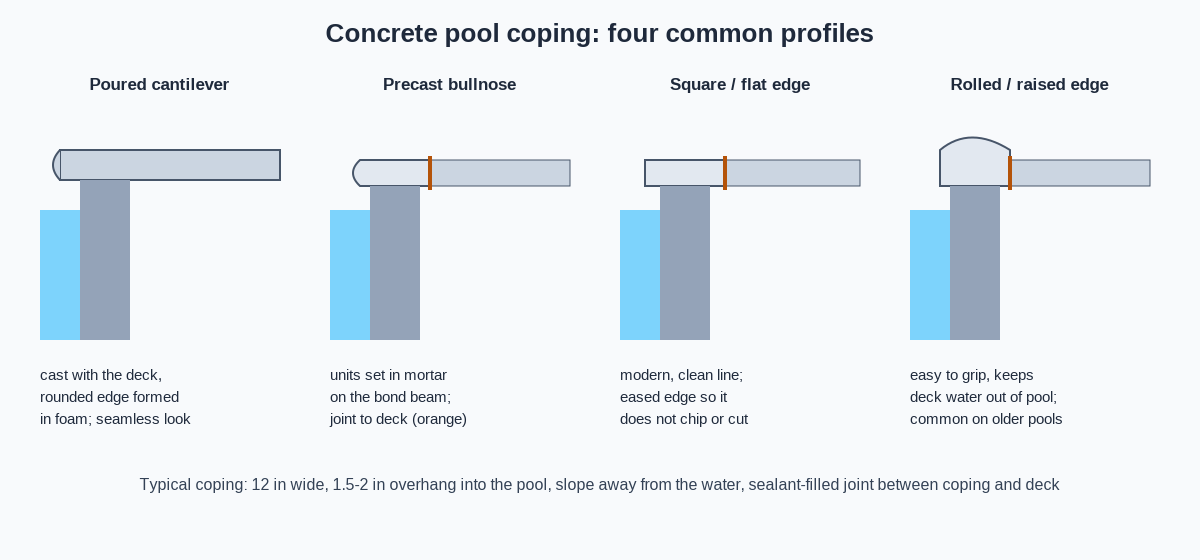
Poured Cantilever Coping
Poured or cantilever coping is formed and poured in place, usually at the same time as the pool deck. Foam or plastic forms are attached to the top of the pool wall to create the rounded edge profile that overhangs the water, and the deck concrete is poured right up to and over the bond beam, creating one continuous surface from the deck to the water's edge. The result is a clean, seamless look with no visible joints between coping pieces, as shown in the first profile in the diagram above. Cantilever concrete pool coping can be finished to match the deck, such as broom finish, stamped concrete, exposed aggregate or a spray-textured coating. Because the coping and deck are one piece, an expansion joint must be placed carefully, usually set back from the edge, and the deck slab must be properly supported. Poured coping is very common in the southern and western United States. See stamped concrete patio and pool deck concrete.
Precast Concrete Coping
Precast concrete coping for pools is made in factories in molds, typically 12 inches wide, 24 inches long and 2 inches thick, with a bullnose, square, rolled or rebated edge. Units come in straight pieces, radius pieces for curved pools, and corner pieces. They are set in a bed of mortar on top of the bond beam, with mortar joints between units, and grouted or caulked. Precast coping offers consistent quality, many colors and textures that imitate stone, and easier replacement of individual damaged pieces. It is common in the northeastern and midwestern United States, Europe and Australia. A clear expansion joint is left between the precast coping and the deck. See precast concrete.
Edge Profiles
Coping profiles change both look and feel. Bullnose coping has a fully rounded front edge that is comfortable to sit on and hold, and is the most traditional style. Half bullnose or eased edges are rounded on top only, with a flat underside. Square or flat edge coping gives a modern, crisp line, best with a small eased radius so it does not chip or cut. Rolled or raised edge coping curves up slightly, creating a lip that keeps deck water out of the pool and gives a strong grip, common on older pools and in some commercial pools. Rebated edges have a notch underneath to fit over the tile line. The choice affects comfort, safety and style, so it is worth sitting on a sample before deciding.
Other Coping Materials Compared
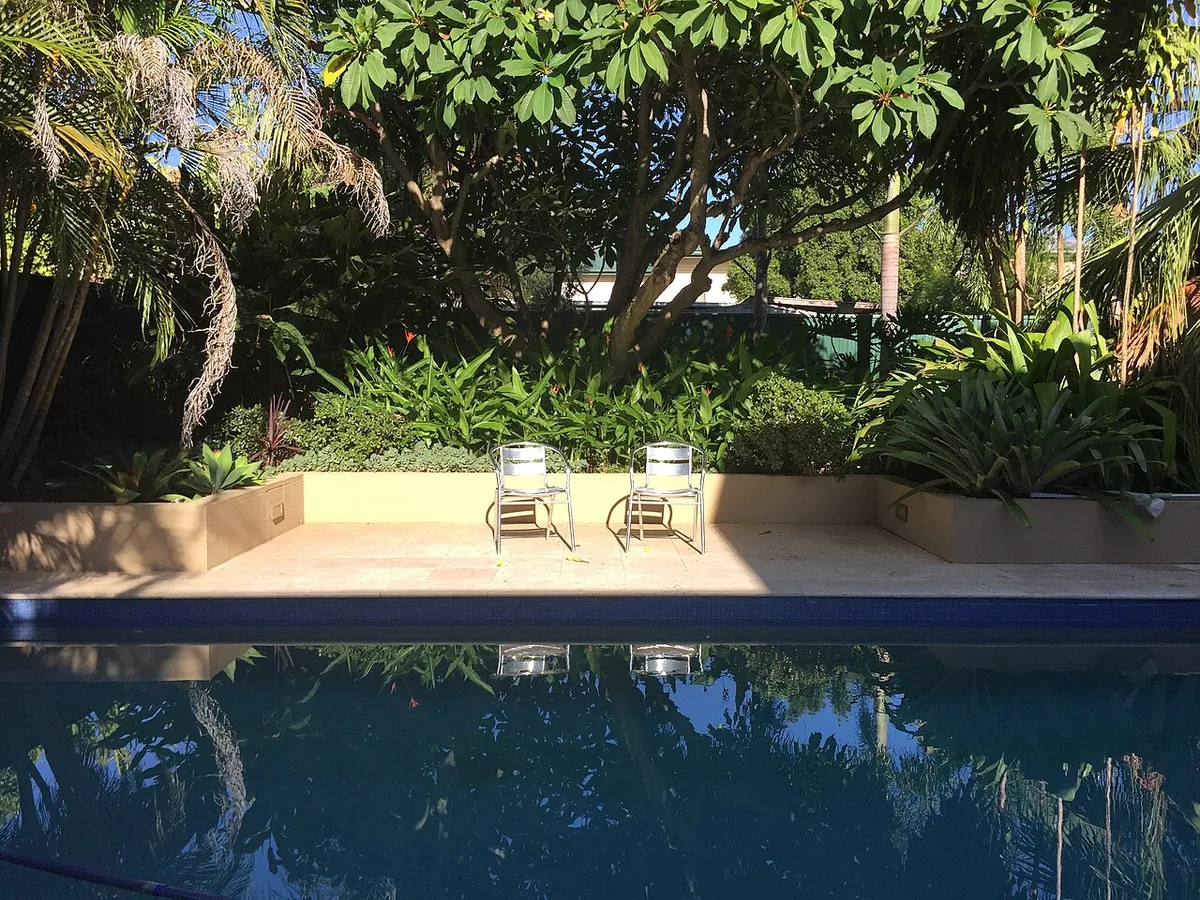
Photo: Kgbo, Wikimedia Commons, CC BY-SA 4.0
Concrete is only one coping material. Natural stone coping, such as travertine, limestone, sandstone, bluestone and granite, gives a premium look and stays relatively cool, like the pale stone edge above a blue tile line in the Queensland pool above. It costs more and some stones are softer and need sealing. Brick coping offers a classic look and good grip, but joints need upkeep. Pavers, made of concrete or porcelain, can be used as coping with bullnose edge pieces, matching a paver deck. Porcelain coping is dense, stain resistant and cool to the touch, a newer option. Cast stone and precast concrete coping imitate stone at lower cost. Swimming pool concrete coping, whether poured or precast, remains the most affordable, durable and versatile choice for most pools, especially with concrete decks. See paving stones vs concrete and stamped concrete vs pavers.
How Concrete Pool Coping Is Installed
Coping goes on after the pool shell has cured and before the deck is poured or at the same time. For poured cantilever coping, the installer attaches foam coping forms along the top of the bond beam, using the waterline tile as a guide for height and overhang. Steel dowels or reinforcing ties may connect the coping to the bond beam, depending on the design and local practice. Deck forms, base material and reinforcement are placed, and concrete is poured from the deck edge to the coping form, consolidated and finished. The foam is stripped and the rounded edge is cleaned up and finished by hand. Control joints are cut in the deck and coping to control cracking, and an expansion joint is formed at the designed location. See control joints in concrete and concrete expansion joints.
For precast concrete coping, the installer lays out the units around the pool, cutting pieces for corners and curves with a diamond saw. Each unit is set in a full bed of mortar on top of the bond beam, aligned to a string line, with consistent overhang into the pool and a slight slope toward the deck. Joints between units are typically 3/8 to 1/2 inch and are filled with mortar, grout or flexible sealant. The deck is then installed, with a separate expansion joint between the back of the coping and the deck. The coping is cleaned and sealed. See mortar vs concrete and concrete saw.
The Expansion Joint: Why It Matters
The single most important detail with any concrete pool coping is the joint between the coping and the deck. The pool shell and the deck move differently. The shell is heavily reinforced and sits deep in the ground, while the deck is a thinner slab on grade that expands in heat, shrinks in cold, and may heave or settle with the soil. If the deck is rigidly connected to the coping, the deck pushes against the coping as it expands, and the result is cracked coping, loose coping, popped tiles at the waterline and cracked bond beams. A properly designed expansion joint, a gap filled with a compressible backer rod and a flexible, UV-resistant sealant such as polyurethane or a self-leveling joint sealant made for pool decks, lets the deck move without damaging the pool. The joint must be kept sealed so water does not get under the deck or into the bond beam. Inspect and reseal the joint every few years, and whenever the sealant cracks, peels or shrinks. See concrete pool deck repair.
Sealing Concrete Pool Coping
Sealing helps concrete coping resist water absorption, chemical attack from chlorine and salt, staining from leaves and sunscreen, and freeze-thaw damage in cold climates. Use a breathable penetrating sealer made for pool decks and coping, which does not make the surface slippery. Film-forming acrylic sealers add color and sheen but can be slippery when wet and may need anti-slip additives. Salt water pools are especially hard on concrete and stone coping, so sealing and rinsing are important. Reseal every one to three years, or when water stops beading on the surface. See concrete sealer and how to seal concrete.
Common Pool Coping Problems
The most common problems with cement pool coping are cracking, loose coping, failed joints, spalling and stains. Cracks often come from deck movement pushing against the coping where the expansion joint is missing or filled with hard material. Loose or rocking precast coping usually means the mortar bed has failed, from water intrusion, freeze-thaw or ground movement. Failed joint sealant lets water into the bond beam and under the deck. Spalling and flaking come from freeze-thaw, deicing salts or poor-quality concrete. Rust stains may come from exposed reinforcement or metal objects. Efflorescence, white salt deposits, shows water moving through the concrete. Popped or cracked waterline tiles below the coping often share the same cause as cracked coping: movement at the top of the pool. See concrete spalling, efflorescence on concrete and how to remove rust stains from concrete.
Repairing Concrete Pool Coping
Small cracks in poured coping can be routed out and filled with a flexible sealant or a polymer-modified patch, then colored to match. Larger cracks and broken edges may require removing the damaged section, cutting back to sound concrete, and reforming and recasting that section of coping, ideally with a proper expansion joint added where it was missing. For precast coping, loose units are lifted, the old mortar is chipped off the bond beam and the coping, and the units are reset in fresh mortar, often a polymer-modified or latex-modified mortar for better bond. Cracked or broken precast units are replaced with matching pieces. Expansion joints are cleaned out, fitted with new backer rod and resealed. Waterline tile is often repaired at the same time. Repairs below the waterline usually require lowering the water level, which should be done carefully to avoid damaging the shell. See how to fix cracks in concrete and concrete patching compound.
When to Replace Pool Coping
Replacement makes sense when coping is widely cracked, loose all around the pool, badly spalled, or when the pool is being renovated and the owner wants a new look. Coping is often replaced at the same time as resurfacing the pool interior and replacing the waterline tile, since all three meet at the same point and replacing them together gives a clean result. Replacing poured cantilever coping means saw-cutting and removing the deck edge, then forming and pouring new coping and deck. Replacing precast coping means removing units, cleaning the bond beam, and setting new units. It is also a good time to fix drainage, slopes and expansion joints. See concrete removal cost and concrete pool deck resurfacing.
Living With a Pool With Concrete Coping
Owning a pool with concrete coping is mostly a matter of small, regular habits. Rinse the coping and deck with fresh water now and then, especially for salt water pools, so salt and chlorine residues do not build up and slowly attack the surface. Sweep leaves, berries and flowers off the coping before they stain it. Keep sunscreen, oils and food off the edge where possible, or wipe them up quickly, because oils soak into concrete and leave dark marks. Do not let pool chemicals, particularly concentrated chlorine and acid, splash onto the coping when adding them to the pool. Check the expansion joint each spring and fall for gaps, cracks or missing sealant, and reseal before water gets underneath. Watch for hollow sounds when you tap precast units with a rubber mallet, which mean the mortar bed is failing and a unit may soon loosen. Look along the waterline tile for cracks or popped tiles, which often point to movement at the coping. Catching these issues early keeps repairs small and cheap.
In winter climates, close the pool properly with the water level lowered to the recommended height and the coping kept as dry as possible. Never use rock salt or other chloride deicers on coping and decks; they attack concrete, stone and mortar and can spall the surface. If you need traction, use sand or a deicer labeled safe for concrete, and shovel gently with a plastic blade so you do not chip the coping edges. See best ice melt for concrete and does salt damage concrete.
Coping and Waterline Tile
The waterline tile, a band of tile 6 inches or so tall just below the coping, works hand in hand with it. Tile at the waterline is easier to clean than plaster, resists scum and scale, and adds color. The coping overhang shades and protects the top of the tile, and both are set on the bond beam. Because they share the same structure, problems often appear together: if the coping moves, the tile below cracks or pops off. When planning a renovation, choose coping and tile together for color and style, and replace or repair them at the same time. Make sure the coping overhang covers the top edge of the tile neatly and that the joint between them is sealed so water cannot get behind the tile.
Safety and Comfort at the Pool Edge
Coping is where people sit, stand, dive and climb out, so safety matters. A slightly textured surface gives better grip than smooth or sealed glossy concrete. Rounded bullnose edges are kinder to hands, legs and backs than sharp square edges. Light colors stay cooler in summer sun, which matters because bare feet linger on the coping. The coping should not overhang so far that it creates a hidden ledge underwater, and it should be firmly attached so it cannot shift when someone pushes off from it. In areas where diving is allowed, the coping and deck must meet local rules for depth and markings. Many owners add depth markers and no-diving symbols on the coping or deck for clarity.
DIY or Professional Coping Work?
Simple maintenance, such as cleaning, sealing coping and replacing expansion joint sealant, is well within reach of most homeowners. Resetting a single loose precast unit can also be a careful DIY job: lift the unit, chip off old mortar, clean the bond beam, set the unit in a polymer-modified mortar to the correct height and slope, and fill the joints. Larger repairs, such as replacing cantilever coping, repairing a cracked bond beam, or replacing coping and tile around an entire pool, are better left to pool contractors or experienced concrete contractors who know how to protect the pool shell, plaster and plumbing, and who can lower the water safely. Mistakes at the pool edge can lead to leaks and costly damage to the shell or deck, so get a written scope and warranty for professional work.
Concrete Coping for Pools: Choosing a Color and Finish
Concrete coping for pools is available in a wide range of colors and finishes. Integral color, where pigment is mixed into the concrete, gives color through the full depth, so chips and wear do not show a different color underneath. Stains and coatings can change the color of existing coping. Finishes range from smooth trowel and light broom to sandblasted, exposed aggregate and stone-textured precast units. For poured coping, many contractors use a sprayed acrylic texture coating that stays cool and gives grip. For precast coping, manufacturers offer colors like sandstone, limestone, charcoal and white, often with a slight texture that looks like cut stone. Choose a finish that hides wear and dirt, stays cool, and suits the style of the house and landscape. See how to color concrete and exposed aggregate concrete.
Coping on Older Pools
Many older pools, built from the 1950s to the 1980s, still have their original coping: often precast concrete bullnose units, poured rolled edges, or brick. After decades of use, the mortar under precast units may be cracked or hollow, the joints may be packed with hard mortar instead of flexible sealant, and the deck may have settled or heaved against the coping. When renovating an older pool, inspect the coping closely. If most units are sound and well bonded, cleaning, resetting a few loose pieces and adding a proper expansion joint can extend their life for many years. If many units are loose, cracked or badly worn, replacement is usually more economical than piecemeal repairs, and it gives a chance to update the look. Older pools also sometimes lack bond beams strong enough for heavy new stone coping, so check the structure before upgrading to thick natural stone.
Coping for Spas and Raised Walls
Attached spas, raised bond beams and water feature walls also need coping. On a raised spa wall, coping caps the top of the wall and often overhangs on both sides, with a drip edge underneath. Spillover spas use a lowered section of coping or a special spillway stone so water flows into the pool in a smooth sheet. Concrete coping for these features must be carefully leveled, since even small variations show in the water flow. Precast and stone units are common here, set in mortar and sealed well because they stay wet much of the time.
Concrete Pool Coping Costs
Costs vary with material, profile, region and access. Typical installed prices are about $25 to $45 per linear foot for poured cantilever concrete coping, about $30 to $60 per linear foot for precast concrete coping, and $40 to $100 or more per linear foot for natural stone. A typical residential pool has 100 to 150 linear feet of coping, so new concrete coping often costs about $2,500 to $8,000. Resealing expansion joints costs about $3 to $8 per linear foot, or a few hundred dollars for a typical pool. Resetting loose precast coping costs about $20 to $50 per linear foot. Full replacement during a renovation, including removal, new coping and tile, often costs $5,000 to $15,000 or more. See concrete repair cost and concrete cost per square foot.
Design Tips for Concrete Coping
Choose a coping color that stays cool in sun; light tans, grays and whites are more comfortable underfoot than dark colors. Match or complement the deck: the same concrete for a seamless look, or a contrasting color for a framed look. Consider the waterline tile, since coping and tile are seen together. Use radius pieces on curved pools for smooth lines. Keep the overhang consistent, usually 1.5 to 2 inches, which hides the tile edge and gives a handhold. For pools used by children and older swimmers, rounded bullnose coping is safer and more comfortable than sharp square edges. For modern pools, thin square-edge coping or flush coping creates a crisp line. Always plan the expansion joint location and color during design so it looks intentional.
Frequently Asked Questions
What is concrete pool coping?
It is the concrete cap on top of the pool wall, between the tile line and the deck, poured in place or set as precast units.
Is poured or precast coping better?
Poured cantilever coping gives a seamless look with the deck; precast coping offers consistent pieces and easier repairs. Both work well with a proper expansion joint.
Why is my pool coping cracking?
Usually because the deck pushes against the coping with no working expansion joint, or because of freeze-thaw and water intrusion.
How much does it cost to replace pool coping?
Often $25 to $60 per linear foot for concrete, or about $2,500 to $8,000 for a typical residential pool.
Should pool coping be sealed?
Yes. A breathable, non-slip penetrating sealer helps resist water, chemicals, stains and freeze-thaw damage.
Sources
- Pool & Hot Tub Alliance: pool construction and deck standards
- Portland Cement Association: concrete joints and durability
- American Concrete Institute: joints in concrete slabs
- Interlocking Concrete Pavement Institute: pool coping pavers
Related Guides
- Pool deck concrete — installation, finishes and cost