
Types of Asphalt: Hot, Warm and Cold Mix, Porous, Stone Matrix, Binders and Recycled Mixes
Quick Answer
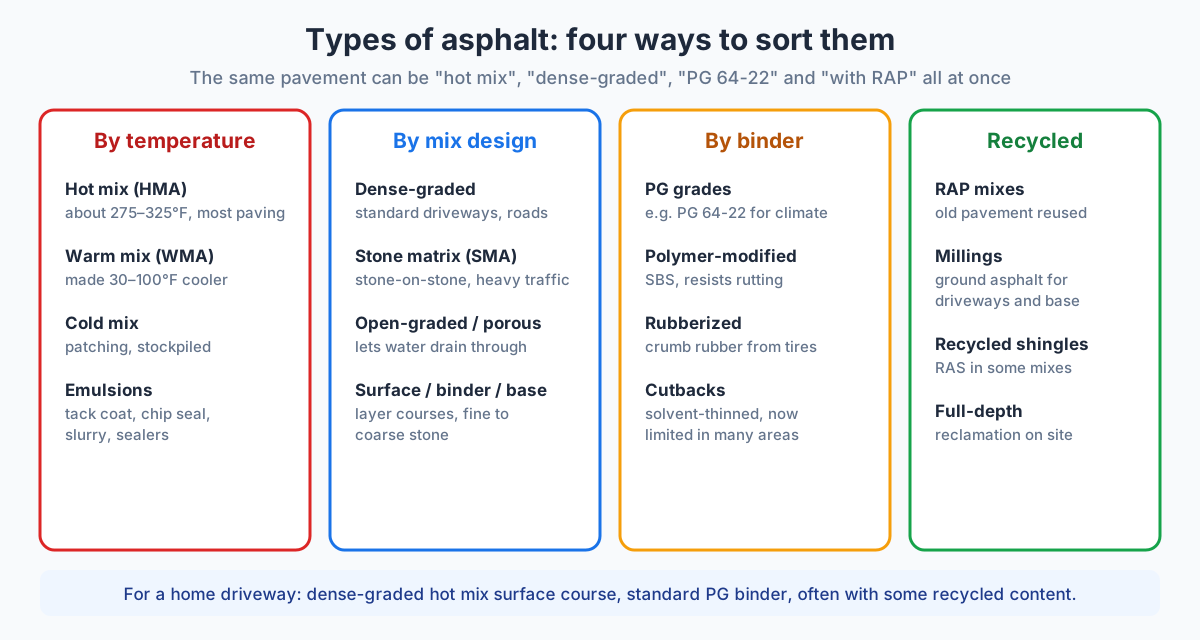
The main types of asphalt are hot mix asphalt (HMA), used for most roads, driveways and parking lots; warm mix asphalt (WMA), made at lower temperatures; cold mix asphalt, used for patching; porous asphalt, which lets water drain through; stone matrix asphalt (SMA), a tough mix for heavy traffic; and recycled asphalt mixes that reuse old pavement. Asphalt is also sorted by its binder (performance grades such as PG 64-22, polymer-modified, rubberized) and by layer (surface, binder and base courses). For a home driveway, the usual choice is a dense-graded hot mix surface course.
"Asphalt" sounds like one material, but paving contractors and road agencies work with many different types of asphalt. Each one is a mix of stone, sand and asphalt binder, but the temperature it is made at, the size and blend of stone, and the binder it uses change how it performs, where it is used and what it costs. Knowing the main asphalt types helps you read a paving quote, ask the right questions and understand why a parking lot, a highway and your driveway are not paved with exactly the same thing.
This guide explains the different types of asphalt in plain terms: sorted by temperature, by mix design, by binder, and by recycled content. It also covers asphalt emulsions and sealers, special-purpose asphalts, what each type costs per ton, which type is best for driveways and parking lots, and, because many searches for asphalt types are really about roofs, the different types of asphalt shingles.
What Asphalt Is Made Of
Asphalt pavement, also called asphalt concrete or blacktop, is about 95 percent stone, sand and gravel (called aggregate) by weight, held together by about 5 percent asphalt binder. The binder, also called bitumen or asphalt cement, is the heavy, sticky residue left when crude oil is refined. It is heated until it flows, mixed with hot, dry aggregate at an asphalt plant, delivered by truck, spread with a paver and compacted with rollers. As it cools, the binder stiffens and locks the stones together. All the types of asphalt below are variations on that basic recipe. Our guide to asphaltic concrete covers the terminology and standards in more depth.
Natural vs Refined: The Two Sources of Asphalt
Before looking at mixes, it helps to know that asphalt binder itself comes in two broad types by origin. Natural asphalt occurs in nature: in asphalt lakes such as the Pitch Lake in Trinidad, in rock asphalt (sandstone or limestone soaked with bitumen), and in hard, solid forms such as gilsonite. Natural asphalt has been used for thousands of years, from waterproofing in the ancient world to early street paving in the 1800s. Today it is mostly used as a modifier blended into other binders.
Refined asphalt comes from crude oil refineries and supplies almost all the asphalt binder used for paving today. When crude oil is distilled, the lightest products such as gasoline boil off first, and the heaviest fraction left at the bottom is asphalt. Refiners then adjust it to meet performance grades. So when contractors talk about different types of asphalt, they nearly always mean different mixes and grades made from refined binder.
Types of Asphalt by Temperature
Hot mix asphalt (HMA)
Hot mix asphalt is the most common type of asphalt in the world. It is produced at an asphalt plant at roughly 275 to 325°F, trucked hot to the job and laid while it is still hot enough to compact. It makes a dense, durable pavement and is used for almost all highways, city streets, parking lots and residential driveways. Its main limitation is that it must be placed and rolled before it cools, so it needs warm weather, a nearby plant and paving equipment. Typical hot mix prices are covered in our hot mix asphalt price per ton guide, and the hot mix asphalt calculator estimates tons for a project.
Warm mix asphalt (WMA)
Warm mix asphalt is made with additives or foaming processes that let it be mixed and compacted at temperatures roughly 30 to 100°F lower than hot mix. Lower temperatures mean less fuel at the plant, fewer fumes for the crew, a longer haul distance before the mix cools too much, and the ability to pave in cooler weather. Once in place, a good warm mix performs much like hot mix. Many state highway agencies now allow or encourage warm mix, and some plants make it routinely.
Cold mix asphalt
Cold mix asphalt uses an asphalt emulsion or a solvent-thinned (cutback) binder so it stays workable at normal temperatures. It can be stockpiled, sold in bags and placed straight from the pile without heating, which makes it the standard material for patching potholes, especially in winter when hot mix plants are closed. Cold mix is not as strong or long-lasting as hot mix, so it is mainly used for repairs and low-traffic areas. See our cold asphalt patch guide and the cold mix asphalt calculator.
| Type of asphalt | Mixing temperature | Main use | Durability |
|---|---|---|---|
| Hot mix (HMA) | About 275 – 325°F | Roads, lots, driveways | High |
| Warm mix (WMA) | About 30 – 100°F lower | Same as hot mix; cooler-weather paving | High |
| Cold mix | Ambient | Patching, temporary repairs | Lower |
Types of Asphalt by Mix Design
Within hot and warm mix, there are different types of asphalt mixes based on the size and blend of the aggregate. This is what engineers mean by mix design or gradation.
Dense-graded asphalt
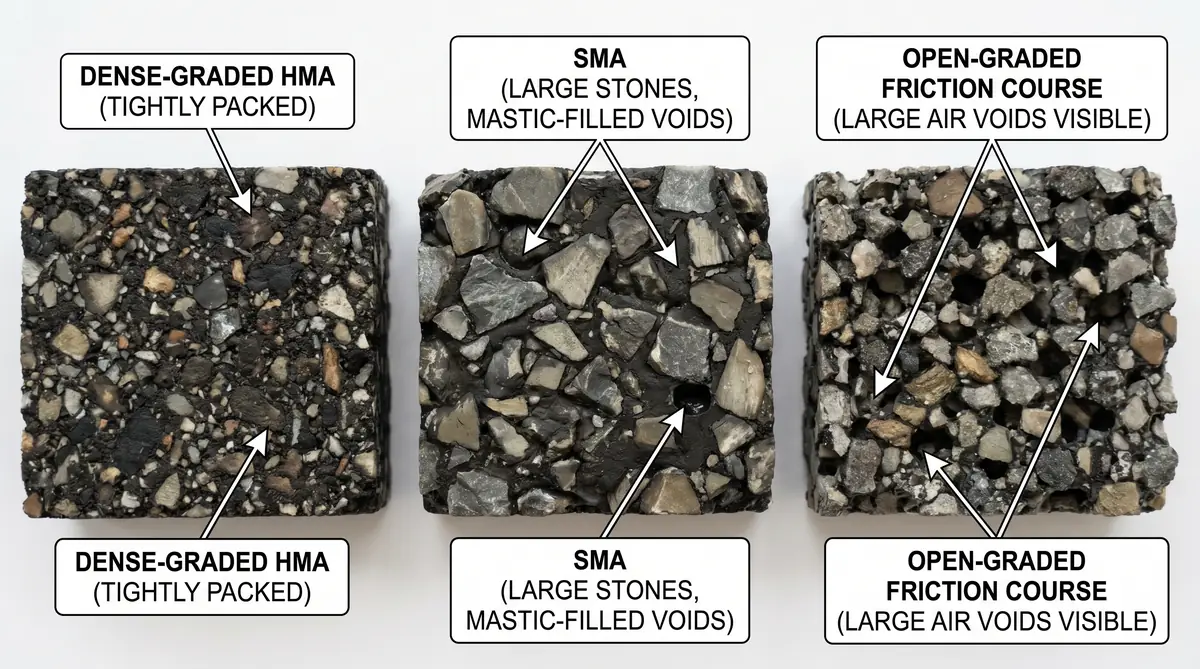
Dense-graded mixes use a well-balanced blend of coarse and fine aggregate, so the stones fill each other's gaps and the mix compacts into a tight, low-void pavement. This is the general-purpose type of asphalt used for most driveways, streets and parking lots. Contractors may describe it by its maximum stone size or by its course, such as a fine surface mix or a coarser binder mix.
Stone matrix asphalt (SMA)
Stone matrix asphalt (also called stone mastic asphalt) uses a high proportion of coarse stone that locks together stone-on-stone, with the gaps filled by a rich mortar of binder, fine material and fibers. The result resists rutting under heavy, slow traffic and is common on busy highways and intersections. It costs more than dense-graded mix and is rarely used on home driveways. Read more in our stone matrix asphalt guide.
Open-graded and porous asphalt
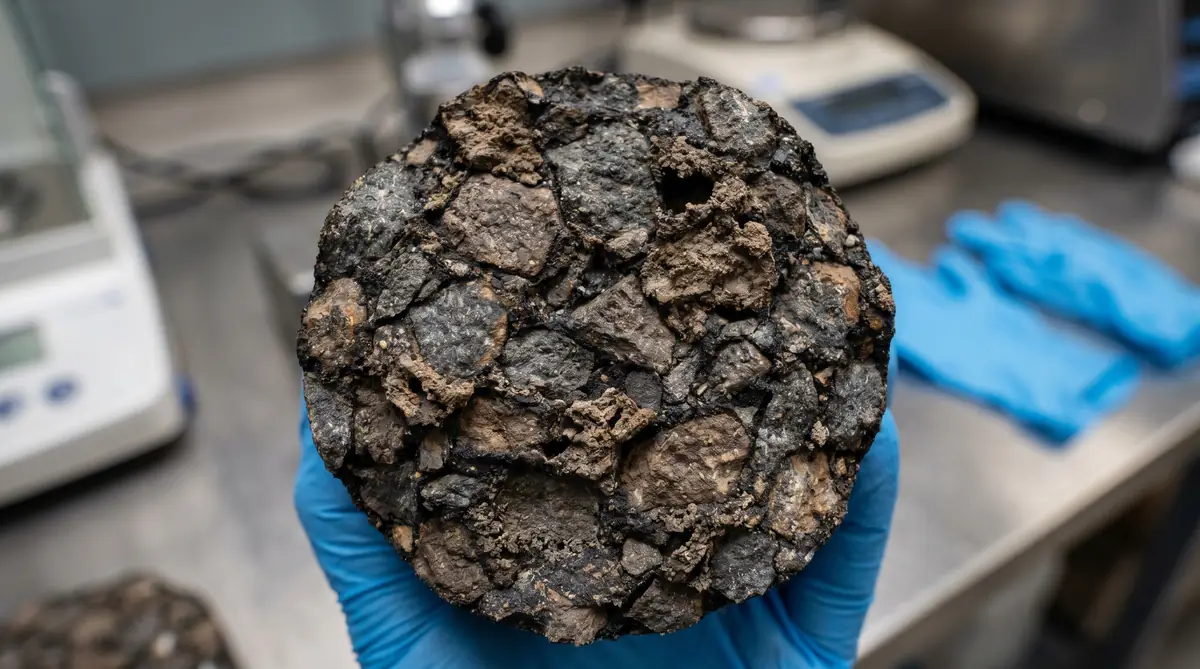
Open-graded mixes leave out most of the fine material, so the compacted asphalt has connected voids. On highways, a thin open-graded friction course (OGFC) drains surface water to reduce spray and hydroplaning. Porous asphalt takes the idea further: the whole pavement layer lets rainwater pass through into a stone reservoir underneath, where it soaks into the ground. Porous asphalt is used for stormwater management on parking lots, trails and some driveways, but it needs a special base, regular vacuuming to keep the pores open and careful design in cold climates.
Surface, binder and base courses
Pavements are built in layers, and each layer may use a different type of asphalt mix. The surface course on top uses smaller stone for a smooth, tight finish. The binder course (or intermediate course) underneath uses larger stone for strength. A base course of coarse asphalt is used on heavy-duty pavements. Residential driveways often use a single lift of surface mix or a binder course topped with a surface course. Our asphalt mix calculator covers common mix choices.
Types of Asphalt Binder
Performance graded (PG) binders
In the U.S., asphalt binder is usually specified by performance grade under the Superpave system. A grade such as PG 64-22 means the binder is designed to perform at a high pavement temperature of 64°C and a low pavement temperature of minus 22°C. Hotter climates use a higher first number to resist rutting in summer, and colder climates use a lower second number to resist cracking in winter. Your local asphalt plant supplies the grade the state uses for that area, so homeowners rarely need to choose one.
Polymer-modified asphalt
Polymer-modified binders have polymers such as SBS blended in to make the binder more elastic. They resist rutting in heat and cracking in cold better than unmodified binders, which is why they are used on interstates, airports and heavy-traffic intersections. They cost more per ton and are seldom needed for residential paving.
Rubberized asphalt
Rubberized asphalt uses crumb rubber from scrap tires blended into the binder or mix. It can reduce road noise and improve crack resistance, and it gives old tires a new use. It is common on highways in some states, especially in the Southwest.
Asphalt emulsions and cutbacks
Not all asphalt is mixed hot. Asphalt emulsions are tiny droplets of binder suspended in water with an emulsifier. They are sprayed or mixed cold and "break" as the water evaporates, leaving the binder behind. Emulsions are used for tack coat between layers, chip seals, slurry seals, cold mix and many driveway sealers. They come in rapid, medium and slow setting grades for different jobs. Cutbacks are binders thinned with petroleum solvents; because the solvents evaporate into the air, many areas now restrict their use, and emulsions have largely replaced them. See our asphalt tack coat and asphalt emulsion sealer guides.
Recycled Asphalt
Asphalt is one of the most recycled materials in construction. When old pavement is milled or removed, it becomes reclaimed asphalt pavement (RAP). RAP is crushed, screened and added to new hot or warm mix, where its old binder and stone are reused. Many standard plant mixes already contain some RAP. Ground RAP is also sold on its own as asphalt millings, a low-cost driveway and base material that packs firm. Some mixes also use recycled asphalt shingles (RAS). On roads, full-depth reclamation grinds the old pavement and base in place and stabilizes it into a new base layer.
For homeowners, recycled asphalt mainly shows up in two ways: as part of a standard hot mix, which you may not even notice, and as millings for a budget driveway. See our guides to recycled asphalt pavement, asphalt millings and full-depth recycling.
Special Types of Asphalt Surfaces
- Chip seal: sprayed binder covered with stone chips, used on rural roads and long driveways. See chip seal driveway cost.
- Slurry seal and microsurfacing: thin mixtures of emulsion, fine aggregate and additives spread over existing pavement to seal and renew the surface.
- Mastic asphalt: a dense, high-binder asphalt poured rather than rolled, common in Europe for bridge decks, roofs and floors.
- Colored asphalt: asphalt with pigments or a clear binder for bike lanes, plazas and decorative paths, or a colored surface coating over regular asphalt.
- Sport and court asphalt: smooth, carefully graded asphalt with an acrylic coating, used for tennis and basketball courts. See asphalt basketball court.
Types of Asphalt and Their Prices
Here is how the common types of asphalt compare on material price per ton, from our asphalt price per ton guide. These are plant material prices before delivery and installation.
| Type of asphalt | Price per ton | Best for |
|---|---|---|
| Standard hot mix (HMA) | $80 – $160 | Driveways, roads, parking lots |
| Warm mix | $90 – $170 | Cooler-weather paving, long hauls |
| Cold mix | $60 – $120 | Pothole patching, temporary repairs |
| Recycled asphalt (RAP) | $50 – $100 | Budget driveways, base layers |
| Polymer-modified | $120 – $200 | Heavy traffic, highways |
| Superpave (PG graded) | $100 – $180 | State and federal road projects |
To turn tons into a project cost, use the asphalt tonnage calculator, or see asphalt cost per yard for square-yard and cubic-yard prices.
Pros and Cons of Each Type of Asphalt
| Type of asphalt | Pros | Cons |
|---|---|---|
| Hot mix (dense-graded) | Durable, smooth, widely available | Needs warm weather, plant and paving crew |
| Warm mix | Less fuel and fumes, longer paving season | Not offered by every plant |
| Cold mix | Use any time, no equipment, sold in bags | Weaker, shorter life, expensive per ton in bags |
| Stone matrix (SMA) | Very rut resistant, long life | Higher cost; mainly for highways |
| Porous asphalt | Manages stormwater, reduces puddles | Special base, needs vacuuming, careful design |
| Polymer-modified | Resists rutting and cracking | Higher cost per ton |
| Recycled (RAP) mixes | Lower cost, reuses material | Quality depends on processing |
| Millings | Very low cost driveway surface | Not as smooth or strong as new hot mix |
Types of Asphalt by Climate
Climate shapes which types of asphalt and binder grades are used. In hot regions, binders with a higher high-temperature grade resist the softening and rutting that summer heat causes, and lighter-colored surface treatments are sometimes used to reduce heat. In cold regions, binders with a lower low-temperature grade stay flexible enough to resist thermal cracking, and warm mix helps extend a short paving season. Areas with heavy rain may favor open-graded surface courses on highways for drainage, while snowy areas avoid porous asphalt in places where plowing and sanding would clog it. For a homeowner, the practical point is simple: your local plant already supplies a binder grade chosen for your climate.
Choosing a Type of Asphalt for Repairs
The type of asphalt for a repair depends on the size of the job and the season. For a single pothole or a small patch, especially in winter, bagged cold mix is the practical choice; see how to fix a pothole. For lasting patches in warm weather, a crew with hot mix gives a stronger, longer-lasting repair; see asphalt repair cost. For a whole driveway that is worn but sound, a new layer of dense-graded hot mix over the old one is the usual fix; see asphalt overlay cost. For sealing the surface, asphalt emulsion sealers are the common choice.
Which Type of Asphalt Is Best for a Driveway?
For almost every home driveway, the right type of asphalt is a dense-graded hot mix surface course with the standard binder grade your local plant supplies. It is laid 2 to 3 inches thick over a compacted gravel base. A few situations call for something different:
- Budget or rural driveway: asphalt millings or chip seal instead of hot mix.
- Heavy trucks or RVs: a thicker hot mix section, sometimes with a binder course underneath.
- Stormwater limits: porous asphalt with a stone reservoir base, designed by a professional.
- Repairs and potholes: cold mix for quick fixes, hot mix for lasting patches.
See is 2 inches of asphalt enough for a driveway and asphalt driveway cost for more.
How Asphalt Mix Choice Affects Cost and Life
The mix you choose affects both the up-front price and how long the pavement lasts. A higher-grade mix, such as polymer-modified or stone matrix asphalt, costs more per ton but can last much longer under heavy traffic, which lowers the cost per year on a busy road. On a lightly used driveway, those premium asphalt mix types add cost without much benefit, because cars do not stress the pavement enough to need them. The bigger factors on a driveway are the thickness of the asphalt, the strength of the gravel base and good drainage. Spending on a thicker standard hot mix and a better base usually does more for a driveway than paying for a premium mix.
The reverse is also true for budget options. Millings and chip seal save a lot of money up front but need more care and do not give the smooth, finished surface of hot mix. Match the type of asphalt to the traffic and the look you want, and put the rest of your budget into the base. If you are unsure, ask two or three local paving contractors which mix they would use for your driveway and why; their answers will usually agree, and any outlier is worth questioning.
Types of Asphalt for Parking Lots and Roads
Parking lots usually use dense-graded hot mix, often in two lifts: a coarser binder course and a finer surface course, with thicker sections in drive lanes and truck areas. Highways use engineered Superpave mixes chosen for traffic volume and climate, polymer-modified binders on heavy routes, and sometimes SMA or open-graded surface layers. City streets fall in between. Our asphalt parking lot cost guide covers lot thickness and prices.
Different Types of Asphalt Shingles
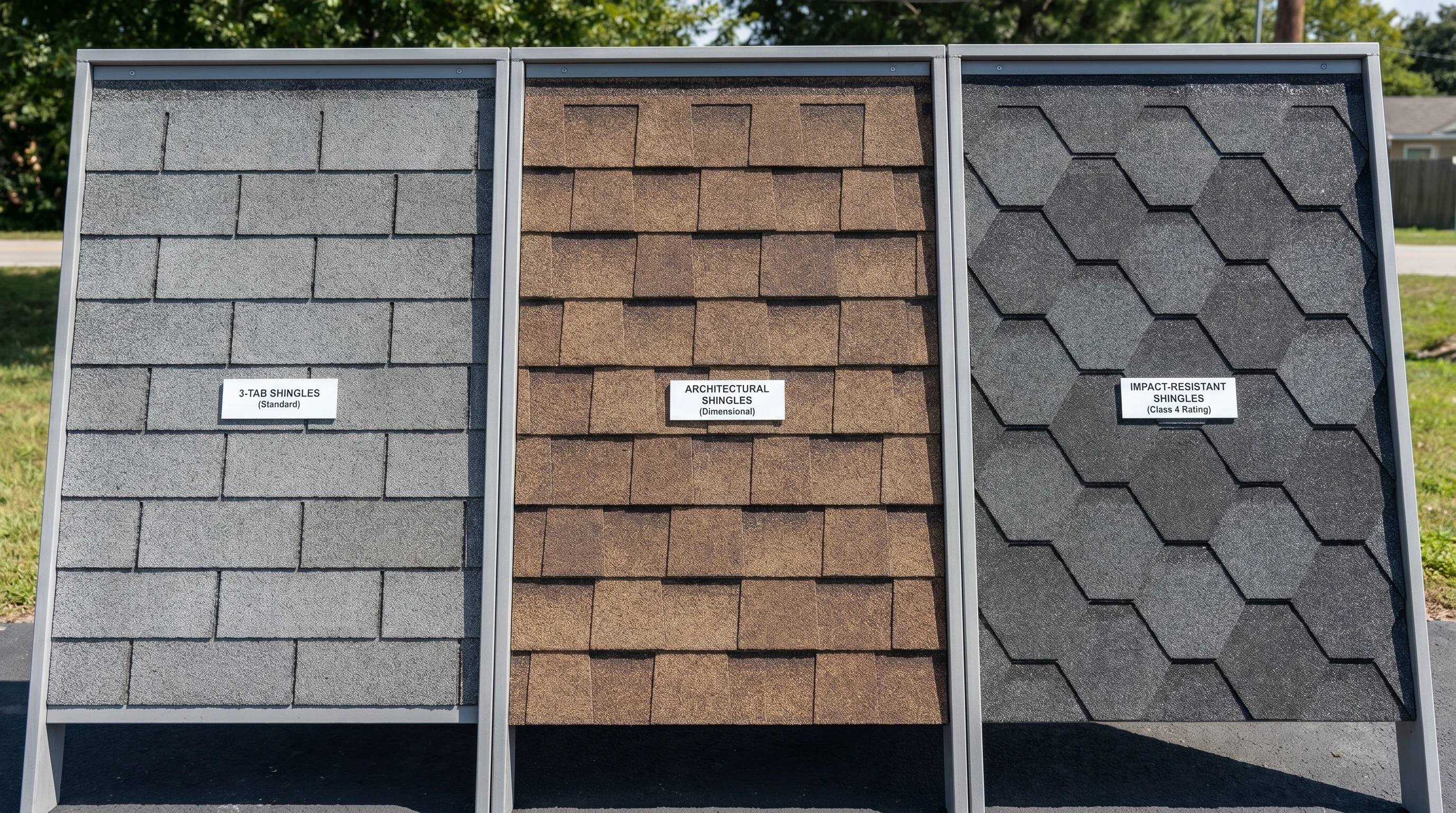
Many people searching for different types of asphalt are thinking of roofs. Asphalt shingles use the same basic binder, but on a fiberglass mat coated with mineral granules. There are three common types of asphalt shingles:
| Shingle type | Look | Notes |
|---|---|---|
| 3-tab shingles | Flat, uniform tabs | Single layer, lightest and lowest cost |
| Architectural (dimensional) shingles | Layered, textured, shadow lines | Laminated, heavier, the most common choice today |
| Premium / luxury shingles | Mimic slate or wood shakes | Thickest and highest cost |
For a closer comparison, see asphalt vs architectural shingles and how long an asphalt roof lasts.
Kinds of Asphalt Sealers
Sealers are another place where different types of asphalt products show up. Driveway and parking lot sealers are thin coatings, not paving, and the common kinds are:
- Asphalt emulsion sealers: made from refined asphalt in water; widely sold and allowed everywhere.
- Coal tar sealers: made from coal tar pitch rather than asphalt; resistant to fuel, but restricted or banned in several states and many cities because of PAH concerns.
- Acrylic and polymer sealers: synthetic, durable and available in colors, at a higher price.
See our asphalt sealer guide and when to seal a new asphalt driveway.
Types of Asphalt Pavement: Quick Summary
- Hot mix asphalt pavement: the standard type of asphalt for driveways, lots and roads.
- Warm mix asphalt pavement: the same job at lower temperatures.
- Cold mix asphalt: the type of asphalt for patches and emergencies.
- Porous asphalt pavement: the type of asphalt for stormwater control.
- Stone matrix asphalt pavement: the type of asphalt for heavy, slow traffic.
- Recycled asphalt mixes and millings: the budget types of asphalt for base layers and rural driveways.
Most home projects only ever involve the first and third types of asphalt on this list: hot mix for the driveway itself and cold mix for the occasional patch.
How to Tell Which Type of Asphalt You Have
On an existing driveway you can often tell a lot by looking:
- Smooth, tight surface with small stones: dense-graded hot mix surface course.
- Loose stones on top of a black base: chip seal.
- Gray-black, rough, slightly loose surface: asphalt millings.
- Visible holes and a very open texture: porous or open-graded asphalt.
- Patches that look different from the rest: often cold mix repairs.
Your paving invoice or the contractor can confirm the exact mix if you need to match it for repairs. Keep the invoice with your house records and the warranty papers; knowing the original mix and thickness makes future patching and resurfacing quotes faster and more accurate.
Asphalt Terms You Will See on a Quote
| Term | Meaning |
|---|---|
| HMA / blacktop / asphalt concrete | Hot mix asphalt pavement |
| Surface course / top coat | The finer top layer |
| Binder course | The coarser layer below the surface |
| Lift | One layer laid and compacted at a time |
| Compacted thickness | Thickness after rolling (what matters) |
| Tack coat | Emulsion sprayed so layers bond |
| RAP | Recycled asphalt in the mix |
| PG grade | Binder grade for the climate |
Frequently Asked Questions
What are the main types of asphalt?
Hot mix, warm mix and cold mix by temperature; dense-graded, stone matrix and porous by mix design; plus recycled asphalt mixes and different binder types.
What type of asphalt is best for a driveway?
A dense-graded hot mix surface course, 2 to 3 inches thick, over a compacted gravel base.
What is the difference between hot mix and cold mix asphalt?
Hot mix is made and laid hot and forms a durable pavement. Cold mix stays workable at normal temperatures and is mainly used for patching.
What does PG 64-22 mean?
It is a binder grade designed for a high pavement temperature of 64°C and a low of minus 22°C.
Which types of asphalt are the most durable?
Stone matrix asphalt and polymer-modified mixes are the most durable types of asphalt under heavy traffic. For a driveway, a well-compacted dense-graded hot mix on a solid base lasts for decades with basic upkeep.
What type of asphalt is used on highways?
Engineered Superpave hot or warm mixes, often with polymer-modified binder, and sometimes stone matrix or open-graded surface layers.
Is blacktop a different type of asphalt?
No. Blacktop is a common name for hot mix asphalt pavement.
What are the different types of asphalt shingles?
3-tab, architectural (dimensional) and premium or luxury shingles.
Sources
- Federal Highway Administration, asphalt pavement technology resources (warm mix, RAP, Superpave). fhwa.dot.gov
- National Asphalt Pavement Association, asphalt pavement and recycling information. asphaltpavement.org
- Asphapro.com, Asphalt Price per Ton — price ranges by mix type.
- Images and diagram: Asphapro.com.
Temperatures and prices are typical ranges; local plants and specifications vary.