
Concrete Overlay Cost in 2026: Resurfacing, Decorative and Stamped Overlay Prices
Quick Answer
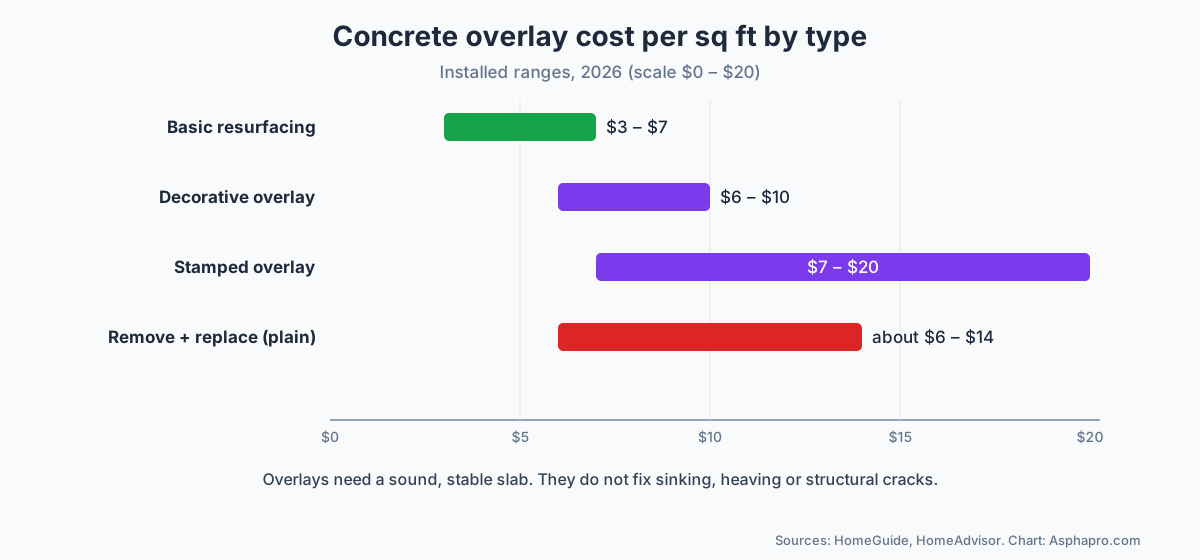
The typical concrete overlay cost in 2026 is about $3 to $7 per square foot for a basic resurfacing overlay, according to HomeGuide, with HomeAdvisor's average for basic resurfacing at about $3 to $5. Decorative overlays with color or patterns run about $6 to $10 per square foot, and stamped overlays about $7 to $20. That compares with about $6 to $14 per square foot to tear out and replace plain concrete. A 40 lb bag of a resurfacer like Sakrete Flo-Coat covers about 18 square feet at 1/4 inch thick, according to the manufacturer.
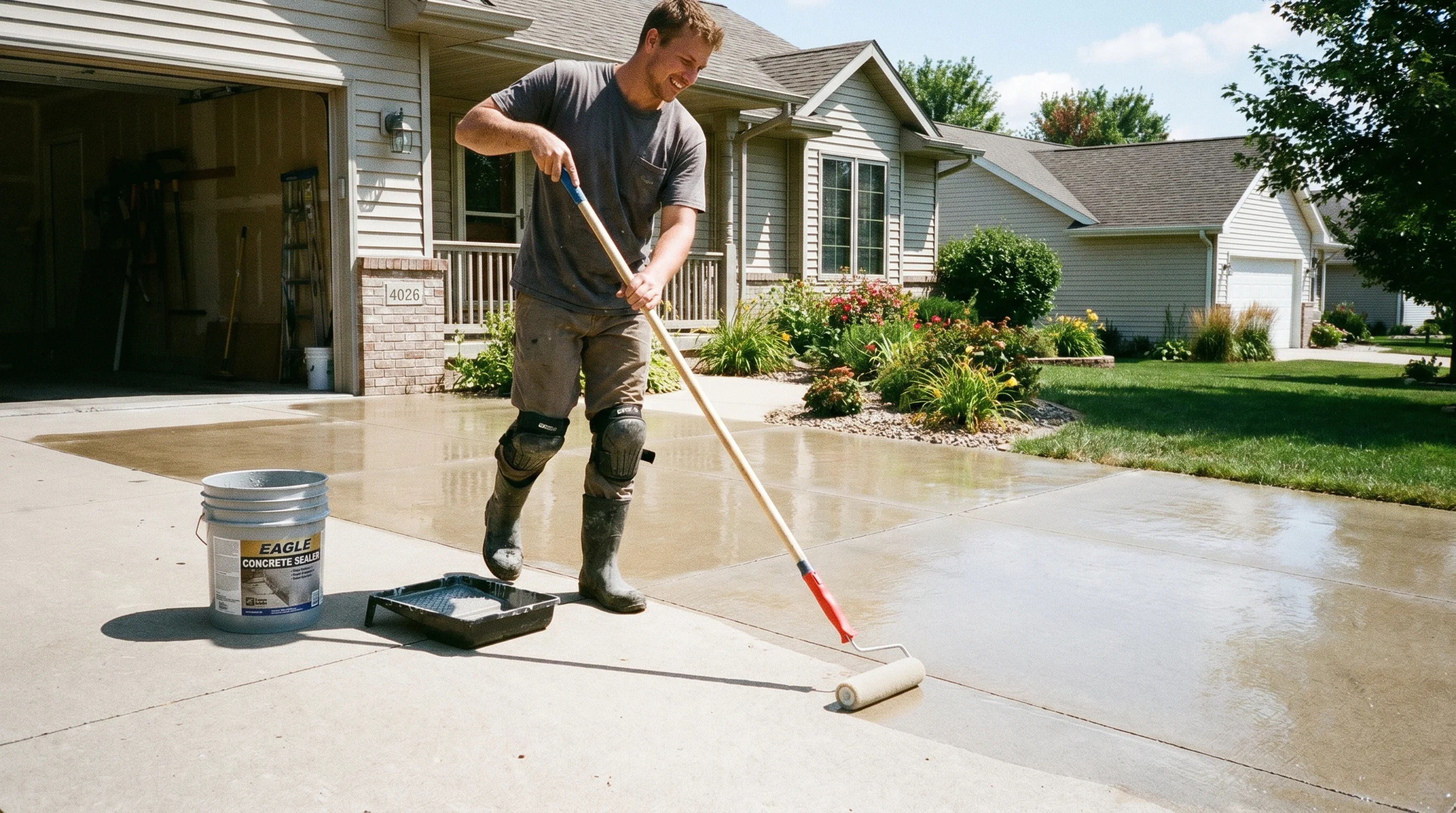
A concrete overlay is a thin layer of cement-based material applied over an existing slab to give it a new surface. It can hide stains, fill pitting, cover scaling caused by salt, and change the color or texture of a driveway, patio, pool deck, walkway or floor. Because the old concrete stays in place, an overlay usually costs far less than demolition and a new pour, and the work is often done in a day or two.
This guide breaks down concrete overlay cost per square foot by type, compares overlays with replacement, explains how much a bag of resurfacer covers, and covers when an overlay works and when it does not. Price ranges come from HomeGuide, HomeAdvisor and Concrete Network, and product coverage from manufacturer data, listed in the sources.
Concrete Overlay Cost at a Glance
| Overlay type | Typical cost per sq ft | Source |
|---|---|---|
| Basic resurfacing overlay | $3 – $7 | HomeGuide |
| Basic resurfacing (average) | $3 – $5 | HomeAdvisor |
| Decorative overlay (color, saw-cut patterns) | $6 – $10 | HomeGuide |
| Stamped overlay | $7 – $20 | HomeGuide |
| Tear out and replace plain concrete | about $6 – $14 | Removal $2 – $6 + new $4 – $8 |
Concrete Overlay Cost by Project Size
| Project | Area | Basic ($3 – $7) | Decorative ($6 – $10) | Stamped ($7 – $20) |
|---|---|---|---|---|
| Front steps and landing | about 60 sq ft | $180 – $420 (minimums likely) | $360 – $600 | $420 – $1,200 |
| Walkway, 4 × 40 ft | 160 sq ft | $480 – $1,120 | $960 – $1,600 | $1,120 – $3,200 |
| Patio, 16 × 20 ft | 320 sq ft | $960 – $2,240 | $1,920 – $3,200 | $2,240 – $6,400 |
| Two-car garage floor | about 480 sq ft | $1,440 – $3,360 | $2,880 – $4,800 | usually not used indoors |
| Driveway, 20 × 30 ft | 600 sq ft | $1,800 – $4,200 | $3,600 – $6,000 | $4,200 – $12,000 |
| Pool deck | about 800 sq ft | $2,400 – $5,600 | $4,800 – $8,000 | $5,600 – $16,000 |
Small jobs often hit a contractor's minimum price. Prep work such as crack repair, grinding and cleaning can be priced separately.
Types of Concrete Overlays
Basic resurfacer (skim coat)
A polymer-modified cement resurfacer is spread thinly, often about 1/8 to 1/2 inch, with a squeegee or trowel and finished with a broom. It renews a worn, pitted or scaled surface to a uniform gray. This is the cheapest overlay and the one most DIYers use.
Self-leveling overlays
Self-leveling products flow out to a flat surface and are mostly used indoors on floors, often under flooring or as a base for polishing or coating. See self-leveling concrete.
Decorative and colored overlays
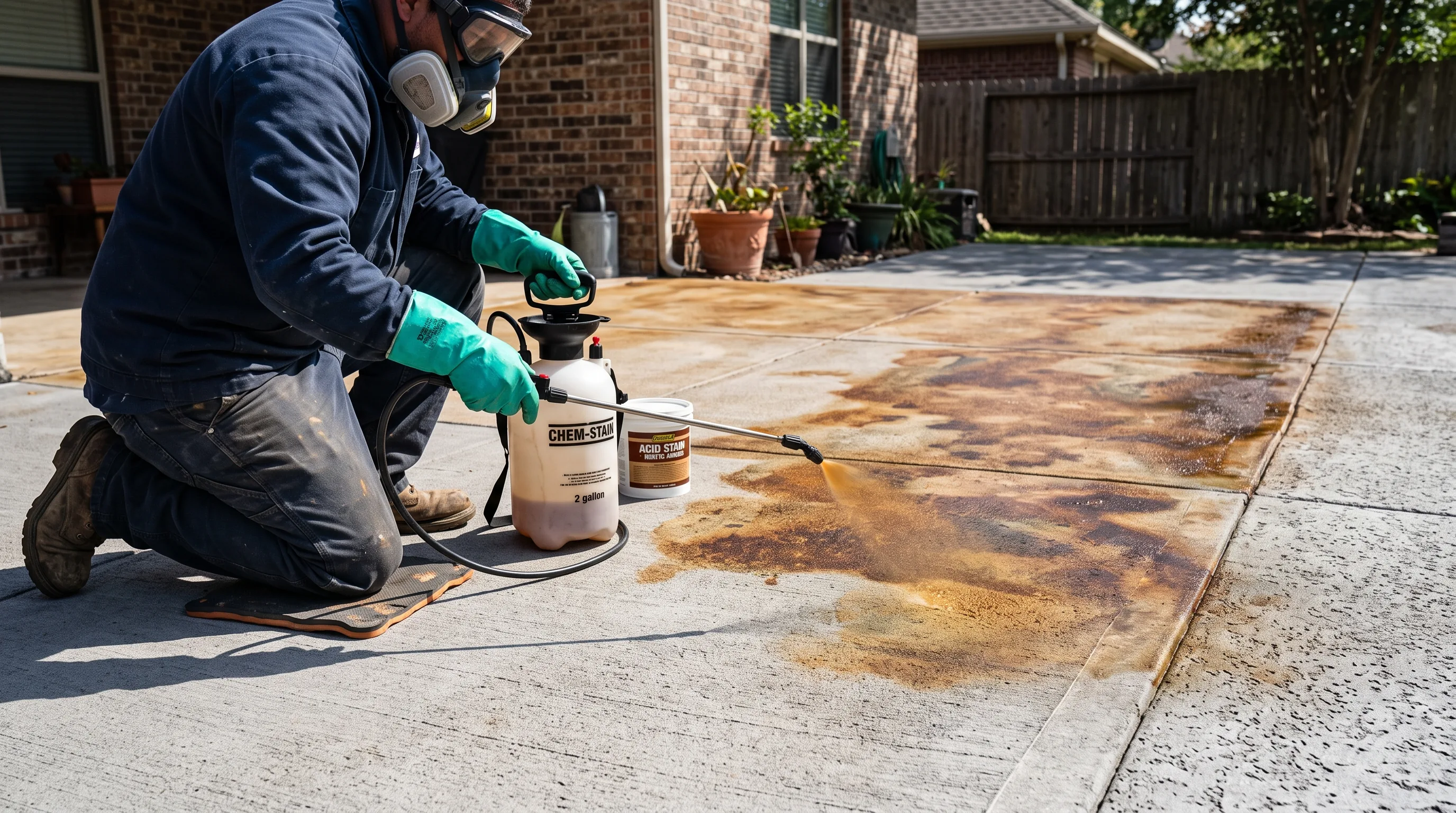
Overlays can be tinted, stained, sprayed with a texture (sometimes called a knockdown or spray-down finish), or saw-cut and colored to look like tile or stone. They cost more because of extra labor and color work.
Stamped overlays
Thicker overlays, often about 1/4 to 3/4 inch, can be stamped with patterns like slate, flagstone or brick, just like new stamped concrete. They give a high-end look without tearing out the old slab, but cost toward the upper end of the overlay range.
Microtoppings
Very thin cement coatings, applied with a trowel in several coats, create smooth, modern finishes on floors, countertops and walls.
How Much Does a Bag of Resurfacer Cover?
Coverage depends on the product and thickness. According to Sakrete's specification sheet, a 40 lb bag of Sakrete Flo-Coat covers about 18 square feet at 1/4 inch thick, and a 20 lb bag about 9 square feet. Sakrete lists application thickness from about 1/8 inch to 1 inch. Because coverage scales with thickness, a 40 lb bag would cover roughly double, about 36 square feet, at 1/8 inch; that is an estimate based on the published figure, so check the label for your product.
| Thickness | Approx. coverage per 40 lb bag (Flo-Coat) | Bags for a 320 sq ft patio |
|---|---|---|
| 1/8 in. (estimate) | about 36 sq ft | about 9 |
| 1/4 in. | about 18 sq ft (manufacturer) | about 18 |
| 1/2 in. (estimate) | about 9 sq ft | about 36 |
So how many square feet does a bag of Sakrete Flo-Coat concrete resurfacer cover? About 18 square feet at 1/4 inch for a 40 lb bag. Other brands publish their own coverage; resurfacers made for very thin coats may cover more area per bag at their recommended thickness.
Concrete Overlay vs Replacement
| Factor | Overlay | Replacement |
|---|---|---|
| Cost per sq ft | about $3 – $20 depending on type | about $6 – $14 for plain concrete |
| Time | often 1 – 2 days | several days plus curing |
| Mess | little demolition | breaking and hauling tons of debris |
| Fixes | stains, pitting, scaling, worn texture, appearance | everything, including structural problems |
| Does not fix | sinking, heaving, moving cracks, bad base | — |
An overlay is only as good as the slab underneath. If the concrete is sinking, heaving, badly cracked or crumbling, the overlay will crack and fail too. In those cases, consider leveling, panel replacement or full replacement; see concrete removal cost and the cost to pour a concrete slab.
What Affects Concrete Overlay Cost
The concrete overlay price you are quoted depends most on the condition of the old slab and the finish you choose. Prep, like grinding, crack repair and cleaning, can be a large share of the total on a worn surface.
- Overlay type: basic resurfacing is cheapest; stamped is most expensive.
- Surface prep: pressure washing, grinding, crack repair and patching add cost.
- Condition of the slab: many repairs before the overlay raise the price.
- Thickness: thicker overlays use more material.
- Color and patterns: stains, saw cuts and multiple colors add labor.
- Sealer: most decorative overlays are sealed, and resealing is needed every few years.
- Size and access: small jobs have minimum charges; steps take more hand work.
- Region: labor rates vary.
How a Concrete Overlay Is Applied
- Inspect the slab. Check for movement, sinking, large cracks and loose areas.
- Repair. Fill cracks and rebuild broken edges; honor control joints so they stay as joints in the overlay.
- Clean and profile. Pressure wash thoroughly. Many contractors grind or shot-blast to open the surface so the overlay bonds.
- Dampen. Most cement overlays go on a damp, not wet, surface.
- Mix and apply. Mix in small batches and spread with a squeegee, trowel or sprayer, working in sections.
- Texture. Broom, trowel, stamp or spray a texture while the material is workable.
- Cure and seal. Follow cure times, then seal decorative overlays.
Where Concrete Overlays Work Best
Driveways
Driveways with surface scaling from salt, pitting, or stains are good candidates for a resurfacing overlay, as long as the slabs are not sinking or broken. The overlay must be rated for vehicle traffic, and control joints in the old driveway must be carried through the overlay, or cracks will appear above them. A basic driveway overlay can cost about half of replacement. For full replacement prices, see concrete driveway cost.
Patios
Patios are the most popular place for decorative overlays. A plain, stained patio can be turned into a stamped stone look, or simply resurfaced to a fresh, even gray. Because patios usually carry only foot traffic, more decorative options work well.
Pool decks
Pool decks are often finished with textured, light-colored overlays that stay cooler underfoot and give good grip when wet. The overlay must be compatible with pool chemicals and should be sealed. Joints around the coping need flexible sealant.
Walkways and steps
Walkways and steps are often resurfaced together so they match. Steps need careful edge work and attention to riser heights, since even a thin overlay changes them slightly. See how to fix concrete steps.
Garage and basement floors
Indoor floors are often leveled with a self-leveling overlay and then coated, stained or polished. Moisture coming up through the slab can cause overlays and coatings to fail, so test moisture first. See concrete coating cost and polished concrete cost.
Why Overlays Fail
Most overlay failures come down to preparation or the slab underneath:
- Poor cleaning: dirt, oil, sealers and paint prevent bonding.
- No surface profile: very smooth slabs may need grinding or shot-blasting so the overlay can grip.
- Moving slab: sinking, heaving and active cracks crack the overlay too.
- Covering joints: if control joints are not cut through the overlay, it cracks above them.
- Wrong conditions: applying in hot sun, wind or cold makes the overlay set too fast or too slowly.
- Too thin or too thick: each product has a minimum and maximum thickness.
- Moisture from below: especially indoors, can cause bubbling or peeling.
A good contractor will spend more time on preparation than on the overlay itself. Ask how they plan to prepare your slab and how they handle joints.
Overlay vs Coating, Paint and Stain
| Option | What it does | Good for |
|---|---|---|
| Cement overlay | Adds a new cement surface | Scaling, pitting, worn texture, new patterns |
| Epoxy or polyaspartic coating | Adds a resin film | Garage and basement floors |
| Concrete stain | Colors the existing surface | Sound slabs that just need color |
| Concrete paint | Coats the surface with paint | Low-traffic areas; needs repainting |
| Sealer | Protects without changing much | Sound slabs in good shape |
If the surface is damaged, stains and paint will not hide it; an overlay is the better choice. If the slab is in good shape and you only want color or protection, stain or sealer costs less.
Overlay vs Pavers Over Concrete
Another way to renew an old slab is to lay pavers or thin stone over it. This adds more height than an overlay, which matters at doors and steps, and usually costs more, but it gives a genuine paver or stone look. Overlays stay thin and keep the original height. See can you lay pavers over concrete and paving stones vs concrete.
Maintenance and Lifespan
A well-installed overlay on a sound slab can last many years. Sealing decorative overlays every few years keeps their color and protects against water, salt and stains. Clean regularly, avoid harsh de-icers, and repair small chips promptly. On driveways, avoid turning tires sharply on a new overlay while it cures. If the slab underneath starts moving, cracks will show up in the overlay; address the cause early.
Weather and Timing
Most cement overlays need moderate temperatures, often around 50 to 90°F, with no rain for at least a day. Hot, windy days make overlays set too fast; cold days slow curing and can damage them. Contractors often work early in the day in summer and avoid late fall in cold climates. Plan for the area to be off-limits for a day or more, and longer before vehicles drive on a driveway overlay.
Three Concrete Overlay Cost Examples
Scaled front walk
A 4 × 40 foot walkway with salt damage gets a basic resurfacing overlay at about $4 per square foot: about $640.
Stamped patio makeover
A 16 × 20 foot plain patio gets a stamped slate-pattern overlay with two colors at about $12 per square foot: about $3,840, compared with roughly $3,840 to $5,760 for a new stamped patio.
Driveway refresh
A 600 square foot driveway with pitting and stains gets crack repair and a basic overlay at about $5 per square foot: about $3,000, versus roughly $3,600 to $8,400 to remove and replace it.
Concrete Overlay Cost vs New Stamped Concrete
If you want a stamped look, you can pour new stamped concrete or put a stamped overlay over the old slab. New stamped concrete runs about $12 to $18 per square foot, plus removal of the old slab if needed. A stamped concrete overlay runs about $7 to $20 per square foot with no demolition. When the existing slab is sound, the stamped overlay is often the cheaper route because you skip tear-out, hauling and a new base. When the slab is cracked, sinking or thin, a new stamped slab is the better investment, because a concrete overlay cannot fix the structure underneath. See stamped concrete vs pavers.
Is a Concrete Overlay Worth It?
A concrete overlay is worth it when the slab is structurally sound but looks bad: stained, pitted, scaled, patched or simply dated. In that case, the concrete overlay cost is usually a fraction of replacement, the work is quick, and you can change the color and texture at the same time. A concrete overlay is not worth it when the slab is sinking, heaving, broken into many pieces, or has cracks that keep moving; the overlay will crack along with it, and you will end up paying for replacement anyway. A simple test is to look for height differences across cracks and joints, rocking slabs, or hollow sounds when you tap the surface. If you see those signs, fix or replace the slab first.
Concrete Overlay Cost by Region
Labor is a big part of any concrete overlay cost, especially for decorative work, so prices are higher in large metro areas and lower in smaller towns. Decorative concrete specialists are not available everywhere, and in some areas only a few contractors offer stamped overlays, which can push prices up. Basic resurfacing is offered by more general concrete contractors and handymen, so prices are more competitive.
Types of Resurfacing Products
Bagged concrete resurfacers are sold by several brands at home centers. Most are polymer-modified cement products designed to bond to existing concrete in thin layers. Some are made to be spread very thin with a squeegee, others to be built up thicker for repairs and texture. Check each label for the recommended thickness, coverage per bag, working time and cure time. For example, Sakrete lists about 18 square feet per 40 lb bag of Flo-Coat at 1/4 inch. Professional overlay systems often include a primer or bonding coat, a base coat, a texture or stamp coat, and a sealer, which is part of why a decorative concrete overlay costs more than a single bag product.
Commercial vs Residential Overlays
Commercial overlays for stores, restaurants and offices are often thicker, more durable systems designed for heavy foot traffic, rolling carts and cleaning machines. They may include multiple coats, polishing and high-performance sealers, and they are usually priced from detailed specifications. Residential concrete overlays for patios, walkways, driveways and garages are typically simpler and use products made for homeowner traffic. The ranges in this guide are for residential work; commercial pricing can be higher or lower depending on size and the system specified.
Concrete Overlay Ideas
- Stamped slate or flagstone concrete overlay on a plain patio.
- Saw-cut tile pattern with stained "grout lines" on a front porch.
- Knockdown texture concrete overlay on a pool deck for grip and a cooler surface.
- Two-tone border around a resurfaced driveway.
- Smooth microtopping on a basement or shop floor before sealing.
- Matching concrete resurfacing on steps, walkways and patios so the whole entry looks new.
Bring photos of the look you want to your contractor and ask to see samples or past concrete overlays they have installed. Colors on samples often look different on a large area, so test a small section when possible.
Hidden Costs in a Concrete Overlay Quote
- Crack repair and patching before the overlay, often priced separately.
- Grinding or shot-blasting to remove old sealers or paint and open the surface.
- Removing coatings such as old epoxy or paint, which can be slow.
- Leveling sunken sections first, since a concrete overlay will not hide height differences.
- Sealer and future resealing for decorative concrete overlays.
- Minimum charges on small jobs like a single landing or a few steps.
Ask for these to be listed so you can compare the full concrete overlay cost between contractors. A detailed quote also makes it easier to see which contractor is planning the most thorough preparation, which is the best predictor of how long the overlay will last on your slab over the years.
Planning a DIY Resurfacing Day
For a DIY concrete resurfacing project, preparation takes most of the time. Repair cracks and broken edges a day or two ahead. On resurfacing day, pressure wash early, let the slab dry to a damp surface with no standing water, and tape off walls and doors. Pre-measure water for each batch so the concrete resurfacer mixes the same every time. Work one section between joints at a time, spreading with a long-handled squeegee and finishing with a broom before the material sets. Have at least one helper mixing while you spread, keep pets and people off the area, and protect it from rain and direct sun if possible. Plan on light foot traffic the next day and vehicles only after the time on the label.
Questions to Ask Before You Hire
- What overlay product will you use, and how thick?
- How will you prepare the slab: pressure washing, grinding, crack repair?
- Will control joints be cut through the overlay?
- Is sealing included, and how often should I reseal?
- What warranty do you offer against peeling or delamination?
- When can I walk and drive on it?
DIY Concrete Overlay Cost
A DIY resurfacing job mostly costs the price of resurfacer bags, a pressure washer (rented or owned), a long-handled squeegee, a broom and crack repair products. For a 320 square foot patio at 1/4 inch, you would need about 18 bags of a product like Flo-Coat, plus extras. The main challenge is working fast enough: resurfacers set quickly, especially in warm weather, so work in sections divided by control joints and have helpers mixing while you spread. Decorative and stamped overlays are much harder and are usually best left to contractors.
Frequently Asked Questions
How much does a concrete overlay cost?
About $3 to $7 per square foot for basic resurfacing, $6 to $10 for decorative overlays and $7 to $20 for stamped overlays, according to HomeGuide.
Is resurfacing cheaper than replacing concrete?
Usually. Basic resurfacing often costs about half of tearing out and replacing plain concrete, which runs about $6 to $14 per square foot.
How many sq ft does Sakrete Flo-Coat concrete resurfacer cover?
Sakrete lists about 18 square feet per 40 lb bag at 1/4 inch thick, and about 9 square feet per 20 lb bag.
How long does a concrete overlay last?
On a sound, well-prepared slab, many overlays last for years, especially when sealed and maintained. Overlays over moving or failing slabs crack early.
Can you overlay a cracked driveway?
Yes, if the cracks are stable and the driveway is not sinking or heaving. Repair cracks first and keep joints in the overlay. Moving cracks will come back through.
Is concrete overlay cost worth it compared with pavers?
Usually, if you want to keep the existing height and the slab is sound. Pavers over concrete add height and often cost more, but give a true paver look and pieces that can be replaced one at a time.
Will a concrete overlay hide cracks?
It can hide stable, repaired cracks. Cracks that move with the slab usually return through the overlay, so repair them with a flexible product and keep joints in place.
Is a concrete overlay slippery?
It does not have to be. Ask for a broom, knockdown or textured finish outdoors, and an anti-slip additive in the sealer for pool decks and steps.
How long does a concrete overlay take to install?
Basic concrete resurfacing is often done in a day after prep. Decorative and stamped concrete overlays can take two or more days, plus sealing.
What is the concrete resurfacing cost for a driveway?
About $3 to $7 per square foot for basic resurfacing, or about $1,800 to $4,200 for a 600 square foot driveway, plus any crack repair.
How thick is a concrete overlay?
Basic resurfacers are often about 1/8 to 1/2 inch. Stamped overlays are often about 1/4 to 3/4 inch. Follow the product's minimum and maximum thickness.
Does a concrete overlay need sealing?
Decorative overlays usually do, and resealing every few years keeps their color. Basic resurfacers benefit from a penetrating sealer too.
Can a concrete overlay go over pavers or asphalt?
Cement overlays are made for concrete. Pavers and asphalt move differently and are not good bases for a cement overlay.
Can I resurface concrete myself?
Basic resurfacing is a manageable DIY project with good prep and helpers. Decorative and stamped overlays are best left to experienced contractors.
Sources
- HomeGuide, "How much does concrete resurfacing cost?" homeguide.com
- HomeAdvisor, "How much does concrete resurfacing cost?" homeadvisor.com
- Concrete Network, "Concrete overlay cost." concretenetwork.com
- Sakrete, Flo-Coat Concrete Resurfacer specification sheet (coverage). Sakrete spec sheet
- HomeGuide, "Concrete removal cost" and "Concrete driveway cost" (replacement comparison). homeguide.com
- Image credits: images and chart by Asphapro.com.
Prices checked November 2026. Product coverage varies; follow the label. They are national ranges; local prices can be higher or lower.
Related Guides
- Stamped concrete vs pavers — decorative patio options
- How to remove paint from concrete — spray paint, epoxy and glue
- Can you lay pavers over concrete? — sand-set vs mortar-set overlays
- Types of concrete finishes — broom, trowel, stamped, polished
- Does salt damage concrete? — deicers, scaling and protection
- How to use self leveling concrete — prep, pour and dry times