
How Long Do Pool Pumps Last? Lifespan, Warning Signs and Care
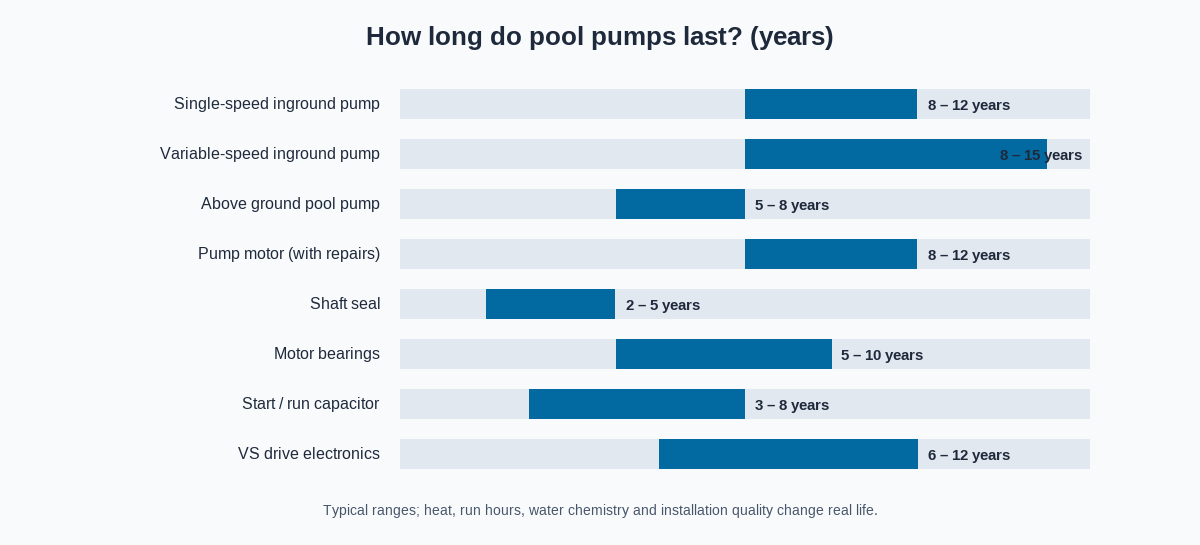
Chart: Asphapro.com
Quick Answer
Most pool pumps last 8 to 12 years. Variable-speed pumps often last 8 to 15 years because they run slower and cooler, while above ground pool pumps usually last 5 to 8 years. Parts wear out sooner: shaft seals every 2 to 5 years, bearings every 5 to 10 years and capacitors every 3 to 8 years. Heat, long run hours, low water, running dry, poor ventilation and unbalanced water shorten pump life. Signs of a failing pump include loud grinding or screeching, leaks under the pump, overheating, tripping breakers and weak flow. Repairs cost $50 to $900; a new pump installed costs about $600 to $2,800.
The pump is the hardest-working part of a pool. It runs for hours every day, moving thousands of gallons through the filter, heater and other equipment. Like any motor, it wears out over time, and the way it is installed, used and cared for makes a big difference to its life. Knowing how long do pool pumps last helps you plan for replacement, spot problems early and decide whether to repair or replace when something goes wrong.
This guide explains how long does a pool pump last by type, which parts fail first, warning signs, repair costs and maintenance tips. For daily run times, see how long to run pool pump equipment.
How Long Do Pool Pumps Last by Type?
Single-Speed Inground Pumps: 8 to 12 Years
Single-speed pumps run at full power whenever they are on. They are simple and durable, and many last 8 to 12 years with routine repairs such as new seals and bearings. Their motors run hot, which wears insulation, bearings and capacitors over time, especially in sunny climates with long run hours.
Variable-Speed Pumps: 8 to 15 Years
Variable-speed pumps use permanent magnet motors and electronic drives. Running at low speed most of the day, they stay cooler and quieter, which is easier on bearings and seals. Many last 10 to 15 years. The drive electronics can fail, though, especially from heat, moisture, power surges or lightning, and they are expensive to replace.
Above Ground Pool Pumps: 5 to 8 Years
Above ground pool pumps are smaller and often built to a lower price. Many sit in full sun and rain and run on hot days. A typical lifespan is 5 to 8 years. Bringing the pump indoors in winter and shading it in summer helps it last longer, as does keeping it off wet ground.
How Long Does a Pool Pump Last? The Parts That Wear Out First
Shaft seal. The seal stops water from leaking along the motor shaft. It wears out every 2 to 5 years and fails sooner if the pump runs dry or water chemistry is off. A leaking seal lets water reach the motor bearings, which then fail.
Bearings. Motor bearings wear over time and from heat and water. Worn bearings cause a loud screeching or grinding noise. Replacing bearings costs less than a new motor if caught early, before heat and vibration damage the shaft and windings.
Capacitors. Single-speed motors use start or run capacitors. A failing capacitor causes humming, slow starting or no start. Capacitors are cheap and easy to replace, but they store a charge, so they must be discharged safely before handling.
Impeller. The impeller can clog with debris or crack. A cracked impeller reduces flow, and debris such as leaves, hair pins and pebbles can wedge in the vanes.
Motor windings and drives. Overheating can damage motor windings, and variable-speed drives can fail electronically after surges. These are the most expensive repairs.
How Long Do Pool Pumps Last Before Warning Signs Appear?
- Loud screeching, grinding or rattling noises (often bearings).
- Water leaking from under the motor or around the pump (often the seal).
- The motor hums but will not start (often a capacitor or a stuck impeller).
- The motor overheats and shuts off, or trips the breaker.
- Weak flow, low filter pressure, or air in the pump basket.
- Rust, burned smell or cracked housing.
- Variable-speed error codes that keep returning.
Repair or Replace: How Long Should a Pool Pump Last Before You Replace It?
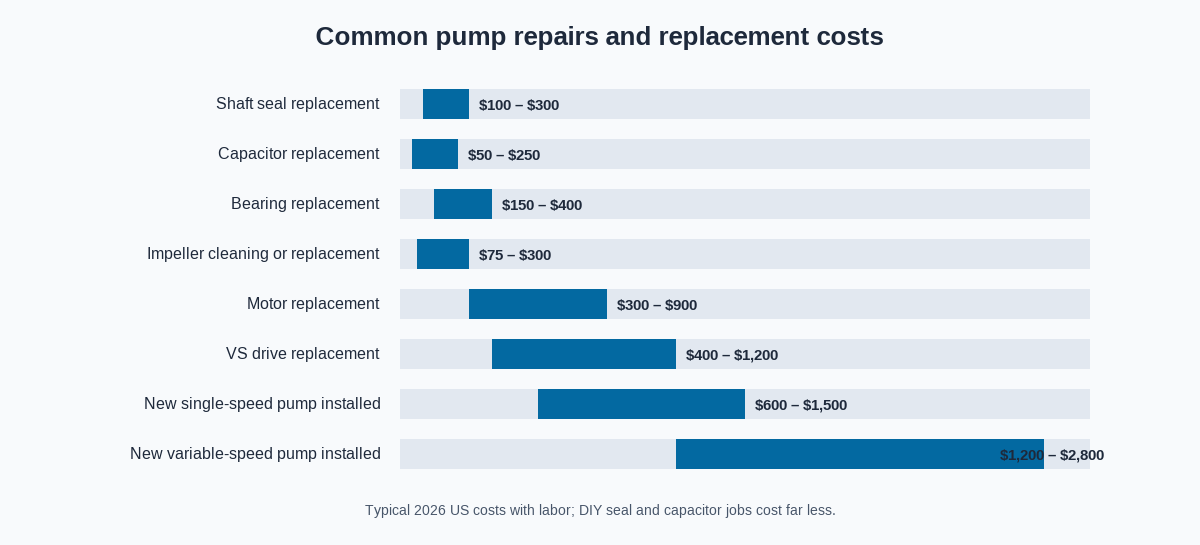
Chart: Asphapro.com
For a pump under about 6 to 8 years old, replacing a seal, capacitor or bearings is usually worth it. If the motor fails on an older single-speed pump, replacing the whole pump with an efficient variable-speed model is often the better choice, since energy savings pay back the extra cost within a few years. A good rule: if the repair costs more than half the price of a new pump, or the pump is near the end of how long should a pool pump last for its type, replace it.
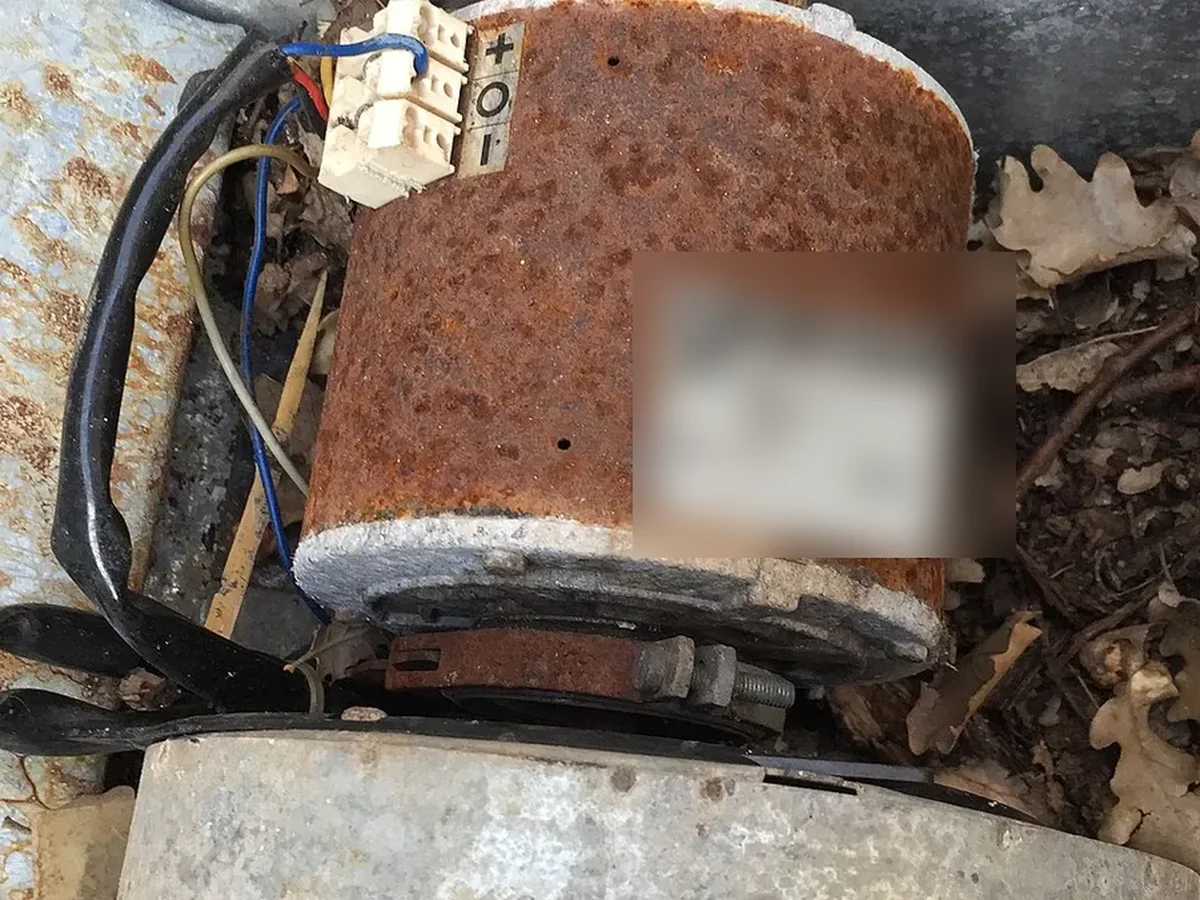
Photo: Air fans, Wikimedia Commons, CC BY-SA 4.0 (nameplate blurred)
How to Make a Pool Pump Last Longer
Keep the water level at the middle of the skimmer so the pump never runs dry. Empty the skimmer and pump baskets often. Keep the filter clean so the pump does not strain. Make sure the motor has shade and airflow and is not covered by plants or a tight box. Protect it from rain and sprinklers. Keep pH and chlorine balanced, since harsh water attacks seals. Use a variable-speed pump at lower speeds whenever the job allows it. Install surge protection for variable-speed drives. Winterize properly in freezing climates every single year. Replace seals at the first sign of a leak, before water ruins the bearings.
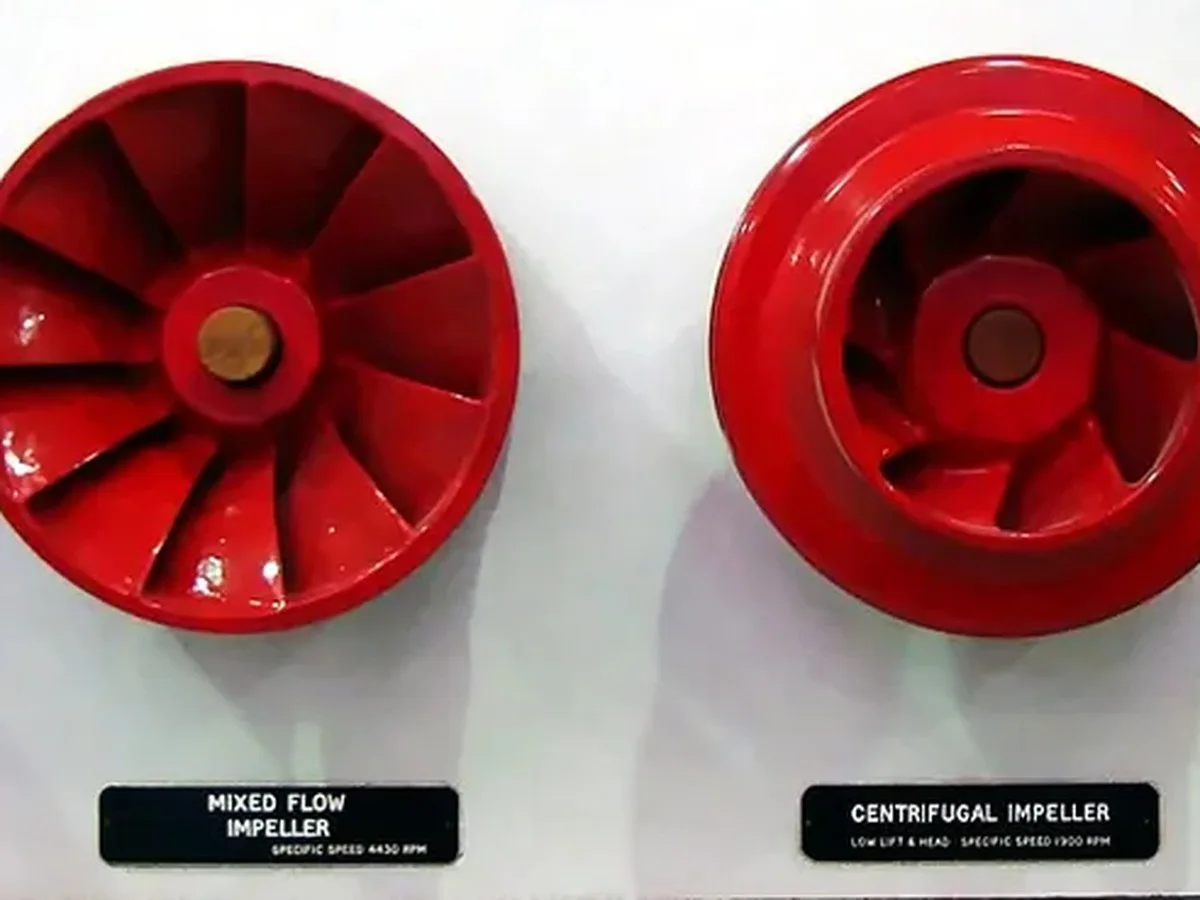
Photo: Meisam, Wikimedia Commons, CC BY-SA 3.0
How Long Does a Pool Pump Last in Different Climates?
Climate has a big effect on how long does a pool pump last. In hot, sunny regions such as Arizona, Texas and Florida, pools run year-round, pumps work long hours, and equipment pads bake in the sun. Heat is hard on motor windings, bearings, capacitors and variable-speed electronics, so pumps in these areas often fall toward the lower end of the normal range unless they are shaded and well ventilated. In cooler regions with shorter seasons, pumps may run only five or six months a year and can last longer in calendar years, but freeze damage is a risk if the pool is not winterized properly. Coastal areas add salt air, which speeds corrosion of motor housings and electrical parts. Shading the equipment pad, adding ventilation and protecting it from rain and sprinklers all help in any climate.
How Long Should a Pool Pump Last With Heavy Use?
Run hours matter. A pump running 12 hours a day, every day of the year, accumulates over 4,000 hours annually, while one running 8 hours a day for five months accumulates about 1,200 hours. When owners ask how long should a pool pump last, it helps to think in run hours as well as years. Single-speed motors at full power wear faster with more hours. Variable-speed pumps running long hours at low speed often wear more slowly than single-speed pumps running fewer hours at full power, since bearings and seals see less stress and less heat at low speed. If your pool needs long run times, a variable-speed pump is usually the better choice for both energy and lifespan.
Installation Problems That Shorten Pump Life
Many pumps fail early because of how they were installed rather than how they were built. Common problems include wiring that is too small for the motor, which causes voltage drop and overheating; the wrong voltage setting on dual-voltage motors; a pump that is too large for the plumbing, which causes cavitation and noise; suction lines with leaks that let air in and make the pump run partly dry; a pump set lower than the pool without proper valves, which makes service hard; and equipment pads where water pools around the motor. A pump placed in direct sun, in a tight enclosure without airflow, or under a sprinkler also wears faster. A well-installed pump on a dry, shaded, ventilated pad with correct wiring is far more likely to reach the upper end of how long do pool pumps last.
Troubleshooting Common Pump Problems
Screeching or grinding noise. Usually worn motor bearings. If caught early, bearings can be replaced. If ignored, the motor can seize.
Water under the pump. Usually a failed shaft seal, sometimes a cracked housing or loose fitting. Replace the seal quickly to protect the bearings.
Humming but not starting. Often a failed capacitor, a jammed impeller or seized bearings. Turn off power and check whether the shaft turns freely by hand.
Pump turns off by itself. Overheating from blocked airflow, low voltage, a clogged impeller or worn bearings. Check ventilation and wiring.
Air in the pump basket. A suction-side leak, low water level, a loose lid or a cracked o-ring. Air makes the pump work harder and can damage the seal.
Weak flow. A clogged impeller, dirty filter, closed valve or failing motor.
Solving these early can add years to how long does a pool pump last.
Replacing a Shaft Seal
A leaking seal is the most common pump repair and one many owners do themselves. Turn off power at the breaker, close valves, and remove the motor from the pump housing. Remove the diffuser and impeller, then the old seal halves from the impeller and seal plate. Clean the surfaces, press in the new seal halves without touching the sealing faces, and reassemble with new o-rings and gaskets. Seal kits cost $20 to $50; a pro charges $100 to $300. Replacing the seal at the first sign of a drip protects the bearings and is one of the best ways to make a pump last.
Replacing a Capacitor
If a single-speed motor hums but does not start, or starts slowly, the capacitor may have failed. With power off, remove the motor end cover, discharge the capacitor safely with an insulated screwdriver across the terminals, note the wiring, and replace it with one of the same rating. Capacitors cost $15 to $50. If you are not comfortable with electrical work, have a pro do it.
Motor Replacement vs New Pump
When a motor fails, you can replace just the motor and keep the wet end (housing, impeller and basket), or replace the whole pump. A new motor costs $300 to $900 installed and makes sense if the wet end is in good condition and the motor is a standard size. A complete new pump costs more but comes with a new housing, impeller and seal, and often better efficiency. Since 2021, US federal efficiency rules have made variable-speed motors the norm for most replacement inground pump motors, so a "motor only" replacement may require a variable-speed motor anyway.
Replacing Early to Save Energy
Even if an old single-speed pump still runs, replacing it before it fails can make financial sense. A variable-speed pump can cut pump energy use by 50 to 80%, saving hundreds of dollars a year in many pools. With utility rebates, the payback is often two to four years. When you think about how long do pool pumps last, also think about how much an old, inefficient pump costs to run each year it keeps going.
Winterizing to Protect the Pump
In freezing climates, water left in the pump housing can freeze, expand and crack it. When closing the pool, drain the pump by removing the drain plugs, blow out the lines, and store the plugs in the pump basket. Many owners remove the pump and store it indoors. In mild climates where the pool stays open, use freeze protection to run the pump during cold snaps. Proper winterizing prevents one of the most common causes of early pump failure. See how to winterize a pool.
How Long Do Pool Pumps Last: Worked Examples
Example 1: long-lived single-speed pump. A 1 hp single-speed pump in a shaded, ventilated pad in Ohio runs 8 hours a day for five months a year. The owner replaces the seal at year 4 and the bearings at year 9. The pump finally fails at year 13.
Example 2: sun-baked pump. A 1.5 hp pump in full Arizona sun runs 12 hours a day year-round. The capacitor fails at year 3, the seal at year 4, and the motor overheats and fails at year 7. The owner replaces it with a shaded variable-speed pump.
Example 3: variable-speed upgrade. An owner replaces a working 10-year-old single-speed pump with a variable-speed pump, cutting the electric bill by $45 a month in summer. With a $200 utility rebate, the $1,800 upgrade pays back in under four years.
Budgeting for Replacement
Since you know roughly how long should a pool pump last, you can plan for it. Set aside $100 to $250 a year for pump repairs and eventual replacement. If your pump is past 8 to 10 years old, start comparing replacement options before it fails, so you are not rushed into a poor choice in the middle of summer. Keep the model and serial number, installation date and repair records together, which also helps with warranty claims.
Warranties and What They Tell You
Pump warranties give a hint about expected life. Many single-speed pumps carry one to three years of coverage, while many variable-speed pumps carry three years or more, sometimes longer when installed by a registered professional. A warranty does not guarantee how long do pool pumps last, but a longer one usually signals better components. Read the terms: many warranties exclude damage from running dry, freezing, lightning, flooding, incorrect wiring or harsh water chemistry. Register the pump after installation, keep receipts and installation records, and note any professional installation requirement. If a pump fails early, a valid warranty can cover parts and sometimes labor.
Above Ground Pool Pumps: Making Them Last
Above ground pool pumps often sit right next to the pool on the ground, exposed to sun, rain, splashing and lawn sprinklers. To help them last, set the pump on a raised, level pad so water drains away from the motor. Add a ventilated pump cover or a small shade structure. Keep grass clippings and leaves away from the motor vents. Plug the pump into a properly installed GFCI outlet rather than an extension cord, which can cause voltage drop. In freezing climates, drain and bring the pump indoors for winter. Because these pumps are smaller, they are also easier and cheaper to replace, so many owners simply budget for a new one every five to eight years. Even so, these steps can extend how long does a pool pump last on an above ground pool by several seasons.
Signs It Is Time to Plan a Replacement
Even before a pump fails completely, some signs suggest it is near the end. Repeated repairs within a short time, such as a seal and bearings in the same season, show the motor is wearing out. Rising electric bills without a change in run time can mean the motor is losing efficiency. A cracked or brittle pump housing, a lid that no longer seals, or heavy corrosion on the motor are signs of age. If your pump is over ten years old and shows any of these, it is wise to plan a replacement before peak season, rather than wait for a breakdown in July when installers are busy. Knowing how long should a pool pump last for your type of pump makes this decision easier.
Choosing a Replacement Pump That Lasts
When it is time to replace, choose a pump sized for your pool and plumbing, not simply the biggest model available. Oversized pumps run harder and wear faster. A variable-speed pump is usually the best value for inground pools, both for energy savings and for longer life at low speeds. Look for sealed, totally enclosed motors in wet or dusty locations, and for drives with good surge protection. Check the warranty and whether local service and parts are available. See our pool pump size calculator to find the right flow for your pool.
How Long Does a Pool Pump Last With a Salt System or Heater?
Salt systems and heaters do not directly shorten pump life, but they change how the pump is used. Salt cells need enough flow to make chlorine, so salt pools often run the pump longer each day. Heaters need minimum flow and add resistance, which makes single-speed pumps work harder. Salt water itself can speed corrosion of metal parts on the outside of the motor if splashes or leaks reach it, so keep the equipment pad dry. With a variable-speed pump set to the right speeds for each job, a pool with a salt system and heater can still expect the normal answer to how long does a pool pump last, about 8 to 15 years.
Noise as an Early Warning
Your ears are one of the best tools for catching pump problems early. A healthy pump makes a steady hum. A high-pitched squeal or screech usually means bearings are wearing. A gravel-like rattle often means cavitation, where the pump is starved of water because of a clogged basket, closed valve or low water level. A clicking or ticking can mean debris in the impeller. A loud hum without the motor turning often means a failed capacitor. Listen to your pump when you first install it so you know its normal sound, then check for changes every week or two. Catching a bearing noise early can mean a $150 to $400 repair instead of a new motor.
Keeping Records
A simple record of your pump's history helps you understand how long do pool pumps last in your own pool and plan ahead. Note the installation date, model, horsepower, seal and bearing replacements, capacitor changes, and any error codes. Record filter pressure when clean, so you can spot rising pressure that strains the pump. Over time, these records make it easy to decide when a repair is worth it and when a replacement is due, and they help a technician diagnose problems quickly.
Simple Monthly Pump Checklist
A quick monthly check helps any pump reach the upper end of how long do pool pumps last. Look under and around the pump for drips or wet spots. Listen for new noises. Feel the motor housing after it has run for a while; warm is normal, too hot to touch is not. Check that vents are clear of leaves, dirt and spider webs. Empty the pump and skimmer baskets and check the lid o-ring for cracks, lubricating it with a pool-safe silicone lubricant. Check the filter pressure and clean the filter when it rises 8 to 10 psi above clean. Make sure the water level is mid-skimmer. Note anything unusual in your pump log. These few minutes a month catch most problems while they are still small and cheap to fix.
How Long Do Pool Pumps Last: Key Points
- Most pool pumps last 8 to 12 years; variable-speed up to 15.
- Seals, bearings and capacitors wear first and are cheap to fix early.
- Noise, leaks, overheating and weak flow signal trouble.
- Shade, clean baskets and balanced water help pumps last longer.
Frequently Asked Questions
How long should a pool pump last?
About 8 to 12 years for most inground pumps, up to 15 for well-kept variable-speed pumps, and 5 to 8 years for above ground pumps. Seals, bearings and capacitors often need replacing along the way.
Do variable-speed pumps last longer?
Often, because they run slower and cooler most of the day, which is easier on bearings and seals. Their electronic drives can fail, though, so surge protection, shade and dry conditions matter.
Is it worth repairing an old pool pump?
For small repairs such as a seal or capacitor, yes. For a failed motor on a pump that is 8 years or older, replacing the whole pump with an efficient variable-speed model is usually better value.
Can a pool pump run 24 hours a day?
Variable-speed pumps at low speed can run 24 hours with little wear and low power use. Single-speed pumps can, but they wear faster and cost much more to run.
Why is my pool pump so loud?
Often worn bearings, a clogged impeller, cavitation from a starved suction side, or air in the system. Check baskets, water level and valves first, then the bearings.
How much does a new pool pump cost?
About $600 to $1,500 installed for a single-speed pump and $1,200 to $2,800 for a variable-speed pump, before any utility rebates.
Sources
- US Department of Energy: Swimming pool pumps
- ENERGY STAR: Pool pumps
- OSHA: Electrical safety
- Pool and Hot Tub Alliance