
How to Winterize a Pool: Step-by-Step Closing Guide
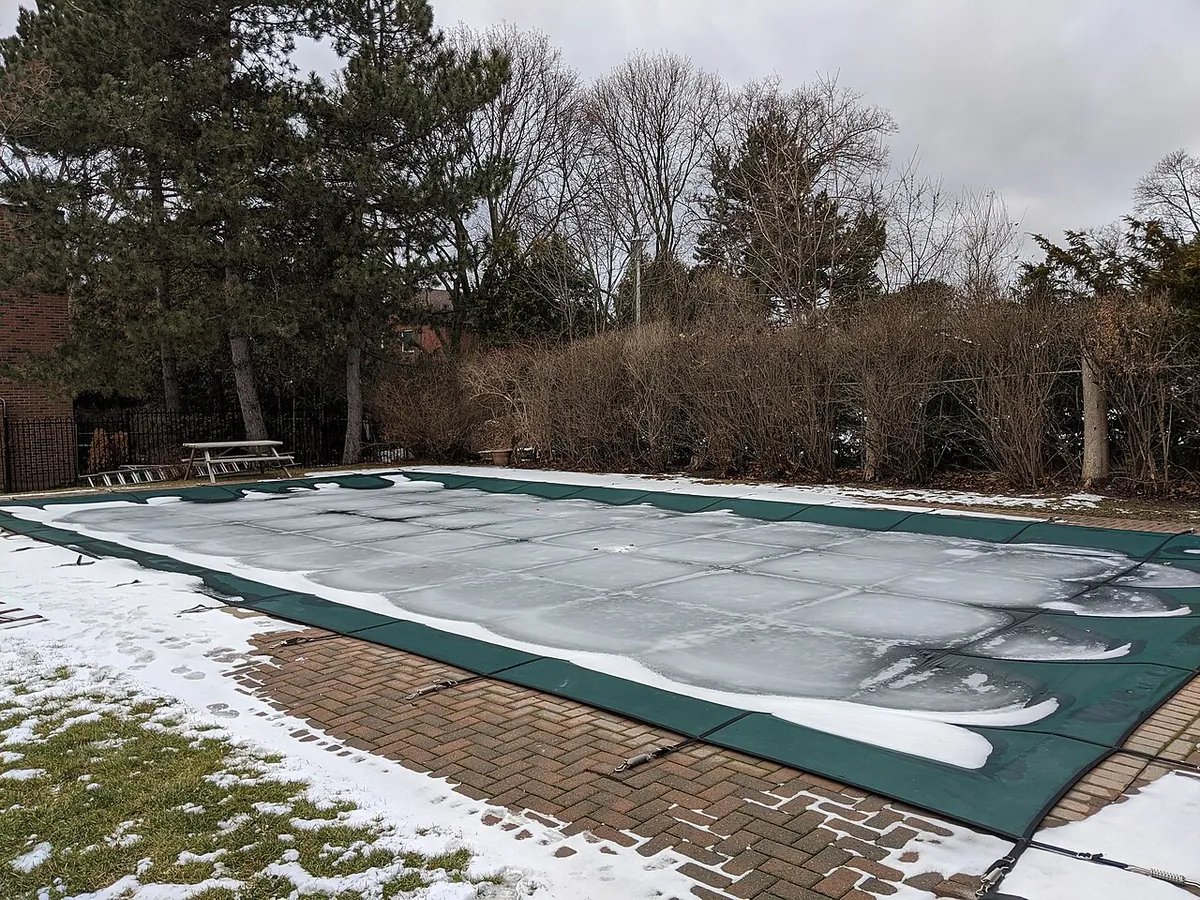
Photo: Sikander Iqbal, Wikimedia Commons, CC BY-SA 4.0
Quick Answer
How to winterize a pool: when the water stays below about 65 °F, clean the pool and filter, balance the water (pH 7.4 to 7.6, alkalinity 80 to 120 ppm), shock it and let chlorine fall back to 1 to 3 ppm, then lower the water below the skimmer (about 4 to 6 inches below for mesh covers, just below the skimmer or tile for solid covers). Blow out the plumbing with a shop vac or air blower and plug the lines, drain the pump, filter and heater, add winterizing chemicals such as algaecide or a pool winterizing kit, and put on a safety or winter cover. To winterize an above ground pool, follow the same steps, remove or plug the skimmer and return, and use an air pillow under the cover to protect the wall from ice.
Winterizing a swimming pool, also called closing a pool, protects it from freeze damage and keeps the water clean until spring. Water left in pipes, the pump, filter or heater can freeze, expand and crack them, leading to costly repairs. A pool that is closed without balancing and treating the water often opens in spring as a green swamp with stains on the walls.
This guide explains how to winterize a pool step by step for inground and above ground pools: when to close, how far to lower the water, how to blow out and plug the lines, how to drain equipment, which pool winterizing chemicals to use, choosing a pool winterizing cover, and what to do in warm climates where pools stay open. If you would rather hire a pro, ask local pool services for a closing price; most charge about $150 to $400.
When to Winterize a Pool
When to close pool equipment for the year depends on water temperature, not the calendar.
The best time to close a pool for winter is when the water temperature stays below about 65 °F. Algae grows slowly at that temperature, so the pool stays clean under the cover. Closing too early, while the water is still warm, gives algae time to grow under the cover. In cold climates, close before the first hard freeze to avoid frozen pipes. Many owners in the northern US close in September or October.
What You Need to Winterize a Pool
- A pool winterizing kit or chemicals: shock, algaecide, stain and scale preventer, enzyme or phosphate remover.
- Water test kit.
- Shop vac or air blower to blow out lines.
- Rubber winter plugs for return fittings and plumbing lines.
- Skimmer plug or ice compensator (a "Gizzmo" style skimmer guard).
- Pool antifreeze (non-toxic propylene glycol made for pools), if used in your area.
- Submersible pump or the pool pump's waste setting to lower water.
- Winter cover (safety mesh, solid safety, or a tarp-style winter cover) with water bags or anchors.
- Air pillow for above ground pools.
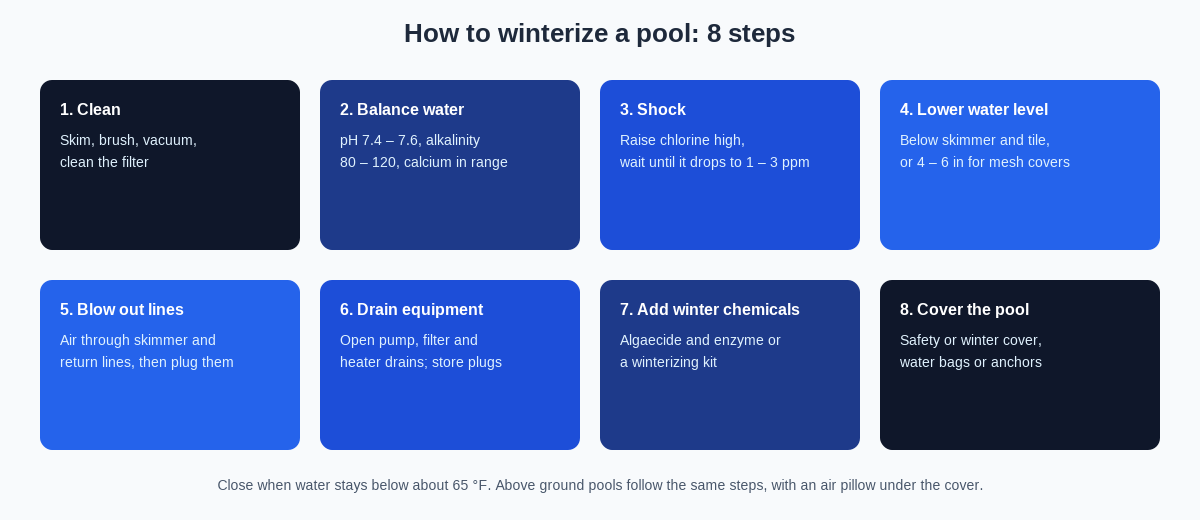
Diagram: Asphapro.com
How to Winterize an Inground Pool: Step by Step
Here is how to close an inground pool, the full process for winterizing inground pool systems. These are also the steps for how to close a pool for winter in most cold climates.
Step 1: Clean the pool
Skim leaves, brush the walls and floor, and vacuum. Empty the skimmer and pump baskets. Any debris left in the pool feeds algae and stains the surface over winter.
Step 2: Balance the water
Test and adjust about a week before closing: pH 7.4 to 7.6, total alkalinity 80 to 120 ppm, calcium hardness 200 to 400 ppm (lower for vinyl). Balanced water protects plaster, liners and equipment from corrosion and scale while the pool sits.
Step 3: Shock the pool
Shock a few days before closing to kill algae and bacteria. Use liquid chlorine or cal-hypo, and let the free chlorine drop back to 1 to 3 ppm before adding algaecide, since high chlorine can break down some algaecides.
Step 4: Clean the filter
Backwash a sand or DE filter, or remove and deep clean cartridges. A filter stored dirty is harder to clean in spring. See how to clean swimming pool filter.
Step 5: Lower the water level
Lower the water so it cannot freeze in the skimmer or crack the tile. For a mesh safety cover, lower the water about 4 to 6 inches below the skimmer mouth (or below the tile line). For a solid cover that rests on the water, lower it just below the skimmer, since the water helps support the cover. Never drain a pool completely; empty concrete or fiberglass pools can lift out of the ground, and vinyl liners can shrink and crack.
Step 6: Blow out and plug the lines
This step protects underground plumbing from freezing. With the pump off, use a shop vac or air blower at the equipment pad to push air through each line. Air bubbling out of the skimmer, returns and main drain means the line is clear. Plug the returns and skimmer lines with rubber winter plugs while air is still blowing, so water cannot flow back in. For the main drain, many owners blow air until bubbles appear, then close the valve to create an air lock. Some areas add pool antifreeze to the lines as extra protection.
Step 7: Drain the equipment
Remove drain plugs from the pump, filter, heater and chlorinator so water drains out. Open the filter's air relief, set multiport valves to the winter position, and remove the pressure gauge. Store the plugs in the pump basket so they are easy to find in spring. Turn off breakers to the pump, heater and lights. In very cold areas, some owners move small pumps and cartridge filters indoors.
Step 8: Add winterizing chemicals
Add winter algaecide, stain and scale preventer, and an enzyme or phosphate remover as directed. A pool winterizing kit bundles these for a given pool size. Pour them around the pool and let them mix before covering (you can run the pump briefly before blowing out the lines, or brush them in).
Step 9: Cover the pool
Put on the cover. Safety covers anchor into the deck and can hold the weight of a person; solid winter covers lie on the water and are held with water bags around the edge. Tighten straps evenly and fill water bags halfway to allow for freezing.
How to Winterize an Above Ground Pool
If you need to know how to close an above ground pool for winter, or how to close above ground pool for winter in one afternoon, start here. Above ground pools need the same water care, but the equipment and cover steps are different. Here is how to winterize an above ground pool:
- Clean the pool and balance the water as above.
- Shock and let chlorine drop to normal.
- Clean the filter (backwash or hose the cartridge).
- Lower the water 4 to 6 inches below the skimmer and return. Some owners use a skimmer cover plate instead of lowering the water much.
- Remove the return fitting and skimmer basket, and plug the return and skimmer openings with winter plugs or a skimmer cover.
- Disconnect the hoses from the pump and filter, and drain them.
- Drain and store the pump and filter indoors if possible. Remove drain plugs and the pressure gauge.
- Add winterizing chemicals from an above ground pool winterizing kit.
- Inflate an air pillow and tie it in the center of the pool. It absorbs the pressure of ice expanding and keeps it off the walls, and it helps rain and snow run off the cover.
- Put on the winter cover and secure it with the cable and winch, plus cover clips or a cover seal to block wind.
Check the air pillow and cover a few times during winter, and pump off standing water so its weight does not damage the cover or the pool walls.
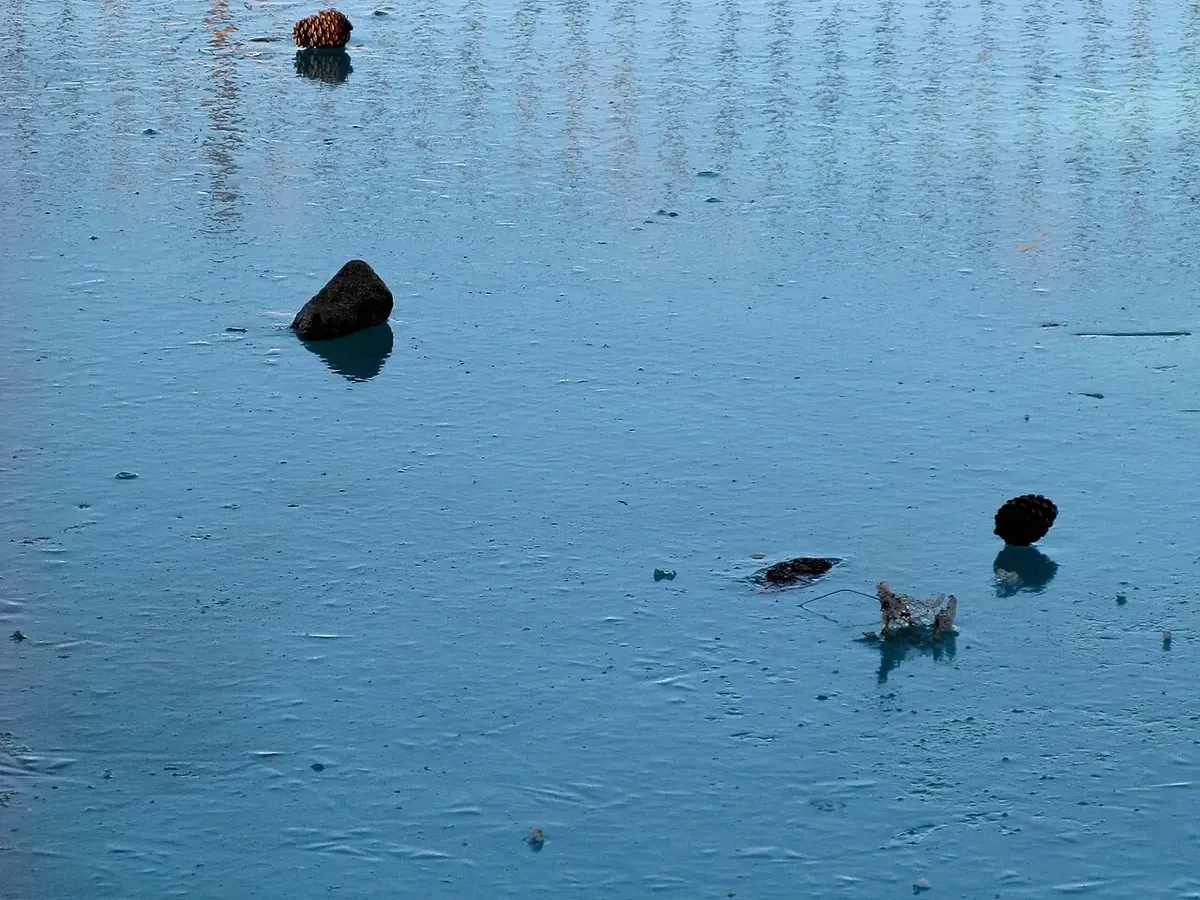
Photo: Pamkelso, Wikimedia Commons, CC BY-SA 4.0 (cropped)
Pool Winterizing Kits and Chemicals
A pool winterizing kit is a convenient package sized for your pool (often 15,000, 20,000 or 35,000 gallons). Most swimming pool winterizing kits include:
- Shock: to kill algae and bacteria before closing.
- Winter algaecide: a long-lasting algaecide to slow algae under the cover.
- Stain and scale preventer: keeps metals and calcium from depositing on surfaces.
- Enzyme or phosphate remover: breaks down oils and removes nutrients that feed algae.
An above ground pool winterizing kit is the same idea, sized for smaller pools. You can also buy pool winterizing chemicals separately if you already have some on hand. Follow the label for timing; most winterizing pool chemicals go in after shocking, once chlorine is back to normal levels.
Choosing a Pool Winterizing Cover
| Cover type | Pros | Cons | Typical cost |
|---|---|---|---|
| Mesh safety cover | Holds a person's weight, lets rain drain through, lasts 10 – 15 years | Lets fine dirt and some light through | $1,500 – $3,500 installed |
| Solid safety cover | Blocks light and debris; holds weight | Needs a pump to remove standing water | $2,000 – $4,500 installed |
| Winter tarp cover (inground) | Low cost, blocks light | Not a safety cover; water bags and pumping needed | $100 – $400 |
| Above ground winter cover | Low cost, fits with cable and winch | Not a safety cover; can tear in storms | $50 – $200 |
| Automatic cover | Push-button, safety rated | Expensive; not all are rated for heavy snow | $8,000 – $20,000 |
If children or pets are around, a safety cover that meets ASTM F1346 is the best choice for a pool winterizing cover.
Winterizing a Pool in Warm Climates
In places where freezes are rare and brief, such as much of Florida, Texas, Arizona and Southern California, many owners keep pools open all year. Instead of fully closing:
- Run the pump fewer hours, but keep the water circulating and chlorinated.
- Use a freeze-protection setting or timer that runs the pump when temperatures drop near freezing.
- Keep the water balanced and skim leaves regularly.
- Use a solar cover to keep debris out and hold some heat.
This is sometimes called a "partial" or "mid-season" closing. It saves the cost and effort of a full closing and makes spring start-up easy.
Common Mistakes When Winterizing a Pool
- Closing too early while the water is warm, which invites algae.
- Draining the pool completely, which can damage the shell or liner.
- Not blowing out lines, leading to cracked pipes.
- Leaving water in the pump, filter or heater.
- Adding algaecide with very high chlorine, which can break it down.
- Losing drain plugs over the winter.
- Leaving debris in the pool, which stains surfaces.
- Ignoring the cover all winter and letting water and leaves pile up on it.
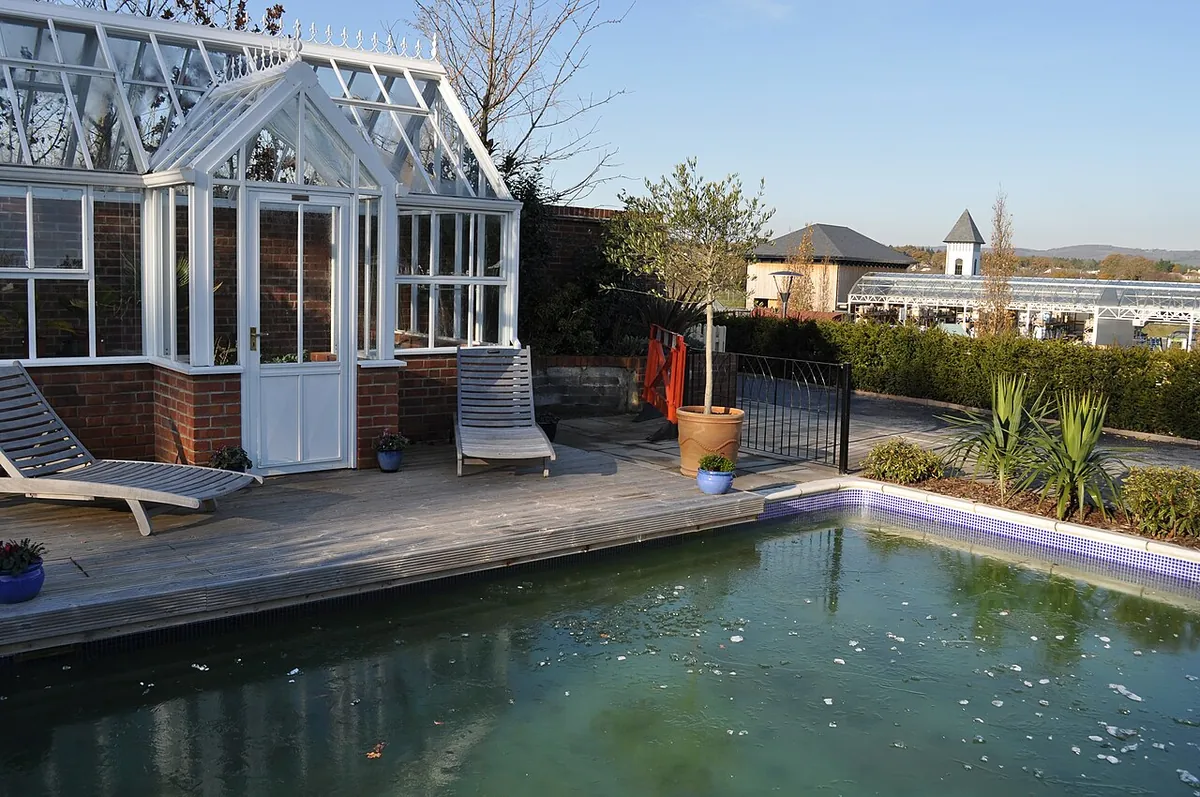
Photo: Lewis Clarke, Wikimedia Commons, CC BY-SA 2.0
Opening the Pool in Spring
A good closing makes opening easy. In spring, remove water and debris from the cover, take it off, clean and store it. Reinstall plugs, fittings and equipment, top up the water, prime the pump (see how to prime a pool pump), and run the filter. Test and balance the water, then shock. A well-closed pool is often clear within a day or two.
Winterizing Pool Plugs and Accessories
Pool winterizing plugs seal the openings in the pool and the pipe ends at the equipment so water cannot flow back into lines you have blown out. Common types:
- Threaded return plugs: screw into return fittings inside the pool.
- Expansion (rubber) plugs: fit inside pipes and seal when you tighten a wing nut. Sizes for 1.5 and 2 inch pipe are most common.
- Skimmer plugs and ice compensators: a skimmer guard (often called a Gizzmo) screws into the skimmer bottom; it seals the line and compresses if ice forms, protecting the skimmer body from cracking.
- Above ground skimmer cover plates: snap over the skimmer opening so you do not have to lower the water as much.
Buy swimming pool winterizing plugs in the right sizes before closing day, and keep a spare or two. Pool plugs winterizing kits are cheap, usually $10 to $40.
How to Winterize a Pool Pump, Filter and Heater
Equipment is where most freeze damage happens. To winterize the pool pump and other equipment:
- Turn off power at the breaker to the pump, heater, salt cell and lights.
- Pump: remove both drain plugs and the basket lid so all water drains. Store plugs in the basket. Small pumps can be moved indoors.
- Sand filter: remove the drain cap, open the air relief, set the multiport to WINTER or between settings, and remove the gauge.
- Cartridge filter: remove, clean and store the cartridge indoors; drain the tank.
- DE filter: backwash, drain, and clean the grids if due.
- Heater: follow the maker's instructions to open drain plugs or use the drain valve; turn off the gas supply. Blow out the heater with air if recommended.
- Salt cell and chlorinator: remove, clean and store indoors, or drain.
- Valves: leave them partly open so trapped water can escape.
Winterizing Pool Pills and Floaters
A pool winterizing pill or winter floater is a slow-release chemical pack you leave in the pool under the cover. Some contain enzymes that break down oils and organic matter; others contain a slow-dissolving algaecide or chlorine. They help keep water clearer over a long winter, especially in pools with lots of leaves nearby. Follow the instructions, and do not let chlorine floaters rest against a vinyl liner, where they can bleach it.
Close an Inground Pool vs Close an Above Ground Pool
| Step | Inground pool | Above ground pool |
|---|---|---|
| Lower water | Below skimmer or tile (mesh covers: 4 – 6 in below skimmer) | 4 – 6 in below skimmer and return, or use a skimmer cover plate |
| Lines | Blow out underground lines and plug | Disconnect hoses and drain |
| Equipment | Drain in place; protect from snow | Drain and store indoors if possible |
| Cover | Safety cover anchored to the deck, or tarp with water bags | Winter cover with cable and winch |
| Ice protection | Skimmer guard, water level | Air pillow in the center |
Whether you need to close an inground pool or close pool above ground models, the water care steps are the same: clean, balance, shock and add winter chemicals.
Mid-Winter Pool Checks
- Pump standing water off solid covers so the weight does not stretch or tear them.
- Brush heavy snow off above ground pool covers gently.
- Check that water bags and anchors are still in place after storms.
- Look at the water level; if it rises near the skimmer, lower it again.
- Check the air pillow on above ground pools.
- Make sure gates and fences are still secure.
Should You Hire a Pro to Close the Pool?
Many owners close their own pools with no trouble. Hiring a pro makes sense if you have a complex system with heaters, salt cells, automation or multiple lines; if you do not have a strong air blower; if you have had freeze damage before; or if you simply want it done right without the work. A pro closing usually costs $150 to $400 and often includes a winterizing kit. Booking early in fall is wise, since pool services get busy when the weather turns cold.
How to Winterize Your Pool in a Hurry
If an early freeze is coming and you have not closed the pool, focus on the steps that prevent damage first. To winterize your pool fast:
- Lower the water below the skimmer and returns.
- Blow out the lines and plug them, or at least drain the equipment completely.
- Remove drain plugs from the pump, filter and heater, and turn off the power.
- Add a dose of shock and winter algaecide.
- Cover the pool.
You can balance the water and clean more thoroughly on the next mild day. Frozen, cracked equipment costs far more than a few extra days of algae.
Winterizing Chemicals for Above Ground Pool Owners
Winterizing chemicals for above ground pool use are the same types as for inground pools, in smaller doses. Most above ground pool winterizing kits treat 7,500 to 15,000 gallons and include shock, algaecide and a stain preventer. Because above ground pools often use vinyl liners, choose non-copper algaecides, which will not stain the liner, and dissolve granular shock in a bucket before adding it. If you plan to winterize above ground pool water with a floater, keep it in the center, tied to the air pillow, so it does not rest on the liner.
Pool Winter Safety
A closed pool is still a hazard. Thin ice and water on a cover can trap a child or pet. Keep the gate locked, check the fence, and use a safety cover if you can. Teach children never to walk on a pool cover, even a safety cover, and keep pool furniture away from the fence so it cannot be used to climb over. A safely closed pool means a safe swimming pool winter for the whole family.
A Simple Pool Closing Checklist
Print this checklist and tick each item on closing day:
- Water below about 65 °F for several days.
- Pool skimmed, brushed and vacuumed.
- pH 7.4 to 7.6, alkalinity 80 to 120 ppm, calcium in range.
- Pool shocked and chlorine back to 1 to 3 ppm.
- Filter backwashed or cartridge cleaned.
- Water lowered to the right level for your cover.
- Lines blown out and plugged; skimmer guard installed.
- Pump, filter, heater and chlorinator drained; plugs stored.
- Breakers off; gas valve to the heater closed.
- Winterizing chemicals added.
- Ladders, rails, lights and accessories removed and stored.
- Cover on and secured; air pillow in place for above ground pools.
Keeping notes on what you did, including the date, water readings and plug locations, makes the next opening and closing faster.
How to Winterize a Pool: Key Points
- Close when the water stays below about 65 °F.
- Clean, balance and shock the water, then clean the filter.
- Lower the water below the skimmer, never drain completely.
- Blow out and plug lines; drain the pump, filter and heater.
- Add winterizing chemicals and cover the pool.
Frequently Asked Questions
How do I winterize my pool myself?
Clean and balance the water, shock it, lower the water below the skimmer, blow out and plug the lines, drain the equipment, add winter chemicals and cover the pool.
When should I close my pool?
When the water temperature stays below about 65 °F, and before the first hard freeze in your area arrives.
How do you winterize an above ground pool?
Clean, balance and shock the water, lower it below the skimmer and return, plug the openings, drain and store the pump and filter, add winter chemicals, float an air pillow and secure the cover.
How do you winterize an inground swimming pool without blowing out the lines?
In mild climates, some owners keep the pump running on freeze protection. In freezing climates, blowing out and plugging lines is the safest way to prevent cracked pipes.
How far do I lower the water to winterize pool systems?
For mesh safety covers, about 4 to 6 inches below the skimmer or tile. For solid covers, just below the skimmer. Never drain fully.
Can I winterize a salt water pool the same way?
Yes. Also remove and clean the salt cell, turn off the generator, and store the cell indoors. Salt stays in the water over winter.
How long does it take to close a pool?
Most owners need 2 to 4 hours on closing day, plus a few days before for balancing and shocking.
Do I need pool antifreeze?
Not always. If lines are blown out and plugged properly, antifreeze is optional. In very cold areas, adding pool antifreeze to the lines is extra insurance. Never use car antifreeze.
How much does it cost to winterize a pool?
DIY: about $30 to $100 for a winterizing kit and plugs. Professional closing: about $150 to $400, more for large pools or extra equipment.
What happens if I do not winterize my pool?
In freezing climates, pipes, the pump, filter and heater can crack, and the skimmer or tile can break. Even in mild climates, an untreated pool usually turns green over winter.
Can I leave my pool open all winter?
In warm climates, yes, with the pump running and water treated. In freezing climates, an open pool risks frozen and cracked equipment.
Do I need to remove the ladder before closing?
Yes. Remove ladders, rails and diving boards if the cover requires it, and store them clean and dry, out of the weather, until spring.
Should I put chlorine tablets in the pool for winter?
Many owners float a few tablets under the cover, but high, concentrated chlorine can bleach vinyl. Follow your kit's instructions or use a winter floater made for closing.
Sources
- Swim University: How to close a pool for winter
- CPSC: Pool and spa safety
- ASTM F1346: Safety covers for pools and spas
- Pool and Hot Tub Alliance