
How Long Do Pool Filters Last? Cartridge, Sand and DE Filter Lifespan
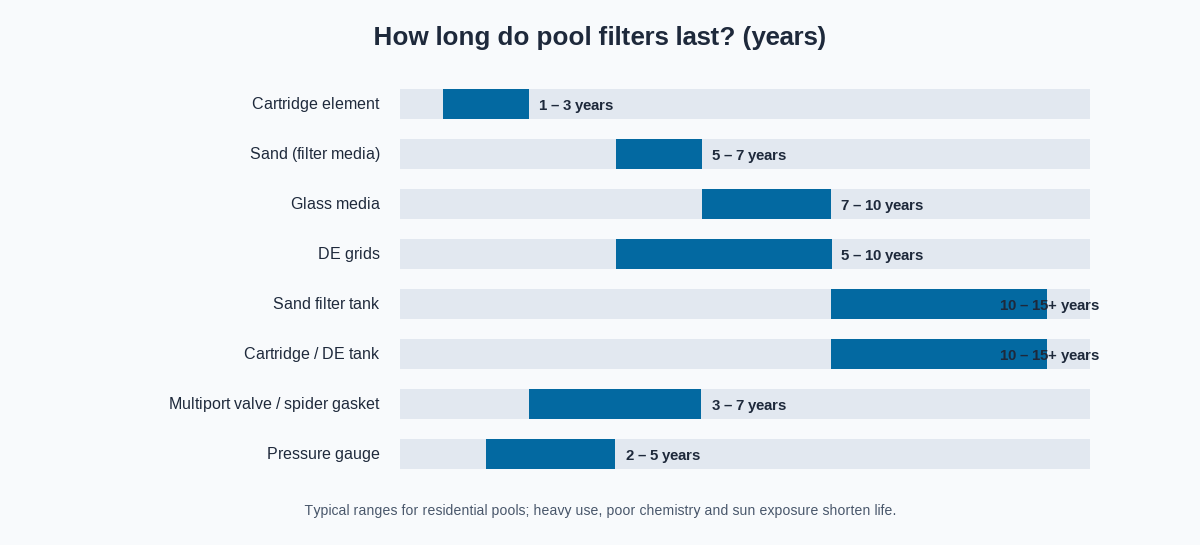
Chart: Asphapro.com
Quick Answer
How long pool filters last depends on the type. Cartridge elements usually last 1 to 3 years, or about 2,000 operating hours. Filter sand lasts 5 to 7 years, and glass media 7 to 10 years. DE filter grids last 5 to 10 years. The filter tank itself often lasts 10 to 15 years or more. Replace media when pressure rises quickly after cleaning, water stays cloudy, cartridges are torn or flattened, sand is clumped, or DE returns to the pool. Clean filters regularly, keep water balanced and avoid over-cleaning to help them last longer.
The filter is what keeps pool water clear. As water passes through, the filter traps dirt, dead algae, oils and tiny particles. Over time, the filter media wears out and the filter tank ages. A worn filter lets fine particles pass, makes the pump work harder and can leave water dull or cloudy even when chemistry is right. It also forces you to use more chlorine and run the pump longer. Knowing how long do pool filters last helps you budget for replacements and spot problems before they affect the water.
This guide explains how long should a pool filter last for each type, the signs it is time to replace parts, costs and care tips. For cleaning steps, see how to clean swimming pool filter parts.
How Long Do Pool Filter Cartridges Last?
Cartridge filters use pleated fabric elements that trap dirt on their surface. Most cartridges last 1 to 3 years, which works out to roughly 2,000 hours of operation. Pools with heavy use, lots of debris, high pump run times or frequent cleaning wear cartridges faster, sometimes in a single busy season. Cartridges in lightly used pools with good water chemistry and a cover can last three years or longer.
How long do pool filter cartridges last also depends on how you clean them. Rinsing with a garden hose every few weeks is gentle. Cleaning with a pressure washer, stiff brush or harsh chemicals damages the fabric. Soaking in a cartridge cleaner or a weak solution once or twice a season to remove oils and scale extends life. Rotating two sets of cartridges, cleaning one while using the other, also helps each last longer and lets every set dry fully.
How Long Do Pool Filters Last With Sand Media?
Sand filters use special pool filter sand (usually #20 silica) inside a tank. Water passes through the sand, and the sharp edges of the grains trap particles. Over time, the grains wear smooth and less effective, and oils and calcium can cause clumping and channeling. Most pool filter sand lasts 5 to 7 years. Glass filter media, an alternative, often lasts 7 to 10 years, may filter slightly finer and resists clumping because oils do not stick to it as easily. Zeolite media lasts a similar time to standard sand. See cost to replace sand in pool filter and how to change sand in a Hayward pool filter.
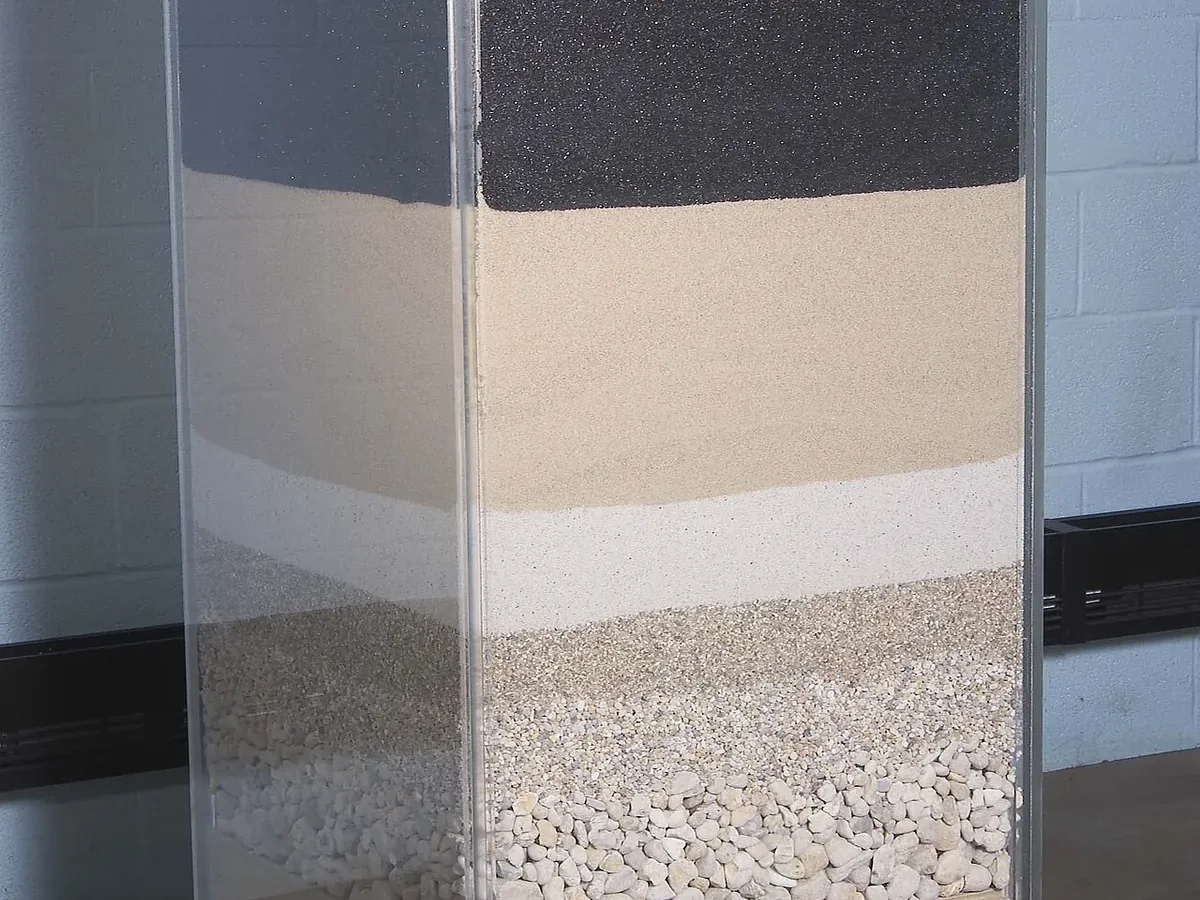
Photo: U.S. Environmental Protection Agency, Wikimedia Commons, public domain
How Long Do Pool Filters Last With DE Grids?
DE (diatomaceous earth) filters use grids or fingers coated with DE powder, which traps very fine particles. The DE powder is replaced after each backwash or cleaning, using the amount listed on the filter's label. The grids themselves usually last 5 to 10 years. They wear out when the fabric tears, the frames crack, or oils and calcium clog the fabric so it no longer cleans properly, even after soaking.
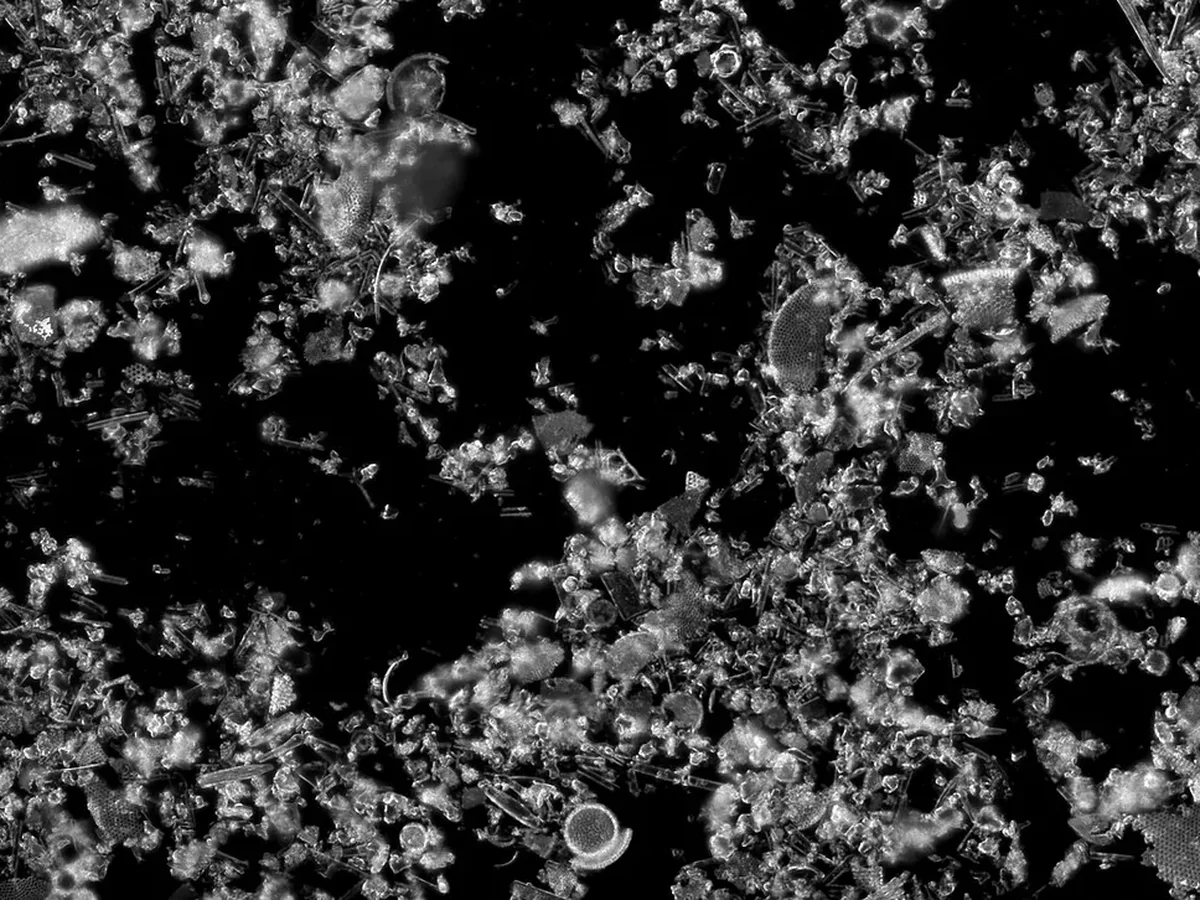
Photo: Zephyris, Wikimedia Commons, CC BY-SA 3.0
How Long Should a Pool Filter Last Before the Tank Fails?
Most residential filter tanks are made of fiberglass-reinforced plastic or similar materials. They often last 10 to 15 years or more, but UV exposure, freezing, high pressure and age can cause cracks. Clamp bands, o-rings, pressure gauges and multiport valves wear out sooner and are cheaper to replace than the tank. Inspect the tank each spring for hairline cracks, especially around the threads and the band.
How Long Should a Pool Filter Last? Signs It Needs Replacing
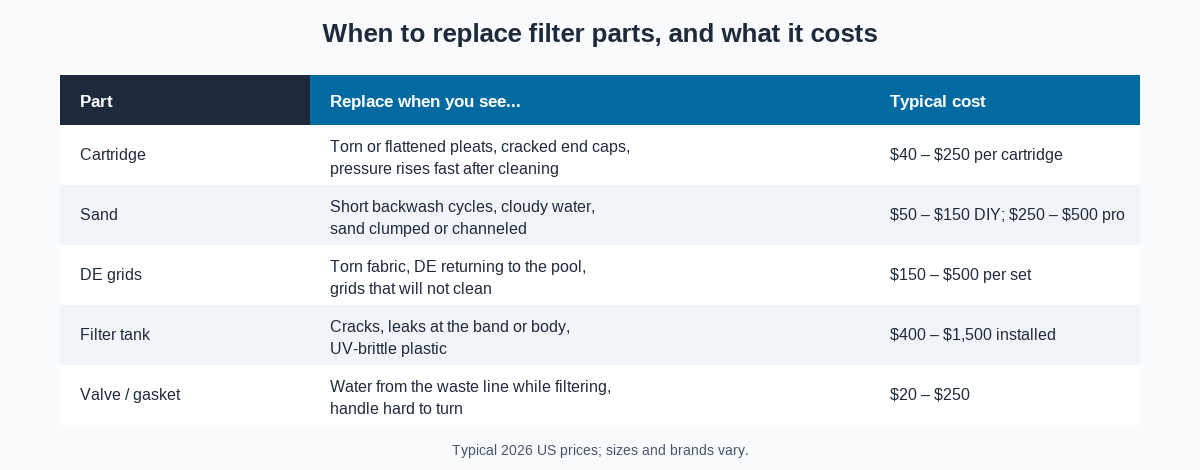
Chart: Asphapro.com
- Pressure rises quickly after cleaning or backwashing.
- Water stays cloudy even with good chemistry and long run times.
- Cartridge pleats are torn, flattened or frayed, or end caps are cracked.
- Sand comes back into the pool, or is clumped and channeled.
- DE powder returns to the pool after cleaning.
- The tank leaks or shows cracks.
How Long Do Pool Filters Last With Good Care?
Keep water balanced, since high pH and calcium cause scale that clogs media. Skim leaves and empty baskets so less debris reaches the filter. Clean or backwash only when pressure rises 8 to 10 psi above the clean reading; cleaning too often wears media and wastes water. Soak cartridges or use a filter cleaner once or twice a season to remove oils. Use enzymes or a skimmer sock in pools with lots of sunscreen, pollen or fine dust. Shade the filter from direct sun, keep it off wet ground, and replace worn o-rings so air does not leak in. Winterize properly in cold climates.
What Affects How Long Pool Filters Last?
Bather load. More swimmers bring more oils, sunscreen, hair and dirt. Busy family pools and rental properties wear filter media faster than lightly used pools.
Debris. Pools under trees, near lawns or in windy, dusty areas send more debris to the filter. Leaves that break down in the skimmer release fine particles and oils.
Water chemistry. High pH and calcium cause scale on cartridges, DE grids and sand. Low pH and high chlorine can weaken fabric and plastic. Balanced water is one of the biggest factors in how long do pool filters last.
Filter size. An undersized filter works harder and clogs faster. A filter sized generously for your pool and pump lasts longer between cleanings and wears more slowly.
Pump size. An oversized pump pushes water through the filter too fast, which reduces filtering and can damage media. See pool pump size calculator.
Cleaning habits. Gentle, timely cleaning extends life; harsh or overly frequent cleaning shortens it.
Sun and weather. UV light makes plastic tanks and valve bodies brittle. Freezing can crack tanks, valves and pressure gauges.
How Long Should a Pool Filter Last in a Salt Pool?
Salt pools do not wear filters much differently from chlorine pools, but they often have higher pH and can form more scale, which clogs cartridges and DE grids. Salt pools also tend to run the pump longer, which adds hours to the filter. With good water balance, how long should a pool filter last in a salt pool is about the same as in a chlorine pool: 1 to 3 years for cartridges, 5 to 7 for sand and 5 to 10 for DE grids. Use a cartridge cleaner that removes scale if you see white deposits on the pleats. See how to maintain a saltwater pool.
How Long Do Pool Filter Cartridges Last in Above Ground Pools?
Small cartridge filters on above ground and soft-sided pools often use thin, inexpensive cartridges. These may last only a few weeks to a few months in busy pools, especially if they are rinsed daily or run around the clock. Larger cartridges on full-size above ground pools last closer to one to two years. To make them last, rinse them gently every few days in heavy use, soak them occasionally in a cleaner, and keep a spare so you can let one dry fully while the other is in use; drying helps loosen dirt and reduces bacteria.
How to Clean a Cartridge Filter So It Lasts
Turn off the pump and release pressure with the air relief valve. Open the filter and lift out the cartridge. Rinse from the top down with a garden hose at a slight angle, working between the pleats. Avoid pressure washers, which tear the fabric. Every few months, or when oils build up, soak the cartridge overnight in a cartridge cleaning solution, then rinse well. If scale is present, use a cleaner made for scale, but never soak in acid before removing oils, as this can set the oils into the fabric. Let the cartridge dry fully before reinstalling if you have a spare. Inspect the end caps, core and pleats for damage each time.
How to Backwash a Sand Filter Without Wearing It Out
Backwash when the pressure gauge reads 8 to 10 psi above the clean, starting pressure. Turn off the pump, set the multiport valve to "backwash," start the pump and run until the sight glass or waste water runs clear, usually two to three minutes. Turn off the pump, set to "rinse" for about 30 seconds, then back to "filter." Backwashing too often removes the fine layer of dirt that actually helps a sand filter catch smaller particles, so do it only when the pressure tells you to. Once or twice a season, use a sand filter cleaner to break up oils and scale.
DE Filter Care
Backwash a DE filter when pressure rises 8 to 10 psi above clean, then add fresh DE through the skimmer in the amount the filter label specifies. Once or twice a year, take the filter apart and hose off the grids, inspecting them for tears. Soak grids in a degreaser and, if needed, a scale remover. Damaged grids let DE pass into the pool, leaving a fine white dust on the floor. Replacing a single torn grid is cheaper than replacing the whole set, but if several are worn, a full set is better value.
How Long Do Pool Filters Last Compared With Other Equipment?
The filter is one of several pieces of pool equipment that need replacing over time. Pumps usually last 8 to 12 years, heaters 7 to 15, salt cells 3 to 7, and filter tanks 10 to 15 or more. Filter media is replaced more often: cartridges every 1 to 3 years, sand every 5 to 7. Planning these replacements together, for example replacing an old filter tank at the same time as a failing pump, can save on labor and plumbing changes. See how long do pool pumps last.
Upgrading When Your Filter Wears Out
When the filter tank itself needs replacing, it may be a good time to upgrade. A larger cartridge filter needs cleaning less often and can last longer. A sand filter with glass media can filter finer and need less backwashing. A DE filter gives the finest filtration but needs more care. Match the filter's rated flow to your pump, and consider your water use, since sand and DE filters use water for backwashing while cartridge filters do not. A well-chosen filter improves water clarity and lowers the work for the pump.
How Long Do Pool Filters Last: Worked Examples
Example 1: family cartridge pool. A 20,000-gallon pool with a 400 square foot cartridge filter is used daily in summer. The owner rinses the cartridges monthly and soaks them each spring. The cartridges last about two and a half years before the pleats flatten and pressure rises quickly after cleaning. Replacements cost $180 for a set of four.
Example 2: sand filter in a leafy yard. A pool under oak trees with a sand filter needs backwashing every week in fall. After six years, backwash cycles shorten to every three days and the water looks dull. The owner replaces the sand with glass media for $220 and backwashes less often afterward.
Example 3: DE filter with hard water. A DE filter in an area with hard water develops scale on the grids after four years. A degreaser and acid soak restore two years of use before two grids tear and the owner replaces the full set for $300.
Budgeting for Filter Replacement
Knowing how long do pool filters last helps you plan. Set aside about $50 to $150 a year for cartridges in a cartridge pool, $20 to $50 a year for sand replacement spread over its life, and $30 to $80 a year for DE grids, plus DE powder. Save toward a new filter tank every 10 to 15 years at $400 to $1,500 installed. These amounts are small compared with the cost of fixing problems caused by a worn-out filter, such as cloudy water, algae and an overworked pump.
How Long Do Pool Filter Cartridges Last With Different Cleaning Habits?
Cleaning habits make a big difference to how long do pool filter cartridges last. Owners who rinse cartridges only when the pressure rises 8 to 10 psi, and soak them in a cleaner once or twice a season, often get two to three years from a set. Owners who rinse every week whether needed or not, or use a pressure washer, may wear out cartridges in a single season, since each cleaning loosens the fabric fibers a little. Owners who almost never clean cartridges also shorten their life, because packed dirt and oils harden in the pleats and cannot be removed. The best approach is to clean when the gauge says so, gently and thoroughly, and to let cartridges dry fully between uses when you have a spare set.
Cloudy Water and a Worn Filter
Cloudy water is often the first sign that a filter is near the end of its life. If chlorine, pH and alkalinity are in range, the pump runs long enough and the water still looks dull, the filter may no longer be trapping fine particles. Cartridges with flattened pleats and sand that has worn smooth both let fine dirt through. A clarifier can help in the short term, but it cannot fix a worn filter. If the pool clears up quickly after you replace the media, the filter was the cause. See how to clear a cloudy pool.
Pressure Gauge: Your Best Guide
The pressure gauge on the filter tells you a lot about filter health. Write down the pressure right after cleaning or replacing the media; this is your clean reading. When the pressure rises 8 to 10 psi above that, clean the filter. If the pressure rises quickly after each cleaning, faster than it used to, the media is wearing out or clogged with oils and scale. If the pressure stays very low, the media may be damaged and letting water pass without filtering, or there may be a suction problem. Replace gauges that stick or fill with water, since a faulty gauge makes it hard to judge how long should a pool filter last in your pool.
Winterizing to Protect the Filter
Freezing water can crack filter tanks, multiport valves and gauges. When closing the pool in cold climates, drain the filter by removing the drain plug, set a multiport valve to "winterize" or between settings as the maker suggests, remove and store the pressure gauge indoors, and clean cartridges or DE grids before storing them dry. Some owners bring small filters indoors. A filter that survives winter without freeze damage is far more likely to reach the upper end of how long do pool filters last. See how to winterize a pool.
DIY or Professional Replacement?
Replacing a cartridge is a simple DIY job that takes a few minutes. Changing sand is a bigger job that takes a few hours and requires lifting heavy bags and removing old sand, but many owners do it themselves with a shop vacuum. Replacing DE grids is moderately difficult, since the grids must be assembled correctly on the manifold. Replacing a filter tank involves plumbing and is often done by a pro, at $150 to $400 in labor on top of the filter price. If you are unsure, ask a pool service to show you the first time.
Choosing Between Cartridge, Sand and DE
If you are replacing a whole filter, the type you choose affects both filtering and how often you will replace parts. Cartridge filters filter to about 10 to 20 microns, use no water for backwashing and are simple to clean, but cartridges need replacing every one to three years. Sand filters filter to about 20 to 40 microns, are the simplest and cheapest to run, and sand lasts five to seven years, but backwashing uses water. DE filters filter down to about 3 to 5 microns, giving the clearest water, but they need fresh DE after each backwash and more careful maintenance. When comparing how long do pool filters last, also compare running costs: cartridges cost more in replacements, sand costs more in water, and DE costs more in powder and labor.
Health and Water Quality
A filter that is past its useful life does more than make water look dull. It lets fine particles, dead algae and organic matter stay in the water, which use up chlorine and can shelter germs. That means you need more chlorine to keep the water safe and clear. Replacing worn media on time keeps chlorine working efficiently and makes the pool more pleasant to swim in. In busy pools, consider a slightly larger filter so each cleaning cycle lasts longer and the media wears more slowly.
Keeping a Filter Log
A simple log helps you see how long pool filter media really lasts in your own pool. Note the date you install new cartridges, sand or grids, the clean pressure reading, each cleaning or backwash, and any problems such as cloudy water or rising pressure. After a season or two, you will know how often your filter needs attention, and you can plan replacements before they cause trouble. The log also helps a pool technician diagnose problems quickly.
Common Mistakes
The most common mistakes are cleaning cartridges with a pressure washer, backwashing sand filters too often, ignoring rising pressure until the water turns cloudy, using the wrong grade of sand, forgetting to add DE after backwashing, soaking cartridges in acid before degreasing them, and leaving the filter full of water over a freezing winter. Avoiding these mistakes is the easiest way to get the full lifespan out of every part of the filter.
How Long Do Pool Filters Last in Hot and Cold Climates?
Climate changes how long do pool filters last. In hot regions where pools run all year, filters see more hours, more debris and more sunscreen, so cartridges often reach the low end of their range and sand may need changing closer to five years. Tanks in full sun also age faster. In cold regions with short seasons, filters run fewer hours each year, so media can last more calendar years, as long as the filter is drained and protected from freezing each winter. When you ask how long should a pool filter last where you live, think about the number of months the pool runs and how much shade the equipment pad gets. Shading the filter and keeping it out of standing water helps it last in any climate. In the end, the honest answer to how long do pool filter cartridges last, or any other media, comes from watching pressure, water clarity and the condition of the media itself.
How Long Do Pool Filters Last: Key Points
- Cartridges last 1 to 3 years; sand 5 to 7; DE grids 5 to 10.
- Filter tanks often last 10 to 15 years or more.
- Rising pressure and cloudy water are signs of worn media.
- Balanced water and gentle cleaning extend filter life.
Frequently Asked Questions
How often should I replace my pool filter cartridge?
Every 1 to 3 years, or about every 2,000 hours of operation, depending on bather load, debris, water balance and how gently you clean it. Replace sooner if pleats are torn or flattened.
How often should pool filter sand be changed?
Every 5 to 7 years for silica sand, or 7 to 10 years for glass media. Replace sooner if backwash cycles get much shorter or the sand clumps and channels.
How long should a pool filter last before the tank needs replacing?
Often 10 to 15 years or more for the tank itself. Valves, gaskets, gauges and clamp bands usually need replacing earlier and are much cheaper than a new tank.
Can a dirty filter cause cloudy water?
Yes. A clogged or worn filter cannot trap fine particles, so water looks dull or cloudy even when the chemistry is right.
Is it bad to clean a pool filter too often?
Yes. A light layer of trapped dirt actually helps sand and cartridge filters catch finer particles, and over-cleaning wears the media faster. Clean when pressure rises 8 to 10 psi above clean.
Which pool filter lasts the longest?
Sand and DE media generally last longer than cartridge elements, and filter tanks of all three types often last 10 to 15 years or more with good care.
Sources
- CDC: Pool chemistry and testing
- EPA: Ground water and drinking water
- US Department of Energy: Swimming pool pumps
- Pool and Hot Tub Alliance