
Concrete Driveway Cost in 2026: Price per Square Foot, by Size and by Finish
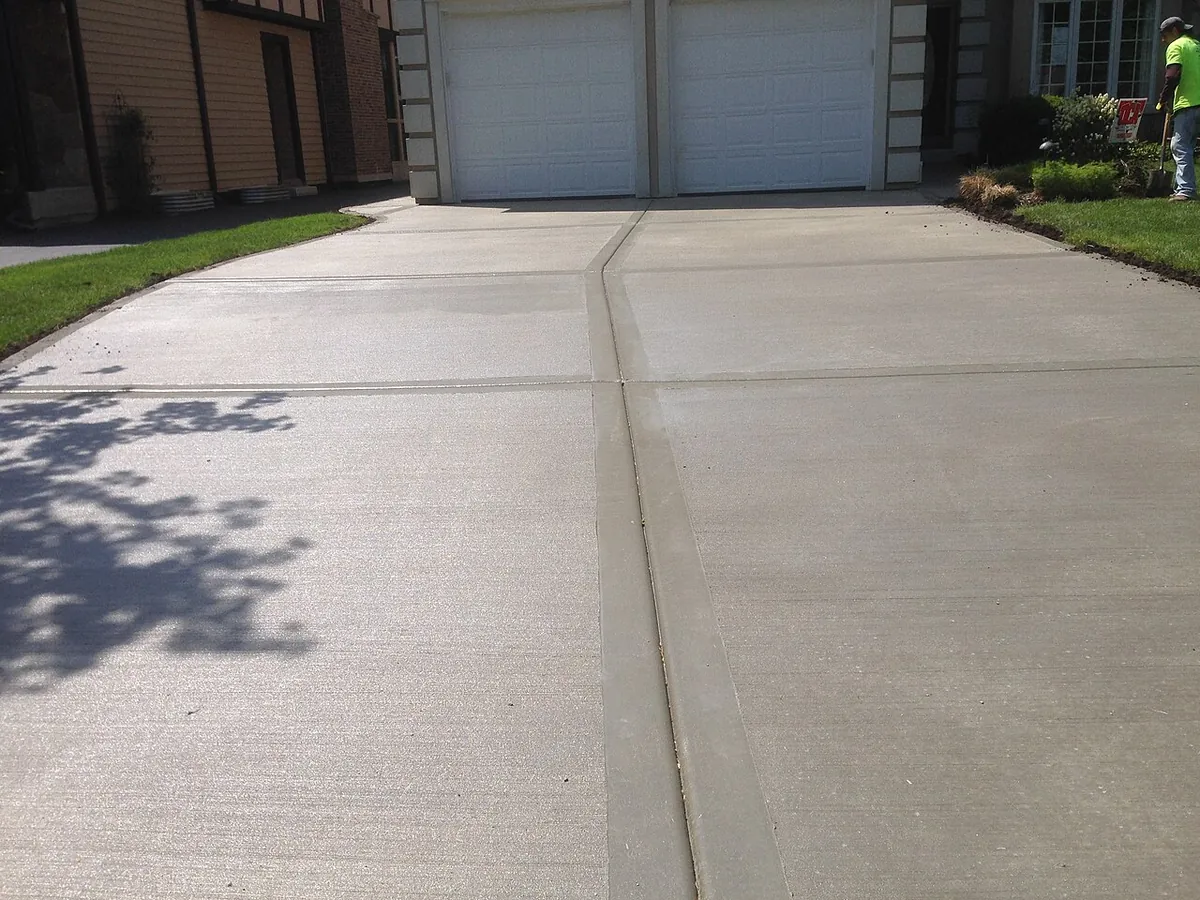
Photo: Catalano Concrete, Wikimedia Commons, CC BY-SA 4.0
Quick Answer
The average concrete driveway cost in 2026 is about $4 to $8 per square foot installed for plain gray concrete, or roughly $1,600 to $4,600 for a typical driveway. Colored or stained concrete runs about $8 to $12 per square foot, and a stamped concrete driveway costs about $12 to $18 per square foot. If an old driveway must be torn out first, removal adds about $1 to $3 per square foot. A standard two-car 20 × 20 foot driveway costs about $1,600 to $3,200 in plain concrete and $4,800 to $7,200 stamped.
A concrete driveway is one of the longest-lasting surfaces you can put in front of a house. It costs more up front than gravel or asphalt in many areas, but it needs little maintenance and can last for decades. The final concrete driveway cost depends on size, thickness, the finish you choose, whether an old driveway must be removed, and how much site prep your lot needs.
This guide breaks down concrete drive prices in 2026 per square foot and by size, the cost of stamped and decorative finishes, the cost of concrete driveway replacement, what is included in a quote, and how to save. Price ranges come from HomeGuide, LawnStarter, Thumbtack and Angi, listed in the sources.
Concrete Driveway Cost per Sq Ft
| Driveway type | Installed cost per sq ft | Notes |
|---|---|---|
| Plain gray (broom finish) | $4 – $8 | Most common; good traction |
| Colored or stained | $8 – $12 | Integral color or surface stain |
| Exposed aggregate | usually between plain and stamped | Decorative stone surface, good grip |
| Stamped concrete | $12 – $18 | Patterns like stone, brick or slate |
| Old driveway removal (added) | $1 – $3 | Break up and haul away |
| Driveway apron only | $4 – $10 | The section meeting the street |
Other 2026 guides land in a similar range. LawnStarter puts most concrete driveways at about $6 to $16 per square foot, or about $1,885 to $6,475 total, and Thumbtack reports totals of roughly $2,695 to $7,998. The spread mostly comes from local labor rates, thickness and finish.
Concrete Driveway Cost Calculator
Enter your driveway size and thickness below to estimate concrete volume and cost, then compare the result with the per-square-foot ranges above.
To calculate cost of concrete driveway work by hand, multiply length by width for square feet, then multiply by the per-square-foot price for your finish. A 16 × 40 foot single-lane driveway is 640 square feet, so at $4 to $8 it lands at about $2,560 to $5,120 in plain concrete. This driveway concrete cost calculator method gives the same ballpark a contractor will start from.
Treat any online concrete driveway cost estimator, including this one, as a starting point. Local labor rates, access for the truck and the condition of the ground can move a real quote well above or below it.
You can also open the full concrete driveway calculator page.
Concrete Driveway Cost by Size
Here is what common driveway sizes cost at $4 to $8 per square foot for plain concrete and $12 to $18 for stamped concrete:
| Driveway size | Square feet | Plain concrete | Stamped concrete |
|---|---|---|---|
| Single car, short | 10 × 20 = 200 | $800 – $1,600 | $2,400 – $3,600 |
| Single car | 12 × 20 = 240 | $960 – $1,920 | $2,880 – $4,320 |
| Single car, long | 12 × 50 = 600 | $2,400 – $4,800 | $7,200 – $10,800 |
| Two car | 20 × 20 = 400 | $1,600 – $3,200 | $4,800 – $7,200 |
| Two car, large | 24 × 24 = 576 | $2,304 – $4,608 | $6,912 – $10,368 |
| Two car, long | 20 × 40 = 800 | $3,200 – $6,400 | $9,600 – $14,400 |
| Three car | 30 × 30 = 900 | $3,600 – $7,200 | $10,800 – $16,200 |
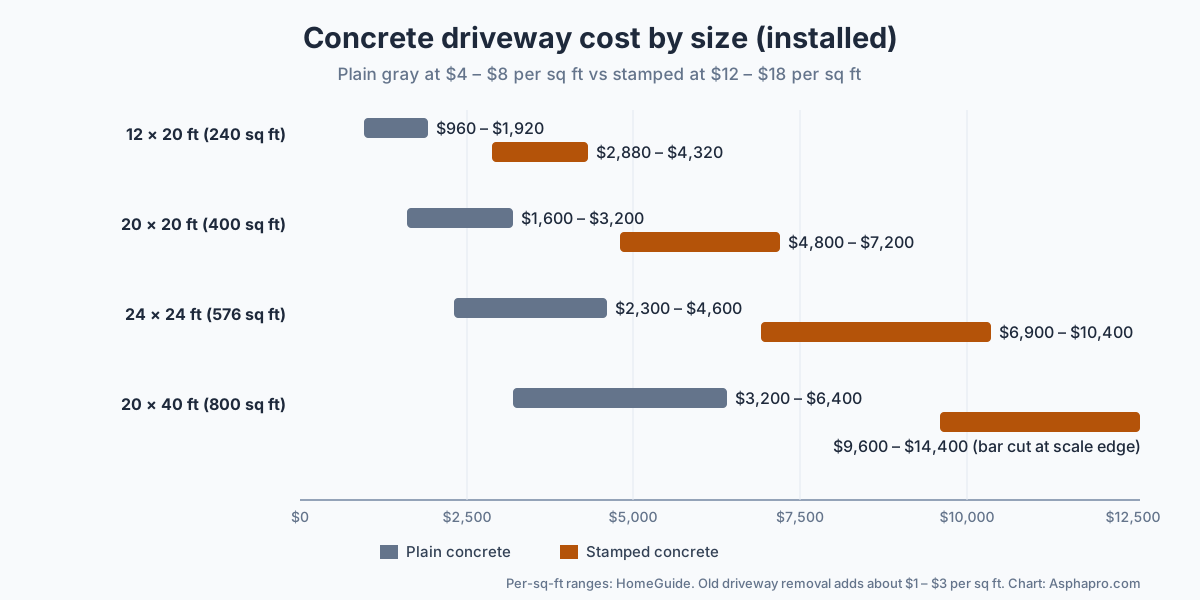
Long rural driveways, steep lots and driveways with turnarounds cost more in total but often less per square foot, since the setup cost is spread over more area. Very small jobs cost more per square foot because crews still have minimum charges and the ready-mix plant may add a short-load fee; see concrete price per yard for how those fees work.
Stamped Concrete Driveway Cost
A stamped concrete driveway costs about $12 to $18 per square foot according to HomeGuide, depending on the pattern and the number of colors. Angi puts basic stamped concrete at about $8 to $12 per square foot, and elaborate hand-stained or saw-cut designs at up to about $28. Stamping adds cost because it needs extra labor and skill: the crew colors the concrete, applies a release agent, presses large rubber mats into the surface while it is still soft, then details the edges by hand and seals the surface.
- Single pattern, one color: toward the low end of the range.
- Multiple colors, antiquing, borders: toward the high end.
- Custom or hand-carved designs: can exceed the typical range.
Stamped concrete needs resealing every few years to keep its color and protect the surface, which adds to lifetime cost. Some homeowners stamp only a border or the front apron to get the look for less. If you are weighing stamped concrete against interlocking pavers, see stamped concrete vs pavers and paving stones vs concrete.
Concrete Driveway Finishes and How They Change the Price
The finish is the second-biggest factor in concrete driveway cost after size. Here are the common options, from the cheapest to the most expensive:
Broom finish
The standard finish. After the concrete is floated smooth, the crew drags a stiff broom across it to leave fine ridges that give traction in rain and snow. It adds almost nothing to the base price, which is why most plain concrete driveways at $4 to $8 per square foot have a broom finish.
Smooth trowel finish
A steel-troweled, smooth surface is common for garage floors but slippery outdoors when wet. It is rarely recommended for sloped driveways.
Exposed aggregate
The top layer of cement paste is washed off before it hardens, exposing the stones in the mix. It looks decorative, hides stains and gives good grip. Cost usually falls between plain and stamped concrete, depending on the stone chosen.
Salt finish
Rock salt is pressed into the surface and washed away after curing, leaving small pits. It is popular in warm climates. It is not a good choice where freeze-thaw cycles can fill the pits with ice.
Colored concrete
Color can be mixed into the whole load (integral color) or applied on the surface. Integral color will not wear off, but it raises the price per yard of concrete. Colored or stained concrete driveways run about $8 to $12 per square foot.
Stained concrete
Acid or water-based stains are applied after curing for a mottled, natural look. Stain needs sealing to last on a driveway that sees tires and weather.
Stamped concrete
The most expensive option at about $12 to $18 per square foot, covered in detail below.
See types of concrete finishes for photos and more detail on each.
Extras That Add to Concrete Driveway Costs
- Driveway apron. The section between the street and the property line often needs thicker concrete and a city permit. HomeGuide puts aprons at about $4 to $10 per square foot.
- Curb cut. Lowering a curb for a new driveway entrance usually needs a city permit and may need to be done by an approved contractor.
- Drainage. A trench drain across the bottom of a sloped driveway or a regraded swale adds cost but protects the slab and garage.
- Borders and bands. A stamped or colored border around a plain driveway adds style for much less than stamping the whole surface.
- Walkways and parking pads. Adding a walkway or side pad during the same pour is cheaper than a separate job later.
- Sealer. A first coat of sealer after curing protects against water, oil and salt.
- Thicker concrete or rebar. Needed for RVs, boats, work trucks or soft soils.
Repair or Replace? Signs You Need a New Concrete Driveway
Not every damaged driveway needs replacing. Small cracks, minor surface wear and a few stains can be repaired for a fraction of the concrete driveway replacement cost. Replacement makes sense when you see:
- Wide cracks running across most slabs, or cracks that keep growing.
- Large areas of scaling, spalling or crumbling surface.
- Slabs that have heaved or sunk badly in many places.
- Water pooling across the driveway because the slope is gone.
- A driveway that is near the end of its life (often 25 to 40 years) and has had repeated repairs.
For smaller problems, see concrete repair cost, concrete leveling cost and concrete overlay cost. If the old concrete is stable, you can even pave over it; see can you put asphalt over concrete.
Cost to Replace a Concrete Driveway
The cost of concrete driveway replacement includes tearing out the old surface and hauling it away, then pouring new concrete. HomeGuide puts removal at about $1 to $3 per square foot on top of the new driveway price. So replacing a plain concrete driveway typically costs about $5 to $11 per square foot in total.
The cost to remove and replace concrete driveway slabs depends mostly on thickness and reinforcement. A 4-inch slab with wire mesh breaks up quickly, while a 6-inch slab full of rebar takes much longer and costs more to haul. For a 20 × 20 foot two-car driveway, the cost of replacing a concrete driveway in plain gray concrete is usually about $2,000 to $4,400, including tear-out.
The cost to replace concrete driveway panels one at a time is lower than redoing the whole driveway: roughly $500 to $1,100 for a 10 × 10 foot panel at $5 to $11 per square foot, though small jobs often hit a contractor's minimum. New panels rarely match the color of old concrete, so many owners replace the whole driveway once several panels fail.
| Driveway | Removal ($1 – $3/sq ft) | New plain concrete ($4 – $8/sq ft) | Total replacement |
|---|---|---|---|
| 12 × 20 ft (240 sq ft) | $240 – $720 | $960 – $1,920 | $1,200 – $2,640 |
| 20 × 20 ft (400 sq ft) | $400 – $1,200 | $1,600 – $3,200 | $2,000 – $4,400 |
| 20 × 40 ft (800 sq ft) | $800 – $2,400 | $3,200 – $6,400 | $4,000 – $8,800 |
Removal costs more for thick slabs, slabs with heavy rebar, and sites where trucks cannot get close. Some contractors include removal in their price; others list it separately. See concrete removal cost for more detail. If the old driveway is mostly sound but sunken in places, concrete leveling or an overlay may be much cheaper than replacement.
What Is Included in a Concrete Driveway Price
A full concrete driveway quote should cover these steps. If one is missing, ask why:
- Excavation and grading to the right depth and slope for drainage.
- Gravel base, usually about 4 to 6 inches of compacted crushed stone.
- Forms along the edges, set to the finished height and slope.
- Reinforcement such as rebar or wire mesh, often with fiber in the mix.
- Concrete, usually 4 inches for cars and 5 to 6 inches for heavier vehicles.
- Placing and finishing: screeding, floating, edging and a broom finish for traction.
- Control joints cut or tooled at regular spacing to control cracking.
- Curing, and often a sealer once the concrete has cured.
- Cleanup, removing forms and backfilling the edges.
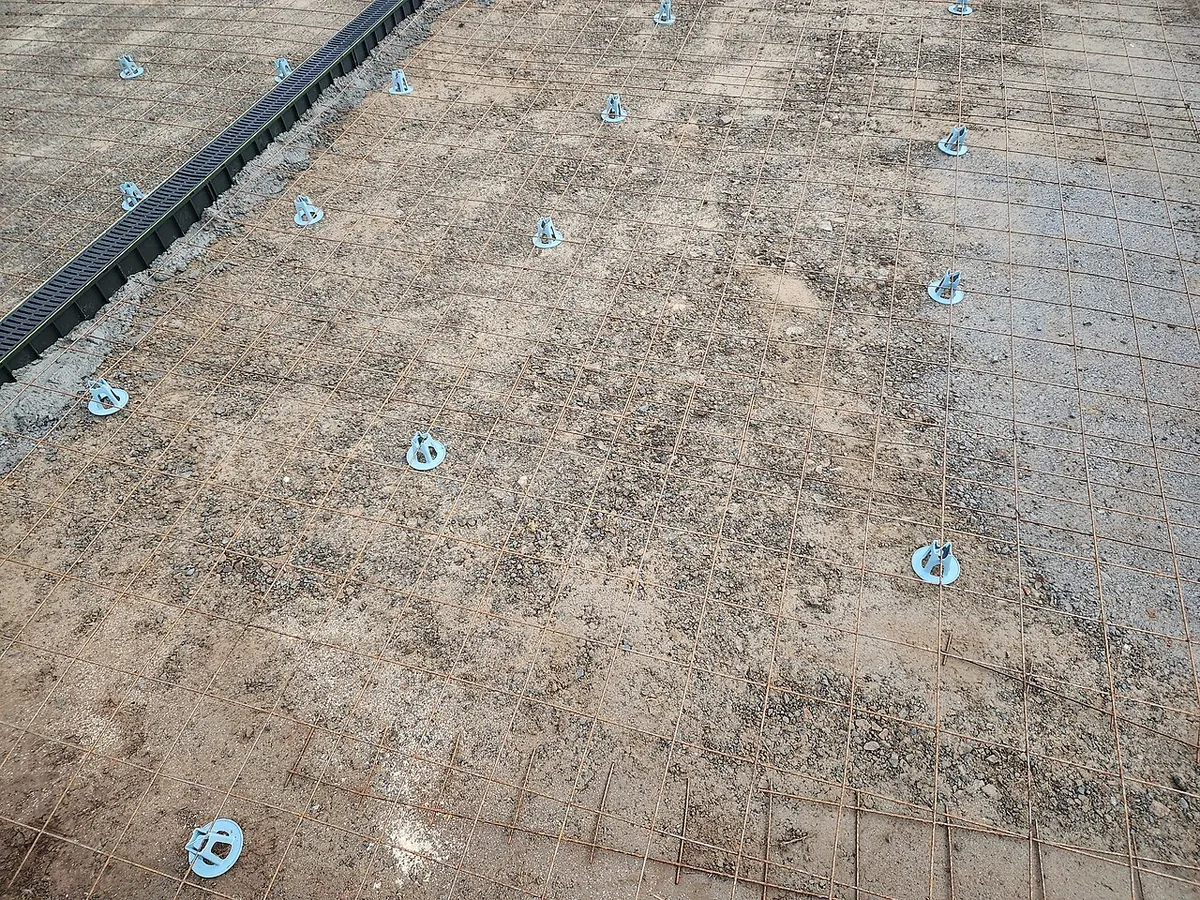
Photo: Panamitsu, Wikimedia Commons, CC BY-SA 4.0
What Affects Concrete Driveway Cost
- Size. The biggest factor. Larger driveways cost more in total but less per square foot.
- Thickness. Going from 4 to 6 inches adds about 50 percent more concrete. See how thick a concrete driveway should be.
- Finish. Plain broom finish is cheapest; stamped and colored concrete costs two to three times more.
- Site prep. Slopes, poor soil, tree roots and drainage work raise the price.
- Removal. Tearing out an old asphalt or concrete driveway adds about $1 to $3 per square foot.
- Access. If the ready-mix truck cannot reach the forms, a concrete pump adds cost.
- Reinforcement. Rebar costs more than wire mesh or fiber alone.
- Permits. Many towns require a permit for a new driveway or curb cut.
- Location and season. Labor and material prices vary by region; busy seasons can push prices up.
Concrete Drive Prices vs Asphalt, Pavers and Gravel
| Driveway material | Typical installed cost per sq ft | Typical lifespan | Upkeep |
|---|---|---|---|
| Gravel | about $1.25 – $3 | needs regular top-ups | Regrading and new stone |
| Asphalt | about $7 – $15 (2026 guides) | about 15 – 30 years | Sealcoat every few years |
| Plain concrete | about $4 – $8 | about 25 – 40+ years | Occasional sealing, crack repair |
| Stamped concrete | about $12 – $18 | long, with resealing | Reseal every few years |
| Pavers | about $10 – $30 | very long; pavers can be replaced | Joint sand, weeds, releveling |
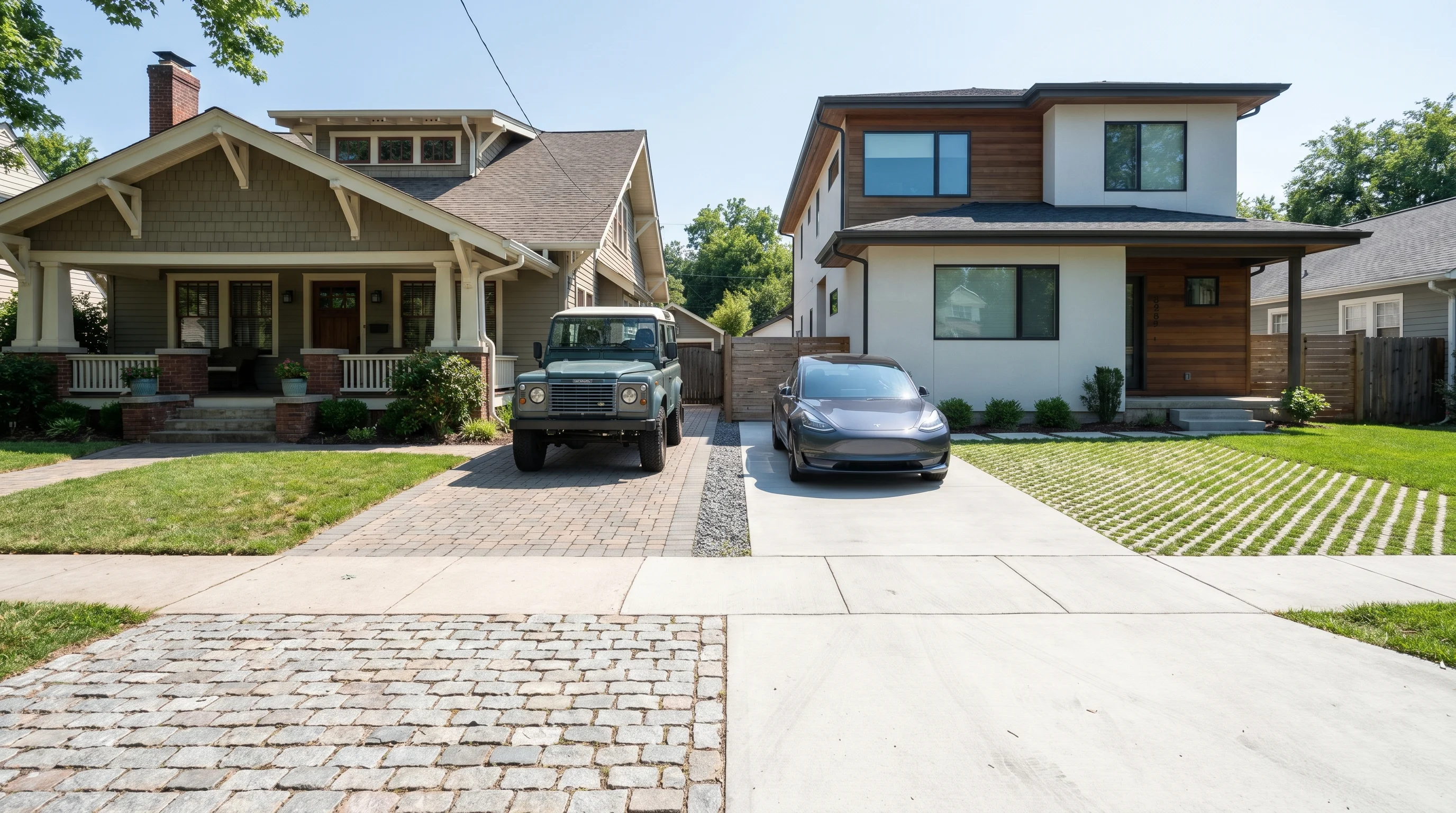
Prices for asphalt and concrete overlap a lot depending on region and oil prices, so get quotes for both. For a deeper comparison, see asphalt vs concrete driveway cost, is asphalt cheaper than concrete and gravel vs asphalt driveway.
How Long Does a Concrete Driveway Last?
A well-built concrete driveway often lasts about 25 to 40 years or more. The main things that shorten its life are a poor gravel base, too-thin concrete, no control joints, water washing under the edges, and de-icing salt in cold climates. Sealing every few years, keeping water away from the edges, and filling cracks early all help. See how long concrete lasts and does salt damage concrete.
Concrete Driveway Project Timeline
A typical residential concrete driveway takes about a week from tear-out to driving on it, plus time for permits and scheduling:
- Quote and permit: anywhere from a few days to a few weeks, depending on your town.
- Day 1 – removal and excavation: the old surface is broken up and hauled away, and the ground is dug to depth.
- Day 1 to 2 – base and forms: gravel is spread and compacted, forms are set to grade, and reinforcement is placed.
- Day 2 to 3 – pour and finish: ready-mix trucks deliver, the crew places and finishes the concrete, and joints are tooled or cut.
- Days 3 to 9 – curing: foot traffic after about 1 to 2 days, cars after about 7 days.
- Later – sealing: many contractors seal after the concrete has cured for several weeks.
Rain, heat and cold can shift the schedule. Concrete should not be poured on frozen ground or in heavy rain; see pouring concrete in the rain and pouring concrete in cold weather.
Lifetime Cost: Maintenance After the Pour
Concrete is low maintenance, but not no maintenance. To get the full life out of your investment:
- Seal every few years, especially in freeze-thaw climates or for decorative finishes. See how to seal concrete.
- Fill cracks early with a flexible concrete crack filler so water cannot get under the slab.
- Clean oil and rust stains before they soak in; see how to remove oil stains from concrete.
- Avoid harsh de-icers on young concrete, and use sand for traction where possible.
- Keep water away from the edges with downspout extensions and good grading.
Even with resealing every few years, the lifetime cost of a plain concrete driveway is often lower than asphalt, which needs sealcoating more often. Stamped concrete has higher upkeep because it must be resealed to keep its color.
Concrete Driveway Cost by Region and Season
National averages hide big local differences. Concrete drive prices are usually highest in large metro areas with high labor costs, and in remote areas far from a ready-mix plant, where delivery fees add up. Prices are often lower in regions with many competing contractors and nearby quarries. Season matters too: spring and early summer are the busiest months for concrete crews, so the concrete driveway cost can be higher and the wait longer. Late summer and early fall often bring good pouring weather and more flexible schedules. Winter pours are possible in some climates, but they may need heated water, accelerators and insulated blankets, which add cost.
How to Budget for a Concrete Driveway
Start with your area in square feet and multiply by $4 to $8 for a plain concrete driveway, or $12 to $18 for stamped. Add $1 to $3 per square foot if an old driveway must be removed. Then add 10 to 15 percent as a cushion for site surprises such as soft soil, roots or extra base material. Getting quotes in writing that list thickness, base depth, reinforcement and finish lets you compare the real concrete driveway cost from each contractor, not just the bottom line. Many contractors ask for a deposit at signing and the balance at completion; avoid paying the full price up front.
If you just want to know how much to concrete a driveway before you call anyone, use $6 per square foot as a middle number for plain concrete. Concrete driveway prices quoted below about $4 per square foot often leave out base work, reinforcement or removal, so ask what is missing.
Permits, HOAs and Codes
Many cities and counties require a permit for a new driveway, a driveway replacement that changes the size, or any work on the public apron, sidewalk or curb. Some require inspections of the base or forms before the pour. Homeowners associations may also have rules on finish and color. Ask your contractor who pulls the permit and whether the fee is in the quote; doing work without a required permit can cause problems when you sell.
How Long Before You Can Drive on a New Concrete Driveway?
You can usually walk on a new driveway after about 24 to 48 hours and drive a car on it after about 7 days. Concrete reaches its design strength at about 28 days, so heavy trucks, RVs and dumpsters should wait longer. Your contractor may give different times for hot or cold weather. Read more in how long concrete takes to cure.
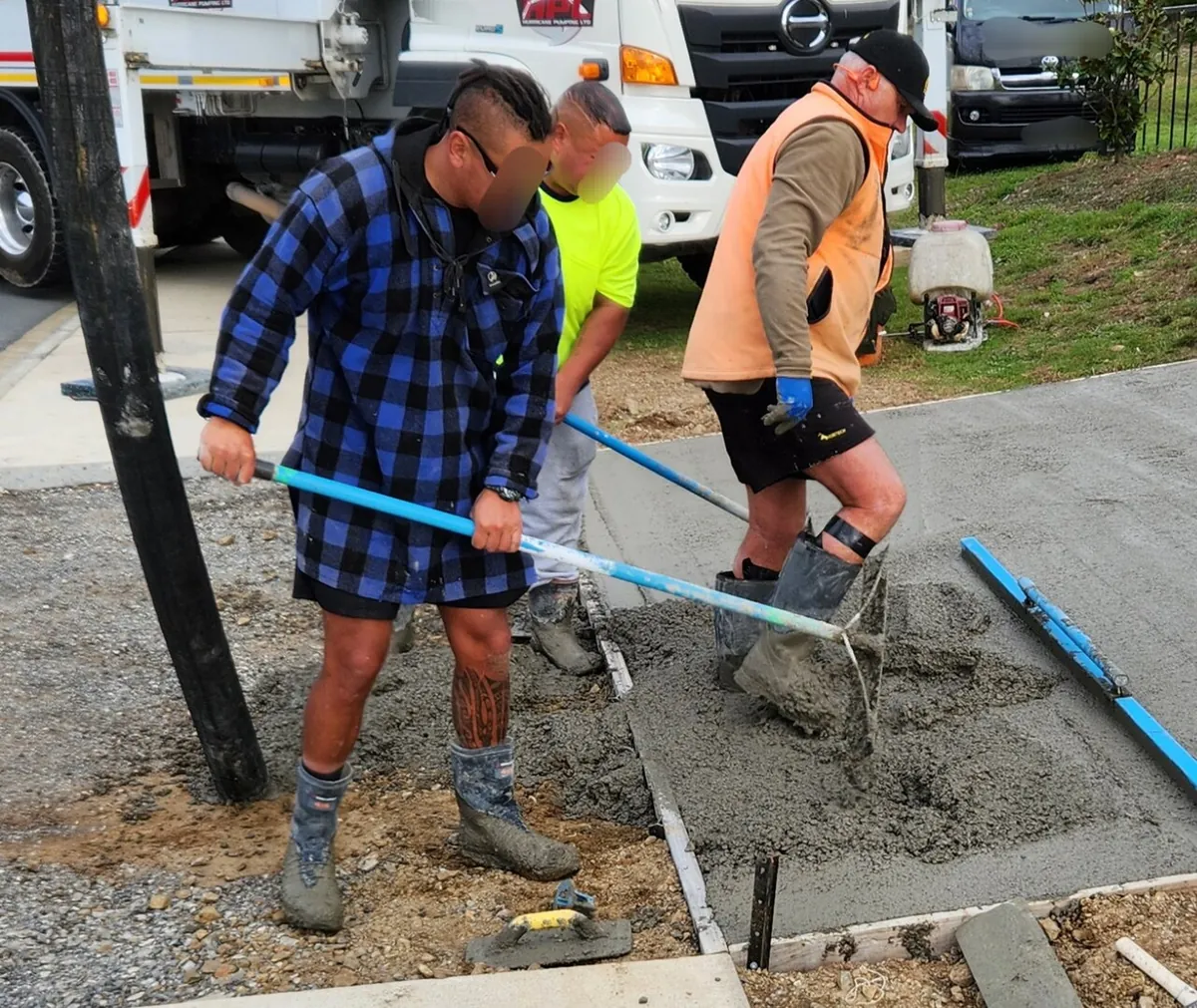
Photo: Panamitsu, Wikimedia Commons, CC BY-SA 4.0
DIY vs Professional Concrete Driveway
Pouring a driveway is one of the hardest concrete jobs for a homeowner. A 20 × 20 foot driveway at 4 inches thick needs about 5 cubic yards of concrete, roughly 10 tons, which must be placed, leveled and finished within an hour or two before it starts to set. You also need a properly compacted base, forms set to the right slope, reinforcement, and finishing tools. Mistakes are permanent and expensive to fix.
DIY can save the labor share of the price, but most homeowners are better off hiring a crew and saving money in other ways: choosing a plain broom finish, doing the demolition or site cleanup themselves, or pouring in a slower season. If you do pour yourself, start with something small like a walkway, and read how to build concrete forms first.
How to Save on Concrete Driveway Cost
- Choose a broom finish instead of stamped or colored concrete.
- Add decoration only where it shows, like a stamped border or apron.
- Get at least three quotes and compare what each one includes.
- Keep the right thickness; do not cut it to save money, since thin concrete cracks.
- Book outside peak season when contractors may have more flexibility.
- Combine projects such as a driveway, walkway and patio in one pour to spread setup costs.
- Fix drainage up front so you do not pay for repairs later.
Concrete Driveway Costs: Questions to Ask Contractors
- How thick will the concrete be, and what strength (psi) mix will you use?
- How deep is the gravel base, and how will it be compacted?
- Will you use rebar, wire mesh, fiber or a combination?
- How far apart will control joints be?
- Is old driveway removal and haul-away included?
- Is sealing included, and when should it be done?
- Who gets the permit, and is the street apron included?
- What warranty do you offer on cracking and workmanship?
Concrete Driveway Cost: Worked Example
Say you are replacing an old cracked 20 × 24 foot asphalt driveway with plain concrete, 5 inches thick, in a mid-cost area:
- Area: 20 × 24 = 480 square feet.
- Removal: 480 × $1 to $3 = $480 to $1,440.
- New plain concrete driveway: 480 × $4 to $8 = $1,920 to $3,840. A 5 inch slab may sit toward the middle or upper part of that range.
- Concrete volume check: 480 × (5 ÷ 12) ÷ 27 = about 7.4 cubic yards, or about 8 yards with waste.
- Optional sealer: adds a few hundred dollars.
- Total: roughly $2,400 to $5,300 for removal and a new plain concrete driveway.
If the same driveway were stamped, the new concrete alone would be about 480 × $12 to $18 = $5,760 to $8,640, plus removal.
Frequently Asked Questions
How much does a concrete driveway cost in 2026?
About $4 to $8 per square foot installed for plain concrete, or roughly $1,600 to $4,600 for a typical driveway. Stamped concrete runs about $12 to $18 per square foot.
How much is a 20x20 concrete driveway?
A 400 square foot plain concrete driveway costs about $1,600 to $3,200, or about $4,800 to $7,200 stamped, before any removal of an old driveway.
What is the stamped concrete driveway cost per square foot?
HomeGuide puts stamped concrete driveways at about $12 to $18 per square foot, depending on the pattern and colors.
What is the cost of concrete driveway replacement?
Usually about $5 to $11 per square foot in total: about $1 to $3 to remove the old driveway plus $4 to $8 for new plain concrete.
Is concrete cheaper than asphalt for a driveway?
It depends on the area. Concrete costs more up front in many regions but lasts longer and needs less maintenance. Compare local quotes for both.
How much does a stamped concrete driveway cost for two cars?
A 20 × 20 foot stamped concrete driveway costs about $4,800 to $7,200 at $12 to $18 per square foot. A larger 24 × 24 foot stamped concrete driveway runs about $6,900 to $10,400.
Do concrete drive prices include removing the old driveway?
Not always. Many quotes list removal separately at about $1 to $3 per square foot. Ask whether tear-out, haul-away and the street apron are in the concrete driveway price.
How thick should a concrete driveway be?
About 4 inches for passenger cars and 5 to 6 inches for heavier vehicles, over a compacted gravel base.
How much is a concrete driveway for one car?
A single-car driveway of about 10 × 20 to 12 × 24 feet costs roughly $800 to $2,300 in plain concrete at $4 to $8 per square foot, more if the old driveway must be removed or you want a decorative finish.
What does concrete driveway installation cost include?
Concrete driveway installation cost usually covers excavation and grading, a compacted gravel base, forms, reinforcement, the concrete, finishing, control joints and cleanup. Removal of an old driveway, permits and sealing are often extra.
What is the cost to pour a concrete driveway yourself?
The cost to pour a concrete driveway yourself is mainly the concrete at about $125 to $200 per yard, plus gravel, forms, mesh and tool rentals, often around $2 to $4 per square foot. Driveways need several skilled finishers working fast, so most homeowners hire the pour.
Sources
- HomeGuide, "How much does a concrete driveway cost?" homeguide.com
- LawnStarter, "How much does a concrete driveway cost?" lawnstarter.com
- Thumbtack, "How much does a concrete driveway cost?" thumbtack.com
- Angi, "How much does a stamped concrete patio cost?" angi.com
- HomeGuide, "Pavers vs concrete" cost comparison. homeguide.com
- Image credits: driveway photo by Catalano Concrete; reinforcement and raking photos by Panamitsu (all CC BY-SA 4.0, via Wikimedia Commons). Chart and comparison image by Asphapro.com.
Prices checked November 2026. They are national ranges; local contractors can be higher or lower.
Related Guides
- Stamped concrete vs pavers — decorative patio options
- How to get tire marks off concrete — degreasers and hot tire pickup
- How to cut concrete — saws, blades and dust safety
- Types of concrete finishes — broom, trowel, stamped, polished
- Can you pour concrete in the rain? — risks and how to protect a pour
- Can you pour concrete in the winter? — cold weather rules and protection
- Why does concrete crack? — causes, joints and prevention
- Does salt damage concrete? — deicers, scaling and protection
- How long does concrete last? — lifespan by project
- How to reseal concrete — sealer types and dry times