
How to Increase Calcium Hardness in Pool Water: Steps, Doses and Calculator
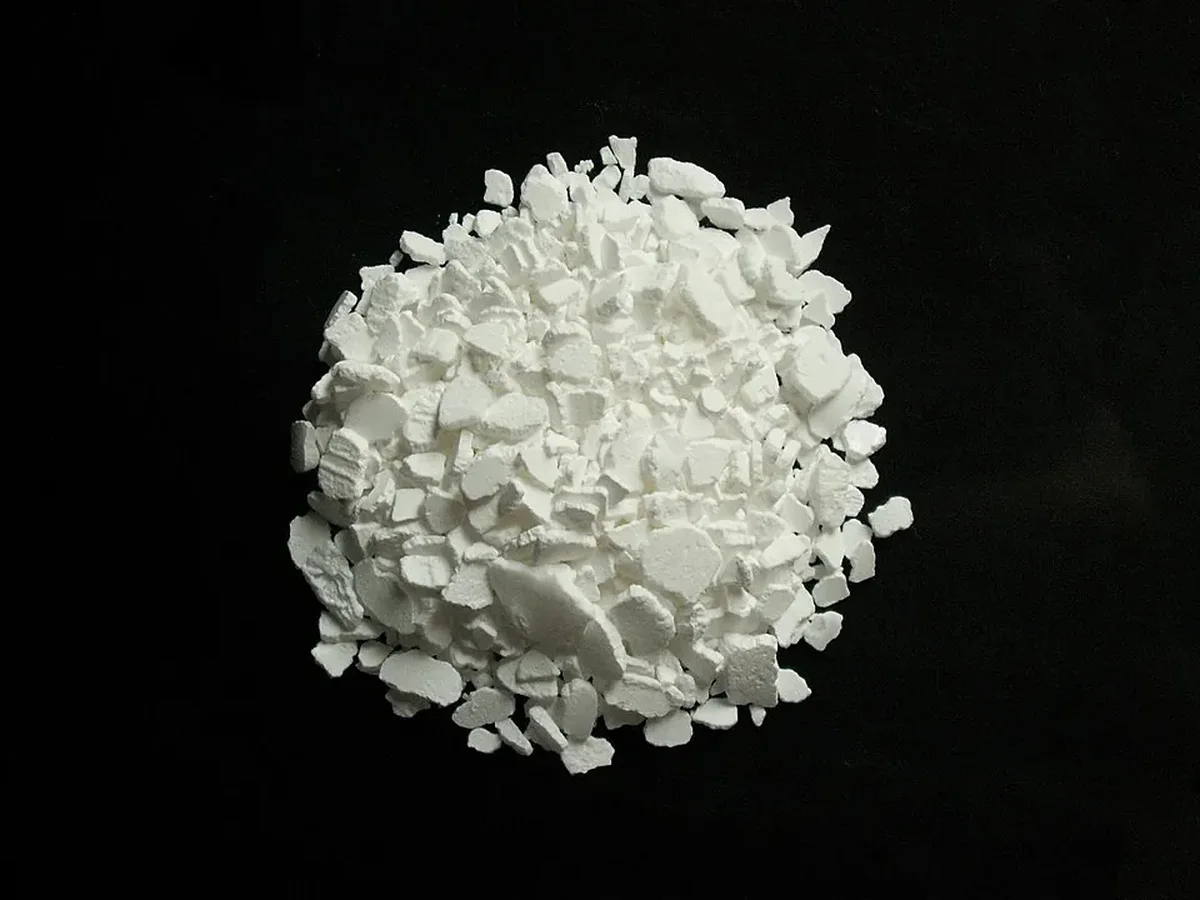
Photo: Firetwister, Wikimedia Commons, CC BY-SA 3.0
Quick Answer
To increase calcium hardness in pool water, add calcium chloride (sold as "calcium hardness increaser"). About 1.2 pounds of 77% calcium chloride per 10,000 gallons raises hardness by 10 ppm; for 94 to 97% anhydrous calcium chloride, use about 1 pound. Test first, work out the dose for your pool size, then pre-dissolve the flakes in a bucket of pool water (always add chemical to water, not water to chemical), and pour the solution slowly around the deep end with the pump running. Add no more than about half the total dose at once, run the pump for several hours, then retest and add the rest. Aim for 250 to 400 ppm in plaster pools and 150 to 250 ppm in vinyl and fiberglass pools.
Calcium hardness is the amount of dissolved calcium in your pool water, measured in parts per million (ppm). It is one of the core parts of water balance, along with pH, total alkalinity and temperature. When hardness is too low, water is "hungry" for calcium and will take it from plaster, grout and concrete, leading to etching and rough surfaces. That is why many owners need to raise calcium hardness in pool water at least once a season, especially after a refill with soft water or heavy rain.
This guide explains how to increase calcium hardness in pool water step by step, with a dose calculator, a dose chart and tips to avoid cloudy water and overshooting. If your problem is the opposite, see our guide on how to lower hardness in pool water.
What Is the Right Calcium Hardness for a Pool?
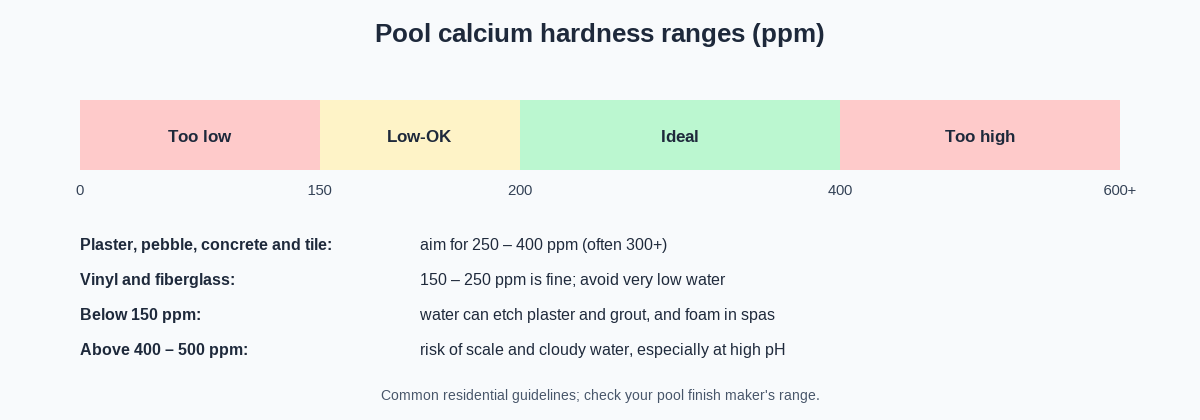
Chart: Asphapro.com
The right level depends on your pool surface. For plaster, pebble, quartz and tiled concrete pools, most guidelines suggest 250 to 400 ppm, and many pool professionals aim for around 300 to 350 ppm. These surfaces contain calcium, so water with too little calcium dissolves it out of the finish. For vinyl and fiberglass pools, 150 to 250 ppm is fine, since the surface does not contain calcium; some hardness still helps protect heaters, metal parts and tile grout, and keeps water from foaming in attached spas.
Hardness is not judged alone. Pool professionals use a saturation index, which combines pH, alkalinity, calcium hardness, temperature and dissolved solids, to tell whether water will etch or scale. Higher pH and alkalinity can make up for slightly low calcium and vice versa. Even so, keeping hardness in the recommended range makes balance much easier. See our guide on how to raise alkalinity in pool water.
Why Raise Pool Hardness?
Low calcium causes slow but costly damage. In plaster pools, soft water pulls calcium from the surface, leaving the finish rough, pitted and blotchy, a problem called etching. Grout between tiles can wash out, and exposed aggregate can loosen. In concrete decks and coping near the water, soft splash water can also leach calcium over time. Very soft water is more corrosive to metal heat exchangers, ladders, rails and light fixtures. In spas, low hardness can cause foaming. Owners who raise pool hardness to the right range protect the finish and equipment, and extend the time before a costly replaster.
Signs Your Pool Needs More Calcium
The only sure way to know is to test. Still, there are signs that suggest you should increase pool hardness. A plaster surface that feels rough or sandy, has etched patches or shows washed-out grout lines points to aggressive water. Pitting on metal rails, ladders or heater parts can mean corrosive water. Foam in a spa that does not clear with a shock can be a sign of very soft water. New pools filled with soft municipal or rain water, pools in areas with very soft tap water, and pools that have had a lot of rain or a partial drain and refill often test low.
How to Test Calcium Hardness
Test calcium hardness with a drop-based titration kit for the best accuracy; test strips are quick but less precise. Most kits measure total hardness or calcium hardness; for pools, calcium hardness is the number you want. Test at least once a month, after refills or heavy rain, and before adding any calcium. Write down the result, your pool volume and the date, so you can track changes over the season. Many pool stores will test a water sample for free.
How to Increase Calcium Hardness in Pool: Step by Step
Step 1: Test and find your pool volume. Test calcium hardness, pH, alkalinity and chlorine. Confirm your pool volume in gallons; if you are not sure, multiply length × width × average depth in feet by 7.5 for rectangular pools.
Step 2: Set your target. Pick a target in the right range for your surface. If you are at 150 ppm in a plaster pool, a target of 300 ppm means you need to raise hardness by 150 ppm.
Step 3: Work out the dose. Use the calculator below or the rule: 1.2 lb of 77% calcium chloride per 10,000 gallons for each 10 ppm. For anhydrous 94 to 97% calcium chloride, use about 1 lb per 10,000 gallons per 10 ppm. Always check the label of your product.
Step 4: Pre-dissolve. Fill a clean plastic bucket about three quarters full with pool water. Slowly add the calcium chloride, a few pounds at a time, and stir with a wooden or plastic stick. The solution gets very hot, so wear gloves and eye protection, and do not hold the bucket against your body. Never add water to the flakes; always add flakes to water.
Step 5: Add to the pool. With the pump running, pour the solution slowly around the deep end or in front of a return jet, away from the skimmer. Do not pour into the skimmer. Add no more than about half of the total dose, or about 10 to 15 lb per 10,000 gallons at a time, to avoid cloudiness.
Step 6: Circulate and brush. Run the pump for at least 6 hours, ideally overnight. Brush the floor to stir up any undissolved flakes so they do not sit on the surface.
Step 7: Retest and repeat. Retest calcium hardness after 6 to 24 hours. Add the rest of the dose if needed, then rebalance pH and alkalinity.
Calcium Hardness Dose Calculator
Enter your pool volume, current and target calcium hardness, and product strength to see how much calcium chloride to add.
How Much Calcium Chloride to Add: Dose Chart
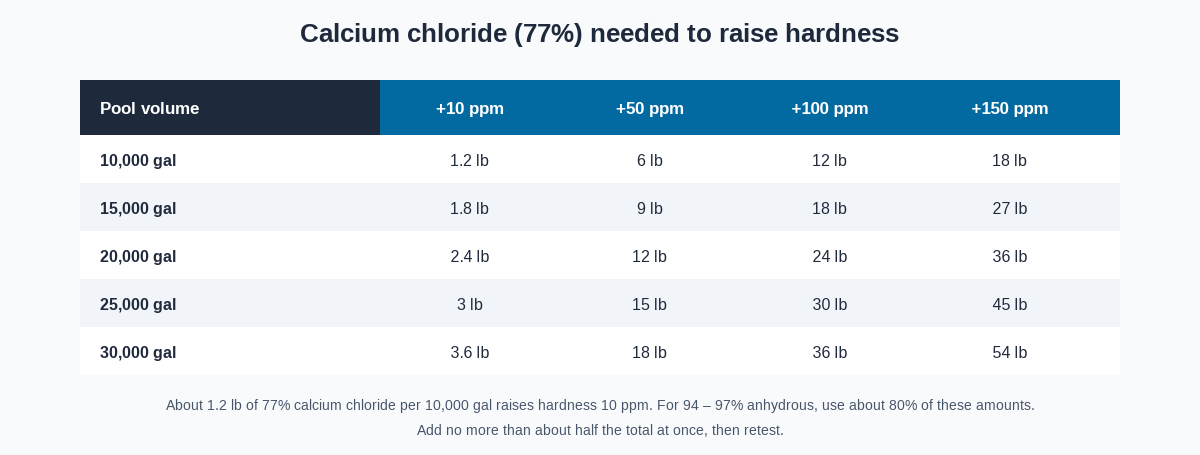
Chart: Asphapro.com
The chart shows how much 77% calcium chloride you need to raise calcium hardness in pool water by 10, 50, 100 and 150 ppm for common pool sizes. For example, to raise a 20,000-gallon pool from 200 to 300 ppm (a 100 ppm increase), you need about 24 lb of 77% calcium chloride, or about 19.5 lb of the anhydrous type. Split that into two doses of about 12 lb each.
Calcium Chloride vs Calcium Hardness Increaser
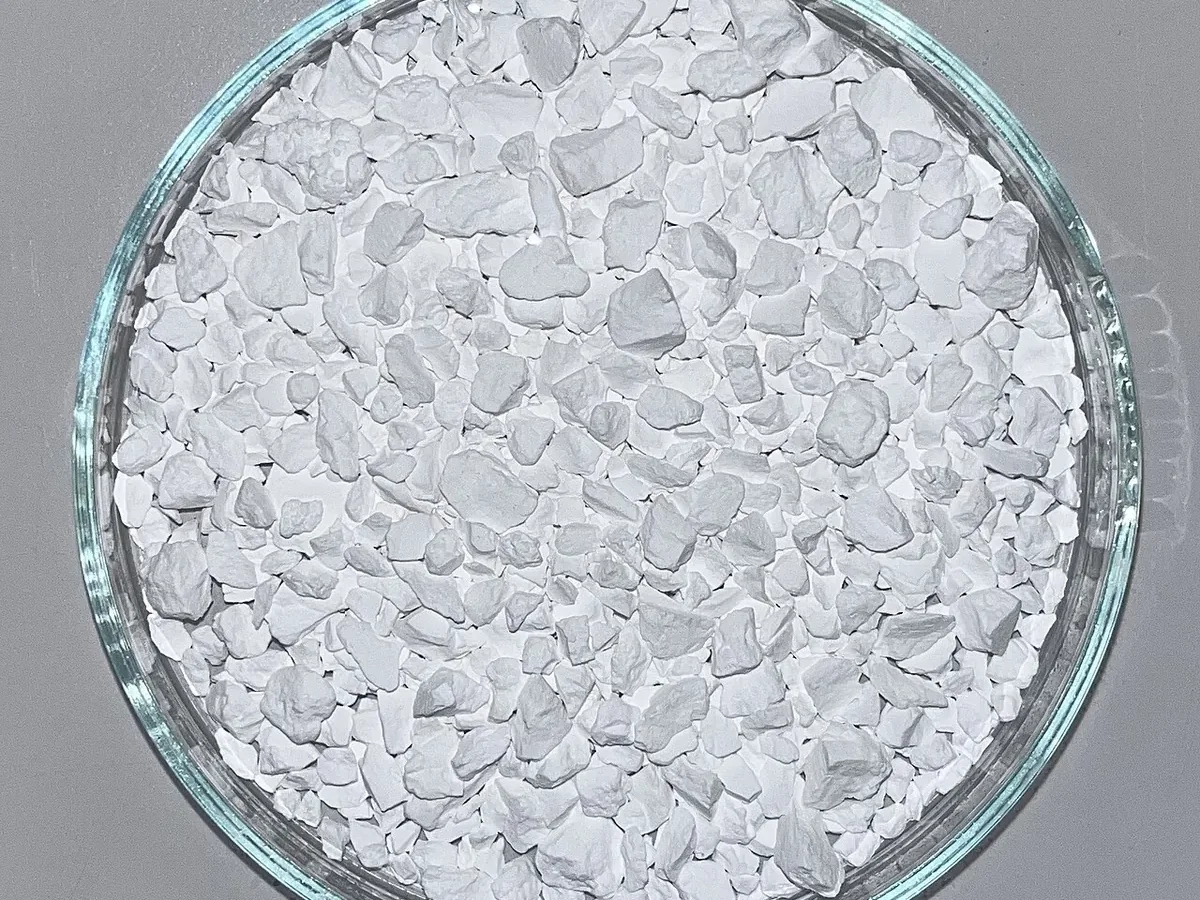
Photo: Roi.Frvr, Wikimedia Commons, CC0
Products labeled "calcium hardness increaser" or "hardness plus" are calcium chloride, usually in the anhydrous (94 to 97%) form. Hardware and farm stores sell calcium chloride as a de-icer or dust control product, often in the 77 to 80% flake form, at a lower price. If you buy calcium chloride outside a pool store, check that it is plain calcium chloride with no added de-icing chemicals, dyes or anti-caking agents. Anhydrous calcium chloride releases more heat when dissolved, so add it slowly to a full bucket of water.
Other Ways to Raise Calcium Hardness in Swimming Pool Water
Calcium hypochlorite shock. Cal-hypo adds about 7 ppm of calcium for every 10 ppm of chlorine it adds. Pools that use cal-hypo regularly will see hardness rise slowly over the season. This is a gentle way of increasing hardness in pool water but too slow to correct a large shortfall, and it adds chlorine too.
Harder fill water. If your tap water is harder than your pool water, topping up raises hardness over time. In areas with hard tap water, many pools never need calcium added.
Trucked water. When refilling a pool, some owners choose trucked water with a known hardness, though this is rarely done just to raise calcium.
For a quick and accurate result, calcium chloride remains the standard answer to how to raise calcium hardness in swimming pool water.
How Do You Raise Hardness in a Pool Without Cloudy Water?
How do you raise hardness in a pool without turning the water milky? Cloudiness happens when calcium comes out of solution, usually because pH and alkalinity are high or because too much calcium is added at once in one spot. To avoid it, lower pH to about 7.2 to 7.4 before adding calcium, dissolve the flakes fully, add the solution slowly over a wide area with the pump running, and split large doses into two or three parts spread over a day or two. If the water turns cloudy, keep the pump running and the filter clean; it usually clears within a day. Check pH and alkalinity again afterward. For persistent haze, see how to clear a cloudy pool.
Raising Calcium Hardness in Pool Water by Pool Type
Plaster and pebble pools. Raising calcium hardness in pool water with these finishes is the most important, since low hardness damages the surface directly. Keep 250 to 400 ppm, and test monthly. New plaster pools need careful start-up; follow your plasterer's instructions, which often call for raising hardness during the first weeks.
Vinyl liner pools. Liners are not etched by soft water, but very low hardness can make water corrosive to metal walls, rails and heater parts. Aim for 150 to 250 ppm.
Fiberglass pools. Fiberglass makers often recommend 150 to 250 ppm. Very high hardness can cause scale on the gelcoat, so do not overshoot.
Salt pools. Keep hardness at the lower end of the range for your surface, since salt cells are prone to scale when calcium and pH are high. See how to maintain a saltwater pool.
How to Increase Calcium in Pool Spas and Hot Tubs
Spas use the same chemical to increase calcium in pool spa water, but because the volume is small, doses are tiny. A 400-gallon hot tub needs only about 1.5 ounces of 77% calcium chloride to raise hardness by 10 ppm. Most spa makers recommend 150 to 250 ppm. Add calcium slowly, dissolved in a small container of spa water, with the jets running. Spas with attached pools share water, so treat the whole system.
How to Raise Calcium Hardness in Pool Water After a Refill
Refilling is the most common time owners need to learn how to raise calcium hardness in pool water. Many cities supply soft water, often 50 to 150 ppm, and rain water has almost no calcium at all. After a full drain and refill or a large partial refill, test hardness as soon as the water has circulated for a day. Balance alkalinity first, then bring pH to about 7.2 to 7.4, and then work out how much calcium you need. Because the increase is often large, perhaps 150 to 250 ppm in a plaster pool, plan to add calcium in three or four doses over two to three days. Each dose should be fully dissolved, added slowly with the pump running and followed by brushing.
If you are refilling a freshly plastered pool, follow your plaster contractor's start-up plan. Many start-up methods raise hardness gradually during the first week or two while the new surface cures, and adding calcium too fast or too early can cause dust, streaks or scale. The general rule on how to raise calcium hardness in pool water still applies: test, dose in parts and retest, but the timing is set by the plaster start-up schedule.
How to Raise Hardness in Pool Water After Heavy Rain
Heavy rain dilutes everything in the pool. A storm that adds a few inches of water to a 20,000-gallon pool can lower hardness by 10% or more, and in very wet seasons the effect adds up. Rain also tends to lower alkalinity and pH. After a big storm, drain the extra water back to the normal level, run the pump and test. If you need to know how to raise hardness in pool water after rain, the method is the same as always: add calcium chloride in measured doses. Because the drop is usually modest, a single dose is often enough. Check pH and alkalinity at the same time, since rain often pushes them low too.
How to Increase Hardness in Pool Water in Soft-Water Areas
In regions with very soft tap water, such as parts of the Pacific Northwest, New England and the Southeast, pools may need calcium added several times a season. Every top-up to replace evaporation, splash-out and backwashing brings in soft water and slowly lowers hardness. If you live in such an area, test calcium hardness monthly and add small maintenance doses rather than waiting for the level to fall a long way. Keeping a log helps you predict how much calcium your pool needs each month. Using a cover cuts evaporation, which means fewer top-ups and a steadier hardness level. Owners who know how to increase hardness in pool water in small steps avoid big swings in water balance and keep surfaces in good condition all season.
Understanding the Saturation Index
The calcium saturation index (CSI), also called the Langelier saturation index (LSI) when applied to pools, tells you whether your water is likely to dissolve calcium from surfaces or deposit it as scale. It combines pH, total alkalinity, calcium hardness, water temperature and total dissolved solids. A reading between about −0.3 and +0.3 is considered balanced. Below that, water is aggressive and can etch plaster; above it, water tends to form scale.
Calcium hardness is one lever you can pull to move the index. If your index is negative and pH and alkalinity are already in range, the right move is to raise calcium hardness in pool water. If your hardness is already high, you may adjust pH or alkalinity instead. Many free online calculators and pool apps work out the index from your test results. Checking the index before you add calcium helps you decide whether calcium is the best fix or whether another part of the balance needs attention.
Cost to Raise Calcium Hardness
Raising calcium hardness is one of the cheaper water balance tasks. Pool store calcium hardness increaser costs about $1.50 to $3 per pound, and 77% flake calcium chloride from farm or hardware stores costs about $0.75 to $1.50 per pound. Raising a 20,000-gallon pool by 100 ppm needs roughly 20 to 24 pounds, so the cost is about $15 to $70 depending on where you buy it. A good drop test kit costs $30 to $70 and lasts a season or more. Compared with the cost of replastering a pool, which can run $6,000 to $15,000, keeping hardness in range is very cheap protection.
Worked Examples
Example 1: plaster pool after a refill. A 20,000-gallon plaster pool is refilled with city water at 120 ppm. The owner wants 320 ppm, a rise of 200 ppm. Using 77% calcium chloride, the dose is 1.2 × 2 × 20 = 48 lb. The owner lowers pH to 7.3, then adds 16 lb on day one, 16 lb on day two and, after retesting at 270 ppm, 12 lb on day three to reach about 320 ppm.
Example 2: vinyl pool in a soft-water area. A 15,000-gallon vinyl pool tests at 90 ppm. The owner aims for 180 ppm, a rise of 90 ppm. With anhydrous calcium chloride, the dose is about 0.98 × 1.5 × 9 = 13 lb. The owner adds 7 lb, waits overnight, retests at 135 ppm and adds 6 lb more.
Example 3: small top-up after rain. A 25,000-gallon pebble pool drops from 300 to 270 ppm after a wet week. Raising it by 30 ppm needs about 1.2 × 2.5 × 3 = 9 lb of 77% calcium chloride, added in a single dose.
How to Keep Calcium Hardness Steady
Once you increase pool hardness to the right range, keeping it there is mostly about monitoring. Test hardness monthly in the swim season and after storms or refills. Use a cover to reduce evaporation and top-ups. Add small doses of calcium chloride when the level drifts down by 30 to 50 ppm, rather than waiting until it is far too low. If you use cal-hypo shock, remember that it adds calcium, so test before adding more. Keep pH and alkalinity in range so the calcium you add stays dissolved. Over time, this steady approach to increasing hardness in pool water saves money and protects the surface.
Raise Calcium Hardness in Pool Water Before Closing
Many pool professionals suggest checking hardness before you close for winter. Cold water is more aggressive than warm water at the same chemistry, because the saturation index falls as temperature drops. A plaster pool that is balanced at 85 °F in summer can become slightly aggressive at 45 °F under a winter cover. If your hardness is at the low end of the range when you close, raise calcium hardness in pool water by 50 to 100 ppm and set pH and alkalinity toward the upper part of their ranges. This gives the water a margin so it does not etch the plaster over the long winter months. See our guide on how to winterize a pool for the full closing routine.
Increase Pool Hardness or Adjust pH and Alkalinity?
Sometimes the better move is not to increase pool hardness at all. If your hardness is in range but your water still shows signs of etching, check pH and alkalinity first; low values of either make water aggressive even when calcium is fine. If your hardness is low but your pool is vinyl or fiberglass, a modest level of 150 ppm may be all you need. In plaster pools, though, low calcium should always be corrected, because no amount of pH or alkalinity adjustment fully makes up for very soft water over the long term.
Common Mistakes
The biggest mistake when learning how to increase pool hardness is adding the full dose at once, which can cloud the water or overshoot the target. Another is pouring flakes straight into the pool, where they can sit on the floor and stain or damage plaster. Adding water to calcium chloride, instead of calcium chloride to water, can cause dangerous spattering. Some owners add calcium to the skimmer, which can damage equipment with hot, concentrated solution. Many forget to lower pH first, leading to cloudy water. And some confuse total hardness with calcium hardness on test strips, which leads to wrong doses.
Safety Tips
Calcium chloride is safe to handle with care, but it releases a lot of heat as it dissolves. Wear gloves and eye protection. Use a plastic bucket, not glass or metal. Add flakes slowly to water and stir. Keep children and pets away. Store the product sealed, dry and away from other pool chemicals, especially chlorine products, since moisture makes the flakes clump and heat up. Wash any spills off skin with plenty of water.
How to Increase Calcium Hardness in a Pool: Key Points
- Target 250 to 400 ppm for plaster pools and 150 to 250 ppm for vinyl and fiberglass.
- Use about 1.2 lb of 77% calcium chloride per 10,000 gallons for each 10 ppm.
- Pre-dissolve, add slowly with the pump running, and split large doses.
- Lower pH first to avoid cloudy water, then retest and rebalance.
Frequently Asked Questions
What raises calcium hardness in a pool?
Calcium chloride, sold as calcium hardness increaser. Cal-hypo shock and hard fill water raise it slowly too.
How long after adding calcium can you swim?
Usually after the chemical has fully dissolved and circulated, often about 2 to 4 hours, or as the label directs.
Can I use baking soda to raise calcium hardness?
No. Baking soda raises alkalinity and slightly raises pH, but it adds no calcium.
Does calcium chloride raise pH?
Not much. It may lower pH slightly. Test and rebalance after adding.
How fast can I raise pool hardness?
You can raise it in a day or two by splitting the dose, retesting between additions.
Is low calcium hardness dangerous?
Not to swimmers, but it can etch plaster, damage grout and corrode metal equipment over time.
Sources
- CDC: Pool chemistry and testing
- Trouble Free Pool: Pool water chemistry
- Pool and Hot Tub Alliance
- PubChem: Calcium chloride