
Replaster Pool Cost: What Pool Replastering Costs and How It Works
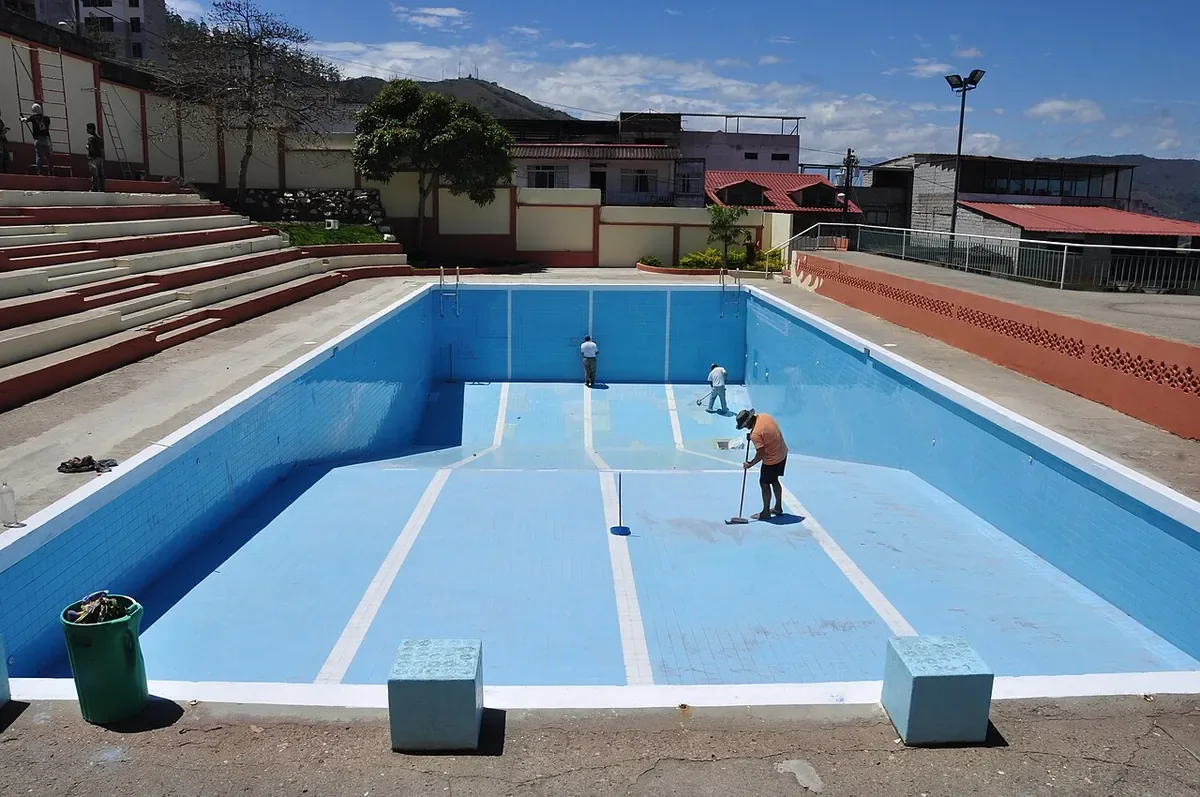
Photo: Municipio Piñas, Wikimedia Commons, CC BY-SA 2.0
Quick Answer
Replaster pool cost for most residential pools is about $5,000 to $10,000 with standard white plaster, according to national cost guides. Per square foot of interior surface, white plaster costs about $4 to $8, colored plaster about $5 to $9, and quartz plaster about $7 to $10. A typical 20x40 pool has about 1,500 to 1,700 square feet of interior surface, so pool replastering it costs roughly $7,000 to $13,000 with white plaster and more with quartz. The price includes draining, removing or preparing the old surface, applying the new plaster in one day, refilling and start-up. Pool replastering is usually needed every 7 to 12 years, and good water chemistry is what makes new plaster last.
Plaster is the classic interior finish for concrete and gunite pools. It is a mix of white cement and fine marble dust, troweled by hand onto the pool shell in a single day. It gives the bright, light-blue look most people picture when they think of a pool. Plaster is also the softest pool finish, so it wears out. When it becomes rough, stained, etched or starts to flake, the pool needs pool replastering.
This guide is all about pool replastering: what it costs, how the cost changes with pool size and plaster type, what is included, how the job is done step by step, what goes wrong with plaster and how to prevent it, and how to get a fair price. For a comparison with pebble, tile and other finishes, see pool resurfacing cost.
Replaster Pool Cost at a Glance
| Item | Typical cost |
|---|---|
| White plaster (marcite), per sq ft | $4 – $8 |
| Colored plaster, per sq ft | $5 – $9 |
| Quartz plaster, per sq ft | $7 – $10 |
| Average pool, white plaster | $5,000 – $10,000 |
| 20x40 pool, white plaster | $7,000 – $13,000 |
| Full chip-out (added to price) | $1,000 – $3,000 |
| Waterline tile replacement (often done together) | $3,000 – $6,000 |
| Start-up chemicals and service | $150 – $600 |
Ranges come from HomeAdvisor, Angi, HomeGuide and Bob Vila. Prices vary by region, pool size, condition of the old plaster and how much prep is needed. Bob Vila puts basic plastering of a concrete or gunite pool at about $3 to $5 per square foot for the core job, with full quotes higher once prep, start-up and extras are included.
Cost to Replaster a Pool by Size
Pool replastering is priced on the interior surface area: the floor plus the walls, plus steps and benches. A quick estimate is floor area (length × width) plus wall area (perimeter × average depth), plus about 10%.
| Pool size | Avg depth | Interior surface (approx.) | White plaster | Quartz plaster |
|---|---|---|---|---|
| 12 x 24 ft | 4.5 ft | about 640 sq ft | $3,000 – $5,000 | $4,500 – $6,500 |
| 15 x 30 ft | 5 ft | about 1,000 sq ft | $4,500 – $8,000 | $7,000 – $10,000 |
| 16 x 32 ft | 5 ft | about 1,090 sq ft | $5,000 – $8,700 | $7,600 – $11,000 |
| 18 x 36 ft | 5.5 ft | about 1,300 sq ft | $6,000 – $10,400 | $9,100 – $13,000 |
| 20 x 40 ft | 5.5 ft | about 1,600 sq ft | $7,000 – $13,000 | $11,000 – $16,000 |
How much does it cost to replaster a 20x40 pool?
A 20x40 pool is one of the larger common residential sizes. With a floor of 800 square feet and walls of about 120 feet × 5.5 feet = 660 square feet, plus steps and slopes, the interior surface is around 1,600 square feet. At $4.50 to $8 per square foot, the replaster pool cost for a 20x40 pool is about $7,000 to $13,000 with white plaster. Quartz raises it to roughly $11,000 to $16,000. Add tile, coping or repairs found after draining on top of that.
Very small pools and spas often carry a minimum charge, because the crew, mixer and setup cost the same regardless of size. An attached spa usually adds $500 to $1,500 to the job.
Types of Plaster for Pool Replastering
White plaster (marcite)
The traditional and cheapest choice. White cement and marble dust give a smooth surface and bright light-blue water. It lasts about 7 to 12 years with good chemistry, less with poor chemistry. It shows stains and scale more than darker finishes.
Colored plaster
Pigments added to the mix give gray, blue, tan or black finishes that make the water look deeper blue or more natural. Colored plaster costs a little more and can show mottling, uneven shading that appears as the plaster cures. Darker colors fade more noticeably over time.
Quartz plaster
Crushed quartz replaces part of the marble dust. Quartz is harder, so the surface resists etching and staining better and lasts longer, often 10 to 15 years. Quartz is a popular middle choice: more durable than white plaster without the cost and texture of pebble.
Polished and premium plasters
Some brands offer polymer-modified or polished plaster that is smoother and more stain resistant. These cost more than standard plaster but less than pebble. Ask your contractor which products they use and what the manufacturer's warranty covers.
What Pool Replastering Includes
- Draining. The pool is pumped out, following local rules on where water can be discharged. Crews check groundwater conditions because an empty pool can be pushed up by water under it.
- Surface preparation. Either a full chip-out, where all old plaster is removed down to the gunite, or a partial prep, where loose areas are chipped and the rest is roughened and coated with a bond coat.
- Repairs. Cracks are cut out and filled, hollow spots are removed, and fittings are replaced as needed.
- Tile and fittings protection. Tile, lights and fittings are taped or replaced.
- Application. A crew mixes and applies the plaster in one continuous session, usually 3/8 to 1/2 inch thick, then hand-trowels it smooth several times as it sets.
- Refill. Water goes in right away, filled continuously without stopping so no ring forms.
- Start-up. Daily brushing and gradual chemical balancing for several weeks while the plaster cures.
Chip-out vs bond coat
A full chip-out costs more, often $1,000 to $3,000 extra, but gives the best long-term bond because the new plaster goes on clean gunite. It is recommended when the old plaster is delaminating, has been replastered before, or is painted. A bond coat over sound, roughened plaster is cheaper and acceptable when the old surface is solid. Ask which method the quote includes; it is one of the biggest reasons two pool replastering quotes differ.
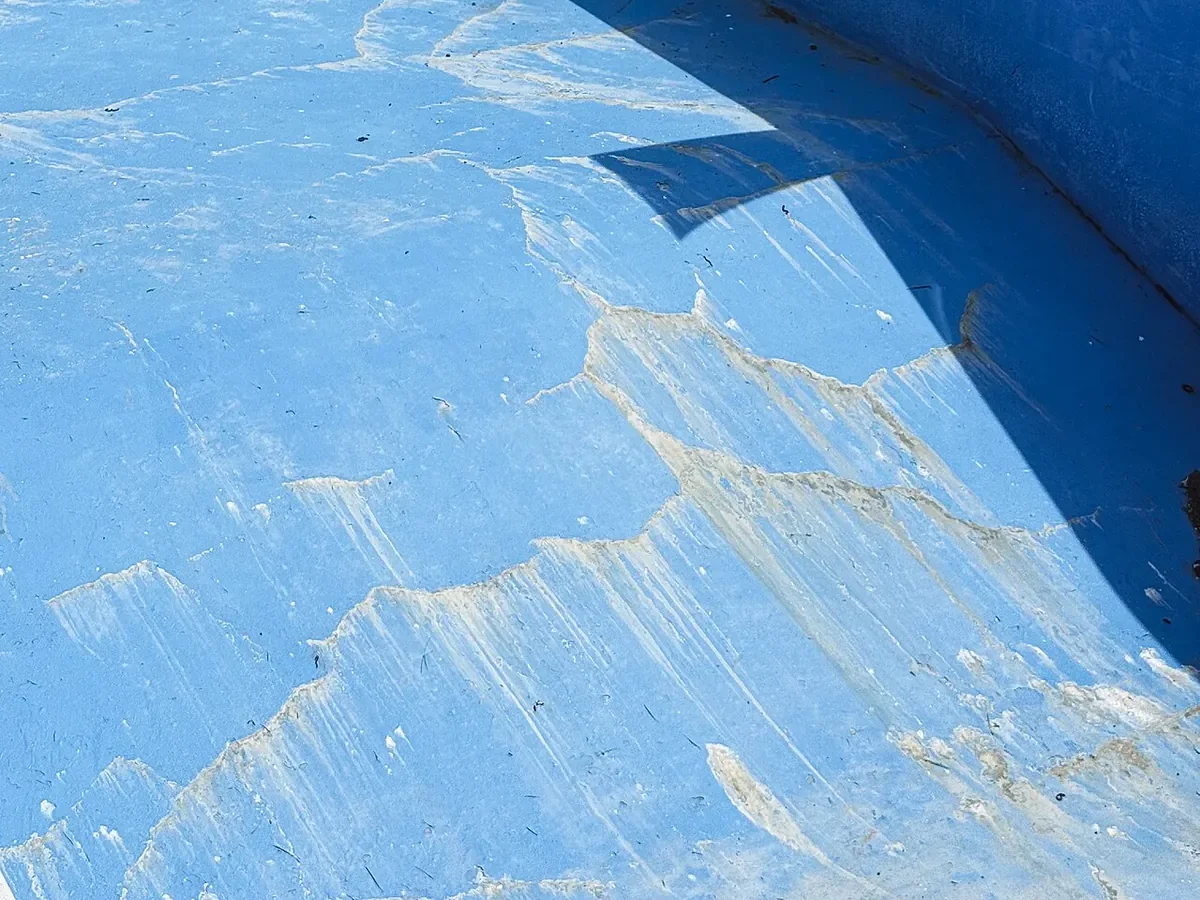
Photo: Shixart1985, Wikimedia Commons, CC BY 2.0 (cropped)
Signs Your Pool Needs Pool replastering
- Rough texture. The surface feels like sandpaper and scrapes feet.
- Etching and pitting. Small holes and a chalky surface from aggressive water.
- Stains that do not come out with brushing, chemical treatment or an acid wash.
- Delamination. Hollow-sounding areas or "pop-offs" where plaster has lifted from the shell.
- Cracks in the plaster, especially if they leak.
- Exposed gunite showing through worn plaster, often on steps and in high-traffic spots.
- Leaks that keep coming back around fittings or through the surface.
An acid wash, which removes a thin layer of plaster to expose a cleaner surface, can extend the life of a stained pool for a few hundred dollars. It takes material away, though, so it is best for pools with plenty of plaster left. On thin or old plaster, it just speeds up the need for pool replastering.
How Do You Replaster a Pool? The Pool Replastering Process
Pool replastering a pool is not a DIY project. Plaster has to be mixed, placed and troweled by an experienced crew in a few hours, before it sets. Uneven troweling, wrong water ratio or delays leave a weak, blotchy surface that lasts a fraction of its normal life. Here is what the crew does on the big day:
- Wet the prepared surface so it does not draw water out of the new plaster too fast.
- Mix plaster in a mixer and pump or carry it into the pool.
- Apply plaster to the walls first, then the floor, working from the deep end toward the shallow end.
- Trowel several times as the plaster stiffens, compacting it and making it smooth.
- Finish the steps, benches and corners by hand.
- Start filling as soon as the plaster can take water, usually the same day.
The whole job usually takes 3 to 7 days: draining and prep, plaster day, filling, and the first days of start-up. Larger pools and full chip-outs take longer.
Start-Up: The First 30 Days After Pool replastering
Start-up is the most important stage for how long new plaster lasts, and it is where many problems begin. New plaster releases calcium and raises pH as it cures. During this time:
- Brush the whole pool once or twice a day for the first week or two to remove plaster dust.
- Balance alkalinity and pH carefully, following the plasterer's start-up method. Some use a traditional method; others use a bicarbonate start-up.
- Hold off on some chemicals, such as calcium hardness increaser or salt, until the plaster cures, if the plasterer advises.
- Do not use automatic cleaners until the contractor allows it; wheels can mark soft plaster.
- Avoid heating the water for the first weeks if advised.
Many contractors offer start-up service as part of the replaster pool cost, often a few hundred dollars. It is worth it if you are new to pool chemistry. For water chemistry steps, see how to raise pH in a pool and how to lower alkalinity in a pool.
Common Pool Plaster Problems
| Problem | What it looks like | Usual cause |
|---|---|---|
| Etching | Rough, pitted, chalky surface | Low pH, low alkalinity or low calcium (aggressive water) |
| Scaling | White crusty deposits, rough patches | High pH, high calcium, high alkalinity |
| Mottling | Blotchy light and dark areas | Uneven curing, colored plaster, calcium chloride in the mix |
| Spot etching | Small white pits in groups | Workmanship and curing issues |
| Delamination | Hollow areas, flakes | Poor bond to the old surface, insufficient prep |
| Check cracking | Fine crazing lines | Fast drying or shrinkage during curing |
| Staining | Brown, green, blue or black marks | Metals, leaves, algae |
Most of these come down to water balance or workmanship. Ask contractors how they prevent them and what their warranty covers. Some warranties exclude problems caused by water chemistry, so keep a log of test results after pool replastering.
Pool Replastering Cost by Region
Swimming pool replastering prices follow local labor rates and demand. In large pool markets such as Florida, Arizona, Texas and Southern California, many plaster crews compete, so the pool replastering cost per square foot is often near the national middle, though spring schedules fill fast. In the Northeast and Midwest, the plaster season is short, crews travel farther, and the cost to replaster a pool can run higher in peak months. High-cost metro areas commonly add 15% to 30% to the national ranges. The best way to know how much to replaster a pool in your area is three local quotes with the same scope.
Pool replastering an Older Pool
Swimming pool replastering on a pool that is 25 or more years old often uncovers extra work. The plaster may have been replastered before, so layers have built up and a full chip-out is needed. Old fittings, light niches and return lines may be cracked or out of date. Main drains may need anti-entrapment covers to meet current safety standards. Budget an extra 10% to 25% on top of the base pool replaster cost for an older pool, and ask the contractor to price likely extras in advance so you can decide quickly when the pool is empty.
Pool replastering a Pool With an Attached Spa
An attached spa is replastered at the same time as the pool, usually with the same mix. It adds surface area plus extra hand work on seats, steps and the spillway. Expect the pool replaster cost to rise by about $500 to $1,500 for a typical attached spa. If the spa has tile on the spillover edge, budget for tile work too.
Hidden Costs in a Pool Replaster
- Hydrostatic valve work if groundwater is high when the pool is drained.
- Crack repair in the shell, priced per linear foot or per crack.
- New fittings such as returns, drain covers and light niches.
- Waterline tile that breaks during chip-out.
- Water and sewer charges for refilling.
- Start-up chemicals and service, often a few hundred dollars.
- Permit fees in some towns.
A detailed written quote that lists these items is the best defense against surprises. The cheapest pool replaster cost on paper is not always the cheapest job once extras are added.
Best Time of Year for Swimming Pool Replastering
Plaster cures best in moderate weather, roughly 50°F to 85°F. Very hot, dry, windy days can make plaster set too fast and crack; near-freezing nights slow curing and risk damage. In warm climates, fall and winter are often ideal and can bring lower pool replastering prices because demand drops. In cold climates, late spring or early fall works best. Booking early gets you a better date, especially before the swim season.
Before Plaster Day: What Owners Should Do
- Confirm the date, start time, and where the crew will park and set the mixer.
- Clear a path from the street to the pool and protect plants and the deck.
- Make sure water is available at enough flow to refill right after plastering.
- Turn off automatic fill devices, timers and heaters as the contractor directs.
- Keep children and pets away from the pool area during the work.
- Buy or confirm start-up chemicals and a good brush.
These simple steps help the crew replaster a pool smoothly and avoid delays that can hurt the finish.
Pool Replastering vs Other Options
Replaster or pebble? Pebble and other aggregate finishes cost about $3,000 to $6,000 more on an average pool but often last twice as long. If you plan to stay many years, the cost per year can be similar. If you are selling soon, fresh white plaster gives the best quick result.
Replaster or paint? Paint is much cheaper up front but needs repainting every few years, and switching back to plaster later requires removing the paint. Plaster is better value for most residential pools.
Replaster or tile? A fully tiled interior is a premium option that costs several times more. Most owners replaster the main surface and replace only the waterline tile. See replacing pool tile cost.
Replaster as part of a remodel. If coping, tile, lights or the deck also need work, do them before or with the plaster so the new surface is not damaged. See pool remodel cost.
What Affects Pool Replastering Prices
- Surface area and shape of the pool.
- Plaster type: white, colored, quartz or premium.
- Prep method: chip-out or bond coat.
- Repairs found after draining.
- Attached spa, benches and steps.
- Region and season.
- Access for the plaster mixer and crew.
- Water costs to refill; see swimming pool filling cost.
How to Make New Plaster Last
- Follow the start-up instructions exactly.
- Keep pH about 7.4 to 7.6, alkalinity about 80 to 120 ppm and calcium hardness about 200 to 400 ppm.
- Test at least twice a week and adjust in small steps.
- Brush weekly, especially steps and corners.
- Never pour acid or chlorine in one spot against the plaster; pour in front of a return with the pump running.
- Remove leaves and metal objects quickly to avoid stains.
- Use a metal sequestrant if your fill water has iron or copper.
For a full routine, see how to clean a pool.
Photo: Accuratecy051, Wikimedia Commons, CC BY-SA 4.0
Is Pool Replastering Worth It?
For a sound concrete or gunite pool, pool replastering is almost always worth it. A worn surface is not just cosmetic: rough plaster harbors algae, raises chemical use, scrapes swimmers and can let water reach the shell. Replastering restores a smooth, watertight surface for a decade or more at a fraction of the cost of a new pool, which typically costs $40,000 or more (see how much does a pool cost). Spread over ten years, a $7,000 pool replaster costs about $700 a year. If you plan to sell, a freshly replastered pool also photographs well and reassures buyers and inspectors.
Pool replastering is not worth it when the shell itself has major structural problems, such as large moving cracks, severe settling or failed steel. Fix those first, or consider whether a rebuild or removal makes more sense; see cost of removing a pool.
How Much to Replaster a Pool: Three Example Budgets
| Scenario | Scope | Estimated pool replaster cost |
|---|---|---|
| Small pool, sound plaster | 12 x 24 ft, bond coat, white plaster | $3,500 – $5,500 |
| Average pool, worn plaster | 16 x 32 ft, full chip-out, quartz plaster, start-up | $9,500 – $14,000 |
| Large pool with spa | 20 x 40 ft, chip-out, white plaster, spa, waterline tile | $13,000 – $22,000 |
These examples show how prep and extras, not just plaster type, drive the final swimming pool replastering cost. When you compare quotes, line them up item by item so you can see where each pool replaster cost estimate differs.
How to Get a Fair Pool Replastering Quote
- Get three written quotes with the same scope.
- Ask which plaster product and color, and the planned thickness.
- Ask whether the price includes chip-out, bond coat, repairs, fittings, drain covers, start-up and refilling.
- Ask for the warranty in writing, including what voids it.
- Ask to see pools they replastered several years ago.
- Schedule in the off-season if your climate allows.
Replaster Pool Cost: Key Points
- The typical replaster pool cost is $5,000 to $10,000 with white plaster; the cost to replaster a pool with quartz is a few thousand dollars more.
- Pool replastering is priced per square foot of interior surface, about $4 to $8 for white plaster.
- A 20x40 pool replaster usually costs $7,000 to $13,000 with white plaster.
- Chip-out, repairs, tile and start-up explain most differences between swimming pool replastering quotes.
- Good water balance is what makes a pool replaster last 10 years or more.
Frequently Asked Questions
How much does it cost to replaster a pool?
Most pool replastering costs $5,000 to $10,000 with white plaster. The cost to replaster a pool rises with size and with quartz plaster.
How much is pool replastering per square foot?
About $4 to $8 for white plaster, $5 to $9 for colored plaster and $7 to $10 for quartz, per square foot of interior surface.
How long does pool plaster last?
White plaster usually lasts 7 to 12 years; quartz 10 to 15 years. Poor water chemistry can cut that in half.
How long does it take to replaster a pool?
A swimming pool replastering job usually takes 3 to 7 days from draining to refilling, plus several weeks of start-up care.
Can you replaster a pool yourself?
It is not practical to replaster a pool yourself. Plaster must be applied and troweled by a skilled crew in one session. DIY is only realistic for small patches.
Is it better to replaster or resurface with pebble?
Pebble costs more but lasts longer. For a long stay, pebble or quartz often gives better value per year.
Can I swim right after pool replastering?
Many contractors allow swimming once the water is balanced, often within a few days, but some limit activities during the first month. Follow your plasterer's schedule.
What is the difference between replastering and resurfacing a pool?
Pool replastering means applying new plaster. Resurfacing is the broader term that also covers quartz, pebble, tile and paint finishes. Every replaster is a resurface, but not every resurface uses plaster.
Does pool replastering fix leaks?
It can fix leaks through worn plaster and around fittings that are replaced during the job, but leaks in pipes or a cracked shell need separate repair. Find leaks before you replaster a pool; see how to find a leak in a pool.
How often should a pool be replastered?
Most pools need swimming pool replastering every 7 to 12 years with white plaster, or every 10 to 15 years with quartz, depending on water care and use.
Does homeowners insurance pay to replaster a pool?
Normal wear is not covered. Pool replastering after sudden damage from a covered event may be; check your policy.
Why is my new plaster blotchy?
Mottling is common in colored plaster and can come from curing conditions or the mix. Contact your contractor early if it appears.
Sources
- HomeAdvisor: Pool replastering cost
- Angi: Pool resurfacing and plastering cost
- HomeGuide: Pool resurfacing cost
- Bob Vila: Pool resurfacing cost
- National Plasterers Council: pool plaster start-up and care