
Paving Stones vs Concrete: Cost, Durability, Repairs and Which to Choose
Quick Answer
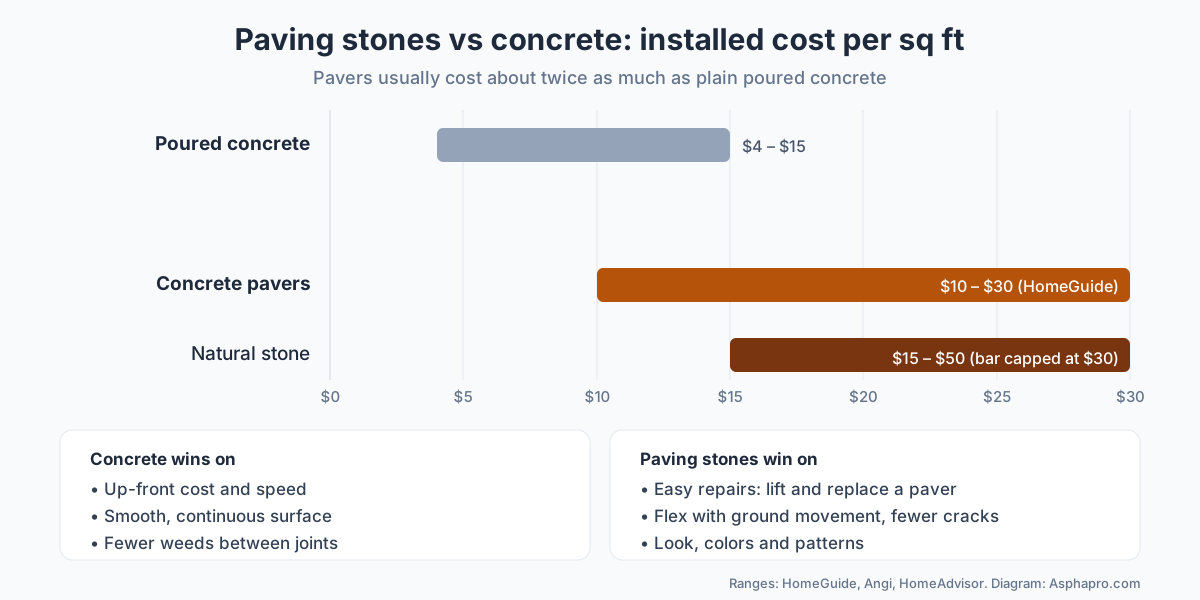
In the paving stones vs concrete comparison, concrete is cheaper: about $4 to $15 per square foot installed for poured concrete versus about $10 to $30 per square foot for paving stones (HomeGuide). Pavers usually cost roughly twice as much. In return, pavers are easier to repair (lift and replace one stone), handle ground movement with fewer visible cracks, and offer far more colors and patterns. Concrete is faster to install, smoother and needs no joint sand. Choose concrete for budget and simplicity; choose pavers for looks, repairability and freeze-thaw climates.
Patios, walkways, pool decks and driveways all come down to the same question for many homeowners: paving stones or concrete? Both are made from concrete in a sense. Concrete pavers are small, factory-made concrete units laid on a sand and gravel base. A poured concrete slab is mixed on site and cast as one large piece. That basic difference drives almost everything else: cost, how each handles cracking, how easy repairs are, how long installation takes and how the finished surface looks.
This guide compares paving stones vs concrete on cost per square foot and by project size, durability and cracking, repairs, maintenance, climate and salt, installation, design, drainage, home value and use on patios, driveways, walkways and pool decks. Cost ranges come from published cost data listed in the sources.
Pavers vs Concrete at a Glance
| Paving stones (pavers) | Poured concrete | |
|---|---|---|
| Installed cost per sq ft | About $10 – $30 | About $4 – $15 |
| Cracking | Joints flex; units rarely crack | Slab can crack; control joints help |
| Repairs | Lift and replace individual pavers | Patches often visible; sections replaced |
| Install time | Longer (laying each unit) | Faster pour, but needs curing time |
| Use right after install | Usually right away | Walk in about a day; drive after about a week |
| Maintenance | Joint sand, weeds, optional sealing | Crack sealing, optional sealing |
| Design options | Many shapes, colors, patterns | Plain, colored or stamped |
| DIY friendly | Yes for patios and paths | Small slabs only |
Cost: Paving Stones vs Concrete
Cost is usually the first thing people compare when choosing pavers or concrete. HomeGuide puts installed paving stones at about $10 to $30 per square foot and poured concrete at about $4 to $15. Angi and HomeAdvisor give a paver range of about $8 to $25 per square foot, and natural stone runs higher, roughly $15 to $50. Plain gray concrete sits at the low end of the concrete range; colored, exposed aggregate and stamped concrete push toward the top.
Cost by project size
| Project | Area | Poured concrete ($4 – $15) | Paving stones ($10 – $30) |
|---|---|---|---|
| Small patio 10 × 12 ft | 120 sq ft | $480 – $1,800 | $1,200 – $3,600 |
| Patio 12 × 16 ft | 192 sq ft | $768 – $2,880 | $1,920 – $5,760 |
| Patio 16 × 20 ft | 320 sq ft | $1,280 – $4,800 | $3,200 – $9,600 |
| Patio 20 × 20 ft | 400 sq ft | $1,600 – $6,000 | $4,000 – $12,000 |
| Walkway 4 × 40 ft | 160 sq ft | $640 – $2,400 | $1,600 – $4,800 |
| Driveway 20 × 40 ft | 800 sq ft | $3,200 – $12,000 | $8,000 – $24,000 |
Driveway pavers and driveway concrete both cost more per square foot than patio versions because they need a thicker base and, for pavers, thicker units. For patio-specific pricing, see our patio pavement price page and ideas for paving a patio.
Durability and Cracking
Both pavers and concrete can last for decades when built on a good base, but they fail differently. A concrete slab is one rigid piece. As the ground settles, freezes or swells, the slab can crack. Contractors cut control joints so cracks form in straight lines at the joints, but random cracks still happen, especially with tree roots, poor compaction or heavy loads.
Paving stones are individual units separated by sand-filled joints. When the ground moves, the pavers shift slightly at the joints instead of cracking. Each paver is also dense, high-strength concrete made in a factory, often stronger per unit than site-poured concrete. The trade-off is that pavers can settle unevenly or spread at the edges if the base and edge restraint are poor. In short, pavers vs concrete is a choice between occasional uneven pavers and occasional cracks.
Repairs: Where Pavers Shine
Repairs are the biggest practical advantage of paving stones vs concrete, and the main reason many people pick pavers vs concrete despite the price. If a paver cracks, stains or sinks, you lift it out, fix the base under it, and put the same paver or a spare back. Done well, the repair is invisible. If you need to dig under a paver patio for a pipe or cable, you can remove the pavers, dig, and relay them.
Concrete repairs are harder to hide. Cracks can be filled, but the filler rarely matches the color. Sunken slabs can be lifted, but large damage usually means cutting out and replacing a section, which leaves a visible seam and a color difference. Buy a few extra pavers when you build a paver patio and store them for future repairs; matching color batches years later can be difficult.
Maintenance Compared
Paving stone maintenance
- Sweep and top up joint sand every year or two; polymeric sand stays in place better than plain sand.
- Control weeds and moss in the joints.
- Reset any pavers that sink or lift.
- Optional sealing every few years to deepen color and help with stains.
Concrete maintenance
- Seal cracks as they appear to keep water out.
- Optional sealing every few years, especially in freeze-thaw climates and on decorative concrete.
- Clean stains promptly; concrete shows oil and rust stains easily.
- Avoid harsh deicers on young concrete.
Overall, the maintenance effort for pavers and concrete is similar; the tasks just differ. Our sealcoating calculator estimates sealer quantities for any surface.
Climate, Freeze-Thaw and Salt
In cold climates, paving stones vs concrete leans toward pavers. Freeze-thaw cycles and deicing salt are hard on concrete, which can scale (flake at the surface) and crack, especially if it was poorly finished or not air-entrained. Pavers are dense and made to handle freeze-thaw, and their flexible joints let them move with frost heave rather than crack. In hot climates, both perform well; light-colored concrete and pavers stay cooler than dark surfaces, which matters around pools.
Installation: Time, Process and DIY
How pavers are installed
- Excavate and grade the area.
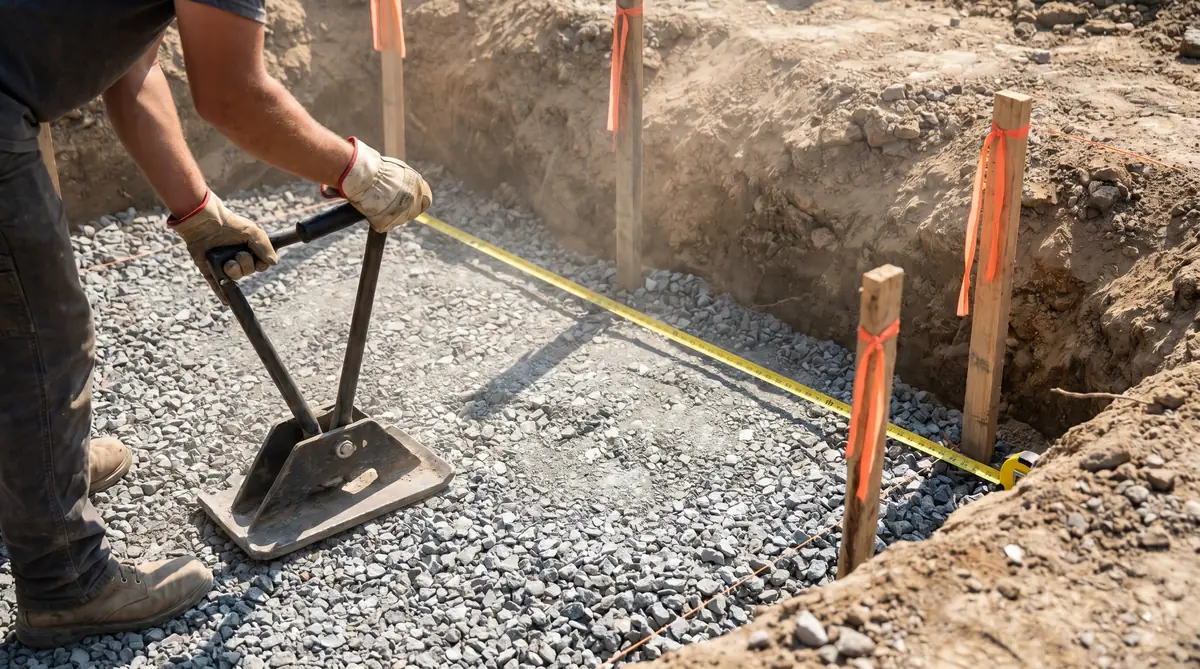
- Lay and compact a crushed stone base, usually several inches for patios and more for driveways.
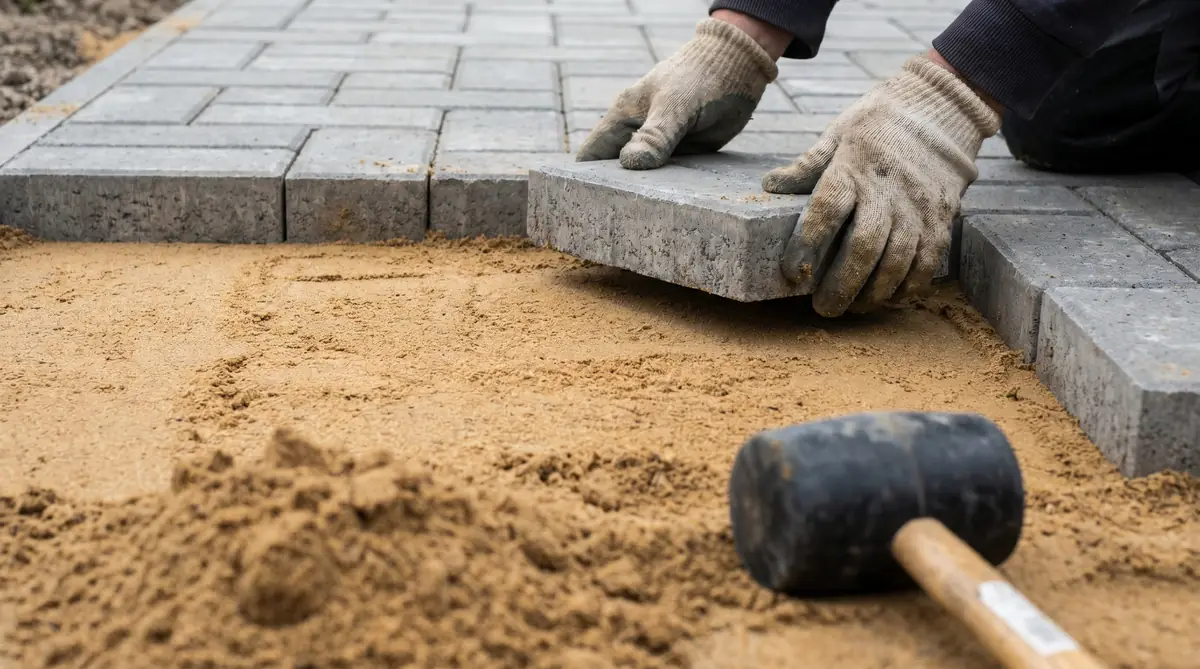
- Screed a thin, level bed of bedding sand.
- Lay pavers in the chosen pattern, cutting edges with a saw.
- Install edge restraints so pavers cannot spread.
- Sweep in joint sand and compact with a plate compactor.
How a concrete slab is installed
- Excavate and grade, compact a gravel base.
- Build forms and add reinforcement (mesh or rebar) as needed.
- Pour, screed and finish the concrete in one session.
- Cut control joints and cure the slab for several days.
A concrete patio can be poured in a day but needs curing before heavy use. Pavers take longer to lay but can usually be used right away. For DIY, pavers are far more forgiving: you can work at your own pace and fix mistakes, while a concrete pour must be done right in a few hours. See our paving a patio DIY guide.
Looks and Design Options
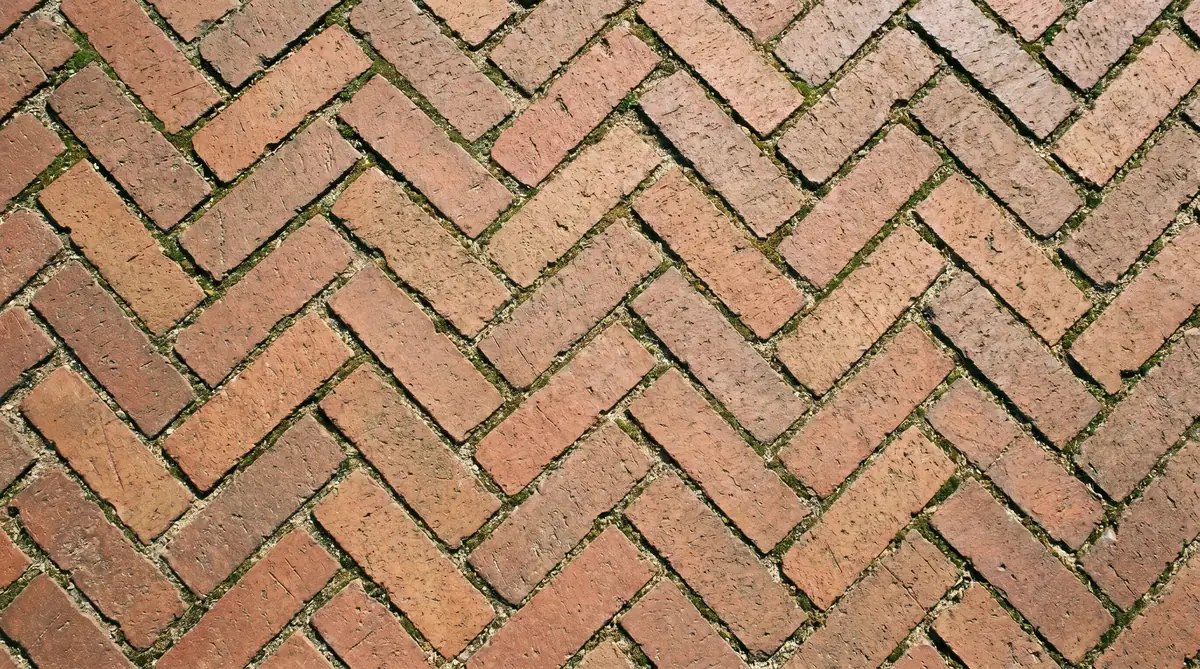
Design is where pavers clearly lead in the pavers vs concrete comparison. Paving stones come in many shapes, sizes, textures and colors, and can be laid in patterns such as herringbone, basketweave and running bond, with borders and inlays. Concrete can be colored, stained, exposed aggregate, broom finished or stamped to imitate stone, which narrows the gap at a lower cost than pavers. But stamped concrete is still one slab, so it shares concrete's cracking and repair issues. If a custom look matters, pavers or natural stone give the most flexibility; if a clean, modern surface is the goal, smooth concrete looks sharp and costs less.
Drainage and Permeable Pavers
Standard pavers and concrete both shed most water and need a slope to drain. Permeable pavers are a special system with wider joints filled with small stone and an open-graded stone base that stores and drains water into the ground. They can help with stormwater rules and puddles, but they cost more than standard pavers. Pervious concrete exists too but is less common for homes.
Patios, Driveways, Walkways and Pool Decks
| Use | Pavers | Concrete |
|---|---|---|
| Patio | Great looks, easy repairs | Lowest cost, smooth for furniture |
| Driveway | Premium look; needs thick base and units | Common, strong, lower cost |
| Walkway | Easy to curve and edge | Fast and simple |
| Pool deck | Slip-resistant textures; cool colors available | Needs a non-slip finish; can crack near pools |
For driveways specifically, compare all your options: asphalt vs concrete driveway cost, gravel vs asphalt driveway and our concrete driveway calculator.
Pavers vs Concrete Patio: A Closer Look
For a patio, the pavers vs concrete decision is mostly about budget, looks and how you use the space. A concrete patio is the budget choice: smooth, easy to sweep, good for tables and chairs, and quick to build. A paver patio vs concrete costs more but gives you patterns, borders and colors that make the patio feel like a designed outdoor room. Pavers also make it easy to add on later: you can extend a paver patio with matching units, while adding to a concrete slab leaves a visible joint.
Think about what sits on the patio too. Grills and fire pits can stain or crack concrete; a stained paver can simply be swapped. Hot tubs need a solid, level base; a reinforced concrete pad is often simplest under a heavy tub, sometimes with pavers around it. If the patio will hold heavy planters or an outdoor kitchen, both work on a good base. Our paving for fire pit guide covers heat-safe choices.
Pavers vs Concrete Driveway
Driveways put much more load on the surface, so the pavers vs concrete driveway decision depends heavily on how each is built. A concrete driveway is typically a reinforced slab around 4 inches thick for cars, thicker for heavy vehicles, on a compacted base. A paver driveway uses thicker vehicular pavers (often around 3 inches or more) on a deeper compacted base with strong edge restraints. Built correctly, both handle cars for decades.
The cost gap is largest on driveways because of their size: an 800 square foot driveway is about $3,200 to $12,000 in concrete versus about $8,000 to $24,000 in pavers using the ranges above. Where pavers earn their price is in cold climates with deicing salt, on driveways with tree roots or shifting soils, and where curb appeal matters most. Where concrete earns its place is on a tight budget, on simple suburban driveways and where a smooth surface is preferred for basketball or skateboarding. Our concrete driveway calculator estimates the concrete side.
Cost of Pavers vs Concrete Over 20 Years
Looking only at the installed price favors concrete. Over 20 years, the cost of pavers vs concrete gets closer, though concrete usually stays cheaper. Concrete may need crack repairs, slab lifting for sunken sections, sealing and, eventually, replacement of badly cracked sections, which is expensive and visible. Pavers need joint sand top-ups, weed control, occasional sealing and resetting a few units, which is cheap, especially if you do it yourself. If a concrete patio or driveway needs a section replaced, that single repair can narrow the lifetime gap a lot. If it never cracks badly, concrete stays the clear value pick.
| Over 20 years | Paving stones | Concrete |
|---|---|---|
| Install | Higher | Lower |
| Routine upkeep | Joint sand, weeds, optional sealing | Crack sealing, optional sealing |
| Larger repairs | Reset or replace units (low cost) | Lift or replace sections (higher cost) |
| Look after 20 years | Usually consistent | Depends on cracking and staining |
Paving Stones vs Concrete for Walkways and Pool Decks
For walkways, paving stones are easy to curve, edge and repair, and they can match a paver patio. Concrete walkways are fast and inexpensive and need little thought. For pool decks, both are common. Concrete pool decks are usually given a textured or broom finish for grip and can be finished with cool-deck coatings. Paver pool decks offer slip-resistant textures, cooler light colors and easy access to plumbing under the deck. Around a pool, where water, chemicals and freeze-thaw all act on the surface, many homeowners choose pavers for repairability; others choose concrete for a seamless look and lower cost.
Common Mistakes With Pavers and Concrete
- Thin or poorly compacted base. The number one cause of sinking pavers and cracked concrete alike.
- No edge restraint on pavers. Without it, pavers spread and joints open.
- No control joints in concrete. Cracks then form randomly instead of in planned lines.
- Poor drainage. Water under either surface weakens the base.
- Patio pavers used on a driveway. They are too thin for vehicles.
- Salting young concrete. New concrete is especially vulnerable to deicer damage.
Questions to Ask Contractors
- How deep is the base, and how is it compacted?
- For pavers: what thickness and type of paver, what edge restraint and what joint sand?
- For concrete: what thickness, what reinforcement, and where will control joints go?
- How will water drain off the surface?
- What does the warranty cover for settling or cracking?
Getting quotes for both paving stones and concrete for the same area is the best way to see the real price difference where you live.
Pavers or Concrete? Quick Answers for Common Projects
- Back patio on a budget: concrete vs pavers favors concrete. A broom-finished slab gives the most space for the money.
- Front walkway with curb appeal: pavers or concrete both work, but pavers vs concrete here favors pavers for curves, borders and a finished look.
- Driveway in a snowy, salted climate: pavers vs concrete driveway favors pavers for salt and freeze-thaw resistance, if the budget allows.
- Simple suburban driveway: concrete or pavers both last; concrete wins on cost.
- Pool deck: paving stones vs concrete is close; pavers for repairability, concrete for a seamless look.
- Area over pipes or utilities: pavers, because you can lift and relay them.
- DIY project: paving stones or concrete? Pavers, because you can work at your own pace.
Concrete vs Paving Stones in Numbers
Here is the concrete vs paving stones comparison in one place for a typical 16 × 20 ft (320 sq ft) patio, using the cost ranges above:
| Measure | Concrete | Paving stones |
|---|---|---|
| Installed cost | $1,280 – $4,800 | $3,200 – $9,600 |
| Typical install time | About a day to pour, days to cure | Several days to lay |
| Ready to use | After curing | Right away |
| Repair of one damaged spot | Visible patch or section | Swap the paver |
So the cost of pavers vs concrete on this patio is roughly double, and what that extra money buys is repairability, design and fewer visible cracks. Whether that is worth it is the core of every paving stones vs concrete decision.
Natural Stone, Concrete Pavers and Poured Concrete
"Paving stones" can mean two different products. Concrete pavers are factory-made units with consistent sizes and many colors. Natural stone pavers, such as bluestone, travertine, flagstone and granite, are cut from quarried stone and cost more, roughly $15 to $50 per square foot installed by Angi's figures. Natural stone looks unique and lasts a very long time, but it varies in thickness and can be slippery or stain-prone depending on the stone. When people compare paving stones vs concrete, they usually mean concrete pavers vs a poured slab, with natural stone as the premium option above both.
Heat, Comfort and Safety
Surface temperature and grip matter on patios and pool decks. Light-colored concrete and pavers both stay cooler underfoot than dark surfaces. Smooth troweled concrete can be slippery when wet, so outdoor slabs are usually broom finished or textured. Many pavers have a slightly textured face that gives good grip. For children and wheelchairs, smooth concrete is easier to roll on, while well-laid pavers with tight joints are also comfortable; uneven, settled pavers can be a trip hazard, which is another reason a good base matters for pavers and concrete alike.
Weeds, Ants and Joint Sand
The joints between pavers are their main maintenance point. Plain sand can wash out, letting weeds sprout and ants build nests. Polymeric sand, which hardens after it is wetted, stays in place much better and resists weeds and insects. Expect to top up joints every few years and pull or treat the occasional weed. Concrete has no joints except control joints and cracks, so weeds are rarely a problem until the slab cracks. If you dislike weeding, factor this into your choice between paving stones and concrete.
Combining Pavers and Concrete
You do not have to pick only one. Popular combinations include a concrete slab with a paver border, a concrete driveway with a paver apron or ribbon, and paver inlays in a concrete patio. These designs give some of the paver look while keeping costs closer to concrete. Pavers can also be laid over an existing sound concrete slab using a thin bedding layer or adhesive, which is a way to upgrade an old patio, though heights at doors and steps must be checked.
Environmental Comparison
Both options are concrete-based, so both carry the carbon footprint of cement. Poured concrete uses more cement per square foot of finished surface in some designs, while pavers are factory-made and need trucking. The bigger environmental differences come from design choices: permeable pavers let rain soak into the ground and reduce runoff, and pavers can be lifted and reused rather than broken up when a patio is redesigned. Concrete that is broken out can be crushed and recycled as base material. If stormwater or reuse matters to you, pavers have the edge in the paving stones vs concrete comparison. If keeping material use and cost to a minimum matters more, a plain, well-built concrete slab that lasts for decades is also a responsible choice. Either way, pavers and concrete both outlast most other outdoor surfaces, such as wood decking or loose gravel, when they are built well and kept up over the years.
How Long Pavers and Concrete Last
With a good base and reasonable care, both pavers and concrete commonly last 25 years or more, and well-built paver installations can last much longer because individual units can be replaced as needed. Concrete life depends heavily on the base, the concrete mix, the finish and the climate; in freeze-thaw areas with heavy salt use, surface scaling and cracking can shorten its good-looking life. The most important factor for both is the same: a well-compacted, well-drained base. Ask any contractor quoting pavers or concrete how deep the base will be and how it will be compacted; the answer tells you more about how long the surface will last than the choice of material itself. A cheap quote that skimps on base work is the most expensive option in the long run, whichever surface you pick.
Home Value and Appeal
In the concrete vs pavers debate on resale, pavers are generally seen as a more premium finish and can make a patio or driveway stand out. Concrete is practical, accepted everywhere and fits modern designs. Neither choice is likely to make or break a sale, but a cracked, stained concrete slab or a weedy, sunken paver patio will hurt curb appeal. Quality of installation and upkeep matters more than the material.
Which Should You Choose?
| Your priority | Better choice |
|---|---|
| Lowest cost | Concrete |
| Easy, invisible repairs | Pavers |
| Cold climate and deicing salt | Pavers |
| Fast, simple install | Concrete |
| Custom look and patterns | Pavers |
| DIY patio | Pavers |
| Smooth surface for furniture or play | Concrete |
Pros and Cons Summary
Paving stones
- Easy repairs
- Few visible cracks
- Many designs
- Use right away
- Higher cost
- Joint sand and weeds
- Can settle if base is poor
Concrete
- Lower cost
- Smooth, continuous
- Fast to pour
- Low weed problems
- Cracks over time
- Visible repairs
- Salt and freeze-thaw scaling
Frequently Asked Questions
Is it cheaper to use pavers or concrete?
Concrete. About $4 to $15 per square foot installed versus about $10 to $30 for pavers.
Do pavers last longer than concrete?
Both can last decades. Pavers show fewer cracks and are easier to repair; concrete may crack and repairs are more visible.
Are pavers good for driveways?
Yes, with thicker driveway pavers on a strong compacted base.
Do pavers need more maintenance than concrete?
About the same effort: joint sand and weeds for pavers, crack sealing for concrete.
Can you put pavers over concrete?
Yes, over a sound slab, using a thin bedding layer or adhesive, if door and step heights allow.
Sources
- HomeGuide, "What is the cost of pavers vs. concrete?" — $10 to $30 and $4 to $15 per sq ft. homeguide.com
- Angi, "Pavers vs. Concrete Patio" and paver patio costs. angi.com
- HomeAdvisor, "How Much Does a Paver Patio Cost?" homeadvisor.com
- Images and diagram: Asphapro.com.
Prices checked November 2026. They are national ranges; local quotes can be higher or lower.
Related Guides
- Concrete price per yard — ready-mix cost for a poured slab
- Stamped concrete vs pavers — decorative patio options
- How to clean concrete without a pressure washer — brush, hose and the right cleaner
- How to get concrete splash off bricks — fresh splatter, lumps and haze
- Can you lay pavers over concrete? — sand-set vs mortar-set overlays
- How to make concrete stepping stones — molds, mix and setting a path